From big picture gardening to small picture detail

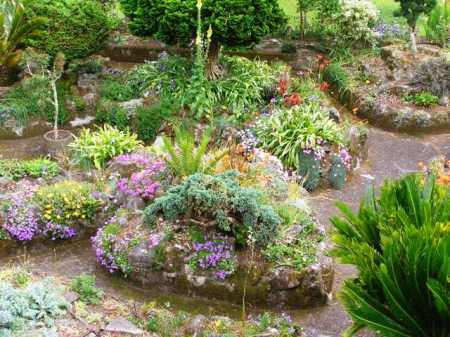
Ours is not a rockery for growing alpines

Ours is not a rockery for growing alpines

My mission to weed our stream and ponds, about which I wrote last week, has been subsumed. That is to say it has largely been taken over by the menfolk in my life and turned into something much larger but I am not complaining. I was trying to clear the water weed. They are now building an additional weir, flushing the stream and hiring a sludge pump to clear the ponds. I know my limits. I have moved up from the park and into the rockery.

Moving from the open areas to the intimacy of the rockery is going from one extreme to another. The former is big picture gardening and much concerned with giving large trees space to grow and anchoring the whole picture well into the surrounding environs. This used to be called borrowed views and vistas before those terms became so pretentious they fell into naffdom. The rockery is all about little pictures, highly detailed gardening. I wouldn’t be without either, but I really enjoy the attention the rockery requires.

Traditionally, rockeries were about creating an environment that resembled scree slopes of mountains in order to grow alpines. We cannot grow alpines. We’ve tried but it doesn’t work. Our high humidity, high rainfall and mild year-round temperatures conspire against alpines. For us the rockery has become the place to keep track of treasures and to confine dangerous but attractive bulbs. Most gardeners know how easy it is to lose bulbs in garden borders. Some get swamped out by neighbouring plants, some are so anonymous when dormant that they get pulled out with other plants, some just seem to go, we know not where. If they have their own pocket in the rockery, it is possible to label their location and restrict competition.

Rockery conditions are surprisingly harsh. All that stone and other hard material heats up in summer so the soil dries out quickly. The gentle, steady rain we had last week didn’t penetrate very far. This means you have to be pretty selective about small shrubs, perennials and other plants but the bulbs don’t usually mind. In the wild, most are used to marginal conditions.
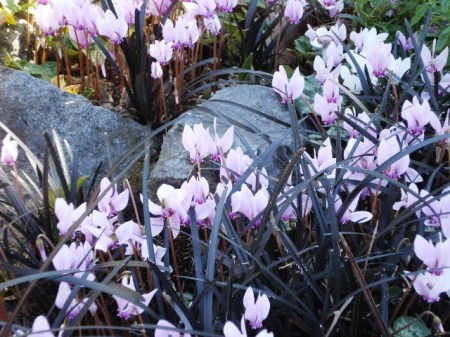
Too much of a good thing - Cyclamen hederafolium with black mondo grass

Too much of a good thing - Cyclamen hederafolium with black mondo grass

Two summers ago, I took the rockery apart pocket by pocket. At the time, I estimated there were about 500 separate compartments and it took me a full month’s work. At least I got to know it and all its inhabitants. This time I am only concentrating on the messy bits and the areas where plants responded a little too enthusiastically to the earlier renovation. The combination of black mondo grass and pink Cyclamen hederafolium is very pretty, especially as snowdrops come through the marbled foliage of the cyclamen in the depths of winter. But you can have too much of a good thing and all three inhabitants were trying to outcompete each other. I am thinning them drastically.

To garden in this style, you have to be willing to tolerate the messy season bulbs have, when their foliage is looking past its best. Most bulbs use the time after flowering to build strength below ground so they can flower again next year. When they have done that, their foliage dies down naturally. With some, this is a quick turnaround. Others, like nerines and colchicums, take many months. We just try and ensure that other areas of the rockery have more attractive displays to distract the viewer and leave the plants to their natural cycle.

I used to think that every pocket of the rockery should have something of interest in it all the time. This is actually a lot harder than it sounds because you then need to use a succession of maybe four different plants which can co-exist quite happily – and each compartment should have different combinations. In other words, for me this would be getting on for 500 miniature gardens. Rockeries are no place for mass planting. I flagged that idea – too hard and not necessary. Some compartments will have periods of the year when they appear empty and that is fine as long as there are no weeds. There is no place for any weeds at all in this intensive style of gardening.

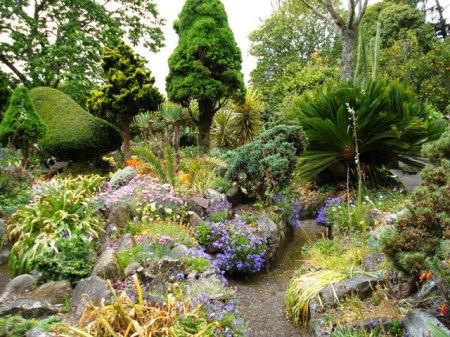
Ours is an aged example – sixty years to be precise. We have some fine, gnarly, old, characterful dwarf conifers to give year round structure along with some smaller growing cycads (though somebody forgot to tell the handsome Cycas revoluta to stop growing). We have a few easy care, small perennials to soften the edges. A compact little blue campanula is one of the best of these along with a well behaved little scutellaria. We like the tall punctuation marks of some plants drifted through the rockery. The upright orange-toned orchid, Satyrium coriifolium, is the choicest one. The large flowered yellow Verbascum creticum seeds down gently to give the statement in late spring and the amaranthus (Love Lies Bleeding), similarly self seeded, is growing before our very eyes to fill the vertical accent role in autumn. These plants just provide a framework for the real stars – a succession of any and all interesting bulbs we can grow.

It means there is always something of interest to look at. I enjoy that sort of detailed gardening.

First published in the Waikato Times and reproduced here with their permission.
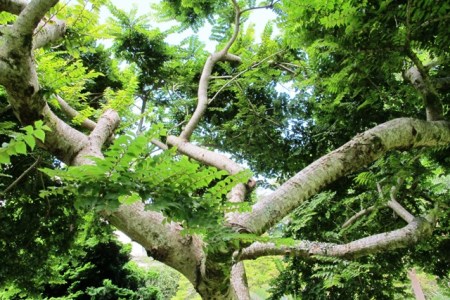
Plant Collector: Ulmus elegantissima “Jacqueline Hillier”

Ulmus (should that be elegantissima, minor or x hollandica?) "Jacqueline Hillier"

Ulmus (should that be elegantissima, minor or x hollandica?) "Jacqueline Hillier"

It’s an elm but from there on there seems to be some debate. We received it under the species classification of elegantissima. The Hillier Manual of Trees and Shrubs lists it under the species name of minor with elegantissima added as a synonym. A quick net search and I see others now list it as Ulmus x hollandica which is a natural hybrid of minor and glabra. In other words, nobody knows for certain so we will stick with Hillier’s own classification.

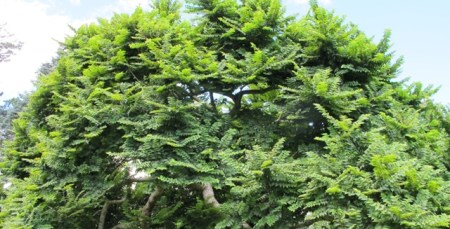
The reason nobody knows for certain is that it was found in a garden in Birmingham in the early 1960s and it was visibly different. Most elms are renowned as handsome, large trees, though they have suffered hugely in the UK and Europe since the 1970s from a major outbreak of Dutch Elm disease which kills them. “Jacqueline Hillier” is smaller growing. In fact it came to us under the descriptor of dwarf. It has tiny, sawtooth leaves and very fine tracery of branch structure whereby the leaves are held in fan shapes. This means it is extremely attractive when it is a bare skeleton in winter. It is delightful when flushed with bright spring growth and it is lovely and lush in summer until the predations of the red spider sometimes defoliate it.

Dwarf it is not. I planted a specimen in our rockery where it set out to prove it belongs to the large shrub category. We have to keep working on it extensively every year to keep it down to about 3 metres x 3 metres. It also seeds and suckers but not in a dangerous way. Had I realised it would grow to that size, I would have planted it somewhere with more space – but I would definitely still have planted it.

First published in the Waikato Times and reprinted here with their permission.

Grow it yourself: spinach

Silver beet and spinach are close relatives. Indeed, somebody very close to me claims they taste the same when cooked, which I can’t argue against because it is so long since I have eaten the former. Texturally, I much prefer the finer, softer leaves of spinach and will happily eat those. Spinach is a winter vegetable. It will continue growing in colder temperatures but as soon as the weather warms in spring, it will bolt to seed. It is not quite as amenable as silver beet to grow and while you can leave plants in the ground and just pick as much as you need, it does not have the same cut and come again characteristics.

Well cultivated, well drained soil rich in nitrogenous fertiliser and full sun are the keys. Spinach is usually direct sown from seed and most of us now know to pick the thinnings and eat them as micro greens in salads or stir fries. The final spacing is in the 10cm range. In the right conditions, it is a quick crop because it will mature within a couple of months and you may have been eating immature leaves all that time. Some gardeners like to sow successive crops every few weeks to ensure continued supply.

There are a number of different spinach varieties, including New Zealand spinach or kokihi which is a different plant altogether (though similar taste and texture) and is our one great contribution to the global world of vegetables. While most spinach are spinacia, it is Tetragonia expansa. We recommend shunning the heirloom strawberry spinach (Chenopodium foliosum), being of the opinion that the reason it has been around for over 400 years is because it seeds so freely it is nigh on impossible to eradicate once you have it. The leaves are pleasant enough but the so-called strawberry seed heads are not.

First published in the Waikato Times and reproduced here with their permission.
In the garden this fortnight: Thursday February 9, 2012

A fortnightly series first published in the Weekend Gardener and reproduced here with their permission.
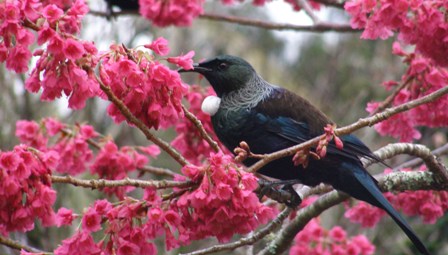
The only justification for growing seeding campanulata cherries - feeding the scores of tui in late winter

The only justification for growing seeding campanulata cherries - feeding the scores of tui in late winter


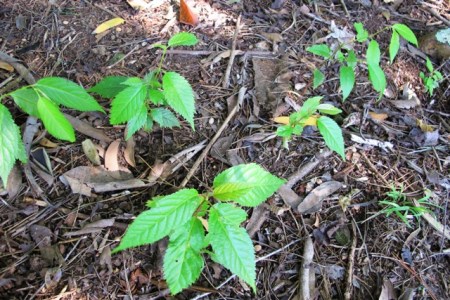
A rash of germinating campanulata cherries

A rash of germinating campanulata cherries

We are very cautious about invasive plants here. I know there is an old cliché that says a weed is just a plant in the wrong place but in a large garden, we can’t afford to have out of control triffids. If a plant starts to look dangerous, it probably is. If it is a prolific seeder and the seed is dispersed by birds, it is even more problematic. The campanulata cherries fall into this category and if it weren’t for the scores of tui they attract to the garden each spring, we would do away with them. The seeding bangalow palm (Archontophoenix cunninghamiana) is also a source of angst. The same goes for the Himalayan Daphne bholua which doesn’t just seed. It also suckers below ground. If we lived near a national park or adjacent to a native reserve, we would feel morally obliged to review our hospitality to these ornamental plants.

We are nowhere near as tolerant of wayward perennials and annuals. Forget-me-not may be pretty but it is aptly named. We have been weeding it out for years here and still it stages a comeback. The orangeberry (Rubus pentalobus) had to go when it formed an impenetrable mat after just one year then started climbing and leaping to extend its territory – but never fruited. Some of the ornamental tradescantias (wandering willies) are also invasive. We have a very pretty blue flowered form but it sets prodigious quantities of seed and is popping up in thickets many metres away. The remains of the arum lily Green Goddess still require regular attention to get rid of the last remnants of tiny rhizomes out of the ground.

Where we have plants which set miles too much seed, like the granny bonnets (aquilegias) and the sweet williams (dianthus), we try and deadhead straight into a bucket. From there, they either go to the bottom of a hot compost heap, out with the rubbish or on the burning heap. Composting alone does not kill seeds unless you manage your compost in a way that generates considerable heat. While we don’t mind a certain amount of seeding down of pretty plants, we like to keep them confined to particular areas and don’t want to spread them everywhere when we use the compost as mulch.

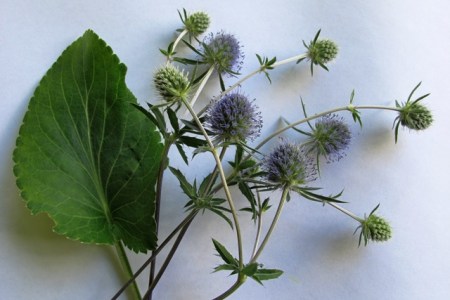
I am very fond of eryngiums

I am very fond of eryngiums

Top tasks:
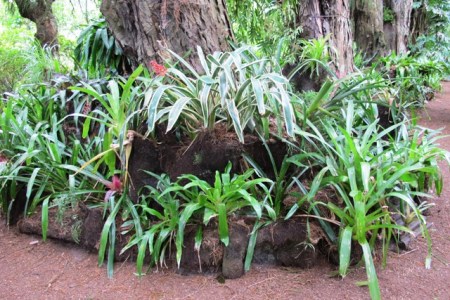
1) Persuade Mark to head out with the chainsaw and cut down some of the self seeded pongas. We don’t regard these as weeds because they are native, but we end up with too many of them. We have them as raised beds in the rimu avenue, where some are now 50 years old. I want to extend the constructions along further and feature more bromeliads. I have never learned to use a chainsaw and am terrified of them. Mark is equally worried by what I could do with one if I became confident so has never encouraged me to learn.
2) Mark has been raising perennials from seed in the nursery and I need to get onto planting these out. I was particularly pleased to see a tray of eryngiums – blue sea holly. It is a little bit prickly but so very pretty. Blue flowers are my absolute favourite. It would have been better had we got onto planting these out earlier but they are perennial so should grow on to star next summer.

Ponga (tree fern) trunks, used to make raised beds andwhich have lasted for five decades already

Ponga (tree fern) trunks, used to make raised beds andwhich have lasted for five decades already


Tikorangi Notes: Friday 3 February, 2012

Our pregnant gecko, Glenys, is back in view

Our pregnant gecko, Glenys, is back in view

Latest posts: Friday 3 February, 2012

1) The battle with the water weeds in Abbie’s column this week.

2) One for the dendrologists in Plant Collector this week – Pinus montezumae. It takes a bit to convince most New Zealanders that any pine tree is capable of being special but garden visitors do single our specimen of P.montezumae as being a tree out of the ordinary realm of the common pine.

3) Grow it yourself – silver beet. Some people are even alleged to enjoy eating this iron-rich but utility vegetable.

4) Welcome back Glenys, our highly prized but rather shy resident gecko. We are terribly excited by the evidence that we have a population of gecko in our garden, though that excitement does not appear to have been widely shared by others! But in this country, the small skinks are a common sight whereas our native gecko is nocturnal, elusive and rarely seen.

5) Check out the lily photo album I am building on our Facebook garden page. If you feel inclined to “like” the whole Facebook page, it would be most gratifying. Our popularity on Facebook lags behind the visitor numbers to our websites, and even the subscribers. This may of course just indicate that gardeners are less inclined to use social networks.

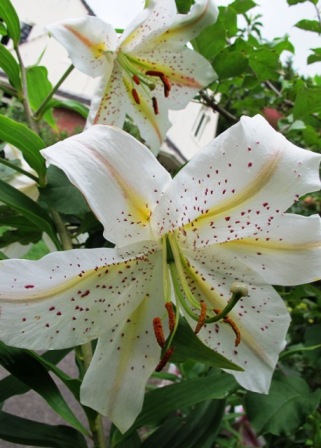
The auratum lily season is late this year, but no less spectacular for its delay

The auratum lily season is late this year, but no less spectacular for its delay

Tikorangi Notes: Friday 3 February, 2012

Oh summer, where art thou? Even the auratum lilies seem to be waiting for some real summer heat before opening fully in all their glory. This may go down in history as one of the coolest summers in recent history. On the bright side, the garden is very lush and green and working conditions are not unpleasantly hot. In fact, for Lloyd and I cleaning out the ponds and stream in our park, working conditions have been very pleasant. I just like a little searing heat to justify the fact we have a swimming pool. It has had precious little use so far this year.

Mark is very excited to see the blandfordia coming into flower. I have tried to photograph it but even by our standards, it is still looking a little too modest to boast about. It may look more notable when additional buds open. The reason for our excitement is that it was planted in the rockery by Felix Jury and as Felix died in 1997, it means it has been there for quite a long time and not doing very much. In fact, in all those years, it has only flowered twice before. Its third flowering is cause to celebrate.

Our Lloyd makes a prettier sight than I do when it comes to weeding the pond

Our Lloyd makes a prettier sight than I do when it comes to weeding the pond