Tikorangi Notes: Friday, April 1, 2011

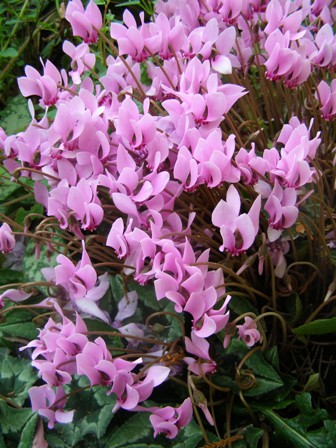
The blue autumn crocus - a fleeting seasonal delight

The blue autumn crocus - a fleeting seasonal delight

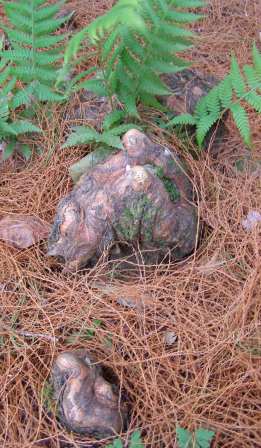
Nerines flowering in the rockery

Nerines flowering in the rockery

Latest posts:
1) Camellia sinensis is grown for harvesting, not for its floral display though its little pink flowers are charming if you look closely. The tea camellia in Plant Collector this week.

2) Garden tasks this week as we enter the second month of autumn.

3) Fifty Plants that Changed the Course of History – book review.

4) Outdoor Classroom this week looks at options for garden mulches in the first of a two part series. I was a little surprised to find that the dreaded scoria is still available.

Latest posts: While early spring is widely seen as the prime season for bulbs, autumn can be pretty rewarding too. The nerines are currently at their peak, the Moraea polystachya, zephyranthes and Spiloxene alba have particularly long flowering seasons, the Cyclamen hederafolium create carpets of pink and white, while the autumn crocus, colchicums and sternbergia are more fleeting delights. April heralds the start of our off season when we say the garden is closed, except by appointment. Mark stood in the rockery today, wondering why we advertise such an early closing date when there is still so much colour and interest.

In the Garden: Friday 1 April, 2011

A game of chance with the pepper crop this year

A game of chance with the pepper crop this year

• The capsicum crop this year has been causing me problems. Peperone Padron is apparently a Spanish heirloom variety, renowned for the fact that it bears both mild and hot peppers but you can not tell the difference until you eat them. The seed packet proudly proclaims that eating a portion is popularly linked to Russian roulette. I prefer a little more predictability in the harvest so we may be more conservative with next year’s varieties.

• The spring bulbs are bolting into growth so if you have patches you have been meaning to dig and divide, do them this weekend and handle them gently. You have longer if you are buying dry bulbs which are still available at all garden outlets.

• We should still have at least five weeks of very mild weather, albeit with cooler nights, before the threat of frosts in inland areas and the first blasts of winter chill. So it is perfect planting time for trees and shrubs.

• The mild conditions are also the reason why right now is a good time to do an autumn fertilising round. The plants have time to benefit from the feed before they either go dormant or slow dramatically in growth over winter.

• Sow new lawns and over sow bare patches now. The grass has time to germinate and get some roots out before winter.

• Don’t walk away from the vegetable garden after you harvest the autumn crops, even if you are not intending to replant until springtime. It is time to do a big tidy and clean up. Remove blighted and mildewed plants entirely from the site to try and break the cycle. You don’t want the fungi and diseases wintering over in your patch. If you are going to dispose of them by burying them, don’t do it in your vegetable garden and only compost them if you make a hot mix. It is also good practice to rake up the leaves from fruit trees as they fall. You can help break the cycle of pests and diseases by good hygiene.

• With cooler nights, mice will be moving indoors. If you are storing seed, move the packets to rodent proof containers.

Fifty Plants that Changed the Course of History, by Bill Laws.

This is a book themed on plants, not to be confused with a gardening book. A collection of fifty chapters on disparate plants (agave, chilli pepper, coconut, olive and forty six others), it is filled with delightfully written random pieces of information. So the chapter on pineapple includes the Wardian case (a vital piece of equipment for transporting plants back alive on very long sea voyages, though it was originally designed for studying moths), a dissertation on the evolution of the glasshouse – and with that, the invention of Bakelite – along with a note about Mr Dole from Hawaii, a name immortalised on the tins of pineapple in our supermarkets. It is full of such curious, eclectic and wide ranging content, ideal for those who like to pick up a book and browse randomly in the hope that some day they may come up with the right answer in a quiz. But more than that, it is underpinned by a little bit of sound botany and wrapped up in a medium format hardback, packed with lovely botanical paintings, historical works of art, imagery and muted, modern photography. The English are masters of understated quality.

(Allen and Unwin; ISBN: 978 1 74237 218 1).

The Jury rhododendron legacy – first published in the RHS Rhododendrons, Camellias and Magnolias 2011 yearbook

When Felix and Mimosa Jury laid out their gardens here at Tikorangi, near the Taranaki coast of New Zealand, it was the early 1950s and rhododendrons were one of the most highly prized plant genus. There were not many different cultivars available but keen enthusiasts around the country imported whatever they could, mostly as seed, and there was considerable exchange of material. In those early years, the species dominated. It was the disappointing performance of many of those cold climate plants which provided the initial impetus for Felix to start hybridising in a quest to create plants better suited to our very mild conditions.

Rhododendron Bernice

Rhododendron Bernice

Gardening on volcanic soils with regular rainfall throughout the year, one could be forgiven for thinking we are ideal rhododendron territory. However, while we do not have hot summers, neither do we have the winter chill necessary to many of the rhododendron family. Frosts are very light and few in number. The lack of winter chill means that thrips stay alive and multiply. Silver leafed rhododendrons are common. Added to that, the bright, unfiltered sunlight which gives this country the dubious honour of being the skin cancer capital of the world, can burn and crisp both foliage and flowers of vulnerable plants.

While many of the species merely dwindled away here, we certainly tried our best. Our computer data base shows that over the thirty years of the nursery, we have produced and sold around 60 different rhododendron species, although some are merely different forms. Not many of them last the distance as garden plants of merit for our conditions. One of the stand-out species, however, is Rhododendron polyandrum. It keeps good foliage in the garden, its flowers are beautiful and showy (though rather soft so inclined to weather mark), the peeling bark is attractive, the fragrance is such that it hangs heavy in the air several metres away. We don’t mind that it is an open, some would say leggy and rangy, shrub because we don’t want all plants to be the tight, rounded bob that defines R.yakushimanum.

R.polyandrum was the star breeder plant for Felix. Taking its strengths, he thought that it should be possible to extend the range of flower colour and to select for more compact and better furnished cultivars. He was right. The polyandrum hybrids share several characteristics: the foliage is visibly derived from polyandrum being small, dark and almost leathery, showing excellent resistance to thrips and leaf burn. The hybrids, however, are blessed with rather more leaves than the mother (which can be a little sparse in the foliar department). Typically, the hybrid flowers are held in flat trusses like R. polyandrum but there are more flowers to the truss, so many that the plants can look like a wall of bloom at their peak.

Felix only named one of the cross with Royal Flush Townhill and it stands out after several decades as a top performer. Bernice was named for Mrs Bernice Kelly, a dear friend of Mimosa Jury and a favourite of Felix’s. With a crimson throat, the tones change through pink to near white on the edge and it remains one of the more colourful in the maddenii range. It has a light but pleasant fragrance and relatively compact growth to about 2 metres. Year in and year out, it performs consistently well.

Rhododendron Felicity Fair

Rhododendron Felicity Fair

Rhododendron Moon Orchid

Rhododendron Moon Orchid

Felix was not as restrained in the selection and naming process of his polyandrum x Sirius series. In fact he named too many of them but it was an enormously successful cross and we still have other sister seedlings performing every year in the garden. Barbara Jury, Felicity Fair, Katie and Moon Orchid are all a little different, but maybe not so very different that all warranted registration. There were fifth and sixth selections, registered as Christine Denz and Sunset but these were never propagated. Barbara Jury is the prettiest, cleanest yellow with a narrower bloom and good scent. Lovely though it is, we discontinued producing it commercially because it is weak in the roots and succumbs to phytophthora – described by Mark as too ready to whiff off. Moon Orchid is a superior garden plant. It has a larger flower with frilly lobes and slightly more apricot toning because the base colour of yellow is suffused with pink on the outer petals and the throat is green. Katie is the most peachy orange in colour because the yellow is now mixed with red tones on the backs of the petals. The flowers are a little smaller, the scent a little less pronounced and the growth a tad more vigorous but the differences are reasonably subtle. The last of the quartet was Felix’s personal favourite – we know this because the name Felicity Fair is a play on his own name. The flower is pastel creamy yellow with definite pink tones on the outside of the throat, combined with excellent foliage and good fragrance. Of this particular cross, with the benefit of experience, we would name Moon Orchid and Felicity Fair as the best selections.

Rhododendron Katie

Rhododendron Katie

The polyandrum selections are all late season flowering. The first of the Jury hybrids to open in early season is White Doves (scopulorum x formosum var. inaequale). While not overly spectacular, it is extraordinarily floriferous with white bells held loosely hiding all foliage and it is a consistent, healthy performer.

We have an ongoing love affair with the showy R. nuttallii family here in our garden at Tikorangi, particularly the more tender sinonuttallii which could be described as a Rolls Royce rhododendron with its heavy, bullate foliage, wondrous peeling bark and simply astounding long, lily-like fragrant trumpets of heavy substance. Felix’s Floral Legacy (nuttallii x sinonuttallii so technically still a species) gave an increased robustness of constitution and yet larger blooms. Where space and favourable climate allow, this is a spectacular rhododendron.

Rhododendron Floral Dance

Rhododendron Floral Dance

Both Felix and his wife Mimosa laid claim to the original cross of sinonuttallii x edgeworthii which came to be called Floral Dance. While Felix certainly raised the plant, by a process of deduction, Mark worked out that his mother must have done the cross so these days we credit it to her posthumously. It brought a somewhat more compact habit into the nuttallii family, though only relatively so. The really bushy, well furnished plants such as the yakushimanum family hold onto their leaves for at least three years whereas most in the maddenii group are only carrying two years of foliage at any one time so they are always going to appear a little more sparse. Floral Dance shows the most appealing characteristics of both parents – very deep forest green bullate foliage, mid sized, good textured mostly white trumpet flowers with frilly lobes flushed darker pink and strong fragrance. It is simply a beautiful rhododendron.

Rhododendron Floral Sun

Rhododendron Floral Sun

This particular breeding direction was continuing the efforts to get more colour into the maddenii group. However, it was not until later when Mark came to grips with the fact that diploid and tetraploid rhododendrons can not be crossed, that he was able to better predict potential outcomes. It explained his mother’s failure to successfully cross sinonuttallii with Bernice.

In his turn, Mark looked at extending the colour range in nuttallii, in combination with more compact growth. I can still recall when he told me he had crossed sinonuttallii with RW Rye, because I quipped that he would likely end up with a run of seedlings with small white flowers and no fragrance. At the time, when I was at home raising preschool children, I was just secretly proud that I actually knew both parents. I was wrong because what emerged was a run of soft yellow, scented seedlings with nuttallii trumpets. From these, Mark named only one – Floral Sun. At last we had a compact habit combined with some of the best sino nuttallii characteristics. After two decades, the original plant has barely reached 130cm in height and about the same in width so it is sturdy and compact. The bullate foliage is mid green but the real joy are the flowers – frilly, fragrant and in soft honey yellow tones. It is still a source of delight here.

Rhododendron Platinum Ice

Rhododendron Platinum Ice

Working the theme of extending the colour range, Mark crossed augustinii with the excellent white form of maddenii we have here, hoping to introduce blue tones to the good performing maddenii characteristics. He named Platinum Ice which is a lovely rhododendron but, to the hybridist’s disappointment – lacking in some of the better features of the parents. The lilac buds open to flowers with the augustinii form but in maddenii size in a pastel shade which fades out to white. It is a good looking plant with good foliage but it lacks the fragrance and the pest resistance of the maddenii and the intensity of hue from augustinii (which is a beautiful species that does not like our conditions – it is a race between the thrips and the bronze beetles as to who can take it out first). So while Platinum Icemarked a colour break, it is still less than was hoped for in performance.

Rhododendron Floral Gift

Rhododendron Floral Gift

Returning to polyandrum as a breeder, Mark tried a number of crosses and has named one, Floral Gift. His records at the time state quite definitely that this was Michael’s Pride x polyandrum but the seedling shows nothing of Michael’s Pride and bears no resemblance to other crosses done at the same time. However, there is no doubt about the polyandrum parentage. Sometimes cultivars can take a long time to prove themselves. There was sufficient that was good about Floral Gift to warrant selection – sturdy habit of growth, compact, healthy foliage, an intense fragrance which is the equal of polyandrum but with heavy textured flowers which resist weather damage. It set flower buds on very young plants and flowered earlier in the season. Floral Gift’s blooms are white with a slight pink flush on the petal backs and a yellow throat. We lost a little confidence in this cultivar because it proved to be a tricky nursery plant – easy enough to strike from cutting and grow but fiendishly difficult to get a decent looking plant for sale when grown in containers. It looked sparse in the foliage and generally scruffy. But as plants in settled in and grew around the district and particularly in our local botanic park, we revisited Floral Gift and decided it is a very good plant. In a garden where we shun mass planting of single cultivars, we think this one is good enough to warrant planting in groups throughout the garden.

Faced by a somewhat sceptical buying public who think that rhododendrons should be nice bushy shrubs with full ball trusses (forget all these lovely walls of loose trumpets and bells exuding fragrance), Mark turned his attention to trying to get healthier foliage in the more traditional rhododendron appearance. Meadow Lemon is one of this ilk. It is Percy Wiseman x Lems Cameo, showing greater health than its parents without the need to spray. Pink buds open to a classic full truss of frilled soft yellow flowers. We are told that this cultivar is impressive in the New Zealand Rhododendron Association trials of NZ raised cultivars.

Rhododendron Meadow Lemon

Rhododendron Meadow Lemon

We have other successful seedlings from this particular hybridising direction in the garden – attractive full trusses in lilac, various pinks, reds and colour mixes but at this stage, that is where they are staying. While the genus of rhododendron has retained some of the status of its glory days in this country, it has had a huge slide from grace in terms of market share and a corresponding drop in value. These days a podophyllum raised over a few months from tissue culture will command a higher price in a garden centre than a rhododendron which has taken three years to grow and has decades of breeding history or plant hunting behind it. It simply is not worth putting a new cultivar on the market. We are philosophical. Plant fashions come and go and in the meantime, we derive a great deal of pleasure from the rhododendrons in our own garden.

Mark continues to dabble with rhododendrons which perform well in our climate, of late working with arboreums which show high health characteristics but tend to achieve giant status. Whether any of these reach the market remains to be seen. Alongside this, he has continued with vireya rhododendrons but these are another story altogether.

For the record, other cultivars registered by Felix include Abigail Jury (yakushimanum x Dido) – lovely plant with a beautiful bloom but too difficult to propagate so never a commercial viability, Soft Shadows (yakushimanum x argrophyllum) and Lollipop Lace (williamsianum x loderi) – in the last case merely raised from overseas seed and registered by Felix. The form of Saffron Queen (xanthostephanum x burmanicum) throughout New Zealand is, as far as we know, the Felix Jury form from repeating the earlier Williams cross. In those early days, he felt he had to stick to the grex name. The griersonianum x grande and macabeanum crosses attributed to the Jury family can be traced back to Felix’s brother, Les Jury, who was better known for his camellias. None of Les’s rhododendron hybrids were commercially viable although there are some handsome plants amongst them.

Mark has never registered his hybrids, although Felix and Les Jury were more meticulous in this aspect. Mark does not do paperwork. We do, however, make an effort to keep the information on our website current and accurate.

Tikorangi notes: Friday 25 March, 2010

Double white brugmansia in flower this week

Double white brugmansia in flower this week

Latest posts: Friday 25 March, 2011

1) The frilly, double white brugmansia in Plant Collector this week.
2) Family bonding and the world of Canberra gardening and landscape – Abbie’s column predominantly on the topic of the new National Arboretum of Australia.
3) It is autumn and the earliest camellias are opening their flowers. Garden tasks for this week.
4) Bromeliads for the Contemporary Garden – a review of the new edition of Andrew Steens’ book.