Tikorangi Notes: Tuesday 14 September 2010

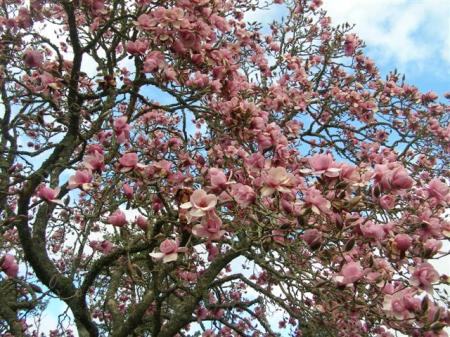
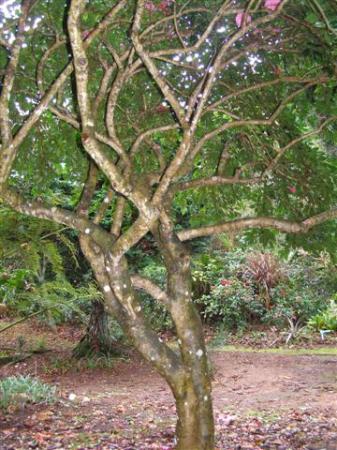
The original Magnolia Iolanthe is a sight to behold in full bloom

The original Magnolia Iolanthe is a sight to behold in full bloom

There will be no updates for the next three weeks owing to the fact that I am flying to Spain and Portugal today and Mark, who remains behind here at Tikorangi, is computer illiterate. New posts are all scheduled for www.abbiejury.co.nz and will appear each Friday as usual, but linking through to each from this site was one task too many to complete before I left.

In the meantime the garden is open daily and the magnolias and spring bulbs are looking splendid. Mark will be available for plant sales on Fridays and Saturdays as usual but he is less enthusiastic at other times unless by appointment. I plan to be far away eating tapas and drinking sangria in a country I have not visited before, although the thirty six hours it takes to reach Madrid from here has to be endured first.

Plant Collector: Tulipa saxatilis

Plant Collector: Tulipa saxatilis

Plant Collector: Tulipa saxatilis

I am not a great fan of the common tulip and even less so of the novelty forms so prized in colder, northern European gardens. But get back to the original species, (how they occur naturally in the wild) and it is a different matter altogether. This very pretty tulip is a combination of soft lilac with a yellow throat which is not the world’s most obvious colour scheme but generally the colours of nature do not clash. It hails from the island of Crete (the home of Zorba the Greek) though apparently it is also found in Turkey. In their natural environment, these are wild flowers and if you have ever visited the Greek islands or the coast of Turkey, you will know that conditions are hard with poor stony or clay soils, very low fertility, drying winds and next to no rain for most of the year. These are not conditions that we can replicate in the garden here but Tulipa saxatilis is not too picky and has thrived in our rockery for many years. With open conditions and excellent drainage, it is genetically programmed to be a survivor.

This is an early spring bulb, so it starts to grow in winter (triggered by autumn rains) and flowers in early spring for a period of several weeks. Each bulb puts up a stem which flowers its way down in succession so you get several blooms per bulb. It is a good example of a bulb which will find the depth it is happiest at in the soil so it will often drag itself down quite deep and it is a rarity amongst the tulips because it runs below ground. Because the foliage doesn’t hang on very long, it lends itself to being co-planted with a summer perennial which is dormant when the tulip flowers. We have had a dwarf species oenothera, better known as Evening Primrose, interplanted with our main bed of Tulipa saxatilis for many years and it comes into its own as the tulip goes dormant.

Tikorangi Notes: Friday September 10, 2010

LATEST POSTS

1) There is clearly no Dutch blood running in my veins. I am not generally a tulip fan but I am happy to make an exception for the Cretan species, Tulipa saxatilis which has just come into flower.

2) Taking a second look at camellias as garden plants despite the ravages of camellia petal blight – Abbie’s column (and de facto instalment on the Camellia Diary).

3) Garden hints for the second official week of spring – but we know that spring is well advanced here.

4) Counting down around the province to our annual Taranaki Rhododendron and Garden Festival.

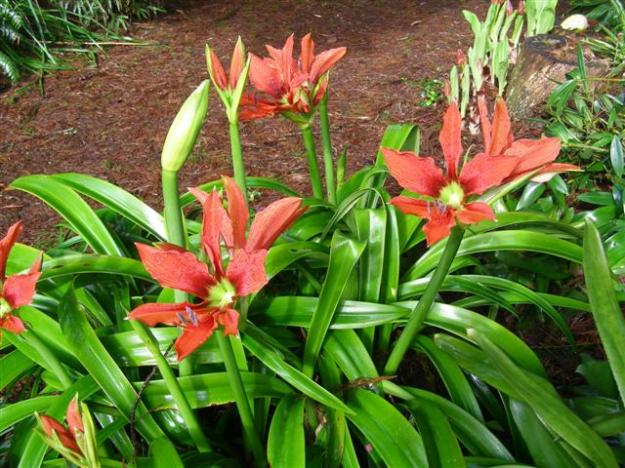
Big clumps of Hippeastrum aulicum are just coming in to flower in our woodland

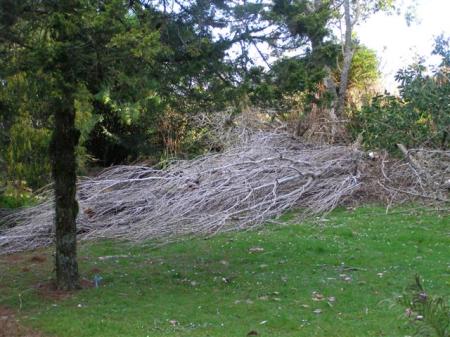
Eighty feet of fallen Lombardy

TIKORANGI NOTES:

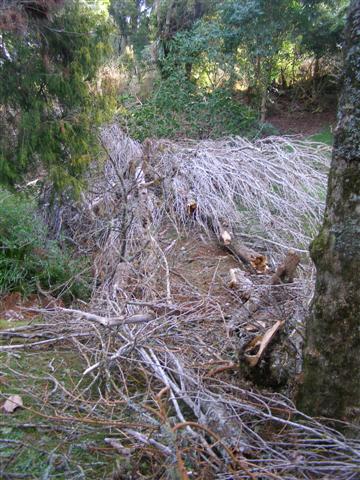
The sad sight of a very tall Lombardy poplar lying on the ground has preoccupied us this week. We were standing in the shed last Friday watching a sudden wind hit our huge pine trees and as it was calm on the other side, we briefly thought that maybe one of the dreaded little tornadoes that can wreak havoc here was hitting us. Mark was wondering if he should shut the roller doors of the shed – is it better to close a building off or to allow air flow in a tornado? Fortunately it was not a tornado but it was quite fierce, very shortlived and so noisy that we didn’t even hear the tree fall. We found it the next day, upon the ground. All 80 plus feet (about 25 metres or so) which can make quite a mess. The toll included a big Loderi Rhododendron King George and about half of the Magnolia campbellii which is fifty years old. It has opened up our view of Mount Taranaki a little more but we are sad about campbellii and King George. We don’t care about the poplar which is no loss, but now we are worried about the remaining two poplars of similar stature.

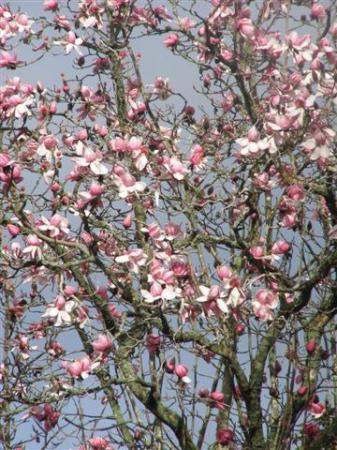
Half the campbellii - killed in action
Half the campbellii – killed in action

Shame the poplar is no good for firewood

Taking a second look at camellias as garden plants

Make your old camellia bushes work at more than one level as garden plants

Make your old camellia bushes work at more than one level as garden plants

The scourge of camellia petal blight continues unabated. This was one disease we could have done without in this country and the sad thing is that when it was first discovered in Wellington, it was limited to two or three locations. Had all the infected plants been incinerated immediately, this nasty fungal ailment may have been eradicated. So if you have been looking at your camellias, particularly the most common japonica types (which takes in most of the lovely formals and the really showy blooms), and thinking that their display ain’t what it used to be, you are right.

We have always had botrytis in this country which can turn blooms to a dark mush but is generally not devastating. Modern camellias have been bred to be self grooming – in other words they drop spent flowers rather than holding them onto the bush and giving that unattractive look of some of the very old varieties still around.The trouble with camellia petal blight is that it seems to glue the flower to the plant so it defeats the self grooming process.
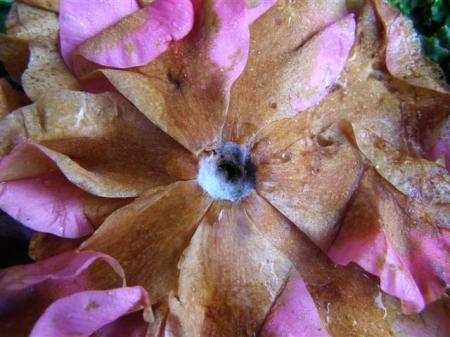
The sad sight of camellia petal blight

The sad sight of camellia petal blight

If you are wondering whether you have camellia petal blight, I would be very surprised to hear that you haven’t. It is unstoppable and untreatable. Well, you can treat your plants but you will just get reinfected. Being a fungus, the blight is spread from spore and I recall reading of it being tracked 5km on the wind. So if anybody has a camellia bush within a 5km radius of you, you are in trouble. If you go out and look at your camellias, you will likely find beautiful blooms with a nasty brown stain starting across some of the petals. Within about 24 hours, that bloom will have turned to a light brown colour. If you pull off the flower, turn it over and pull off the calyx on the back (that is the little green hat that holds all the petals together in the middle), you will find the tell-tale ring of white powdery web. That is camellia petal blight. If it is blacky-grey and the spoiled bloom is a darker brown, it is botrytis.

Camellias used to be second only to roses for the volume sold in this country. The bottom has pretty much fallen out of the market now and the volume sold is a fraction of what it used to be. I married in to a leading camellia family. Les Jury, Mark’s uncle, is still remembered internationally, long after his death nearly 30 years ago, for his huge contribution to camellias including such classics as Jury’s Yellow, Anticipation, Ballet Queen, Elegant Beauty and so many more. In his day, Felix Jury was far better known for his beautiful camellias than his magnolias – Waterlily, Dreamboat, Mimosa Jury, Rose Bouquet, Itty Bit and many others. Mark carried the mantle, encouraged by both his uncle and his father, until the day he heard that petal blight was in this country. He ceased all work on breeding camellias immediately and it is only now, well over a decade later, that he is starting to see directions he can take.

All this is such a shame because the camellia remains an enormously useful plant. It is just that we have traditionally seen it primarily as a plant to grow for its flowers. With the huge hit on its flower power, we are tending to ignore the other possibilities and positive aspects.

  • Camellias are unrivalled as a source of nectar for our tui and bellbirds through the winter. Singles and semi doubles with visible stamens will bring the birds to your garden.
  • Camellias remain fantastic hedging. They will sprout again from bare wood and most will tolerate dreaded salt winds. They only need trimming twice a year for a formal hedge and almost never for an informal look or windbreak. For our money, they remain one of the very best hedging options.
  • Autumn flowering sasanqua camellias do not get hit by petal blight. Not at all, that we have ever seen or heard.
  • Red flowered camellias still get petal blight but it doesn’t show up anywhere near as badly. The showiest displays we have had this winter have mostly been from red flowered varieties.
  • Reticulata camellias are commonly in shades of red and have such big flowers that they have sufficient weight to drop cleanly. They continue to put on a splendid display.
  • The little miniatures and single flowered types have many more buds and flowers and, by their very nature, each bloom only lasts a few days so they are usually over before petal blight gets to be unsightly.
  • Camellias are an unsung hero for topiary and clipping. If you get away from the few with really grungy colour and a tendency to turn murky yellow, most camellias have terrific foliage.

Clipping and shaping has never featured large in this country. While we may say that this is because we prefer a more natural look, gardening by its very character is an exercise in controlling and manipulating nature. It is more likely that we lack the labour force to clip extensively and we lack the cultural context to create entire scenes from clipped plants in the traditions of England, Italy, France, China and Japan. While yew and buxus are common clipping candidates overseas, the ubiquitous camellias grow so very well here that they give us an unexpected option. They are evergreen and not generally fussy. They sprout from bare wood so you can cut them back hard and they are very forgiving if you get the cuts in the wrong place. Clipping encourages bushier growth. Many people have large, mature specimens in their gardens so there is an abundance of raw material out there. The flowers then become a bonus not the prime reason for growing the plant. You will still get lovely flowers, just not as many as you used to and they won’t last as long.

If you have gone off your camellias, try getting out there and clipping before you cut them out. Balls, pillars, obelisks, clouds, free form shapes – there are lots of options if peacocks, animals and other birds do not appeal. A camellia bush can continue to justify its place in the garden if you make it work at levels other than just being a pretty flowering shrub.

In the Garden this week: September 10, 2010

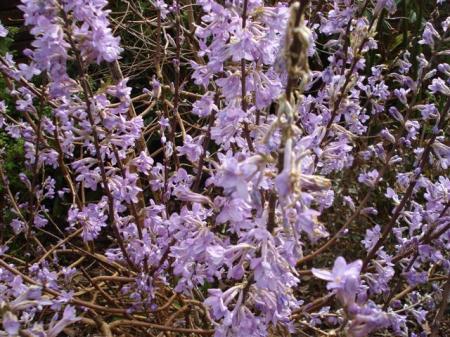
Daphne genkwa looked fantastic last year - but died when I pruned it after flowering

Daphne genkwa looked fantastic last year - but died when I pruned it after flowering

  • The common daphne is odora and does not appreciate hard pruning. Dainty Daphne x burkwoodii can also be touchy. Keep pruning to a light haircut each year rather than a major cut-back. The Himalayan Daphne bholua has a more robust constitution and can get rather large, scruffy and leggy if left to its own devices. This one you can cut back hard. Now is the time to prune those daphnes which are finishing their winter flowering. The beautiful blue Daphne genkwa will be coming into flower soon – don’t even prune this one. I killed a splendid, established specimen last year by cutting it back after flowering.
  • If you can reduce your number of slugs and snails now, you will be reducing the breeding population when they get frisky as spring temperatures warm up.
  • Keep an eye on emerging hostas because you can be sure that all slugs and snails are watching closely for this manna from the soil. Jenny Oakley from Manaia swears by the use of crushed eggshells sprinkled on the crown of the hosta before the leaves unfurl to deter early munchers though she also follows up with bait later. Ringing the plants in sand, coffee grounds, sawdust or anything gritty is said to discourage some slimy predators though Mark is sceptical of this claim. However, the bakers bran liberally sprinkled around plants under attack worked a treat and is an environmentally friendly technique – the birds eat the bloated slugs and snails.
  • It is the last chance to get a crop of late broad beans sown. If you leave it any later, it won’t be worth the effort and space. Get carrots sown soon. Don’t fertilise carrots but they need well cultivated soil to get their roots down. Fresh animal manure is a particular no-no for carrots and causes forking of the carrot and too much leafy top growth.
  • If you want to plant yams, you can be setting them to sprout in trays now. Yams are frost tender but need a long growing season (five to six months) so you want to get them started as soon as the danger of late frosts is over.
  • You can continue lifting and dividing perennials as they come into growth because they have the energy to overcome the havoc and destruction you wreak on their root systems and crowns. If you have many to do, prioritise the spring perennials and then follow up with summer ones like coreopsis, asters and chrysanthemums.