- Leave spring bulbs to die down at their own speed, no matter how untidy they look. Resist the temptation to tie the foliage in knots because this interferes with the plant’s ability to build up its energy for next season’s appearance. If flopping foliage is a real problem, construct a low trellis out of twigs or old bamboo stakes criss-crossed to keep the plants tidier.
- Keep earthing up potatoes (piling on the garden soil to build ever higher mounds) to stop the tubers going green. Both potatoes and broad beans may need a copper spray to stop rust or blight taking hold.
- Basil can be started now but it will need to be kept warm for a few weeks now before planting out in the garden.
- Parsley can be sown any time but if you lack a perpetual supply self seeding down and keeping you going when green vegetables are in short supply, you can sow it down. A visiting expert here advocates sowing the seed, covering it and then head out with jug of boiling water and pour it over the row to aid germination.
- It is the last chance for getting a crop of Florence fennel (finocchio) in for eating over summer. After this, you are best to leave it until late summer or early autumn and sow then for winter harvest because it will tend to bolt to seed too early over summer. We rate this as a fantastically versatile vegetable and are working to increase production on a regular basis here.
- Time is running out for winter/spring pruning. Shortly it will be time to put away all the loppers and the cutters until the summer prune of cherry trees calls.
Plant Collector: Anopterus glandulosa
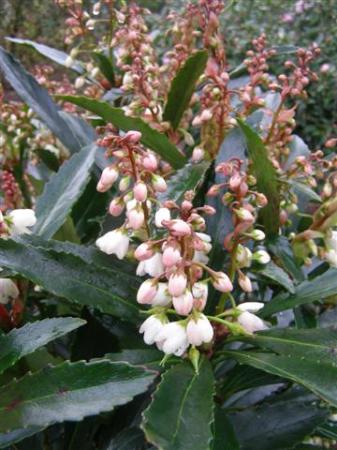
Anopterus glandulosa - a slow growing treasure
It did take a long time for our Anopterus glandulosa to do much other than just sit and put up a few racemes of flowers each spring but eventually it grew a little and after a decade (possibly more than a decade, in fact) it just gets better every year. Its flowers look like lily-of-the-valley but this is an evergreen shrub from Tasmania. The literature tells me it can make a small tree but at the rate it is growing, that might be when our grandchildren (who have yet to make an appearance) are adults. I can see why it is rated as rare because this is not a quick turn-over shrub for the trade so if you ever see it offered for sale, grab it because you may be looking a long time to find it again. The leaves are long, leathery, shiny dark green with saw-toothed edges. Even without its flowers, it is a tidy little evergreen shrub which keeps good form without needing pruning and then for many weeks in spring, it is adorned with its racemes of pink buds opening to white flowers.
There are apparently only two species of anopterus and the other member of the family must be of negligible merit because most of the references only record glandulosa. They are closely related to escallonias which readers may know for a hedging option. If you find somebody with an anopterus, you may be able to raise it successfully from seed.
Plant Collector: Calanthe orchids

Calanthe orchids - happy growing in our woodland
Orchids are one of the largest and most complex groups in the plant world – fearfully complicated to try and navigate your way through. Our interest here is in orchids as garden plants and one of the star performers is the calanthe family. These are called ground orchids or terrestrial orchids – in other words they are happy to grow in good garden soil. In the right conditions, you can plant them and leave them alone for many years where they just gently build up and make a better display with more flower spikes. There are well over 150 different species of calanthes and inevitably some will be better and showier as garden plants in our conditions than others. There is a bit of a question mark over the correct name for this lovely soft yellow one- probably a form of sieboldii or striata. Note: I have now been informed that in fact it is Calanthe ‘Higo’ (C. sieboldii x C. aristulifera) which makes sense to us.
Most of the calanthes come from tropical and sub tropical Asia and are generally evergreen. Presumably the forms thriving with us are the sub tropical types because tropical, we are not. We use them as woodland plants and have only once ever had them tickled up by a vicious frost. Their only downside is that they are quite leafy and the foliage hangs on for grim death long after it has become tatty and shredded. They benefit from an occasional tidy up. The new growth comes in spring and is quite lush so that every year garden visitors ask us which variety the yellow flowered hosta is.
Probably because orchids are such a complex plant family, orchid societies continue to grow, show and share when many other specialist groups have gone out of existence. They are a friendly and knowledgeable bunch and if you want to start building up a collection, either joining the local branch or visiting their shows is the best place to start.
In the garden this week: October 1, 2010
- Ideally you should have finished your spring fertilising round so give this priority if you haven’t.
- Broad beans need to be staked to stop them from falling over. Pinch out the tops to stop them getting too tall. These tender tops are delicious eaten as fresh greens.
- Peas also need something to climb up. We tend to use a stretch of wire netting held by wooden stakes at each end so these frames can be moved around the vegetable garden as required – functional but not aesthetic. Woven willow supports or bamboo structures look more ornamental but take more time.
- As evergreen azaleas finish flowering, they can be clipped or pruned and shaped – with hedgeclippers if you wish. These are tough plants that will shoot again from bare wood so you can prune hard if they are looking scruffy or too leggy. You can even cut them off just above ground level if you are into drastic rejuvenation.
- If you have forgotten about your feijoa bushes, you can still get in and give them a thin and a feed. Don’t clip off all the tips or you will be cutting off next year’s potential harvest – thin out entire branches if necessary. A more open, airy bushy will set bigger fruit.
- You can get your first crop of dwarf beans and runner beans sown in all but the coldest areas.
- Ideally you should have dug over the areas of the vegetable garden which are to be planted out in a few weeks. Certainly you should have dug in any green crops. If you use animal manures, get them incorporated now so they get dispersed in the soil before you start planting. Keep raking over the freshly dug areas to stop compacting and to disturb the freshly germinating weeds.
Propagating cordylines: step-by step guide
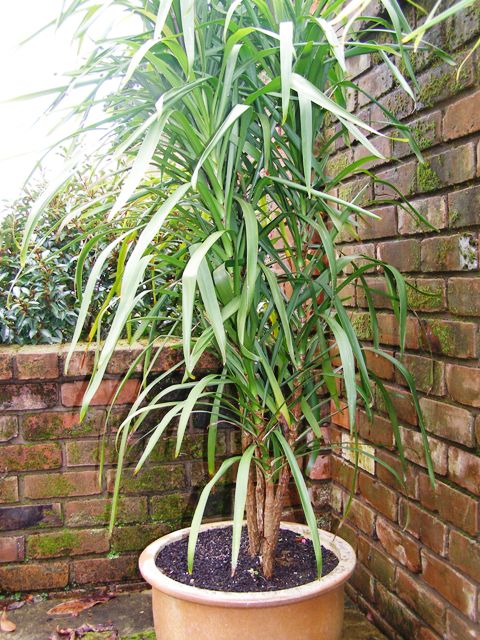
1) Most cordylines or cabbage trees grow a solid, fleshy tap root below the soil and it is easy to increase plants from sections of these roots, commonly called toes. This particular cordyline is an Australian species, stricta, but it shows similar structure below ground to our most common NZ cordyline which is confusingly named Cordyline australis.
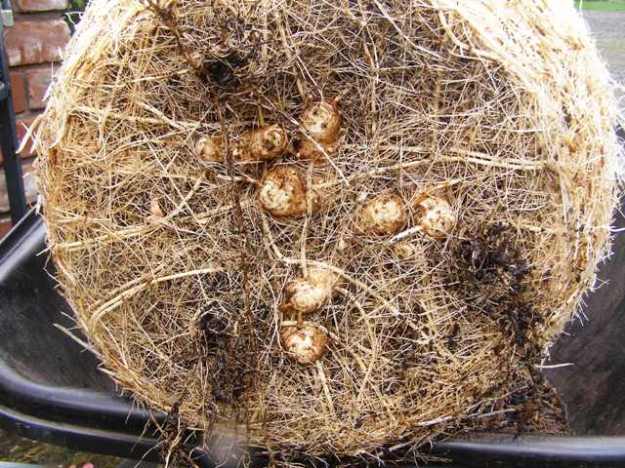
2) Taking the toes off this cordyline will reduce the size of the root mass and allow me to replant it back to the same pot with fresh mix and fertiliser. Container plants are best repotted annually if possible and will generally deteriorate badly if you leave them any longer than three years without repotting.
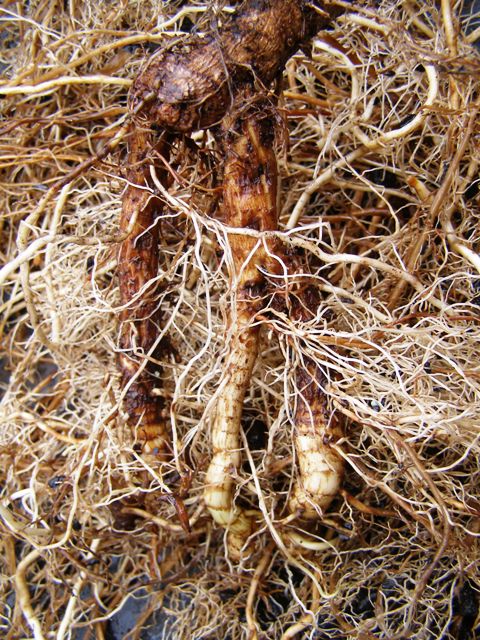
3) Shake off the mix. Wash it off if necessary so you can see what is there. The same steps apply if you are lifting a cordyline out of the garden. We have never tried taking the toes off a large, established plant while leaving it in the ground although you can presumably do it without killing the plant because Maori used to harvest the toes as kauru – a form of starch similar to root vegetables. Try digging in from one side of the plant only if you plan to try this.
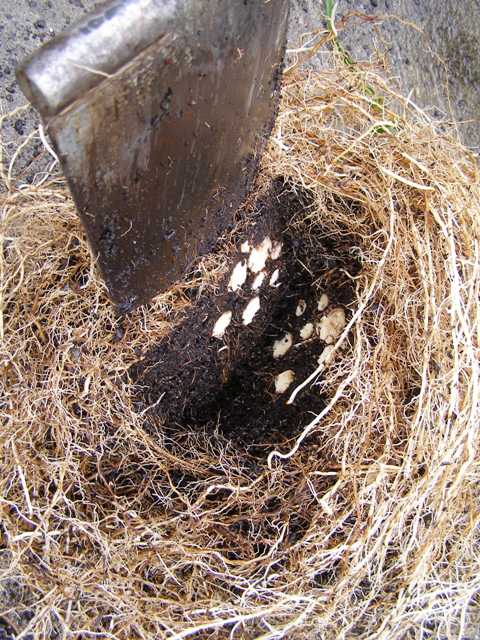
4) Because the toes can be very tough, a sharp spade or saw may be needed to cut the lower section off. We cut around 15cm off the bottom of the central root system of the plant.
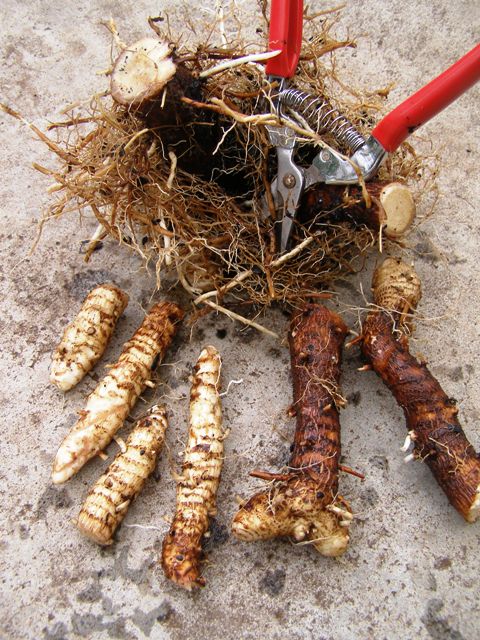
5) If you wash the cut section, you are better able to see what you are doing. Cut the roots off the toes. They will die back anyway. If you want plenty of plants, cut the biggest toes into sections but don’t go much smaller than about 3cm in length.
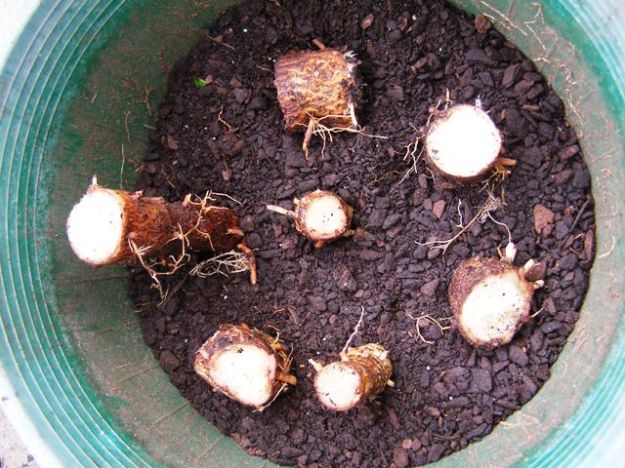
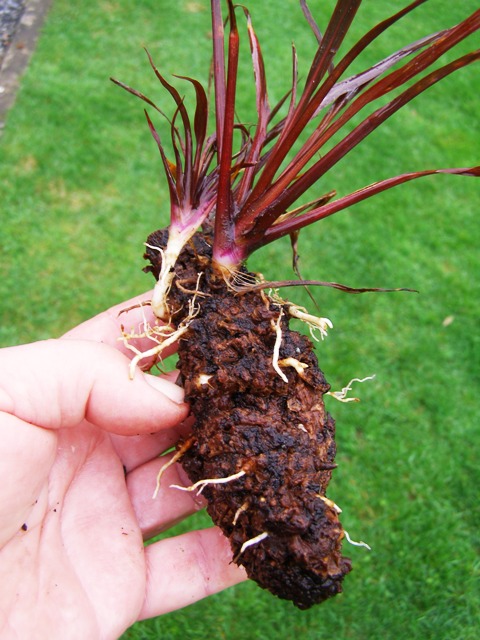
6) Pot the toes fairly close to the surface, either flat or on end (cut side up on the whole toes because that is the top) in seed raising mix (low nutrient potting mix). Do not let them get too wet or they may rot. Within a few months, they will be sprouting afresh as shown on this toe of Cordyline Red Fountain.