In the Garden: Friday 9 July, 2010

Our citrus trees actually do save us money

Our citrus trees actually do save us money

  • Avoid stomping around the garden or lawn where you have spring bulbs. It is a hard life already for a bulb, pushing through cold, wet soils without being stomped back into the ground. Even worse, some only put up one flowering spike and if you break that off, you are sunk for this season’s display.
  • Prune and keep pruning. I am halfway through the roses but have finished the wisterias. The hydrangeas have been started. As luculias finish flowering, it is the best time to prune and feed them because their instinct is to spring into growth. It doesn’t pay to be too brutal with luculias – they can up and die on you. Regular pinching out or cautious renovation is recommended. They are not difficult to root from cuttings in late spring or early summer if you want to start afresh.
  • Sasanqua camellias can be pruned and shaped as they finish flowering. This includes sasanqua hedges but it won’t matter if you leave it until spring.
  • With our comparatively mild winters, we can lift and divide dormant perennials such as hostas all winter and spring. In cold climates where there is no growth over winter, recommended practice is to leave it until temperatures start to warm in spring (presumably divisions can rot in completely dormant, cold and wet conditions) – hence the different advice in books and TV gardening programmes from England. However it is wise to leave grasses, reeds, rushes and similar plants until they are growing again because they can be surprisingly touchy.
  • You can at least be planting your fruit trees which are now available in abundance. Put in the sure-fire crops first and go to the riskier, more exotic options if you have space remaining. Apples, pears, plums and feijoas are extremely reliable whereas it can be hit and mostly miss with peaches, nectarines, cherries and apricots. In mild coastal areas, citrus and avocados are well worth a try – for us they are the crops that save us significant money. Only buy named cultivars of feijoas – the cheapie plants are patchy seedlings for hedging and may never even fruit.
  • Get a winter strength copper spray onto deciduous fruit trees, citrus and roses as a winter clean up. This will reduce disease and lichen.
  • I have a new definition of a gardening optimist – the person who googled “sub tropical fruits Southland”. Southland may be many things, but sub tropical is not one of them.

Countdown to Festival, July 9, 2010

At Paradiso in town, creative veg gardener, Denise Wood, thinks this may be her last year opening for Festival so is determined to make the most of it. She is preparing the ground now for sowing and planting as early as possible and her baskets in varied colours are coming along well. The new theme in her garden this year is pink flamingos but I don’t think we are talking real ones here. Denise donates all proceeds from her open garden to animal rescue.

I recall crowning Havenview’s Maree Rowe as the compost queen last year. She reports this week that she feels her life is compost, compost, compost, moving endless barrow loads of it around her fruit and vegetable plants. I think you can be pretty confident that she makes her own compost and it does not come in a heavy duty plastic bag from any garden retailer. She has just moved her chooks out of the second hot house where they had been happily scratching around, ridding it of bugs and pests while enriching it with their own contributions – she prides herself on good natural controls. Maree has now put in a layer of silage and compost and the house is ready for planting. She is also busy planting riparian plants along the areas of waterway on the farm and wishing the rain would stop for longer.

Around the coast, Vandys’ Maria van der Poel is highly motivated and out with her spade moving plants around. In fact, some have several rides in the wheelbarrow before she feels she has it right but the many clivias her sister in law gave her found a home immediately and filled a shaded area. They are such a convenient shade plant, are clivias, as long as you don’t have severe frosts. Maria is delighted at her new garden and storage shed, which freed her instantly from competition for space in the woodshed, and she is revelling in her new-found orderly storage. Next she is hoping that her new hot house is going to eventuate and make wintering over cuttings and germinating seed much easier. However, she is sad to see her favourite garden centre, The Girlz, closing down and says she will miss being able to pop in there on her way home down the coast.

At La Rosaleda, Coleen Peri is one of the first gardeners who are serious about their roses to report that she has completed the annual prune. In her own words: “… a fine day!!! Was out there and finished the rose pruning, such relief. This is always the time of year I question my sanity with having over 300 roses – I am battered, scratched and bruised, but satisfied! I tend to clear the bases of the roses and get rid of weeds in the immediate vicinity at the same time as pruning…. The larger roses are always the hardest – Sally Holmes is my nemesis this time of year, with 23 of them all along the pool fence, right at the back of the borders – I have to fight my way through the roses in front just to get to them, then manoeuvre myself amongst the very closely planted thugs – definitely not a task for the faint hearted. I used to really give them a good hard prune, but they have won the battle and now I prune fairly lightly just to keep them in check (size wise and to a nice shape), and to get rid of any significant dead wood. Oh well, come summer all will be forgiven!”

In Central Taranaki, Merleswood’s Erica Jago is feeling cheerful at the sight of spring bulbs appearing (her daffodil lawns are a feature) and with the shortest day now past, spring seems to be waiting in the wings. She spent a goodly part of June tackling her seventy metre hedge of the rugosa rose “Scabrosa”, pruning it and taking out all the dead wood. This was a much heavier prune and clean up than usual and she is delighted with the effect of freshening up the front garden and allowing views through to the mature rhododendrons behind. She comments that her snake bark maple, Acer Esk Flamingo is only now dropping the last of its autumn leaves and it has provided a spectacular autumn finale. This is a good example of how much better autumn colour is inland where the change in temperature is sharper. The Acer Esk Flamingo I can see out of my window is very pretty in spring but its autumn colour is non-existent in our milder, coastal conditions.

Here at Tikorangi, we have been enjoying a superior class of morning tea. Our neighbours, Chris and Lloyd, are doing food for our garden visitors during Festival weekends and Chris has been refining her recipe choices and trying them out on us. She is accomplished at baking and we think quite capable of holding her own in those ghastly TV competitions. The pumpkin and prune cake was particularly delicious though I also nurse fond memories of her Greek lemon cake which was a tour de force. I, alas, am not a good baker but at least we are an appreciative tasting panel.

Camellia Diary number 3: July 3, 2010

Click to see all Camellia diary entries

Click on the Camellia diary logo above to see all diary entries

July may see days getting a little longer but it also tends to herald the worst of our winter weather. However as chill, grey days can be interspersed, as today and indeed, last weekend, with positively mild days when it is possible to garden comfortably and shed layers of clothing, the camellias flower on undeterred.

The sasanquas are drawing to the end of their season but Elfin Rose, who opened her first blooms at the very end of March, is still a significant patch of lolly pink and dark forest green. Three months of flowering is better than most of the other sasanquas manage. Silver Dollar also just gets better every year and is excelling with an extended flowering season. We think Silver Dollar, being lower and slower growing, would make a good hedge. Alas were it not for the wonderful shape and maturity of Mine No Yuki, it would have had the chop by now. It does not justify its place here as a flowering plant where the pristine white blooms turn to brown mush in our rains.

The ever faithful Camellia Waterlily

The japonicas are just starting – the first flowers came on good old Waterlily, one of the first camellias named here by Felix. The original plant is pretty sizeable now – maybe six metres – but the early flowers are as lovely as ever. Half sister, Softly (another saluenensis hybrid) is also showing plenty of open bloom. In the class of pale formals, Softly shows good weather resistance. We went on a magnolia tour in northern Italy a few years ago and the timing coincided with the peak of their japonica display, and what a display. We soon worked out that camellias in that climate mass flower over a much shorter period of time. Here, ours flower for much longer but without that oomph all at once.

The lovely species yuhsienensis

Compact C. drupifera, planted here with burgundy aeonium and cordyline

In the species, C.gauchowensis is looking lovely but the star this week is the compact C.drupifera. Or maybe C.yuhsienensis. It is hard to decide – all look lovely with pristine white blooms. Yuhsienensis takes a bit of grooming to stay looking its best but it is such a lovely camellia. We have a row of about 50 plants in our open ground area which we are still debating about using as a hedge. Puniceiflora continues flowering – puny flowers but still with a simple, small charm.

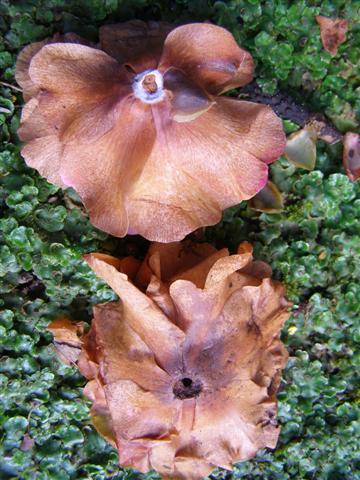
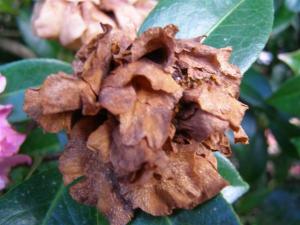
Alas I found the disconcerting sight of the first instance of the dreaded camellia petal blight at the very beginning of June (about June 2, from memory). It just seems to get earlier every year but it is not yet showing up badly on garden plants so I will return to the topic later when it is no longer possible to ignore it.

Tikorangi Notes: July 2, 2010

Latest posts:
1) The winter flowering gem, Cyclamen coum ssp caucasicum – well suited to our temperate sea level conditions.
2) It is a funny thing that satire can get more response than a tightly argued piece. The response to this morning’s column published in the Taranaki Daily News on the topic of total public funding for Pukeiti Rhododendron Trust has been both positive and also considerably greater than I would expect from a usual fortnightly column.
3) It may be mid winter, but that does not mean gardening stops and we give our weekly hints on tasks which can be done.

The harbingers of spring - galanthus

TIKORANGI NOTES
The first of the snowdrops, Galanthus elwesii, are now open and the daintier Galanthus S. Arnott are not far behind. These winter joys may be fleeting, but it is hard to find a simpler or lovelier winter picture. That said, we never get snow here. Never. While daytime temperatures in winter can drop down to single digits (as low as 8 degrees Celsius on a bitter cold day), they are interspersed with glorious days like today – bright sun, blue as blue sky and temps around C16. That is not bad for a temperate climate in the depths of winter, especially as it wasn’t preceded by a frost. That is why we garden for the full twelve months of the year here.

Flowering this week: Cyclamen coum ssp. caucasicum

The charm on the winter flowering cyclamen

These winter flowering cyclamen are a delight and over the years we have increased their numbers so that we can use them to carpet beneath the light canopies of large evergreen azaleas (also coming in to flower now) and in open woodland areas. They have a remarkably long flowering season of months but don’t hold on to their foliage very long after flowering and their corms are quite small, so they discreetly disappear amongst the leaf litter when dormant.

Technically these go by the tongue twisting name of Cyclamen coum ssp caucasicum (the ssp stands for sub-species) and the caucasicums are a great deal more successful in our conditions than the straight coum. They hail from a wide area along the western edge of the Black Sea from Georgia southwards through Turkey to Northern Iran, including the Caucasus Ranges, where they can apparently be found growing from sea-level up to 2000 metres. It is the tolerance of sea level which means they will do with us where we don’t get an alpine chill. The Cyclamen Society (based in Britain) have been sending expeditions for years to try and establish the geographic distribution of the different forms of coum but the political instability of the area poses difficulties. The British have a wonderful history, second to none, of intrepid plant hunting and botanical research but they also have a healthy survival instinct. You won’t often see any forms of Cyclamen coum offered for sale, but if you know of somebody with some plants, they are easy to raise from fresh seed.