There are no shortcuts when it comes to notable trees in the landscape

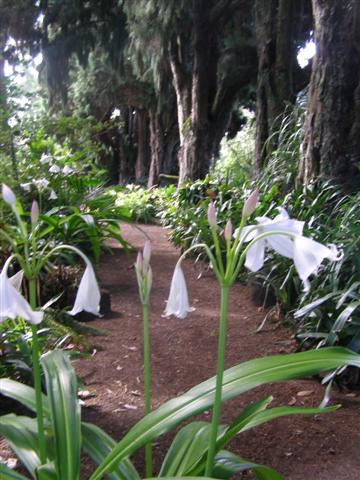
A great grandfather's legacy - the canopy of rimu trees planted in 1880 as a shelter belt.

A great grandfather's legacy - the canopy of rimu trees planted in 1880 as a shelter belt.

New Zealand is a windy country. It seems self evident but it wasn’t until I started travelling overseas that I realised that the wind we have learned to live with here is not the experience of many. But you just have to look at a map and see our long thin islands surrounded by vast bodies of ocean and it is hardly a surprise that we have on shore winds, off shore winds, winds from the south, the north, the east and the west. It is the norm and consequently shelter belts in rural areas are also part of our landscape. Australians have commented to me about the predominance of clipped hedging in our garden landscape too and a lot of that has to do with minimising wind.

Many readers will be aware that hedges and plants are better at dissipating the blast of wind than a solid barrier. Walls and fences can funnel the wind up and over, protecting only the area in the immediate lea of the barrier because the air then flows down again. Even then, you are only protecting for the height of the wall so any time a plant gets its head above, it catches the full blast.

But it is not hedging for urban gardens that I have been thinking about, rather the benefits of a bit of creative thinking and plantsmanship when it comes to utility shelter belts. Here we benefit greatly from the vision of Mark’s great grandfather when he settled here 130 years ago. Presumably Tikorangi had already been cleared of most of its native tawa forest cover because the first thing Thomas Jury did was to get in and plant some shelter from the prevailing winds. Those trees give us our stately garden avenues today and we have learned much from looking at them. The more spectacular is the rimu avenue, often likened by visitors to the effect of a vaulted cathedral ceiling. Now those trees give us an environment which is one of the most special areas of our garden – and as it has taken well over a century to reach this stature, it is not easily replicated.

Our other avenue comprises mere pine trees, but pines of huge grandaddy stature – towering over 40 metres high and a mixed blessing. At ground level they give us wonderful gnarled old trunks, again in rows because of course they started life as a shelter belt. Above is a little more problematic with falling pine cones and a few swinging branches but nobody has been injured so far. Both avenues continue to perform their initial function – they break the wind and shelter the garden.

How many of today’s shelter belts will still be around in another century? And how many are planted in trees with the potential to add significant impact to the landscape? Leightons Green, phebalium, nasty yellow conifers or pittosporumns … I don’t think so.
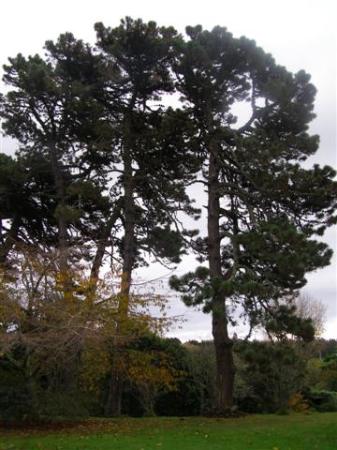
After 130 years, our Pinus muricata are somewhat more compact than the P. radiata windbreak trees of the same vintage.

After 130 years, our Pinus muricata are somewhat more compact than the P. radiata windbreak trees of the same vintage.

It is of course Arbor Day tomorrow and that is a good time to make some shelter belt resolutions. These wind breaks do not have to be 100% cheap, utility and uniform. Dropping it to 90% cheap, utility and uniform is fine and there is the opportunity to use these shorter term plants of little or no aesthetic value to act as nurse trees for the long term landscape trees. For who will plant the rimu, totara, araucaria (Norfolk Island pines, monkey puzzle and the like, along with our own kauri), picea, abies, tawa, beech, oaks and other splendid trees with the potential for stature and longevity? As the size of town sections grows ever smaller, the need to continue planting potentially large trees in positions where they have the opportunity to reach maturity becomes correspondingly more important. Owners of lifestyle blocks have a chance to make a significant long term contribution and leave a worthwhile legacy if they just plant some decent trees. It is all very well thinking farmers should do it. Some do, but you can’t just plant trees in paddocks which are grazed. Trees have to be fenced off and that is very expensive and fiddly on a large scale. By their very nature, shelter belts are double fenced and planting is the easy part.

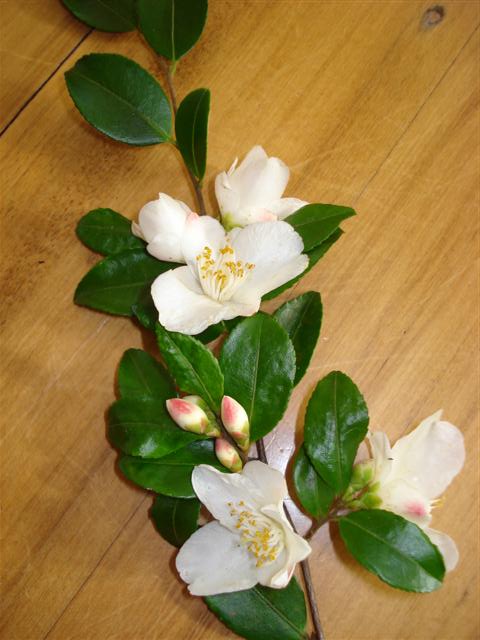
When it came to our own roadside shelter belts some fifteen years ago, Mark went for the mixed and layered approach. Quick, cheap cover came from expendable alders. Long term landscape trees are mostly kauri, rimu and totara, planted perhaps for our grandchildren and great grandchildren. Then, because we don’t have to buy the plants, seasonal impact has been added with magnolias – both showy deciduous types and larger growing evergreen michelias. The final layer is the roadside camellias – larger growing varieties surplus to garden requirements. They are a bit of a seasonal statement, some of our shelter belts, but also practical and planted with an eye to the long term future.

Many years ago, I wrote a column advocating that every person should plant at least one good, long term, landscape tree in a position where it has the chance to reach maturity. I recall two responses. The first was: “What, only one?” Fortunately a few will plant many but that only compensates for some of those people who will never, ever plant a decent tree in their entire lifetime. The second person castigated me for being too honest about how large a large tree will eventually grow. “We will never sell any if people know how big they can get,” she said.

In my books, landscape trees are large, handsome and long lived. These are not to be confused with pretty but low-grade, short term, quick impact trees favoured in most home gardens – the Albizia julibrissin, flowering cherries, robinias and their ilk. As a general rule, fruit trees will never make a landscape tree either. By definition, any plant with the telltale words compact or dwarf in the description will lack stature.

Our country is still somewhat raw and utility in our approach to trees. To many farmers, they are a waste of valuable grazing space and they get in the way of machinery in this heady world of high production but green desert farming. To many town dwellers, they block views and are messy. In a country with a tendency to cold houses, the shadow they cast is another black mark. Any tree of stature is measured in terms of timber potential, not landscape value. Compare that to the pride taken in the UK with their champion trees – those specimens judged to be the largest of their type in the country and awarded accordingly and in Europe where trees of ancient pedigree are venerated. I have seen the plane tree, now some 2500 years and definitely ailing, beneath which Hippocrates apparently sat to write the Hippocratic Oath. We have a long way to go yet here. Arbor Day would be a good place to start.
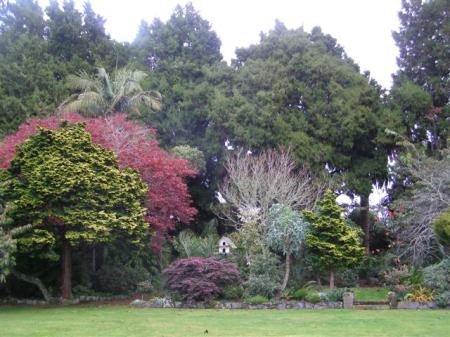
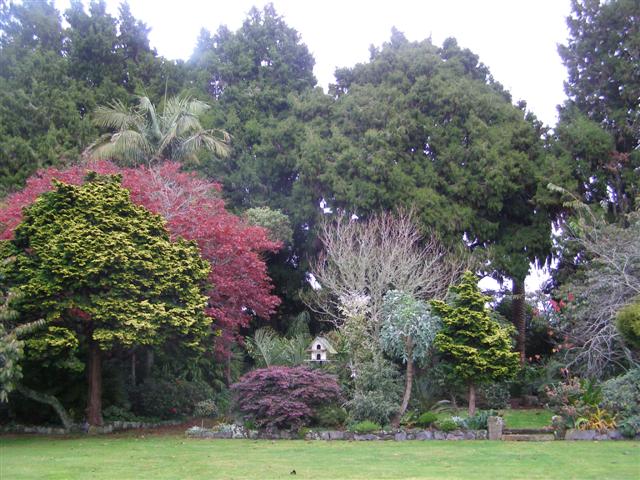
Rimu trees from 1880 in the background, mixed plantings from 1950 to now in the middle ground

Rimu trees from 1880 in the background, mixed plantings from 1950 to now in the middle ground

In the Garden: June 4, 2010

• Queen’s Birthday Weekend may herald the first arrival of new season’s rose plants in many garden centres but it also marks Arbor Day. Planting a tree will do more for the environment than planting a rose. If you can’t tell a good variety of tree from a cheap filler tree, then get some advice from somebody you trust.
• If you buy bare rooted roses (as opposed to ones in planter bags or pots), don’t let their roots dry out at any stage. Plant them immediately, trimming any ragged or damaged roots. Roses are best in full sun with rich, friable soil. Plants will have had a quick prune before being despatched from the nursery but you usually need to follow up with a tidying prune at some stage after planting. We will bravely tackle rose pruning made simple in a few weeks time in Outdoor Classroom.
• The recent run of dreary wet weather has meant that our soils are pretty waterlogged. It is a good rule of thumb to avoid walking on garden beds where possible, but even more important when soils are we. Many experienced vegetable gardeners keep a couple of long boards lying around. These can be handy to act as a straight edge for planting in rows but their primary use is to walk on when soils are wet. The board will disperse your weight and greatly reduces soil compaction. They should be used at all times in conditions with heavy soils which does not generally apply in Taranaki – think the mud and clay of Auckland, Manawatu or Dunedin and be grateful for our friable volcanic soils.
• If you have positions where you often take a shortcut across a garden or have to stand in the same spot in order to weed, think about placing a stepping stone or paving slab to stand on to avoid continual compaction.
• Lilies of most descriptions, rhodohypoxis and pleione orchids are all dying down now and can be lifted and divided if required. With pleiones, the large central bulb becomes mushy and black, never to appear again and it is the green back bulbs which will grow and flower.
• Rocket much prefers cooler weather (it bolts straight to seed in summer) and makes a good winter crop in pots or a seed tray.
• Bringing outdoor furniture in under cover for winter greatly extends its life expectancy. We know this from experience.

Tikorangi Notes: 28 May, 2010

Latest posts:
1) 28 May, 2010: The banana crop of 2010 revealed but really about our recommended tasks in the garden this week.
2) 28 May, 2010: The wonderful lemon fragrance of Backhousia citriodora.
3) 28 May, 2010: More about bananas – our Outdoor Classroom on thinning to get better crops.
4) 28 May 2010: The burgundy coloured loropetalums, China Pink in our case, are a splendid additon to our gardens here.
5) 26 May, 2010: The story of Cordyline Red Fountain.

The persimmon in autumn is more about looks than taste, for us at least

The persimmon in autumn is more about looks than taste, for us at least

As autumn morphs into winter here (to paraphrase our inimitable television weather presenter), we seem to be doing the Squirrel Nutkin impersonation and following a food theme. We aim to be self sufficient in vegetables and most fruit – I say aim, some years we get closer than others. But with only two of us left at home these days, I don’t have to resort to buying much fresh produce at all.

One of the edible crops we grow which we rarely eat ourselves is the highly ornamental persimmon which looks fantastically decorative in the autumn. This is an elderly astringent variety which means one needs to wait until it so ripe it is nearly rotting before it becomes palatable. Even at that stage, I only like the jelly-like segments at the very centre and find the outer flesh rather clarty and sticky. I am sure it would make an excellent gelato, icecream or granita but none of these appeal in the chill of late autumn. It is possible to buy non-astringent fruit and plants which can apparently be eaten crisp, like an apple, but I have yet to bring myself to buy one when we have all these going to waste at home. Except that they are not really going to waste because they bring us a great deal of pleasure over many weeks just adorning the bare branches of the tree.

In the Garden: May 28, 2010

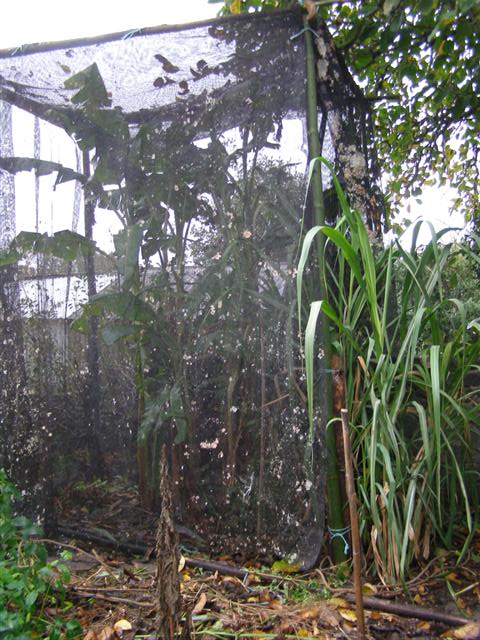
The banana crop this year was particularly disappointing. Mark took the teasing in good heart and blames a few severe frosts last year at a time when we were overseas

• It is time to batten down the hatches for winter. If you have frost tender plants you need to get under cover, don’t delay. Mark spent the better part of the weekend building a Rolls Royce protective shield for his fruiting bananas, so determined is he to get a good crop through next summer. Reduce watering of house plants and move sensitive plants off window sills. Never let them sit in water (the fastest killer of African violets) and remove saucers from beneath outdoor container plants.
• Valiantly eating my way, mostly singlehandedly, through the feijoa crop, I can report that the fruit from the old fashioned Coolidgei is a great deal tastier than the more common Unique. As the fruiting season finishes, you can get in and do any pruning you think is required. This is an optional activity but I did notice in our Urenui days that the row of four very large plants on our boundary which were mostly shaped to a single leader with a canopy made gathering the fruit a great deal easier than our current bushier plants. If you only get pathetic little fruit, you probably have seedling grown hedging. You will need to buy a named variety if you want good sized fruit in the future. To extend the harvesting season, you will need to plant early, mid and late fruiting varieties – check www.feijoa.org.nz for recommendations. Most named varieties are self fertile.
• Mark is pleased to still be harvesting fresh corn and green beans. It has been a bit of a close-run thing on whether the last sowings will get through in time but there is no doubt that you can extend the season by successional plantings. We would be harvesting yams at this time, had they been planted last spring.
• Think garlic and shallot planting for the veg garden along with broad beans. It is the optimum time for all three crops. Garlic and shallots like really well cultivated and enriched soil but incorporate any animal manure and compost a few weeks in advance of planting to give it a chance to settle and mellow.
• Generally speaking, the next major planting push in the veg garden will not happen until August when temperatures start to rise again. Wise gardeners will try and keep weeds under control in the interim but you have basically left it too late for sowing green crops.
• Queen’s Birthday weekend is coming up soon – this is traditionally rose buying time when garden centres take delivery of new season’s crops. The timing of rose pruning is flexible. While gardeners in colder spots will want to delay pruning until later in winter, in warmer areas it is fine to prune any time from now through to the end of August.

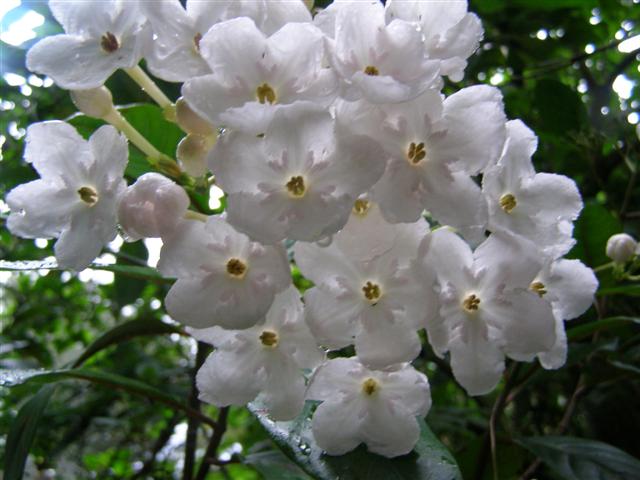
Flowering this week: Backhousia citriodora

The lemon fragrance from Backhousia citrodora has to be experienced to be believed

I would be the first to admit that the creamy fluffy floral clusters of this small(ish) tree are not showstoppers though they are pretty enough in their own way and make a change for autumn flowering. Nor are the long narrow leaves eye-catching though the red-brown velvety new growth is very tactile. In fact, the visuals of this plant are remarkably modest especially when you consider it is an Australian from the coastal rainforests of Queensland and northern New South Wales. The knock-you-dead aspect is the lemon fragrance when you crush or even brush past a leaf and the flowers also exude wafts of lemon. It has quite the most delicious lemon scent of any plant I know, bar none. This is apparently because Backhousia citriodora, commonly referred to as the lemon myrtle, has higher concentration of citral (lemon oils) than many other plants, including lemon verbena. In fact it is harvested commercially for lemon flavouring. I have to admit that I have not tried it in a culinary context but I will do so. You can apparently use the leaf whole (like a bay leaf) or chopped and it will give a lemon flavour without the problems of curdling, even in milk puddings. So I have read.

While not overly hardy, if given some protection when young, the backhousia should be able to grow throughout most of our area. I have seen it in a protected valley in Canberra Botanic Gardens where apparently it can survive frosts of 8 degrees. It is a member of the myrtle family and it can be clipped. This may be a plant to put alongside a bay tree in the vegetable garden or plant it by a path so you can pluck a leaf to sniff when you pass.