Plant of the week – Farfugium japonicum argenteum

A farfugium, these days, no longer a ligularia

I had to do some decoding of the name of this evergreen, clump-forming plant for woodland and shade areas. It used to be known as a ligularia (Ligularia tussilaginea argentea to be precise) but the family were reclassified as farfugiums. Argenteum’s siblings are far easier to build up so are a great deal more common – aureomaculatum which many of you will know as the Leopard ligularia (about which we are bit sniffy – looks as if it has been sprayed with Paraquat, is Mark’s opinion) and cristata (also known as crispatum) which looks a little like a tough oak-leafed lettuce. Argenteum is slow to increase so usually passed by in the nursery trade in favour of those which get a quicker turnaround. But none of the alternatives can light up a dark space quite like the startling white splashes on the often enormous leaves of this plant. The kidney-shaped leaves can reach up to half a metre across.

These plants are classified within the daisies, asteracea, and the flowers are typically nasty yellow things but you can cut them off. Argenteum prefers some shade (the white parts will burn in the sun) and grows in similar conditions to hostas – humus rich with adequate moisture. The beauty is that they keep their leaves all year and are largely impervious to slug and snail attack. The one defect they can suffer from is anthracnose which can result in little shot holes in the leaves. We don’t worry about it but if you want perfect leaves every time, you may need to use a fungicide occasionally.

In the Garden – May 7, 2010

• It is time to make the second cut to large plants you are wrenching (root pruning) in preparation for shifting when the rains finally come. You should have cut two sides several weeks ago. Make the remaining cuts now and let the plant rest for another couple of weeks before you cut any roots below and start the moving process. We remind again to keep the root ball as large as you can physically manage. You can still shift plants that haven’t been wrenched but it does help plant health to do the preparatory work.
• Alas winter is just around the corner and motivation for intensive gardening can wane when it gets cold. Although we are still dry, cooler temperatures mean less stress on the plants and less evaporation so take full advantage of the extended, calm autumn weather to get the autumn clean up done and to plant out if you can get the hosepipe close to water in.
• Polyanthus respond particularly well to lifting and dividing every year or two and the rewards in increased vigour and flowering come quickly. Heucheras are another plant I have found need to be lifted and divided regularly if they are to retain their size and vigour. Give them a cooler position in the garden (not the sunny borders) and plenty of humus-rich, friable soil without root competition from nearby plants.
• Most deciduous perennials will be looking sad and tired. Cut off the dying tops and compost them unless you have noticed that their seed heads are feeding the birds.
• You can plant garlic from now onwards. Don’t plant the cheap Chinese imported stuff – it is from the wrong hemisphere so out of its growing season and often carries viruses which will affect production badly. If you haven’t saved your own fresh garlic from the summer harvest, go and buy some proper New Zealand bulbs. The large cloves will give the best results – each clove should grow to form a bulb. There is a great deal of debate about spacing but if you keep to around 15cm apart and space the rows at 20cm you should be right. Full sun, good drainage and lots of feeding will help get a better crop.
• Sow broad beans.
• If you subscribe to Sky, make a point of watching the Living Channel at 5pm on Sunday afternoons. The British show how to make a really informative and interesting garden programme with BBC Gardeners’ World and what is more, this is actually hot off the production line and is the 2010 series (as opposed to being five years old!).

Tikorangi notes: April 30, 2010

Latest posts.
1) The flower may look like a white camellia on steroids, but it is in fact Gordonia yunnanensis opening its first flowers now.
2) Lifting and dividing smaller growing perennials is straightforward, but sometimes it can be a bit daunting to know how to tackle huge and tough clumps of large growing plants such as our native flax (phormium) or astelia. We show how in the latest Outdoor Classroom.
3) Despite dry conditions throughout much of the country (and a downpour on Tuesday hardly penetrated the ground at all though it swirled all the mulch and leaf litter around) autumn can be a highly productive time in the garden – our recommended garden tasks for the week.

Grateful for the autumn colour of the humble grapevine

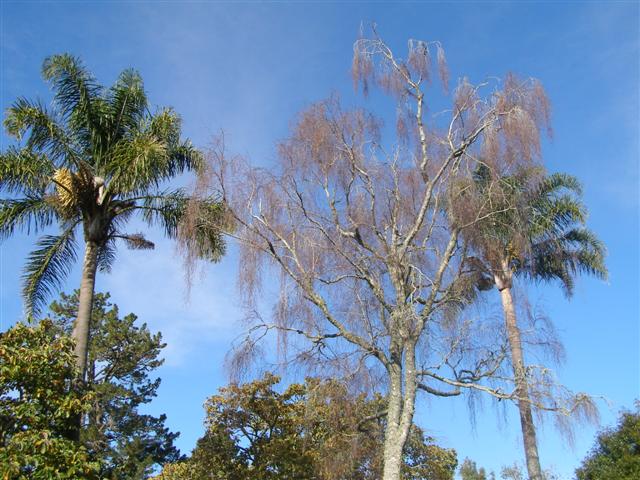
Autumn continues to be unusually dry and calm but as a rule, we don’t do good autumn colour on the coast. We drift so slowly from waning summer into autumn and winter that there is not sufficient temperature change to signal plants to change colour. Added to that, New Zealand gardens use so much evergreen material (and all this country’s native plants are evergreen) that the blaze of autumn colour common to countries with deciduous forests is largely missing. But the grapevines do colour and this one, a fruiting grape, has particularly ornamental foliage.

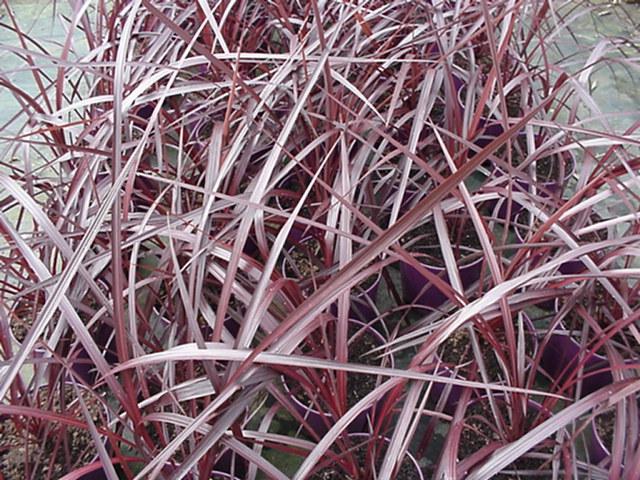
Curculigo recurvata is not common here and needs s p a c e


In an area where the giant gunneras – both manicata and tinctoria – are on the banned list and recommended for total eradication (they have naturalised too readily even on cliff tops and are swamping out native flora), the Curculigo recurvata in our swimming pool garden has been doing its best to emulate the proportions of the gunnera, reaching several metres across and staging a takeover bid. It is a most handsome plant with its pleated leaves, completely evergreen, but we had to reduce the clump back or we would have no decking left.

Flowering this week: Gordonia yunnanensis

A gordonia not a camellia

A gordonia not a camellia

This is not a camellia though the flower looks very similar to a large, pure white single camellia with showy golden stamens. They are botanically related from a distance, as stewartias are too. Gordonias are sometimes known as the fried egg plant because the flowers drop off whole and land sunny side up where they resemble, loosely speaking, that breakfast food. This form is yunnanensis which simply means it is from the Yunnan province in southern China. As far as I know, it is the largest flowered form. There are other forms around – axillaris is the most common but yunnanensis has much better flowers and plenty of them which open from now through winter. It also has a lovely glaucous, or blue-grey, tone to the shiny leaves. We also have an unidentified Vietnamese species which has slightly smaller flowers, bright green foliage and a more compact habit than yunnanensis though we are still talking around four metres high.

Gordonias are evergreen with shiny foliage and reasonable wind resistance. Most of them come from eastern parts of Asia (there are a few which come from mild areas of North America) and will make large shrubs or small trees. While we have seen the odd pink tinged one, basically they are all white with petals that look a little like crushed tissue paper. They could, perhaps, be described as the very large pure white camellia you have when you are not having a camellia.

In the Garden: April 30, 2010

• I am reliably informed that the autumn colour in colder inland areas is at its very best. The sudden cooling of temperatures in March followed by a long, dry and calm autumn has resulted in a splendid display. If you are wondering why we never get great autumn colour in coastal areas, it is because we lack the sharp seasonal changes which trigger deciduous trees to colour before dropping.
• Cleaning up fallen leaves and spoiled fruit from under your fruiting trees helps to reduce pests and diseases which can winter over in the debris. This is particularly true with apples and pears. Lay a blanket of compost after the clean-up to suppress weeds and to condition the soils.
• If you are wondering how to prune your raspberry bushes, we will do an Outdoor Classroom on this shortly. While timing is not critical, it is easier to see what you are doing when the leaves have dropped. The rule of thumb is that you remove all fruiting canes from this summer and just keep the new canes.
• Finish the autumn feeding round as soon as possible. While evergreen plants don’t go dormant like deciduous plants, their growth slows right down over winter which slows their ability to take up fertiliser. There is no point in feeding deciduous plants which are dormant or in the process of going dormant.
• Despite being horrified at the price and initially suspicious of an approved organic spray for aphids, Mark was pleasantly surprised to find that Yates’ Nature’s Way did actually work on the swan plants – killed the aphids without affecting the monarch caterpillars at all though it needed repeat applications because it is nowhere near as powerful as the pyrethrum based sprays. On the other hand, the Tui product, Eco-Pest, which is primarily canola oil, had absolutely no effect at all on the aphids when applied at the recommended dosage.
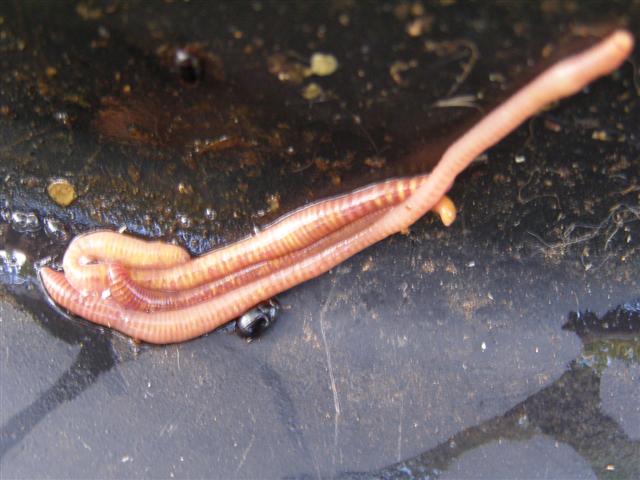
• Most gardeners will be looking at some pretty sad and leafless tomato plants by now. Unblemished tomatoes can be ripened off the vine so harvest these now and keep in an airy, light place to ripen. Gather up all the spent tomato plants and leaves and dispose of them in the rubbish or by hot composting to reduce fungi spores wintering over. I see the advice from Andrew Steens in the Weekend Gardener magazine is to put such diseased foliage on your lawn and then run over it repeatedly with a mulcher mower to chomp it up and leave it to feed the worms in your lawn. This of course assumes that you not one of those ecologically challenged types who kills out the worms in your lawn to preserve a better green sward.
• Some time ago, I wrote a glowing review of The Artful Gardener by Rose Thodey and Gil Hanly. I see it has been reduced from $60 to $25 on special at Touchwood Books (www.touchwoodbooks.co.nz). It was worth its original price, let alone the reduced price.