Anchoring a garden to its location

“When we can see the cycle is complete, it is time to cut the hedges that mark the tended places close to the buildings and provide the contrast to the rough wild hedges that run away darkly and on into the valley. 

The link between garden and the beyond landscape is deliberately mutable and I prefer to tread lightly now and to only act where it is really needed to keep in time with the landscape.”

I was completely charmed by these two sentences in a recent post by English designer and gardener, Dan Pearson. Yes! I thought. He was writing about exactly the same philosophy that inspired a piece I wrote two years ago that I headed ‘Blurred lines’. It is always reassuring to find a fellow traveller. And what a gentle way to mark the transition by neatly trimming hedges in the cultivated areas of the garden and then allowing them to be naturally wild and loose in the farther reaches.

There are beautiful photos of a heavy frost in that post, too. We never, ever get frosts of that magnitude here but any readers in Central Otago will identify with the chilly, still beauty of a hard frost in the morning light.
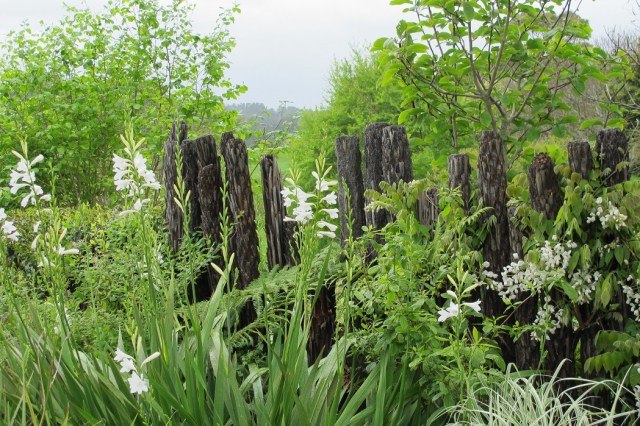
Puketarata

I have been thinking for the past fortnight about that approach of blurring transitions between garden and wider environment and how, to me, it is the difference between a garden that sits on the land and a garden that sits comfortably within the environment. It is all part of the spectrum of creating a garden by controlling nature through to creating a garden in partnership and cooperation with the forces of nature. Mark is currently fond of the description of naturalistic gardening, which he favours, being more or less about tidying nature.
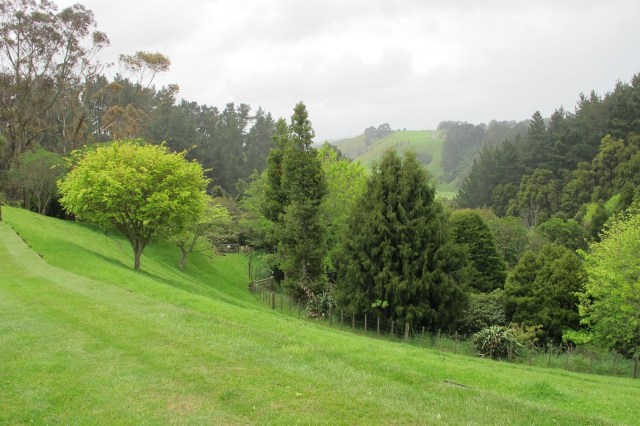
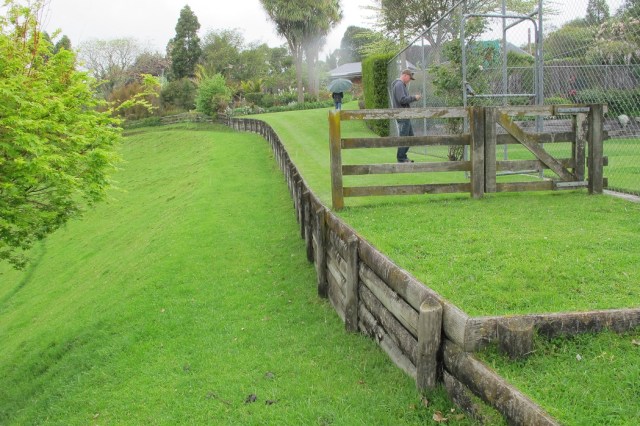
Puketarata again
And the view from below the haha at Puketarata to show how they achieved the seamless vista in the previous photo
Still at Puketarata

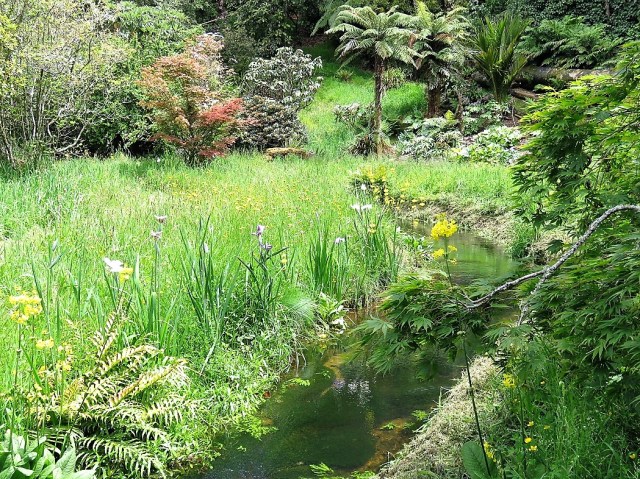
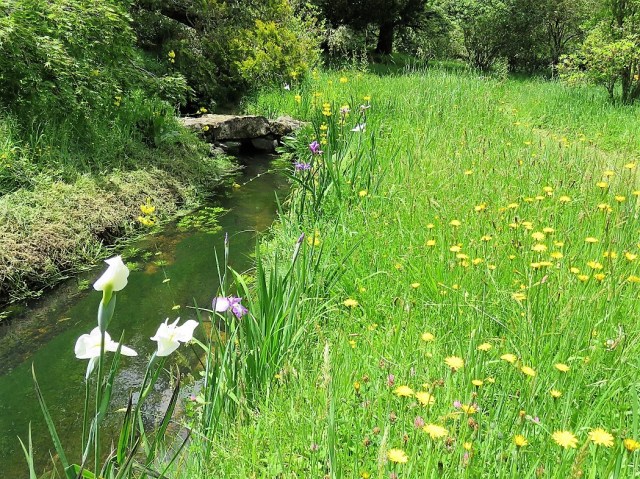
Closer to home, that desire to sit a garden comfortably within a wider environment is what makes Puketarata Garden near Hawera memorable for me. Here is a garden within the environment, not sitting on top the land with no reference – or deference – to its location and sense of place.
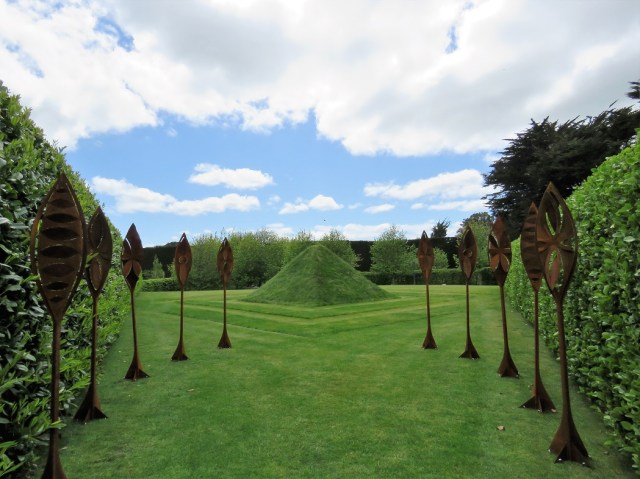
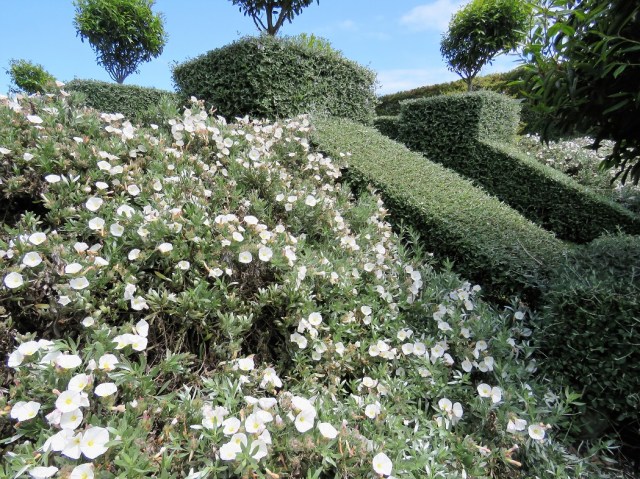
By definition, strictly formal gardens sit ON the landscape, drawing inspiration from cultural and historical precedents far away in place and time. Close to the residence at Gravetye Hawera (not to be confused with its very different namesake, Gravetye Manor).
Gravetye Hawera again, heading away from the house

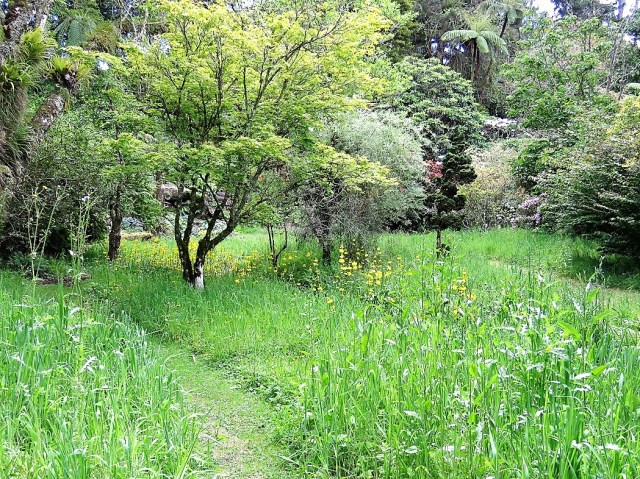
Different, but related, it is also what I like about Gravetye Garden in Hawera. I am not generally attracted to formal gardens in themselves but what I like there is how the strictly formal areas melt out gradually to the farthest boundaries where there is the contrast of much wilder areas. Because it is a confined space – several acres so not a town section but on generally flat land and defined by very tall boundary hedging with no view beyond that I recall – it is an example of how a very controlled style of gardening can still be anchored to its place. I see many gardens which could, theoretically, be lifted in their entirety and plonked down in another location altogether and nobody would be any the wiser. That gentle transition from control to wildness at Gravetye Hawera is what connects it to its own specific location.  
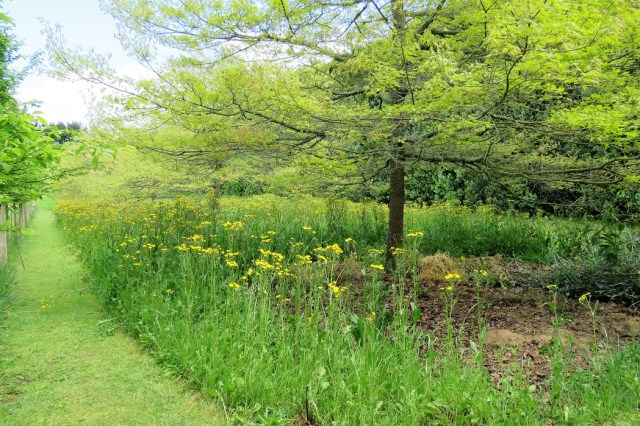
Gravetye Hawera melts out to wilder outer reaches and it is this unexpected charm that, for me, anchored this garden to its location

I will be honest. I am not sure how, or even if, this applies to small town gardens. If you live on a small section surrounded by tall, timber fences currently favoured in this country, it probably doesn’t. The area is already defined as a tightly confined space. If you are lucky enough to have a view – even the neighbours’ trees –  then the lessons from Puketarata can be scaled down to a smaller focus but still draw the eyes of the viewer from the close-up view and out beyond, blurring the edges of the garden into the wider environment. Or maybe the Gravetye example of softening the outer reaches could be scaled down to a small, confined space but I am not sure how this would be done in practice.

I do not think I could be happy living surrounded by tall fences. It would be more like a prison to me than a safe space but as I drive around towns and cities, it appears that is a minority view. Human beings can be very territorial.

With the current cessation of international travel, it may be that we are limited to enjoying experiences vicariously for a while yet. I don’t subscribe to many gardening blogs but two I enjoy are Dan Pearson’s ‘Dig Delve’ – at its best lyrical in conveying his delight in his private garden – and Pat Webster in Canada. Pat gardens in Quebec, so under snow for some of the year, and brings a personal focus on the historical and cultural context of her garden. It is not just about plants and design; she is also an artist and the installations she creates for her garden all use that wider social and historical context as a reference point. Pat can also be found on Facebook here.
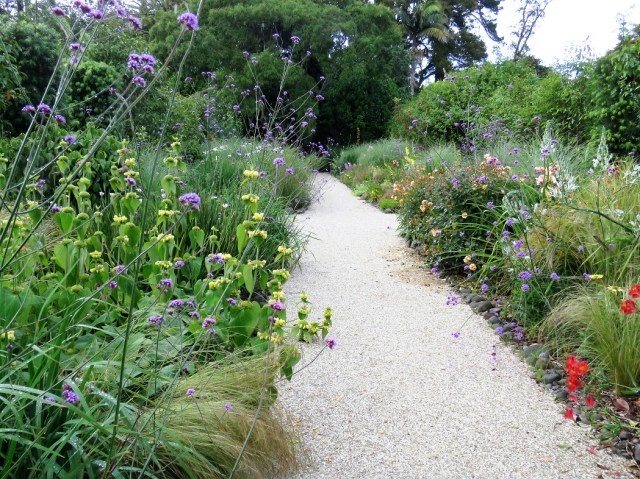
Early summer in the borders, after days of unrelenting rain

Finally, and unrelated, Mark, the rain gauge man, tells me we have had over 20cm of rain since last Monday. Even by our standards, that is a lot. The borders, photographed this morning, have held up remarkably well to the unrelenting rain. I have my fingers crossed for more sun this week.
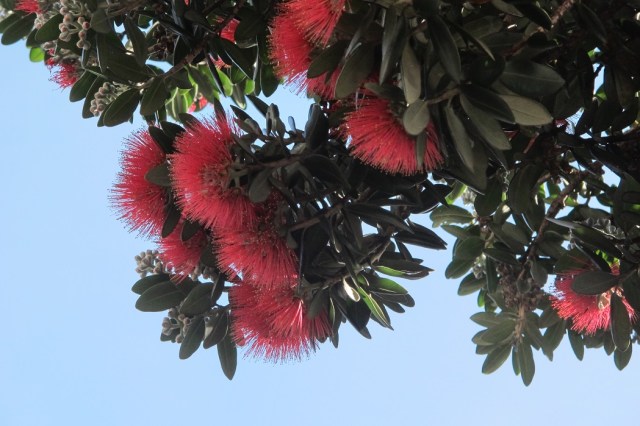
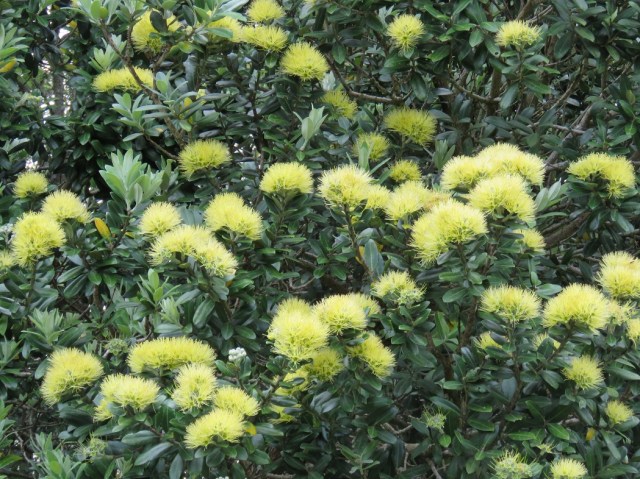
The colours of a New Zealand Christmas

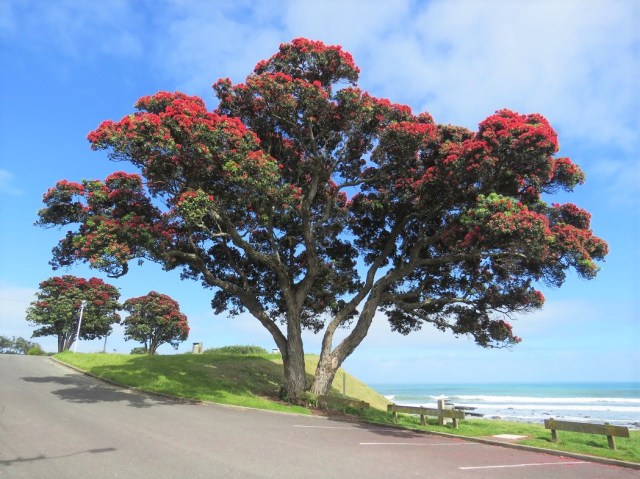
Nature provides us with seasonal decorations – all around the area where we live. Pōhutukawa

My social media is flooded with Christmas photos, mostly from cold, northern climates. But I thought, as I drove through my local town, the colours of a New Zealand Christmas are red, blue and yellow. Bright red, blue and yellow because of the clear light that characterises this country.

Pōhutukawa come in every shade of red. The yellow is much less common and not as spectacular in the landscape but has a charm of its own.

The pōhutukawa (Metrosideros excelsa) are commonly referred to as the New Zealand Christmas tree though their climatic range does not extend the full length of the country. This is the time they all come into flower for a brief but impressive few weeks.

Lovingly crafted and gifted from our daughter

I am not great at Christmas decorations (and Mark’s efforts are limited to the Christmas table flowers). There doesn’t seem a great need for them when we live surrounded by flowers and foliage just outside every window. With no little ones in our life at this time, and indeed no big ones this year with no international travel possible, the box of decorations will likely stay in the Harry Potter cupboard beneath the stairs. In the interests of festive spirit, however, I have brought out the exquisite three kings in crochet that Elder Daughter made for me. And planking Santa and yoga Santa are making their annual appearance.

Planking Santa and yoga Santa – pretty much family heirlooms now.

Spare a thought for Melania, though. There are words I never thought I would say.

After the black and silver gothic horror of her first efforts decorating the White House, followed by her bizarre attempts at designer red – quickly transformed on social media to figures from ‘The Handmaid’s Tale’, this year she went with a more traditional theme. I might not have taken much notice of this were it not the headline I saw from Mashable: “Melania Trump unveils her final White House Christmas decorations and they’re fine.

Talk about being damned with faint praise, tinged with relief!

Lightly decorated though our house will be and few in number sitting down to Christmas treats (few? What am I talking about? Just two) ours at least will be a Christmas of colour, light and flowers.  I may have to dig out the CD we have of reggae Christmas carols as the background soundtrack to Christmas zoom calls with the children, just to make them groan and remember the days of childhood Christmases.

Elegia capenis

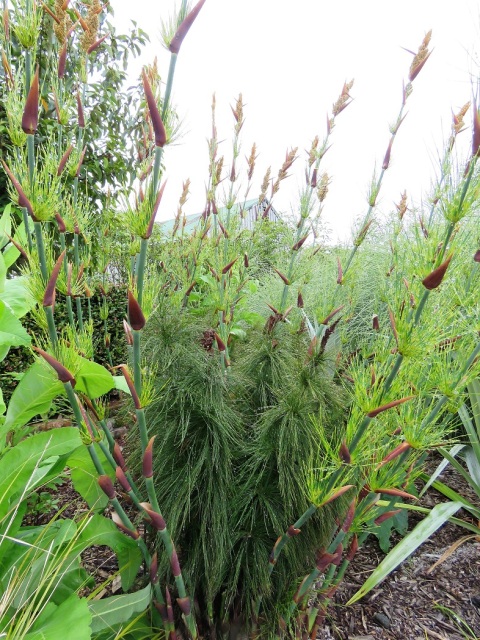
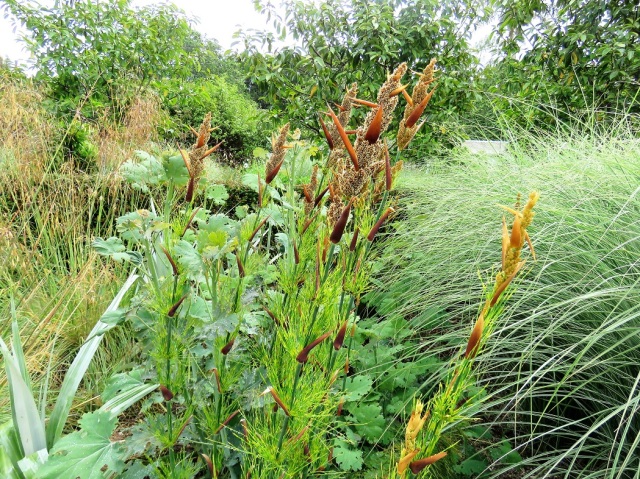
Elegia capensis in the new Court Garden

I lost count of the number of times we were asked about Elegia capensis during our recent open days. I have used it extensively with the grasses in the new Court Garden and it is looking rather splendid.

Its common name is the horsetail restio and the entire restionaceae plant family hails from South Africa. There are plenty of them but E. capensis  is the most common in ornamental gardens. It is not too fussy on conditions as long as it never dries out entirely and is not subjected to very cold winters.

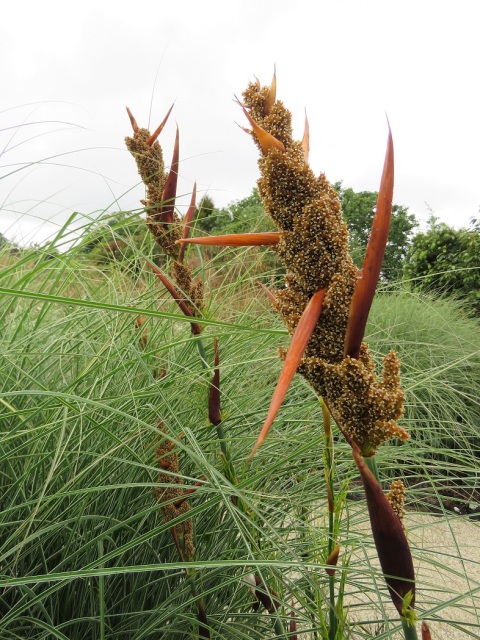
Most visitors described it as looking like a bamboo but with feathery growth, which is apt. The new shoots come up in spring like narrow bamboo shoots, first developing brownish sheaths at points up the stem before growing the fine foliage in tiers. The stems last about three years before dying off.

When you look at the seed head, it is just as well that seed is not viable here

Our plants have never set viable seed. Whether that is because they are all one clone and they need other clones to set seed or whether it is the lack of smoke from bushfires, we are not sure. They may even be fully dioecious – needing both male and female plants to set viable seed. These are plants that have evolved to deal with frequent fires (they sprout afresh from underground rhizomes). PlantzAfrica says: “The seeds react well to treatment with smoke or with the ‘Instant Smoke Plus’ seed primer. Without this treatment the germination rate is poor.” I have never even heard of Instant Smoke Plus before.

We used to produce a few to sell in the nursery but the death rate in production was high. I have only just discovered why. We assumed that they would be similar to other plants like hostas and rodgersias that grow from rhizomes. In other words, we would lift the plants in winter, separate the rhizomes and repot them ready for spring growth. Then I read somewhere that they should be divided in February – late summer – so we tried that and it was not particularly successful either. What I have since discovered is that their roots are very sensitive, making the plants difficult to propagate by division. They are evergreen and not overly hardy so they are in growth all the time, unlike plants like the aforementioned hostas which have a dormant period. Commercially, they are more commonly raised from seed.

Where we have been successful in dividing this elegia, it has not been by taking apart the rhizomes but by cutting off large chunks of the original plant and putting the entire chunk into the new location. When I say cutting off large chunks, this requires a strong person, a very sharp spade and sometimes an axe, to take off blocks that are about 20 cm across which need to be replanted straight away. Brute strength, not high-level skill.

I see BBC Gardeners’ World describe this plant as invasive, which I think is wrong. It doesn’t seed readily – or at all here. Nor does it run below the soil surface so it is not invading. It is, however, strong growing and can make a large clump in the right conditions and that large clump is not easy to reduce or eliminate because of the solid nature of the rhizomes.

The maceaya is the poppy foliage amongst the elegia

What is setting out to be genuinely invasive is the Macleaya cordata, commonly known as the Plume Poppy which is interplanted with the elegia. We have it in a shade garden where it certainly ‘ran’ below the soil surface but not in a particularly problematic manner. In full sun in the Court Garden, it is not so much running as sprinting – in every direction including into the pristine new paths. Attractive it may be, but it is a worry. I may just have to leave it in the shade garden and find a less determined plant option for the sunny, grass garden.

Terry’s restio, as we refer to it here.

We have another restio that I picked up from Terry Hatch at Joy Plants in Drury but I am not sure where – or if – I kept its species name. It is not as vigorous as the elegia so better suited to the perennial borders where I have it planted but lacks the immediate visual charm of the deep green colour and tiers of feathery foliage up the stem. There is no such thing as a perfect plant for all situations.

Apparently, almost everybody loves a meadow

“Wow! Moved to tears at the beauty around the river, couldn’t drink it in fast enough! Well done! ❤️” (Thanks, Amanda and Tim.)

I can admit now that the aspect that worried me most about opening the garden after seven years was how people would react to the meadow we are developing where it was formerly all neatly mown parkland. Would others like it as much as we do or would some visitors criticise it for being ‘full of weeds’?

There is no doubt that the meadow harbours many plants that are generally regarded as weeds. Buttercups, dandelions and daisies abound, along with Herb Robert, the interloper Mark refers to as ‘stinking billygoat weed’ and Yorkshire fog grass. We try and keep in check the common, weedy crocosmia (orange montbretia) that washes down to us from upstream every flood. I dig out flowering docks and pull out cleavers and Mark will resort to spray to get the onion weed out before it gets too widespread – it too has washed into our place from upstream. We have a zero tolerance policy on tradescantia. But there are a lot of common weeds in amongst the long grass.

The streambanks were cut back with the weedeater this week. We have learned we need to do this more frequently to stop the grass from invading the stream bed.

Maybe New Zealand is moving on from its dedication to gardens as an exercise in total control. At its worst, this may be seen in scalping lawns (cutting with the lawnmower set on the lowest level possible), spraying along all path edges with glyphosate and a scorched earth approach. Equally, it may be seen in gardens laid out in straight lines with rows of tidy edging plants or low hedges defining the end of paved areas or mown grass and the start of all garden beds. Certainly, visitors who have looked at the UK, European and American traditions of meadows and long grass could relate to what we are doing, but would New Zealanders understand it, I wondered.

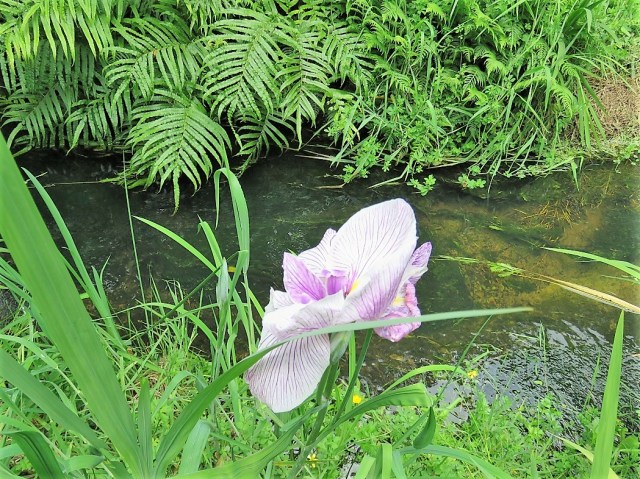
The lovely Higo iris are coming into bloom

The answer was a resounding yes. The comments we received in person were all very positive and it was the area of the garden that attracted most comment overall. The language in the visitor book kept using words like tranquil, inspiring, magical, relaxing and restful. It may be that anybody who didn’t like the meadow was too polite to say anything but we were only aware of one dissatisfied visitor. An older lady, she asked three of us in turn where the meadow was and insisted that somewhere there was a flat field of flowers. I am sorry we disappointed her but I am also surprised and reassured that there weren’t more people like her.

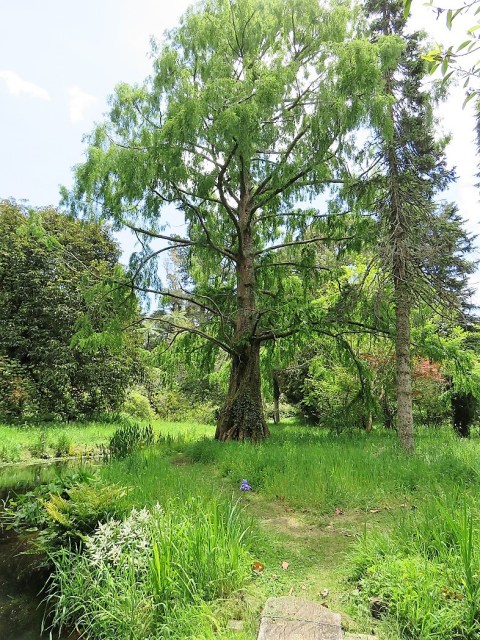
Metasequoia glyptostroboides

Maybe the reason our meadow works is in part because the rest of the garden is as close to free of weeds as humanly possible so it doesn’t look as if we are weedy everywhere. We love the softness of it, the more natural feel that comes with keeping a much lighter hand on its maintenance and management. It has certainly reduced the maintenance burden and is more environmentally friendly than keeping it as mown park. But it is the feeling of romance that comes with that softer approach that delights us. The plants that have naturalised within it are seasonal pleasures – from the common yellow primulas and bluebells to the irises, the lysichitons, Mark’s unexpected trilliums, even the white ox-eye daisy that is now settling in. We keep adding a bit more as we find plants that we think will fit the environment without becoming a pest.

It was affirming to have so many visitors who found our meadow just as charming as we do. I hope some will be inspired to find ways to implement this gentler style in their own home spaces. Also, given how wet the ten day festival was, it was reassuring to find that even in such conditions, the meadow can still be a delight and not just acres of unappealing, sodden, rank, long grass. That was a good test for it to pass.

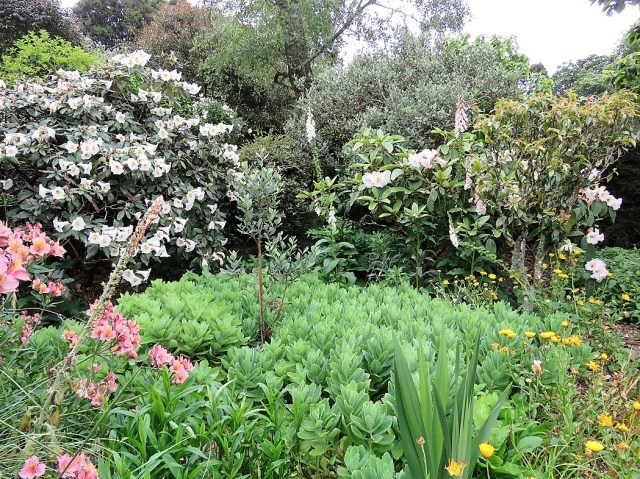
More cottage garden than anything else. But with a few unlikely plants like the nuttallii rhododendrons as well as feijoas and flowers.

One visitor solved a different problem for me. I was struggling to explain the bee and butterfly garden we refer to as the Iolanthe Garden a few weeks ago, landing eventually on the descriptor of it being a form of  freestyle, transitional meadow. “I am English,” this visitor said. “So my favourite part of the whole place was the cottage garden.” It had not occurred to me that what I was planting was a cottage garden but I looked afresh. She was right. The Iolanthe Garden is a cottage garden. I shall describe it as such from now on. It makes simpler sense.  

Time for tea

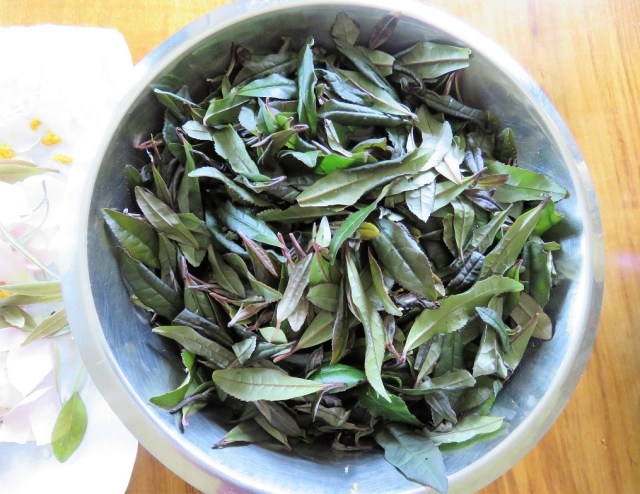
“Oh,” said Mark as he went to empty the food scraps into the black compost bin. “A tea maiden.” I was picking the finest, youngest leaves off the tea camellia. At least I know to pick only the tender leaves. I may have learned this from advertisements long ago, claiming superior status for some brands on account of only picking the youngest, most tender leaves. I am guessing the cheaper, dustier teas are from the tougher leaves further down the stem.

The leaves will be left to oxidise and lightly ferment for a couple of days before drying

Preparing the tea is still a learning process here. Last year’s harvest was a bit bland, to be honest, so was mostly used up making kombucha because it didn’t rival our preferred French Earl Grey tea. I shall try fermenting this batch a little longer than just overnight to see if that deepens the flavour. Maybe two or three days before I start the drying process.

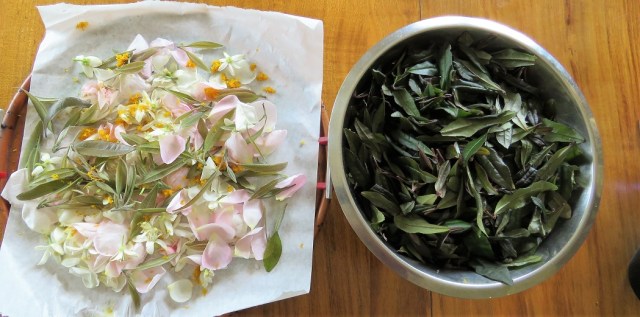
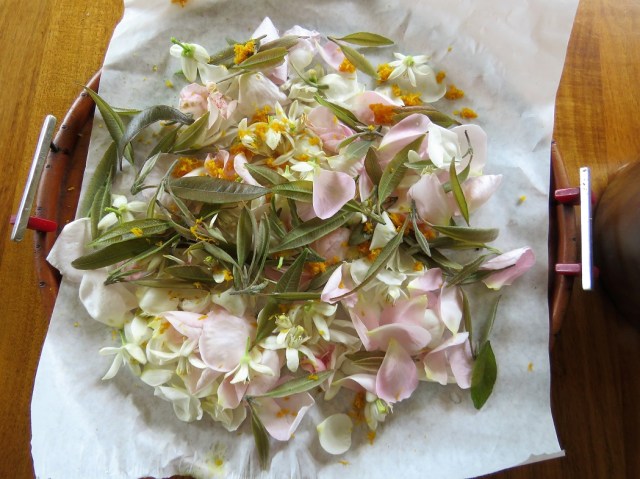
The ratio of aromatics to tea may be a little high but I will see when they have dried.

And I am upping the additional flavourings component because we like aromatic teas. It will be citrus and rose scented – using tender leaves of the lemon myrtle (Backhousia citriodora), orange blossom (the orange trees are still in flower here), the grated zest of an orange and the most scented rose petals I could find.

I planted out three more tea camellias (Camellia sinensis) this year but they are still small. It takes a whole lot of leaves to get any volume of dried tea so I doubt we will ever reach self sufficiency in tea but it is fun to try, in a homestead-y sort of fun way. You do need one of the proper tea camellia varieties, not just any old camellia and I have no idea how readily available they are on the market these days.

That is the one large tea bush outlined in red. The foliage is different to most camellias.

I quote again the Wikipedia article in answer to the question as to whether there are different camellias for different teas: “Camellia sinensis and its subspecies, Camellia sinensis var. assamica, are two major varieties grown today. White tea, yellow tea, green tea, oolong, pu-erh tea and black tea are all harvested from one or the other, but are processed differently to attain varying levels of oxidation.” There are different selections of the species and some will have different characteristics, but the vast majority of tea sold in the world is indeed from Camellia sinensis.