
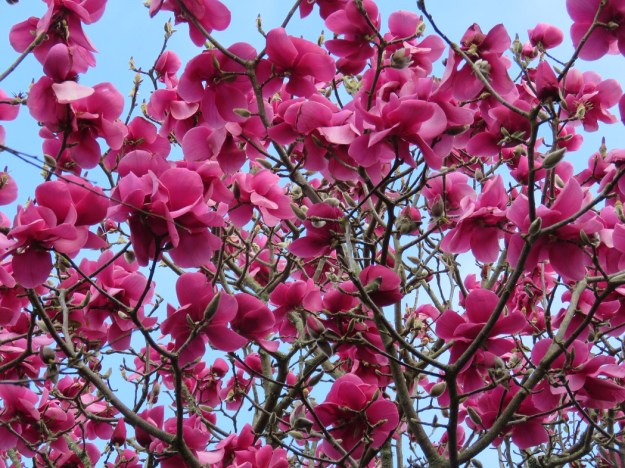
Just another unnamed seedling
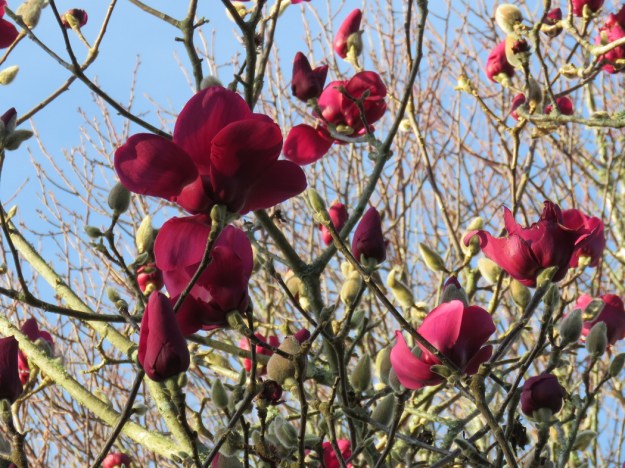
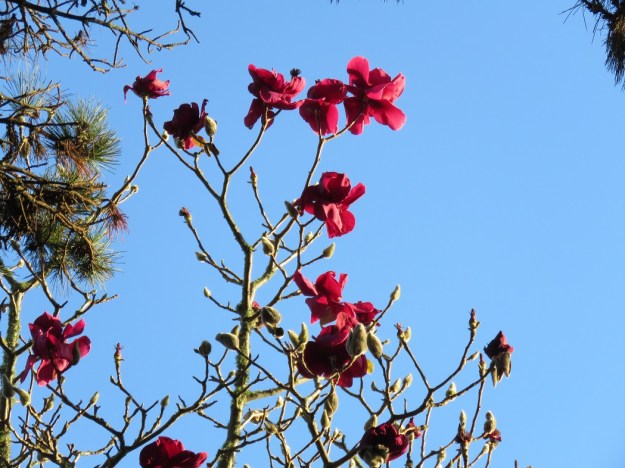
I feel that we are becoming increasingly reclusive in this new world we are facing in 2020 but there are many worse places to become reclusive than here. It is magnolia season.
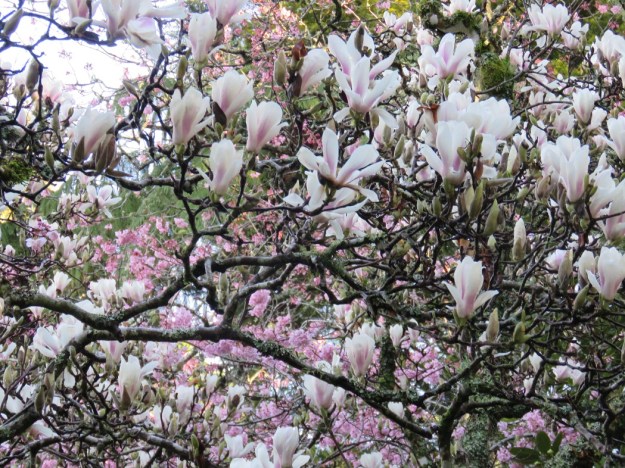
Magnolia × soulangeana ‘Alexandrina’
It is time for my annual reminders on magnolias.
- If your magnolia opens with two separate coloured blooms (white first and with deep red just opening in the email enquiring about this phenomenon this morning), you have a case of escaped root stock. The root stock is generally stronger growing and will overwhelm the grafted variety over time, if you don’t remove it. This is not a case where you can have two for the price for one.
- Ripped petals are usually being eaten by kereru, sometimes rosellas in northern parts of the country. Kereru are a protected species, rosellas are a gaudy Australia export so not.
- Buds which fail to open or only produce distorted, misshapen blooms have almost certainly been eaten out in the bud stage by possums or rats who like to nip out the centre. Mark carries out extensive trapping and shooting to keep these pest numbers low here.
- If you are into spraying your lawn in spring, do it now. If you delay, the faintest whiff of spray drift as magnolias start to open their leaf buds can cause significant damage to the new foliage which will be unsightly until the leaves drop next autumn and, over time, can weaken the tree.
- It might be true in the UK that you can’t move magnolias – or it may be a factoid – but here in NZ we can move magnolias and we have done it many times. Just make sure you get as big a root system as you can manage and if the root system is small, prune the tree hard.
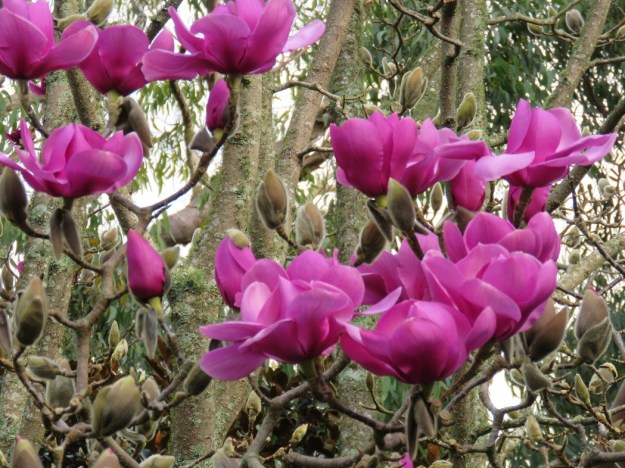
Lanarth at the top, Mark’s purple below
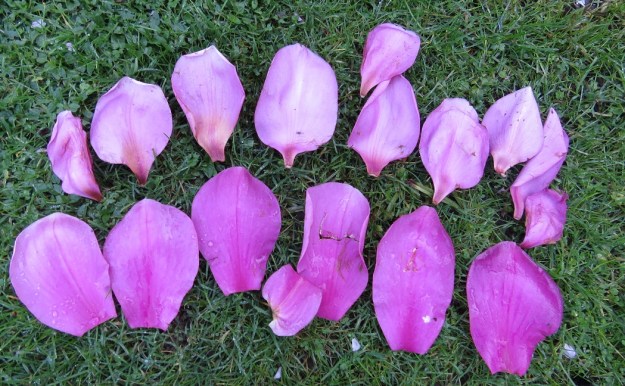
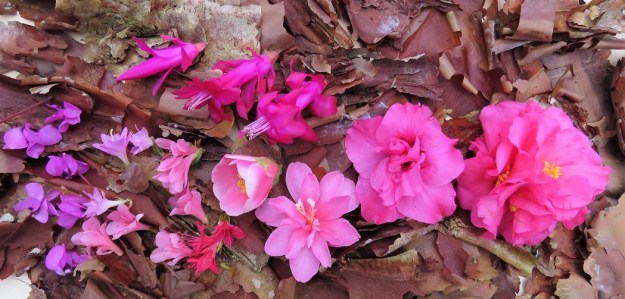
We have been hesitating about whether we can fairly describe Mark’s selection (as yet unnamed) as purple. Magnolia campbelli var. mollicomata ‘Lanarth’ is widely seen as setting the standard for purple magnolias. I finally got around to lining up petals of Mark’s purple and Lanarth petals to compare. Magnolias are variable so I picked up the darkest petals of Lanarth I could find and it seems that the colour of Mark’s measures up.
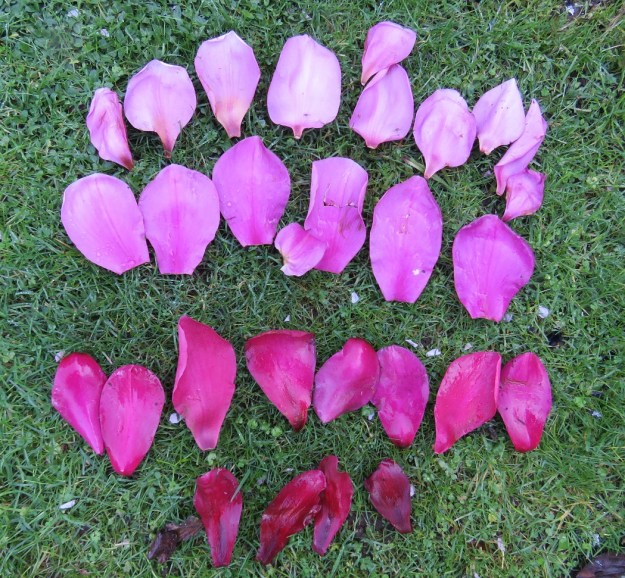
Top to bottom: Lanarth, Mark’s purple, Vulcan and Burgundy Star
Just out of interest, I added in Vulcan petals. Vulcan was the first of the new generation magnolias 30 years ago that moved into red tones, rather than purple. The few at the bottom are of Burgundy Star, the next generation of reds bred from Vulcan. Mark is getting to cleaner reds.
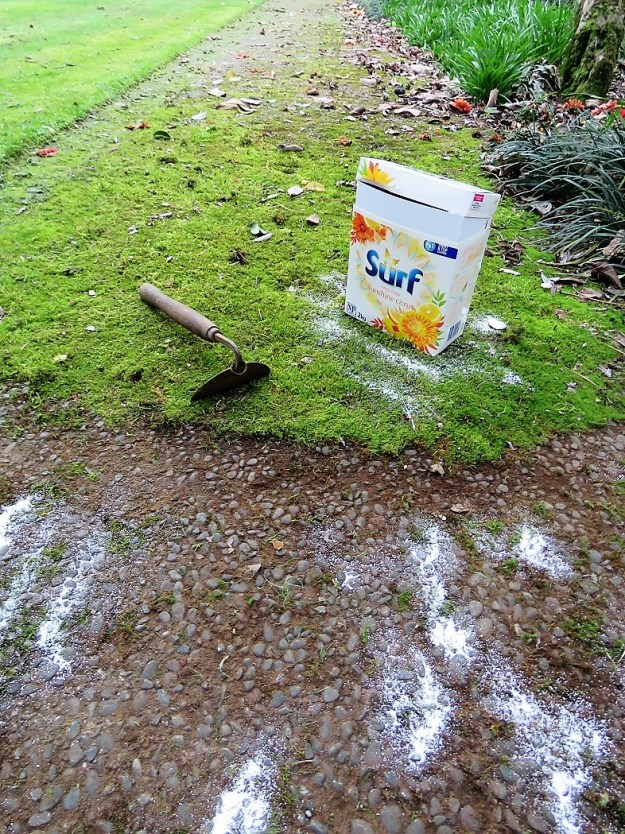
More on Cold Water Surf (or any other washing powder) and moss. You can, and I have, use it on moss in the lawn. We accept moss but preferably the fine forms. I am not a fan of liverwort and some of the coarse mosses and Surf works on them.
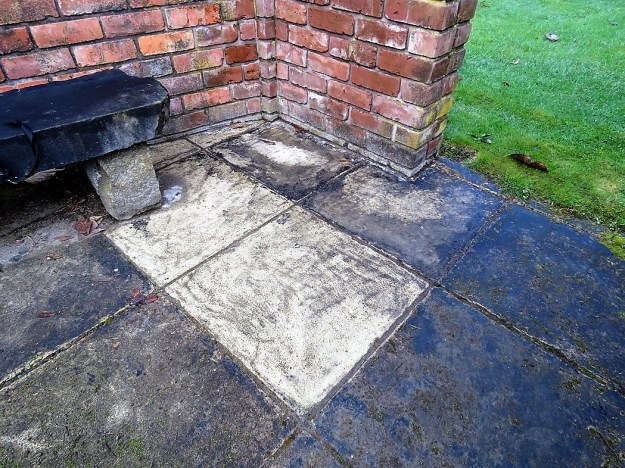 Hard surfaces? Hmmm. It works. It kills the moss. If all you want to do is to get rid of slippery growth, it may be fine to sprinkle it generously, wait for rain and then use a stiff brush a few days later. I want these pavers back to their soft gold so I tackled these with a wire brush but it is going to be a lot of hard work to restore the whole area. I think I will resort to the water blaster (jet washer).
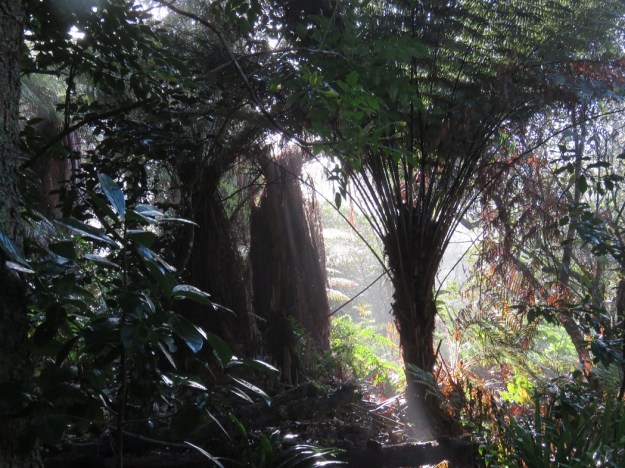 Finally, a few mood shots from this week. We do not generally get mist or fog so this morning mist gathering in a lower area seemed appropriately mystical to me.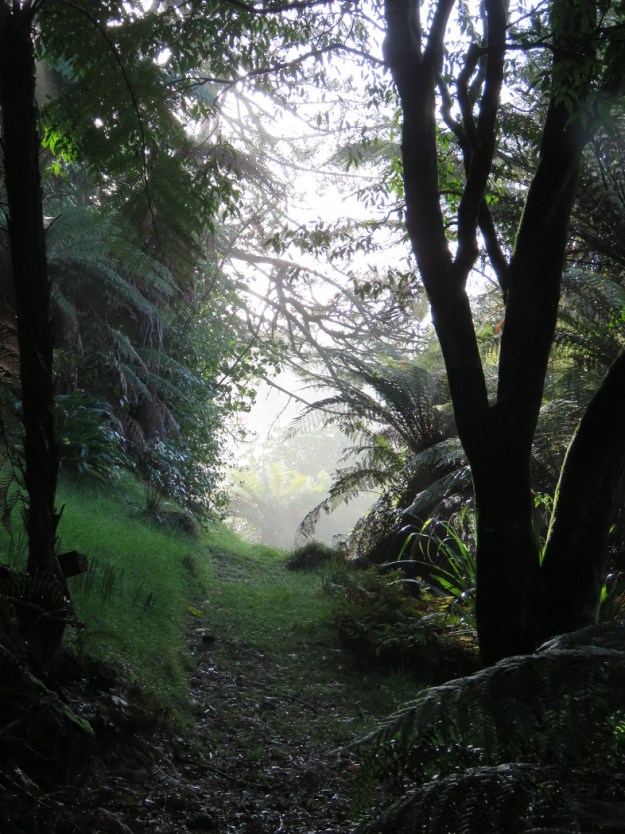
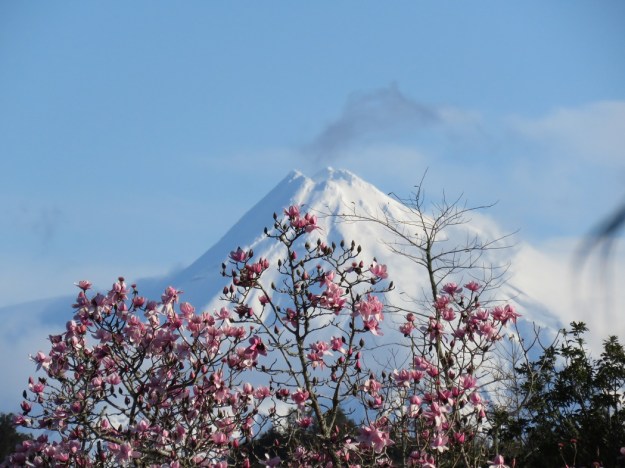
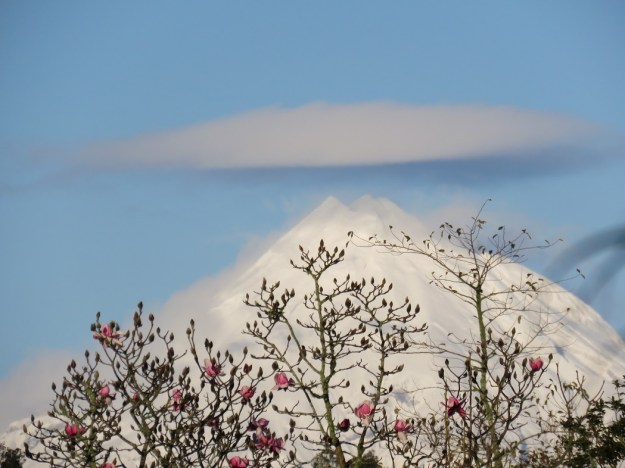
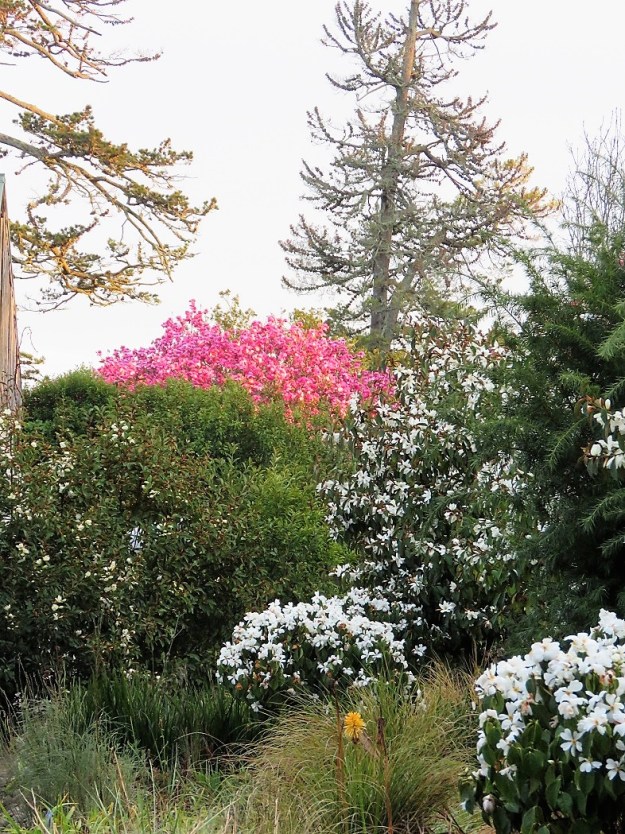 On a grey morning, a few shafts of rising sun broke through to illuminate the magnolia in the distance. It was a somewhat startling sight.
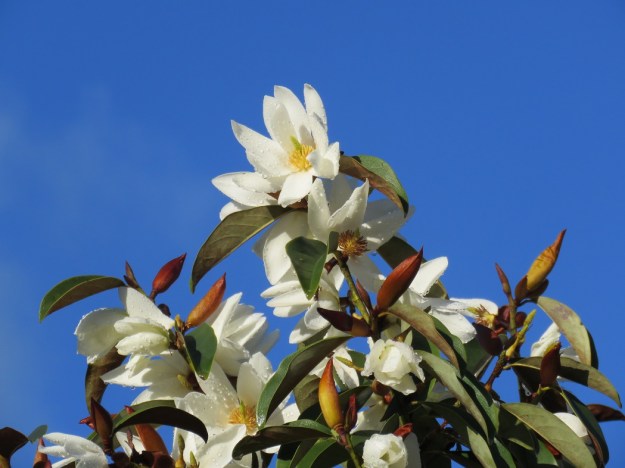
Fairy Magnolia White
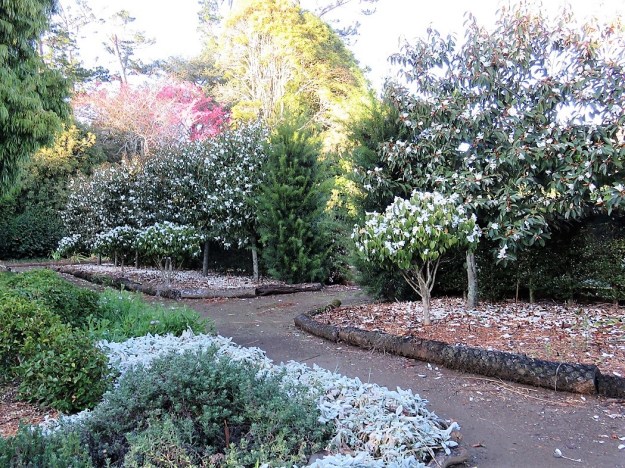
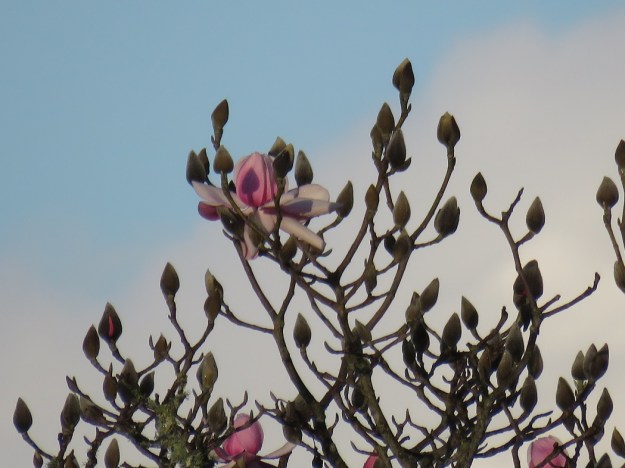
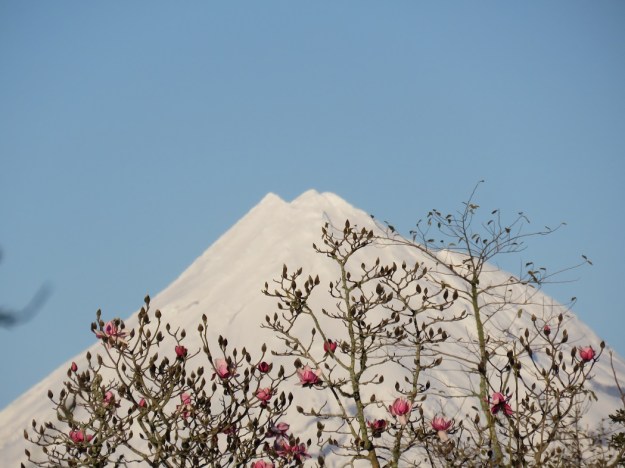
More often, this clarity of light is the norm for us, even in winter. That is Mark’s Fairy Magnolia White which really does have an exceptionally long flowering season.
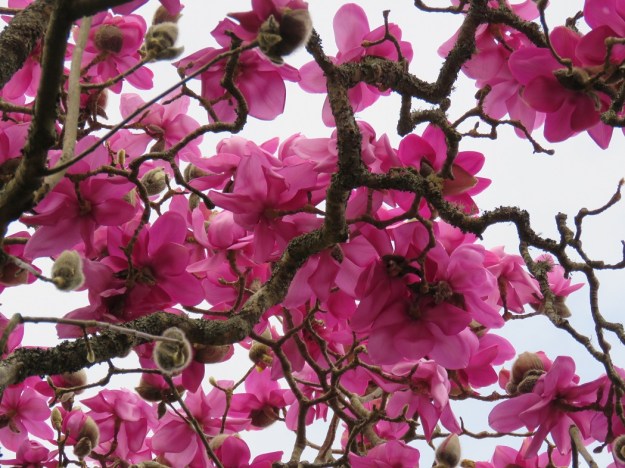
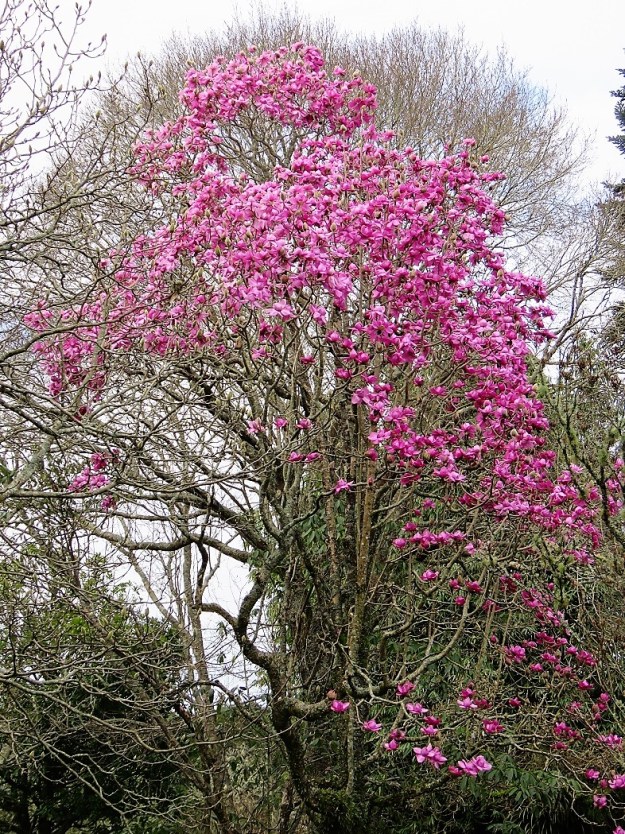



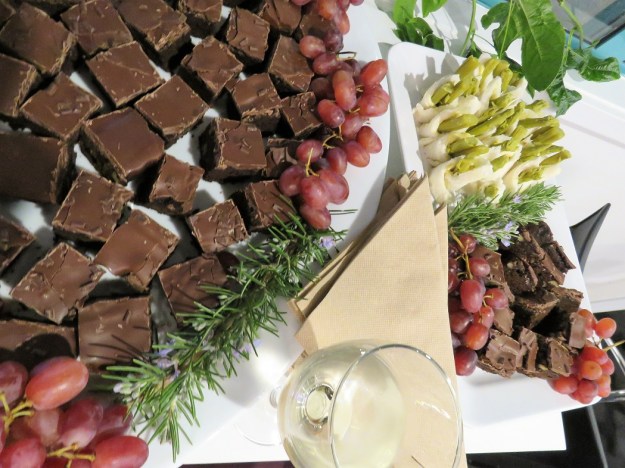
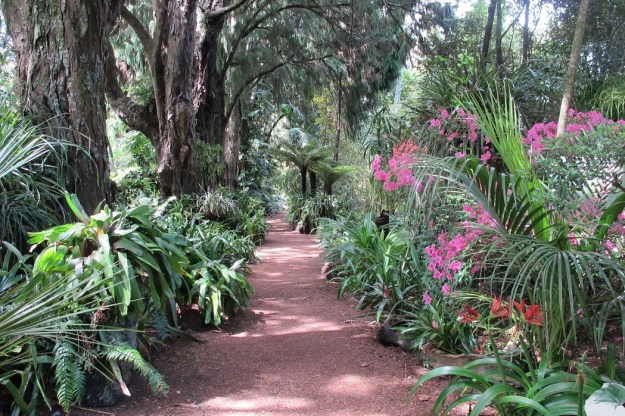 It is official. We are reopening our garden for the ten days of Taranaki Garden Festival – and only for those ten days from October 30 to November 8. In fact, we are garden number one in the programme. We attended the launch on Thursday evening and there were asparagus rolls. I only mention this because the asparagus roll shares a special position of nostalgia in NZ catering history on a par with Maggi onion dip and slightly less controversial than the Otago and Southland cheese roll. But I digress.
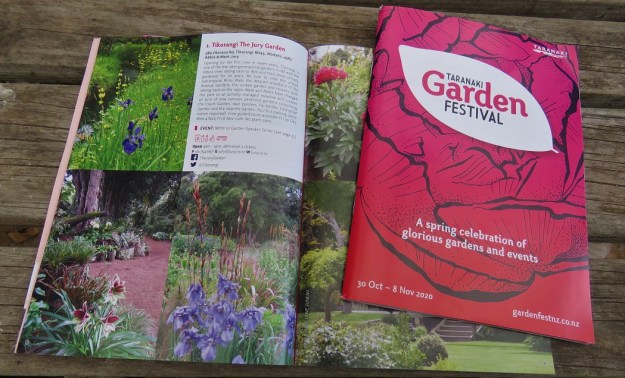 The printed programme is now out and the information is all
  New Directions with Sunny Perennials
 Meadow Theory 101
 Postscript for overseas readers: sorry, this is all of no relevance to you. Even if you wanted to, you can not come. Flights to NZ remain few and far between and you have to be a NZ citizen or permanent resident to get in (bar a few essential workers). Even then, all incoming passengers have to go into government quarantine for 14 days and it seems to be the luck of the draw as to whether you get confined in a five star hotel or one that is more modest. But we are now free of Covid, bar the quarantine cases at the border, and have been for over ten weeks. Life here is back to normal – no masks, no PPE, no physical distancing required, no restrictions bar those at the border. This situation has been hard-won and there aren’t many New Zealanders willing to risk the alternatives as we look at the grim situations around the world. It seems there is a long way to go in this pandemic yet. May those of you overseas stay safe and well.
 Tikorangi The Jury Garden