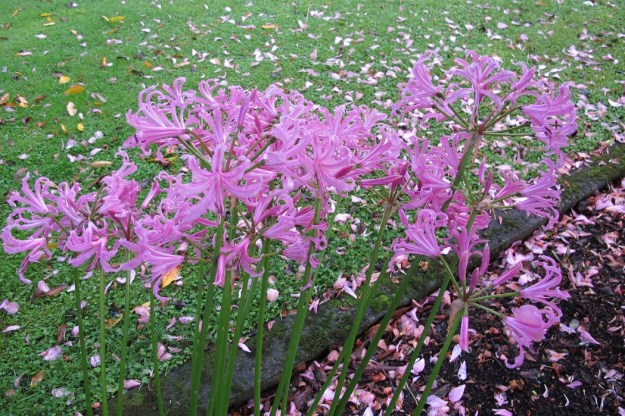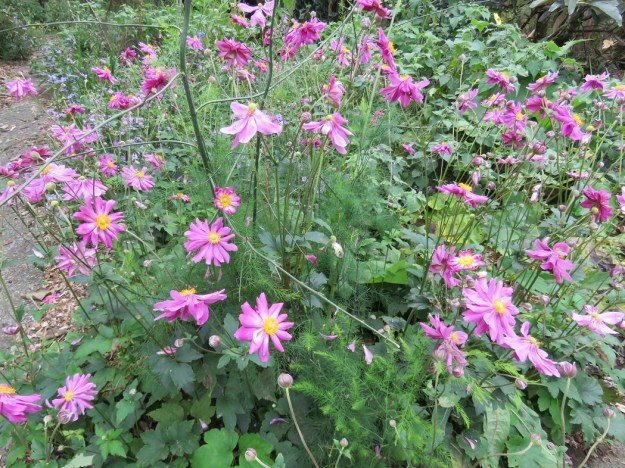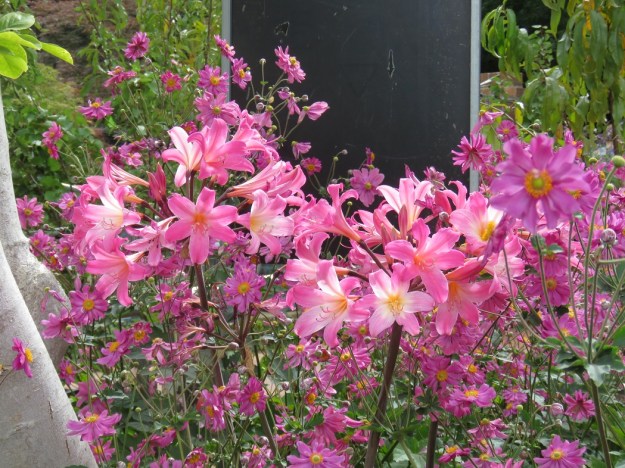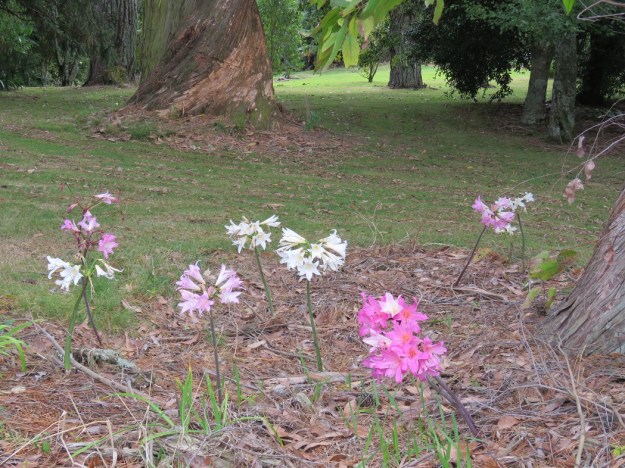
The weeks that come may very well be worse than the week that was but there are always flowers

Our mounga is unchanged

I doubt that anybody really thought through how much our world could turn upside down in such a short space of time. It is different in every country. In New Zealand, at this stage it is an exercise in how long we can stave off widespread community transmission, how we can get travelling NZ residents home when air flights around the world are ceasing with little or no warning (up to 110 000 NZ travellers stranded around the world is the latest estimate I have seen) and how we can best protect the Pacific Island nations to whom we have a duty of care and who are extremely vulnerable to an outbreak.

Other countries are facing different challenges and the impact is more extreme at this stage. The message from our Prime Minister is clear – be kind, be considerate, be caring, be careful.

I am pleased to report that there is no shortage of toilet paper at the Waitara supermarket. The shelves were full on Friday with plenty out the back. Amusingly, most of it is manufactured in NZ so there are no supply chain issues.

The world as we know it has changed, if not overnight, then certainly in the last fortnight. Nobody has a crystal ball so there is no way of predicting what will happen into the future. All we can do is make our personal worlds smaller, to be the best person we can at an individual level and, for many of us, to take refuge in black humour.

Just a butterfly on a dahlia

But there is always the garden and the cycle of the seasons. There is a correlation between greater interest in gardening and hard times. At the moment it is panic buying vegetable seedlings but as most people adjust to a more confined life at home, their horizons are likely to expand beyond survival vegetables to the pleasures of ornamental plants and gardens as well. Food for the body and food for the soul.

If you are alarmed at not being able to buy vegetable seedlings at this time, here is a guide to raising plants from seed that I published earlier. Online seed catalogues will tell you what you can sow at this time of the year.

We drive a Corona!

We are feeling blessed to live in a situation where we have huge personal space, where maintaining physical distancing is no problem at all and where we can largely control our personal level of exposure to risk. But our children living in Australia have never felt so far away. We are resigned to the realisation that our trip to look at wildflowers in the Pindos Mountains of Greece and then looking at summer gardens in the UK will not happen and we can’t even console ourselves with a family meet-up in Australia. These limitations seem but minor disappointments in this new situation.

All I can offer readers are pretty flowers, a reminder that whatever else is going wrong in the lives of us all, the seasons will continue to change.

Amaranthus caudatus

The amaranthus has been a surprise volunteer in a garden I replanted earlier this year. It came in with the compost I spread and is perhaps a good example of what happens when I am not careful enough on what goes onto the compost heap. At this stage it makes me smile as I pass that garden bed but I will need to consider whether I want it established as an annual in that area.

Rhodophiala bifida

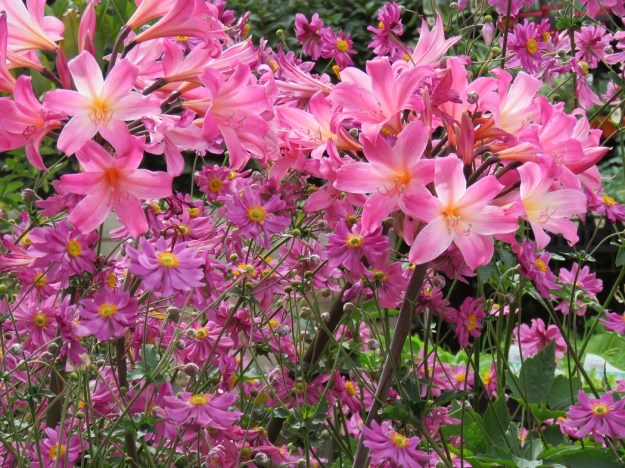
I posted this photo of rhodophiala to Facebook earlier this week – a lesser known bulb that is a fleeting seasonal delight. Whether you are willing to give garden space to a plant that is a 10 day wonder is entirely up to you but we like the variety and depth such plants give to our garden. The pink form does not appear to be as vigorous but is also very pretty.

Rhodophiala bifida pink

Colchicum autumnale

To be honest, the flowering season on the autumn flowering colchicum is also pretty brief but undeniably delightful. Their foliage comes quite a bit later and stays fresh all winter but does take rather a long time to die off – untidily – in spring.

Haemanthus coccineus

Haemanthus coccineus is even briefer in bloom – days not weeks – but justifies its place because of its rather remarkable foliage. The pair of huge leaves on each bulb resemble big, fleshy elephant ears. But in green, not grey.

Cyclamen hederifolium

The autumn cyclamen are a different kettle of fish altogether. They really are a well behaved plant, flowering for months from mid to late summer through til late autumn and then putting out charming, marbled foliage. They seed down gently without becoming a menace and just get better as the years go by.

The rockery has two peaks, in early to mid spring and again in autumn. We are just entering the autumn phase when the nerines (the first ones out are the red blobs in the upper right), cyclamen, colchicums and many other autumn bulbs bloom.

Interlopers on our driveway! The neighbours’ free range turkeys. Should the food supply chains fail in the face of Covid19, we will not starve here.

Batten down the hatches, one and all, and may you stay as safe as possible in these times.

Theatre set design in the garden

Not Duquette’s garden. Just a photo from a NZ garden I have in my files.

Mark and I were sitting watching Monty Don’s series on American gardens when he came to the garden of the late Tony Duquette. Think Hollywood in the 1940s and 50s, a flamboyant set decorator, costumier and interior designer with extreme, international magpie tendencies who crammed much of what he collected into his own, quirky garden. Google him if you want to know more. Monty Don referred to some of it as being cobbled together with ‘cardboard and string’.

Not The Laskett, either. Just another example from a NZ garden

It started me thinking about those who approach their gardens as a theatre set. We have never been to The Laskett, the much-acclaimed UK garden of Sir Roy Strong and his late wife, Julia Trevelyan Oman. It too, comes out of the land of theatre design, I understand. It is not a garden style that we feel an affinity with so we tend to seek out other gardens when we travel.

A much loved local garden that belongs to Sue

But it is a style that some people enjoy. At its best, it may be described as quirky, eclectic, imaginative, flamboyant. At its worst, tacky, veneer gardening. I shall try not to be judgemental. It is just that at times, I wonder how very different set design in acclaimed gardens is from the folk art that abounds in some of the more loved gardens in my local town. They seem to me to be on the same continuum, at times distinguished as much by social prestige, acreage and financial resources as by flair. Some people just really like heavily decorated gardens.

The D.I.Y trompe l’oeil, constructed from trellis timber

I think what worries me at times is when this theatrical approach to garden design and ornamentation brings rather too much of the two-dimensional, temporary nature of the theatre into the garden. I prefer gardens where features are well made, substantial and underpinned by quality. The 10cm deep pond lined in plastic is never going to delight me like a well thought-out pond, constructed from permanent materials where consideration is given to its longevity and sustainability. More substance, less illusion. Preferably not constructed out of tanalised plywood, either, and three dimensional as befits its outdoor setting.

Not for the faint-hearted, the Dawson garden 

The orchid theatre, based on the auricula theatre and it certainly was… theatrical

That said, the one theatrical garden that did surprise me and make me laugh out loud is in Auckland. Or it may be ‘was’, in the past tense now. When I last saw it, it was on the market and it was such a very personal garden that it is hard to imagine new owners coming in and leaving it in the same state. The first time I saw it, it was a private visit with its creator, Grahame Dawson. The second time I visited as part of a busy garden festival. The place was jam-packed with visitors and the two owners were leaping around, hosting with the most. It was indeed like watching energetic producers directing a cast of many in a theatre scene.

The theatre curtain in tillandsia 

There was such a crush on the second visit that this was the only photo I took

What set the Dawson into a different class for me was the underpinning quality. Yes it was quirky and individualistic. But it was executed with attention to detail. It was solid and three dimensional, a garden designed to be lived in and enjoyed by the owners and their friends, not done for show. To me that matters but others may be perfectly comfortable with the ephemeral nature of theatre set design in a garden.

Sometimes, theatrical touches can fall short. NOT from the Dawson garden.

The first autumn blooms and the journey to gardening nirvana

Amaryllis belladonna – more roadside flower than garden plant in our conditions

As the calendar moves into March, the autumn bulbs are the first reminder that summer will not be endless. First Cyclamen hederafolium and Colchicum autumnale remind is that the seasons wait for no man or woman. Now they have been joined by the belladonnas and the truly tiny Leucojum autumnale.

Colchicum, not autumn crocus. The foliage is unrelated, being a dianthus

Colchicums are often referred to as autumn crocus but there is no botanical connection, just a visual perception. The best known leucojum is L. vernum or the common snowflake which flowers in spring – a vigorous bulb that is widely found around old house sites that date back to the nineteenth century. The old brick chimney may be all that is left standing but it is highly likely to have clumps of the double daffodils and snowflakes, maybe some violets and a couple of really old camellia trees. For overseas readers, almost all the early European settlers’ homes were built in wood and house fires were common which is why the chimney is the only remaining evidence.

Blink and you may miss the delight of tiny Leucojum autumnale

Little Leucojum autumnale is a very different creature, a fleeting, dainty little flower that has to be measured in millimetres, not centimetres. It is very cute but easily swamped by larger plants if you are not careful. I see it is now classified as an acis, not a leucojum but it may take me a while to remember that. It comes from the western areas of the southern Mediterranean so places like Spain, Morocco, Tunisia and Sicily which are very hot and bone dry but the first autumn rain will trigger the bulbs into their very short flowering and growing season.

Some welcome rain fell this week – 62ml to be precise, which was very welcome after an exceptionally dry summer. Sadly it was followed by the first chill wind of autumn which rather reinforced the message of the autumn bulbs. Summer 2020 is over and we are now entering our long autumn season. I have removed my togs and towel from the swimming pool and put them in the laundry basket although the younger visitors here are still swimming.

What I call English manor house style of twin borders – seen here at Parham House

Cottage garden style as per Margery Fish at East Lambook Manor

Beth Chatto’s dry garden

As the summer borders reach their point of peak profusion, I ponder again how full I want these borders to look. The tradition of herbaceous borders is to have them packed so full that no soil is visible. Cottage gardening encourages the plants to meld and run together whereas herbaceous tradition says that each plant occupies its own space without much intermeshing with its neighbours. And then there is the Beth Chatto dry garden where, even in a mature garden, she kept each plant standing alone in its own space. Mark likes the Chatto approach because it displays the individual plants to their best. It is a style he has used extensively in the more detailed woodland areas. If you analyse the Chatto dry garden, they are predominantly smaller plant varieties growing in very hard condtions (dry river bed with very low rainfall) which could not be further from our summer garden conditions which foster lush and exuberant growth.

I am leaning to the traditional herbaceous position for these summer borders but it is a constant learning process about how each plant variety performs. I want to be able to walk amongst the plants to weed, stake and dead-head and that means knowing how much space to leave between each different clump that they may floof themselves over the space to fill it but still leave me passage between the plants at ground level without tramping on them.

The summer borders here

The bouffy aster needs staking to keep the path clear. I do it very simply and this is not visible when the plant is allowed to flop back

I love this big, bouffy aster coming into flower. We have the more compact version that makes a low carpet in bloom and another similar one that is just above waist height. I am guessing this larger version is a species – or close to it – with its daintier, paler blue blooms that are like a cloud of butterflies dancing on the bush. This year I have had to stake it to keep the path clear and it is obvious I have too much of it too close together for future seasons. Some at least will need to be moved to another area before next summer.

It is a constant learning process but that is what makes gardening interesting. Once a garden is all planted up, most of the gardening activity is simple and repetitive maintenance – outdoor housework, in effect. The interest levels in that are not high. It is the ongoing learning and constant tweaking in search of the impossible state of perfection that makes it interesting. That is how I see it for those of us who actively garden.

As a final comment: the new summer gardens have all been planted following the modern trends of lower labour input and management than the older, more traditional herbaceous plantings of the English manor house style of borders. But they still involve me in quite a lot of deadheading, dividing, staking and cutting back. I enjoy doing it but it is certainly more than I originally anticipated. My gardening nirvana may be when I have tweaked the plantings to the point where such a high level of intervention is no longer required.

Dispensing with the big pond

Everything grows so quickly. Back in the 1990s, the whole area was much more open

The big pond is a good example of how conditions can change over time. Sometimes decisions need to be made rather than fighting nature to try and preserve an increasingly unsatisfactory status quo.

The pond had ceased to have a function. Originally, it was our swimming pond where we used to gather as a family for summer dips. That stopped when we built a swimming pool which didn’t carry the perils of resident eels.

Our son Theo used it in his middle childhood. He and his mates built a bike jump and it became a show of macho youthfulness to see how high up the hill they could start their run with an old pushbike. The aim was to build up as much speed as possible, hit the launch pad and part company from the bike in mid-air, both boy and bike landing separately in the deepest part of the pond. It was the responsibility of the rider to dive to retrieve the bike and get it back to shore. It sounds dangerous and maybe it wasn’t the safest of childhood pursuits but there were no major injuries.

By last spring, the water had all but disappeared from view

Over time, the weed infestation took hold – possibly because of increased nutrient loading in the water from upstream farming activities. It was several years ago that I figured that it was unwise to get into the water when I had open skin wounds, even just minor abrasions. It only took a few hours for fungal infections to start getting a hold. It is not water that I would swim in these days.

With the growth of weed, we lost any reflective qualities of the water.

It was only three years ago that Theo did a major clean out for us.

Three years ago, Theo was at home for a couple of weeks, en route from Amsterdam to Melbourne. He did a trojan job clearing the pond of accumulated weed but short of finding somebody willing to do that every year – volunteers are not so much thin on the ground as entirely absent – we needed to concentrate the flow of the river into a designated channel and abandon the pond.

The platforms that enabled Lloyd to reach the middle of the pond

I missed the photo of Lloyd walking on water. By last Monday, he had reached the point where the pond narrowed sufficiently for him to stretch from the banks. We have an extra-long handled rake and have put a long handle on the drainage fork. All I can show you are the platforms he was using made from corrugated iron, linked by wide wooden boards. The principle is of spreading the weight so the human on top does not slowly sink into the morass of water weed and silt. With the water level dropped as low as we can get it, the silt layer is still about a metre of soft, floating soil particles. With resident eels. Lloyd hauled all the weed to the sides of the pond and has basically created terraces which will compact and solidify over time, leaving a winding channel in the middle.

Lloyd hauling out large swathes of Lousiana iris 

The wakendorfia have all been removed this week and the oxygen weed raked out of the smaller, upper pond.

At the same time, he and I removed 2/3 of the Louisiana iris (ratio of foliage to flower is much too high to justify massive swathes of them). I dug out the remaining Wachendorfia thyrsiflora. It is showy in bloom but too invasive and free-seeding to keep by running water. We try to manage what we may be spreading downstream. I took a rubbish bag down with me to load all the bulbs of the weedy montbretia (Crocosmia x crocosmiiflora) and all the bits of Tradescantia fluminensis  – both invasive weeds that repeated floods keep delivering us from upstream. Readers may know the tradescantia by its common name of ‘Wandering Jew’, or maybe ‘Wandering Willie’. We have decided that the Jew epithet is nothing short of downright offensive and Willie carries other connotations so we have trained ourselves to refer to it as ‘Wandering Trad’. Let’s lay the responsibility for this plant where it belongs – which is presumably with plant collector, John Tradescant, not with the Jews in the millennia when they lacked a homeland.

We have reached this stage of narrowing the pond to just a stream channel. The water is very low at the moment because of unusually dry conditions

There is still a clean-up to be done around the stream but fortunately, we are in high summer and it is dry. All the plant material is being left out to be dried by the sun and we will then stow it beneath established trees and shrubs where it can rot down. It has to be dried out so that it doesn’t take root and grow again. The mud and silt will be raked out along the sides where necessary. And we will let the grass grow long again. I am hoping the result of some pretty solid work across the past couple of weeks will be a greatly improved meadow display this coming spring and water that is more bubbling brook than sluggish stream morphing into swamp.

The big lesson we have learned from this is that we need to do more to control the growth on the banks of the stream, not by stripping them bare or spraying but by strimming them twice a year when the park gets mowed. It is all part of the learning process on how to manage a more natural-style of gardening.

Another week in the garden of Jury

Subtitled: Rain! At last! A study in a sparrow’s nest, waterworks, the raspberry coop, tamarillos and an update on the new grass garden.

It is mighty unusual for us to get excited about rain in our climate. But a good rain last night was certainly a relief. It has not been a particularly hot summer but it has been a dry one. We do not irrigate our garden. Nor should anybody else, in this day and age when we are realising that water is a precious commodity. Garden to your conditions. Grow what flourishes in your climate. Target watering only to what needs it to survive and produce, not the whole area.  But I digress. The rain last night, in addition to the 9 ml we received last week, is very welcome.

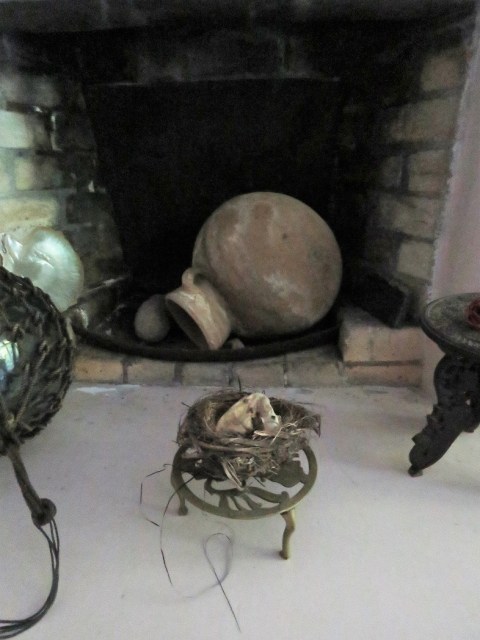
It also brought down more of the old sheaths clinging to the Queen Palm (Syagrus romanzoffiana)  We describe this particular specimen as being an entire condominium of nesting birds, mostly sparrows. As each sheath falls, so too does a spent nest. In this case, it appears there were two families of sparrows squashed into the same apartment. Sparrows may be a common and unpopular little bird here (Oi! England! Do you want your spadges back? We could do a two-for-one deal and throw in Mrs Tiggywinkle and her large family) but their nests are soft, feather-lined creations of great charm. When you think how small these birds are, creating a cosy, safe place for their offspring’s first weeks is a major effort. What is more, they have to repeat the process every year.

It disintegrated in the fall from a great height but look at how much work the little sparrows put into creating this one-season masterpiece

As I wrote last week, we have decided we will reopen the garden this year for the 10 days of the Taranaki Garden Festival. Work in preparation has already begun. I tackled the raspberry coop. Mark marvelled that he did not think it had ever looked as tidy, including back in his father’s day. Lloyd was terribly impressed by my weekend’s efforts. It is a very old pipe and wire netting cage which is scheduled for removal but not for another year or two. We call it the raspberry coop because it houses a very productive row of raspberries but it was the sad, neglected blueberry that forced me into action. It was limping on with its cropping when I saw a photo of a commercial bush that was way more impressive. Maybe ours would do better with some care and attention, I thought. So I fed it, gave it compost as well, cleared everything else around it and mulched it. I am hoping for great things next year. The coop also houses seven geriatric dwarf apple trees. With feeding and mulching, I am hoping they may become venerable, rather than geriatric. They date back to the 1950s and we still have a collection of varieties that were popular back in those days – Sturmer, Golden Delicious, Spartan and others of that era.

Never before has the raspberry coop looked this smart

The raspberry coop is on the margin of the Iolanthe garden that I have been working on transforming to a perennial meadow and if visitors are going to be looking at that, I felt that a weedy, unloved raspberry coop was not a good look at all. Now I just have to keep it this tidy and free of weeds.

A work in progress on what used to be the big pond. The water level is way up after last night’s rain

Lloyd has been slogging it out this week, carving out a stream channel through the large pond that had silted up and become choked with water weed. It is an area where the digger did not have sufficient reach to enable him to do by machine. I did not think to take my camera down to record the simple system of floating platforms and boards that has enabled him to walk on water (well, floating mats of weed, really) to cut it up and haul it to the side so you will have to wait until next week for handy hints on how manpower can achieve what machinery cannot. Some weeks, that man is worth his weight in gold. We are only days away from being able to put the water back down the channel and that will be a celebratory conclusion to a major maintenance task.

A great crop on the self-sown tamarillo

Ripe tamarillo fruit

We know this South American fruit as a tamarillo in New Zealand, formerly a tree tomato. I doubt that many people know it by its botanical name – Solanum betaceum but there seem to be plenty of other names for it around the world. ‘Tamarillo’ is another case of NZ renaming a fruit to increase its marketable qualities (like ‘kiwifruit’). For us, it is a bit like the Cape gooseberry and passionfruit – short-lived but able to pop up around the place from seed. We didn’t plant this specimen, it is a volunteer and it is carrying a great crop this year. Those hanging fruit will not be ripe until they turn red. It is not my favourite fruit but it adds variety to our diet and can be used in both sweet dishes and as part of a savoury salad. Mark’s father used to like it with a little chopped onion on wholemeal toast but it is more common to peel them and serve them with sugar.

Finally, I give you the latest photos of my grass garden, planted at the very end of May, just nine months ago. I am really delighted with it. Mark is a flower and colour man and wistfully asked if I intended to add more colour. I defensively reeled off all the flowering plants in it (pale apricot foxgloves, Verbascum creticum, Inula magnifica, salvias red, yellow and blue/green, daisies, evening primrose and more). It turns out he was discounting white flowers. What he really meant was colour. The answer to that is probably not. I am fine with it growing just as it is. It is getting the immersive atmosphere I want and to stand or sit amongst it when there is a breeze blowing is the pleasure I hoped for. It is very different to any other part of our garden.