The tale of Sir Francis Drake’s small balls

The Chinese box was allegedly a later addition

I would like to tell you the tale of Harry. He could equally have been called Tom or Dick, but I will preserve his anonymity by calling him Harry. He was a neighbour of ours in the rural sense, which means that he lived a few, but not too many, kilometres from us.

Harry was a retired farmer, confident of his position in the world. And he had a pendulum in which he placed absolute trust. My first encounter with him must have been December 23 or 24,  2007, when he called in to see if we had a fax machine. His pendulum had told him where the missing UK child, Madeleine McCann was. She was, he assured me, being held in a commune in the centre of Spain dressed as a boy, with her hair cut and dyed dark. He wanted to let the Spanish police know so they could get Madeleine home for Christmas. I thought he was cutting it a bit fine, really.

As we walked over to my office where the fax machine was, he whipped out his pendulum and *located* ten dead bodies deep beneath our driveway. Historical, I think. They were a long way down. He then proceeded to tell me how he knew that the war medals stolen earlier that year from Waiouru Army Museum had been taken across country to the Port of Napier and they were now in Berlin. His pendulum told him so. Events were soon to prove him wrong on this but I am sure his pendulum gave him an update to explain this later.

Because it was so close to Christmas, I was busy in the kitchen and I left him in my office with a friend who was staying, to assist in sending his fax to the Spanish police. They had some issues getting the fax to go through and when the phone bill arrived later, there were multiple calls to a Spanish number, costing about $15. To this day, I wonder what the Spanish police thought, getting repeated faxes and calls from Mark Jury Nursery in NZ in the middle of their night. He turned up the next day with a bottle of wine as a thank you but I knew that it was the cheapest bottle of wine at the Waitara New World supermarket, costing about $6.50.

We then went through a period when he became fascinated by Mark. He arrived one day, bearing a cracked and chipped old vase that he had seen in a shearing shed out the back of beyond and he bought for a dollar. It had a vaguely Spanish look to it but his pendulum had told him that an ancestor of Mark’s had carried that vase back on one of Christopher Columbus’s expeditions to South America. So deeply ingrained are middle class manners, that I conversed courteously with him on this topic, but I recall laughing later with Mark that he did not offer to gift this family artefact to us. After all, he had paid a dollar for it.

But wait, there is more. Next he turned up with another artefact he had found. His pendulum swinging over this item informed him that one of Mark’s ancestors had sailed with Sir Francis Drake. I mean, Columbus, Drake, not much difference, is there? I didn’t mention the previous Columbus visit. He assured me these were very small bowling balls, used by Drake to while away the shipboard hours. Reportedly, Drake was playing bowls onboard in the lead-up to his great victory over the Spanish Armada. Quite what role Mark’s ancestor played in this game of bowls with Sir Francis Drake, the pendulum failed to specify.

For the avoidance of doubt

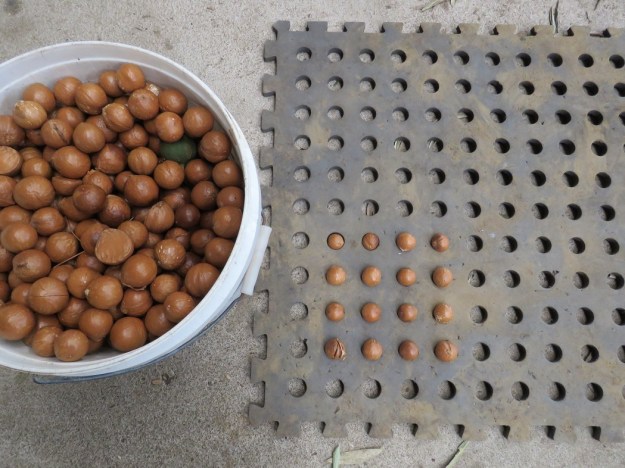
Astonishingly, Harry gave us Drake’s small balls. ‘Somebody has put them in a Chinese box at some stage,’ he told me. For the avoidance of doubt, he had put a sticker on the bottom. ‘Drake 1590 1739’ the sticker reads. Bit of an oops there with the date, apparently, though we do not know whether it was the pendulum or Harry’s research that made the mistake.

I opened the Chinese box, quelling my excitement. I am sure you can visualise the scene.

The big reveal: Sir Francis Drake’s small bowling balls? Or Chinese chiming balls, maybe?

Reader, they are Chinese chiming balls that were all the fashion a few decades ago. The chimes still work. Maybe Taiwan 1970?

I feigned gratitude but informed Mark that next time I saw Harry arrive here, I would hide. He was all Mark’s to deal with from now on.

Planning a trip

I loved my one, limited trip to Greece in 2004 but didn’t see a lot of vegetation

I like travelling. I am also mindful that in these rapidly changing times, the ability to fly across the world on a whim may be a privilege with days that are numbered. In fact, I feel defensive about even owning up publicly to planning another trip. But I am and it is very exciting.

The sight of wildflowers growing in their natural habitats can fairly be described as thrilling, for some of us at least. We haven’t seen a lot of it but I have been casting around for a tour that would suit us and I wasn’t overly keen on travelling to alpine meadows as they break into spring. A chance remark from a visiting friend put us onto a small tour company whose speciality is wildflower tours. The company is led by Christopher and Basak Gardner whom some readers may know as the authors of a beautiful book “The Flora of the Silk Road”. Another NZ colleague whose opinion we trust gave a ringing endorsement, having gone on two different tours with them.

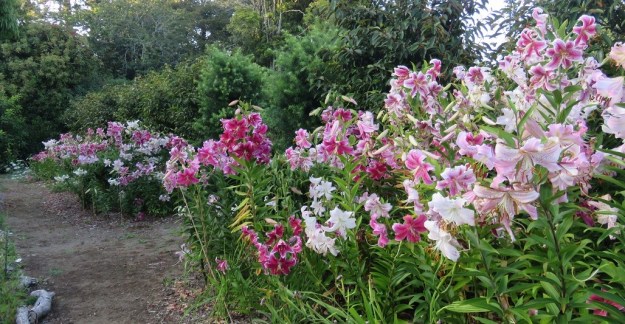
Just look at the enticing small tours Vira Natura offer.  We are opting for the summer tour of the Pindos Mountains in Greece where the temperatures will be cooler than down on the coast at that time of the year. Lots of summer wildflowers, including Lilium chalecedonicum, and a  small group, staying in traditional hotels, led by a botanist.

Patmos, not Pindos, in 2004 but Greek at least

I have only been to a small part of Greece – an island-hopping trip in the Dodecanese with Second Daughter who was living in London at the time. I absolutely loved it and have longed to return. But Mark’s interest in arid island landscapes and swimming in the warm Mediterranean sea might last two days at the most before he became bored. And I could never inflict an island-hopping tour on him when he can get seasick out snorkelling, let alone travelling on ferries and catamarans. A land-based wildflower trip, however, is something that will delight both of us.

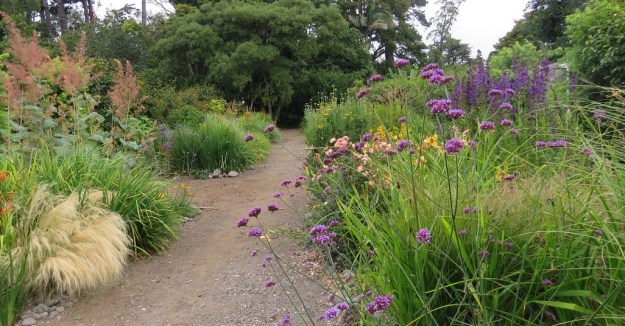
Because we are travelling so far, we will likely tack another week or ten days on to the end of the trip and head over to England (despite Brexit and all that). We are really keen to track how some of the naturalistic plantings we have seen have matured with the passage of a few more years. It is all very well to look wonderful for the first year or two, but how is it five years or more down the track? The Missouri Meadow at Wisley that so enchanted us in 2009 did not fare well but no doubt lessons have been learned. Meadows, prairies, wildflowers and naturalistic plantings may not need the heavy maintenance input of more traditional garden styles but they still need skilled management.

I offer our tentative list with the thought that some readers may have recommendations or comments to make. This will be mid-July, so heading into high summer.

London – I want to revisit the Nigel Dunnett planting at the Barbican that so delighted us on a previous visit and I can’t think why we have never been to see the Oudolf plantings at Potters Fields. Then up to Trentham Gardens near Stoke-on-Trent, primarily to see how the Dunnett plantings are maturing and to see the more recent additions he has made. We are particularly interested in his work. There is also a major magnolia planting there and we would like to see if any of ours have been used.

Wildside, a very special private garden in our opinion

Heading further north than we have been before, we are thinking of visiting Lowther Castle in Cumbria, mostly to see the gentle romance of Dan Pearson’s recent work. While up there, we would add in the outrageous, historical topiary of Levens Hall and probably pay a return visit to Arabella Lennox-Boyd’s lovely garden, Gresgarth (if it is open). Heading south, there has been so much talk about Piet Oudolf’s plantings at the Hauser and Wirth Gallery in Somerset that it would be a pity to miss them, even though we have a fairly good understanding of the Oudolf style now. Then to North Devon to see Keith and the late Ros Wiley’s particularly special garden called Wildside. We have been twice before but it remains our absolutely all-time favourite garden other than our own. It is worth the journey. We will go as far as arranging the dates and itinerary around Wildside’s limited opening days.

Heading back towards London, I would like to see Derek Jarman’s garden, even if it is only a brief stop en route. His book about the making of his garden is the best personal account I have read of any garden.

I am not sure how well we understood Great Dixter back in 2009

Finally, on this whistle-stop tour, we may revisit Sissinghurst to see what changes the outgoing head gardener, Troy Scott Smith and advisor, Dan Pearson have wrought in recreating the romance of Vita Sackville-West and Harold Nicholson’s original creation, which had become largely a distant memory in the face of ever-growing crowds of visitors. And we probably should have a second look at Great Dixter. We would look with different eyes now and it is time to lay to rest the most enduring memory of our one previous visit when we encountered some gardening underling who had clearly failed at Gardeners’ Charm School. It is not fair to judge the life’s work of Christopher Lloyd and, more recently, Fergus Garrett on the shortcomings of one graceless underling. Besides, on our only other visit, rather of a lot of what we were looking at seemed like serendipity. I think now we may have fine-tuned our observation skills and understanding to the point where we can discern what role careful editing (in modern parlance) plays in creating this experience of happy chance when it comes to keeping a light but skilled hand on garden maintenance.

Mark’s comment is that it should be really interesting to look at real wildflowers in the wild and follow it up with looking at the application of that naturalistic style in the more managed context of gardens and amenity plantings.

Finally, Greek goat, as seen on the tiny island of Lipsi

Drowning the planet in plastic


Left to right: food scraps, glass, general waste and recycling

We have had two new rubbish receptacles delivered and our rates (local council taxes) have increased accordingly. I am grateful that we have a large, double carport where we can hide these in the deepest recesses – I pulled them out to pose them with a pretty background – but I can see that the sheer amount of space they take up must be a real problem for many urban dwellers, particularly those in small units or with minimal outside space.

One size must fit all. Our council has lofty zero waste ambitions but all I can see is a redistribution of waste to different containers and nothing about a reduction overall. In vain did I submit to Council, pointing out that rural dwellers do not need a food waste collection. I even directed them to the Australian system many councils have opted in to where there is a project to educate residents to deal with food waste on site, via the supply of no-charge options of a worm farm, a bokashi composting system or a black compost bin. Our apartment-dwelling Sydney daughter has a worm farm in her carpark space to deal with her food waste. But neither councillors nor council staff were listening and so our food scraps bin (that is the smallest of the three bins) arrived this week and we will pay for its weekly collection even though we will never use it.

Times past

Some readers will be old enough to remember old-time rubbish collection. Why, we still have one of those old rubbish tins here – we retain many such handy old relics from times past. About 40 years ago, multi wall paper bags came in, to be replaced soon after by more capacious, thin plastic bags. And now heavy duty plastic bins. With every change, the capacity has increased and so has the volume of household waste. Murphy’s law. Not our household waste, I hasten to add. We have gone all out to reduce waste and minimise how much enters our place in the first place. We are meticulous at sorting it and it’s really only the blue bottle bin that needs to go out regularly on account of our wine drinking habits. Out there on the verge for everyone to see is evidence that the Jurys prefer drinking Pinot Gris but generate very little waste other than the bottles. I hope they, at least, are actually recycled.

A lifetime supply of left-over plastic pots 

and cartons of left-over planter bags from PB2s to PB 90s which we will almost certainly never use now

Back when we had the nursery in production, we were aware of how dependent the nursery trade is on plastic. It was many years ago that we heard talk from Germany of making suppliers responsible for taking back the inorganic packing and waste generated in the supply of their product and we dreaded having to deal with that. I see the comment in the annual sales report we received this week from our agents who handle the international sales of Mark’s cultivars: “there is also pressure on the use of plastics in the industry which will impact on containers and packaging as we identify more sustainable options”. That is the use of ‘we’ in the royal sense, meaning the whole industry. It needs to happen but it will take a whole lot more pressure by customers to force the pace of change. The garden industry is not as good for the environment as many like to think. While we continue to use and reuse the hard plastic pots and cartons of planter bags left over from our nursery days, the fact remains that at an individual level, we are continuing to smother our planet in plastics.

It is local body election time here. These are rarely exciting events, so dominated are local politics by older (rather too often, just old) middle class, white men, many of whom have held their office for decades. Readers may be faintly amused – or aghast – at our local council’s attempt to convince the younger generations to vote with a campaign featuring the poo emoji with a smile superimposed on top and the byline ‘I give a shit’. Mark groaned and pointed out that the yoof of today are way more sophisticated than we ever were and maybe still are. I am not at all convinced that the sight of the fairly well-paid Council CEO – and presumably other staff – out and about wearing ratepayer-funded tee shirts with a smiling turd and declaring that they give a shit (don’t we all? Literally) is going to woo a younger voting demographic when the problem is more likely that they look at the candidate line-up and see a majority who resemble white great uncles or grandfathers.

As my daughter says upon occasion, “you can’t polish a turd”. But you can apparently, smother it in glitter.

Sad thoughts on camellias

We used to take perfection in camellia blooms for granted

Why did this camellia make me so sad that I picked it to photograph it? It is just a pretty, formal japonica-type that is an unnamed seedling, known here as ‘Mimosa’s sister’ because it is of the same breeding that produced the beautiful pink formal that Felix Jury liked so much he named it for his wife, Mimosa Jury. The answer is because it is a rare sight, now – a perfect, undamaged bloom.

When we set up the nursery in the early 1980s, rhododendrons and camellias were our main lines. The former have fallen from favour these days, the latter have been decimated by camellia petal blight. Mark’s dad, Felix, loved the formal flower shape so much that most he named were of this form – ‘Waterlily’, ‘Dreamboat’, ‘Softly’, ‘Julie Felix’ and ‘Mimosa Jury’. The first two are international classics now and ‘Mimosa Jury’ deserves to be there, too.

These days, this is a more common sight – blooms showing various stages of unsightly damage

We still have many camellias in our garden, both of Jury breeding and named cultivars from around the world. Right now should be peak display for the japonicas, hybrids and reticulatas but camellia petal blight has dealt a death blow to that. It is maybe two decades since we have had a good early spring display and we will never see it again from that grouping of mass bloomers. It really is a bit sad to lose a major family of flowers. We keep the plants we want for shelter, overhead cover and as background filler plants but now without the pleasure of a clean floral display.

Sadly, even the interesting tropical yellow species like Camellia nitidissima suffer from petal blight in our conditions 

More of botanical interest than rewarding garden plant – Camellia nitidissima again

Camellia petal blight is a problem throughout much of the world. Australia hasn’t got it and long may their border control keep it out. As I commented after attending the International Camellia Congress in China,  it is not as devastating in other areas as ours. It is nowhere near as bad in dry climates. But here, with our generally mild climate, high rainfall and high humidity all year round, it is as bad as it can be. I doubt that we will plant another japonica or reticulata in our gardening lifetime. Were we still selling plants, we would have contracted our range to sasanquas, the garden-worthy species and some of the tiny flowered cultivars that don’t show a problem with petal blight because each individual flower only lasts a few days.

There is work going on to try and breed for blight-resistant choices but they are limited to tiny flowered cultivars as far as I have seen. I do not think we will ever see the japonicas and reticulatas free of blight. The progress on trying to find a treatment for petal blight is painfully slow and if it comes about, it may be suitable for treating individual specimen plants but not for the mass plantings that New Zealand went for in the past.

At the time it was discovered, it was only in four places in Wellington and could have been eradicated but it wasn’t seen a priority, either high or low. So it spread – everywhere. The theory back then was that it may have come in on a corsage being worn by an airline passenger from the west coast of USA where it was already well established. From such minor events can a major change be brought about.

Most of our camellias look more like this now – hanging on to blighted blooms

I just feel a bit sad that I won’t see the mass display of beautiful blooms that we took for granted for so long. If you live in a drier climate, they are probably still a viable option. Look around and see if the garden plants in your area are putting on a clean display and dropping their spent blooms (blighted blooms usually stay hanging on the bush). If, like here, there are no mass displays of blooms any longer, I would be looking at planting other options than the larger flowered camellia types. When you come from the camellia family of Jury, that is bleak advice.

Ever the Pollyanna, I should finish on a positive note. Fortunately there are plenty of other beautiful flowering plants we can choose from for this time of year. Look at the range of colours Mark is getting to in his breeding work on garden-friendly michelia shrubs. Most of these are also blessed with good fragrance which is not common in camellias.

A touch of Africa in Waitara

Aeonium arboreum ‘Zwartkopf’ and Dracaena draco, both from the Canary Islands

When I was photographing the Magnolia ‘Felix Jury’ plants in my local town of Waitara on Thursday, I stopped to photograph this small public garden by the river. I remember thinking when it went in about 15 years ago that it was a most unusual and extravagant planting by the Council. Local authorities are always strapped for cash and, when money is short, Waitara has a history of coming off second best to more affluent areas which are better at lobbying and demanding quality. The money, as I recall, came from a charitable trust and I am guessing an outside designer had a hand on this project.

Some red flowered aloe that neither of us could name

It was the mass of red flowering aloes that particularly caught my attention this week but I have thought about this planting on and off for years. Culturally, with its heavy African influence, it is like a fish out of water. But logically, is it any more culturally alien than the gleditsias planted down the main street, the bedding plants around the clock tower or indeed the magnolias I had just photographed? Would I have raised my eyebrows had it been a more conventional planting of cherry trees from Japan, daffodils and tulips, maybe with kowhai (our native sophora)? Most of our plantings in this country, be they public or private, are a mix of exotic and native plants.

Our own Aloe plicatilis have never reached this stature

And there are plenty of native plantings nearby – opposite on Manukorihi Hill, the pohutukawa that we managed to save from the ravages of the flood engineer downstream (as I recall, we lost about 29 to the chainsaws but saved over 80), extensive mixed native plantings upstream on the river flats. Literally a few doors down the road is a little pocket park that has been lovingly and just as carefully landscaped in natives.

Strelitzias from South Africa with the rock gabions visible behind as part of flood protection. The river is just behind the gabions.

There is no arguing that in this free draining, frost-free, sunny situation on the riverside, very close to the sea, these African plants are thriving. The stone gabions in the background are the latest addition to the stopbanks to get additional height to hold back floodwaters. Like much of coastal NZ, large parts of Waitara have been built on the flood plain and that is looking increasingly precarious these days. And this planting has prospered in a maintenance regime that is public sector, so not intensive and it will be a lot less intensive than bedding plants.

Mark tells me it is a Butia capitata which is actually South American. Looking terrific with a bed of native libertia at its feet. 

The attempt to incorporate our native nikau palm is not as successful in such an open situation. Many of our native plants have evolved to grow in close company.

I was discussing this with Mark and he made a comment that was like a lightbulb moment for me. “Well, it hasn’t been vandalised in all those years.” He is so right. Vandalism of public plantings is a larger issue than people stripping pretty flowers or stealing plants. Maybe this one just looks too prickly?

More aeoniums (with the only piece of litter I saw – spot the can) and Dracaena draco again

While it may strike me as slightly incongruous in its local context, this exotic planting owes much to the style of landscaping favoured at the time for upmarket, domestic gardens in the big city of Auckland. The interesting thing about it in this situation is how well it has done in the conditions and how it has matured gracefully over the years. Fifteen years without anything more than routine maintenance is like a lifetime in public plantings.

Agave attenuata is actually Mexican so this is quite an international planting. Like Aloe plicatilis, it is way more impressive in this open, coastal situation than in the sheltered conditions of our inland garden.

I am not so keen on the blue painted seats, lights, rubbish bins and the like but that is my personal taste. I prefer the plants to star rather than the man-made conveniences. The planting is not pretty in the conventional sense, it lacks all cultural context* – but it works. And it is undeniably different to every other public planting I have seen in our district.

*When I mention cultural context, it may perhaps help if I explain that the ONLY building of architectural significance that I can think of in Waitara is the meeting house on Ōwae Marae, the most important marae for Te Āti Awa, one of Taranaki’s pre-eminent Maori iwi, or tribes.

Photos at Ōwae Marae taken earlier at a government select committee hearing