
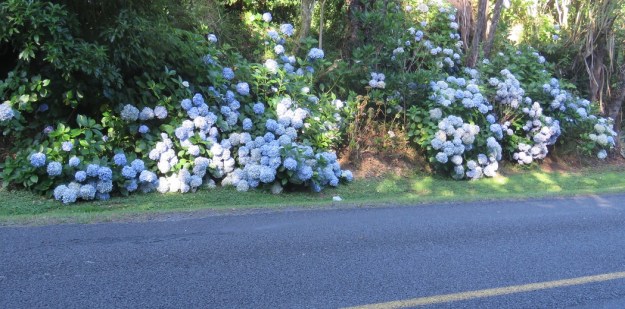
Blue hydrangeas – a common roadside plant
We are very blue along our Taranaki roadsides in midsummer. I meant to get out with my camera a few weeks ago to record the roadside hydrangeas flowering in our area. Many are now passing over so I had to make do with the verge planted by our neighbour across the road. It has been bringing me pleasure for many weeks now.
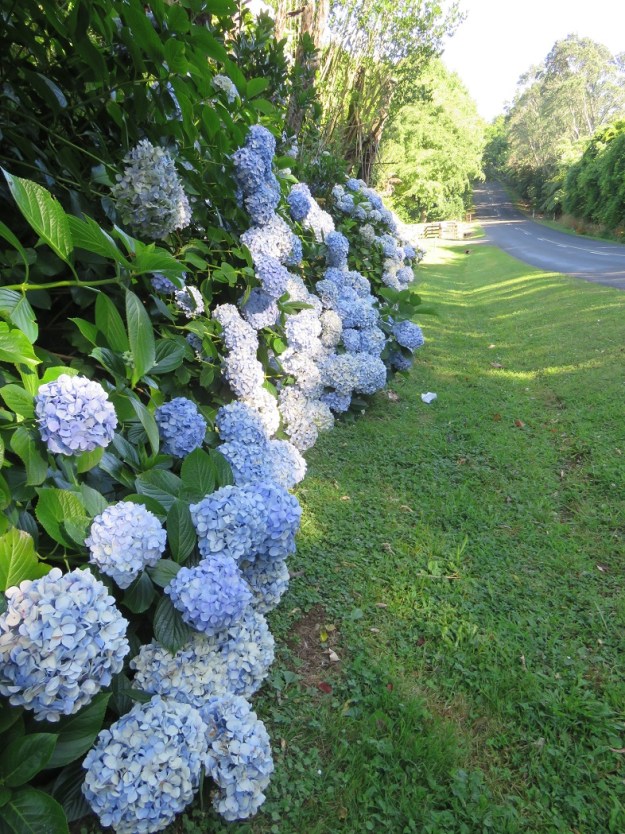 Basically, hydrangeas are blue in Taranaki. This is to do with available aluminium in our acid soils. In our warm, temperate climate with adequate summer rain, they can just be planted and left. The many, many roadside hydrangeas will have been planted originally (seeding is minimal) and then left to their own devices. I don’t think anyone ever prunes them. This means that they are generally smothered with smaller flower heads. Pruning controls the size of the shrub and increases the flower size but lessens the number of blooms. Plants can survive quite happily with no pruning at all.

Weed or common wildflower? Agapanthus
It is the season of agapanthus. They are EVERYWHERE in this area, although they generally start from a deliberate planting and they are most often seen as amenity, road verge plantings rather than garden plants. They are controversial here on account of their seeding ways and the fact that they are resistant to the most common weed killer. But our roadsides would be so much the poorer without them.
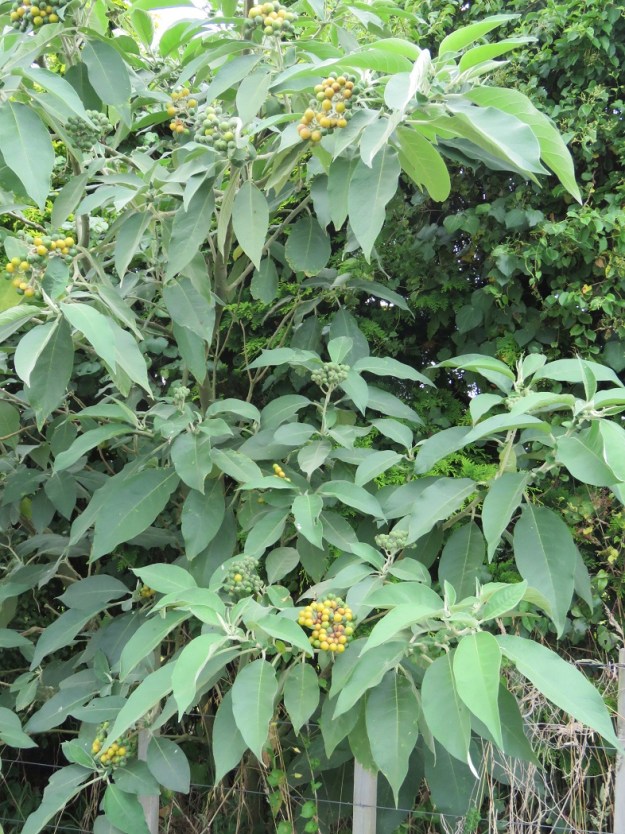
Thumbs down to woolly nightshade
My definition of a noxious weed is a plant that invades and displaces more desirable native plants and I don’t think the roadside agapanthus are displacing anything more desirable. The seed is not spread by birds and generally falls close to the parent plant so is localised. I would be far more worried about woolly nightshade – Solanum mauritianum – than about agapanthus. It has no redeeming features and is highly invasive. Curiously, by this plant, I saw a small plant of Verbena bonariensis on the verge. As it is at least two kilometres from my garden where it is flowering, I don’t think I am responsible for this plant making its way to the wild. Most of our wildflowers start as garden escapes and this verbena is so light and airy in form, while being popular with bees and butterflies, that I am not convinced that it is going to be a problem in the comparative wasteland of road verges.
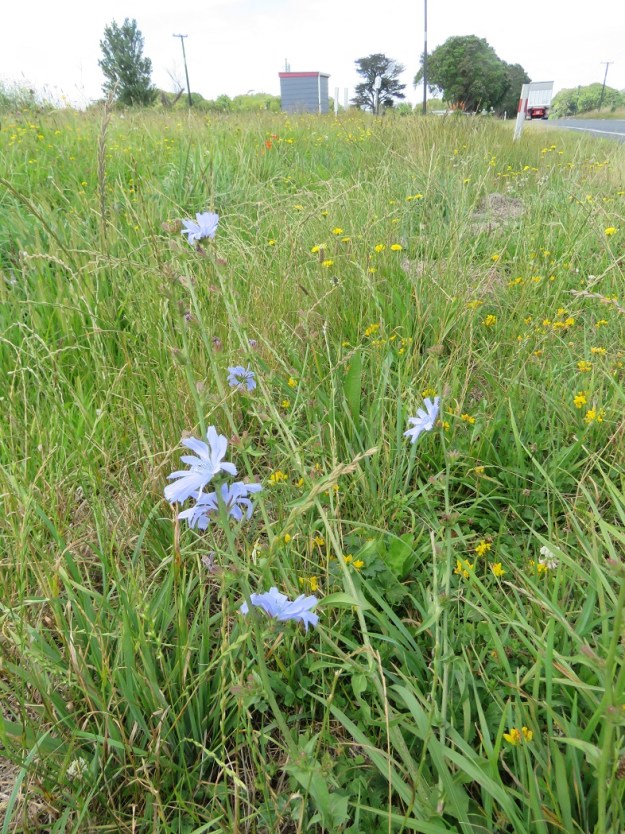
Chicory – not as common as I would like it to be
Chicory is another pretty blue that I wouldn’t mind making its home around here. It is a member of the dandelion family and is also used as stock food overseas so I can’t think it would do much harm here. I found this one growing on railway land when I stopped to photograph the red hot pokers.
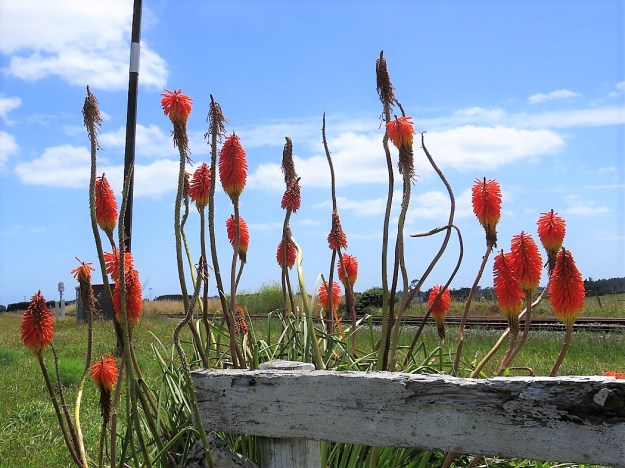
Kniphofia in Lepperton
Like the hydrangeas, kniphofia generally start from a deliberate planting. Though some forms seed more freely than others in a garden situation, I have never seen them as a weed when on road verges. I once wrote about them – if you want to know why Father was a red hot poker and Mother was a blushing violet. I liked this scene of kniphofia and an old gateway between the state highway and the railway line in Lepperton this week.
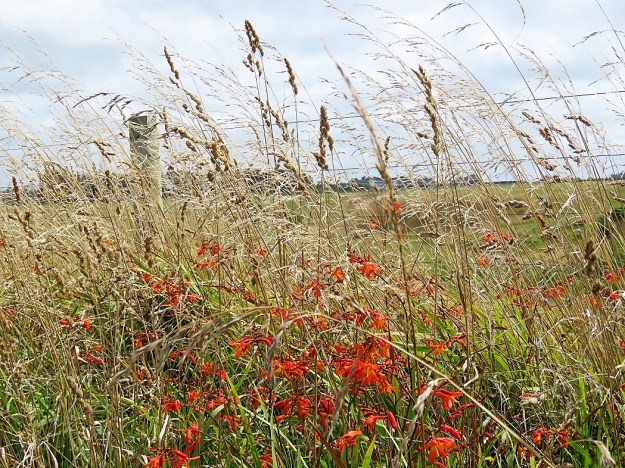
Crocosmia – commonly referred to as montbretia
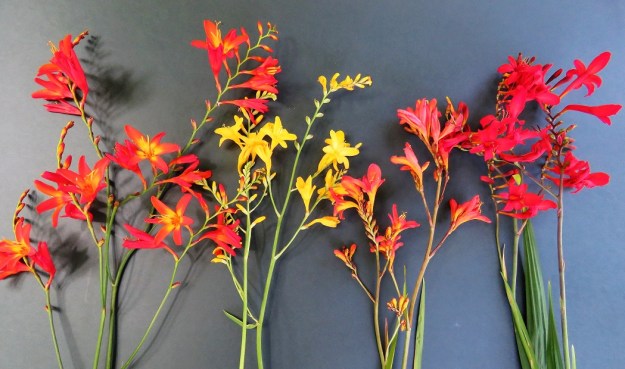
I wrote about crocosmia in my earlier post today. If we are not blue, we are carpets of red around here – or sometimes blue and red. They are just too happy in our conditions though they do look very pretty interspersed with the long grasses on some road verges.
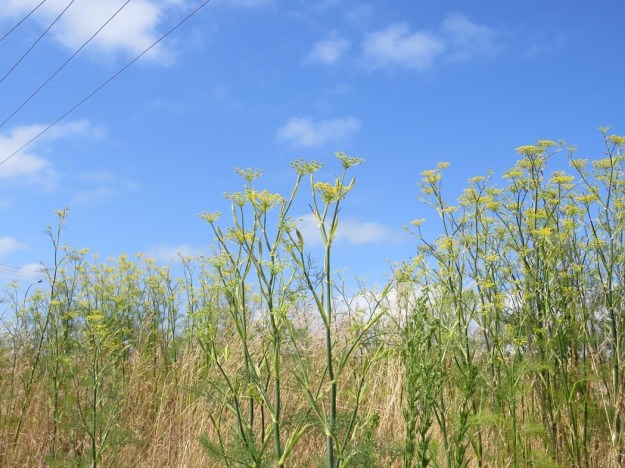
Common fennel
Into the yellows, we have fennel, fennel and more fennel all around the district. I really like it, so much so that I have used it in the summer borders. I like the airy grace of those yellow umbellifers and the fine, ferny foliage. The insects like them too. There is a bronze form more commonly used as an ornamental but I am not willing to spend money buying a fennel and nobody has given it to me yet.

Evening primrose
I am also fond of the wild evening primrose (Oenothera biennis) which is common enough here and certainly common in wilder areas of our property. It doesn’t seem to do any harm and the bees like it.
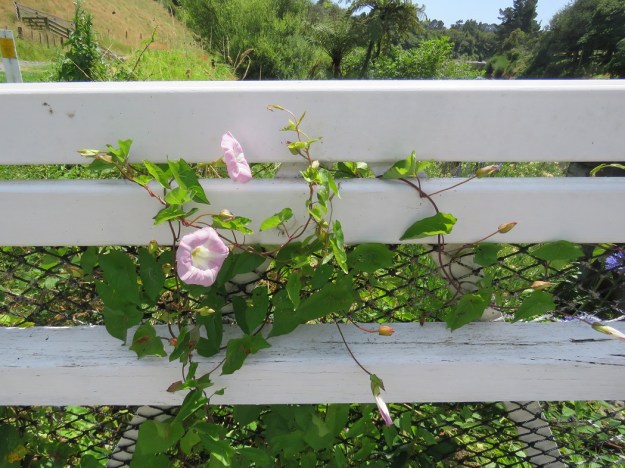
Thumbs down, also, to convolvulus
Not all of our wild flowers are desirable. Mark keeps out the convolvulus, be it pink or white, though there is so much of it around, I can only conclude that others are less vigilant. It is a smothering plant, hellishly difficult to eradicate once it gets a foothold. This one is climbing up the Bertram Road swing bridge over the Waitara River but will very soon dominate the whole bank and bridge if not kept under control or taken out.
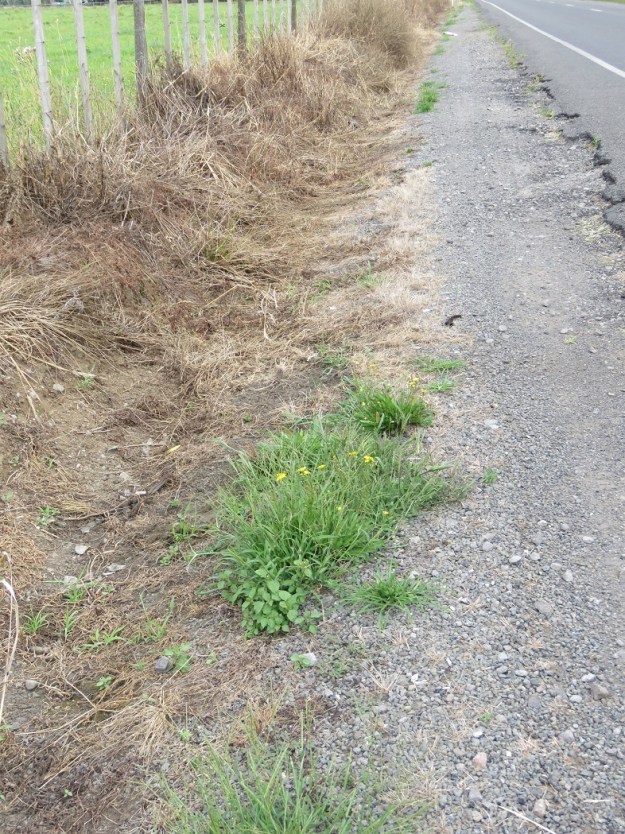
The wasteland of the sprayed road verge
Not all of our wildflowers are noxious weeds. But neither are all of the weeds wildflowers worth tolerating. On the other hand, is there anything much worse than this sprayed wasteland of a road verge? A practice that remains common around here.

Agapanthus a-plenty

And sometimes agapanthus and crocosmia – one starting from a deliberate planting, the other entirely self-introduced
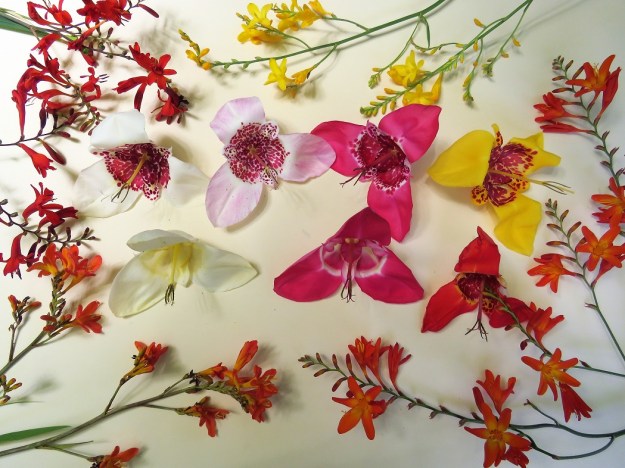 I started by thinking I would do a comparison of tigridias. And then crocosmias. It was too hot to be out in the garden and I couldn’t go down to the shaded areas of the stream in the park to clear weeds on the banks and free up the water from some of the choking weeds on account of having stuffed my dodgy wrist doing this heavy work the day before.
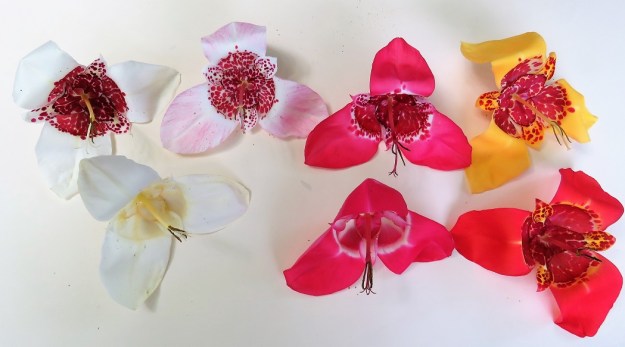 I have spent some time separating the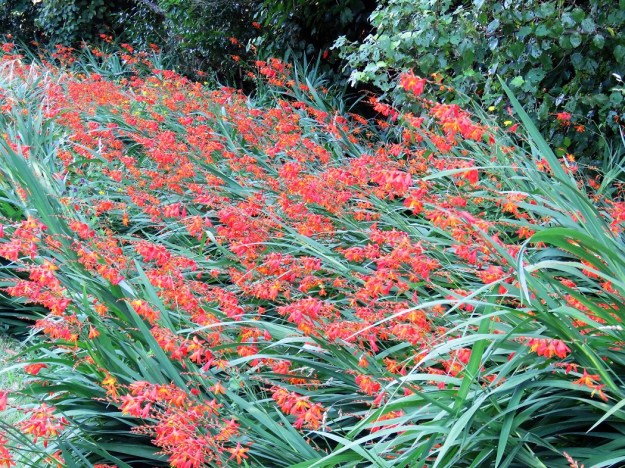

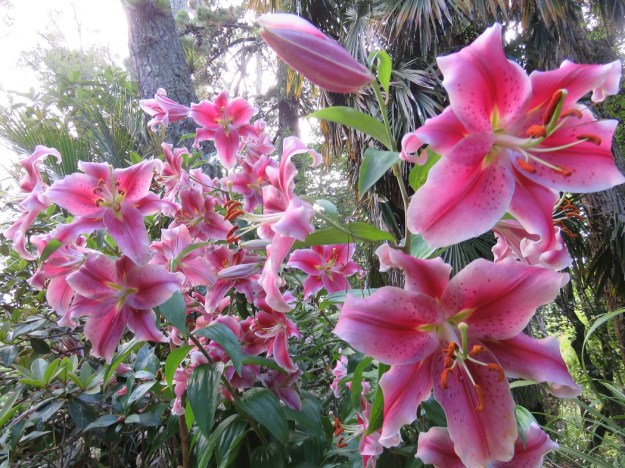 Auratum lily time is a delight, a joy even. Showy, over the top, flamboyant but glorious. And we are just entering these weeks of glory.
 We grow lilies in the better lit areas of woodland. They can get somewhat stretched reaching for the light so need more staking when not in full sun. I am rounding them up to limit the areas where we have them growing in order to make that seasonal staking task easier. But they certainly light up the woodland margins.
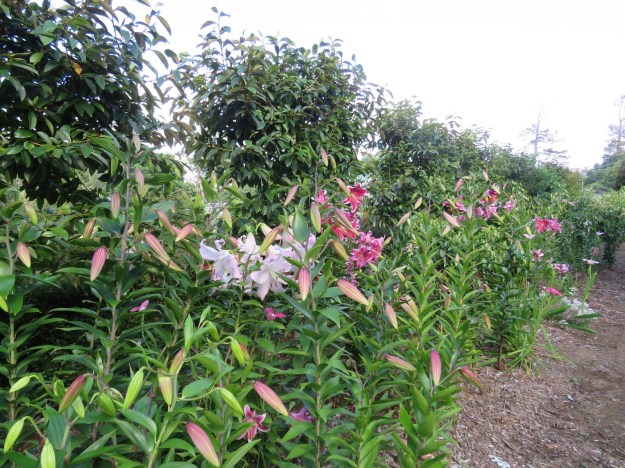 The new lily border has just opened its earliest flowers. These are the result of a determined and sustained effort to
  Almost all of ours are unnamed hybrids raised by father and son – first Felix and now Mark. Felix named a few that we used to sell but they are pretty mixed in the garden now. All are outward facing, not upward facing. That was one of the breeding aims. Upward facing lilies act as leaf and debris catchers and weather-mark badly.
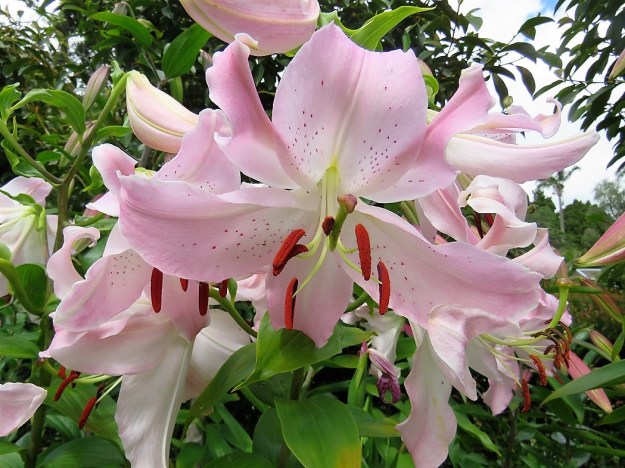 Of them all, I think these soft, marshmallow pink ones of Mark’s raising may be my favourite. Or it could be another one in a few days’ time.
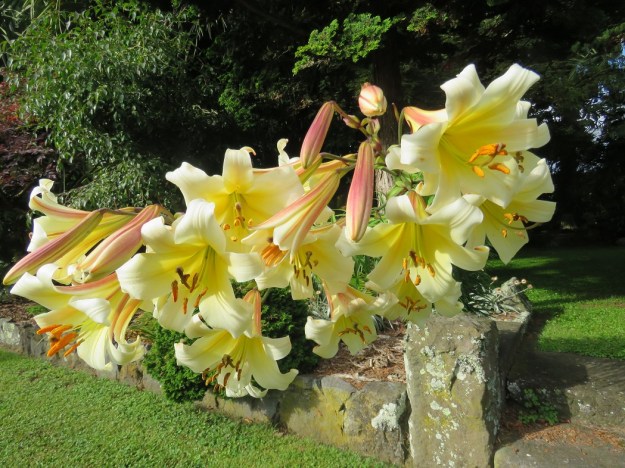 Finally, just in case there are any lily experts reading this: I assumed these trumpet lilies elsewhere in the garden are an unusual, honey-coloured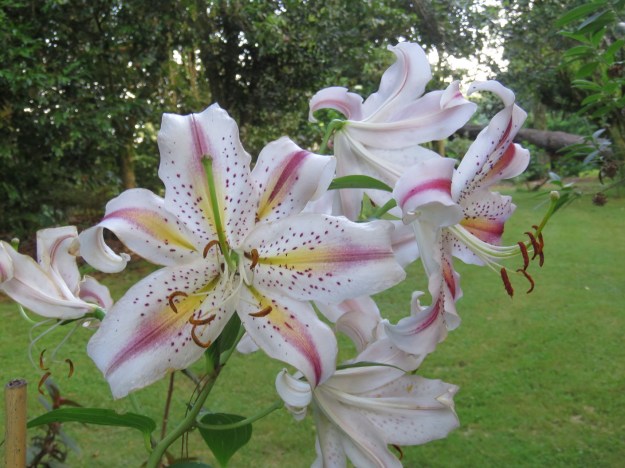

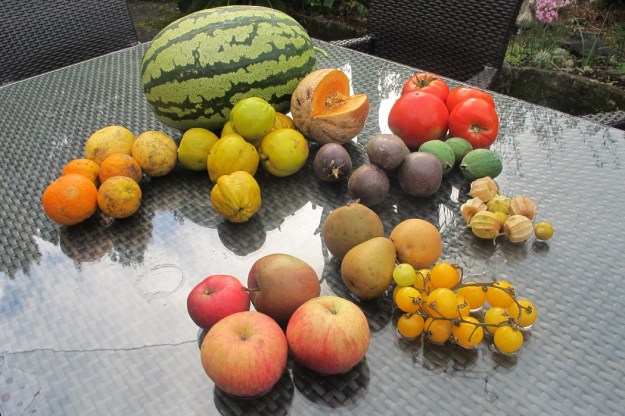
 That got me thinking. Do we eat twenty-five different fruit and veg week in and week out? The recommended daily intake of five plus is no issue, but that is servings of fruit and veg, not different types. We are large consumers of fresh fruit and vegetables but do we reach twenty-five different ones? When I say we eat a lot, we are maybe 90% vegetarian these days. Mark starts his day with avocado on toast, I have fresh fruit and muesli. Lunch is always a fresh fruit salad with five or six different fruits and Greek yoghurt. Dinner includes a fresh salad, a cooked green vegetable and a vegetable and carbs-based dish that contains protein. We can eat like this because we produce most of our own food, though I use the word ‘we’ in the royal sense. Mark grows the food crops. Were we buying all our food, I can’t imagine that the range of fruit and veg we eat would be anything near its current level. I blench at the thought of traversing the supermarket fresh produce section for the weekly shop and trying to select twenty-five different options. I mean, how many more of those resusable mesh produce bags would I need? (Answer: another nineteen).
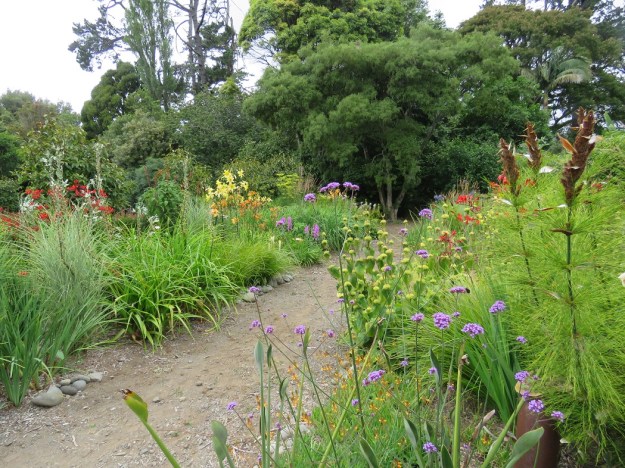
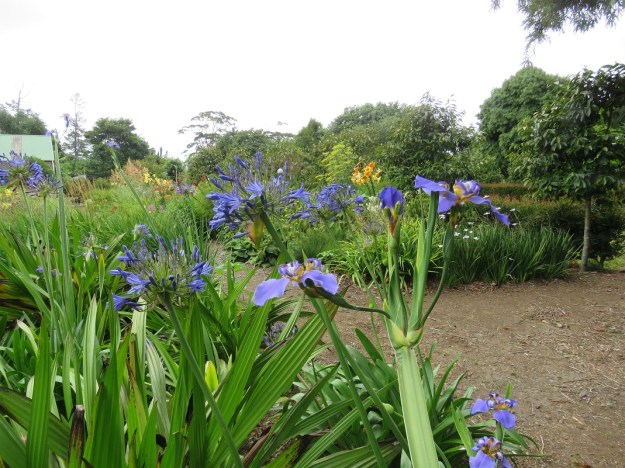 Gardening is usually a gentle activity in emotional terms. We may feel irritation, pleasure, satisfaction, disappointment or similar feelings. The feeling of sheer panic is probably largely limited to those gardening to deadlines with either an opening date for the public or a garden-based event. Occasionally, I feel real joy. I wrote about the
 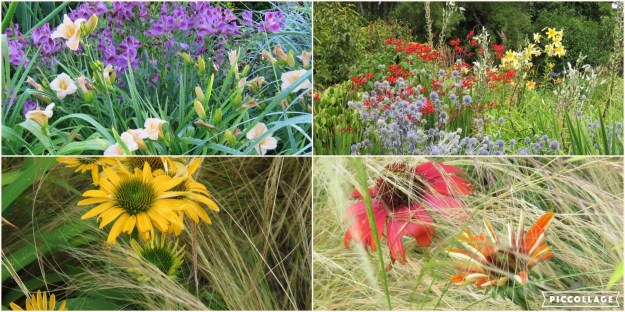 A decade on and I looked at my herbaceous borders this week, and my heart sang. “Yessss!” I thought. “We do actually have a summer garden at last.” A colleague and friend visited this week and was suitably gobsmacked. “When you said you wanted to do herbaceous borders,” he said, “I thought …” I can’t remember what he said he thought but it was along the ‘yeah nah. Unlikely. They’ll learn. It’ll never happen,’ sort of thing. It was very affirming to impress a professional colleague of similar experience level to us. These borders are now at what I call the ‘tweaking stage’. Altering the bits that don’t quite work. Were I more high-falutin’, I would describe this as ‘editing’ (the current term) or maybe fine tuning. But every day, these borders bring me great personal pleasure.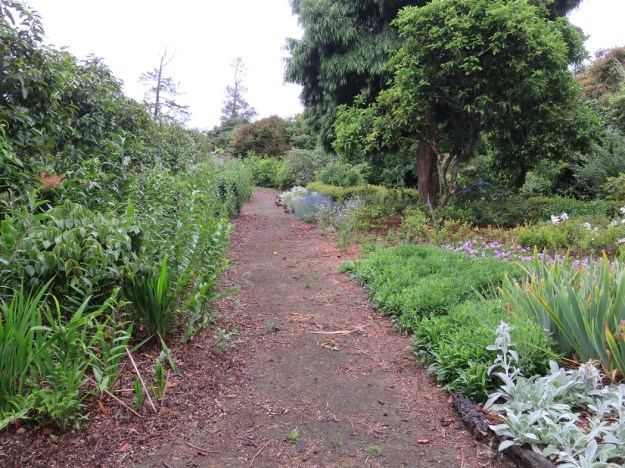
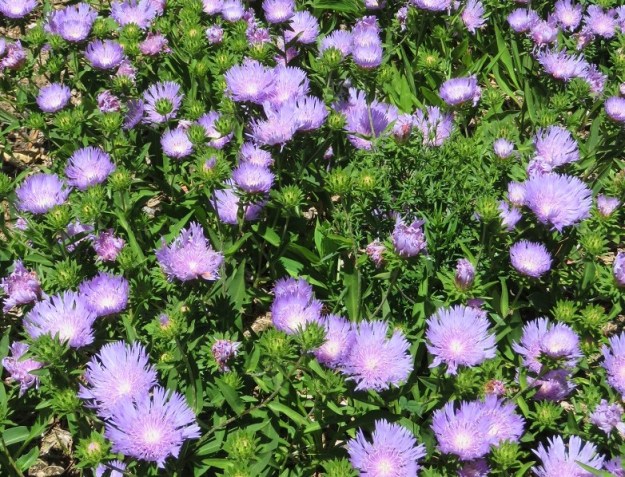
 Many of us covet those gorgeous big blue-lilac alliums that are seen widely in UK gardens. I was a bit shocked to find they usually treat them like tulips – disposable, one-season wonders. But then I looked at some bulb catalogues there and they are cheap as chips to buy. If we are paying anything up to $15 a bulb here, we are not going to be treating them as annuals. I decided this spring that the easy to grow blue brodiaeas – particularly Brodiaea ‘Queen Fabiola’ (also known as a tritelia) are not bad substitutes for we poor, colonial gardeners. I am drifting these bulbs along one side and very pretty they looked in spring with the white iberis. And they are perennial, not one-season wonders.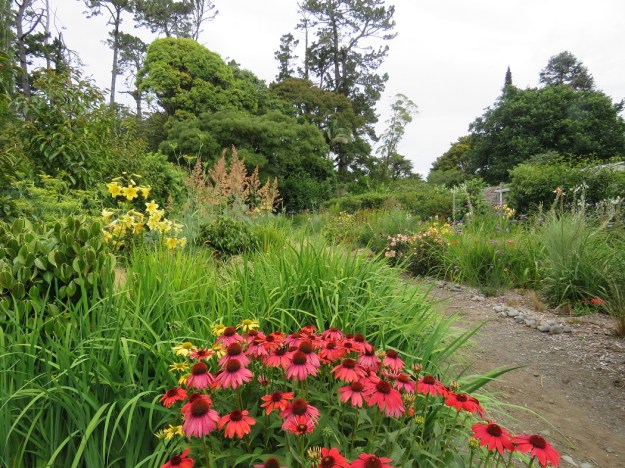
 Tikorangi The Jury Garden