
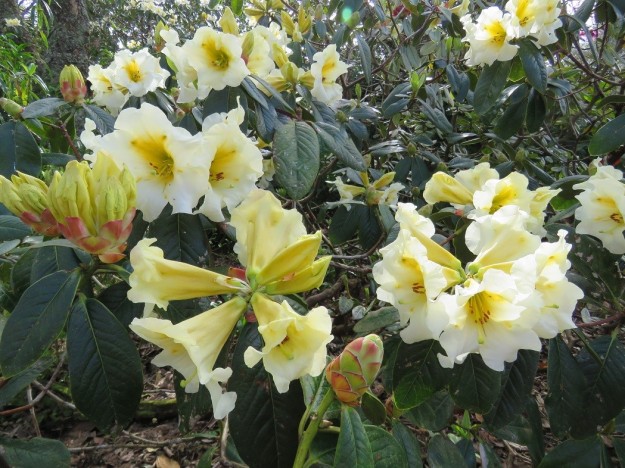
Mark’s ‘Floral Sun’ is a great performer for in our conditions
Rhododendrons have long been a part of our lives. The first ornamental plants we bought in our twenties for our first home in Dunedin were three rhododendrons, chosen with great care from a local specialist grower. They were ‘Mayday’, ‘Princess Alice’ and, obscurely, R. oreotrephes.
Mark is not exaggerating when he says he started the nursery here from one wheelbarrow up. We will give credit to his parents, Felix and Mimosa, for many things but starting the nursery was not one of them and attempts by others to credit Felix as a nurseryman never fail to irritate. The first mail order list we ever posted out in 1982 comprised fifteen rhododendrons and Magnolia Iolanthe. Five of those fifteen were first releases from his father’s breeding and the others were mostly species, including the rare R.bachii. Rhododendrons remained a key part of our mail order offering for the next 22 years, with a wide range of both species and hybrids.
Mark gathered up all the new hybrids he could find which meant a fair swag of material out of USA, very little of which thrived in our conditions. In our time, we grew all those popular varieties of their day – ‘Lems Monarch’, ‘Lems Cameo’, ‘Ostbo’s Low Yellow’, ‘Markeeta’s Prize’ and ‘Percy Wiseman’ amongst many, probably scores, of others. Very few of them are in the garden now. Most needed a colder winter and somewhat drier conditions than we could give them. They were particularly vulnerable to thrip, giving them silver leaves and weakening the plant over time because we were not prepared to routinely spray plants in the garden.
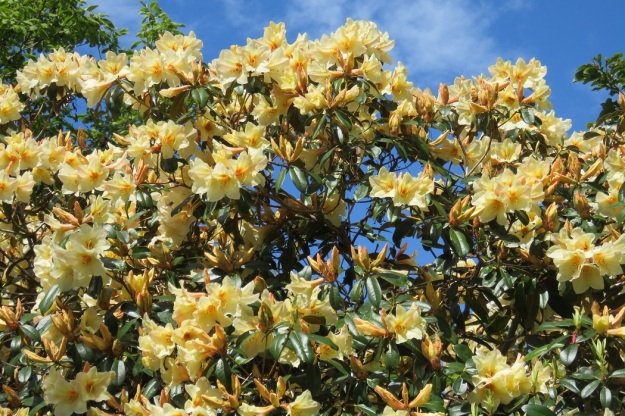
Felix’s maddeni hybrid ‘Barbara Jury’
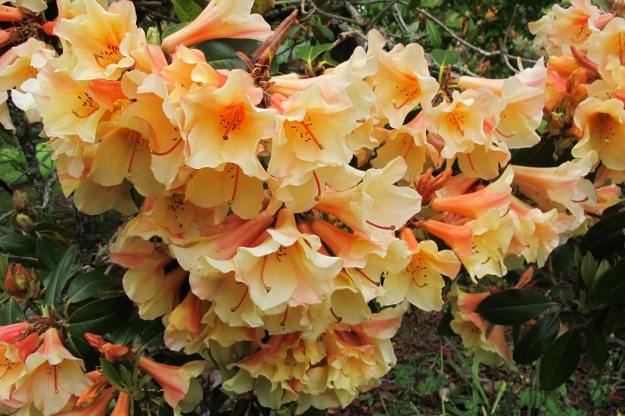
Just another unnamed seedling from Felix’s breeding but it wasn’t that easy to sell these types of rhododendrons to customers who expected tight, ball trusses
Felix had dabbled in breeding for years and his interest in the maddeniis was because of their excellent foliage, high health performance and fragrance. He named about twelve which we released onto the market but they were always a bit of a hard item to sell because they didn’t have the full truss that most people associate with rhododendrons. No matter that they put up a wall – or maybe curtain – of gorgeous blooms, often well scented, and kept healthy foliage all year round, it took a more sophisticated gardener to appreciate their charm.
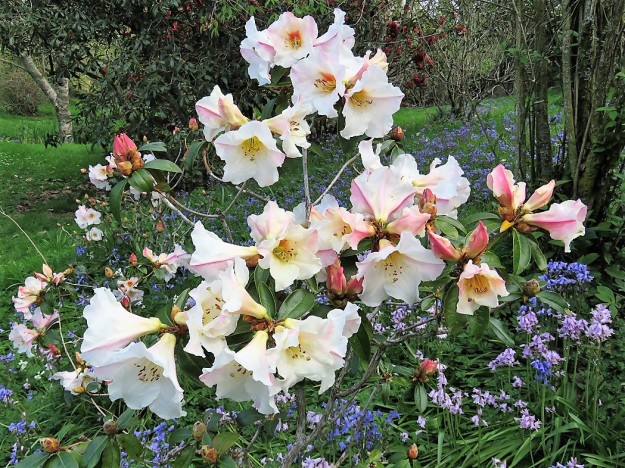
Mark’s ‘Floral Gift’ is proving to be a bit of a star over time in local gardens at least
In his turn, Mark took his paintbrush to the task of pollinating rhododendrons. He has only named four so far, three from the maddeni group and one, ‘Meadow Lemon’, with a full truss. There are more, quite a few more here but the rhododendron lost its elevated social status in the New Zealand garden. Sales declined and the earlier abundance of specialist rhododendron nurseries either changed tack or closed down. A highly competitive market became instead one of very limited supply and little specialist knowledge.
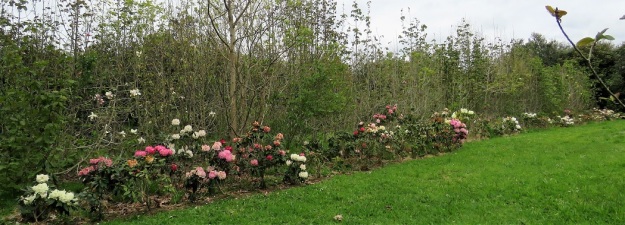
The row of latest hybrids ‘across the road’, as we say
A fair number of readers will know Our Mark. He has never let the changing market deter him and he has continued to potter away breeding rhododendrons, albeit without the sense of urgency because we don’t see any immediate commercial potential in them. He does it very quietly so when he asked me if I had seen the rhododendrons across the road (we have another block of land that is more Mark’s domain than mine), I knew he must be pleased. These were the latest lot of crosses that had hung about the nursery for a while and were finally planted out – a ragtag collection that had not received any tender, loving care and were put out into full sun in the field a year ago. They have never been sprayed or had added fertiliser so it is a regime which separates the good performers from the strugglers.
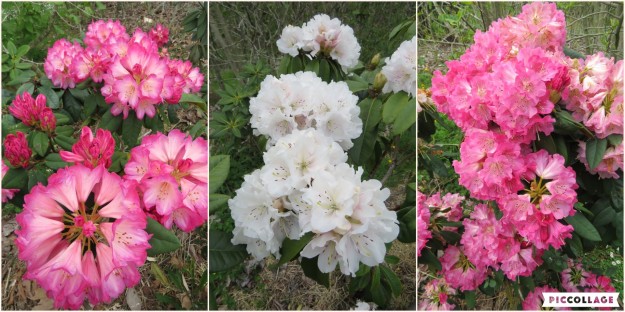
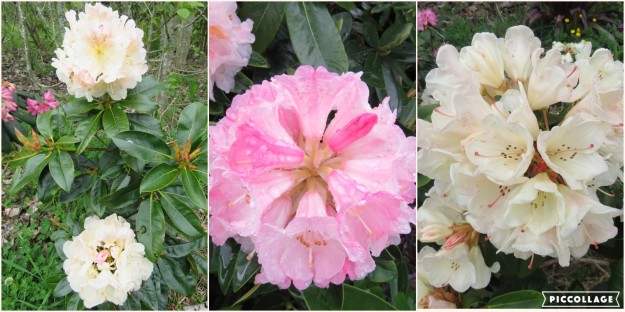
Just a few of the promising seedlings
I was impressed. I admit that I am not a huge fan of the full trusses. They are not my personal preference. But I could see the commercial appeal of these, were they presented in their pots in the garden centre, tidy little mounds in full bud and bloom. What impressed me most was the foliage. We are too well acquainted with grungy rhododendron foliage and, as our winters have become milder, the issue with thrip infestation is getting ever worse. I photographed a fine specimen at the cemetery last week – so badly thrip damaged that it was silver all over. Not a green leaf in sight. But it wasn’t a good enough photo to use.
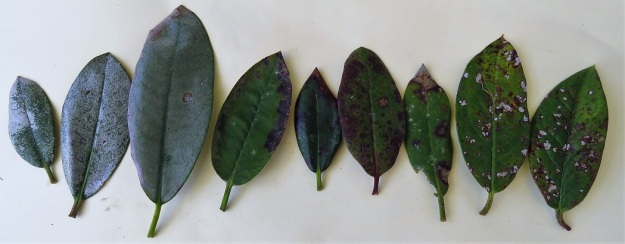
We know plenty about grungy foliage
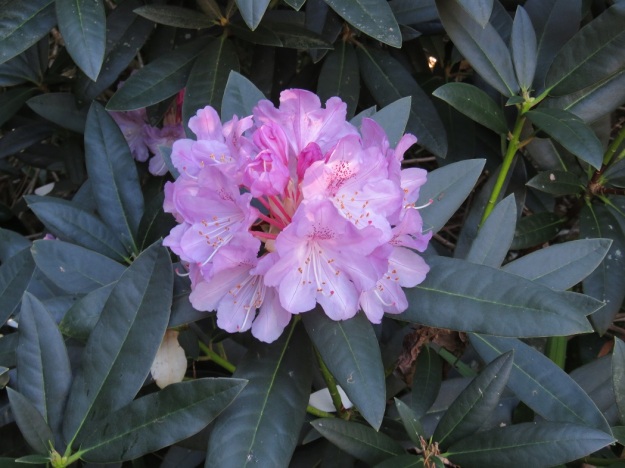
Look past the flower – that foliage! Grown in hard conditions and never sprayed. That foliage is a breakthrough.
To see plants growing in what are not coddled and managed conditions with perfect foliage is a joy to a gardener’s eyes. For readers with a technical interest, these are highly complex hybrids. Mark started many years ago with the red R. arboreum, ‘Sir Charles Lemon’ (for its indumentum), ‘Pink Delight’ and ‘Helene Schiffner’ and he introduced other genes from good coloured rhododendrons that did not thrive in our conditions. Because he has kept breeding with each generation of seedlings, the finer details of the genetic make-up of this latest lot is largely a mystery, even to him.
We have no plans to release any of these. Mark will no doubt carry out some propagation trials to narrow the selections down to those that root easily from cutting. Over time, we will replace some of the under-performing rhododendrons in the garden with better selections. The hybrids may just be a little legacy that he leaves to whichever child of ours eventually comes home – a collection of market-ready, high health, proven performers with commercial potential. By that stage, the rhododendron may have returned to popularity in good gardens again. And who knows? His next generation of seedlings may be better yet.
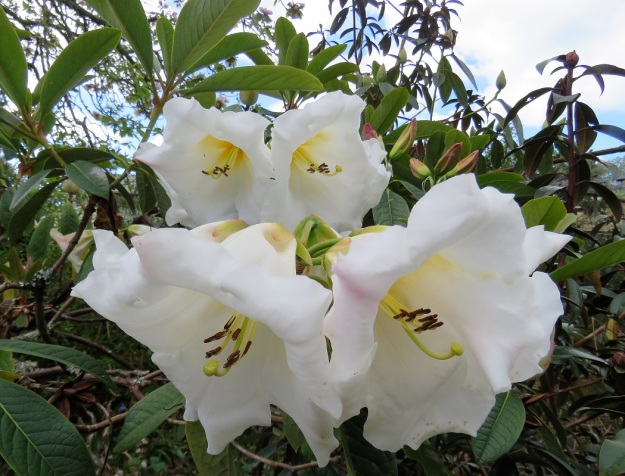
The gorgeous nuttalliis are a favourite of mine though not a commercial viability
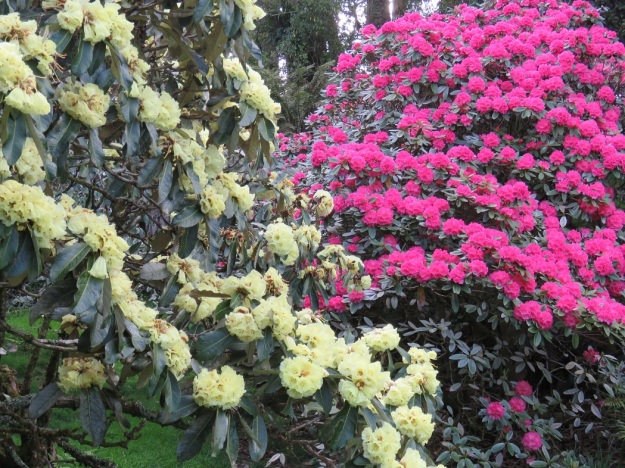
The big full trusses are not so much to my taste, even when it is R. macabeanum to the left. The giant pink ‘College Pink’.
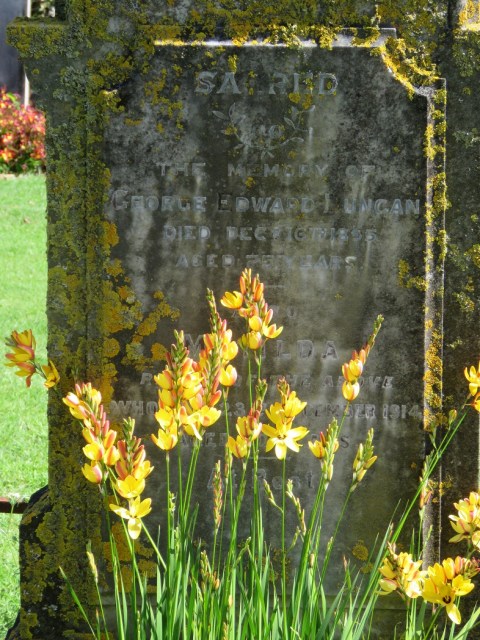
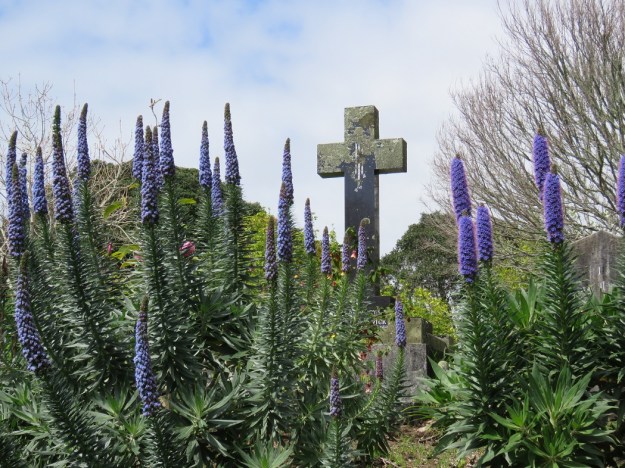
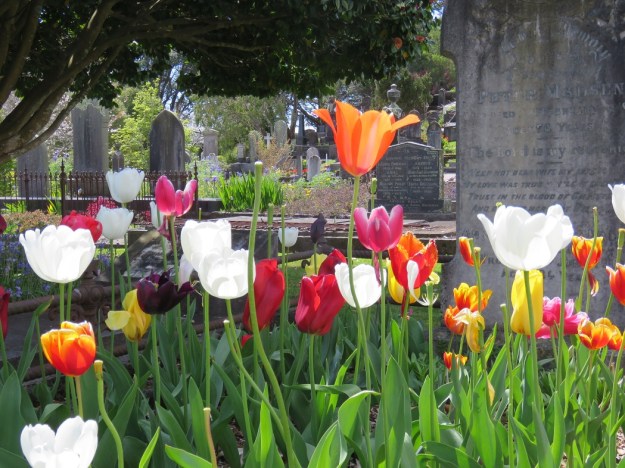
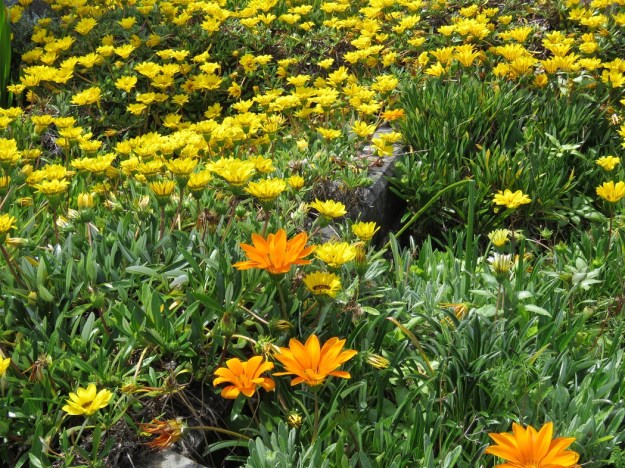 I don’t have any photos of sand saucers but if you Google images, you will find a resurgence on Pinterest. Where else? For anyone with a deprived childhood, it involves filling a saucer with wet sand and sticking the flowers into that to anchor them. The scope for imagination is limited. One memorable year, a junior teacher at the school our children attended – a woman who was not one for expending unnecessary effort – decided sand saucers were ‘messy’ so they decreed Vaseline saucers instead. For this, the saucer is used face down and coated in Vaseline with flowers stuck to it. This was a travesty of an idea, I tell you. Not the same at all.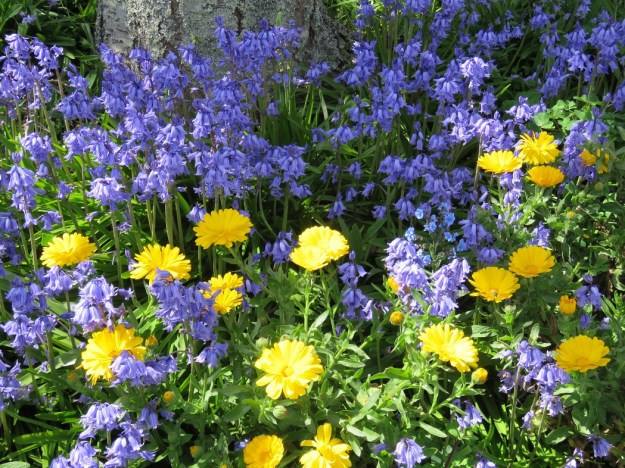
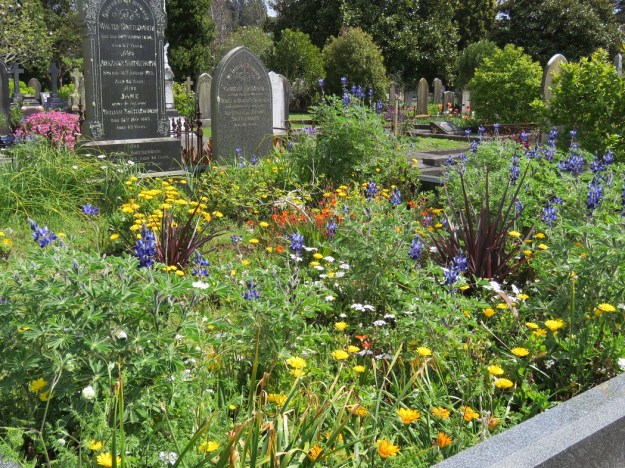
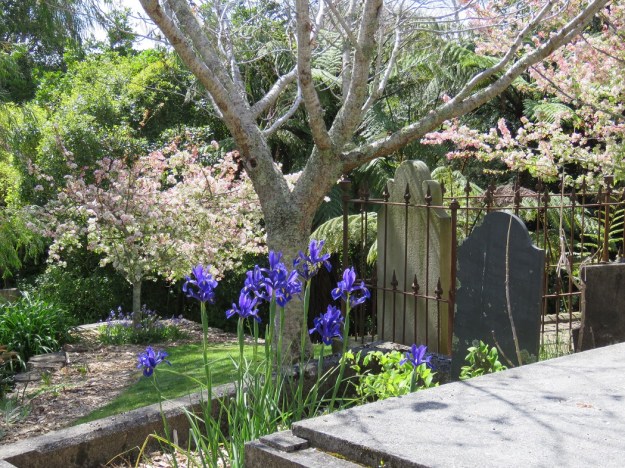
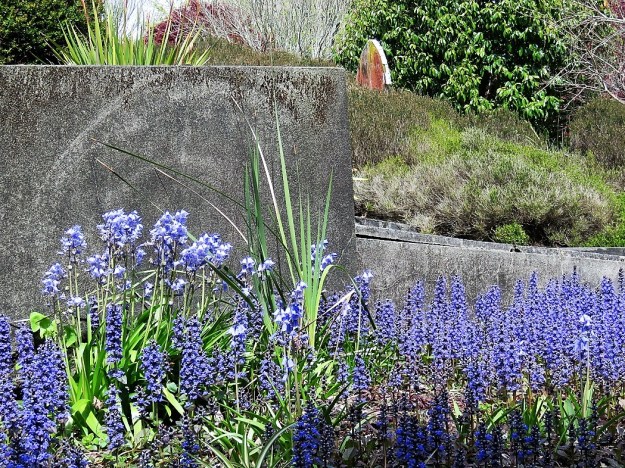
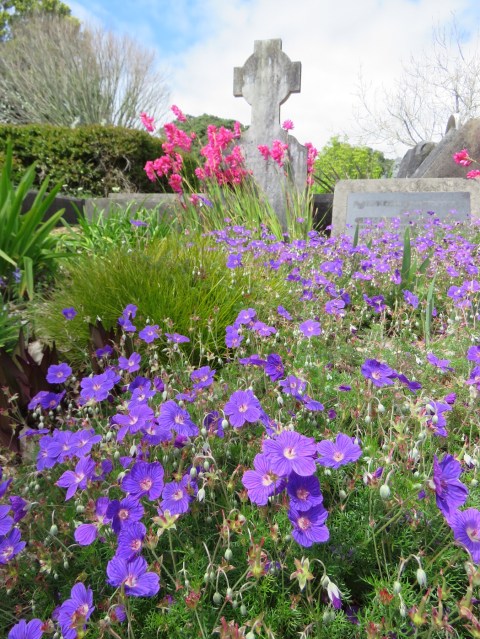 I quite like watching English real estate programmes (Kirstie and Phil assisting escapes to the country come to mind). They have many more little country churches complete with old graveyards surplus to requirements than we have. It is too late for me – and the wrong country – but the idea of creating a home within a traditionally sombre setting and a garden with all the hard landscaping features already in situ sounds appealing. These places may be there to remember the dead, but it does not mean that they must be sombre, morbid and gloomy. Death and taxes may be two of life’s certainties, but there can be life and colour wrapping around death and softening its raw finality, even if the same can not be said for taxes.
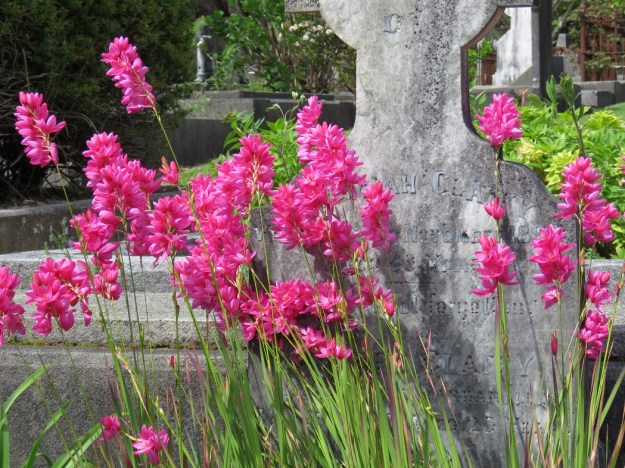 The one remaining mystery for me is why some families prefer to adorn their graves with fake flowers. It is a timely reminder, however, that some of these graves are intensely personal memorials with living descendants who choose to maintain the connection and to personalise the grave in their own way. It is just as well the volunteers are there to tend to the vast majority which would otherwise be largely forgotten and uncared for.
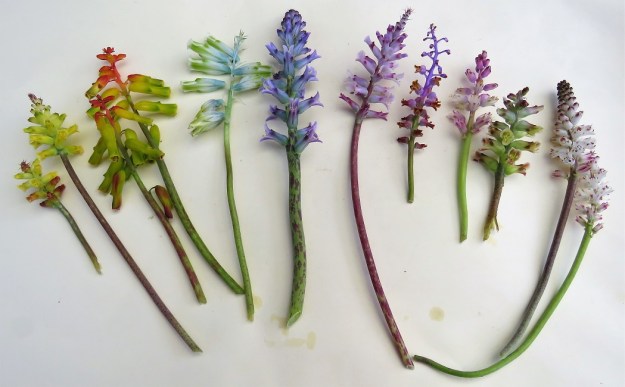
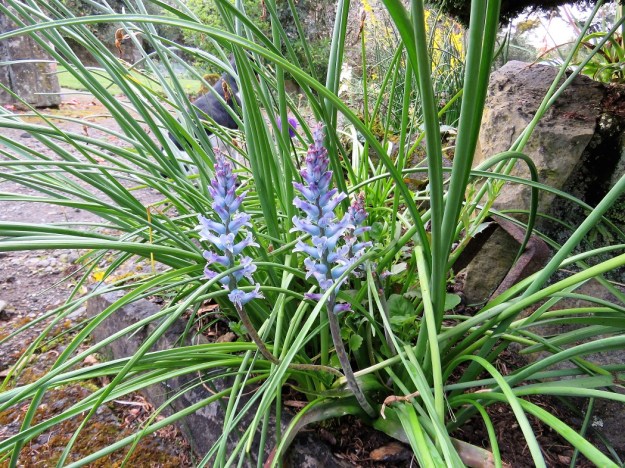
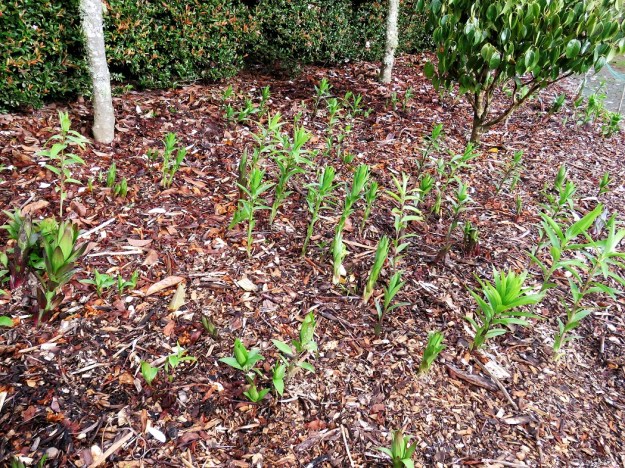 Just look at the lily border. It never looked like this last year when the rabbits won the battle on the emerging shoots. Mark is getting bored with his daily round of vigilance and looking forward to the time when the stems get tall enough to be out of the reach of the rabbits. But spraying the plant with water and sprinkling just a part teaspoon of blood and bone on each plant is working. The reason for doing it one by one is because it has to be reapplied after rain and we don’t want to be over fertilising the whole border by broadcasting the blood and bone freely and often. Besides, I was a bit shocked at the price last time we bought some. It would be easier to manage if we bought some liquid blood and bone so it could just be applied with one action but we will use up what we have first.
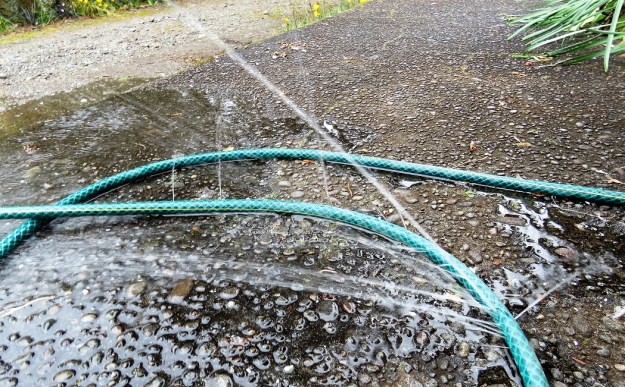 Yes, yes I know the advice is always given not to drive over hoses. Based on experience, it appears that you can get away with it when the hose is still relatively new but there comes a point in the age of the hose when one incident of driving over it can render it a very leaky hose. This of course means that over the course of the next weeks, any user of said hose gets wet legs until the right stage of being fed up is reached and the hose replaced. We haven’t quite got to this point but it is imminent. And I will try not to drive over the next hose length.
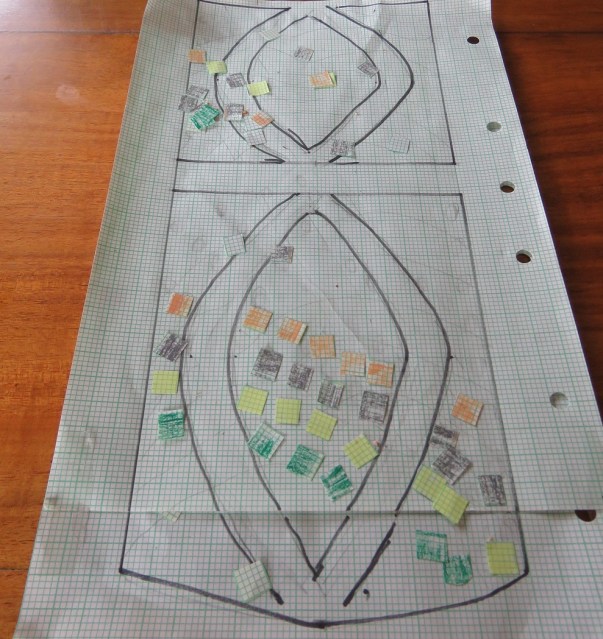
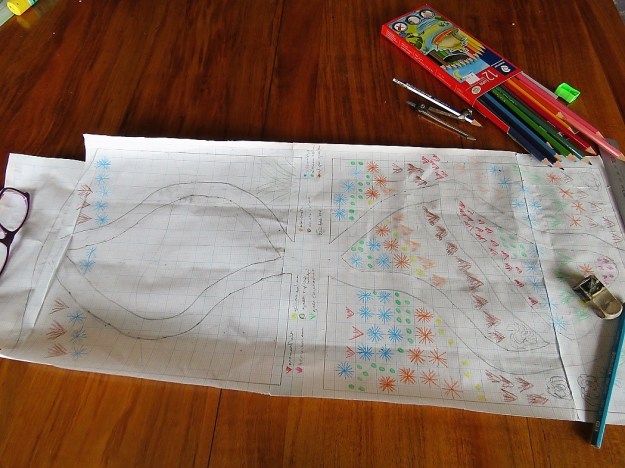 Mark has been laughing at me and calling me Gertrude. This is a reference to Gertrude Jekyll so I will take it as a compliment. It is all on account of my working on a planting plan. On graph paper, with coloured pencils.

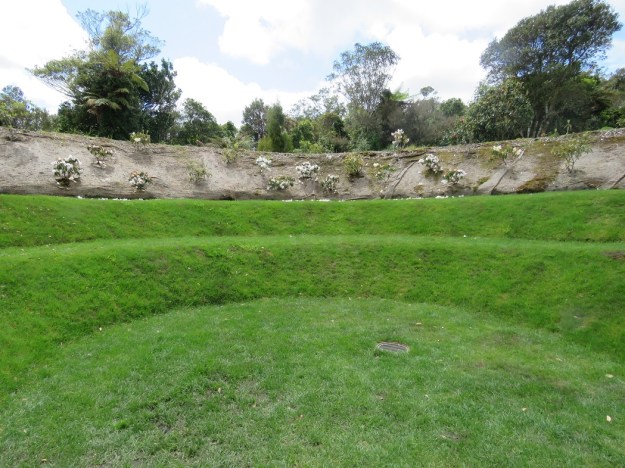

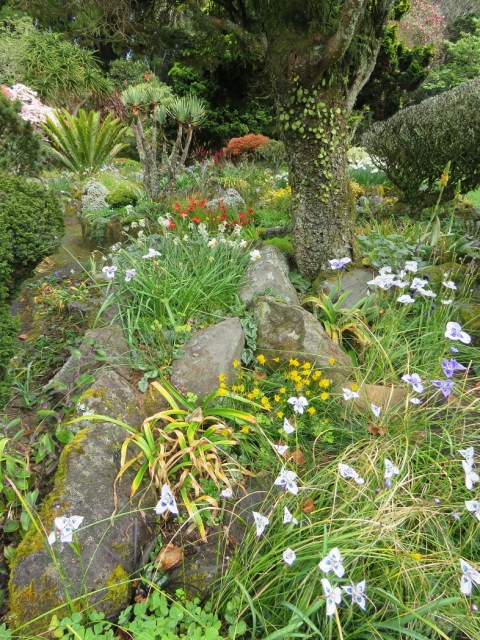
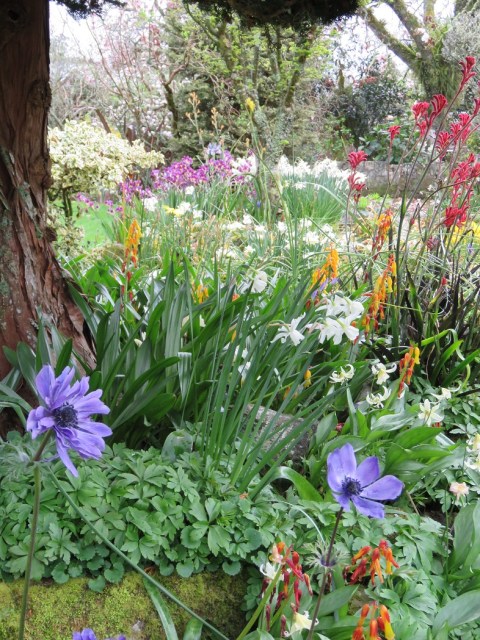 At ground level, the construction of the island rockery beds varies from ankle height to knee height to thigh height – sometimes all in the same island bed. The paths have also been lowered which accentuates the garden elevations. Truth be told, the lowering of the paths was probably in part to get soil to fill the raised beds but it is a detail that is less obvious from above.
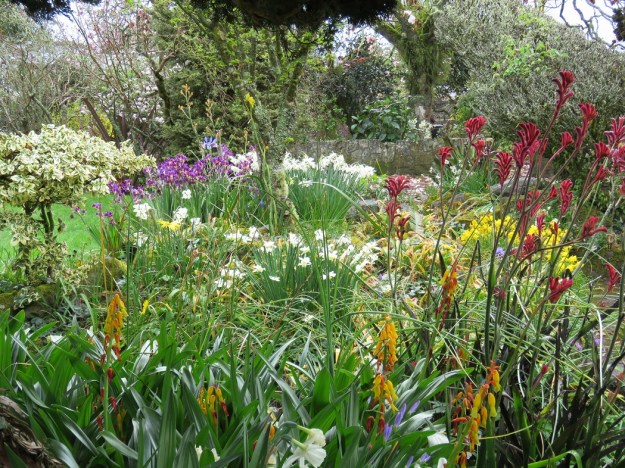 Yesterday, on a grey day, I looked at some of the views within the rockery and was delighted that it was like an Impressionist meadow, albeit in miniature.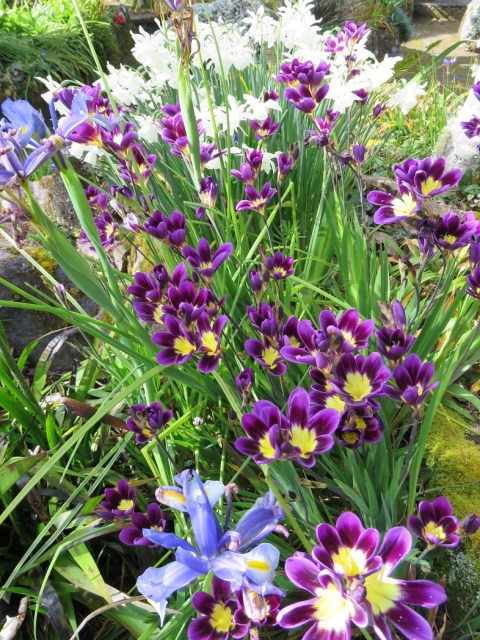

 Tikorangi The Jury Garden