Garden thoughts

Just another heavy transporter passing along one of our road boundaries. A particularly noisy one this Sunday morn.

I garden. A lot. So I have a lot of solitary thinking time. Never more so than this week when it has taken every ounce of my inner strength to maintain some equilibrium in the face of relentless heavy traffic from the gas well site on the farm across our bottom road. The company is ‘demobilising’ the workover rig that has been on site and that has generated as much, maybe even more, heavy transporters along our two road boundaries than at the peak of the bad days from 2011 to 2013. Once the rest of the rig gear has been moved out, the ‘well stimulation’ equipment will all be trucked in for four weeks of intensive fracking and flaring. Super! Yes we still carry out open air flaring and extensive fracking in this country. Worries about climate change apparently lie with somebody else, anybody else – a concern divorced from current, high-level activity.

This is why our garden is still closed to the public. Fortunately my coping mechanisms are better than they were during the bad old days, but it does take a lot of mental energy to keep some positivity and inner serenity, I tell you. Especially for one who is not naturally of a serene disposition.
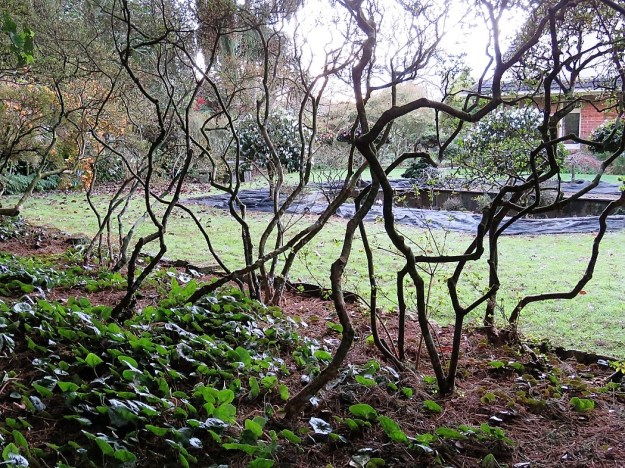
The gnarly trunks of the aged Kurume azaleas. In the background, Mark has draped old shade cloth over the newly sown areas of grass to discourage the pesky rabbits and sparrows.

Back to gardening. I mentioned last week that I was doing a clean-out of the Rimu Avenue. I still am, though I have broken the back of it and am now working more on the margins, including the bed of venerable Kurume azaleas which are underplanted with cyclamen. This is another area that can be left pretty much to its own devices for extended periods of time but it looks better when I get in and clear out the regenerating growth from the base of the azaleas, take out dead wood and shake out the accumulation of leaf litter from the trees above that builds up in the canopy.

It is not really self-sustaining gardening. More like lower-input gardening. For those who like a bit of substance to your gardening reading, you may enjoy Noel Kingsbury’s latest post on the subject of so-called ‘natural gardening’. He is an English writer and a specialist in that new wave style of perennial gardening led by Piet Oudolf.

We have never talked about ‘natural gardens’. Naturalistic, yes, and we have played around with various other descriptors. Enhanced nature, romantic gardening, gardening WITH nature rather than trying to control it but maybe the one we use most is sustainable gardening. We try hard to reduce the negative inputs (spraying, chemical fertilisers, really high input labour practices, use of internal combustion engines for routine maintenance and suchlike). For us, sustainable gardening is also about being able to manage this place as we get older in the next couple of decades. We have no plans to leave in our old age. I anticipate that, like his father before him, Mark will be carried out in a wooden box and hopefully that will not be for another 20 years. So we have to be mindful of how we manage our acreage and what expectations we have of the garden.
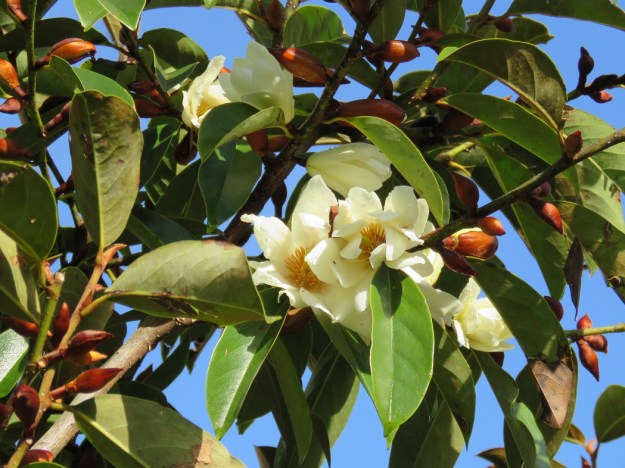
Fairy Magnolia White has opened her first, fragrant blooms this week.

Mark sees it in simple terms. He thinks that we all like to be surrounded by pretty things and that is why he loves flowers and always has done. It is the prettiness – sometimes even astounding beauty – combined with nature that feeds his soul, and indeed mine.

It is perhaps the dearth of homegrown gardening TV programmes and Monty Don and BBC Gardeners’ World taking a break from our screens that drove him to start recording ‘Best Gardens Australia’. This is not gardening as we see it. In fact it has very little indeed to do with gardening. The plants are mostly added in the manner in which scatter cushions and a stylish throw might be added to complete the picture of a stylish sofa. It has a heavy infomercial component and big budget outdoor spaces, mostly dominated by the mandatory swimming pool, additional water features, hard landscaping on a grand and permanent scale (no matter how small the site) and… pavilions. Garden sheds, washing lines, wheelie bins and storage for bikes are not in evidence, but pavilions rule supreme. Along with ‘resort-style living’. In New Zealand, resort-style gardens tend to mean the intimacy and tropical look of small, Balinese hotels. In Australia, it means something very different – the Miami look of lots of stark, hard-edged white plaster and concrete.
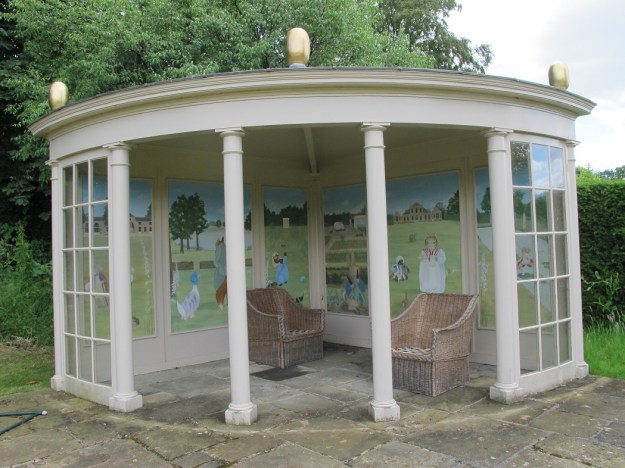
The children’s summer house in a handsome Yorkshire garden

England has its summer houses and garden rooms and very charming many of them are, too. In New Zealand, we are generally more modest and less permanent and the gazebo is most common. I am not a fan of the gazebo as a general rule, with its tanalised pine construction and trellis decoration. We call them gazzybows. They are usually bought in kitset form and too often used as a ‘garden feature’, rather than to enhance the outdoor living experience.

The typical off-the-shelf gazebo

I am not sure at what point a gazzybow crosses over to a pavilion. I suspect you need a budget at least 10 times larger (maybe 20), space in similarly inflated proportions and block or concrete construction (plastered, of course). By the pool. With a full second kitchen, a dining set that can accommodate a minimum of 12 people to a sit-down meal and a barbecue that can roast all the cuts of meat from a beef beast to feed the many (many) friends that the pavilion owners have assembled. Mark was a bit stunned by the pavilion shown with a drinks fridge that would rival most upmarket hotels.

Never have we felt more like the poor relatives across the Tasman than when faced by the ostentatious wealth of ‘Best Gardens Australia’. We are more in synch with the gardening philosophies of the aforementioned Noel Kingsbury.
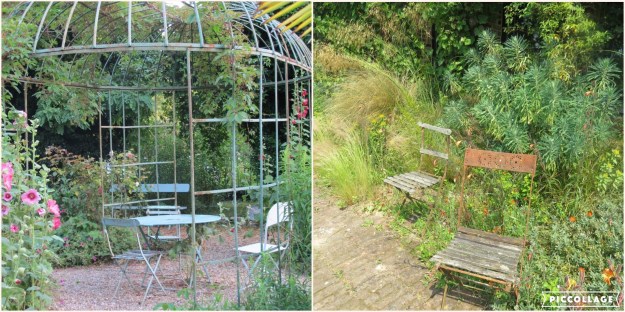
French style. My photo library is entirely lacking in images of contemporary Australian pavilions.

So in the spirit of sweeping generalisations, I tell you that if you are a modest New Zealander, you have a gazebo. If you are nouveau riche Australian, you have a pavilion. If you are British establishment, you have a summerhouse or garden room. If you are French, you have a little, aged, shabby chic café table and chairs.

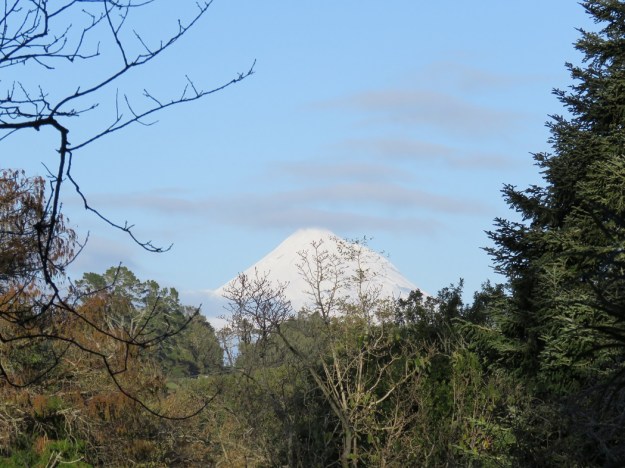
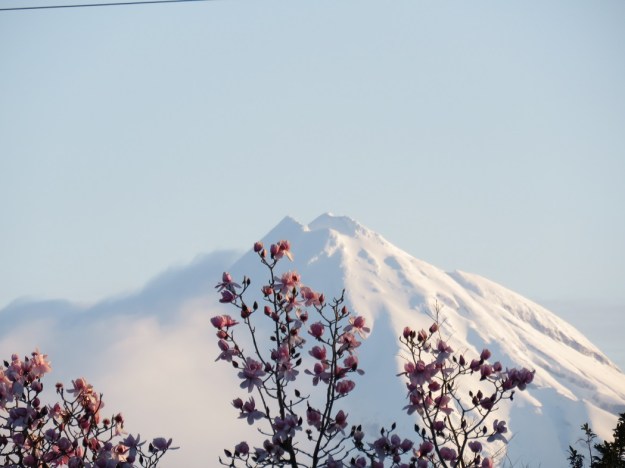
Finally, the late afternoon light falls upon our maunga or mountain on the winter solstice – a sight which keeps us anchored firmly to this place where we live and garden.

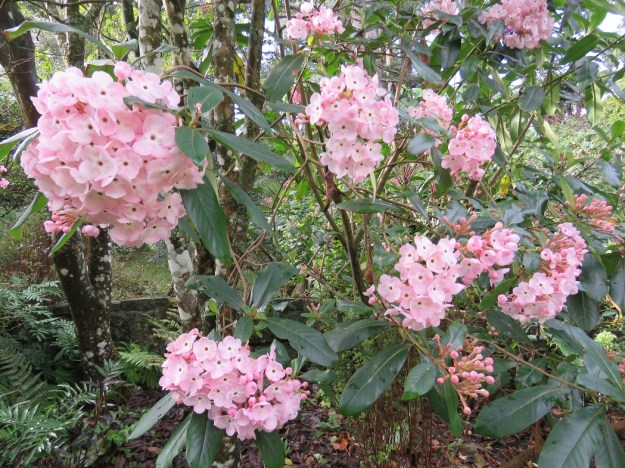
Blooms to sweeten a winter’s day – luculia

Luculia gratissima ‘Early Dawn’

Here we are, a mere three days from the winter solstice and outside my window, rain is pelting down while thunder and lightning is keeping the dogs safely in their beds by the fire. So I bring you winter sunshine, in the form of luculia, with photographs I took just yesterday when the sun shone and the daytime temperature was around 18 degrees Celsius.

I am very fond of luculia with their heady fragrance and their balls of flowers. Perhaps they are a bit like the wintersweet equivalent for mild climates. These are not particularly hardy plants even though their original homeland is declared as the Himalayas and Southern China. Think not of high, snowy peaks but more of temperate, protected, lowland forests and by the time you reach southern China, it is distinctly tropical. Luculia are okay with cooler temperatures and a degree or two of frost but that is all. The will not survive much beyond that.

There is not a huge range of luculia – there are only five different known species and, as far as I know, named cultivars are species selections, not hybrids. We grow gratissima and pinceana, grandiflora is also widely grown but I have not seen intermedia or yunnanensis except on line.

I am not a massive fan of L. gratissima ‘Early Dawn’, which is a smaller growing species. That sugar pink flower is very… sugary. Also, when grown in full sun or high light levels, the foliage can take on autumn tones which are not a great foil to sugar pink. Too often, ‘Early Dawn’ is clipped into obedient, rounded stature. Let it grow as it wishes in woodland conditions and the foliage stays bright green giving clean contrast to the pink, while the shrub becomes willowy and graceful. That is when it looks best, to my eye, although it won’t flower as prolifically in shadier conditions.

Luculia pinceana ‘Fragrant Cloud’

‘Fragrant Cloud’ is a different species, being L. pinceana. It is larger growing with considerably larger flowers in pretty almond pink, a stronger fragrance, more rangy and open in its growth and if you prune it too hard, it is highly likely to die on you. If you like tidy, contained shrubs, this may not be one for you. ‘Fragrant Pearl’ is one we named, another L. pinceana selection that came to us as a seedling from our colleague, Glyn Church. It is much more forgiving than its pink sibling and will take harder pruning. Left to its own devices, it will be just as rangy.

Luculia pinceana ‘Fragrant Pearl’

We used to grow ‘Fragrant Pearl’ commercially and it was one of the quickest turnarounds we had. Most of the trees and shrubs we grew took 3 or even 4 years from taking the cutting before becoming saleable. We could get ‘Fragrant Pearl’ through in 15 months. We would take the cuttings from nursery plants as soon as the new growth had hardened in January. They rooted really quickly and with a high percentage in the propagation beds. We would pot them from root-trainers to finished bag size in late winter or early spring, stake and shape them in January and sell them in bud in March and April. ‘Fragrant Cloud’, the pink form of the same species, was nowhere near as easy to handle as a nursery plant and the reason we don’t have L. grandiflora is because it was not that easy to propagate from the cuttings Mark tried and we don’t want it enough to go out and actually buy a plant.

I can not advise on how to make the flowers last longer when cut. Sometimes they have held reasonably well, other times they have gone limp and flaccid within hours. This probably has more to do with the time of the day they were cut than whether the stems were crushed or sealed by burning. But we heat our house to such a degree in winter that there is no point in trying to keep cut flowers in a vase.

Left to right: gratisima ‘Early Dawn’, pinceana ‘Fragrant Pearl’, pinceana ‘Fragrant Cloud

Found! Low maintenance gardening (of a sort)

The magnolia and te maunga

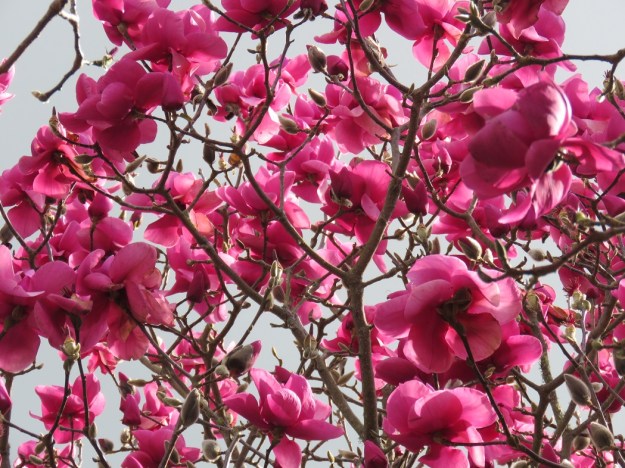
Magnolia campbellii, the Quaker Mason form

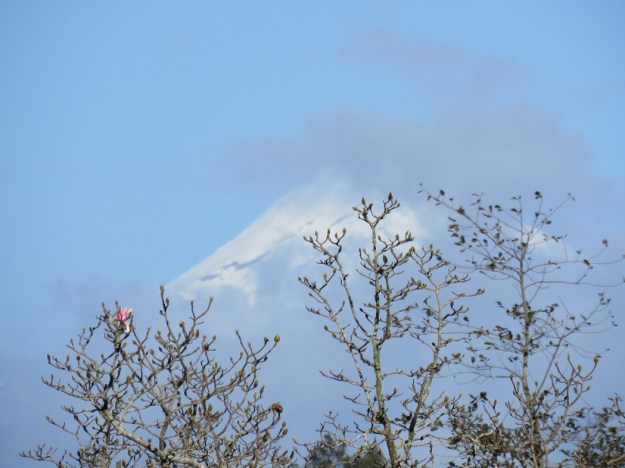
For me, the start of a new gardening year is marked by the opening of the first magnolia bloom. It is a very personal measure of time. This year, it happened this very week. Magnolia campbellii has opened her first blooms on the tree in our park. So I start a new season series of The Magnolia and Te Maunga – ‘te maunga’ being ‘the mountain’ in Maori. Our magnificent Mount Taranaki is commonly referred to simply as ‘the mountain’ by locals because it stands alone and is part of the very being of anyone who was born or now lives within sight of its presence. It is, by the way, an active volcano. With other volcanoes erupting in the world, Mark was moved to comment last week that we do at least live far enough away to get some warning if we ever need to evacuate. I have ascertained that the distance between our magnolia and the peak is 36km as the crow flies, so it is at the limits of my camera zoom.

Beneath the mighty rimu trees

Earlier in the year, we rashly agreed to open the garden for the annual conference of the NZ Camellia Society. I say rashly, only because the August date is coming closer. We closed our garden to the public coming up to five years ago now. While we maintain it to a standard that we are happy with, opening it to others requires a higher standard of presentation. I am beginning to feel the pressure. This week, I started working my way along the garden we call the rimu avenue. It is an area about 100 metres long and up to 25 metres wide, so large enough to accommodate a fair number of townhouses, were it in a major city. Fortunately, we are in the country, so instead of townhouses we have a backbone of 14 majestic rimu trees, now nearing 150 years old. Rimu are a native podocarp, botanically Dacrydium cupressinum. Mark’s great grandfather planted them back in the 1870s and photos show that they have doubled in size in Mark’s lifetime.

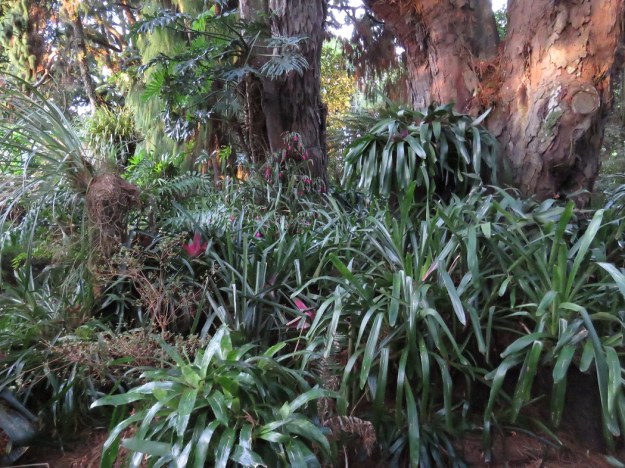
Beneath these rimu, we have what is probably the most complex planting of anywhere in our garden. Oddly, it occurred to me this week that it is the least demanding in terms of regular maintenance. This is not related to the complexity of the planting; it is to do with the fact that it is all in dry shade and also to the plant selection over time. In the last five years, we have gone through it and pulled out fallen branches and a bit of occasional debris but it has not had the loving attention to detail that I am currently giving it.

Over time, this area has become a largely self-maintaining matrix planting, an ecosystem in its own right.  There is a little bit of seeding down, but not too much. The *volunteer plants* that arrive are largely ferns, nikau palms, native collospermum and other astelias. The most common weeds are the occasional germinating Prunus campanulata and the cursed bangalow palms. Most weeds need more light. That in itself is worth knowing. If you hate weeding, go for shade gardening.

Piling the debris onto the meandering paths

All I am doing to jazz it up is going through and removing much of the fallen rimu leaf litter and debris which builds up over time, taking out the spent heads of bromeliads, thinning clumps where necessary, a bit of cutting back of shrubby begonias, zygocactus, thinning the thuggish Monstera deliciosa and Philodendron bipinnatifidum and general tidying up. It looks a great deal better for it.

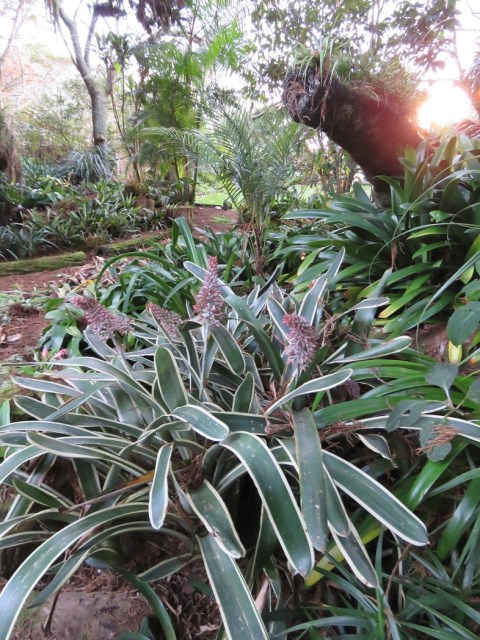
For those who are wondering what plants we have growing in the rimu avenue, I will tell you that when we first went into the enormous subtropical glasshouse at Kew Gardens in London, we felt right at home. There seemed to be a large number of plants growing under glass that we grow under the rimu, an area that is completely frost free. We have a whole range of shade palms, schefflera, vireya rhododendrons, dendrobium orchids, many clivias red, orange and yellow, species hippeastrum bulbs, Crinum moorei, bromeliads galore, ferns and a whole lot more. Everything is interplanted so it is complex and layered full, interesting year-round, as well as low maintenance.  Mark’s father first starting planting this area in the late 1950s so it has only taken 60 years of active management to reach this state of gardening nirvana.

Laying cut lengths beneath

and spreading the mulched leafy waste – yellow because it was mostly berberis

While I am working ‘up the top’, as we say, Mark and Lloyd have been down in the park doing a tidy up of fallen branches and dead shrubs and trees. Chainsaw and mulcher work, mostly. For those who read these posts looking for handy hints, I photographed their techniques for dealing with the waste on site. While they may have removed the bigger pieces for firewood, the smaller lengths of branch and trunk are chainsawed into short lengths and laid beneath large shrubs or trees. Line the lengths up in the same direction and they look neater and more purposeful than being tossed higgledy piggledy. The leafage and finer material has been mulched on site and raked out over a bed of dormant herbaceous planting. These are not techniques for formal or tightly groomed gardens but we find it an acceptable process in informal and more naturalistic areas. And we like the philosophy of keeping the cycle of growth, death and then decay nourishing further fresh growth in the same location.


A garden for all seasons

Is it possible to have a garden for all seasons? In our soft climate, yes, it is. But is it possible to have a garden that is at its peak for 12 months of the year? That is what many folk visualise when they think of a garden for all seasons. And the answer is no.

You can have a garden that looks more or less the same all year round. This is achieved by lots of hard structure, heavily trained and clipped plants, very little seasonal interest and constant maintenance or garden grooming. Seasonal interest (flowers, bulbs, autumn colour and suchlike) is messy and alters the tidy picture.

A reader left a comment on a recent post which included “I’m hoping that you have invented the solution to the 4 season perennial garden by then.” (Here’s looking at you, Cath). It started a train of thought along the lines of whether this is even possible and whether I had ever seen it done. If by a four-season garden, is meant incidents of colour (usually flowers), then yes, you can do it. But not massed, peak performance all year round.

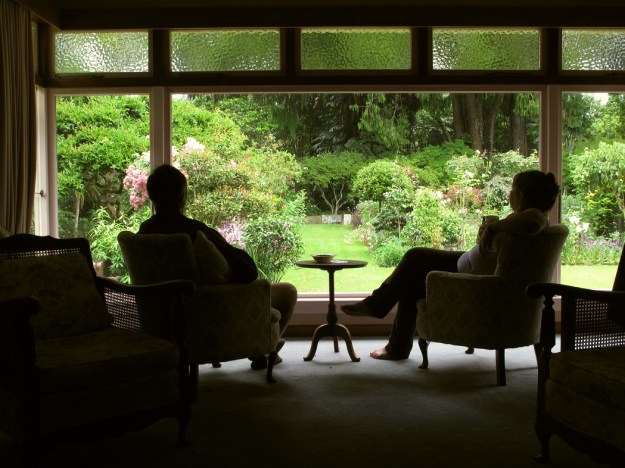
It is an old photo of us and the view out the window has recently changed. It is the border to the left of the coffee table that I have recently replanted in blocks for flowery interest

I replanted a border recently, aiming for year-round performance. About 20 metres long by just over a metre wide, it contains a few established shrubs which flower in spring and summer and I underplanted in large blocks – each at least a square metre, some larger – to get big splashes of colour through most of the year. It is a garden that we look out to from one of our favourite indoor seating positions for afternoon tea or an early evening drink. It now has a pretty blue scabiosa (dreadful name – the pincushion flower) for summer, Mark’s mother’s vintage Sweet Williams and hot pink Phlox paniculata for spring and early summer, large white flowered polyanthus for winter, blue asters for late summer and pink and white sedums for autumn. All interplanted with random bulbs I lifted from elsewhere. It doesn’t quite cover the full 12 months although it should have something showy, in bloom, for most of the year. But it is one block at a time, not the full border simultaneously.

Phlox paniculata, I think. Easy to grow, vibrant and seasonal

Elsewhere, we go more for matrix planting, rather than block planting.  The new grass and perennial garden is strongly modelled on matrix principles but even so, as winter draws in, that garden is going into a rest phase. There is not much to carry it through the coldest weeks.

The magnolias, of which we have quite a few, do not all bloom at the same time. Nor do we want them to.

It is a conundrum. From time to time, we ponder reopening the garden for selected days through the year – snowdrop weekend, magnolias, lilies and the like. But while the snowdrops – or bluebells or lilies – have a defined and finite peak season which is relatively easy to determine, which weekend would we pick for the magnolias? They flower from July to the end of September here. No matter which date we select, some will have finished flowering and others will not have opened.

Early winter – just last week in fact. The view from our park.

I used to get so irritated by visitors at our annual festival who would go round the garden and come out saying of the rhododendrons, “It must have been gorgeous a few weeks ago,” or “There is a lot that have finished flowering, aren’t there?” I would quell my irritation and smile courteously, saying something bland along the lines of “there is always something different in bloom but yes, some have finished for the season and some are yet to open”. What they wanted was peak display when everything bloomed en masse, perfectly timed for the garden festival. This is what I saw at the Floriade tulip festival in Canberra and what, I understand, can be seen at the Butchart Gardens in Canada in their peak season of July and August. But ours is a private garden. Our rhododendrons flower from July until Christmas and what we want is something of interest every week of the year.

Late winter – as in August 9th.

Knowing this, we raised our eyebrows when Pukeiti Gardens, then a private trust, went to a great deal of effort to rebrand itself as “a garden for all seasons”. It seemed like an over-promise that they could never deliver. Its main focus was rhododendrons and yes, they flower from July til Christmas, but not all at once for all that time. Their location, at altitude, butting up to a national park means that winter is not a hospitable time for garden visitors – far from it – and being surrounded by evergreen, native forest means that autumn is never going to be as showy as in other places. It was – and probably still is – primarily a garden for spring and summer. Intrepid visitors outside those two seasons will still find much of interest, but not mass, seasonal display as implied by the catch line ‘a garden for all seasons’.

Large parts of the gardening world put their gardens to bed for winter and do not expect anything to happen during that rest period of chill. In our mild conditions, we have flowers in bloom all year round and actively garden for 12 months of the year. But, as I commented in my last post about vireya rhododendrons, it is a trade-off. You can have the big bang impact of peak season with mass blooming and all-round showiness, or you can have long performance of gentler display.

Do the maths. It is not even just the four seasons. Each season has its early, mid and late period. If you want year-round interest, then you have to allocate about one twelfth of the area and the plants to peak in each seasonal period. That is never going to give you the massed bangs for buck display at a single time. But it will give you garden interest all year round.

Today is brought to you… by the colour orange

Orange is not my favourite colour. In this, I am unlike the bride who wore an orange wedding gown and themed her wedding on orange and brown.  I mentally walked through every room in our house and there is no orange to be seen. Not a skerrick. And the only orange item in my wardrobe is a faded tee shirt. Clearly, orange is not a colour that I relate to in daily life.

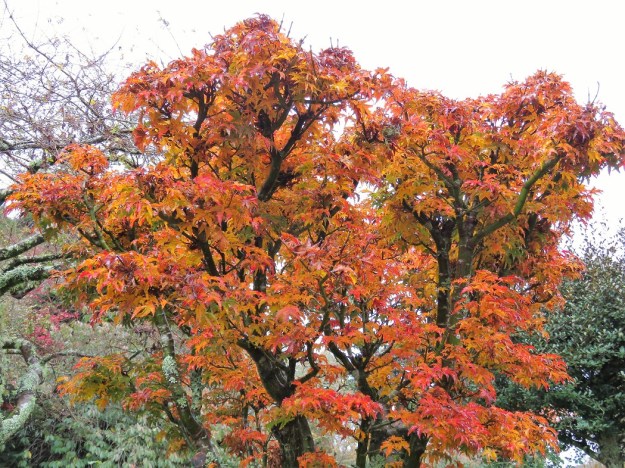
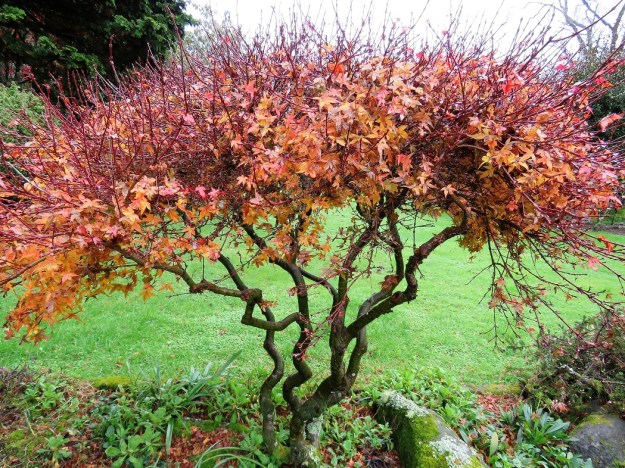
But as late autumn draws in, the orange outside is very cheering. On Monday, I thought I must get out and photograph the dwarf Japanese maple that turns its raiment from modest green to blazing orange as winter approaches.
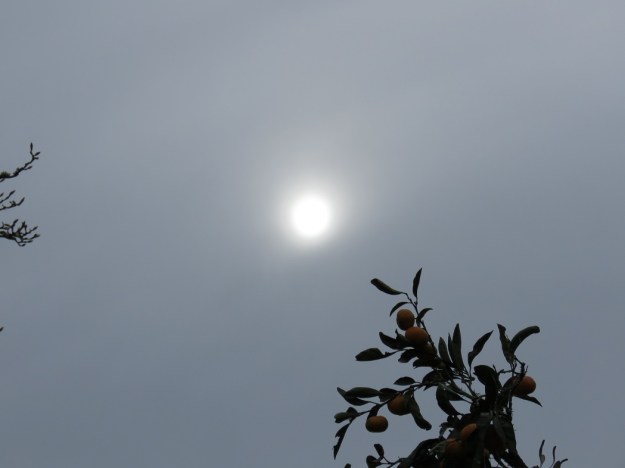
The day was grey with the sun attempting to break through, a light so unusual here that I also photographed it. I have only been to the UK once in December and I remember a similar light on the day we visited the Russell Page garden at Leeds Castle. The difference is that here, the sun did indeed come out and shine brightly – if intermittently – as the day progressed while my UK family said that was as good as it got there, closing in on the shortest day.
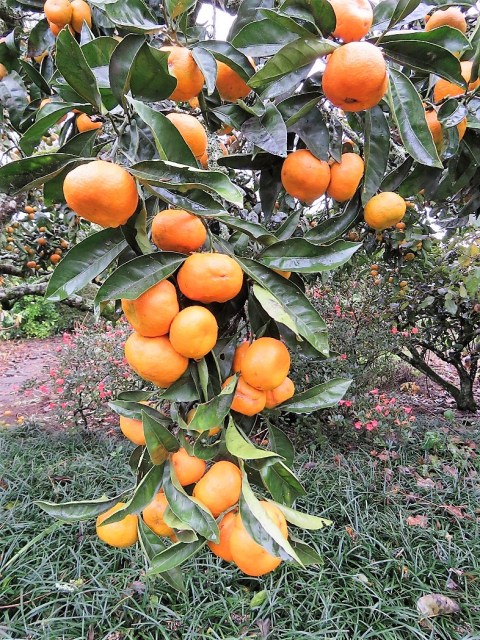
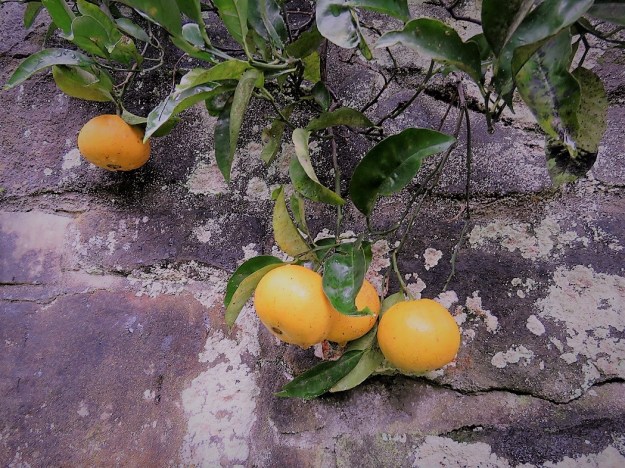
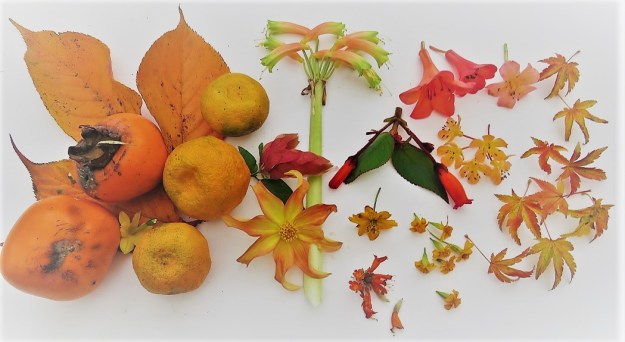
I became entirely focused on orange. Mind you, it is hard to ignore it as the citrus trees flaunt their wares. We are blessed to have a climate where we can grow citrus and also to have inherited a garden where the trees have large been included in the wider garden, rather than confined to an orchard situation. Citrus are both decorative and functional. I  once wrote a fairly lengthy piece on growing citrus in our conditions if any readers in less traditional citrus areas are interested.
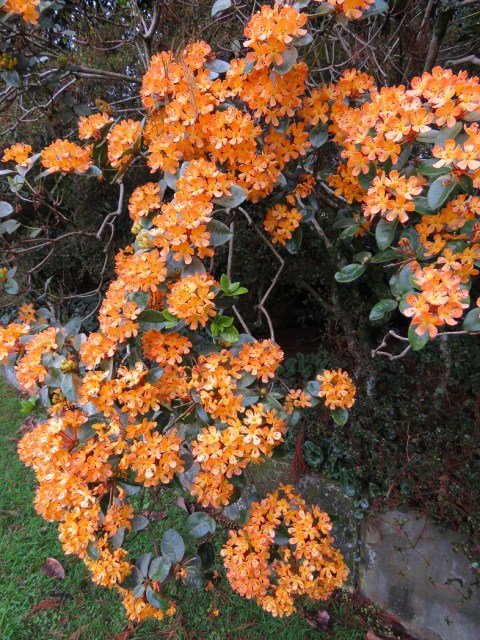
Vireya Rhododendron macgregoriae flowers like clockwork, as it has for nigh on sixty years now. That is a seriously advanced age for a vireya, which are not generally long lived, and this particular plant has a place in our family history, having been collected in the wild by Mark’s father, Felix, back in 1957. Orange is a common colour in vireyas and we have a number of other hybrids also in flower at the time. None mass flower like the species R. macgregoriae. It is a trade-off, I think. You can have either prolonged blooming over many months or mass flowering, but not both. At least when it comes to vireyas.

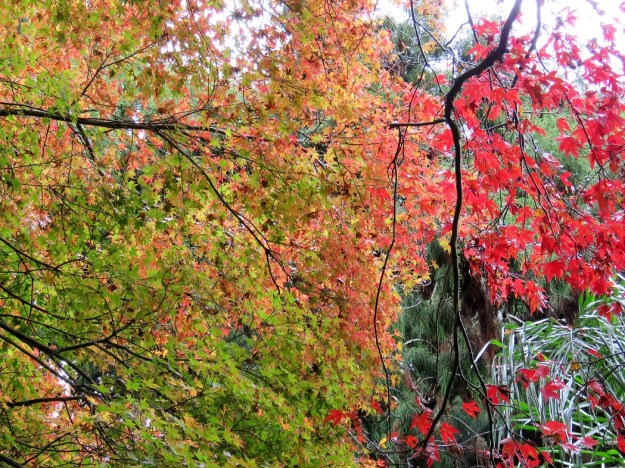
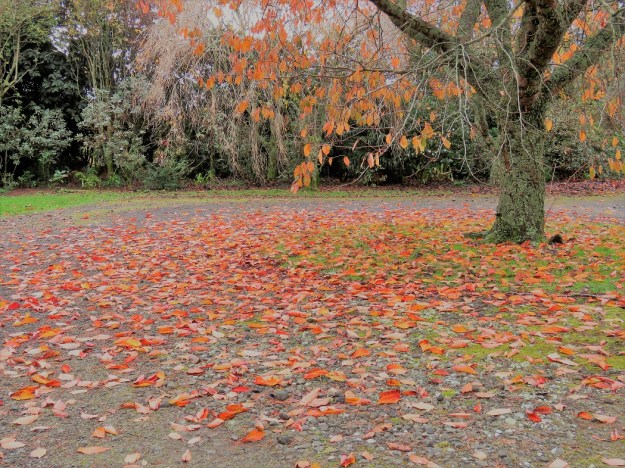
The maples and the flowering cherry trees produce many hues of orange and tend to colour in late autumn for us – or early winter as it is now. June usually feels autumnal for us, July is the bleakest month of winter and by August, we are bursting into spring growth and bloom. We really shouldn’t complain about a winter that is effectively about six or eight weeks in duration.

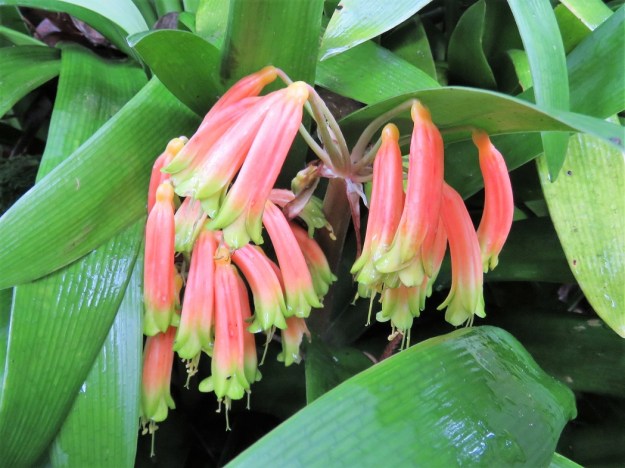
The first of the clivias are in bloom – looking a bit pink in this image but more soft orange in real life. I asked Mark which one this is and he thinks it is C. gardenii. It is nowhere near as showy as the C. miniata selections and some of the hybrids. But as I think an abundance of bright orange clivias can lead to the NABOC syndrome (Not Another Bloody Orange Clivia), the understated charm of this one pleases me.

The orange tones of autumn shone through the grey day. I looked around and thought yes! There is a time and a place for orange. It is in autumn and winter.