

The stone mill wheel serves as a bird bath and is used often, this time by a tui
Were I starting a new garden from scratch, especially a large garden, I would reduce the number of beds and borders. And I would be more rigorous in separating the highly detailed areas from the broad sweeps of plantings.
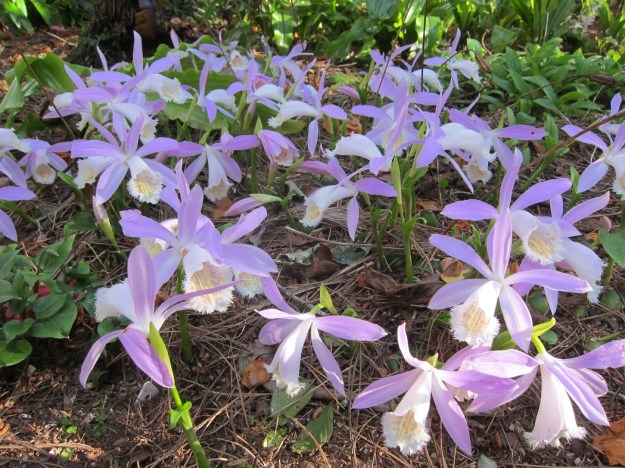
Pleione orchids in spring. At this time of the year they are dormant and can be lifted, cleaned up and replanted.
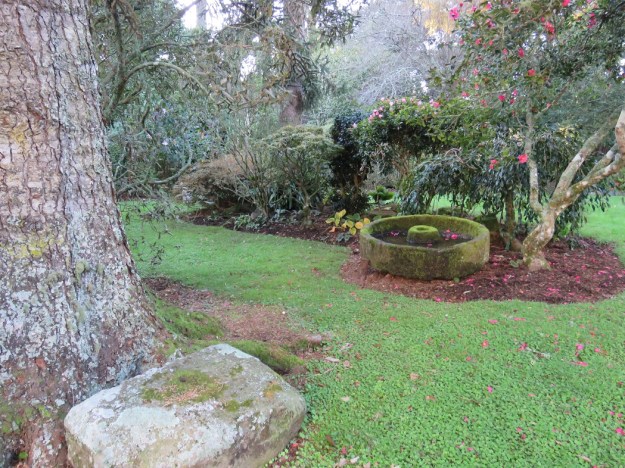
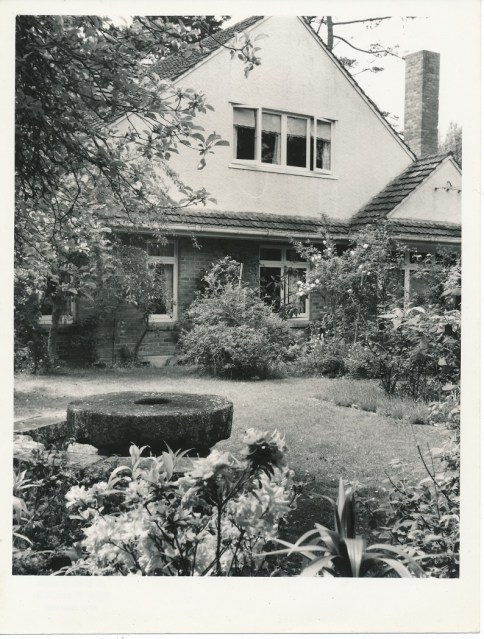
The little mill wheel bed is a highly detailed area
I am perfectly happy doing highly detailed gardening. Micro gardening, I call it. As I lifted and divided big clumps of pleione orchids, I decided it was the gardening equivalent of surgery. But I want my areas of highly detailed gardening limited and confined. We have a large rockery which requires close attention, the sunken garden and the millwheel garden. It was the little millwheel garden that I was going through earlier this week. It is full of seasonal detail like the aforementioned pleiones, blue lachenalias, fritillarias, erythroniums, dactylorhiza orchids and similar tiny treasures along with a few choice shrubs like species camellias and small rhododendrons.
The mistake I made over time was to grab pots of such treasures from the nursery (in the days when we still did the full range for mail order) and tuck them into odd places here and there. Everywhere, really. Now I am trying to reverse that and lifting such little gems to relocate out of mixed borders.
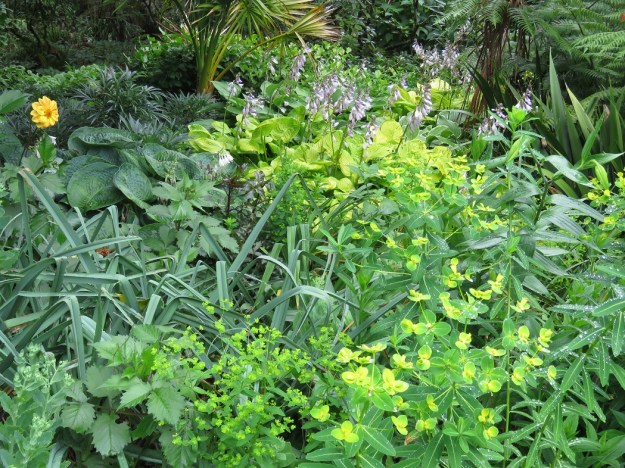
Bolder plantings in bigger sweeps need treasures that are in scale to the other plantings, not small detail.
Away from these highly detailed areas of planting needing close maintenance, I want bigger sweeps of bolder planting. I love how our avenue gardens have shaped up with the bigger sweeps of interesting shade perennials. It is the itsy, bitsy, inbetween stuff that I do not enjoy doing. The mixed border – too often the hodge podge border – has a lot to answer for. We have too many borders and beds like that and they are hard going.
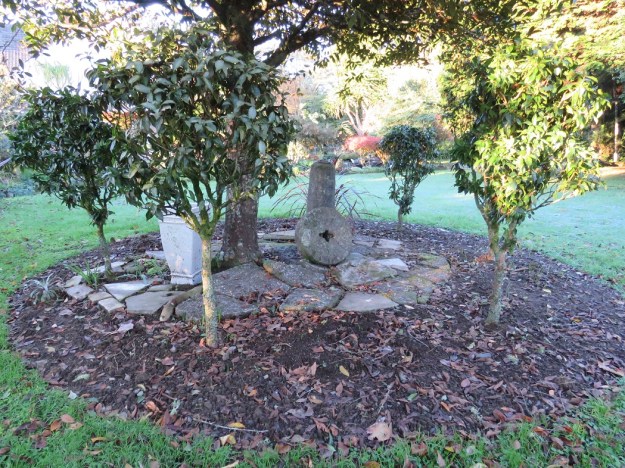
The round garden was a design aberration and has never been successful

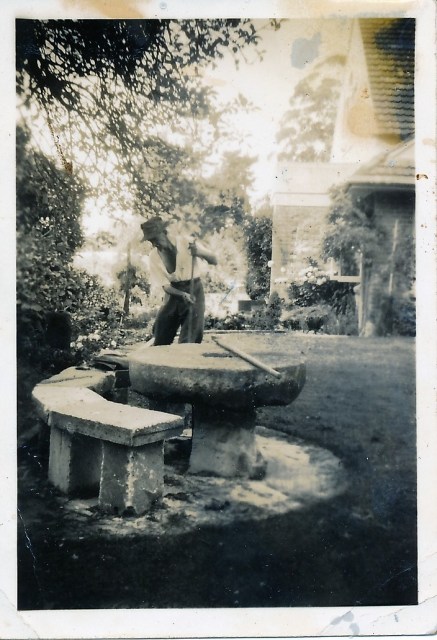
Hand-hewn stone artefacts dating back to pioneer forebears
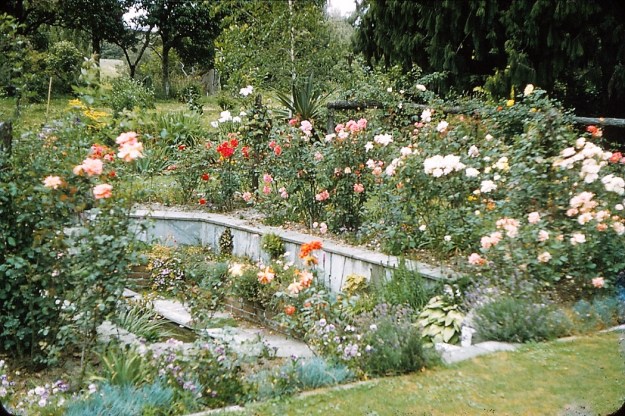
I didn’t just strip out the old rose garden. I am also nearing the end of clearing another design aberration – a round garden in the front lawn which had evolved over time to something less than satisfactory. The defining concrete mowing strip has been removed, as have the bulbs and smaller plants. It is just waiting for Mark to remove the dwarf lollipop camellias and the Graham Thomas rose. All that will remain is the umbrella Magnolia laevifolia in the centre and the stone artefacts which are of interest. One is a shaped corner stone which used to be placed to protect the early timber buildings in settler New Plymouth from being raked by passing cart wheels. Another is a small stone trough Mark’s mother collected, hand-shaped of course and the centrepiece is another mill wheel. This wheel is a small inner wheel from a domestic grain mill in the Te Henui stream area in New Plymouth. Mark’s parents gathered these historical pieces back in the 1950s when nobody else valued them and the records have been passed down orally. We don’t do much in the way of ornamentation in our garden but we appreciate our small collection of historic artefacts.
I am also eyeing up another three short lengths of garden border and thinking I may strip out the messy underplanting. There are sufficient shrubs in those borders to carry them without the need for ground cover detail as well. A mulch of leaf litter or compost is all that they need. It is just quite a bit of work to lift everything and reuse the plants and bulbs that are of value. If we gardened less with bulbs it would be easier but our bulbs represent many years of building up large numbers of different types, many rare and curious, and are a feature of our garden.
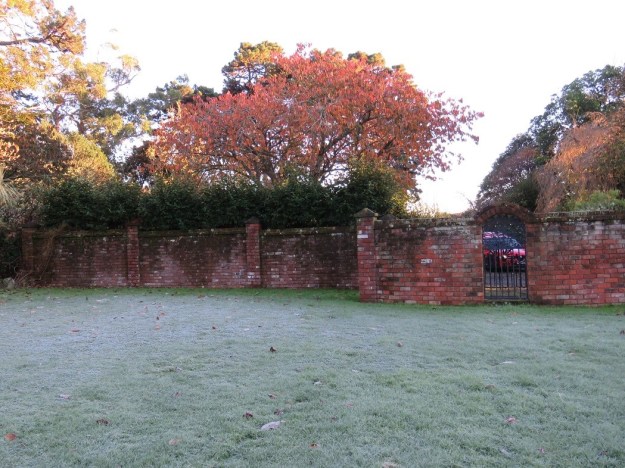
Not every wall, fence, pathway or building needs an edging border of planting. We had our first visible frost this week – we don’t get too many of these each winter.
There are several lessons I have learned through all this:
- Gardens evolve over time and we often don’t step back to look with critical eyes at the current picture. Sometimes, they do just become a mishmash, especially if you are the sort of gardener who tucks plants in to fill spaces. Or they become dominated by thugs which take over and swamp out the more desirable plants.
- Tiny treasures and small detail need to be accommodated in designated areas where they won’t get overtaken by competitors and where it is easier to carry out the more careful, intensive maintenance that they require.
- It is still possible to get detail and variety into larger scale plantings but the detail needs to be larger in scale.
- Not every area needs the oft recommended three layers of planting (ground cover, middle layer and upper canopy or backdrop (recommended, I think, to get the lush, well furnished look).
- Not every pathway, driveway or building needs a side border to complete it. There can be too many bits and bobsy borders and beds. Fewer may be more effective and certainly makes for easier management.
- Mixed borders are difficult to manage well in the long term (mixed borders being a mix of woody shrubs, perennials, climbers and sometimes bulbs).
- Most perennials perform much better if you lift and divide them, replanting them in well-dug soil. Some, like polyanthus and pulmonaria, benefit from lifting and dividing every two or three years in our conditions. Others like hostas, can usually be left for about ten years before they start to go back (by ‘going back’, I mean they can reach a point where they get smaller, not larger).
As I have said before, if there is an area of your garden where you avert your eyes every time you walk by, there is a problem that needs to be addressed. It won’t get better if you ignore it. Sometimes it needs drastic action.



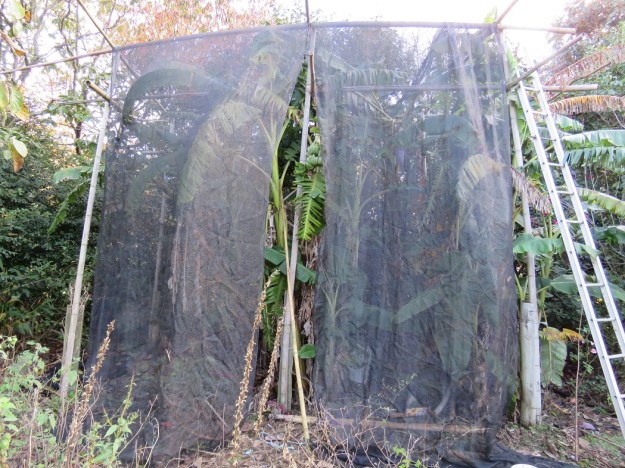
 As our maunga – or Mount Taranaki to non-NZ residents – has put her full winter raiment on this week, it was a close-run race between the covering of the bananas and the first cold snap of winter. Not that we have had a frost yet.
 The ladybirds have moved inside to hibernate. They creep into the crevices of the upstairs wooden joinery which can make opening and shutting the windows challenging. I was fine with this annual event until a social media friend suggested that they looked to be the pest Harlequin ladybird which is a far grubbier and less desirable version of the charming, common ladybird. I suspect she is right, though the first reported incidence of the Harlequin ladybirds was up north in 2016 and we have had these hibernating critters for longer than that. So either they have been in the country longer than has been reported, or we have some other form of this beetle. I see there are 6000 different types of ladybirds so unravelling the different ones is beyond me. They are a bit messy, so I may flick them back out the windows with the duster.
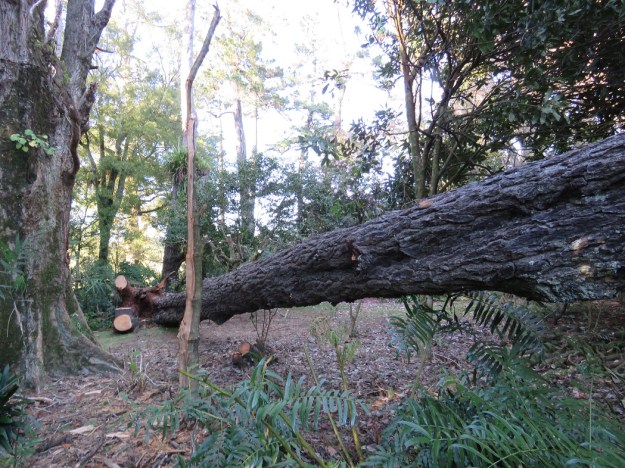
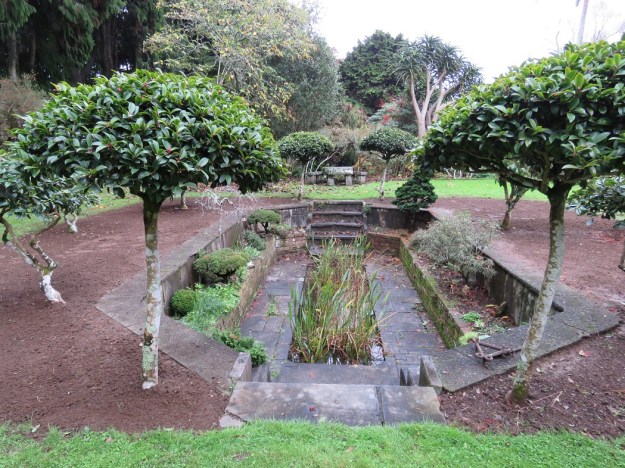
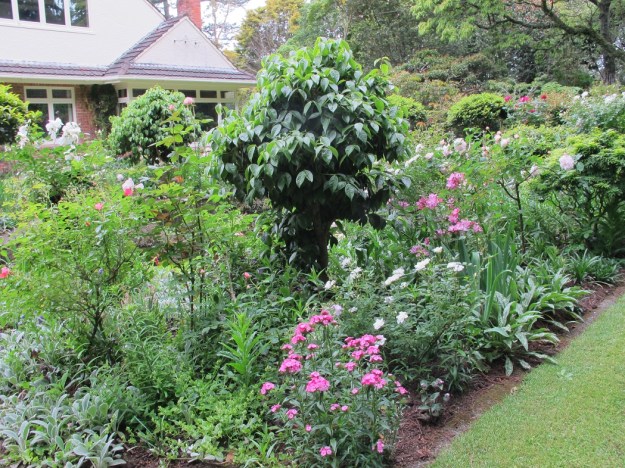
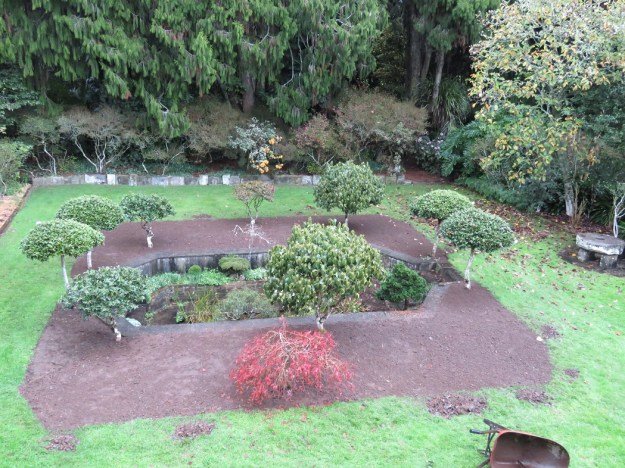 Finally, the last plants were gone at the weekend and the area was bare. Lloyd, our extraordinarily handy and obliging man about the garden, has moved in extra topsoil and raked and levelled to get it ready for sowing in grass. The eight camellias and two maples will stay and be shaped into gnarly, character, feature plants. We normally avoid growing plants in mown lawn areas and I know I will have to hand-trim the grass around the trunks but I am willing to do that. We do not like the weed-sprayed brown look of lank grass around trunks and I have no desire for the tidy, suburban look of encasing each trunk in a tidy round concrete circle planted with pansies. For those of you who want to know what the camellias are, two are the gorgeous species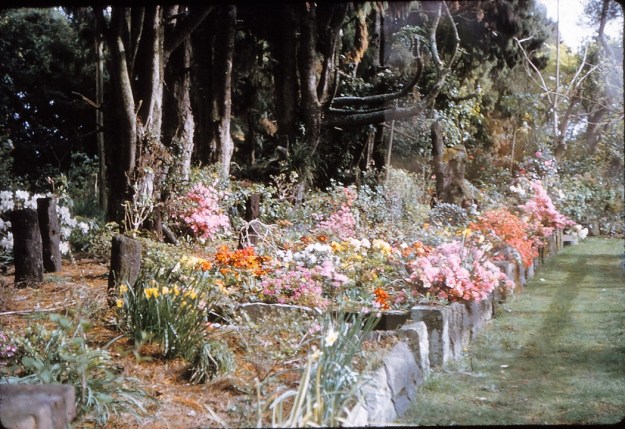
 Beth Chatto dead? This should not be a surprise.
 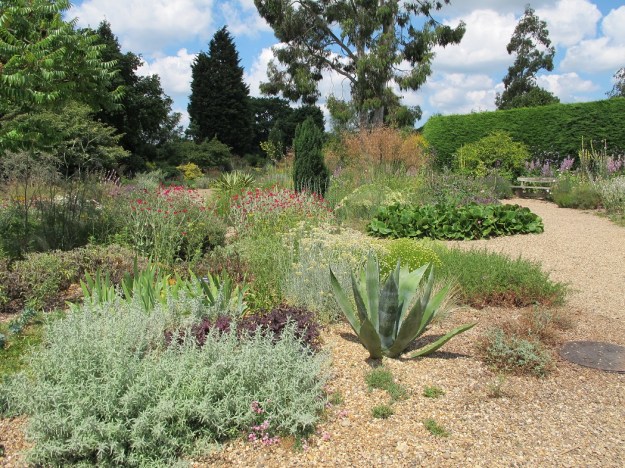 We returned to her garden with Charles in 2014 but she was too frail that day to join us. It was a bright, sunny day and I have since regretted that I did not get good enough photos of her dry garden in the glaring light.
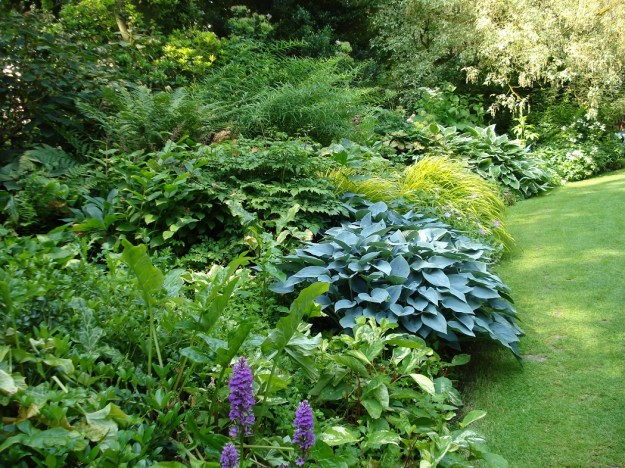 The original garden is perhaps a little dated by modern standards – rather a lot of curvy, hose-pipe borders – but always managed to the highest horticultural standards and underpinned by that knowledge of which plants will perform in those conditions and co-exist well with each other. I would love to see the woodland area in early spring when it must be magical but the UK in early spring is a bit cold for us these days. It is the dry garden that lifts a visit to another level altogether.
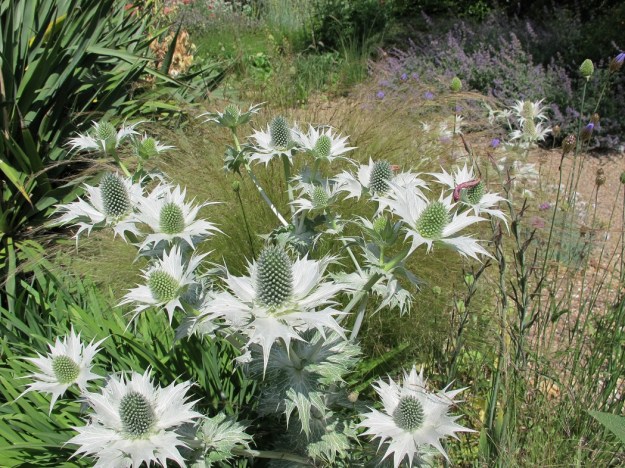
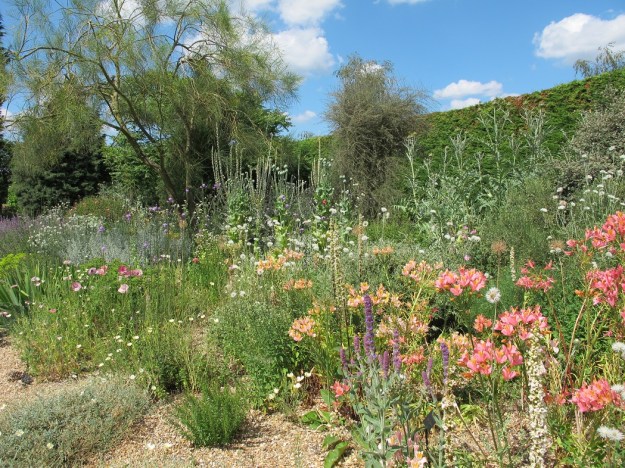 We have spent quite a bit of time making sense in our own minds of contemporary European and UK gardening trends – New Perennials (where Piet Oudolf’s work is still the gold standard), the New Naturalism, meadows, prairies, ecological gardening, matrix planting, sustainable plant communities and what we call the romantic revival or, simply, romantic gardens. And in Beth Chatto’s garden, thirty years ago, she was creating the precursor to all these modern trends in her new dry garden. In a very dry climate, nothing is irrigated in this garden built on a compacted carpark and river gravel. The skills lie in plant selection and the light-handed but deft management which allows plants to have their own space and follow their own natural inclinations. She had a rare combination of exceptional plantsmanship and top-level gardening skills.
 I did not so much appreciate her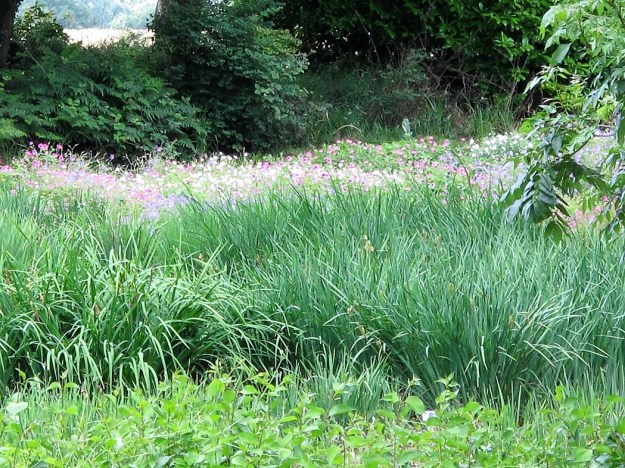



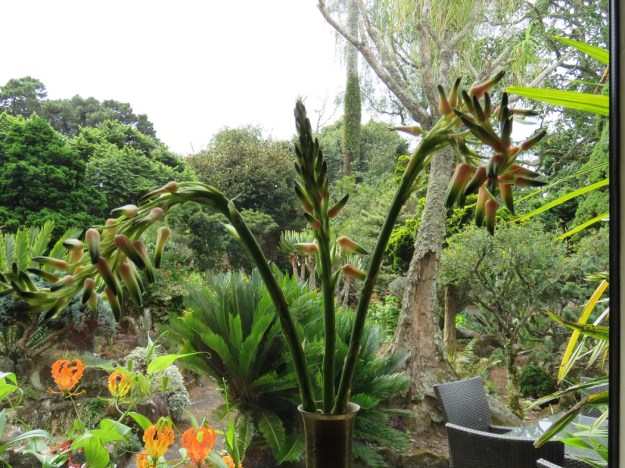
 Tikorangi The Jury Garden