
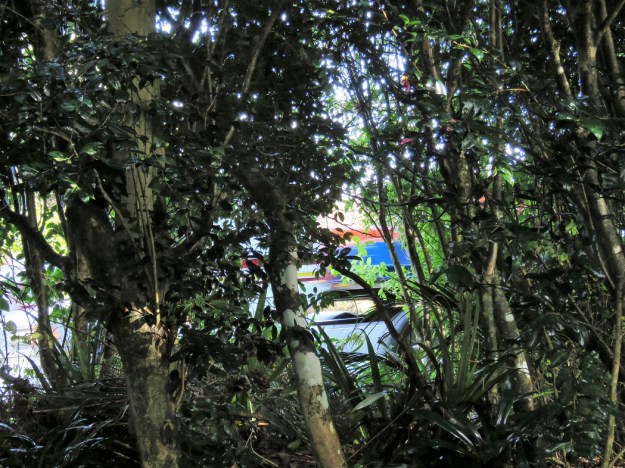
Just another heavy transporter passing along one of our road boundaries. A particularly noisy one this Sunday morn.
I garden. A lot. So I have a lot of solitary thinking time. Never more so than this week when it has taken every ounce of my inner strength to maintain some equilibrium in the face of relentless heavy traffic from the gas well site on the farm across our bottom road. The company is ‘demobilising’ the workover rig that has been on site and that has generated as much, maybe even more, heavy transporters along our two road boundaries than at the peak of the bad days from 2011 to 2013. Once the rest of the rig gear has been moved out, the ‘well stimulation’ equipment will all be trucked in for four weeks of intensive fracking and flaring. Super! Yes we still carry out open air flaring and extensive fracking in this country. Worries about climate change apparently lie with somebody else, anybody else – a concern divorced from current, high-level activity.
This is why our garden is still closed to the public. Fortunately my coping mechanisms are better than they were during the bad old days, but it does take a lot of mental energy to keep some positivity and inner serenity, I tell you. Especially for one who is not naturally of a serene disposition.
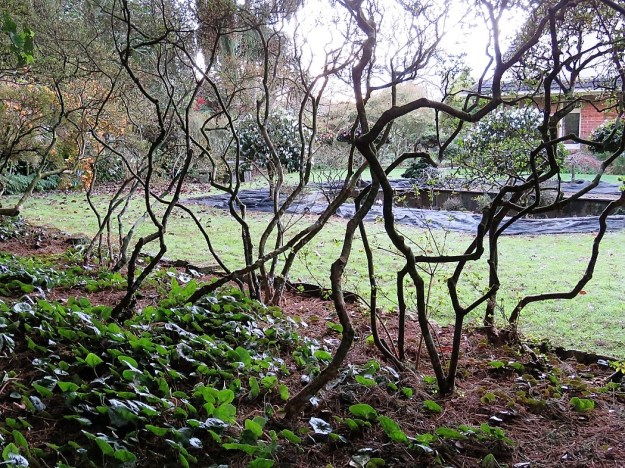
The gnarly trunks of the aged Kurume azaleas. In the background, Mark has draped old shade cloth over the newly sown areas of grass to discourage the pesky rabbits and sparrows.
Back to gardening. I mentioned last week that I was doing a clean-out of the Rimu Avenue. I still am, though I have broken the back of it and am now working more on the margins, including the bed of venerable Kurume azaleas which are underplanted with cyclamen. This is another area that can be left pretty much to its own devices for extended periods of time but it looks better when I get in and clear out the regenerating growth from the base of the azaleas, take out dead wood and shake out the accumulation of leaf litter from the trees above that builds up in the canopy.
It is not really self-sustaining gardening. More like lower-input gardening. For those who like a bit of substance to your gardening reading, you may enjoy Noel Kingsbury’s latest post on the subject of so-called ‘natural gardening’. He is an English writer and a specialist in that new wave style of perennial gardening led by Piet Oudolf.
We have never talked about ‘natural gardens’. Naturalistic, yes, and we have played around with various other descriptors. Enhanced nature, romantic gardening, gardening WITH nature rather than trying to control it but maybe the one we use most is sustainable gardening. We try hard to reduce the negative inputs (spraying, chemical fertilisers, really high input labour practices, use of internal combustion engines for routine maintenance and suchlike). For us, sustainable gardening is also about being able to manage this place as we get older in the next couple of decades. We have no plans to leave in our old age. I anticipate that, like his father before him, Mark will be carried out in a wooden box and hopefully that will not be for another 20 years. So we have to be mindful of how we manage our acreage and what expectations we have of the garden.
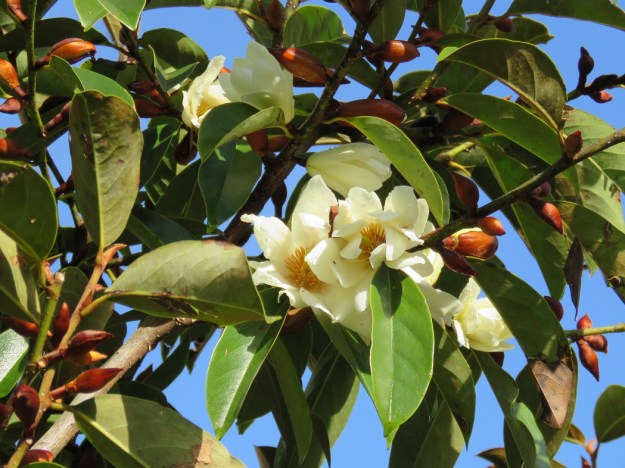
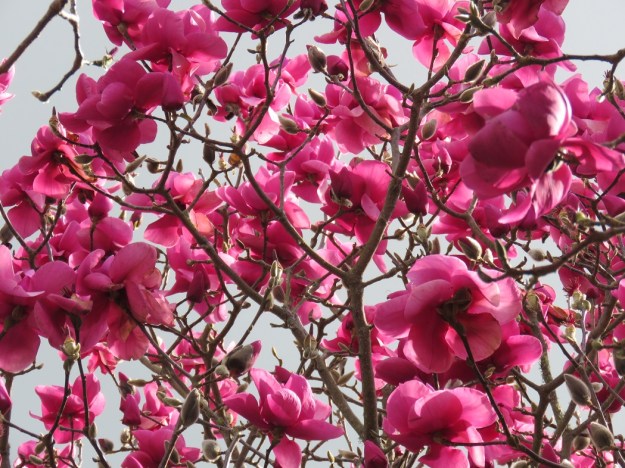
Fairy Magnolia White has opened her first, fragrant blooms this week.
Mark sees it in simple terms. He thinks that we all like to be surrounded by pretty things and that is why he loves flowers and always has done. It is the prettiness – sometimes even astounding beauty – combined with nature that feeds his soul, and indeed mine.
It is perhaps the dearth of homegrown gardening TV programmes and Monty Don and BBC Gardeners’ World taking a break from our screens that drove him to start recording ‘Best Gardens Australia’. This is not gardening as we see it. In fact it has very little indeed to do with gardening. The plants are mostly added in the manner in which scatter cushions and a stylish throw might be added to complete the picture of a stylish sofa. It has a heavy infomercial component and big budget outdoor spaces, mostly dominated by the mandatory swimming pool, additional water features, hard landscaping on a grand and permanent scale (no matter how small the site) and… pavilions. Garden sheds, washing lines, wheelie bins and storage for bikes are not in evidence, but pavilions rule supreme. Along with ‘resort-style living’. In New Zealand, resort-style gardens tend to mean the intimacy and tropical look of small, Balinese hotels. In Australia, it means something very different – the Miami look of lots of stark, hard-edged white plaster and concrete.
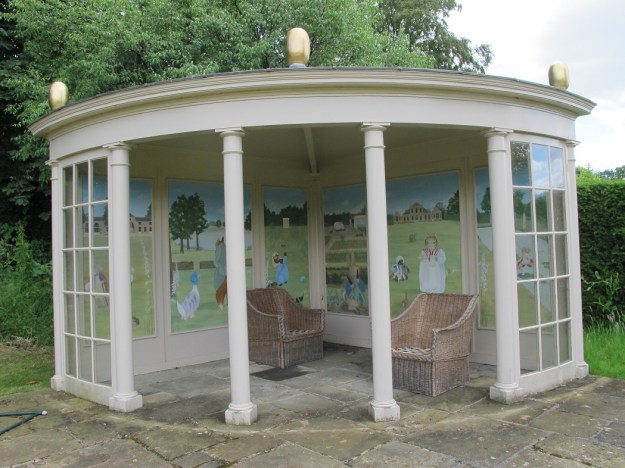
The children’s summer house in a handsome Yorkshire garden
England has its summer houses and garden rooms and very charming many of them are, too. In New Zealand, we are generally more modest and less permanent and the gazebo is most common. I am not a fan of the gazebo as a general rule, with its tanalised pine construction and trellis decoration. We call them gazzybows. They are usually bought in kitset form and too often used as a ‘garden feature’, rather than to enhance the outdoor living experience.
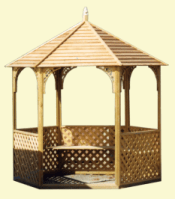
The typical off-the-shelf gazebo
I am not sure at what point a gazzybow crosses over to a pavilion. I suspect you need a budget at least 10 times larger (maybe 20), space in similarly inflated proportions and block or concrete construction (plastered, of course). By the pool. With a full second kitchen, a dining set that can accommodate a minimum of 12 people to a sit-down meal and a barbecue that can roast all the cuts of meat from a beef beast to feed the many (many) friends that the pavilion owners have assembled. Mark was a bit stunned by the pavilion shown with a drinks fridge that would rival most upmarket hotels.
Never have we felt more like the poor relatives across the Tasman than when faced by the ostentatious wealth of ‘Best Gardens Australia’. We are more in synch with the gardening philosophies of the aforementioned Noel Kingsbury.
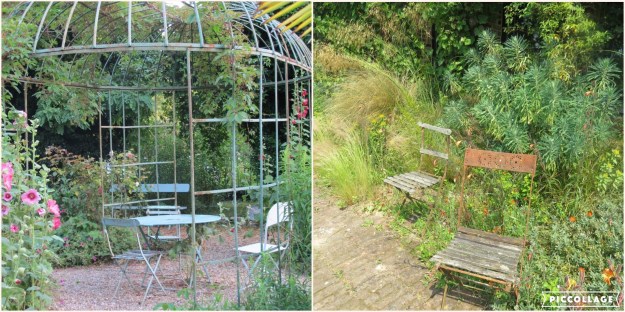
French style. My photo library is entirely lacking in images of contemporary Australian pavilions.
So in the spirit of sweeping generalisations, I tell you that if you are a modest New Zealander, you have a gazebo. If you are nouveau riche Australian, you have a pavilion. If you are British establishment, you have a summerhouse or garden room. If you are French, you have a little, aged, shabby chic café table and chairs.

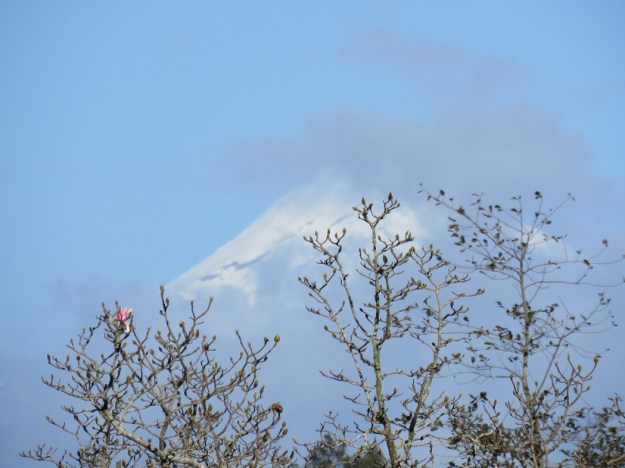
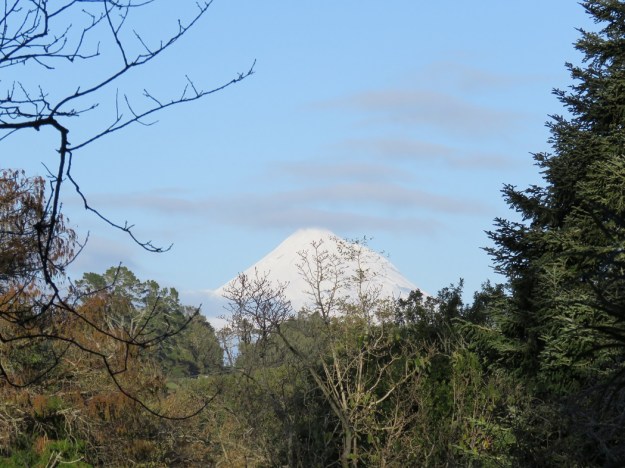
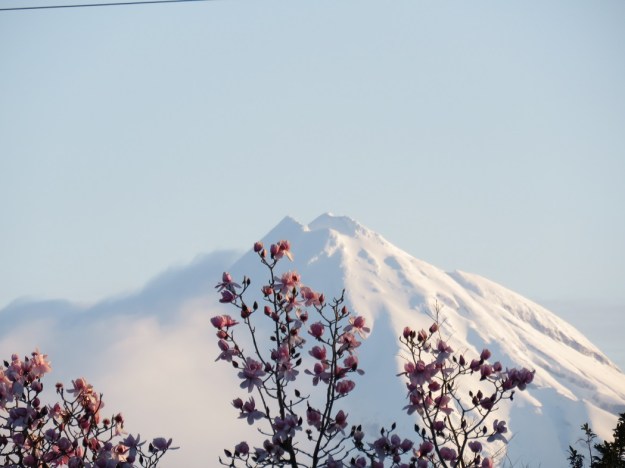
Finally, the late afternoon light falls upon our maunga or mountain on the winter solstice – a sight which keeps us anchored firmly to this place where we live and garden.

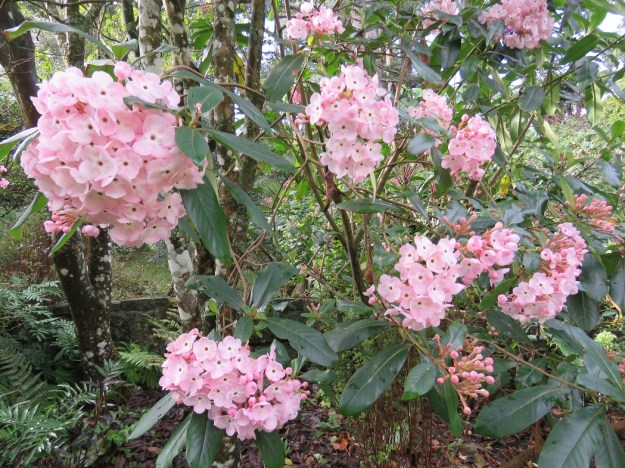



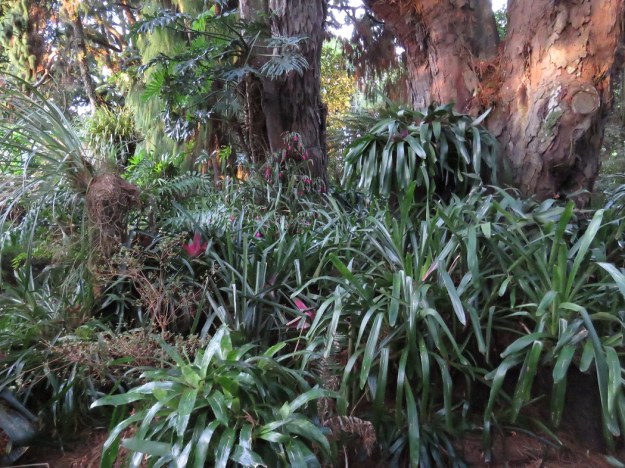
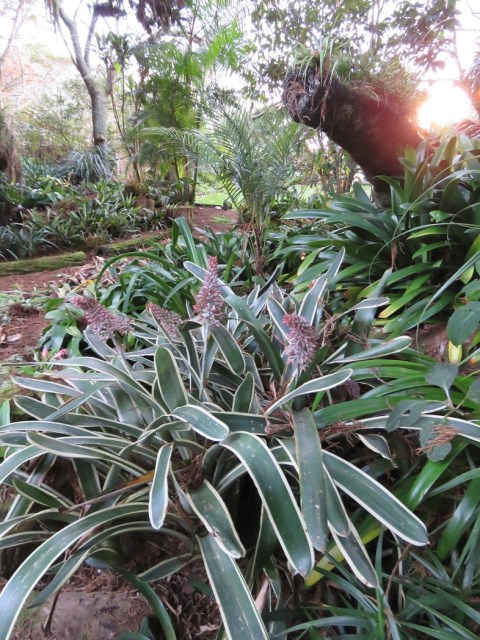 Beneath these rimu, we have what is probably the most complex planting of anywhere in our garden. Oddly, it occurred to me this week that it is the least demanding in terms of regular maintenance. This is not related to the complexity of the planting; it is to do with the fact that it is all in dry shade and also to the plant selection over time. In the last five years, we have gone through it and pulled out fallen branches and a bit of occasional debris but it has not had the loving attention to detail that I am currently giving it.



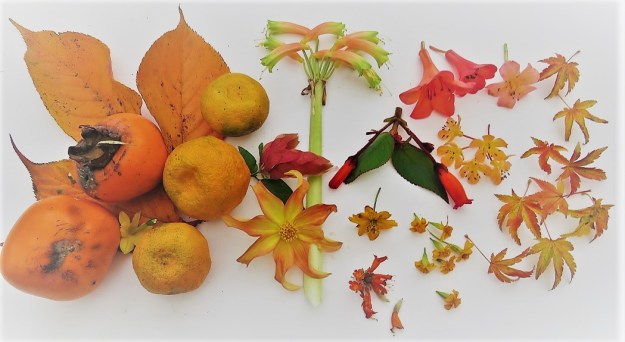
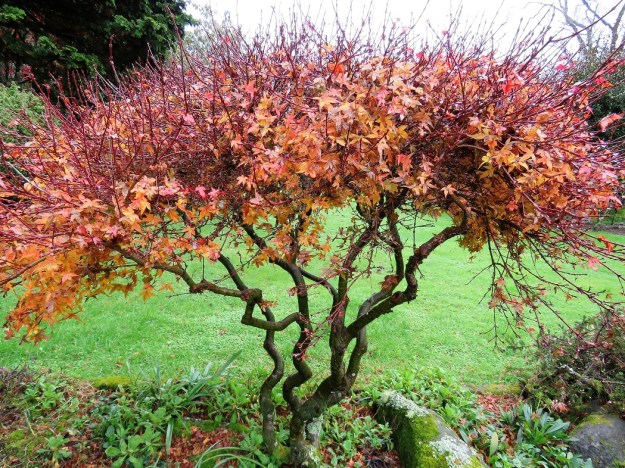
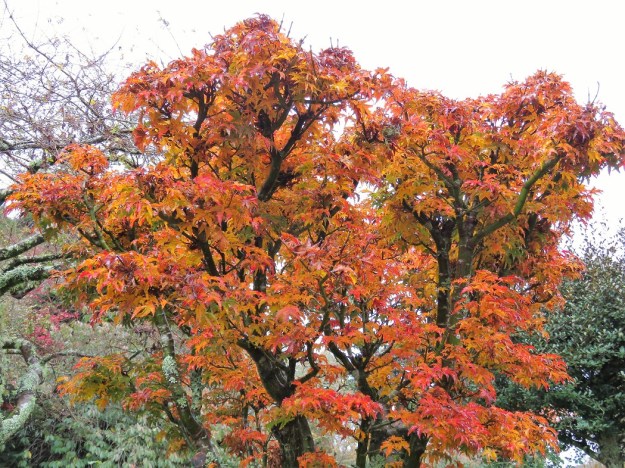 But as late autumn draws in, the orange outside is very cheering. On Monday, I thought I must get out and photograph the dwarf Japanese maple that turns its raiment from modest green to blazing orange as winter approaches.
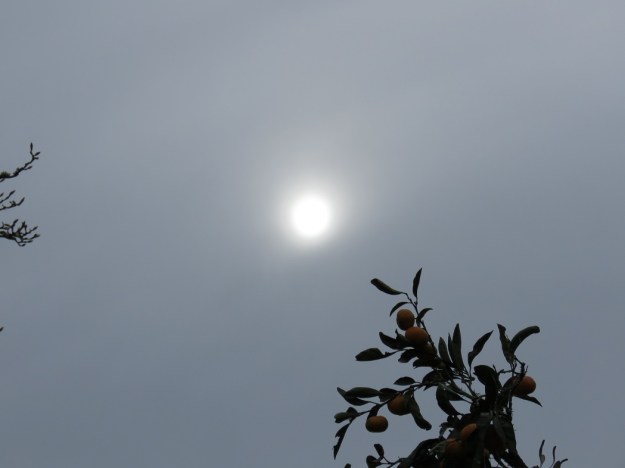 The day was grey with the sun attempting to break through, a light so unusual here that I also photographed it. I have only been to the UK once in December and I remember a similar light on the day we visited the Russell Page garden at Leeds Castle. The difference is that here, the sun did indeed come out and shine brightly – if intermittently – as the day progressed while my UK family said that was as good as it got there, closing in on the shortest day.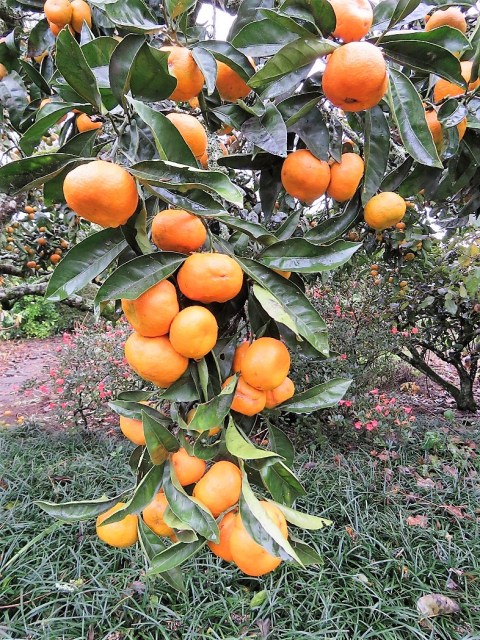
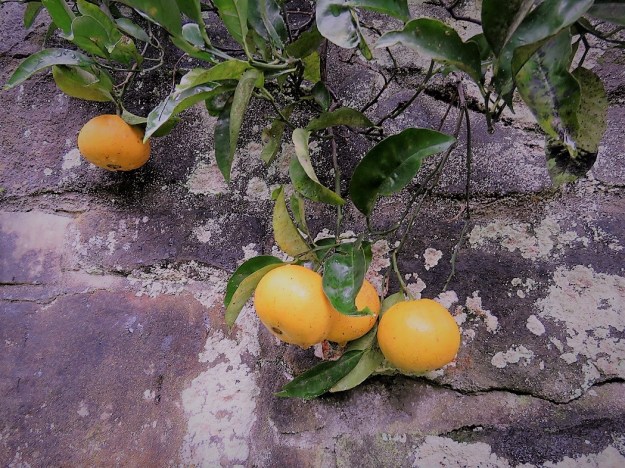 I became entirely focused on orange. Mind you, it is hard to ignore it as the citrus trees flaunt their wares. We are blessed to have a climate where we can grow citrus and also to have inherited a garden where the trees have large been included in the wider garden, rather than confined to an orchard situation. Citrus are both decorative and functional. I once wrote a fairly lengthy piece on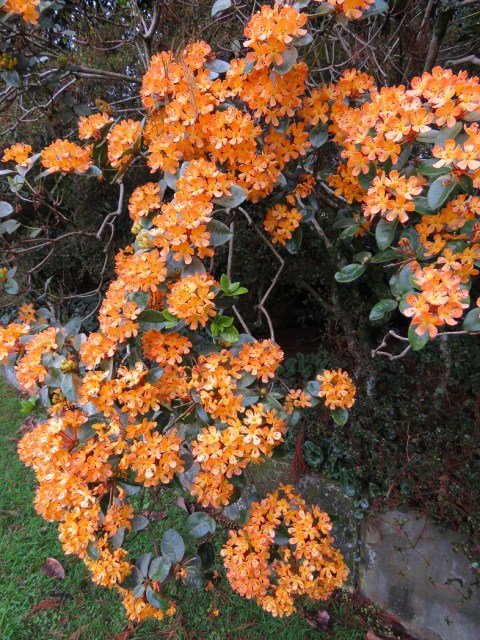
 Tikorangi The Jury Garden