
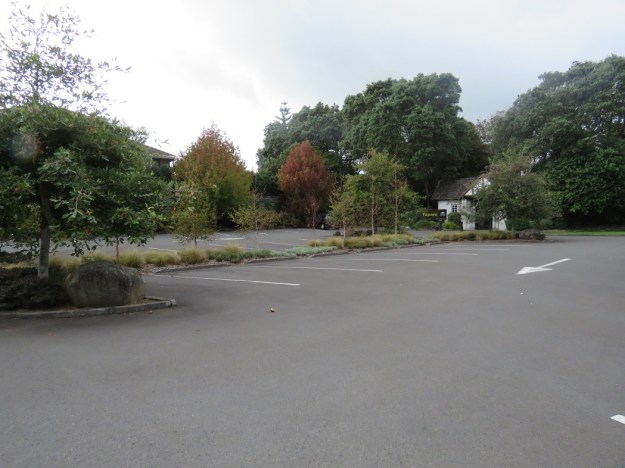
A sense of arrival. But empty.
Mark and I have longstanding running jokes about garden car parks. This, I admit, may not be a common source of amusement to many others. It all came about when we were recruited to a small group in an effort to preserve the spirit of the trust gardens being taken over by one of our local councils. It was not a positive experience in any way, shape or form. In fact it scarred most in our small group of maybe eight or ten leading private gardeners. Our involvement was not welcomed. Not. In. Any. Way. We were left in no doubt of that. But the experience gave us the car park jokes.
This is because, in that typically bureaucratic way of local government in this country, the council commissioned many expensive consultants’ reports and convened a TAG – a technical advisory group which rather appeared to be hand-picked to give them the outcomes they wanted. I can’t recall offhand how much they spent on these reports but I am pretty sure it was into the hundreds of thousands of dollars. And one theme that came through repeatedly was the need, apparently, to establish a sense of arrival at the gardens.
That sense of arrival was, it appeared, mostly about car parking. For what do you see first when you arrive? The car park. All three trust gardens ended up with pretty detailed car parks as a high priority.
We have done a fair amount of garden visiting in our time, including overseas and have seen some pretty rudimentary, though functional, car parks. When an official from that council went on a fact-finding mission to look at the infrastructure of major UK gardens, I wanted to comment to him on his return, “You must have been very disappointed in their car parks” but Mark wouldn’t let me. My recollection is that the car park at Hidcote was modest, at Great Dixter it was informal and at Sissinghurst, we were simply worried about whether we would even find a vacant space.

The car parking area at Giardino di Ninfa
The most gorgeous car park of all was the grove of trees at Ninfa, south of Rome. Ours was the only car on the day we were there because we had the place to ourselves. I understand on their official open days, the crowds are such that one shuffles along in line so presumably the car park is chocka block. We have one tree in our car parking area – Prunus Pearly Shadows – and it is a bit surprising that people manage to reverse into it, given it is fairly obvious. I wonder how much rear bumper damage happens at Ninfa.

From memory, I think we worked out that we can park 27 cars in our car park area, if we manage it carefully. Prunus Pearly Shadows in the middle is apparently a hazard. Several drivers have failed to see it.
We have a small car park because when we open the garden, it is a safety matter to get the vehicles off our dangerous road. We know quite a bit about the vagaries of parking habits. In fact the general public shows a lamentable lack of common sense when it comes to parking. But we did soon learn that if we parked the first car in the right place at the right angle, others followed suit so we would sometimes put our own car out in the car park to set the tone for the day. This is why you often see car parks sealed with painted lines – the supermarket look. Of course, if you want painted lines, you have to seal the area. As soon as you put in large areas of seal (and cars take up a lot of space, camper vans and coaches even more), you also have to put in drainage systems to deal with the run-off because there is no ground absorption. The aforementioned council rose to this challenge with a very tidy set-up which I bet was expensive. But there is nothing environmentally friendly about large expanses of seal. Nothing cheap, either.
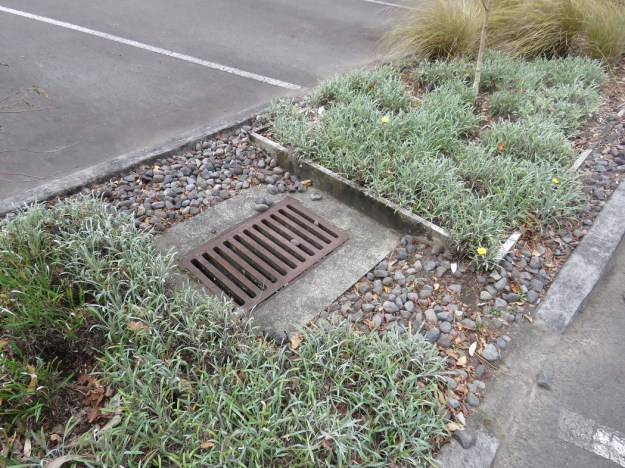
Dealing to the storm water in the somewhat grand but indubitably stylish car park at the council garden

A more modest approach to dealing with car parking in unsealed areas at Pensthorpe – a busy tourist attraction in Norfolk
I once asked Mark what he thought gave the greatest sense of arrival at a garden. “A FULL car park,” he replied. It is hard to argue with that.
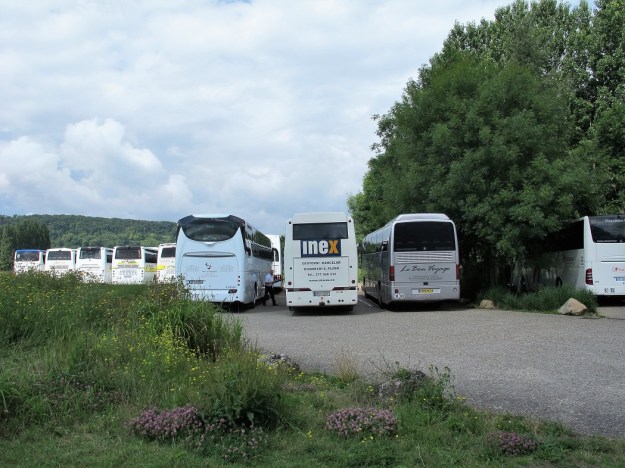
Part of the coach parking area at Monet’s garden in Giverny. Those coaches were parked up to three deep.
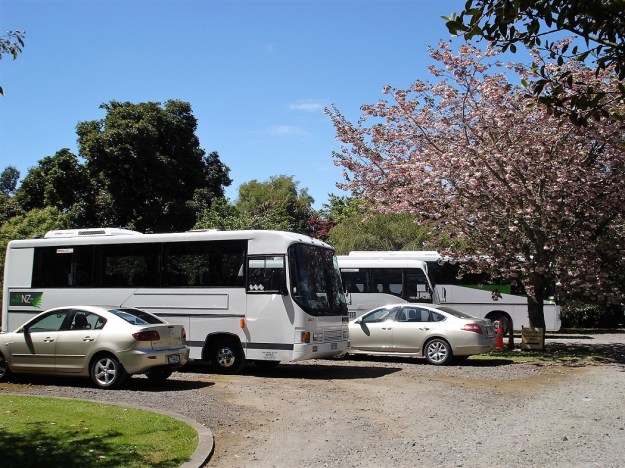
We are more modest back home. But the retired senior government minister who came in saying “It’s just like Sissinghurst” (referring to the trouble he had finding a car park), endeared himself to us forever, despite his subsequent and very public fall from grace.
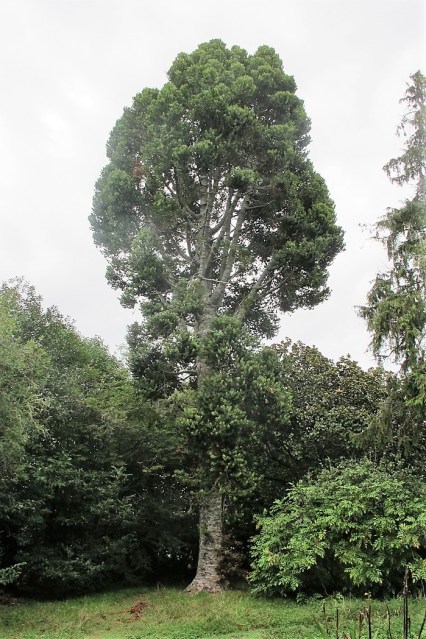




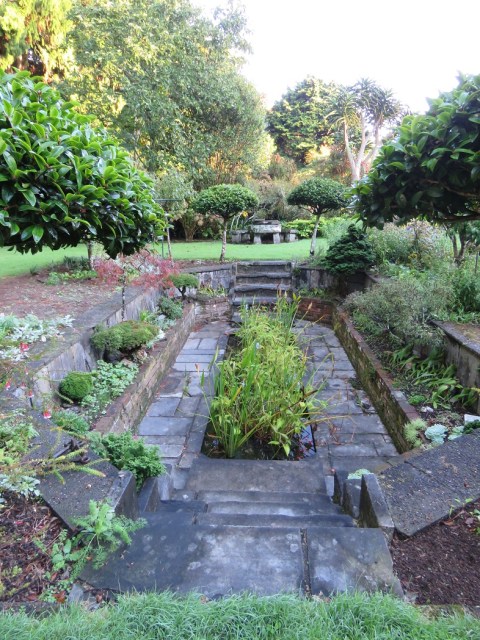
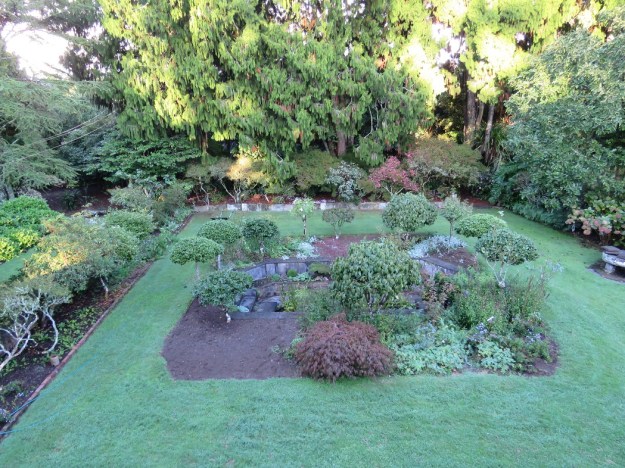
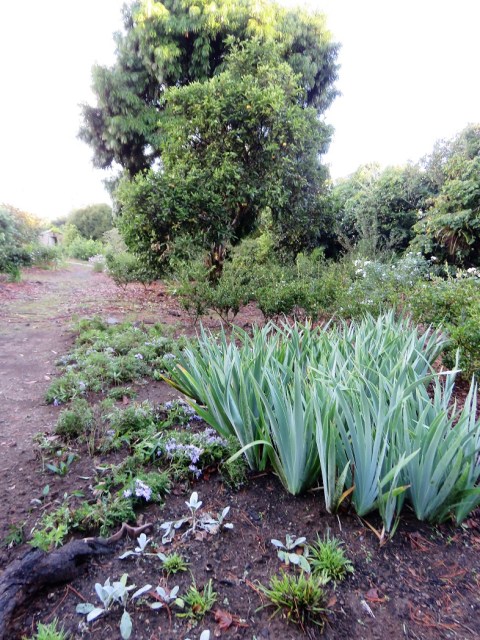


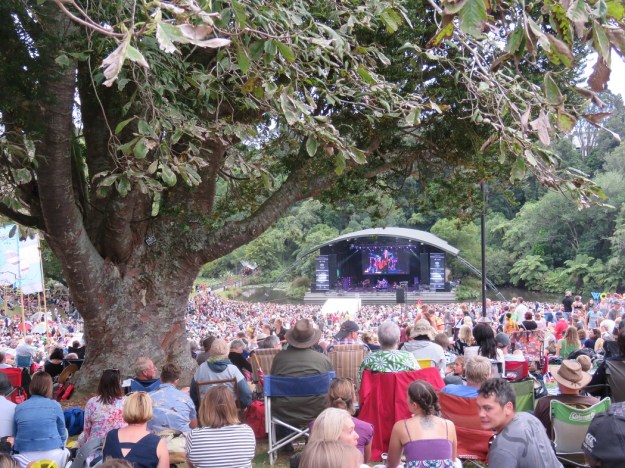
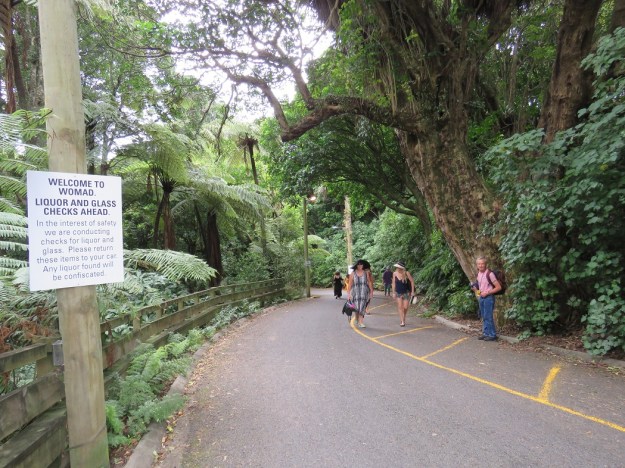 The entrances alone set the scene. That is Mark in the coral pink tee shirt, standing by George’s tree. I wrote a
 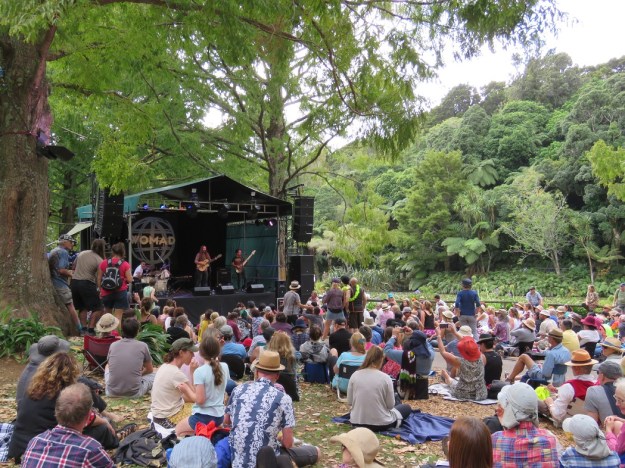 The entire WOMAD festival takes place within the embrace of trees. I particularly like the small Dell Stage for its intimacy and charm.
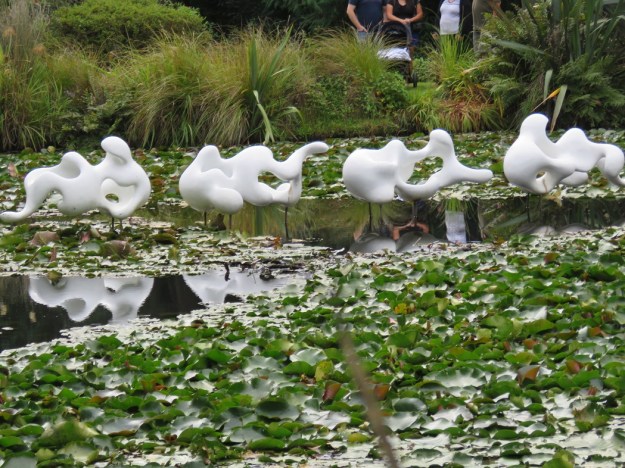 Adjacent to The Dell is this lily pond. It is a good exercise in knowing your water lilies. Some lilies S P R E A D to take up all the water, which rather defeats the reflective qualities. If you plan on growing a few water lilies at home, my advice is not to plant these overly strong triffids but to seek out smaller growing, named varieties which may be less inclined to stage a takeover bid. There are easier maintenance tasks than thinning water lilies.
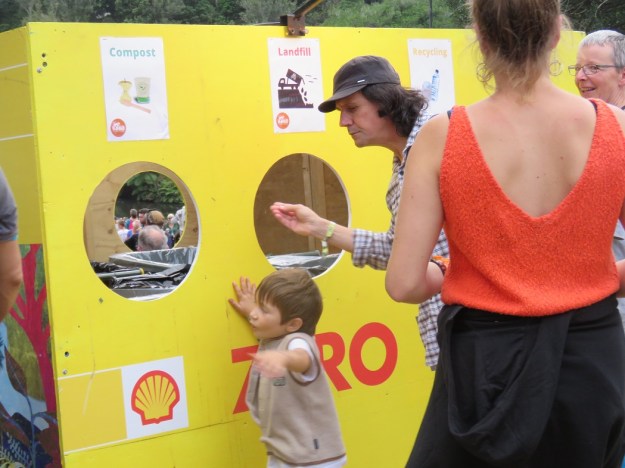 One of the other aspects of our WOMAD that really impresses me is the zero waste priority. Unlike most events that attract thousands of people, WOMAD is simply remarkable for its total absence of rubbish on the ground and the use of compostable or reusable serving dishes and drinking vessels. It is proof that with a good set-up and plenty of good management, litter and plastic waste can be eliminated.

 “Daisy, Daisy, give me your answer do
 In sorting out my haberdashery – in other words, reorganising my sewing desk – I came across this delight, the Daisy Disc. I can’t recall having noticed this before so it must date back to my very late mother-in-law whose sewing desk I inherited. I see it has the price of 30c on it, so I can date it to post July 10, 1967 when New Zealand swapped to decimal currency. It was the instruction folder that delighted me, with its pictures of projects and the following bold statement:
 The instructions are something else. Step one was fine – wind the wool 2 or 3 times around opposite spokes in turn. But then we come to the second step:
 I looked at the suggested projects for our daisy motifs and I was struggling to find a clear winner. Would it be the wildly impractical baby blanket, the adorned evening shoe or the daisy earrings? But then I spotted the fez-style hat. Ladies and gents, that must be the clear winner.
 I went looking for daisies in the garden to illustrate this post but came up rather short. I did not go far enough, I tell you. I should have done some googling first. Their family of Asteraceae is huge. Not just the obvious asters which are so pretty in flower at this time of early autumn, but also cosmos, tagetes (marigolds), sunflowers, echinacea, rudbeckia, even dahlias. I was sad that one of our largest and showiest daisy plants, the spectacular

 Tikorangi The Jury Garden