Tag Archives: Abbie Jury

Shaping up michelias

Written for and first published in the Royal Horticultural Society yearbook of the Rhododendron, Camellia and Magnolia Group 2025.

Over our years of experience with the michelia group of the magnolia family – en masse, so to speak – we have learned that we can treat them as we treat camellias when it comes to clipping and pruning in our climate. I italicise those last words because I hesitate to advise gardeners in more extreme conditions.

In a world where hardier michelia species are generally white or maybe cream, this is an example of Mark’s breeding programme getting more colour options into the future.

We have a very soft climate. We are never very hot and never very cold, regular rain falls all year round but our sunshine hours are high and we are on friable volcanic soils. If that sounds like gardening paradise, it probably is, as long as you can cope with the wind we get here on the west coast of the North Island of Aotearoa New Zealand.

We also have an abundance of michelias to work with, as a result of my husband, Mark Jury’s breeding programme with the genus down the past 30 years. We have never kept track of the numbers raised here but it will be in the thousands. From those, three have been released under the Fairy Magnolia™ branding; there are two more in the pipeline for release shortly and we are in the process of selecting maybe another three. That leaves many, many seedlings that have been rejected along the way, including entire crosses that he has decided are not worth pursuing. Most get cut out but some we have utilised as screen hedging and shelter belts. There is no shortage of raw material here.

I often claim that we don’t do a lot of heavy clipping and shaping; I have seen Italian gardens and compared to them we are minor players indeed. We do a lot of pruning because our garden is mature and is strong on trees and shrubs which take management down the decades. When it comes to detailed clipping and shaping, it is mostly on camellias and michelias.

Fairy Magnolia® ‘Blush’ soon after planting, circa 2005
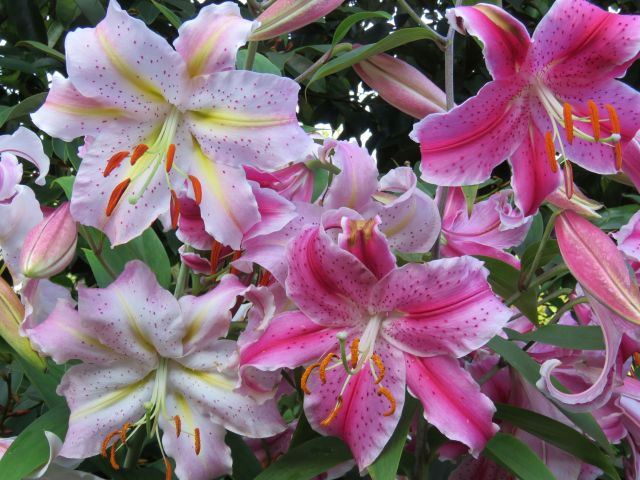
And in 2012

We started with Fairy Magnolia® ‘Blush’, planted twenty years ago in front of our brick wall. These were original stock plants grown in large containers in the nursery so they went into the ground with big root systems. We gave them a season to get established and then started shaping to lollipops. They have grown a little larger over the years but not hugely so. Every spring, as flowering finishes, we clip them hard, removing somewhere between 30% and 50% of their foliage.

Pruning in 2013. We remove more these days to keep them to size.
More or less frozen in time by 2020. The untrimmed section on the plant in the foreground is to allow the blackbird babies in a nest time to fledge and fly. We try to avoid ornithological infanticide – a hazard of early spring pruning.

We clip for future blooms so we only clip once a year, as they finish flowering. By the end of summer, they can be a bit woolly in appearance but if we cut again then, we would be removing many of the flower buds. If you want a sharp form all year round, don’t start with plants you want to flower well, at least not michelias or camellias. We use secateurs to trim. Hedgeclippers may be faster but they cut all the external leaves, the edges of which then go an unsightly brown. There is only a day’s work in clipping this row and cleaning up.

We have two smaller umbrella shapes which will now be well over 20 years old. The variety is to be released internationally this year under the name of Fairy Magnolia® Petite Peach. The photo above shows how much growth we are removing each year to keep the plants to a set size.
Fairy Magnolia® ‘Petite Peach’

If you want to create standardised lollipops, be patient. Let the plants become well established and growing strongly before you start serious shaping. You need a strong central leader to hold up the weighty head. Too often, I have seen plants in garden centres that have been *trained* to standards with a spindly trunk and all side growths removed, so it is entirely dependent on the strong stake holding it upright. You will have a higher success rate if you start with a plant which has a central leader as well as multiple side growths which you can trim but not remove entirely until later. Reduce particularly strong branches which are competing with the central leader but those side growths give the plant more strength and vigour. The leader doesn’t have to be dead straight to start with. What looks like a kink in a stem that is one to two centimetres across will have disappeared by the time it is five to ten centimetres in diameter. Don’t stake unless you have to. Long term, you want the plant to stand straight on its own and plants that are staked from the start come to depend on the stake rather than developing their own strength in the roots and stem. Once the plant has reached the height you want, then you can start serious shaping and when the central leader is strong, you remove all side growths below the top knot.

The side-on view shows the width we are keeping these plants – Fairy Magnolia® ‘White’
They were somewhat large plants on our very small tractor when we moved them from the open ground in 2015

Our pleached rows of Fairy Magnolia® ‘White’ have taken patience. Pleaching is basically a hedge on stilts. These came in as large plants we dug out from the field where they were growing in 2015. They have looked good and flowered well in the intervening decade but it took until last spring’s pruning for me to look at them and sigh with satisfaction. At last we had that two dimensional plane sitting above the camellia hedge below that we had envisioned from the start.

We have two matched lengths either side of a central court garden, trimmed flat down the length

Again we trim hard once a year, as flowering finishes, using secateurs and loppers to remove probably 40% of the foliage to freeze them in size and to create the form we want. They are bigger plants and surrounded by gardens, so trimming them is more challenging and slower than the aforementioned lollipops. Good ladders help. We bought both an orchard ladder and a platform ladder and I see our gardener, Zach, has both of these out when it comes time to trim the pleached rows.

A tall hedge of michelia seedlings straight after trimming in October (above) and nine weeks later below, showing how quickly the new growth fills the gaps. The untrimmed tuft on top in the photo above is because of a bird’s nest. When we trim and prune in spring, we are mindful that it is nesting season and work around any we find.

We also use michelias as tall screening hedges kept to about three metres and these, too, get trimmed after flowering. They can look a little sparse when first done but it is only a matter of six weeks before the flush of new growth fills in the spaces.

The same hedge as planted in 2017 – seedlings cut hard back to allow them to grow afresh.

About once every five years, these plants need to be picked over more thoroughly, to take out dead wood in the middle where branches have not resprouted. It saves them from getting woody and ugly over the longer term.

Magnolia laevifolia ‘Velvet and Cream’ was cut back hard to bare wood in 2023 but was bushy and flowering again the next season.
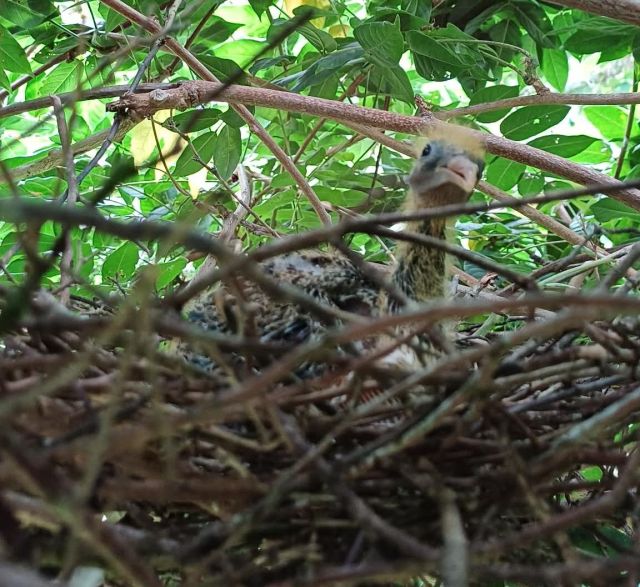
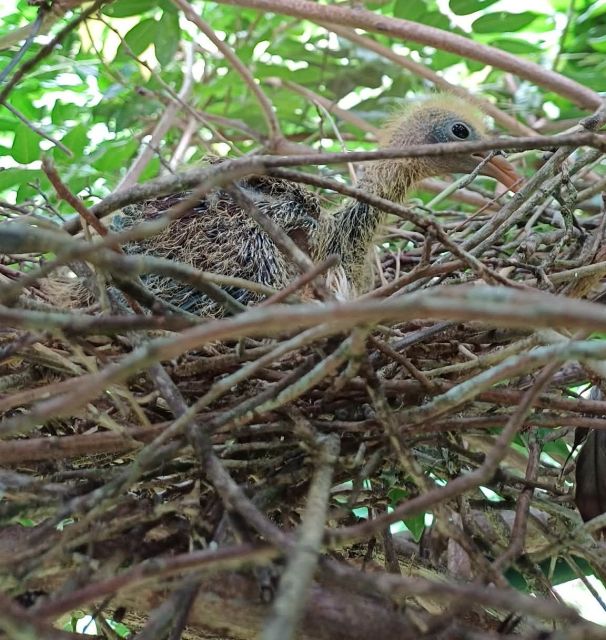
I only include this photo because it still makes me laugh. We used to trim with hedge clippers. When I found these making a handy platform for a bird’s nest in the M. laevifolia. Mark’s comment was, “Oh. So that is where I lost them.” 

Well established plants that are growing strongly can be trimmed back to bare wood, as can camellias and rhododendrons. It is a last resort when a plant has got away on us but we have done it successfully, notably on M. laevifolia. The plants may take another year or two to flower again but they will reshoot from bare wood.

Michelias can be pollarded and respond by putting up straight shoots.

Unexpectedly, michelias also have potential as a coppiced crop, or what we refer to as a sustainable wood-lot, much as hazel is used in the UK. We found this out by chance when we were running low on winter feed for our very small number of beef cattle – more a group of cattle than a herd. Mark started trimming michelia branches as stock food (do NOT try this with rhododendrons which will kill animals) and they were perfectly happy eating the foliage. The plants which were cut to the ground, allowing us to use the trunks for firewood, responded by reshooting from the base with very straight stems.

Another of Mark’s oretty seedlings

In our climate, michelias can set prodigious amounts of seed. In fact, setting too much seed is one of our most common reasons for rejecting a cultivar as unsuitable for commercial release. They are not as prolific in harder climates but if you can find one that sets seed, raising the seed is not difficult and the results are reasonably quick, by woody  tree and shrub standards. You will get seedling variation; if you want a hedge of identical plants you need to buy or propagate by cutting or grafting to get them all the same. We like the seedling variation which makes for a more interesting, though less formal, flowering hedge. If you are using seed from the same source, the variations are more likely to be subtle, not radically different. It is likely that Magnolia laevifolia will be the most common seed setter in the UK and Europe. It clips well but can be slow to get established. If you can find a hybrid that sets seed, it generally brings a degree of hybrid vigour.

Fairy Magnolia® Cream is strongly scented

With most michelias, there is the added bonus of scent. In our humid climate, camellias are ravaged by camellia petal blight and we no longer get the mass displays on the reticulatas and japonicas. To some extent, the michelia group have filled the gap and they are rewardingly free of pests and diseases.

A note on nomenclature: Michelias have been reclassified as magnolias so all species are now listed as magnolia. The Jury hybrids are sold under the trademarked name of Fairy Magnolia®. For purposes of clarity, we continue to refer to them as michelias in common usage, to differentiate them from both deciduous magnolias and other species of evergreen magnolias, particularly M. grandiflora.

We have a matched pair of Fairy Magnolia® ‘Cream’ at our gateway which we prune to restrict each year. The photo below shows it growing as a roadside plant with no pruning. We can’t allow our gateway plants to get to that size in the space they are in so we are pruning to freeze them in size.

The bulbs of November

Arguably, rhodohypoxis could be the provincial flower of Taranaki. Like clockwork, they bloom on cue for the garden festivals which take place here at the start of November and there wouldn’t be too many gardens that don’t have rhodohypoxis growing either in garden soil or, more commonly, in shallow pots. They may hail from southern Africa, but we have made them our own.

Rhodohypoxis baurii ‘Ruth’

For all our years opening the garden and when we had the nursery, we would pot up what seemed like an inordinately large number of these little rhizomes in shades of pink, white and deep carmine. I wondered if we would reach saturation point when every local gardener and any return gardeners from out of the region already had them, but we never did. It seems the market for these charmers – referred to as ‘roxypoxies’ by more than one customer – is endless in the month of November.

Orange tritonias

Also standing out are the orange tritonias. There is nothing subtle about these easy bulbs, also from South Africa. They need to be managed and used thoughtfully or they just look a bit… vulgar really. They pull their weight in vibrant meadows, set against deep blue flowers or in predominantly green situations.

I am pretty sure those are pastel tritonias at the front of the borders at Riverlea Garden

I am pretty sure the muted pink clumps repeated down the front of the borders at Riverlea Garden are also tritonias, or a close relative. They were very pretty and maybe easier to place in the garden than the orange.

White ixias in the front left. And of course those red and yellow alstromerias on the other side are also rated as bulbs. And I would assume that the Iris sibirica ‘Blue Moon’ can be included in the bulb fraternity with its underground rhizomes.

Also in the ‘easy’ bulbs class are ixias – African corn lilies. Not that all ixias are equal. I had a brief look at the ixia family and it seems there are somewhere around 100 different species and there seems to be quite a strong correlation between different colours and different species. Our form of Ixia viridiflora – the best known and unusual coloured one in strong blue-green – is a poor form. Despite my best efforts, it never flowers well and I have seen photos of way better performing selections. It is the pure white ixia that delights me this week, both in the Wild North meadow and in conjunction with the blue Iris sibirica in the borders. We also have ixias in various shades of pink from pastel to cyclamen pink, in lilac and in yellow.

Romulea rosea
Romulea candidissima

Romuleas can be a bit too enthusiastic on the reproduction stakes but both R. rosea (in brightest pink) and R. candidissima (in pure white) are earning their keep this week. Mark tells me that the best romulea is R. sabulosa but it is also the most difficult to grow and we lost it.

It has taken us a long time to get to the name of this – Herbertia lahue or prairie nymph

Crossing the ocean to the central and southern Americas, we get Herbertia lahue with the charming common name of Prairie Nymph. Neither Mark nor I have known what this was until now, although Mark gave his assessment that it ‘looks dangerous’. He is right that the visible evidence of seed development is scary, but in all the years we have had it, it has not become an invasive problem.

I have brodiaea firmly embedded in my brain so I may struggle if in fact it is now a tritelia

Then there are the multitudinous but welcome plants of Brodiaea laxa ‘Queen Fabiola’. Or is it definitively reclassified as a tritelia these days? This I do not know. It has built up most satisfyingly here without becoming a problem. In a climate where the giant blue alliums are not a starter for us – or indeed for many people in this land, given the whopping price per bulb let alone sparse availability – I see my brodiaeas as the poor man’s alternative to swathes of late spring blue. True, it falls over in the rain but it stands up again when the rains stop.

Flattened by the rain this week but what I think of it as the poor man (or woman)’s blue allium replacement
Albuca flaccida (not canadensis!)

It has taken a few years (read: quite a few, possibly many years) to build up Albuca flaccida  (incorrectly named and sold in this country as A. canadensis, including by us) in sufficient numbers to put on a show but we are finally there. In the class of graceful, hooded, hanging bells in yellow with green stripes, this South African bulb is a winner and even more charming when in a clump of many. The bigger growing white and green albucas are only just opening and we will get to them next month.

I will struggle with remembering Sinningia instead of gesneria but the cardinalis remains the same

Sinningia cardinalis (alternatively known as Gesneria cardinalis) is one of our curiosities here, built up over decades to be standout clumps of foliage and flowers that attract attention. I am not aware that it has a common name but it belongs to the same family as African violets, streptocarpus and some gloxinias. You don’t see it around much because it doesn’t appear to reproduce easily from seed and its large tuber doesn’t set offshoots so propagating it requires a bit more skill than most bulbs.

Pretty sure it is one of the gladiolus species but we don’t know which one. These often seemed to be loosely grouped into G. carneus but that may not be right

Our interest in bulbs largely begins and ends with what we can grow as garden plants. We have enough garden without having to faff around with pots. Some bulbs are easier to manage in pots, particularly those that are being grown outside their climatic and geographic areas. It is easier to manage water and growing medium requirements in pots, as well as controlling temperature and day length. It is also easy to take your eye off pots and find the contents withered away to nothing in high summer, eaten out by hungry mice in winter, or sprouting with unwelcome seed from invasive neighbours. Ideally, potted bulbs should be replanted in fresh mix every year. We prefer to keep them to the garden once we have enough to plant out.

But wait there is more! I had forgotten entirely about the arisaemas, which is quite a big oversight on my part. This oddity is A, dahaiense.

The bulbs of October

Bluebells in abundance but now all but passed over for another year

October opened with the bluebells, the pinkbells and the whitebells. I don’t want these in cultivated garden areas any longer but they are very pretty in wilder areas. In terms of a single colour sweep, blue is always best. White might as well be onion weed. Pink is a bit novelty-ish. When it comes to a colour mix, blue should still be in the highest proportion, as it is in the wild. At least that is the rule of Abbie if you are after a naturalistic, sweeping meadow effect.

This was as good as the Hippeastrum papilio got in the unusually prolonged spring rains
Looking happier in previous years – Hippeastrum papilio

Last month belonged to red Hippeastrum aulicum. This month opened with Hippeastrum papilio. It has taken a few years but we now have plenty of this bulb, able to be counted by the score rather than single figures. It is available for sale and it is expensive to start with – probably around $25 or $30 a bulb. But it is not difficult to grow and it multiplies at a reasonable rate if you quietly lift and divide it every year or two, replanting into well cultivated soil with some compost added. Its flowers are large and showy. Its season was somewhat shortened this year with The Rains. It feels as though it has rained most days this spring. The magnolias and michelias did not appreciate the very wet season and were particularly disappointing. H. papilio tried to bloom and did well enough for me to get this photo. Alas, when I looked a few days later, even with their heavy texture, the blooms had largely sogged out and given up.

The erythroniums in a previous year

The dogs tooth violets – Erythronium revolutum – are marginal with us at the best of times. Their very soft blooms can mush up in our spring rains so I had to reach into my file photos, given that there were a few brave blooms at best. The Fritillaria meleagris is equally marginal our climate and has also been and gone for the season. These are plants that are very charming but they will love your conditions more if you can give them more winter chill and less spring rain.

We have failed to get a species name for this striking, late-season lachenalia. Its pink, blue and pale colouring is almost luminous.

The lachenalias have proven more weather hardy for us. Now that the early ones have long gone, we are onto the late bloomers, particularly this rather striking pink and blue number and the white species L. contaminata.

Veltheimias – ‘Rosalba’ is prettier than the more common pink V. capensis

The veltheimias are another large bulb that has surprised us with its willingness to settle in and naturalise. It is a South African native, triggered into growth by autumn rainfall but otherwise happy in dry, conditions. We assumed it would want full sun but Mark’s efforts scattering seed through the woodland areas has seen it settle in without fuss and gently establish in shade as well as sun. Veltheimia capensis is the pink form and it is common enough and reasonably hardy; the prettier lemon and pink form is less common, probably less hardy and is Veltheimia capensis ‘Rosalba’.

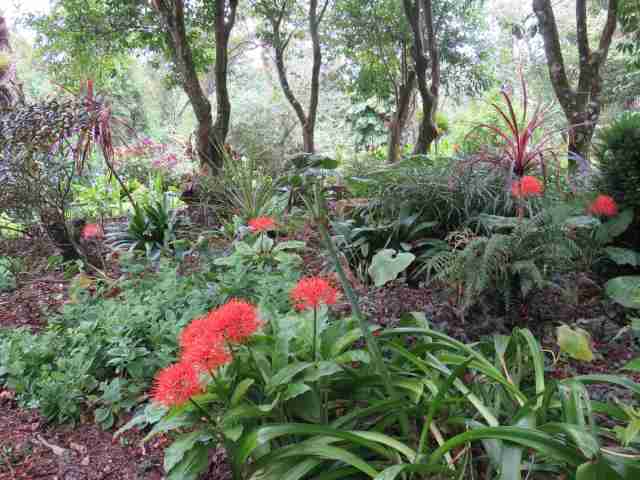
Scadoxus puniceus

Our other stalwart this month and into early November is Scadoxus puniceus. Part of the family oft referred to as blood lilies, this species is not common. You will be lucky to find it offered for sale in New Zealand. The summer flowering Scadoxus katherinae (technically S. multiflorus ssp katherinae) is readily available, although certainly not cheap. We have both gently seeding down in woodland where they make big, bold statements with their presence. If you are a patient gardener, you can build these up from a single bulb, as we have. If your conditions are favourable, you may even get them to naturalise over time, as we have.

It may remain a spiloxene to us, although it seems it is now reclassified as a pauridia

I am not writing a comprehensive book so I am not doing a full listing of which bulbs flower this month. There are too many, from pretty Albuca canadensis through to Phaedranassa cinerea,  that sit on the choice, less common end of the bulb spectrum. There are families that we tend not to think of as ‘bulbs’ like alstromeria (we must have those blooming every month of the year) or the vast iris family. And there is that whole cluster of somewhat messy bulbs which often seem to overlap categories – babiana, sparaxis, ixia, vallota, tritelia, brodiaea, spiloxene syn  pauridia and more – many coming into flower now.  I say messy because a fair number of them come up with foliage that starts to die off as the flowers open. There are times I think greater separation between flowers opening and foliage browning off would be preferable.

Ornithogalum arabicum

I will mention Ornithogalum arabicum, sometimes referred to as black-eyed Susan but it shares that name with other plants too, which all goes to show that common names can be problematic. Arabian star flower or star of Bethlehem are perhaps preferable options. It is not that O. arabicum is particularly rare but it does exercise great mystique for me as a prime example of random reinforcement. Every few years it pops up flower spikes but it clearly does not wish to be taken for granted because it doesn’t do it every year. It makes it a fresh surprise and pleasure when it deigns to bloom.

Look at that set of bulb offshoots. Every one will grow, given half a chance.
Even more bulblets forming at the base of the flowers

Unfortunately, I am also dealing with An Incident – The Incursion of the Allium Bulbs. “Oh, that is the one Dad tried to get rid of,” Mark said as he passed. It is probably a species that was sold at some stage but, with over 1000 species of alliums now identified, I have no idea which it is. There are not too many of that thousand that I would accept these days, excepting onions and garlic, of course. Look at how many bulbs a single stem is creating. And not just at the base. If you look at the flowers, you can see a whole lot more babies forming at the base of each bloom. This is a scary rate of reproduction. I shall continue attempting to get rid of it here, even though total eradication does not seem possible. 

Do not be fooled by the pretty flower with the strong onion scent. Let this in at your peril and future generations of gardeners will rue your decision.

Three weeds in white

Is it Prunus serrulata? It is certainly a prunus, or flowering cherry and what we call ‘a garden escape’ in this country

Springtime is very flowery and all tends to be forgiven when plants flower. However, I couldn’t help but notice that three common roadside wildflowers in bloom right now are indubitably weeds. Not harmless weeds that qualify as ‘just plants growing in the wrong place’ but actual, invasive weeds.

You see it here, you see it there. On the road to town and there are a large number that I could have stopped to photograph along the way that are clearly garden escapes – as in, they are not planted in gardens but must have originated from one to start with.
But wait there are more. And more and more.

I have never noticed before just how many white flowering cherries there are all around the countryside but once I started looking, they were e v e r y w h e r e. There has been a lot of talk in this country about the evils of the-early flowering, carmine-red Prunus campanulata so favoured by our native tui. Some areas have gone so far as to completely ban it – around Nelson and in Northland, I understand. They are somewhat controversial to grow and most will seed around too freely. But I can’t find the same level of concern concerns expressed about white prunus  spreading itself far and wide in this area. There is a whole lot more of it around this neighbourhood, clearly self-seeded, than P. campanulata. I am no expert on cherries but looking up the pest plant lists, I figured it is quite possibly Prunus serrulata. There is a list of 13 different prunus species on the national plant pest accord, all identified as problematic and banned from commercial production and sale. P. serrulata seems the best match to what I see in bloom right now.  

Plenty of onion weed on roadsides and along fencelines on country roads.

Onion weed is in full flower and it, too, is widespread, mostly on roadsides. It is quite pretty in bloom but spreads way too enthusiastically and is difficult to eradicate. I haven’t dug one up but I would guess it is a typical weedy allium where a single bulb is capable of producing baby bulb offshoots by the score or more. The ability of weedy alliums to reproduce is frankly alarming.

Mark was sure that onion weed is what is sometimes referred to as wild garlic but I see he is not correct on that. What we call onion weed is Allium triquetrum. What is usually referred to as wild garlic is a different species, A. ursinum. Proper garlic is yet another allium species, A. sativum. I doubt there is any reason to avoid harvesting our common onion weed, should you be keen on gathering wild foods. It certainly smells onion-y, as all the alliums do. Indeed, a quick net search came up with one enthusiast on Substack sharing his recipe for charred onion weed with cashews, curry leaves & gochujang ripple labneh. Not all of his recipes are quite so complex and the author is clearly better placed to advise on foraging than I am.

Arum lilies growing wild. There is no colour enhancement or filter on this photo. That bright green of the paddock behind is the defining colour of this area, especially in spring.

Arum lilies are a great deal more highly prized in other countries than here. I quote Bay of Plenty regional council: “Zantedeschia aethiopica Originates from South Africa. Introduced to New Zealand as an ornamental garden plant and thought to have naturalised by 1870. All parts of the plant (are) poisonous and it is one of the National Poison Centre’s top ten poisonous plants; being consistently involved in unintentional or childhood poisonings.”

Like all zantedeschia, they make a good cut flower but their reputation here is so tarnished by their invasive weed status that few people value them in that category. It is a very difficult plant to eradicate too, and I can tell you that from experience after working to eliminate the form once sold here under the name of ‘Green Goddess’.

A mass of arums in a garden I visited two years ago. A brave landscaping decision, I thought.

I have only once in recent years seen it used as an ornamental garden plant. It is certainly striking and the blooms are long-lived and robust. I can’t quite get over my squeamishness about featuring plants that we know are noxious weeds. Pampas grass is striking, especially the fluffy pink form. Giant gunneras are striking but they are a really invasive problem here. Last time I looked, they were banned entirely in Taranaki – as in, illegal to have on your property – which is the highest level of control. I feel that arum lilies, like giant gunnera, are much more valued in other countries where they don’t pose the same environmental problem as here.

When all is said and done, should famine strike, we can eat onion weed and the wild cherry trees can provide good firewood but the arum lily has no such saving grace.

From 1993

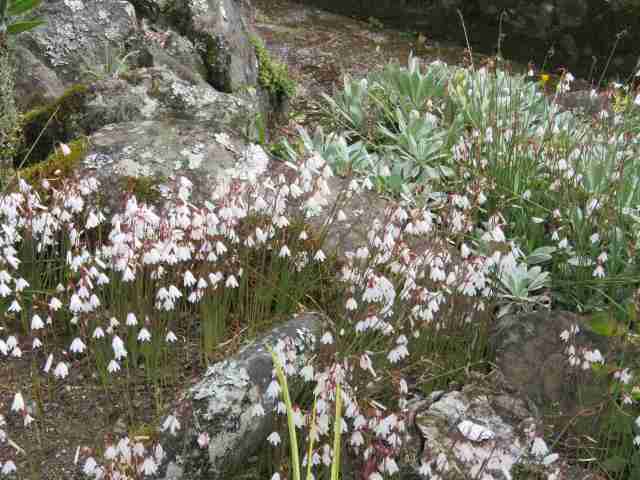
Postscript: While thinking of weeds, I was amused to find this low-grade photo of the rockery, taken in 1993, so 32 years ago. The blue – you are looking at the blue which I tried to bring up with a filter and then highlighted. Most of that blue is the Geissorhiza – probably G. aspera, seen here at its worst. To this day, I am still digging out every tiny bulb that germinates and grows to the point where I can identify it. Mark’s father, who planted it and then deeply regretted it, took to painting it with weedkiller and an artist’s paintbrush. I have even dug out and replaced all the soil in some of the rockery pockets with the worst infestations. Continued vigilance is all that stands between a well-tended rockery and a repeat geissorhiza takeover.

Do not be fooled by its dainty appearance. The geissorhiza is not harmless.

Revisiting Le Clos du Peyronnet, but not in person

If I knew then what I know now, would my visit have felt different? When it comes to Le Clos du Peyronnet, the answer is probably yes. I have just finished reading ‘The Long Afternoon’ by Giles Waterfield. His late brother William and his even later Uncle Humphrey are credited with making the garden into a place of note.

I wrote about the garden after my visit in May last year in the second half of my post covering two English gardens on the French Riviera. I thoroughly enjoyed the visit. But now I would like to go back and experience it again, although that is extremely unlikely to happen. We were told a few historical facts but they were not of a compelling nature.

These were my only photos showing part of the villa, which I now know was built in 1896 by Annie Davidis, an Anglo-German artist.

We learned that the villa, purchased by the author’s grandparents in 1912, had now been divided into five apartments – but not that it was a move taken immediately after WW2 which was necessary to save both the villa and the garden. And we were told that one or more of the apartments’ occupants were hostile to William Waterfield’s widow continuing to accept and lead tour groups around the garden. Our movements around the garden were somewhat restricted and we descended from the top terrace and entirely missed the experience of the main entrance and the front of the villa. When I looked at an upper story window, I saw a figure standing there, possibly glaring. The vibes were bad, Reader. He seemed to radiate hostility so I averted my eyes and studiously avoided going close to the building, instinctively trying to minimise any further intrusion on that resident’s privacy. As a result, I have very little visual memory of the villa, just the garden

“You should read ‘The Long Afternoon’,” our Irish tour leader said to me. “It is Giles Waterfield’s account of his father and uncle growing up in the garden.” It was published in 2001 so I found a second hand copy which described it as a novel. It is sort of a novel but based on pretty accurate family history. The names have been changed. Barbara and Derick Waterfield became Helen and Henry Williamson, their sons Humphrey and Anthony became Charles and Francis. The name of the garden became Lou Paradou. The author has created the dialogue and placed his interpretations of events into various character’s minds. But the facts and events are real.

The view of Menton from the top terrace of the garden in 2025.

The garden and villa wrap around the plot, ever present – especially for me as I could visualise the garden and the setting and I have looked at that view of the Mediterranean and crossed the border to Italy to the Hanbury garden. The plot centres on the relationship between ‘Helen’ and ‘Henry’, leading lives of huge privilege in the sedate ex-pat community of British residents who had chosen to live in Menton in the first half of last century. New Zealanders may recall Menton as the place where Katherine Mansfield lived in her doomed quest to recover from tuberculosis. English people may know it as the place where Lawrence Johnston of Hidcote fame preferred to spend his time at his garden, Serre de la Madone. Both are of the same era as the Waterfields/Williamsons.

The structure and design is largely attributable to Humphrey Waterfield
William Waterfield was the first in the family to take up year-round, permanent residence (the earlier generations tended to split their time between there and England, preferring to spend summer in the cooler climate. William was a botanist and added the botanical detail to the garden, including an acclaimed bulb collection – all of which was over by the time I visited in late May.

Giles Waterfield is a good writer. Much of the book is a long, intricately drawn picture of co-dependence evolving over time between Helen and Henry, set against a backdrop of ennui and lassitude that comes with lives rich in privilege but lacking in purpose. No wonder she had plenty of time to supervise the gardeners.

There is a sharp change in writing style and tone as the inevitability of WW2 looms large, disturbing their tranquil way of life. Menton is right on the border with Italy and the fascists were already in control of that country. Life as it had been started disintegrating at a terrifying speed.

Spoiler alert: in the unlikely event that you are currently reading the book or plan to read it very soon, you may wish to skip the next three paragraphs.

I describe it as an explosive ending. In a suicide pact, they chose to end their lives together, by gunshot. A Luger, no less.  In June 1940. They were only in their early sixties. The war was too much for Helen – too inconvenient, too much unknown, too much to fear and too much potential chaos. Fourteen months of retreat to Pau (still in France but near the Spanish border rather than the Italian one) was all she could cope with.  The tone of the book makes it very clear that it was Helen’s decision and Henry acquiesced. Again. “She wants us to end our lives, and I still love her enough to do as she wants.” I am guessing the excerpt of the letter written to their sons which ends the book is likely the actual text from Derick Waterfield to his sons.

After the precision of an organised life that leads up to the end, those last four pages were shocking. I am with the reviewer who said of the book, ‘I can’t get it out of my head’. I had to start searching to see if the ending was true. It was. Then I became fascinated by the author whom, I suspect, took after his Uncle Humphrey (Charles, in the book). The empathy is clear.

That is the backdrop to Le Clos du Peyronnet. The garden as it is admired today, is credited to Humphrey who returned to it as soon as he could when the war ended and then to William. Humphrey was in the shadow of the war and the suicide of his parents, William was raised in a family where the deaths were not discussed at all (according to his brother Giles, in a lecture delivered to the Garden Museum Literary Festival in 2014. I told you I became fascinated.)

It was a grey and drizzly morning so it is not clear but the space around the conifer is the Mediterranean Sea. The famed ‘water staircase’ of five descending pools culminates in the borrowed view of the Med being the sixth pool, the design work of Humphrey Waterfield. That conifer may need to be removed soon.
I now know that the ‘Anduz jars’ came from Lawrence Johnston’s garden nearby but what I don’t know is whether they are the urns or the glass jars. Or both. There seems to an absence of Anduz jars in this country so my education is lacking on this matter.

Knowing what I know now, I would be staring at that villa, locating the upstairs balcony that featured so often. I now know who built the grotto that William loved, who designed and constructed the cascading pools and so much more. It is a garden conceived, created and continued in an unbroken chain of ex-pat Brits on the Riviera, which is a very particular garden genre. It seems that the grandparents provided the canvas and showed the potential (the blue irises are woven through the family history), Humphrey lifted the design and layout to a new level and William was the plantsman who set about enhancing the garden with detail. Alas, there are no more Waterfields. The garden has been accorded historic monument status by the French Ministry of Culture but what that means in the mid to longer term, I do not know.  

Would it have enriched my experience to know all this when I visited? For me, yes I think it would. Private gardens are about more than pretty scenes, interesting plant combinations or good management. Their very existence is tied to their individual owners and their social context. Their stories are part of the garden’s being.

Note to self: do more research in advance of visiting gardens, especially overseas gardens that I may only get to see once.

Curiously, William Waterfield once commented in an interview that this was his favourite part of the garden – a small grotto utilising a natural spring and one of the few original parts of the garden as created by Annie Davidis, who built the villa. The silver agave was added by William.