
Mindful of how badly most of us stake plants, I have been looking at alternative strategies.
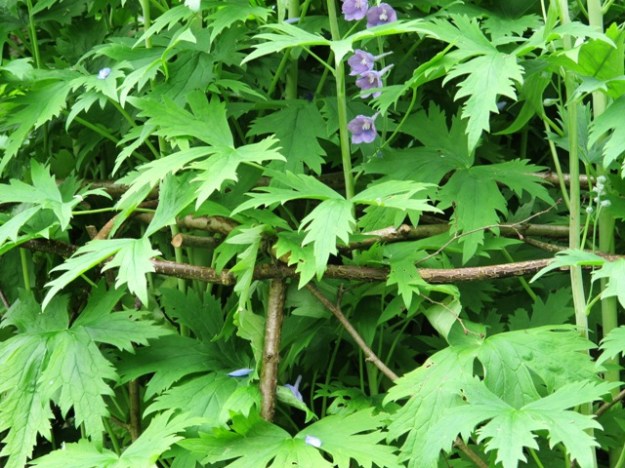 Delphiniums are usually problematic. Rather than staking each flower spike individually, having a clump of them enables them to be retained invisibly. If natural fibre string is used for any ties required, the entire structure is fully biodegradable. This type of support is probably the most time consuming to construct. Whether it takes longer than to stake each flower stem individually, tying it with synthetic stretch tie to a plastic cane is debatable however.
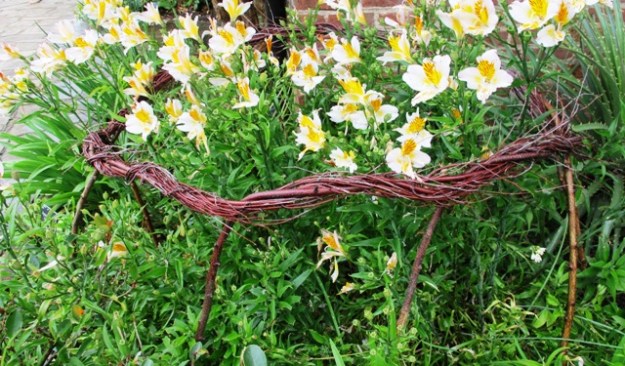 Alstromerias are inclined to fall apart in our climate with rapid growth rates and often torrential downpours. Here the weaving approach has been used, adapted from its traditional use in rural fences and hedges. Stems of willow have been pushed into the ground at regular intervals and then bent and woven, side growths and all, at the desired height. If you are using a material like willow which can root easily, you need to either treat the ends (boiling water should do it if you are shunning herbicides) or keep an eye out for the support starting to grow.
 In this case, wire mesh has been laid at about 30cm above the ground to support the plant, a tall thalictrum, as it grows. While neither invisible nor attractive, the plant growth will fill out and hide it as the season progresses. If you want to try a natural alternative, tying bamboo lengths together in a grid will work. We have used a vertical bamboo grid to give an unobtrusive frame for a seasonal climbing plant – Tropaeoleum tricolorum.
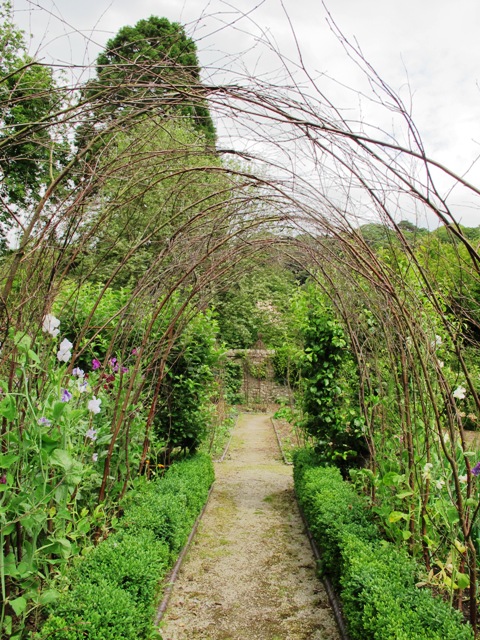 It depends on what visual effect you want in your garden, but the use of natural materials to create a seasonal growing frame is as efficient while more environmentally friendly than tanalised timber, plastic or metal. It is just not as permanent but this may not be a requirement for some gardeners, certainly when it comes to annual crops such as sweet peas. The natural alternative will usually age more gracefully.
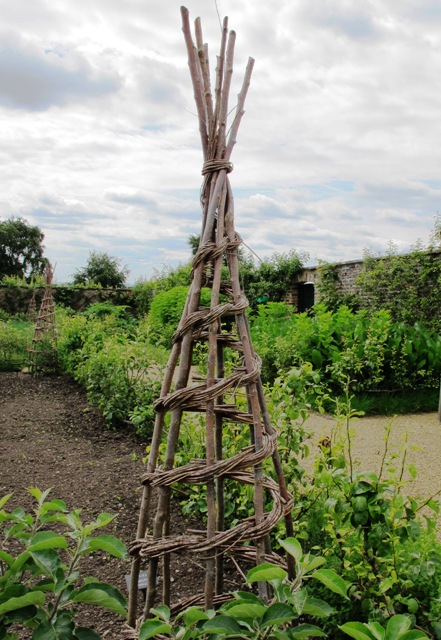 We make bamboo teepees here, but any longer stretch of branch can be used and there is charm in the irregularity of using natural materials. Solid branches will last longer than bamboo, maybe longer than cheap metal ones you may purchase. Depending on what you are trying to grow, it may not be necessary to weave the horizontal supports. A top tie may suffice. In most situations it will be necessary to push the long supports into the ground to prevent the structure being blown over.
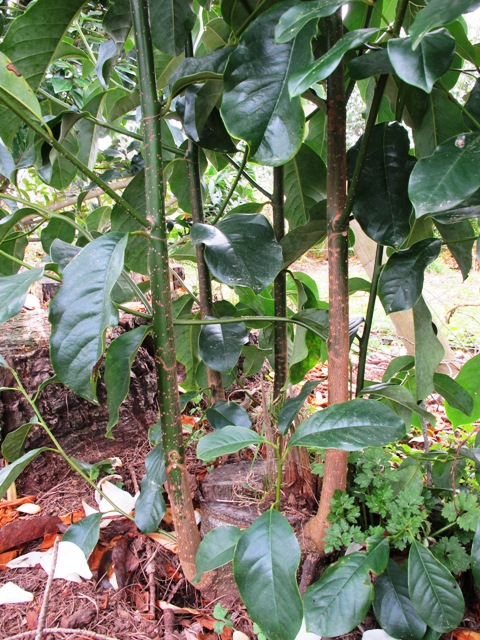 If you have the space, coppicing plants is the traditional means of ensuring an ongoing supply of fresh, green wood. We are very impressed at the coppicing potential of michelias here. Others coppice cornus already and hazel is the traditional English material. However, most gardens will have some suitable material available for gathering – grapevine, bamboo, willow, phebalium, wisteria canes – the choices are many. The growth needs to be flexible for weaving, more rigid if it is to be pushed into the ground, twiggy if it is to form a natural support for bushy plants – one material will not fit all situations.
First published in the Waikato Times and reprinted here with their permission.




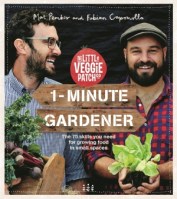 I am totes the wrong demographic for this book. Believe me. It is zip zap instant gratification for the iPhone generation where everything has to be easy-as and fun fun fun. I am sure Mat and Fab have their loyal following in Melbourne although I think that hailing them as “Australia’s No 1 gardening authors” might be a little over-hyped by the publishers. However there is a contagious delight in their exuberance, even when you are not their target audience and that is not to be derided.
 Tikorangi The Jury Garden