

Louisiana iris are flowering by our stream
I am enjoying the irises enormously this season. This week we have three main types in flower – the Sibericans, bearded irises and the Louisanas.
Botanically Iridaceae, they are more romantically named for Iris, the Greek goddess of the rainbow. It is a big family – there are maybe 300 different species and they are grouped in different botanical sections. Then there are thousands upon thousands of different hybrids, for irises have been bred extensively for hundreds of years. Some of those hybrids are what I would describe – politely, if disparagingly – as ‘novelties’. This is more evident in the bearded iris class than anywhere else but I will draw veil of silence beyond saying that not all hybrids are improvements.
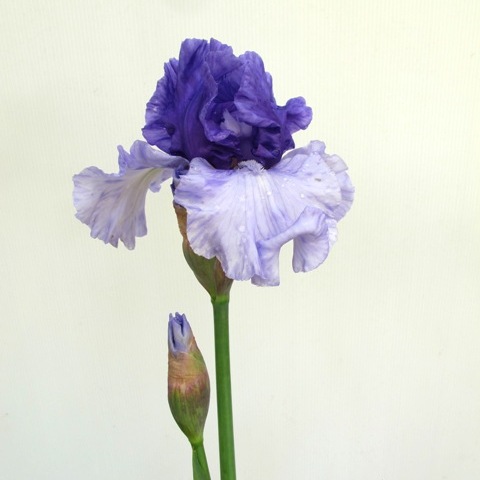
‘Crowned Heads’
We are not the best bearded iris territory here. These ones grow from rhizomes that sit on top of the soil and they tend to prefer free draining, sandy soils (great if you live on the coast though you may have to stake the flower spikes). They like their rhizomes baked in the sun and they are fine with winter frosts but are not so at home in high rainfall, high humidity climates. They are also better without a whole lot of other foliage flopping over their rhizomes, which tends to happen in perennial beds.

Yes that is a black iris, called ‘Anvil of Darkness’, and an old yellow variety to the right
The modern hybrids are often touchier than the old toughies. I was delighted by the iris fields of nursery plantings I saw last spring (www.theirisboutique.co.nz) and tramped up and down looking at them all. The owner, Coleen Peri, has given me a few new ones to try here. Bless her, she avoided the weird colour mixes, splashes and splotches that I personally dislike. The very dark ones are interesting but are not going to be easy to place in the garden so that they stand out. There are some exquisite blues available but my most reliable standby is still an old pure yellow one which dates back to Mark’s mother. It is very forgiving and tolerant.

One of the easiest of all iris to grow, as long as you have heavy or damp soil – Iris sibirica
The easiest of all irises to grow must be the Siberian iris or I. sibirica. As its name suggests, it is fully hardy but it does want to grow in a heavier soil which doesn’t dry out during the growing season. It is dormant in winter, so winter dry won’t matter – though few of us have dry winters in this neck of the woods. It has the classic form with three upright and three falling petals and comes mostly in gorgeous shades of blue. Because it is clump forming (it has a fibrous root system as opposed to many irises which are either bulbs or rhizomes), it can be planted and left for many years. I get a lot of pleasure from the border where I have combined it with the big hairy-leafed Bergenia ciliata. I like the contrast between the foliages and they co-exist happily together.
The Louisiana irises are in flower down by our stream. These ones hail from the bogs and swamps of Louisiana and are easy to grow in clumps on the margins of water, although they can also be grown in heavy soils. These are plant and leave types, too. The lovely Japanese Higo irises will not come into flower for another few weeks yet. We are still working on establishing these here and they appear to be at their best immediately by water. We want lots of them blooming into December because we love their colours and ethereal form.

Moraea villosa or the peacock iris
Then there are the Dutch iris (often sold widely and cheaply as corms in autumn). They looked out of place in the rockery, vulgar even, so I moved them into a perennial border where they flowered away in early spring and looked much better. Dutch iris are not native to Holland. It is just the Dutch who did the breeding to get these popular forms for the floristry and garden markets. The dwarf (ground-hugging) Iris cristata from USA look much more appropriate in the rockery and have that classic three up, three down petal formation so often associated with the iris family. The peacock iris (moraea) species which grow from corms, also fit in well with the rockery and different species flower through autumn, winter and spring though many people would not even pick some as irises.
It seems a general rule that if the iris grows from rhizomes or bulbs, it needs excellent drainage and will do better in lighter soils and full sun. If it has a clumping, fibrous root system, it leans more to heavy soils and damper conditions. One size does not fit all when it comes to the large iris family.

A field of irises being grown commercially
First published in the Waikato Times and reprinted here with their permission.

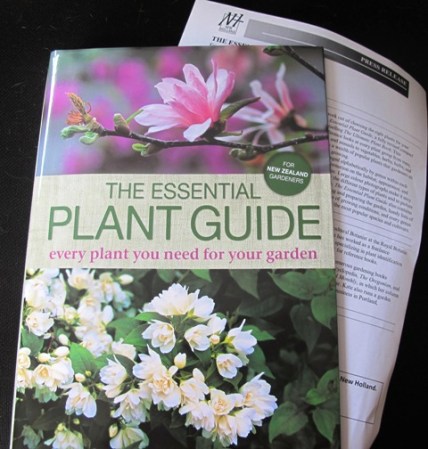 The subtitle of this large book is “Every plant you need for your garden” and the cover, presumably generated specifically for the NZ market by the publisher and the NZ distributor, New Holland, boldly states “For New Zealand Gardeners”. It isn’t. The authors are Australian and American and the text has not been adapted for NZ conditions which are very different. Including plants like meconopsis (which will seed down and naturalise, don’t you know?) and trilliums as great garden plant options is problematic. There are reasons why you don’t see many crepe myrtles (lagerstroemia) growing in this country (they need hot, dry summers) and cornus are not great in the mild north and mid north. Arisaemas – we know quite a bit about arisaemas here. A. sikokianum is incredibly difficult to keep going as a garden plant but that is at least better than the recommendations for some which we think aren’t even in this country. Recommended camellia and rhododendron varieties are often (mostly?) ones more popular in the authors’ home countries and are not the NZ market choices. I would not be sure that they have all been imported to NZ, let alone in production.
