Tag Archives: Abbie Jury

It doesn't have to be all or nothing – using native plants in our gardens

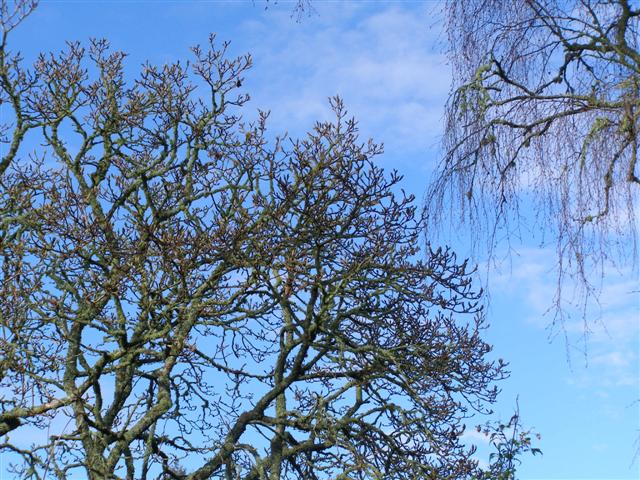
A magnolia to the left and silver birch to the right, silhouetted against the winter sky

A magnolia to the left and silver birch to the right, silhouetted against the winter sky

Mark has been hiding indoors on bad weather days, watching Victory Gardens on the Living Channel. It is not that it is a very good American programme, he is just addicted to TV gardening. But he was a little shocked recently by presenter, Jamie Durie. Now we are not going to be critical of said Australian who has done a great deal to sex up gardening in his native land and who is a young man of considerable talent. He has also managed to cross over successfully to American TV and we love him because it was he who has twice promoted our very own Cordyline Red Fountain on the Oprah Winfrey Show. Our home grown gardening celebs, such as they are, don’t fall into the same league. I don’t think any of our local candidates would have an alternative career stripping for Manpower Australia. But I digress.

There was Jamie, talking with passion about Australian native plants, brandishing what looked suspiciously like a New Zealand cabbage tree. It was. Our most common cabbage tree is Cordyline australis, you see, but australis does not mean it comes from Australia. The kind interpretation is that our iconic tree is now Australasian, just as our soccer team briefly enjoyed that curious status. Australia does have its own members of the cordyline family including congesta, fruticosa and stricta, but australis is not among them. We are now wondering where Jamie Durie thinks Dicksonia antarctica hails from. It is the Tasmanian tree fern which is a close relation of our own ponga trees.

But at least Jamie avoids the dreary political correctness of a pretentious novel I was recently reading for review. Describing the Christchurch gardens of the relatively well-heeled, the author wrote: “Most of the gardens were populated with imported English varieties, but there were a couple of house owners who had made some effort with native New Zealand vegetation, and the dark greens and rich browns stood out among the bleak, bare branches of the non-native trees that seemed to claw at the grey air.”

I read this passage aloud to Mark who instantly demanded to know what native tree is a rich brown. Shades of green, dear, they are shades of green. I envisaged the PC Christchurch of the future where gardeners could only plant native trees – towering rimus, totara or kahikeatea, perhaps, which on a small town section will remove all winter sun and light from your neighbour’s property. Or maybe some of the smaller trees such as the interesting dracophyllums or nikau palms which, typically, are forest growers, designed to grow in company and with the protection of surrounding plants. Let’s be PC and maroon these forest dwellers in a sea of suburban grass.
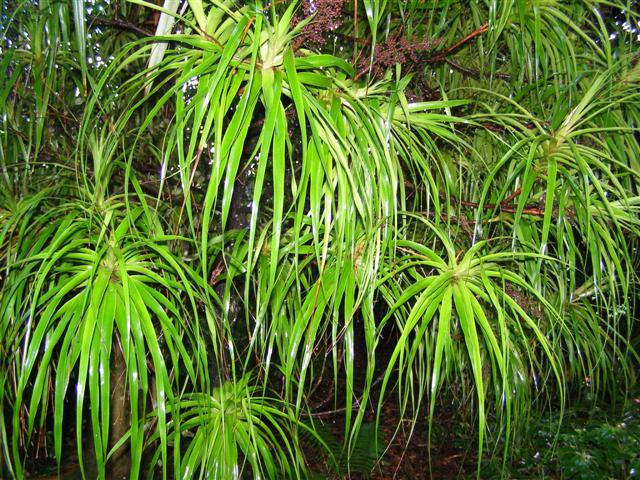
Our native dracophyllum, better in company than marooned as a lawn specimen in solitary splendour

While we are about it, shall we eradicate all the imported fruit trees, veg plants and even the ubiquitous grass? We do have native grasses but they are not usually the ones found in lawns, on road verges or pasture. I am not sure that the author had any understanding at all of botany, let alone gardening. I would be guessing that her derisive reference to imported English varieties includes the cherry trees for which Christchurch is renowned (hailing from Japan), the deciduous magnolias (from Asia), dogwoods (cornus – mostly American) let alone the rest of the options from around the world. As you may have gathered, I regarded that particular passage as particularly ill-informed and downright silly.

I will absolutely stand up for the preservation (and preferably extension) of our remaining forest remnants where the eradication of competing imported species is important. I think defending our diversity of indigenous plant material is equally important. I think incorporating native plants into our public plantings is highly desirable and that our native flora has a key role in our domestic and private gardens. It is what makes us different. But I am not going to put our native plants on such a pedestal as to declare that, by definition, native equals good, imported equals bad and reactionary.

We are hardly living and gardening in an environment where our native plants originally thrived. New Zealand attitudes to our indigenous flora have waxed and waned in recent years. The early settlers often found the native forests intimidating which is to be understood when you consider that all our plants here are evergreen whereas the majority of both native and introduced trees in Britain are deciduous. The forest remnants I have seen there are what I would call woodland. Our bush is akin to impenetrable, tropical forest without the tropical temperatures. I imagine they were terrifying to people more accustomed to woods of white barked birches, sweet chestnut or oaks carpeted below with wild bluebells and snowdrops. No wonder they planted to remind themselves of home.

Even thirty years ago, there was a pretty large-scale dismissal of our native flora as dull, boring and not worthy of garden space. Native plants on sale were under-valued, so sold cheaply and seen as utility – a bit like riparian plantings today. All function and no aesthetics. Then came the big turnaround and suddenly native plants were all the rage. Led by government agencies, public plantings were heavily dominated by native plants. This crossed over to private gardens and planting native became the higher moral ground, a point of principle. A stream of Bright Young Things could be found browsing plant stocks, determined to buy and plant only natives. Though they would make an exception for an apple tree (from Central Asia), a macadamia (from Australia) or an olive tree from Greece. There was also a myth that you had to plant natives to feed our birds. In fact you have to plant the right plants to encourage birds and our indigenous birds are not fussy about whether it is a native or an introduced plant.

The author of whom I am so critical is caught in this PC time warp. As always, the answer lies in the middle ground. We have many fantastic native plants ideal for gardens. We also have boring, utility native plants ideal for land reclamation, shelter or nurse plants. But it doesn’t have to be all or nothing at a gardening level. It is the vast array of plant material that we can grow here, the mix of indigenous and introduced, which makes our gardens interesting. Those Christchurch houses so maligned for their plantings are probably much better served by deciduous specimen trees which allow light and winter sun through. We tend to have cold houses in this country and we don’t need to make them any colder by planting so that they are in the winter shadow of evergreens. Bare branches silhouetted against a winter sky can be seen as a beautiful tracery just as readily as the aforementioned bleak, bare claws. Long may common sense and aesthetics triumph over ignorance, however well intentioned and at least those Christchurch houses planted trees rather than keeping everything to under a metre in height.
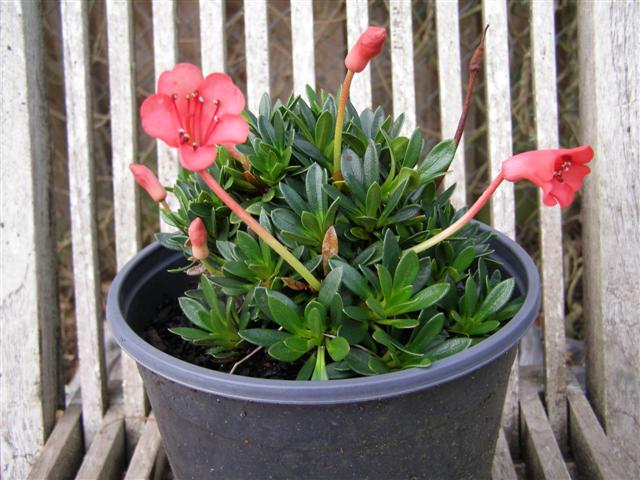
Flowering this week: Vireya rhododendron saxifragoides

Eight years of growth, maybe more, in good nursery conditions and R.saxifragoides reaches this size

Eight years of growth, maybe more, in good nursery conditions and R.saxifragoides reaches this size

We have a standing joke here about plants which we won’t part with unless the recipient passes both an interview and a test – saxifragoides is one of those plants. After a good eight years, maybe more, this plant is 6cm high and about 14cm across. We don’t want to waste a plant that grows so slowly on somebody who has no idea what it is or too little appreciation of what it takes for the plant to reach this stature. It is an odd little vireya species from New Guinea which makes a mounded cushion (generally a small mounded cushion) and which is far more tolerant of both cold and wet conditions than any other vireya we know. In fact it is often found growing in cold bogs in its native habitat (other rhododendrons will quickly give up the ghost and die if their roots stay wet for long) as well as in alpine grasslands. It is not as forgiving in our garden where I have managed to kill off two or three plants now. It seems easier to keep healthy in a pot.

The flowers are red and held singly (most rhododendrons have clusters or trusses). Sharp-eyed readers may pick the similarity in flower to the rather larger vireya hybrids, Jiminy Cricket, Saxon Glow and Saxon Blush. Yes, saxifragoides is a parent of these and gives the hardier characteristics and the leaf shape to its offspring. In the wild, saxifragoides will layer naturally (put down fresh roots from branches which touch the ground) and seed down. Very old clumps have been found which have even developed a woody rhizome below ground but in cultivation it is normally propagated from cutting – very small cuttings as you can perhaps imagine from the picture.

In the Garden: Friday 9 July, 2010

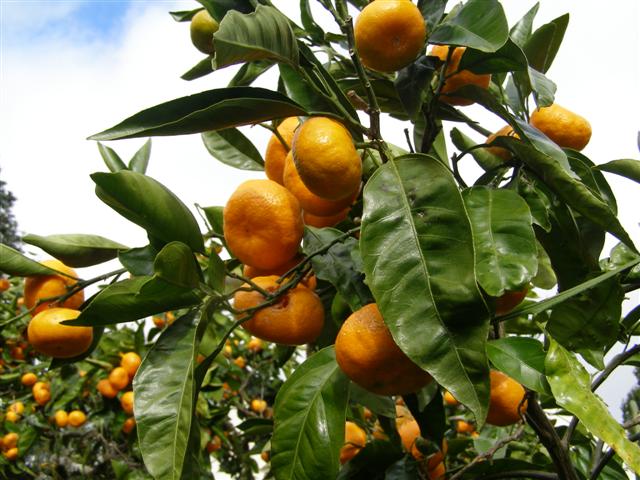
Our citrus trees actually do save us money

Our citrus trees actually do save us money

  • Avoid stomping around the garden or lawn where you have spring bulbs. It is a hard life already for a bulb, pushing through cold, wet soils without being stomped back into the ground. Even worse, some only put up one flowering spike and if you break that off, you are sunk for this season’s display.
  • Prune and keep pruning. I am halfway through the roses but have finished the wisterias. The hydrangeas have been started. As luculias finish flowering, it is the best time to prune and feed them because their instinct is to spring into growth. It doesn’t pay to be too brutal with luculias – they can up and die on you. Regular pinching out or cautious renovation is recommended. They are not difficult to root from cuttings in late spring or early summer if you want to start afresh.
  • Sasanqua camellias can be pruned and shaped as they finish flowering. This includes sasanqua hedges but it won’t matter if you leave it until spring.
  • With our comparatively mild winters, we can lift and divide dormant perennials such as hostas all winter and spring. In cold climates where there is no growth over winter, recommended practice is to leave it until temperatures start to warm in spring (presumably divisions can rot in completely dormant, cold and wet conditions) – hence the different advice in books and TV gardening programmes from England. However it is wise to leave grasses, reeds, rushes and similar plants until they are growing again because they can be surprisingly touchy.
  • You can at least be planting your fruit trees which are now available in abundance. Put in the sure-fire crops first and go to the riskier, more exotic options if you have space remaining. Apples, pears, plums and feijoas are extremely reliable whereas it can be hit and mostly miss with peaches, nectarines, cherries and apricots. In mild coastal areas, citrus and avocados are well worth a try – for us they are the crops that save us significant money. Only buy named cultivars of feijoas – the cheapie plants are patchy seedlings for hedging and may never even fruit.
  • Get a winter strength copper spray onto deciduous fruit trees, citrus and roses as a winter clean up. This will reduce disease and lichen.
  • I have a new definition of a gardening optimist – the person who googled “sub tropical fruits Southland”. Southland may be many things, but sub tropical is not one of them.

Tikorangi Notes: July 2, 2010

Latest posts:
1) The winter flowering gem, Cyclamen coum ssp caucasicum – well suited to our temperate sea level conditions.
2) It is a funny thing that satire can get more response than a tightly argued piece. The response to this morning’s column published in the Taranaki Daily News on the topic of total public funding for Pukeiti Rhododendron Trust has been both positive and also considerably greater than I would expect from a usual fortnightly column.
3) It may be mid winter, but that does not mean gardening stops and we give our weekly hints on tasks which can be done.

The harbingers of spring - galanthus

TIKORANGI NOTES
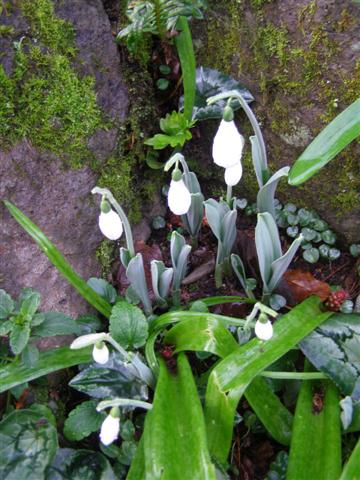
The first of the snowdrops, Galanthus elwesii, are now open and the daintier Galanthus S. Arnott are not far behind. These winter joys may be fleeting, but it is hard to find a simpler or lovelier winter picture. That said, we never get snow here. Never. While daytime temperatures in winter can drop down to single digits (as low as 8 degrees Celsius on a bitter cold day), they are interspersed with glorious days like today – bright sun, blue as blue sky and temps around C16. That is not bad for a temperate climate in the depths of winter, especially as it wasn’t preceded by a frost. That is why we garden for the full twelve months of the year here.

A letter from a ratepayer

Mr David McLeod, Chair
Taranaki Regional Council,
Stratford

Dear David,
I was terribly thrilled to read your press release about having secured the future of Pukeiti. That is so exciting.

I see that you personally rank the importance of Pukeiti right up there alongside our maunga, our mountain, Taranaki. Now I don’t want to be accused of raining on your parade, but you don’t think that maybe you were getting a little carried away with the hype of the situation? That perhaps you have overstated the importance just a trifle? I admit I don’t know you (you don’t mind me addressing you as David, do you? It is just that as you are quite good at spending my money, I feel as if I have some sort of relationship with you). Maybe you do in fact wake each fine morning and look out at both Mount Taranaki and Pukeiti and feel a sense of identity. Maybe when your travelling children are asked where they are from, they identify themselves as coming from Taranaki, the home of Pukeiti Rhododendron Trust. Maybe you have enjoyed such frequent visits to Pukeiti all your life that you feel a deeply personal sense of ownership and belonging. Alas, much of your electorate has already voted with their feet and decided that in fact Pukeiti is not such a part of their very identity – that is the whole nub of the problem. Visitor numbers simply haven’t been high enough to support the dream – a dream that belonged to somebody else. But I don’t want to be negative. I am assuming that you and your councillors did a breakdown on visitor numbers to work out how many were local and how many were tourists? And as you are so hellbent on making it free for everybody, I guess that your public consultation showed that ratepayers are glad to pay so that tourist attractions have free entry for visitors from out of the region.

I mention this, David, because in your press release you approved the takeover of Pukeiti “in the wake of positive feedback during public consultation…” That is absolutely wonderful, no doubt about it. I wouldn’t for one minute want to be accused of pouring cold water on your plans. It may be that your networks in the gardening, plants and garden tourism scene are hugely better than mine. That would explain why nobody I have met in the last six months has been consulted. My networks must be terrible. I am talking to the wrong people. No matter, you have apparently found the right people to talk to. Mark says he would really like to hear the names of all three of them.

But lest you think I am moaning, really, David, my reason for writing is to offer you some help. Your press release says that ” …work will begin soon on plans to develop and enhance the property and its plant collection. This will be similar to the planning processes which resulted in the very successful redevelopment and refurbishment of the Council’s existing heritage properties, Tupare and Hollard Gardens. We are looking forward to involving the Trust, PKW and a range of people in this exercise.” That sounds absolutely splendid, very consultative. It is just that I am pretty sure that this has all been done already, quite recently in fact, and I still have the discussion papers in my archives. Actually it is not that long ago – 2005 in fact and I can date it exactly because it all happened when Mark and I were flicking off to look at magnolias in northern Italy. I think along with all the discussion papers from Big Names like Boffa Miscall, Berl and others, somewhere, just somewhere, I even have a letter from your CEO, Basil, telling me how much ratepayer money had been spent on these plans. These sums (measuring into the multi hundreds of thousands of dollars but I would need to find the letter to confirm exact figures) included plans for Hollards and Tupare as well, but the ratepayer has already paid for big plans to take Pukeiti in to a new era of popularity.

Sure, it has to be admitted that some of those plans may have been just a tad grandiose. I think they even included a new home for the wandering gondola, along with a little shopping arcade, of sorts. A tourism hub, even. And fabulous (and I mean fabulous) visitor numbers.

But a little bird told me, and I wouldn’t want to be quoted on this because I haven’t had the information officially and it may be completely wrong, that after Regional Council paid for all those plans five long years ago, the Pukeiti Trust Board commissioned another review and set of development plans immediately after. I think what I was told was that the annual grant of $50 000 of ratepayer money, allocated by Regional Council, was further reinvested in this new set of plans to save Pukeiti. I just recall some discussions at the time because some of us felt that maybe they could have been spending that windfall of 50 grand on another gardener instead of yet more development plans. I am just guessing, maybe putting two and two together and making five, that that was why Pukeiti went ahead and appointed a new CEO with a highly relevant record in managing Speedway. I recently found a newspaper clipping where that new CEO declared that within six months of him starting in his new position, Pukeiti would be re-branded as a functions and events centre. Funny thing that. Six months came and went and it doesn’t seem that long after, the new CEO also went. Made redundant in preparation for Regional Council taking over, do we think?

David, I don’t want to be a moaner but it just may be that there are plenty of recent reports already available to be drawn on, without having to start again. We don’t want to be accused of re-inventing the wheel, do we? Or to make ourselves vulnerable to an accusation of pouring more rate-payer money down the wishing well. Maybe somebody could pick up the phone and have a chat to the immediate past CEO to find out what did and didn’t work?

You don’t think, do you, that maybe it could be argued that it is a teensy weensy little bit precious to say that the cost of Regional Council picking up the tab for Pukeiti will have “minimal impact on average regional rates — over a full year, less than half the cost of the $14 entry fee Pukeiti has been charging up until now” (your words, not mine). That might be true had all ratepayers demonstrated that they wanted to visit Pukeiti at least once a year. A veritable bargain in fact. Such a shame they didn’t. Had they shown this burning desire to visit, Pukeiti would not be in the pickle it is. Instead they would have been run off their feet, even more so on their gold coin donation days when the financially impoverished would have flocked there. In fact, if you take the cost of running the place and divide it by the number of visitors, it just may be that you will find the cost of attracting every single visitor is somewhere nearer $70 per person. Even if you double the attendance in a short space of time, it is still around $35 of ratepayer money to give every visitor free entrance.

Lest you think I am being grumpy, David, I am already on public record as saying that for us personally, Regional Council making sure that Pukeiti survives is, on balance, a good move. We know what Pukeiti’s standing has been internationally, which is more than many of your ratepayers who just have to take your word for it. We also know which key individuals worked tirelessly to earn Pukeiti that credibility. In fact we know quite a bit about the history of Pukeiti. We just hope that you and your fellow councillors have a pretty good grip on it all too After all, you wouldn’t want history to record that you were the people who were all too ready to spend other people’s money trying to realise a lost dream. The Pukeiti dream of Douglas Cook and the founders has long gone. Now you have a large garden in a cold and damp out-of-the-way position, served by a really bad road, branded with a plant which used to be incredibly popular and of high status but few people want any longer.

Do let me know if you need the reports I mentioned.
Kind regards,
Abbie

Today’s column is but the latest in a series over recent years. Earlier columns on this topic include:
1) A tale of Pukeiti Rhododendron Trust and ratepayer funding Published March this year.
2) Taranaki Regional Gardens Part 1 – first published late 2004
3) Taranaki Regional Gardens Part 2 – first published, apparently January 2005 – the best piece of writing for those who can’t be bothered wading through the lot.
4) And Taranaki Regional Gardens Part 3 – which rather tells about the treatment of an unsolicited submission. When in doubt, levy accusations of self interest.