Tag Archives: Abbie Jury

Flowering this week: Gordonia yunnanensis

A gordonia not a camellia

A gordonia not a camellia

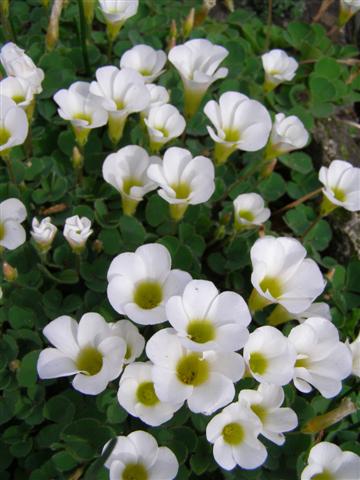
This is not a camellia though the flower looks very similar to a large, pure white single camellia with showy golden stamens. They are botanically related from a distance, as stewartias are too. Gordonias are sometimes known as the fried egg plant because the flowers drop off whole and land sunny side up where they resemble, loosely speaking, that breakfast food. This form is yunnanensis which simply means it is from the Yunnan province in southern China. As far as I know, it is the largest flowered form. There are other forms around – axillaris is the most common but yunnanensis has much better flowers and plenty of them which open from now through winter. It also has a lovely glaucous, or blue-grey, tone to the shiny leaves. We also have an unidentified Vietnamese species which has slightly smaller flowers, bright green foliage and a more compact habit than yunnanensis though we are still talking around four metres high.

Gordonias are evergreen with shiny foliage and reasonable wind resistance. Most of them come from eastern parts of Asia (there are a few which come from mild areas of North America) and will make large shrubs or small trees. While we have seen the odd pink tinged one, basically they are all white with petals that look a little like crushed tissue paper. They could, perhaps, be described as the very large pure white camellia you have when you are not having a camellia.

In the Garden: April 30, 2010

• I am reliably informed that the autumn colour in colder inland areas is at its very best. The sudden cooling of temperatures in March followed by a long, dry and calm autumn has resulted in a splendid display. If you are wondering why we never get great autumn colour in coastal areas, it is because we lack the sharp seasonal changes which trigger deciduous trees to colour before dropping.
• Cleaning up fallen leaves and spoiled fruit from under your fruiting trees helps to reduce pests and diseases which can winter over in the debris. This is particularly true with apples and pears. Lay a blanket of compost after the clean-up to suppress weeds and to condition the soils.
• If you are wondering how to prune your raspberry bushes, we will do an Outdoor Classroom on this shortly. While timing is not critical, it is easier to see what you are doing when the leaves have dropped. The rule of thumb is that you remove all fruiting canes from this summer and just keep the new canes.
• Finish the autumn feeding round as soon as possible. While evergreen plants don’t go dormant like deciduous plants, their growth slows right down over winter which slows their ability to take up fertiliser. There is no point in feeding deciduous plants which are dormant or in the process of going dormant.
• Despite being horrified at the price and initially suspicious of an approved organic spray for aphids, Mark was pleasantly surprised to find that Yates’ Nature’s Way did actually work on the swan plants – killed the aphids without affecting the monarch caterpillars at all though it needed repeat applications because it is nowhere near as powerful as the pyrethrum based sprays. On the other hand, the Tui product, Eco-Pest, which is primarily canola oil, had absolutely no effect at all on the aphids when applied at the recommended dosage.
• Most gardeners will be looking at some pretty sad and leafless tomato plants by now. Unblemished tomatoes can be ripened off the vine so harvest these now and keep in an airy, light place to ripen. Gather up all the spent tomato plants and leaves and dispose of them in the rubbish or by hot composting to reduce fungi spores wintering over. I see the advice from Andrew Steens in the Weekend Gardener magazine is to put such diseased foliage on your lawn and then run over it repeatedly with a mulcher mower to chomp it up and leave it to feed the worms in your lawn. This of course assumes that you not one of those ecologically challenged types who kills out the worms in your lawn to preserve a better green sward.
• Some time ago, I wrote a glowing review of The Artful Gardener by Rose Thodey and Gil Hanly. I see it has been reduced from $60 to $25 on special at Touchwood Books (www.touchwoodbooks.co.nz). It was worth its original price, let alone the reduced price.

Flowering this week: Nerine sarniensis hybrids

Years of work have made the sarniensis nerines a real autumn feature in our rockery

The nerines are looking wonderful in the rockery. These autumn flowering South African bulbs are members of the amaryllis family and are a mainstay of our April garden. There are a number of different species (about 30, apparently) but it is the large flowered, showy sarniensis hybrids which we feature. Felix Jury imported some bulbs and did quite a bit of work to extend the colour range here. He particularly favoured the smoky burgundy colours but we also have a shocking pink which is near iridescent, along with a whole range of different reds, oranges, pinks and corals from pastel to verging on purple and even apricot. They are grown as a cut flower commercially but we prefer them in the garden setting. These are large bulbs which are planted to half depth only with their necks exposed and they are happy with summer baking. Their strappy leaves come after the flowers and hang on until spring.

Nerines are sometimes called the Guernsey lily or the Spider Lily. Some of the other species have much finer, more spidery flowers than the sarniensis types, but lilies they are not. Neither do they originate in Guernsey though that island became renowned for its cut flower production and the bulbs have since naturalised there. Nerines were named after Nereis, a mythological Green sea nymph.

There is life beyond buxus hedging

It is more about the lines and shapes, not the materials used.

Last week in Outdoor Classroom, I looked at some of the alternatives to buxus and came to the conclusion that there is nothing that really fits the bill when it comes to low growing hedges. And it is the low and slow Buxus suffruticosa that is the worst hit by the dreaded buxus blight and the hardest for which to find a suitable substitute. Sempervirens is the common buxus and it will make a large shrub or even small tree if you don’t clip it. Handy little suffruticosa is a dwarf form of sempervirens and the option that is commonly used when you want a little hedge around 30cm high.

Clipped hedges are essentially walls, usually green walls. Sometimes they are low walls, sometimes they are high walls but what they do is give some shape in a garden. The low, clipped box hedge is not about wind protection. It is largely about definition, formal lines and tidiness. The advent of buxus blight and the lack of an easy and cheap alternative to buxus may be a signal that it is time to look at alternative means of getting that definition. Maybe it is time to review the whole concept of tidy edgings and that is no bad thing where buxus hedging has become over-used and clichéd.

Tarting up the vegetable garden and turning it into a potager was all the rage coming up to twenty years ago and I, too, fell into the fashion trap. It took a lecture by garden historian, Helen Leach, to wake me up. She pointed out in no uncertain terms that it was completely impractical to vegetable garden surrounding by little buxus hedges. Vegetable gardens rely on constant cultivation of the ground and invading buxus roots make that impossible. Besides, the hedge provides nice, sheltered conditions for snails and slugs to set up residence and she is not wrong there. I got rid of the hedging I had inflicted on Mark and Felix and would suggest that gardeners worrying about the buxus hedging in their vegetable patch (potagers are so passé these days; the least you can do is refer to it as the kitchen garden) just rip it out and pretty up the area in other ways. Pavers, possibly used as stepping stones, are a great deal more practical to get defined lines. Raised beds can be used to define space if you want to go down that path. A spot of clipped topiary or matched vertical accents, even a pair of urns can give definition without compromising the prime purpose of the productive garden.

In the ornamental garden, it is a little different. Though after battling congested root systems to renovate mixed borders, I wouldn’t be wanting to use hedging as an edge- line for any gardens where I grow perennials or annuals which prefer not to compete for root space. Our preference is for more permanent materials which serve the same purpose without the maintenance and the problem of roots – in other words, low brick or stone walls about the height of a little buxus suffriticosa hedge, around 20 to 30cm. They take a bit to put in with poured footings and a mowing strip where laid beside lawn, but they are pleasingly permanent and they give the lineal definition that a low hedge also gives. Personally I prefer stone to brick, especially when it is a narrow, faced stone wall. I think it weathers better and looks wonderfully timeless without the slight garish aspect that even recycled brick can give but it is also the most expensive option in terms of time and requires a much higher level of skill to construct.
We have been laying a low brick edging this week to formalise a previously casual, rather wayward area. It is a situation where it would have been common for many to go in with a low buxus hedge but it all serves the same purpose – to channel the eye straight down to a longer view, to give definition and form to that particular border and to stop the birds from dispersing the soil and mulch as they scratch around. When we lay any concrete here, be it path or mowing strip, we tint it so that it does not dry out that stark white in the initial stages. Sometimes we will go to exposed aggregate also so the new area looks instantly weathered.

Concrete blocks laid and then plastered will serve the same function as brick or stone edging in getting the sharpest definition of line. If you are thinking to yourself that you like the softer effect of a hedge, that is what you achieve in the garden inside the edging where you can allow plants to froth over and blur the rigidity.

In less formal areas, edgings can be done with natural wood. At Te Popo Gardens near Stratford, Lorri Ellis has used the device of stacking narrow lengths of branch not much thicker than 10cm in diameter, all cut to the same length and laid with the cut end visible, modelled on a tidy wood pile. It creates a visual barrier in the same way as a hedge and Lorri has planted against it to soften the view. Even ponga logs can define an edge and last for years, ageing gracefully.

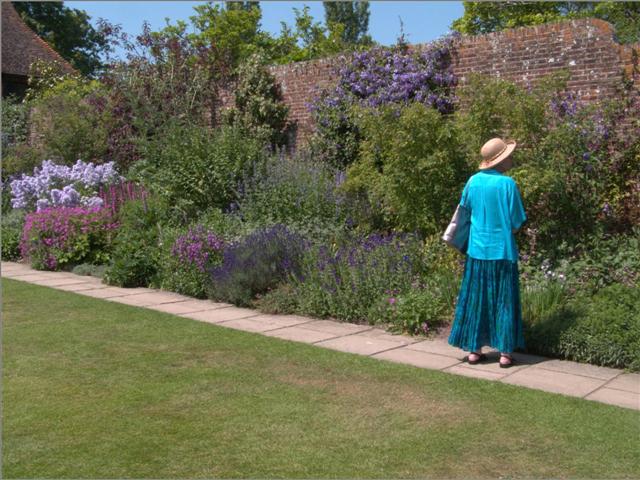
At Wisley in the United Kingdom, the long borders of classic herbaceous plantings are not edged in hedging to contain them. Instead big square pavers have been used. These guide the eye down the length of these parallel borders and protect the lawn because the exuberant plants just froth and flop on the pavers. If you are going to try the paver approach, experiment with different sizes. I suspect bigger is better unless your space is narrow.

You can edge with rows of some clumping perennial. Grasses are often used, though it is not to my personal taste. I think it looks a bit suburban in mondo grass or lirope but if we all liked the same thing, our gardens would all be very much the same.

In the end, it is not your buxus hedging that makes your garden look sharp and smart. It is the lines drawn with the hedging. So if buxus blight is forcing a re-think on you, maybe you don’t need another hedge at all. Having commented previously about the suffering from DEBBO (that is Death by Bloody Buxus Overload), I would welcome seeing some more creative and individual solutions to creating formal shapes and design in New Zealand gardens.

As a postscript to last week’s Outdoor Classroom, I would reiterate what I have said before about other forms of buxus. Overseas research says that while suffruticosa is the worst hit by buxus blight, followed by the other forms of sempervirens (which is very evident now in Taranaki), no buxus variety is resistant. So while anecdotally there are reports locally that the Japanese and Korean forms (microphylla, microphylla var. koreana and sinica) are not affected, this may be more related to individual conditions. I certainly would not be recommending spending much time or money on replacing affected hedges with Japanese or Korean buxus. The picture will be clearer in five years time but at the moment it appears you run the risk of replacing one infected hedge with another which will become infected in due course.

Tikorangi notes: April 16, 2010

Latest posts:
1) April 16, 2010 There are times we have regretted letting our purple bougainvillea reach its natural massive proportions but it is a splendid sight in flower.
2) April 16, 2010 There are no like for like replacements for the ever handy (if a little dull and clichéd) buxus hedge.3) April 16, 2010 Making the most of mild autumn conditions in the garden – what to do in the Taranaki garden this week.

Our venerable old man pines against the blue sky of autumn

The common reaction from New Zealanders to our massive, but elderly pine trees is that we should be taking them out immediately because they are dangerous but we are fond of their scruffy majesty on our south eastern skyline. Planted in a double row around 1880 by Mark’s great grandfather, they were originally a shelter belt and will rank amongst the oldest specimens in the country. Californians are often impressed because these Monterey pines tower around 50 metres or over 150 feet high which we are told is unusual for their homeland on the Monterey Peninsula.

Our Monterey pines - not all are exactly at right angles to the ground

But to New Zealanders, they are just crusty old Pinus radiata, a cultivar the timber industry has made our own as a very quick turn around, low grade timber crop covering vast acreages.

Occasionally we lose a pine tree – running about once every fifteen years at the moment – and the last one dropped itself in the one clear space that we would have chosen had we deliberately felled it, doing minimal damage as it crashed down but gouging out a 30cm deep indentation on the ground. Because they started life as a shelter belt and are planted in more or less straight rows, they now give us a woodland avenue below to grow frost tender material such as vireya rhododendrons, cymbidium orchids, monstera delicosa and a range of woodland bulbs. Such is their location, they would have to removed by logging helicopter but we are happy to live with them as a characterful backdrop.