Tag Archives: Abbie Jury

A short story in four photos

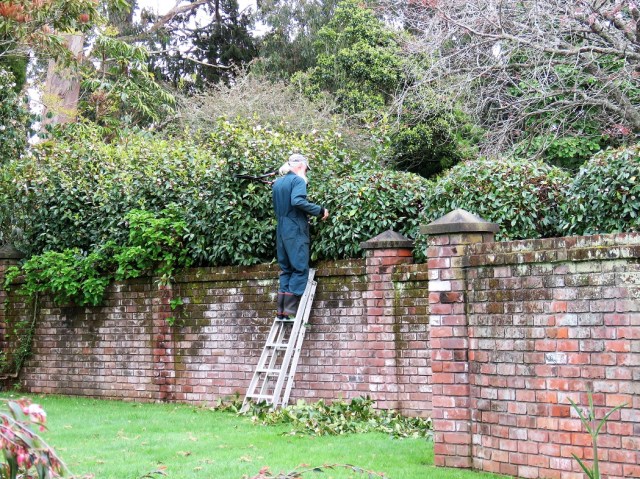
Lloyd was trimming the lollipop michelias at our front entrance this week, to have us looking smart for opening the garden on Friday. We only trim them once a year.

At the end of the day I looked and was surprised to see that he hadn’t finished. The only reason I was surprised is because he is very task-oriented and likes to finish whatever he is doing. Mark and I tend to flit all over the place, multi-tasking, so his focus is a good foil in our team. There are six lollipops clipped from Fairy Magnolia Blush and one and a half umbrellas from the unnamed seedling we have by the courtyard entrance.

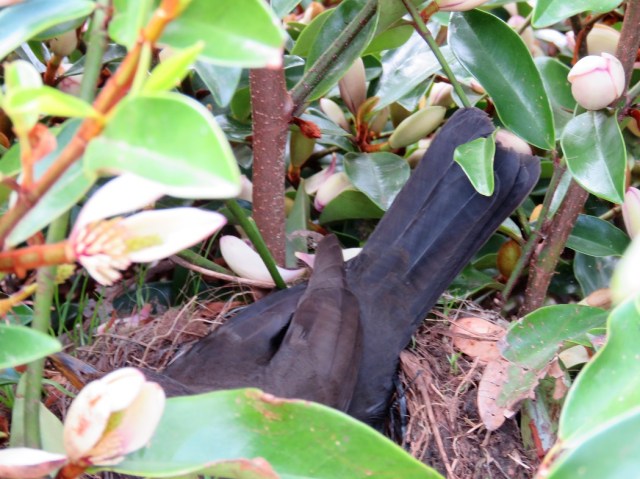
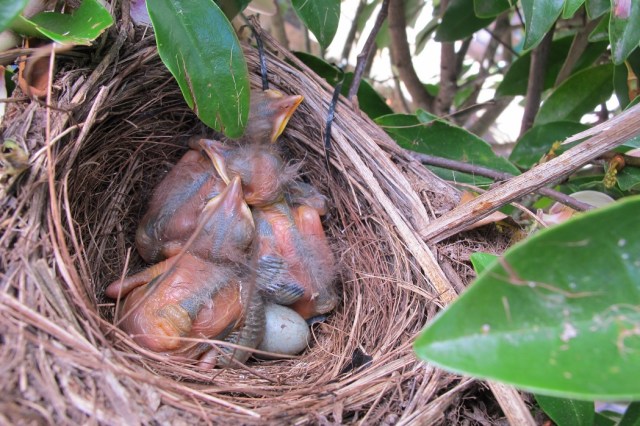
This morning he explained. He only just noticed Mama Blackbird in time and he didn’t want to destroy her home and kill her babies. This is exactly how both Mark and I would have responded, too. So if you are visiting our garden during the Taranaki Garden Festival, that is why one bush right at the entrance is only half-clipped.

I remembered this happening before, when I took this photo in the same plant, and in other years. Because the photo is dated back to 2012, I googled the life expectancy of a blackbird. I wondered if they lived long enough for it to be the same bird returning to her favourite position. FIFTEEN YEARS. Blackbirds can last 15 years, presumably if not predated by a cat or anything else. So it may indeed be the same Mama Blackbird raising another clutch. We can accommodate her in relative safety here.

The 2020 election in flowers. Mostly.


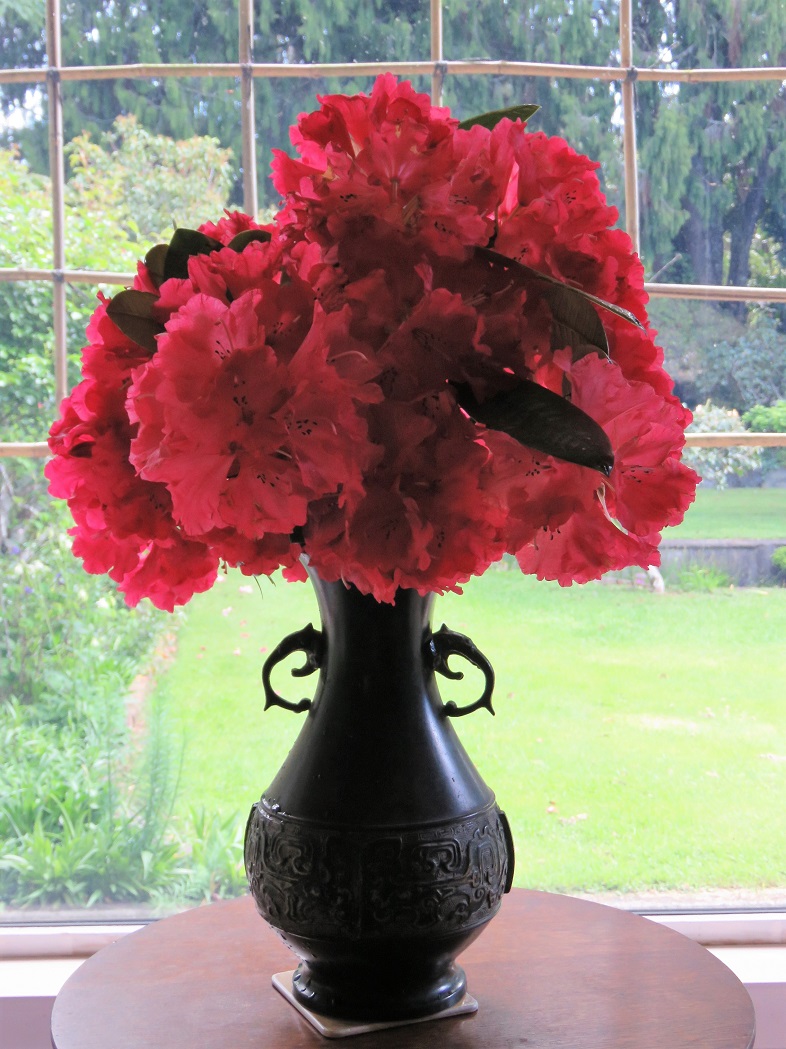
Red, of course for the Labour Party and Jacinda Ardern with a resounding vote of confidence that exceeded the hopes of even their own supporters. That is Rhododendron ‘Noyo Chief’.

(Red – centre left)

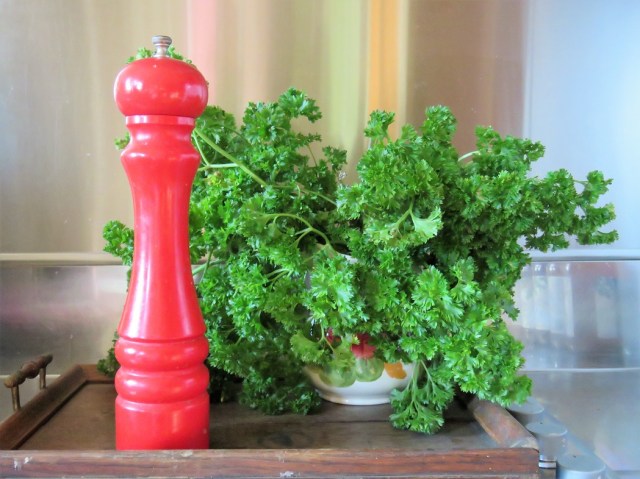
Green for the Green Party. I put the giant red pepper mill that our son bequeathed to us before he headed overseas (and a very good pepper mill it is, too) beside it yesterday. It was not a premonition, more serendipity but today it stands for the resurgent Māori Party who won a seat against the odds.

(Green – left wing with a strong focus on the environment and social justice. Red – but a darker shade than Labour red and with black – for the only party whose prime focus is on Māori affairs)

The yellow Doronicum orientale daisy is for the Act Party – one star and now nine additional members of parliament, some of whom must be as surprised as the rest of us to see themselves there.

(Yellow – our most right wing, libertarian party)

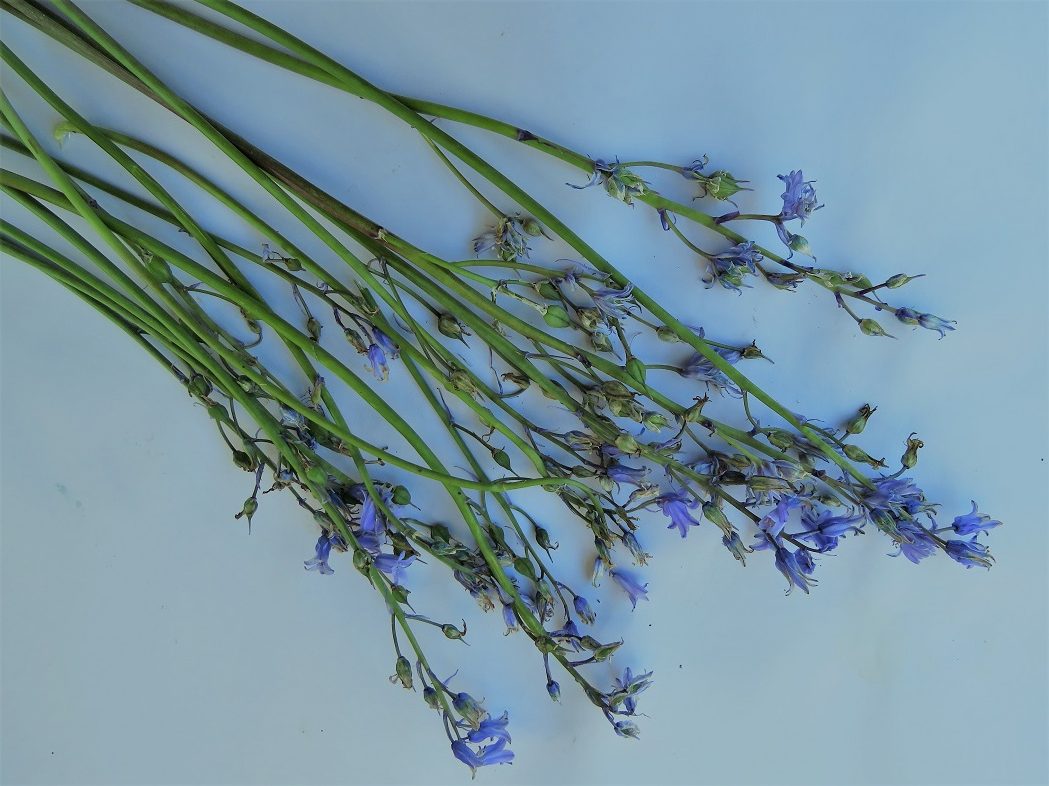
Bluebells, wilting, past their prime and going to seed for the National Party. But, like bluebells, they will rise again, refreshed, at some stage in the future.

(Blue – centre right but leaning more right than centre lately).

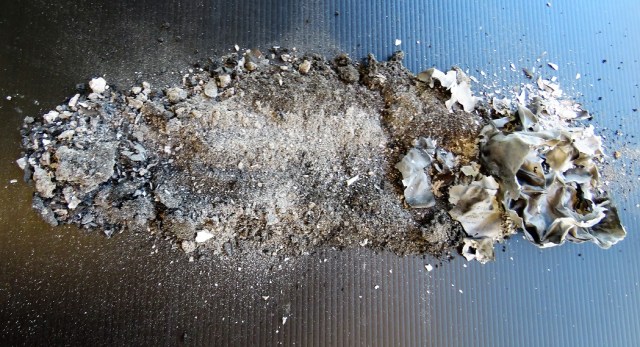
And the black ashes of defeat for the demise of New Zealand First. No matter one’s personal opinion of its leader, Winston Peters, it seems sad to witness the demise of such a characterful and long-serving MP in such an inglorious manner.

For overseas readers, we have proportional representation in NZ and a history of very stable coalition governments. This is the first time since we opted for this system that a single party has received such an overwhelming mandate that they can govern alone without needing the support of other parties. It remains to be seen whether the Labour government will choose to govern alone or whether they will opt for a cooperative approach which would see them bring the Greens and probably the Maori Party onto the government benches.


And that is a wrap from what seemed like an interminable election campaign in this year of Covid.

Golden orbs

This image has an empty alt attribute; its file name is img_7832.jpg

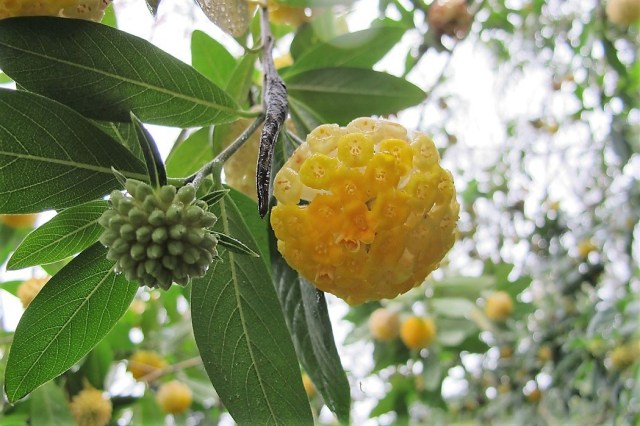
Every time Edgeworthia gardneri blooms and I sniff the waxy, golden orbs of fragrance, I remember a customer from our mail order days. One who put the cuss into customer, as Mark is wont to say.

New Zealand Gardener magazine carried a full-page photo of a single golden orb and the accompanying text named us as one of very few suppliers of this plant. It is not common in NZ gardens and not that easy to propagate. A full-page photo should give a hint as to the problem. It was considerably enlarged in the image.

A reader rang, desperate to order one of the few remaining plants we had. One of the staff took the call and didn’t check to make sure she knew what she was buying. I am not saying Mark or I would have checked, but we might have. The staffer instead sold her an additional random plant as well to meet our minimum order of $35 and her plants were packed and despatched.

I have no idea what the woman’s name was but I can remember she lived in Palmerston North (here’s looking at you Palmerstonians – she was yours, all yours). On receipt of the plant, she rang to express her extreme disappointment. The flower, you see. She had no idea the flower would be so small. It looked much larger in the photo. I mentally sighed and agreed to take the plants back if she returned them in good condition. She had clearly destroyed our packing because in due course, the plants arrived back in a carefully constructed cardboard cage, with windows and air vents, even. As I recall, it cost her $27.50 to send us back $35 worth of plants. I deleted her from our data base.

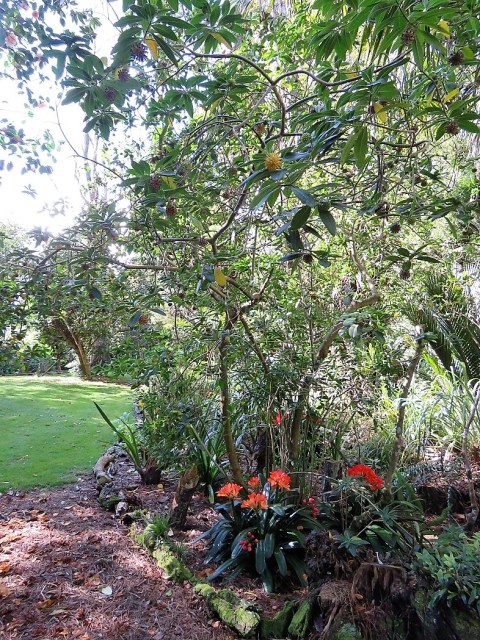
Edgeworthia gardneri is the tall, willowy, multi-stemmed shrub behind the orange clivia

But every year, as I enjoy the plant in bloom, I smile wryly at the thought of what she missed out on because it is lovely. It is willowy in its growth so light and graceful, adorned by many golden orbs with good scent in late winter and early spring. It is evergreen and hails from the forests in the Himalayan foothills and is, I have just discovered, just as good if not better for the making of high quality paper as its better known, deciduous, shrubby cousin, Edgeworthia papyrifera syn chrysantha (which bears the common, though inaccurate, name of the yellow daphne).

It is just that the flower heads are the size of pingpong balls, not tennis balls, or maybe even the larger ball size used in softball and baseball.

Spring pinks

Pink froth of Prunus Awanui  currently at its peak

I am a big fan of pink and not just in flowers, but my theme this week came because of two pink plants in bloom.

The balls of viburnum are at the front of the vase

The first is one of the Virburnum × burkwoodii cultivars. I am not sure which one it is but we have it planted beside the drive where it is largely anonymous for 51 weeks of the year. In the 52nd week, it opens its flowers to rounded balls of exquisite fragrance – strong enough to hang in the air several metres away. We would be lucky to get a full 7 days out of it but I am sure it does better in other climates – it probably wants it drier and colder. I picked a few balls to put in a vase with pink bluebells and late flowers of Mark’s Daphne ‘Perfume Princess’ (which still has flowers and has had since late March). It was lovely but the viburnum flowers promptly died overnight. They last longer than that on the bush, though not by much.

The view with our morning cuppa

Magnolia Serene

A prodigious carpet of petals beneath

The second pink to give me daily delight is Magnolia ‘Serene’ – bred by Felix and the marker of the end of the deciduous magnolia season for us. As we sit having our morning cup of tea, it is framed in the corner window of our bedroom. Not this morning, though. With daylight saving, it was a bit dark at 7am to see it so that may herald the end of that particular seasonal pleasure, too.
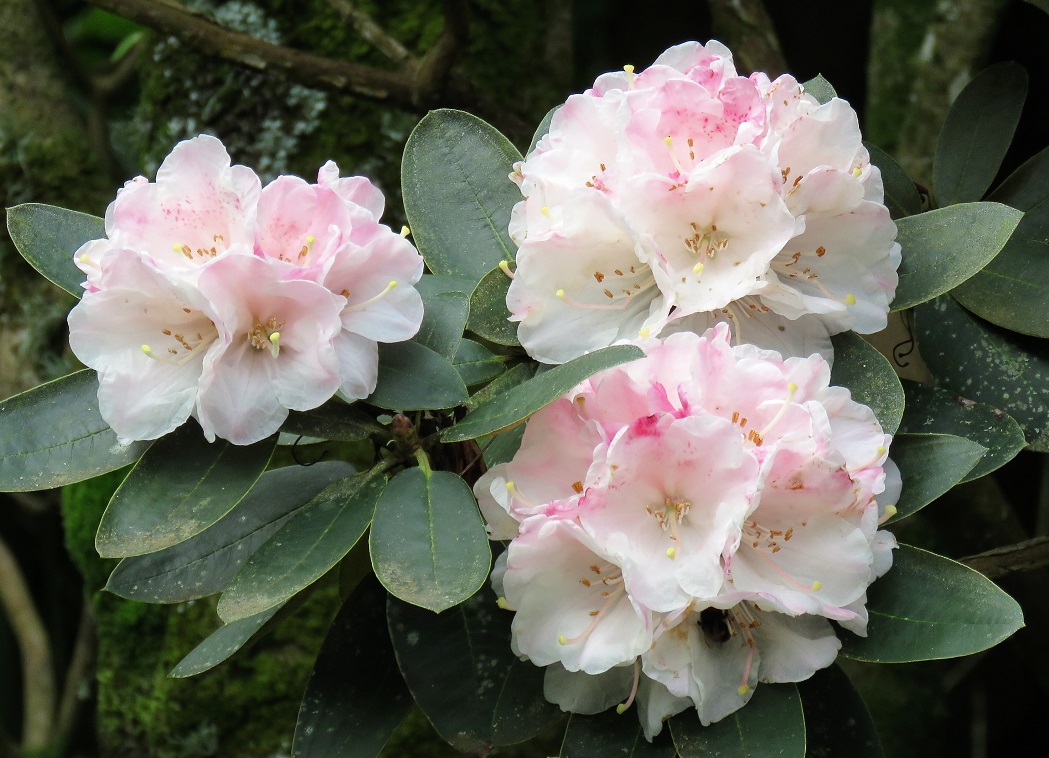
Rhododendron Coconut Ice

I am not the world’s biggest fan of the ball truss type of rhododendron but ‘Coconut Ice’ was looking particularly pretty earlier this week. Sadly, it is browning off already. Flowering is an ephemeral pleasure. Mark observes that the delight of rhododendrons lies in watching the buds for a long period of time before finally opening over a period of a couple of weeks. There is then a week, maybe 10 days, of full glory – sometimes cut shorter by an ill-timed storm – and then it is time to dead head it. In practice, we don’t dead head all our rhododendrons – just those that set large amounts of seed which can weaken the plant over time.

My rhododendron preference is for those with looser trusses that are sometimes so abundant that they can cover the plant.
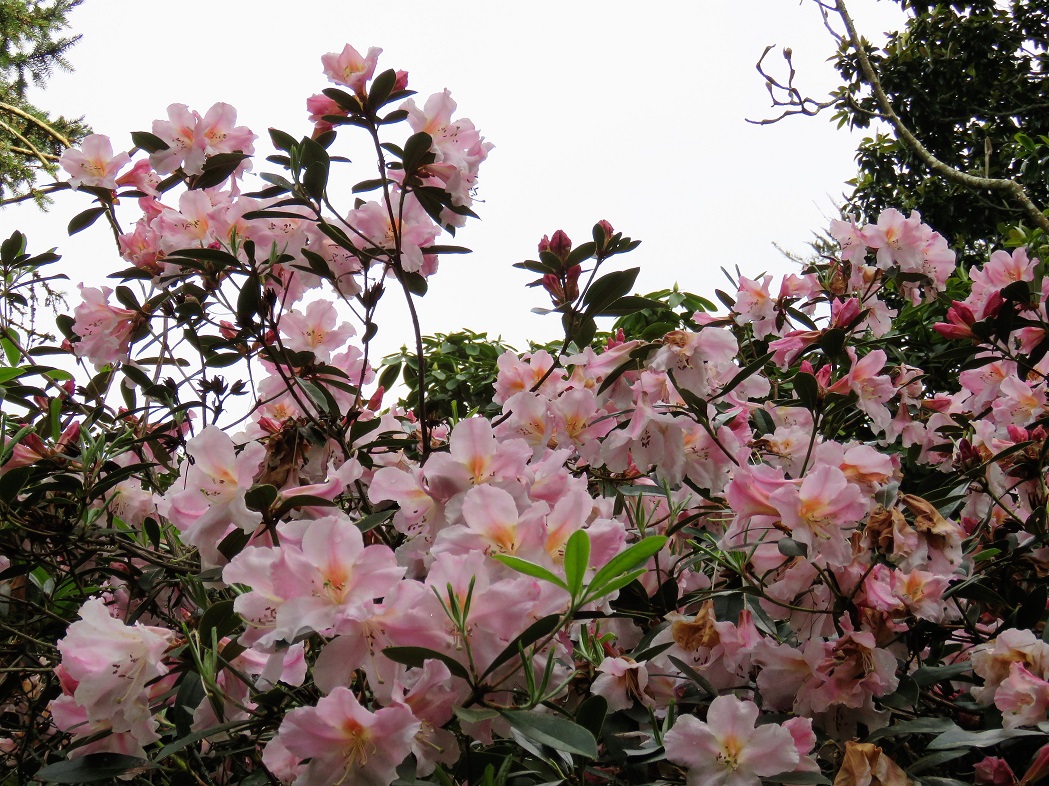
Rhododendron Anne Teese

It took a couple of goes for Mark to remember the name of this beauty – Rhododendron Anne Teese. It is an Australian-bred hybrid coming from the Teese family (in this case the father, Arnold) who are well known through their nursery, Yamina Rare Plants in Monbulk, Victoria. Mark thinks it was named for the mother, presumably married to Arnold. Whatever, it is very lovely and I would be happy to have it named for me. It is a Maddenia hybrid (R.ciliicalyx x R.formosum) so scented and with a heavier petal, more weather resistant than ‘Charisma’, a similar R.ciliicalyx selection that used to be widely available here.
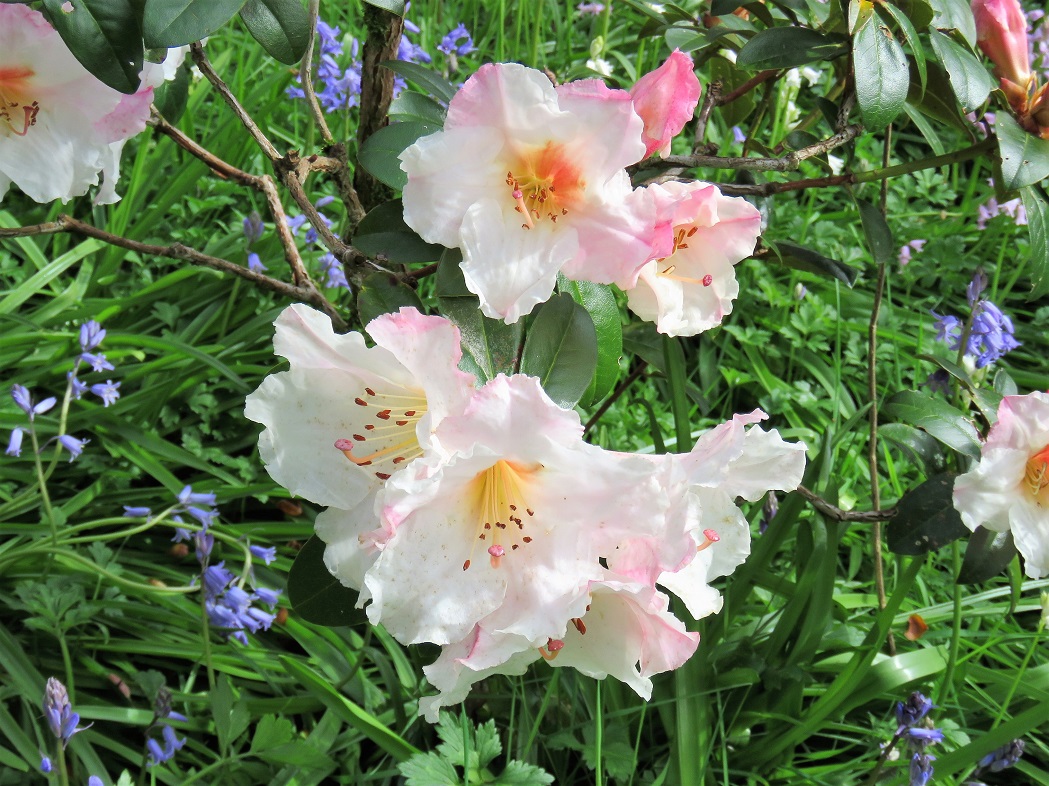
Rhododendron Floral Gift in a swathe of bluebells

With one notable exception – Magnolia ‘Felix Jury’ – Mark doesn’t name his cultivars for people. Or when he does, it is by oblique reference at best so an in-house tribute only. So this, his most fragrant rhododendron is ‘Floral Gift’, not ‘Abbie Jury’. It takes a while to get established but it is lovely and can be seen performing really well at Pukeiti Rhododendron Gardens. There are a whole lot of hybrids in this genre of scented, white flushed pink loose trusses; the best known is ‘Fragrantissimum’.  What sets ‘Floral Gift’ apart is the large flower and the very heavy petal texture giving it good weather resistance.

The reason I often reference weather resistance is because our spring flowering coincides with the spring equinox when we get the most unsettled weather, as evidenced this weekend – which, for us, means very heavy rain and wind which can wipe out fragile flowers in a matter of hours. And a few more pinks to finish off – this is one of the Dendrobium ‘Bardo Rose’ group of orchids which thrive in our open woodland areas. They flower for a long time and the scale is right for detailed woodland plantings – by which I mean, not as big and dominant as the cymbidiums.
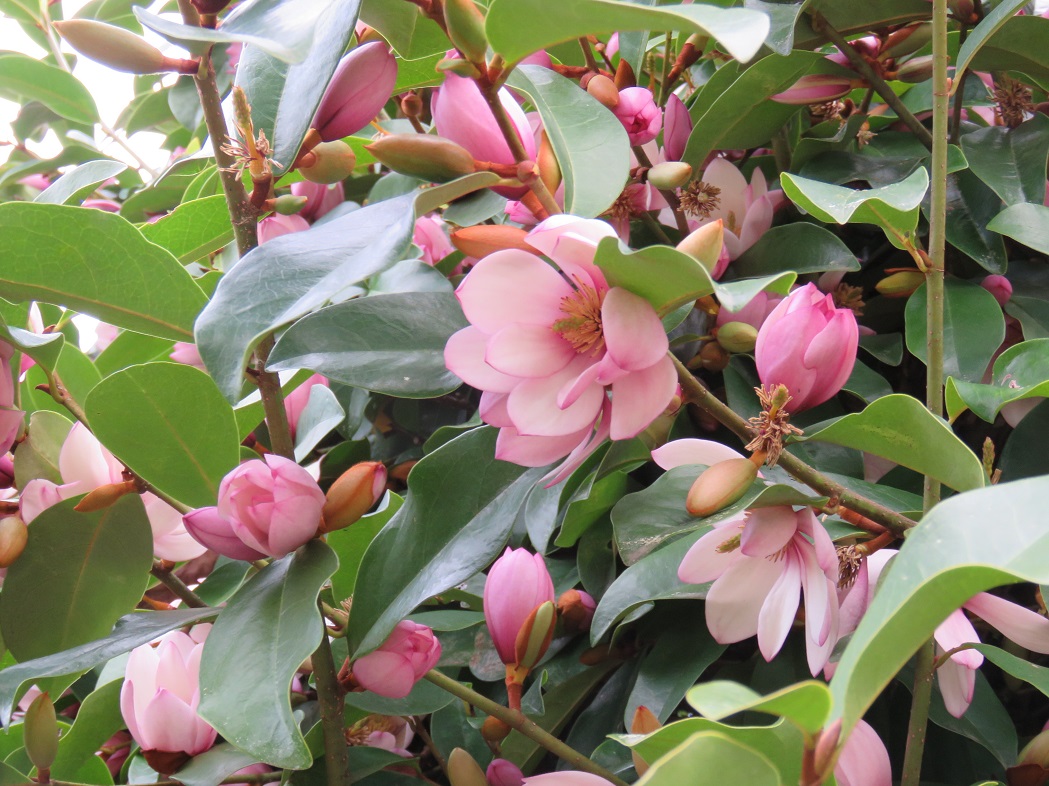
Fairy Magnolia Blush

Fairy Magnolia Blush has a good, long flowering season, currently at its most charming stage of peak bloom. More lilac than pink, it is pleione orchid time. This is another group from the orchid family that thrives in pretty laissez-faire woodland conditions (in other words, benign neglect) but the flowering season is much shorter than the dendrobium ‘Bardo Roses’.

And the final bar of pink can be left to the evergreen azaleas. We have so many different ones that we get many months in flower but they are currently at their showiest.

Notes from the Garden of Jury – September 13

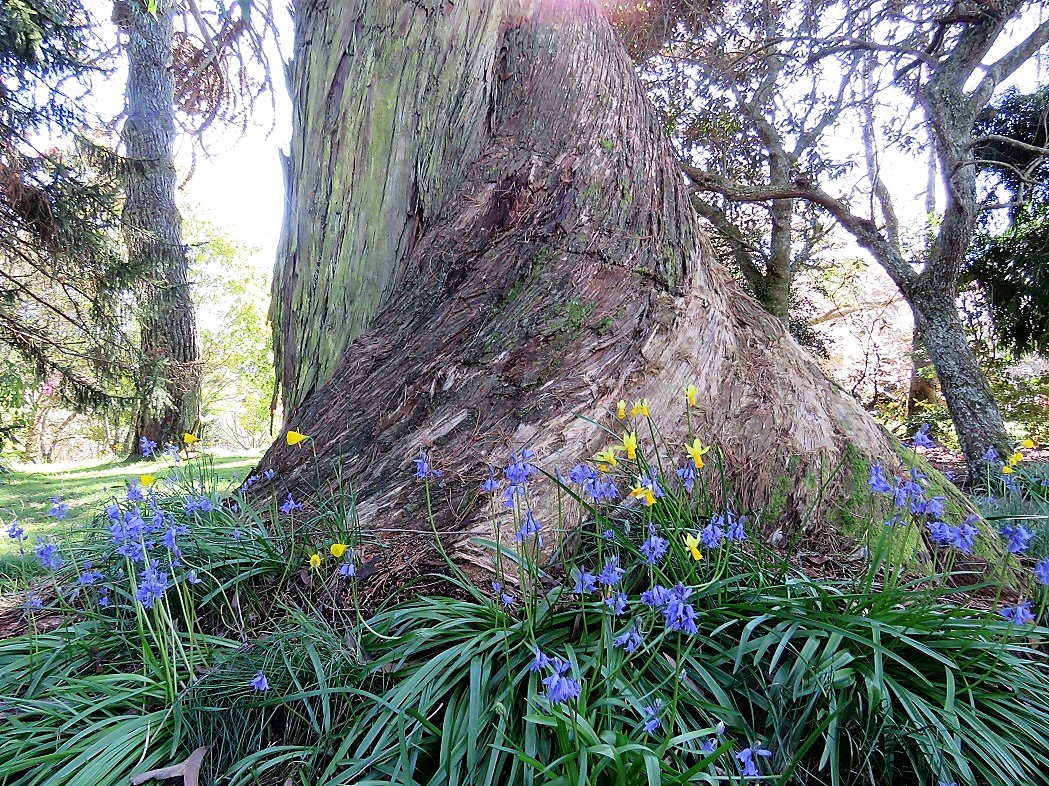
The little sights in the garden can bring me delight – bluebells and narcissi against the twisted trunk of a giant eucalyptus

I am feeling the pressure of opening the garden again after seven years. All I can say is that if you want to see it, you had better come this year to the Taranaki Garden Festival (October 30 to November 8) because they way I am feeling, we may not open again.

We maintain the garden all the time to a level that keeps us happy but that is not the same as the level needed to reopen after such a long time closed. With seven weeks to go, there seems to be so much to do. We will get there – we are experienced at this – but it does take away some of the pleasure of early spring.

Spring has long been associated with anxiety in my mind. For seven years, from the age of 15 to 22, it was the time of major exams that could change the course of my life. I had nightmares about it all for at least two decades after that. Then spring became a pressure time for us when we were in business with the garden open, retailing plants and the never-ending demands of nursery production work. The last seven years have been bliss. Bliss, I tell you. With no external pressures or expectations of us, we have been free to take all the time we want to enjoy the daily sights of spring abundance and beauty. Whether we continue to reopen after this year will depend on how much we enjoy the festival and sharing the garden with visitors. It will have to be quite a lot to reward me for all the effort going into it right now.

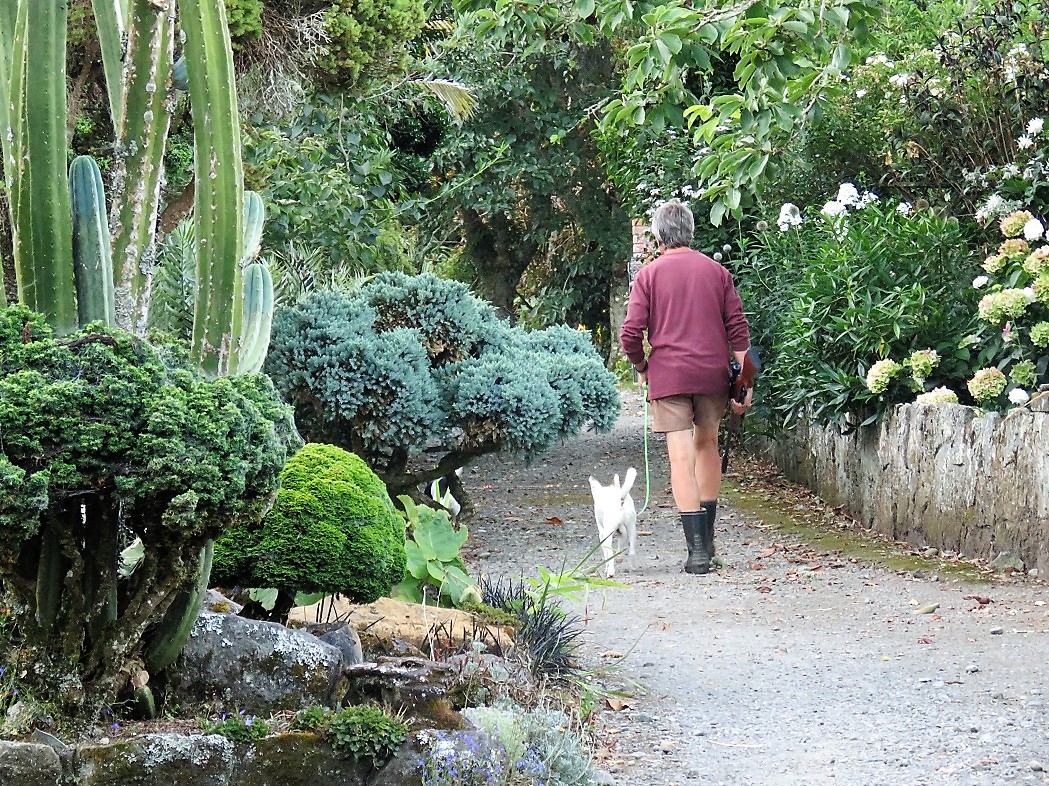
A daily routine here but I admit that the photo was taken earlier when temperatures were warmer. Mark is not one of those hardy men who wears shorts all year round.

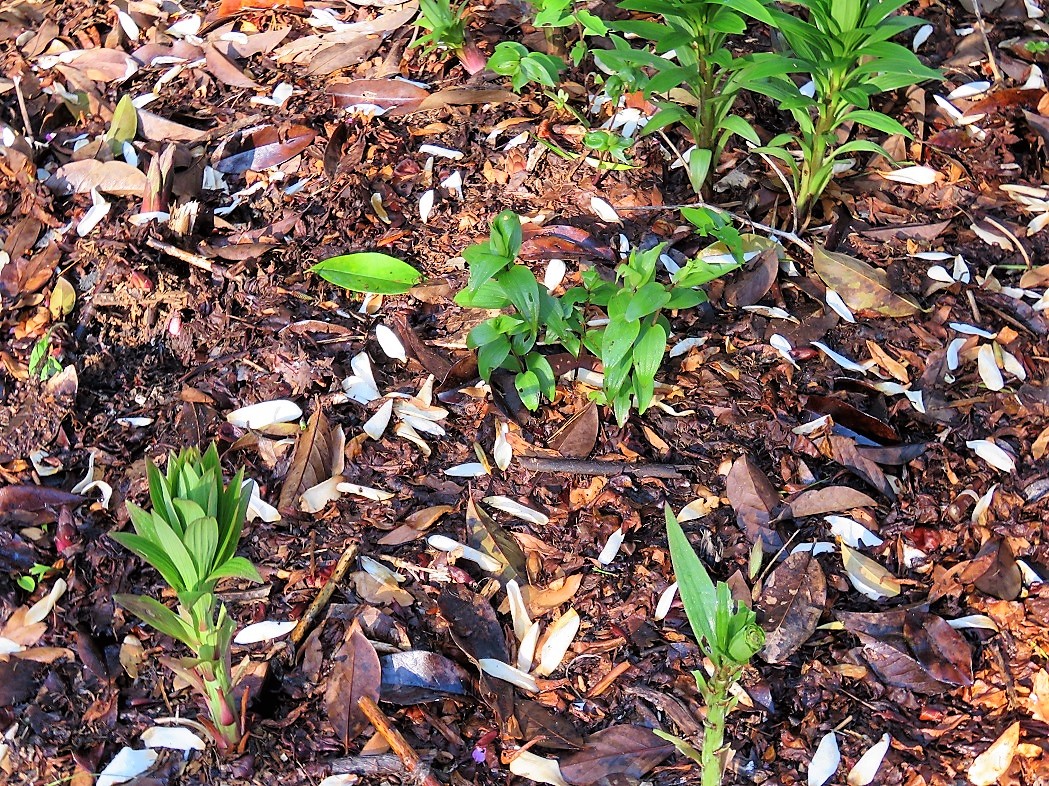
Emerging lilies. You won’t see the detail if you are reading this on your phone, but front right is the one rabbit-chewed shoot. In the past two years, all would have been attacked by now.

Regular readers may recall my despair at the rabbit predations this time last year. Mark and I were out sprinkling blood and bone after every rain to try and deter them. The auratum lilies are all coming through again and I am checking every morning. So far only one has been chewed off. This is testimony to Mark’s ongoing efforts with the gun. He has shot nearly 50 so far this year and that in a limited area of barely 2 acres. There are still a few around that need to be cleaned out and we dare not take our eyes off the ball – or the fluffy tails – because those few can increase exponentially (not unlike Covid, really) but man with .22 rifle appears to have the upper hand at this stage. In case you are wondering what we do with 49 dead rabbits, there is not much that the dogs enjoy more than fresh rabbit for breakfast.

I have tried cooking rabbit before – both casserole and pie but the only recipe I have really enjoyed is for rabbit and pistachio terrine (a recipe courtesy of Alistair Boyce) and it takes a bit of effort and pre-planning so I don’t make it often.

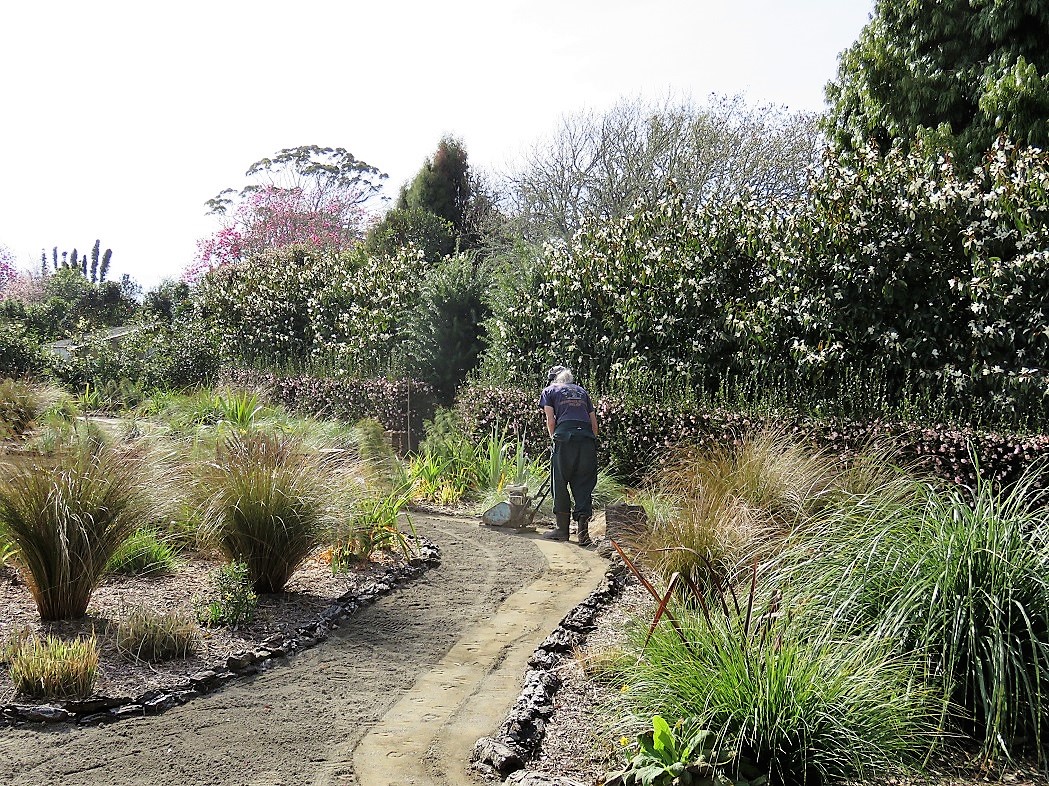
Lloyd in the process of compacting the base layer of pit metal. We borrowed the compactor from an obliging man up the road but they can also be hired. 

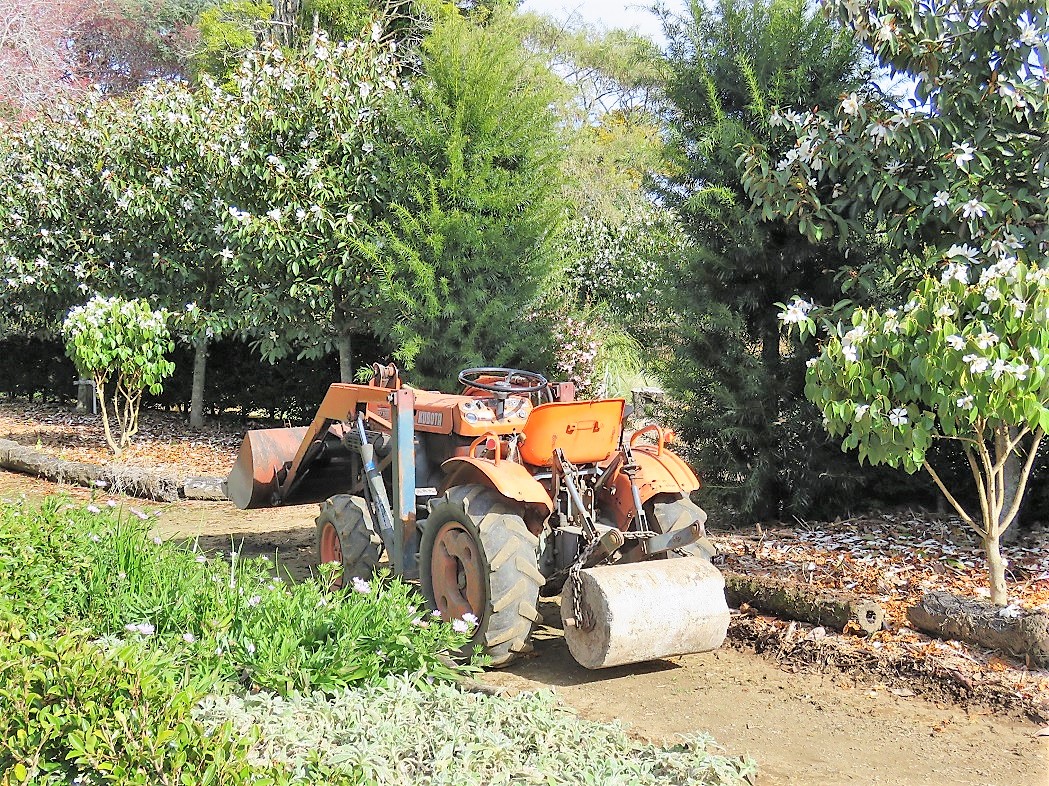
We bought this little orchard tractor over 20 years ago and it was already old then. It has done a lot of work in the years since.

We have laid the base course of pit metal for the paths in the new summer gardens. I say ‘we’, but that is in the royal sense. This has been Lloyd’s project. It took about 19 cubic metres and he did it with our baby tractor and wheelbarrow. We had thought we would get a bobcat in but Lloyd pointed out that the paths, though appearing generous, were just too narrow for the bobcat and some of the turns too tight so he thought it better to take the time to do it himself with minimal disturbance.

When it rains heavily, this path becomes the natural water course

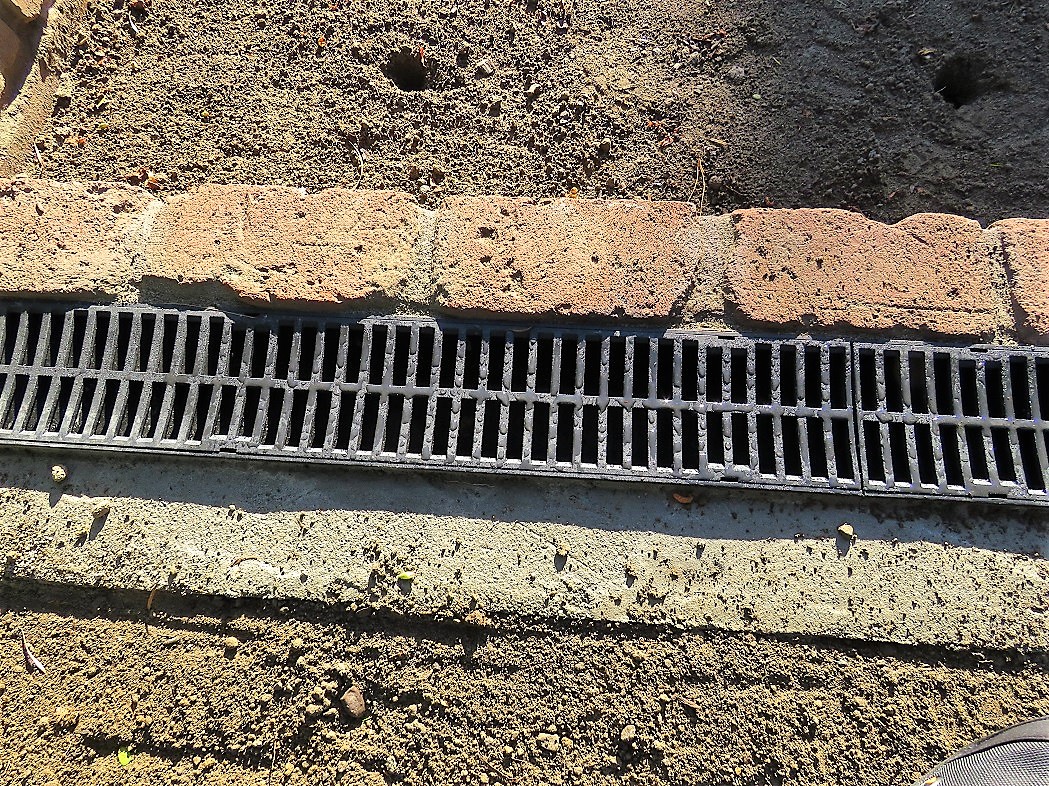
An off the shelf solution but it needs precise installation to make it work for the best outcome

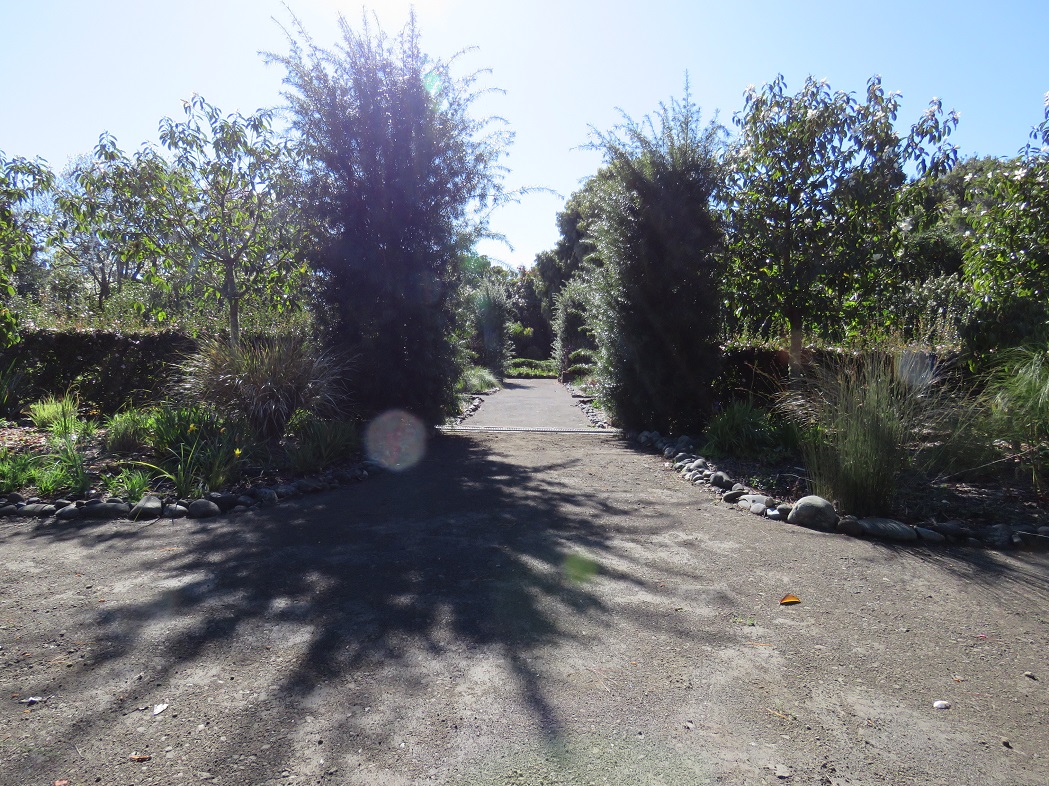
He is only half way there. There is still the top layer of crushed limestone and shell to be laid but we are letting the base layer settle first. Heavy rains highlighted a problem: in one area, the run-off from downpours naturally flowed down one path and scoured out the newest set of steps every time. We can get away with quite a bit because our volcanic soils are very free draining and surface water is absorbed quickly (this never happens in clay soils). But our rains can be torrential and when that happens, the run-off will find its natural path. Lloyd is, by nature, a problem solver. He decided we needed a drainage channel in front of the steps, one that is safe to be walked on. Fortunately, this is an off-the-shelf solution. He has laid it with an imperceptible drop to one side (this is a man who makes a spirit level his friend) and then connected it to a length of holey, plastic drainage tubing hidden just below the mulch to disperse the water more widely. We are waiting for the next downpour but we expect the problem to be solved.

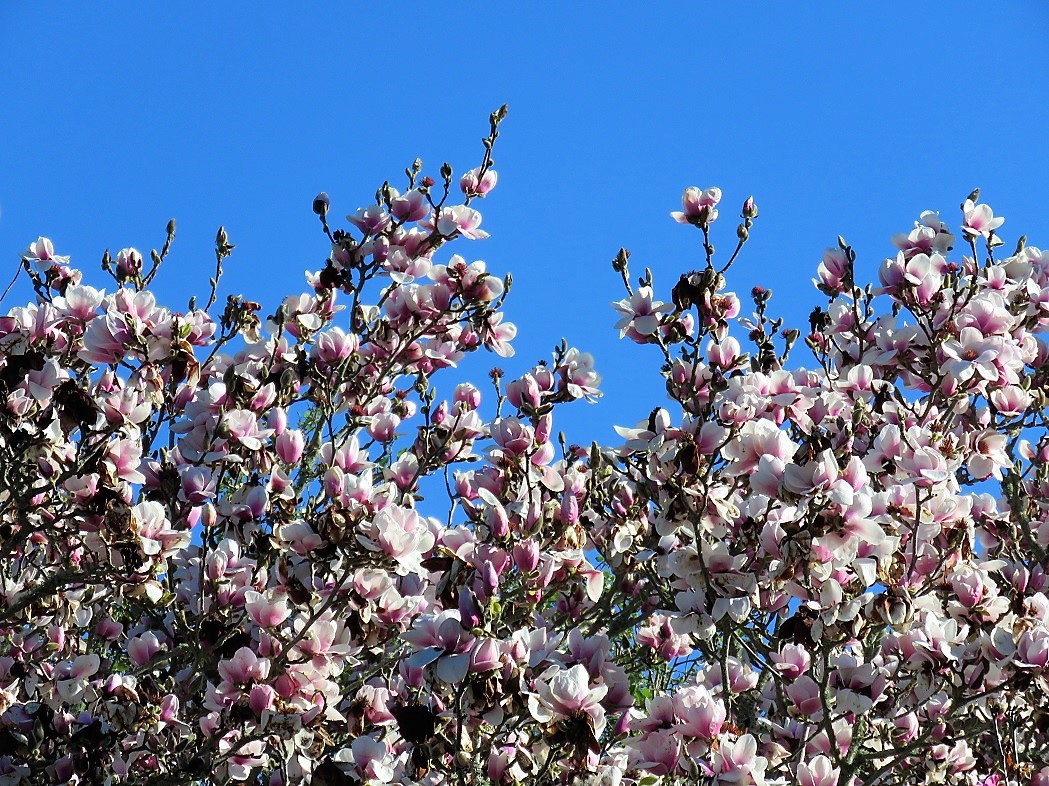
Magnolia Athene against the bright blue sky yesterday