Tag Archives: Abbie Jury

Spring is in the air ♫ ♫ ♫

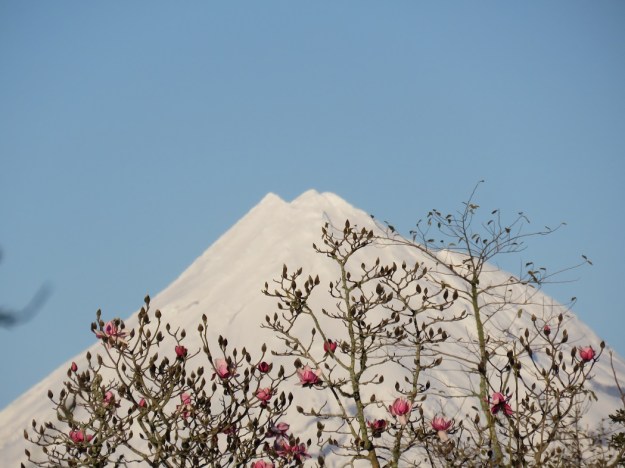
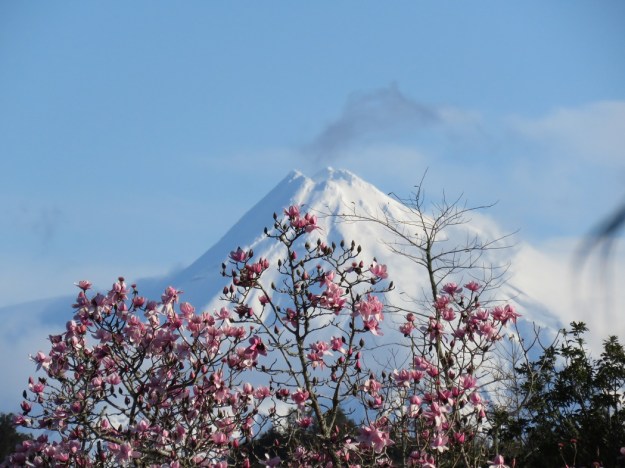
Mount Taranaki is an active volcano but the dark above its crater is cloud not smoke

I was prophetic. Just two weeks ago I commented that bringing in a film crew from outside the area to capture our view of Magnolia campbellii and Mount Taranaki was fraught with problems, that we could go ten days without being able to see it. In fact it was fourteen days this time – a period of cloud and intermittent rain which kept te mounga shrouded. Yesterday was fine and sunny and the cloud over the peak cleared in the afternoon. Is there a lovelier sight?

As I walked around the garden with my camera, it was clear that, midwinter or not, the plants are telling us that spring is here. Is it earlier this year than usual? We are reserving judgement; these things tend to even out over time though this winter has been relatively mild There have only been a handful of days when it has been too bad to be outside for at least a few hours.
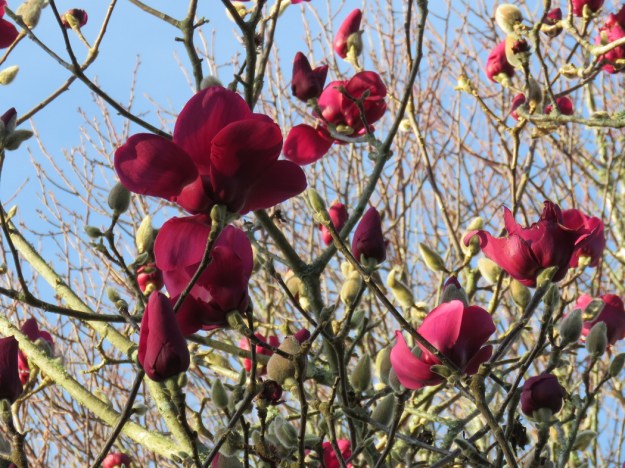
Magnolia Vulcan – the ragged flowers to the right will have been chewed by kereru

Magnolia season is probably our showiest with the grandeur and vibrancy of blooms against the sky, complemented by drifts of snowdrops and dwarf narcissi below. Vulcan has opened its first blooms, showing the colour intensity we get here in the garden of the breeder (Felix Jury) which is rarely matched in colder climes in the northern hemisphere where it can be smaller and more of a murky purple.
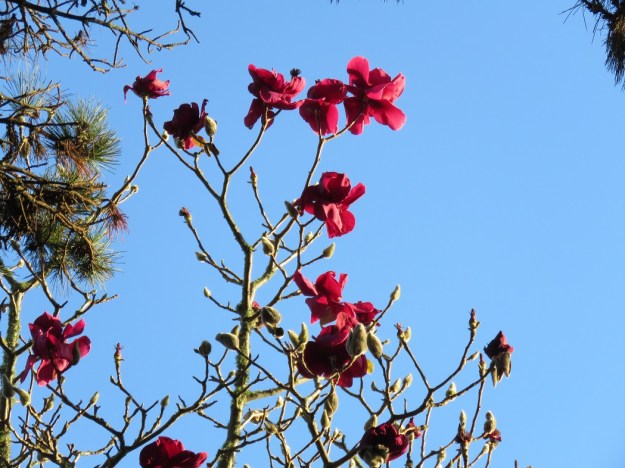
Magnolia Felix Jury

So too Magnolia Felix Jury (bred by Mark) which opens red for us. It, too, tends to colour bleach in colder climates so is more a rich pink but with its magnificent size and flower form, it doesn’t seem to matter. Nobody complains about it to us and we only get rave reviews from around the world.
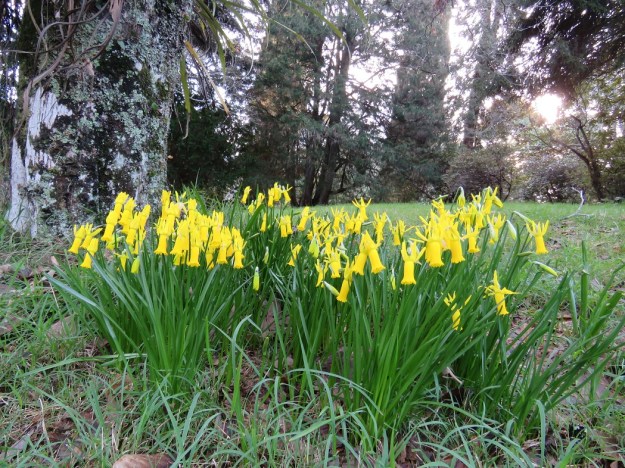
Hybrid cyclaminues narcissi with their swept back petals making them look perpetually astonished

With the rush of spring, comes a rising sense of urgency. This anxiety has yet to afflict Mark but I am feeling it. Opening the garden at the end of October takes planning. I have no idea what preparing a small garden for opening is like but I know a lot about preparing a large one. Timing is everything. Unlike routinely maintaining a garden – and we routinely maintain ours to a level that makes us happy – opening for a festival means having it all ready at the same time.
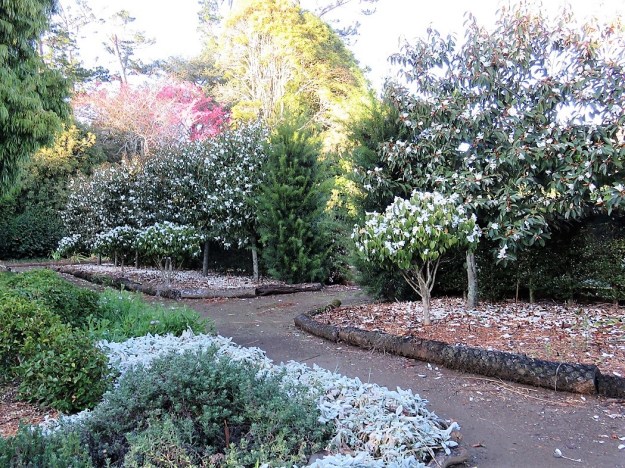
Major work includes laying a path surface in the new areas. Mark’s Fairy Magnolia White with Camellia yuhsienensis in front. The pink at the back is Prunus campanulata.

My plan is to have all major work and the first round of the entire garden completed by the end of August. That leaves about seven weeks to do the second round which is more about titivating and detail. The final week is then about cleaning public areas and doing the last-minute presentation stuff (including, believe it not, cleaning the house windows). I think we are on track but it feels like there is a lot to do. Well, there is a lot to do.
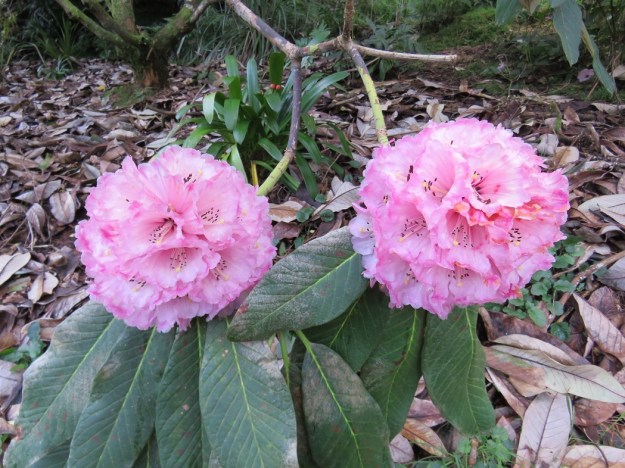
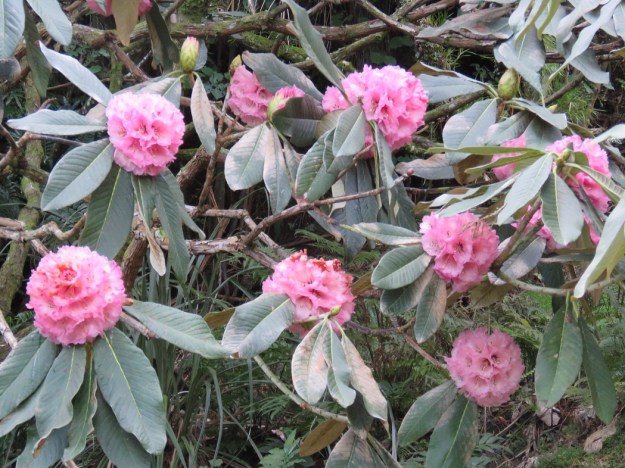
The big-leafed rhododendrons flower now, not at the beginning of November. This is Rhododendron protistum var. giganteum.

We have never targeted our plantings to the annual garden festival. I think that is more a small garden approach. Back in the days when we used to retail plants (and that is a long time ago now – over a decade) most locals who opened their gardens for the festival would only buy plants that we could assure them would flower in the prescribed ten days. They actually geared their entire garden to peak over that ten day period. Each to their own. We garden primarily to please ourselves and we like flowers and seasonal interest all year round. So there is always something of interest in bloom but also plants that have ‘passed over’, as we say, and plants that ‘yet to come’.
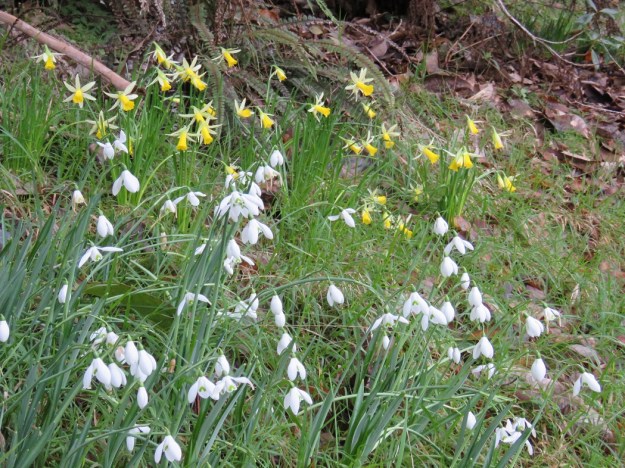
We are currently at peak snowdrop

There is a lot ‘coming’ right now and that brings us great pleasure, even if sharing it is done vicariously. It will look different when we open for festival – not better, not worse, just different. Probably tidier, though.
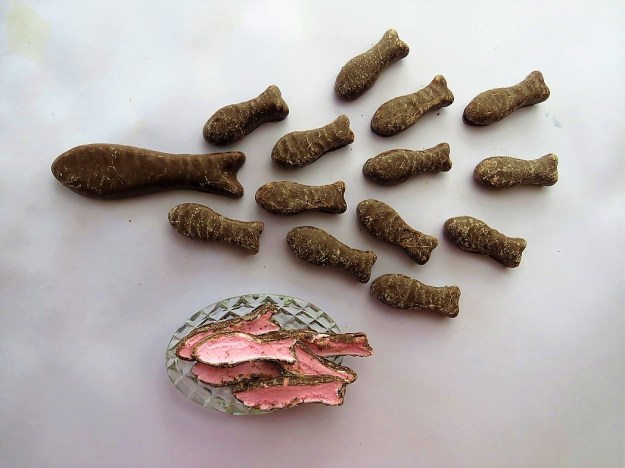
A school of chocolate fish

Finally, in my occasional series on reinterpreting New Zealand confectionary in flowers, I give you the chocolate fish. I was a bit disappointed when I cut into the fish. I am pretty sure that the marshmallow interior used to be a richer pink shade – raspberry-ish even, but I have taken some floral licence.
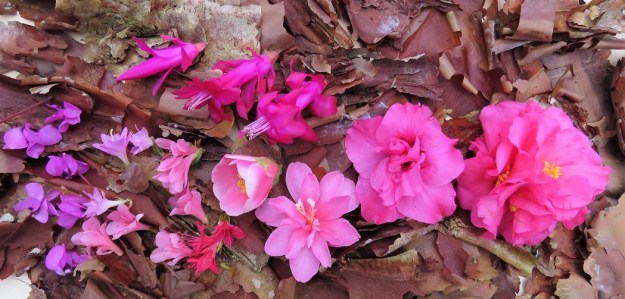
Cyclamen coum, schlumbergera, azaleas and camellias on a bed of Acer griseum bark
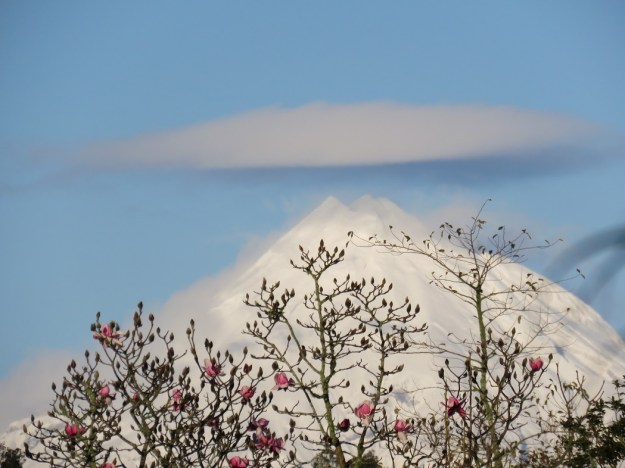
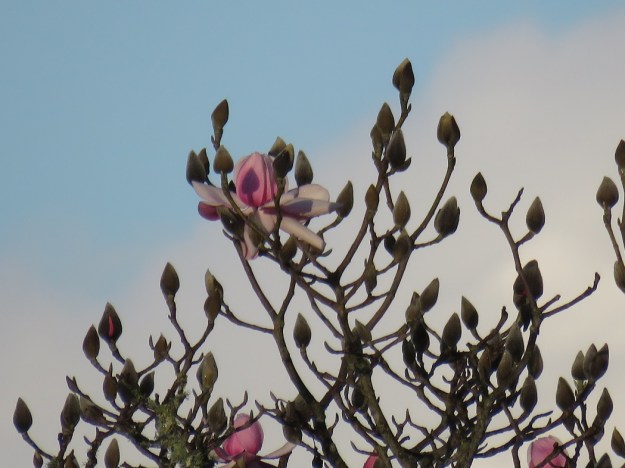
A story of the magnolia, the mountain and air freshener

Thursday July 9 at 8.40am

The first photo opportunity of the year to capture our Magnolia campbellii and Mount Taranaki came this week and it reminded me of a funny story. Well, I think it is funny.

It was only last year, I think, that a creative from a Sydney advertising agency contacted me. She had found a photo of mine on the internet of this very scene and she was enquiring whether we would agree to let a film crew visit to film it for a product – unspecified. She wanted permission and to negotiate a fee so she could pitch the concept to the client.

I briefly thought it might be fun. But only briefly, until I worked out the logistics of the exercise. That is a very specific view shaft and a scene that is visible for just a few days each year. I imagined the crew flying in, some from Sydney and maybe the film crew from Auckland and me feeling personally responsible for the weather. That is a mountain. In midwinter, it is  more often shrouded in cloud than in clear view. I can go out at 8am and it may be fine and sunny here but 40km away, on that mountain peak, the cloud is moving in and by 8.03 there is nothing left to see.  We can go a week, maybe ten days, without a clear view of the peak. With a film crew hanging around waiting for the moment? I think not.

Magnolia campbellii var campbellii

Then I shuddered at the thought of the crew capturing that view and then asking me where they could get other angles on the scene. They can’t. There is only one, highly specific view shaft and that image is taken right on the limits of my camera zoom function.

I said no. Undeterred, she asked me if I recommend other locations. I pointed out that they do grow magnolias in Australia, very well in fact in the Dandenong area outside Melbourne. I have seen them there. No, she replied. She wanted a setting that looked like Chinese countryside. Reader, I cringed. Our maunga can, at a pinch, pass for Mount Fuji in Japan – and has done in the movie ‘The Last Samurai’. The magnolia actually comes from Darjeeling, which is in northern India. I have been to China and seen a bit of their countryside. I do not think she had.

I suggested Auckland Regional Botanic Gardens and there our correspondence ended.

I did not think any more of the matter until my Canberra daughter emailed me saying: “Is this the advert you missed out on providing the pics for?”  I am guessing so. It fits the brief. Air freshener? That is not a product I ever buy. We have plenty of the natural product here. Besides, as those blooms on our Magnolia campbellii are about eight to ten metres up in the air, I have no idea at all whether they are even scented.

Postscript: Mark tells me that he is pretty sure M. campbellii has no scent. Perhaps they were thinking of the Yulan magnolia, M. denudata, he hypothesized. We don’t have it in the garden so I looked it up and yes, it is renowned for its lemon fragrance. That is not the magnolia used in the advertisement. It seems botanical accuracy matters more to us than it does to air freshener manufacturers and Sydney creatives.

A perfect, cloudless morning – Friday 10 July at 8.40am

After the arborist

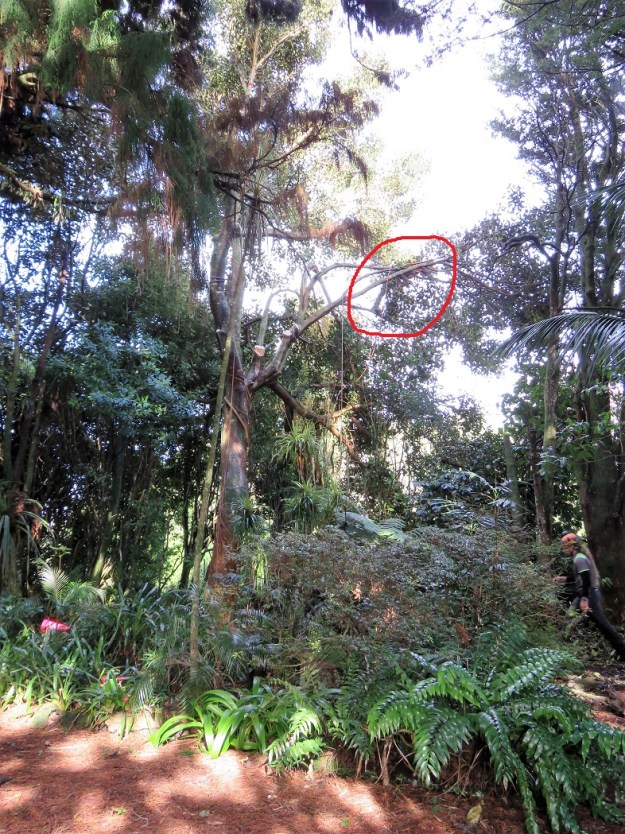
I circled the man in the tree. I don’t think I would stand on that branch but these trained arborists know what they are doing.

We had the arborist back in last week. Two of them, in fact because our usual arborist has teamed up with another so there were two skilled people on the job. This is just as well because we only call them in to do major jobs. On this occasion, it involved three trees but the one I photographed because I thought it was most interesting was a fairly large ficus – a fig tree but not a fruiting one. Mark estimates it was about thirty years old and growing at a great rate. Not only was it in the wrong position but it was of neither interest nor merit. When it dropped a large branch recently, we realised it was also brittle.

Dropping it was a skilled job because it had to be dismantled, not felled in one go. With the road on one side and a densely planted garden on three sides, how the pieces came down was of considerable importance to us. It took the arborists about six hours to fell the tree and clear up.

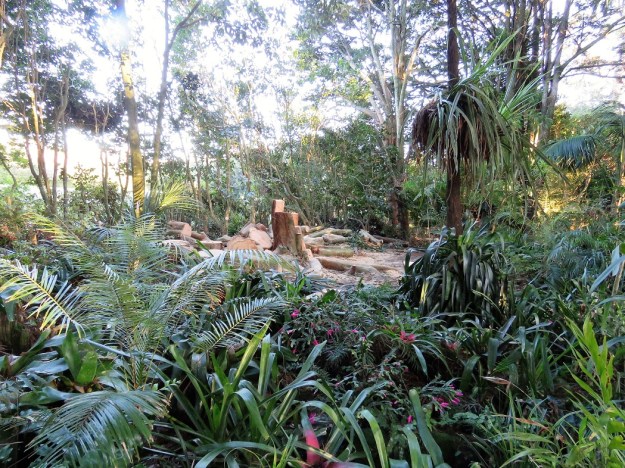
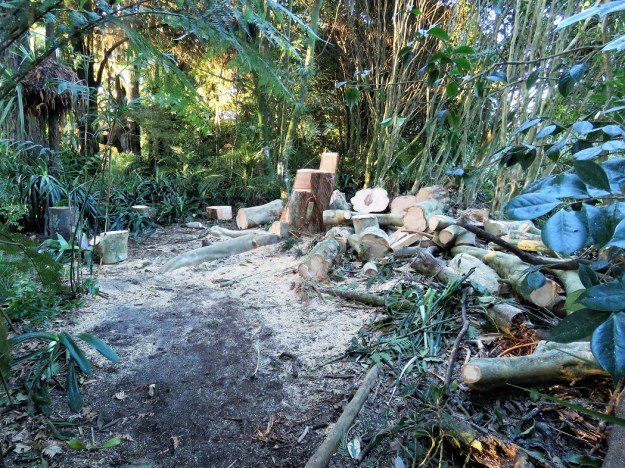
The amount of tramped, bare space was a bit daunting at first glance

This was how the scene looked at the end of the arborists’ work. They mulch all the leafy material and remove it and cut the bigger lengths up. Fortunately, they had dug out most of the plants that were in the area – mostly clivias and bromeliads – and the only damage was to a dracophyllum which is now somewhat smaller than it was. In a moment of whimsy, one of them shaped the remaining trunk into a throne, though only designed for those with small derrières and the gluey sap oozing from it was a problem, as Mark found when he tried. Mark described the area as looking somewhat like a state highway, given the amount of bare, tramped space.

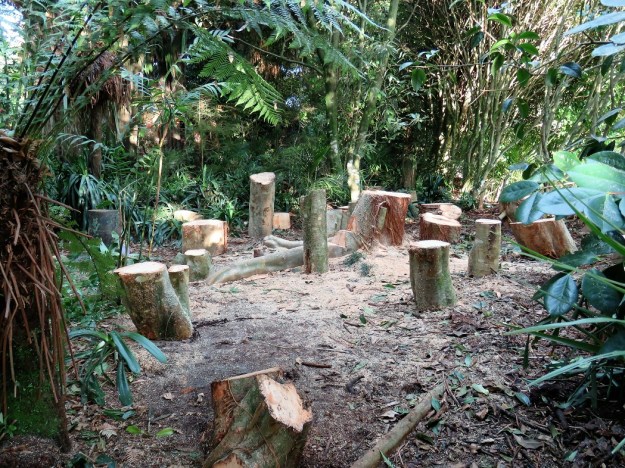
Not so much a trendy insect hotel, Mark quipped, as an entire insect resort

Because the timber was very soft and sappy, it had no use for firewood or garden edging, or anything else. It seemed best to let it break down at its own speed in situ. I asked Lloyd to stand up the longer lengths and rounds and to stow the small material out of sight at the back. He also removed the throne shaping. Not our style and we didn’t want to encourage any garden visitors to tramp across the garden to try it out.

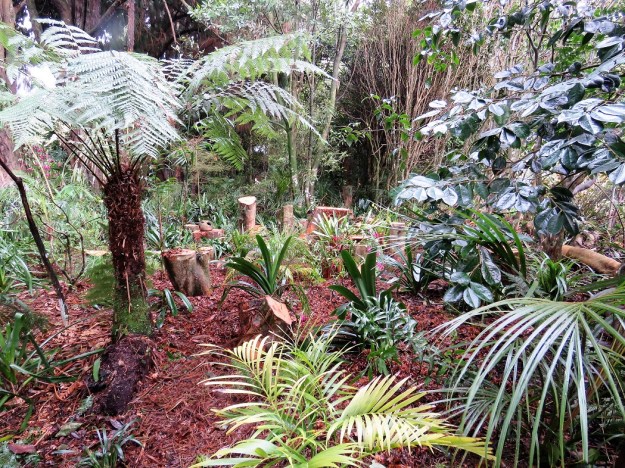
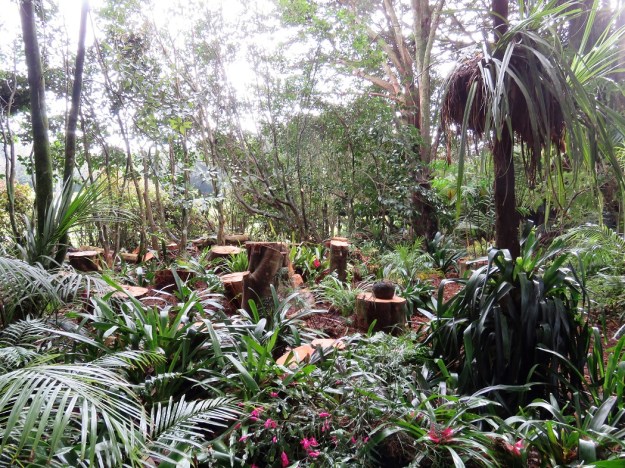
Then I moved in, replanting what had been dug out and rustling up other suitable material to fill it all up. Ferns, clivias, chain cactus, bromeliads, three small growing palms from the collection Mark still has ‘out the back’, some liriope and I can not recall what else. This area is mixed and informal and is one of the best examples of a stable matrix planting we have. By matrix planting, I mean one where the selected plants co-exist happily over time (measured in decades, not months or a year or two), requiring remarkably little maintenance or intervention. It is also bio-diverse because of the range of plant material used, the depth of natural leaf litter and because most of the spent material is kept on location, not removed.

To finish off the reinstatement of the area, I moved in large amounts of leaf litter as mulch. With high overhead trees, the whole area has considerable depth of mature leaf litter and I was able to skim it off from adjacent spaces to get what I wanted. There is no bare earth left visible.

The cut edges on the trunks need to mellow. The plants need to bed down and put on fresh growth. It does not look as densely planted as the surrounding areas. But it doesn’t look raw and new and I am pleased. The two factors that made the biggest difference to the appearance are the natural mulch and using plants that were a variety of different sizes and maturity. If you buy plants from a garden centre, they are a uniform grade. Freshly planted, they will look like plants you bought from a garden centre.  If you can cast around and rustle up plants to hand, the look is far more natural and that is the effect we want.

The whole exercise took about four days from the arborists arriving to reach this final point. The pile of woodchip mulch has grown further. It is clearly generating some heat on this frosty morning. It represents a handy resource, even if we don’t want to use fresh woodchip mulch everywhere in the garden.
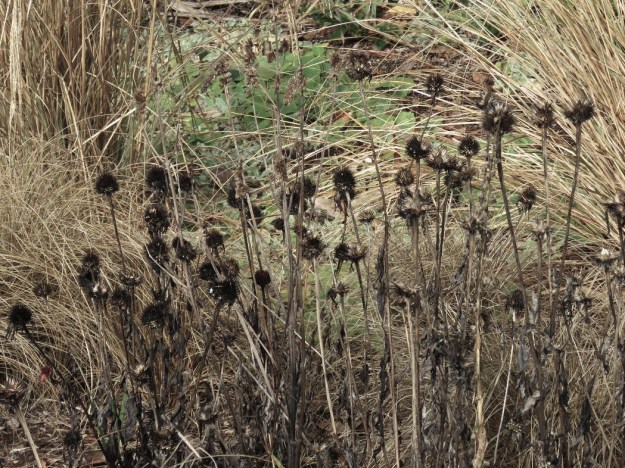
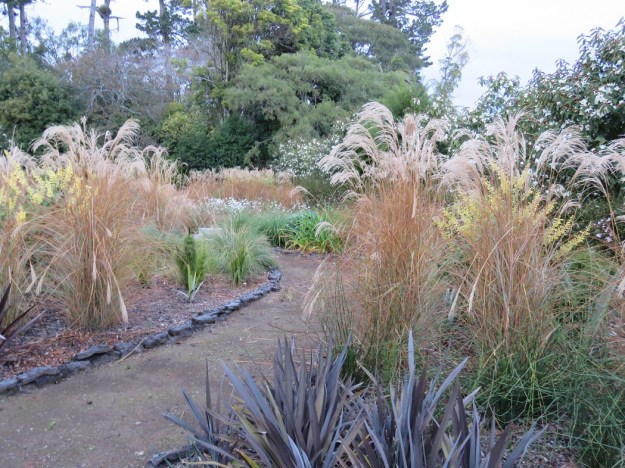
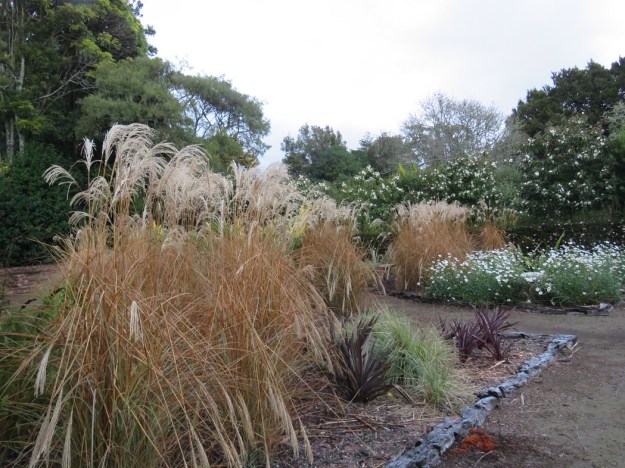
The summer gardens in midwinter, Boris Johnson and pineapple lumps.

‘the english/european “dead stuff” look’

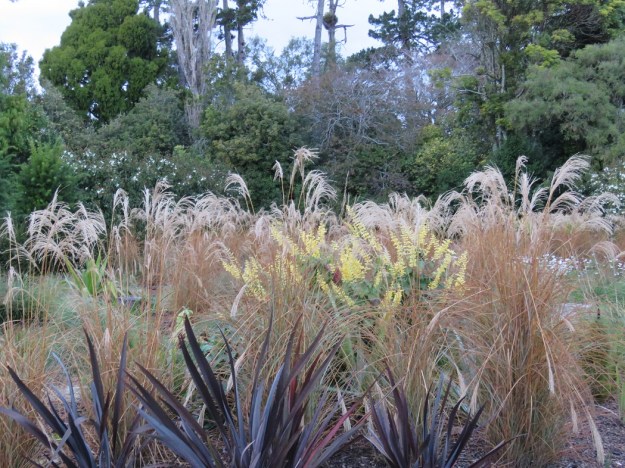
I was casting around for topics this week when a gardening friend emailed: “Was wondering if you could post on your website a couple of shots of the grasses at this time of year – interesting to see the “winter look” – will you be cutting them back or going for the english/european “dead stuff” look?” I see she is not that keen on using capital letters.

As with everybody else, my world has shrunk to be very home-based in this time of pandemic. This is the week that Mark and I were meant to be looking at the summer wildflowers of the Pindos Mountains of Greece and I had thought I would be sharing photos of Lilium chalcedonicum (the beautiful red Turk’s cap lily with reflexed petals) in its natural environment. So disappointed was I, that I looked out the times we were to be making our journey and marked my Monday to Wednesday with the progress of our journey that wasn’t – flying to Auckland on Monday, leaving Auckland for the long haul to Doha (very long at 17 hours 40 minutes non-stop because we New Zealanders do very long hauls), the layover in Doha and then the quick 5 hour leg to land in Thessaloniki in the early afternoon. But if one is going to be confined to home, I am deeply relieved that life dealt me a hand that sees me living in what is currently one of the safest countries in the world with the greatest level of personal freedoms restored.  Life is back to normal here, except for the absence of international visitors and the sanctions on overseas travel.

The court garden right on midwinter in the morning light at 8am

So back to the mid-winter garden. We refer to the new perennial gardens as our ‘summer gardens’ though really they are the spring, summer and autumn gardens. There isn’t a whole lot happening in them in winter but they are not bare.

Planted June 2019 – this garden is just ending its first year

We will go through the Court Garden in the next week or two and cut down all the miscanthus, the six remaining Calamagrostis ‘Karl Foerster’ and the salvias. A frost this week finally hit the foliage of the salvias the day after I took these photos. The calamagrostis is evergreen but very scruffy at this time of the year and I think it will look better in spring with all fresh foliage.
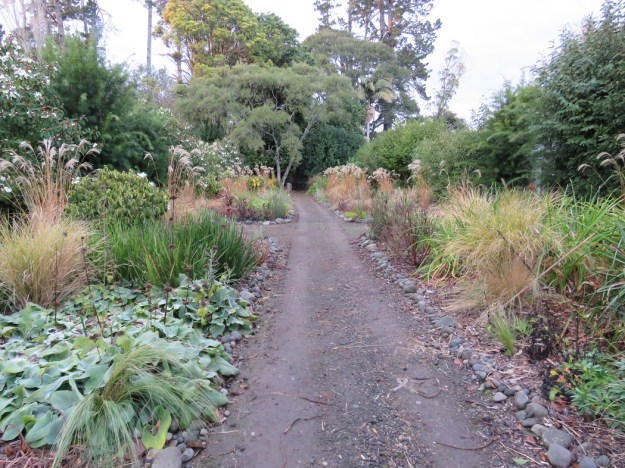
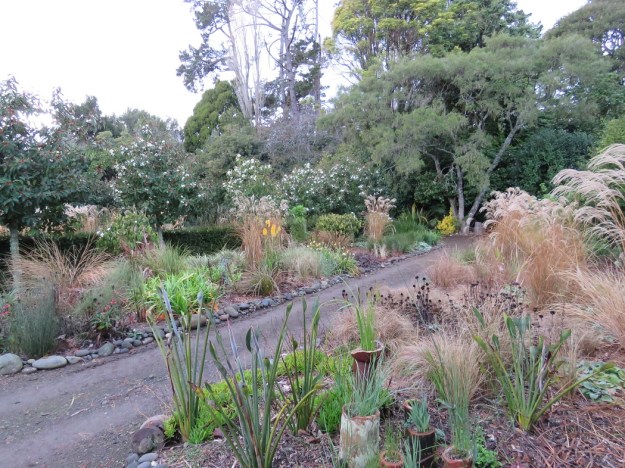
Mark has offered to cut the grasses down. He can do it in a jiffy, he tells me, with the chainsaw. He wants to keep some of the grass for his strawberry patch and is making his annual jokes about taking up thatching. Would I like a thatched shelter in the garden he asks, and we laugh merrily while knowing that the chances of him ever whipping up a little thatched shelter are nil.

The twin borders in midwinter

The twin borders are a good example at this time of year of how gardening here differs from the northern hemisphere. So much of the plant material we use is evergreen. Not for us the garden beds which are levelled to the ground with a strimmer or weed-eater and then covered in a blanket of mulch.

Lily border to the right, caterpillar garden to the left

The lily border is the only garden bed we have devoted to a single plant family that disappears entirely in winter. Well, almost limited to one plant. Fairy Magnolia White forms the backdrop to the border and is in bloom while Camellia yuhsienensis is placed at wide intervals to give some winter interest and is coming into flower.

Looking back from the other end of the caterpillar garden

The caterpillar garden is a mix of evergreen and deciduous perennials. We have just given the Camellia microphylla hedging a heavy prune and shape now that its short flowering season is all but over. And I did a full dig and divide on several of the bays. We have to dig, divide and thin in our conditions and the asters and ox-eye daisy were too congested. I also cast out entirely the Eupatorium sordidum I had used in a central enclosure. It was growing well and its blue flowers fitted the colour theme but overall it was just too big and strong in foliage and flower and looked out of scale with the other plants. I have replaced it with hydrangeas, mostly serrata, which are finer in appearance.

Memories of midsummer

On a lighter note, I offer you a clip of UK Prime Minister, Boris Johnson. Shocked I was, I tell you, shocked by this blatant product placement of Tim Tams. But then I discovered that *Penguins* were not, as I thought, paperback books from a respected publisher. NO! THEY ARE A CHEAP CHOCOLATE CANDY. Given that penguins are a southern hemisphere bird (bar the Galapagos few), it felt like cultural appropriation – or maybe, as one wit suggested, ‘faunal appropriation’ to purloin our southern penguins to brand a chocolate candy biscuit. If the future of post-Brexit Britain is dependent on exporting Marmite and Penguins to the Antipodes, it does not look bright.

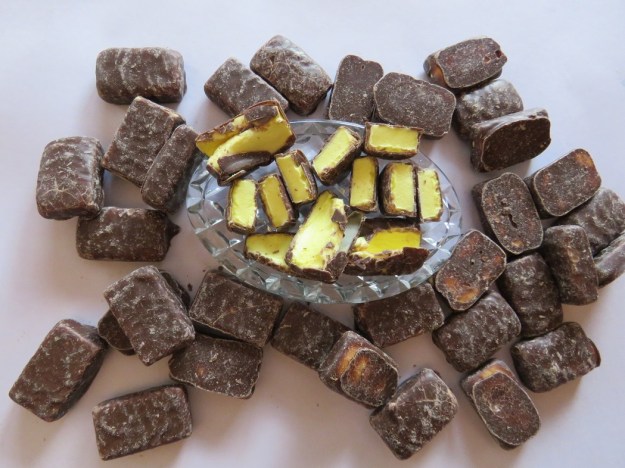
The NZ pineapple lump, now manufactured in Australia. It seems unlikely that any actual pineapples were harmed in the making of this confection

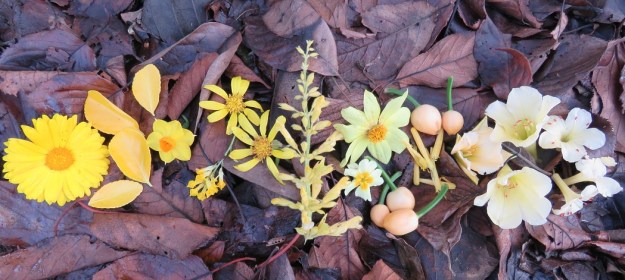
Tim Tams may be Australian, but I understand the pineapple lump is a New Zealand confection, in origin at least. For readers in other parts of the world, this is a pineapple-flavoured chewy centre coated in chocolate. Regular reader, Tim, who expressed a sudden desire for marshmallows after last week’s post, motivated me to repeat the exercise but in yellow and brown. Inspired by the pineapple lump, on a bed of spent magnolia leaves we have yellow blooms of midwinter. Left to right: calendula, some yellow leafed shrubby plant I have little interest in so do not know the name, the first jonquil, corydalis, ligularia, salvia, primrose, the last of the dahlias, tubes of kniphofia, clivia seed, hemerocallis and vireya rhododendrons.

Next week may bring to you the delights of the jaffa, chocolate fish or maybe the endangered snifter. Other suggestions from NZ citizens are welcome.

The marshmallow hues of midwinter flowers

Following on from my post last week on the rainbow colours of midwinter,  I did indeed buy a packet of marshmallows. To focus my thoughts on the pretty pale pinks and whites, you understand.
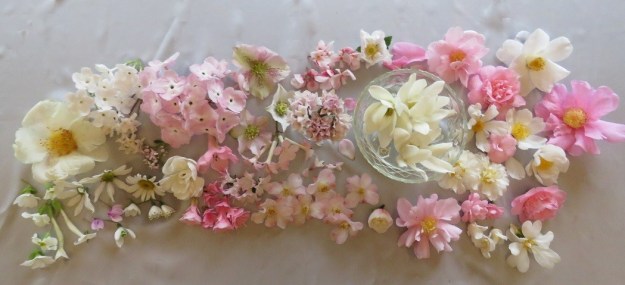
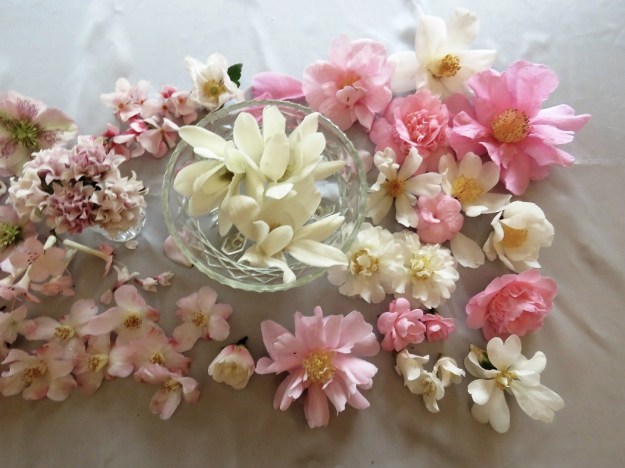
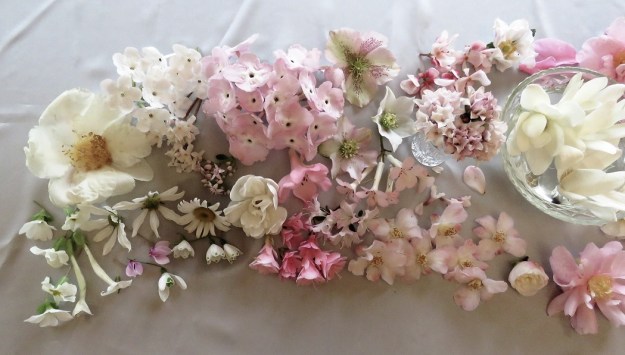
Flowers listed in the footnote below

A bleak day on Thursday had me out picking flowers in marshmallow hues. I was going to aim for a comprehensive representation of all candidates but decided part way through that this was unnecessary. Suffice to say, there was plenty to choose from and that right on mid-winter.

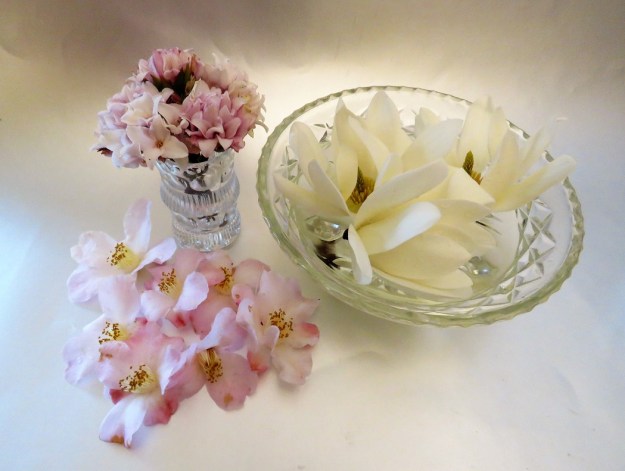
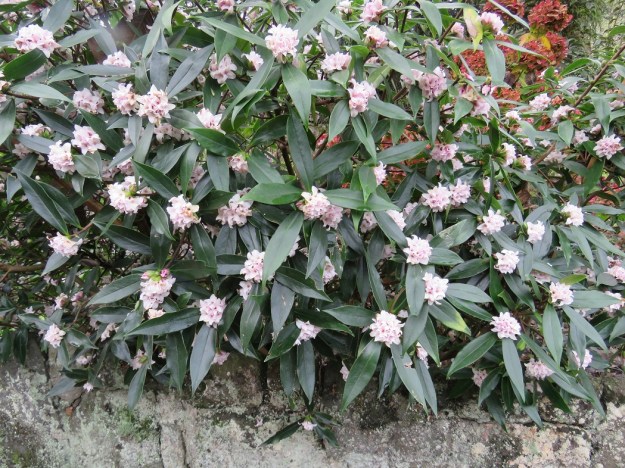
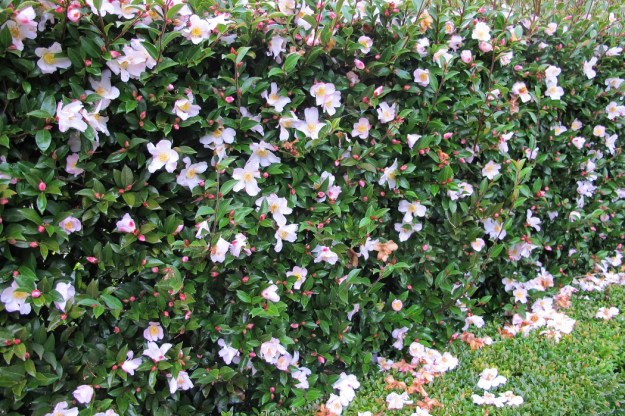
The centrepiece, I decided should be three of Mark’s cultivars. Fairy Magnolia White is well into bloom and a delight to us. We are proud of this one. Daphne Perfume Princess is in its full glory and the scent as we walk along our driveway is a pleasure. Camellia Fairy Blush never fails to please us, even after many years. It was one of the earliest plants Mark selected, named and released, if not the very first.
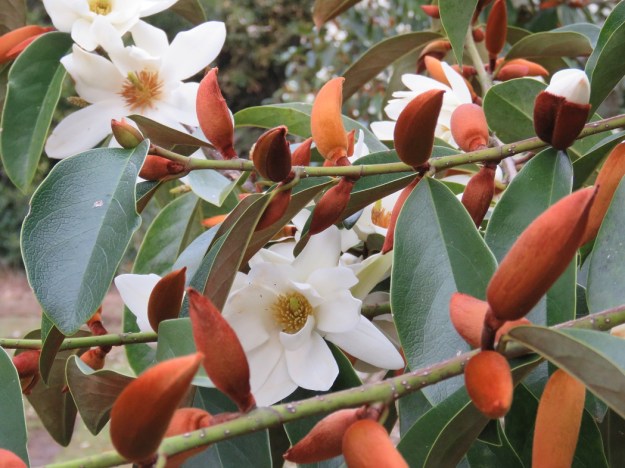
Fairy Magnolia White

Daphne Perfume Princess

Camellia Fairy Blush

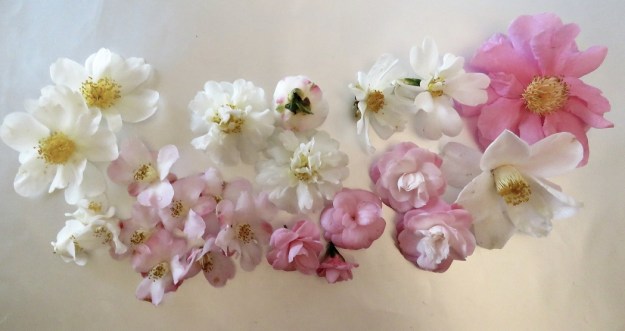
I separated the named camellias from the seedlings. We use many unnamed seedlings in the garden because we raise most of our own plant material here and always have done. It is how we can afford to garden on the scale we do.

The named ones from left to right are C. gauchowensis, C. transnokoensis, Fairy Blush, Silver Dollar, Tiny Star, C. yuhsienensis Sweet Jane, Superstar and Showgirl.
The bloom shown face down is from Silver Dollar – one of the best, compact white sasanquas we know. Sometimes, both Mark and I get assailed by memories of our years retailing plants from here. Anybody who knows camellias will also know that many of the excellent white camellias open from a pink bud. Back in the days when ‘ladies who lunch’ (better known these days as ‘Karens’) were all madly planting their clichéd white gardens, I met more than I care to remember who wanted white camellias. Pretty much any white camellia would do but woe betide a pink bud. In vain would I assure them that the display was totally white, there was not to be a hint of pink in their pristine white garden.

We do not miss retail. In hindsight, I am somewhat surprised at the courtesy and politeness we maintained in the face of severe provocation.

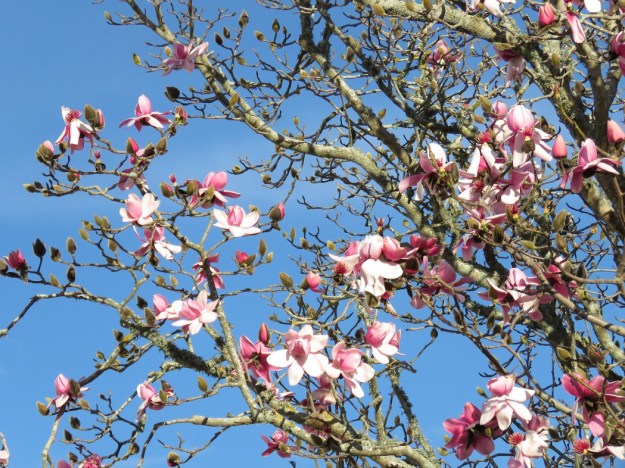
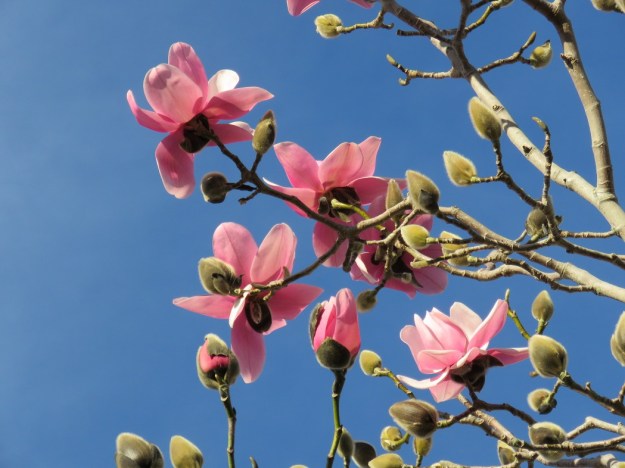
Magnolia campbellii

Thinking marshmallow hues, I photographed the Magnolia campbellii by St John the Baptist Anglican Church in Waitara. Is there anything more pink and white than this sight? Our plant here has yet to open its first bloom for the season.

That starter pack of marshmallows is going rather a long way. Mark and I are still eating our way through them a week later, even though they are sitting in glass jar on the bench tempting us each time we pass. I can report that marshmallows last longer than chocolate in this house.

Footnote: The plant list in paler pinks and whites shown above includes the following: luculia pink and white, Primula obconica, polyanthus, gordonia, Crassula ovata, daphnes, montanoa, ox-eye daisy, Cyclamen hederafolium, galanthus (snowdrop), leucojum (snowflake), rose, nicotiana, vireya rhododendrons, azaleas, hellebores, begonia, Japanese anemone, michelia and camellias.