Tag Archives: Abbie Jury

A celebration of bright light and the start of a new year of gardening

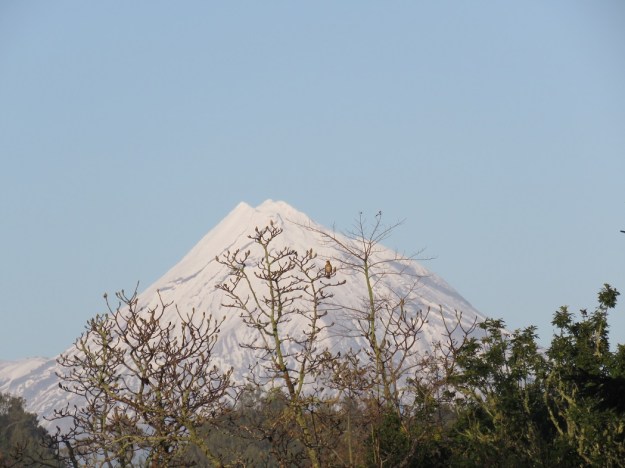
Our maunga – Mount Taranaki – on the day before the winter equinox

I have said before that the first flowers on Magnolia campbellii herald the start of a new gardening year for us. But I had not thought before of the bigger picture. On the day before the winter equinox last week, I went out on a clear day to catch the image of our maunga, our mountain, from the path down to our park. It wasn’t until I saw it on my big computer screen that I spotted the bird in the branches. I assumed it was a kereru judging by the size and shape and so did Mark when I showed him. When I zoomed close in on my screen, it is just a thrush.

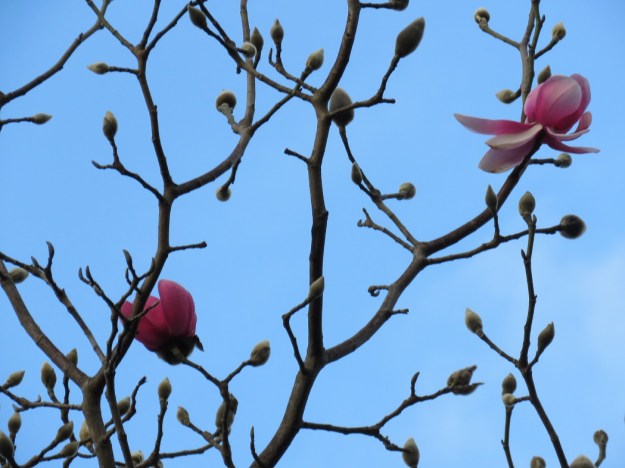
The first blooms on Magnolia campbellii herald the start of a new garden year – for us, at least.

This week, the first flowers opened. And I made a connection between the first flowers, the winter solstice and Matariki. The last is a traditional Maori celebration now gaining popularity in the wider population. Sometimes referred to as the Maori New Year, its timing is determined by the rise of a cluster of small stars known to Maori as Matariki but commonly called the Pleiades in astronomical circles. The exact date of the appearance of this star cluster varies from year to year, but it is usually soon after the winter solstice. And it occurred to me that the calendar which we all follow where New Year is accepted to be January 1 is, of course, a northern hemisphere creation so everything seasonal is reversed. It makes perfect sense that the first flowers on M. campbellii signal the start of our new year in the garden.

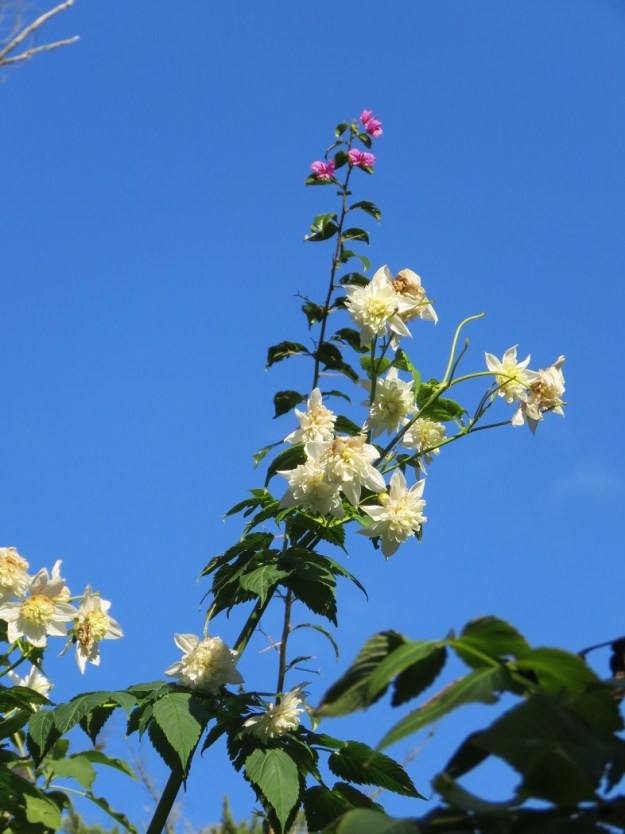
Reaching high into the mid-winter sky, Dahlia imperialis Alba and a bougainvillea shoot

And what a week it has been. Cool nights (which means between about 3° and 8° Celsius where we are), followed by sunny, calm days with a temperature of 14° to 15°. We cannot complain about that in mid-winter, even though we know winter storms will return over the next six weeks before temperatures start rising in August.

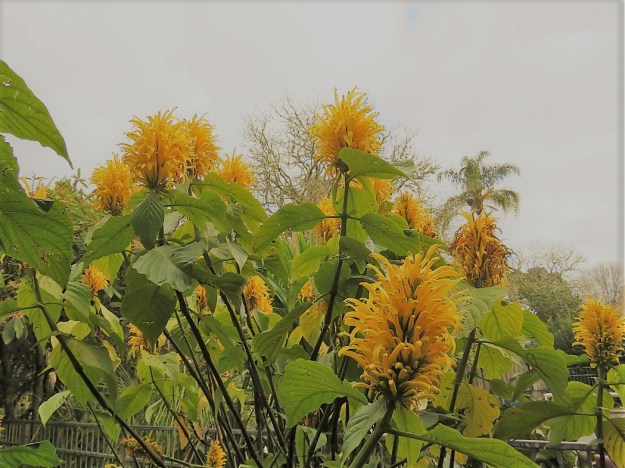
The shaggy spires of Jacobinia chrysostephana syn. Justicia aurea in the early morning light

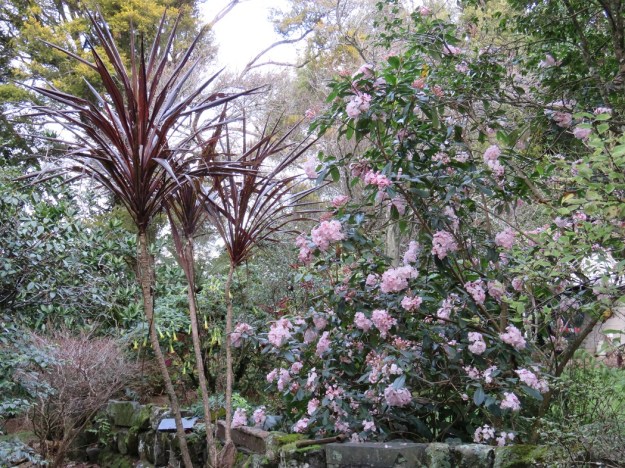
As usual, in this part of the world, we keep that clarity of bright light all year round. Not for us a watery winter sun held low in the sky and lowered light levels of winter gloom. No, we have bright sunshine and clear blue skies on good days where the only difference is the air temperature. And it is not so bad to winter-over in conditions where, even as I type with warm gloves (blood circulation to the arthritic fingers is not what it once was) in my office with the heater on, I know that after my 10am coffee, it will be warm enough outside to head outside and start on today’s project. And still we have a garden full of flowers.

Luculia Fragrant Cloud in full bloom

Luculia Fragrant Cloud with its sweet almond fragrance

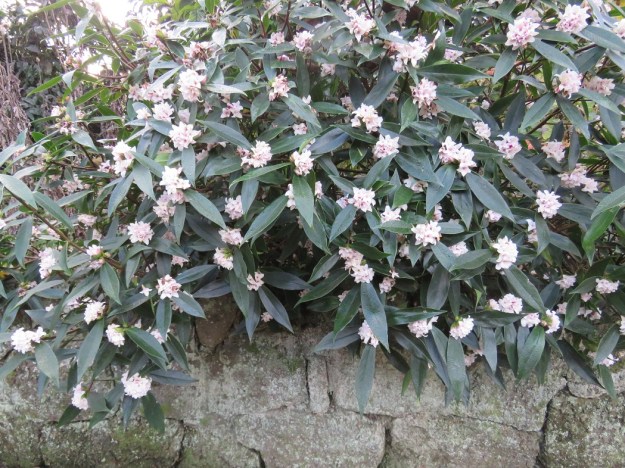
Mark’s Daphne Perfume Princess – we have rather a lot of these scattered through the garden

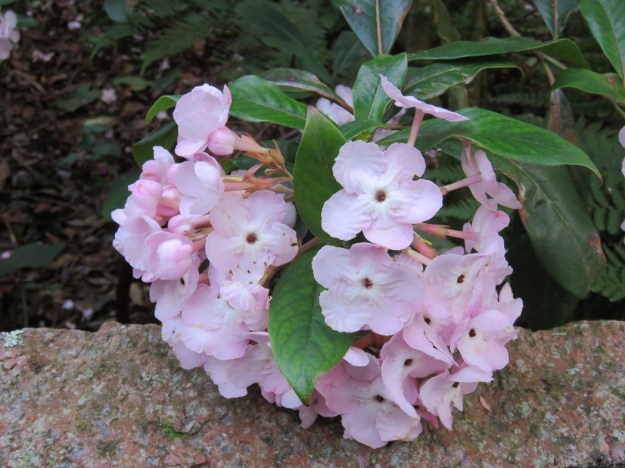
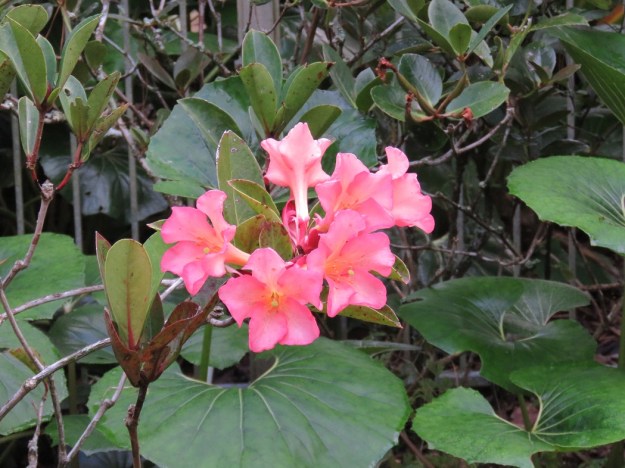
Vireya rhododendrons planted in sheltered positions throughout the top garden flower intermittently through the year but are perhaps most appreciated in mid winter


Epiphytes and ponga logs

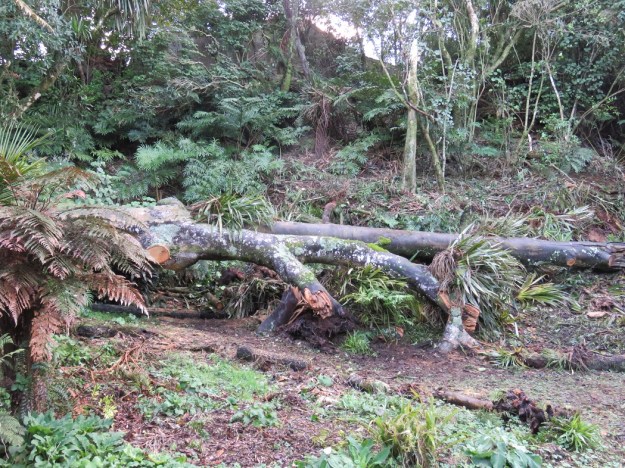
It took Lloyd 10 days of determined work to clear up after the fallen tawa tree. It was a big job. He has hauled out many trailer loads of firewood and dispersed most of the vegetation. What is left now will stay in situ and we will work around it. The trunk will outlive us.

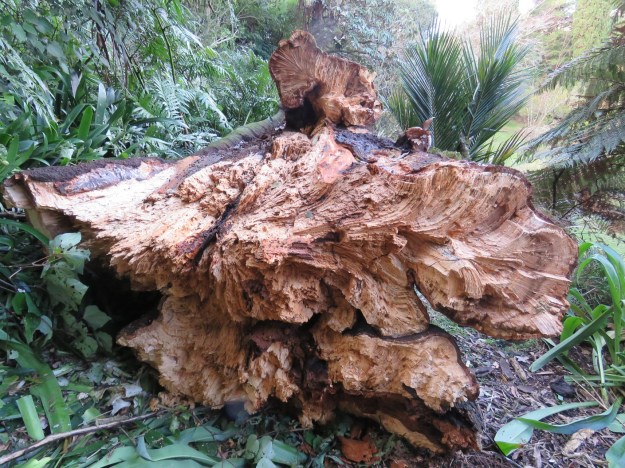
One path is still blocked unless you are of small stature and willing to crouch to pass beneath the trunk. It is likely that it will be left like that. Mark and I will continue to use the path but others will take the easier route. You can see the epiphytes still clinging on to the fallen trunk.

When I wrote about the weight of the tree coming down, Canadian gardener, Pat Webster, commented: “To think that the weight of epiphytes could contribute to its demise makes my head reel… this is not something I experience in Canada.” It hadn’t really occurred to me that this is a distinguishing feature of mature trees in this country but of course it is. The collospermums are not referred to as widow-makers for nothing. You would not want to be beneath a falling cluster but apparently a number of the early pioneers and bushmen were.

In New Zealand, we usually refer to our remnants of original vegetation as ‘native bush’. Sometimes ‘native forest’ but commonly ‘the bush’. Even forest may be misleading. It is more like cool climate jungle in reality – near impenetrable at times, almost entirely evergreen and layer upon layer of vegetation. Perfect conditions for epiphytes to get established and a frightening experience for those early settlers who arrived expecting something more resembling England’s rolling fields and rather sparse woodland.

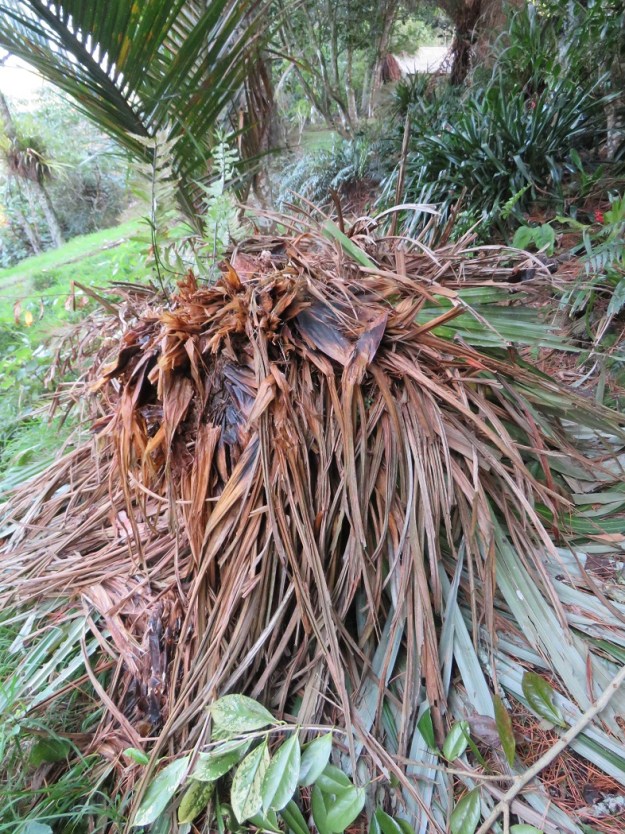
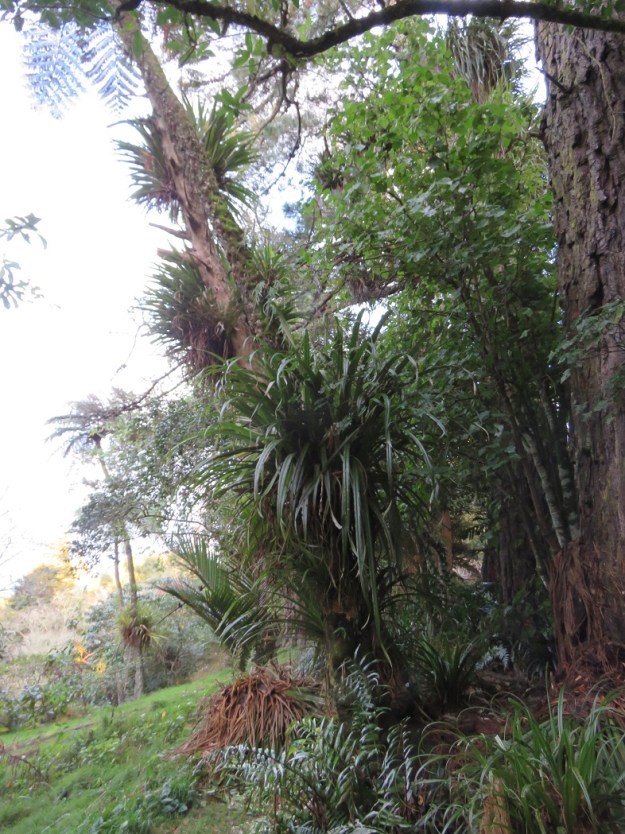
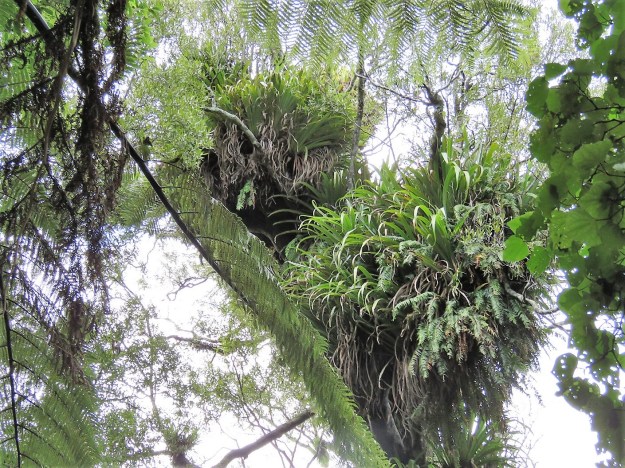
I was thinking of Pat’s comment when I came upon another clump of collospermum that is waiting to be dismantled and removed from a path. This fell off the stem of a tree fern – the very one in this photo which still has several remaining. The abundance of epiphytes is presumably an indication of our high humidity, regular rainfall, absence of both extreme cold and extended dry periods and the predominance of evergreens giving shelter.

The demise of the tawa tree brought down several self-sown tree ferns (known here as pongas). One or two it uprooted and launched into the air as spears – or maybe javelins. They embedded themselves into the soft ground and stream bed by their crowns. Lloyd asked me if I had plans for the ponga stems, which can last for many years in some situations. Well yes, I did.

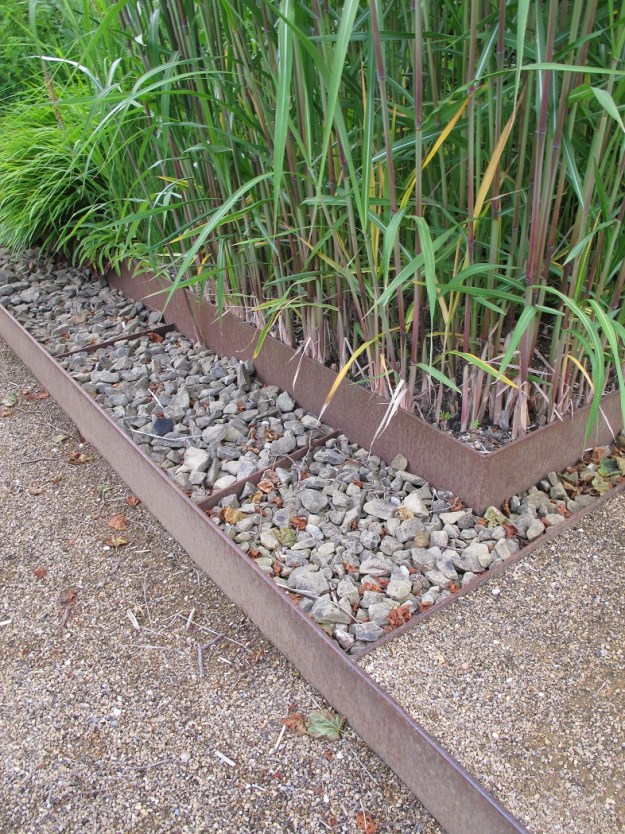
Very smart edging in an English garden

The new lily border needs an edging to keep the mulch on the bed despite the birds and rabbits scratching. I had wondered using the rusted steel edging, often referred to as Corten steel. I really like the look and it weathers gracefully, while, I understand, being flexible enough to bend around curves. I did a quick calculation of how many hundred metres I needed to edge the new Court Garden and to highlight the curves of the lily border and the caterpillar garden and looked on line. Yes, I really like the unobtrusive crispness of Corten steel edging but I don’t love it several thousand dollars’ worth.  That is a lot of money that I could spend on an overseas trip that will inspire me and bring me memories. Garden edging may please me but it is never going to inspire me.

When the compromise is tree fern or punga lengths

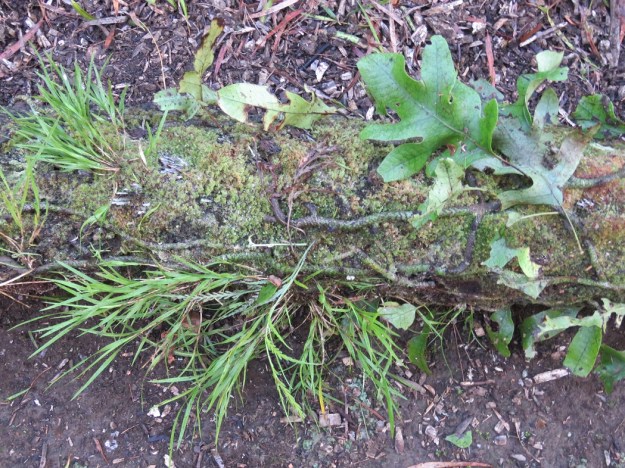
The ponga lengths will have to do and are arguably more suitable for our relaxed style. They come already furnished with an abundance of softening epiphytes and they are free. I will get over my passing disappointment at taking the easy option over expensive aesthetics.

Pong lengths softened with existing epipyhtes for added interest

Of gnomes and statues

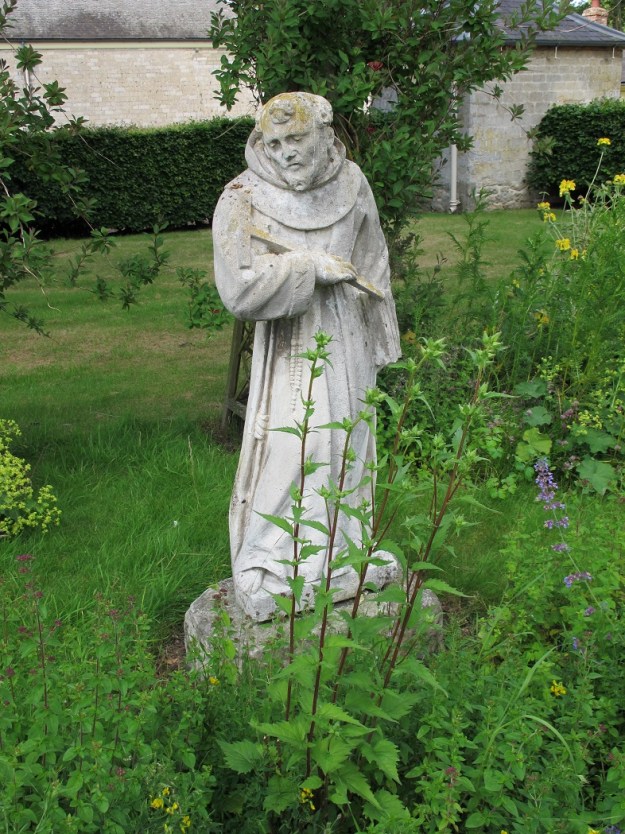
Context matters. I photographed this in a garden on a country estate in England. And it did not seem out of place at all there, to my eyes. But is it just a classier form of the garden gnome? 

There I was, bereft of ideas for a post this weekend when a visiting colleague gave me the best quote, which he attributed to the renowned Irish gardener, the inimitable Helen Dillon.

“Statues are just the gnomes of the upper classes.”

We laughed out loud. Of course we did. I did a quick search on line and I see Helen Dillon attributes that statement first, in 2004, to a garden visitor commenting on an aged statue in her garden – a semi clothed woman of Victorian vintage. More recently, she reportedly ascribed the comment “to a friend”. Maybe the visitor went on to become a friend?

We lack both gnomes and statues in our own garden but I have always had some fascination for a good gnome garden. There is one down the way, in my local town of Waitara. I have wondered about calling in and asking permission to photograph it but I just don’t think my motives are sufficiently pure and that makes it discourteous and lacking in respect on my part. You will have to imagine it, instead. It is a much-loved garden and were there a National Collection for gnomes and ornaments, this one would almost certainly qualify. I noticed it one time when the son of the house had carefully cleaned and repainted the entire population and that would be no mean feat, believe me. They gleamed in the sunlight.

Gnome gardens do tend to associate with succulents. I have no idea if this is by choice or chance on the part of the gnomes.

I could only find a single photo of a gnome in my extensive photo files. Clearly I need to rectify this.

Gnomes have a long and somewhat more celebrated history than their current position in gardens suggests. There is a wealth of information on line, should you feel compelled to find out more about gnome history. But there is no denying that their slide in social status has seen them end up pretty close to the lower end, if not right at the bottom.

Classical statuary in NZ gardens is more commonly of this ilk

Which brings us to the statues. New Zealand is no longer the egalitarian society many of us like to pretend but the differences are not so much one of social class as economic status. We are somewhat lacking in the upper classes in this country. Our colonial forebears were more interested in shaking free from the shackles of the class system back in the Old Country and few of the early settlers came from the gentry. There are a few aspirants that linger on, but they are more a curious sub-group than a social and political force. I am pretty sure that if you took a census of New Zealanders and asked what social class they see themselves in, over 90% would declare themselves as middle class. Just as ethnic affiliation is a matter of personal choice in this country (as in, people define which ethnic groups they identify with and there is no reliance on blood quantum), so too is social class. I think it is one of the nicer aspects of living in New Zealand.

Saint Fiacre, I think, again in a grand English garden but by no means uncommon in a miniature form in NZ gardens

But does a reproduction classical statue, or even a figure of Saint Fiacre, make you more middle class than a gnome? That is the question. Many people who would shun Snow White, Grumpy, Sleepy, Dozy, Mick and Titch in the garden clearly believe so. The evidence is there in many, many gardens. What it doesn’t do, in this far-flung island nation of the South Pacific, is make you upper class and that has nothing to do with the dollar price-tag on the statue. Wealth and class should not be confused.

I would suggest that the downward slide in social status of classical statuary continues to take place (prole drift!), just at a slower speed than the rapid descent of the gnome. In this country at least.

We don’t have gnomes in our garden because they only amuse us in other people’s gardens. We don’t have classical statuary because it seems irrelevant to the context of our garden. Each to their own. But we are still chuckling at the Dillon quote

Thugs in the garden

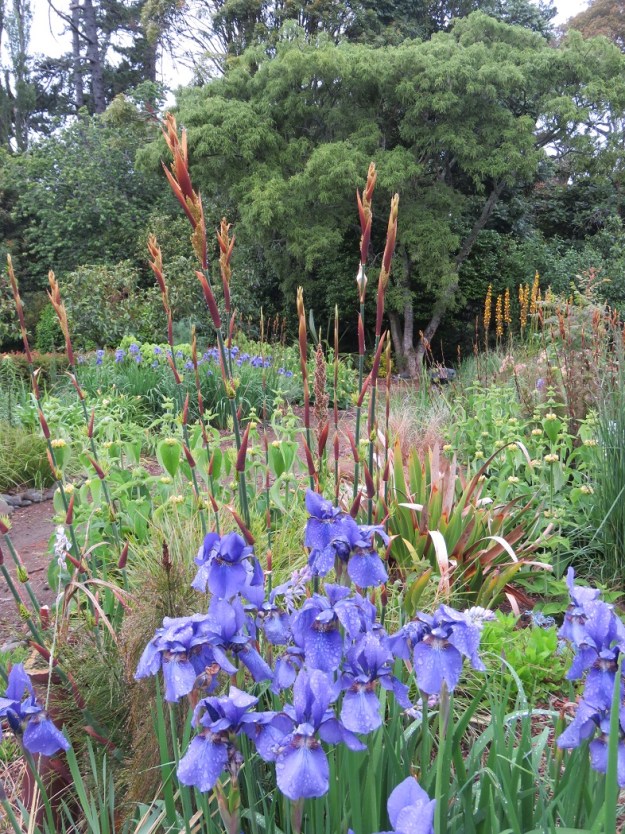
I am surprised by how strongly Iris sibirica grows in well cutivated soils and full sun. I have moved the discoloured Xeronema callistemon behind the iris to the right to a more protected position 

Thugs. Not trugs.

We are cautious here. We do not want to unleash plants that threaten to become weeds and therefore become maintenance nightmares. Some plants that set seed rather too freely (like Orlaya grandiflora, Verbena bonariensis and the perennial forget-me-not, Myosotis scorpioides) fall into this category, but they are easy to pull out if they are seeding in the wrong places. Other plants are far more difficult because they wriggle their roots below ground to entwine anything in their way – not unlike couch grass but considerably more decorative. The pretty, blue Salvia uliginosa and Japanese anemones are examples. These are the plants that we are really cautious about placing and controlling.

And then there are the thugs that stand four square and strong and will swamp anything in their way. Thugs need space of their own. Preferably permanent space because some of those thugs can get too large to handle easily in a short space of time. Learning to garden with sunny perennials is teaching me quite a bit about thugs.
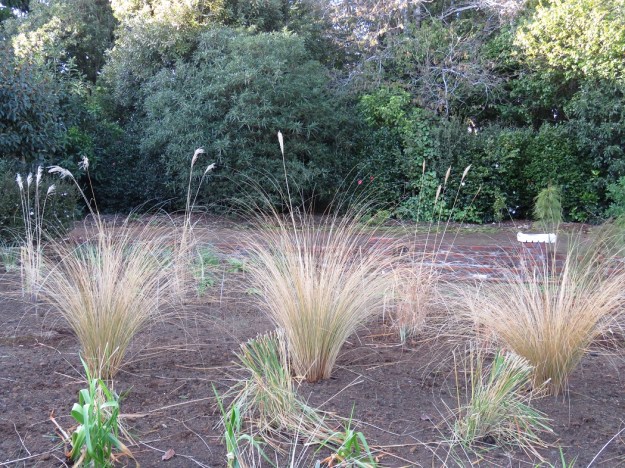
Chionochloa rubra, not a thug but seen to best advantage when allowed to stand in its own space

When I planted up the new Court Garden a few weeks ago, I removed such thugs from the herbaceous borders to relocate in the bigger space of the new garden. They are all good plants but way too strong for the congeniality of an herbaceous border. Calamagrostris ‘Karl Foerster’, Elegia capensis and the large growing salvias were the main thugs that I had used extensively. I also relocated all the Chionochloa rubra, not because it is a thug but because it needed more space to allow it to star in its graceful glory. And Stipa gigantea because it was underperforming in the herbaceous borders and I thought it might be better en masse in its own space.

Raiding the borders left some big gaps, and indeed some large holes. No problem, I thought. I had additional top soil to fill the holes and plenty of plant material to fill the spaces and it seemed a good opportunity to tweak a few areas in the borders which I felt were a bit messy – more messy-matrix than dramatic swathes of plants. I figured all I had to do was to consolidate the areas where I had tried to fill in spaces with additional material. A bit of fine-tuning.

I am sure most gardeners will understand that situation where what we think will be a relatively small project escalates into a major operation. This is one of that ilk. For I found the second tier thugs. These plants have only been in two and a half years and for the first two years, I was simply delighted at the quick result achieved in these borders started from scratch. Gardening with sunny perennials was a completely new experience and so rewarding. Yes, well….
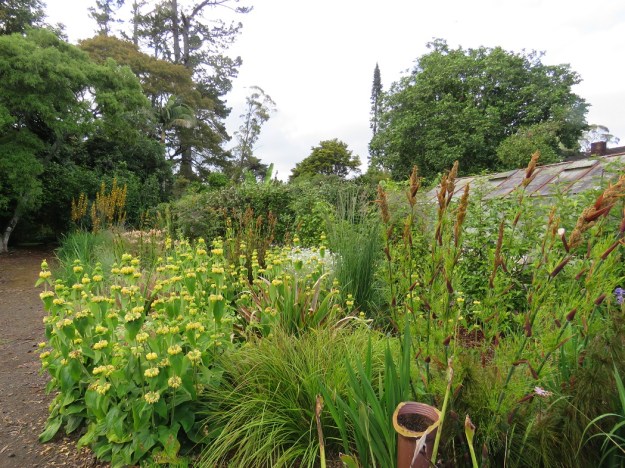
Phlomis russeliana to the left, Elegia capensis to the right with Lomandra ‘Tanika’ in the middle

I am now looking in askance at some of the plant selections. Great plants, but they are going to take a bit more work to keep them that way than I had anticipated because, boy, are they strong growers in this situation. Phlomis russeliana – Turkish sage – with its attractive, tiered yellow flower spikes, has quietly flowered away in our woodland without problems for decades. Moved into full sun and well cultivated soil, it has formed massive underground root systems and overgrown tops in a very short space of time. Iris sibirica – wow. Admittedly, I planted large chunks of it in the first place rather than separating the rhizomes and in springtime, it is simply glorious – so much so that I wanted to add new varieties and colours. Hmmm. All that foliage flops over in autumn, smothering nearby plants and it has to be cut back eventually because it doesn’t even pull off easily. I thought it would be a good time to dig and divide them. It took all my strength to get these plants out of the ground and I ended up with mountains of them. I replanted them as individual rhizomes and mulched with compost. In replanting the same area, I ended up scrapping at least two thirds of them as surplus. And each patch of maybe three or four square metres takes about a day and half to do. I have done four blocks, I have two left to do and I got rid of the seventh block entirely. That is a lot of labour input and time to just one plant type.

And the lomandras. These are tidy, Australian evergreen grasses. We only have two different ones and probably started with a single specimen of each because Mark never buys the same plant in multiples. They kicked around the old nursery area for years, unloved, uncared for, waiting for someone to find them a forever home. That should be a clue as to how tough they are.
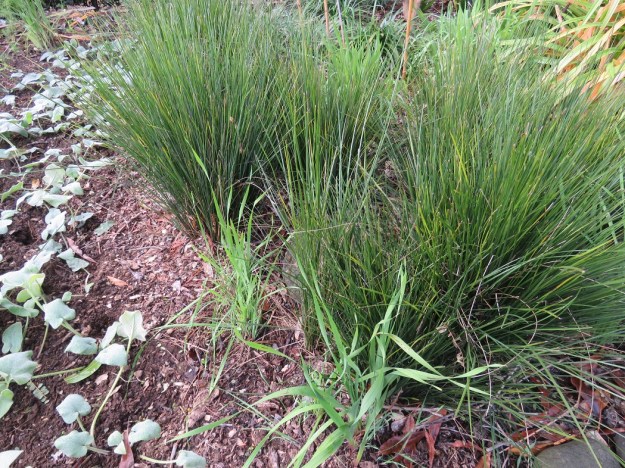
The compact dark green lomandra (with freshly divided phlomis to the left). It will be a named clone; it is just that we lost the name

The compact, forest green variety (name has been lost in the mists of time) is very good. And very well behaved. The very dark green colour contrasts well with everything, really. I wouldn’t mind it growing a little taller in this situation – it is only knee high – but it is very tidy. Not a wow sort of plant but excellent in the chorus line of back up vocals.
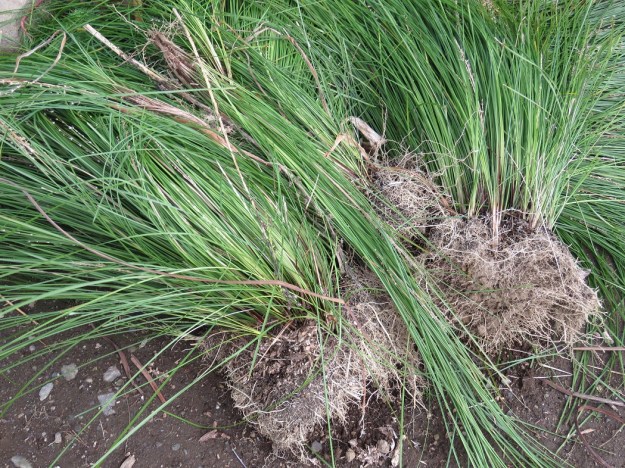
Too much Lomandra ‘Tanika’

The other one we have is Lomandra ‘Tanika’ which is widely marketed in this country. It is larger growing, sort of anonymous mid-green and what is called a reliable performer. It is one of those bullet-proof plants where you start, as we did, with one, put it in good conditions and next thing you know, you have eleventy thousand of it if you want to divide it. Enough to fill a traffic island or a motorway siding, even. It looks attractive in form for the first couple of years but if you don’t lift and divide it, it threatens to become an overgrown, overblown thug.
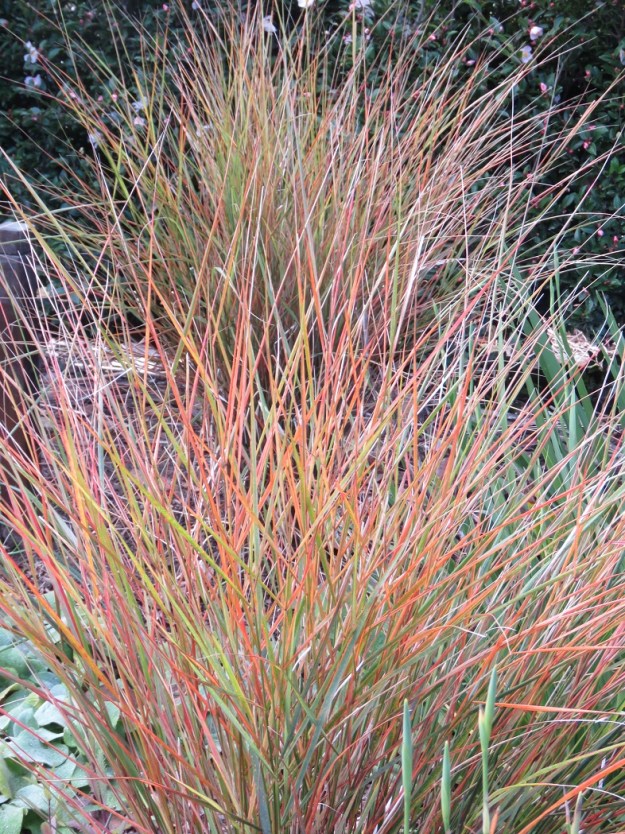
The autumn hues of our native Anemanthele lessoniana – also evergreen

I can’t get too excited about the lomandras. While they can be tidy plants, they lack the flower power of showier grasses and they are bit, well, utility. Space fillers. Evergreen and they stay looking the same all year round, which, I admit, some people see as a desirable trait. I am scaling back ‘Tanika’ – composting about 80% of it. It has another two years to win me over but at this stage, I think I would prefer to replace it with our native Anemanthele lessoniana which fills a similar niche but with more foliar interest and lower maintenance requirements.

What I thought would take maybe four or five days’ work – filling the gaps in the herbaceous borders created by my earlier raid – has turned into several weeks. I am quite happy doing this because it is an active learning exercise but I don’t think I want to be doing it as routine maintenance.

The lesson is that there is no substitute for trialling plants in situ and making some major calls when it comes to swapping some selections out for others.  It is why other people’s plant lists are a guide, not a manual, especially if they are overseas recommendations. There is fine line between plants that are sufficiently strong growing to hold their own in herbaceous plantings and plants that are too strong to grow in happy congeniality.

Oh, and give plant thugs the space they need or don’t use them at all. Otherwise they will swamp out other plants of a more refined disposition.

At least the Iris sibirica star in spring, even if they are going to take ongoing work to keep them from smothering their neighbours

Treemageddon. Again.

The snapped trunk measures about shoulder height on me

Trees have a finite life span. It is just that not many of them get to see out their allotted life span without being felled earlier in the process. This one just fell, completely rotten at the base. We didn’t hear it come down which is surprising in itself because it is H U G E. We assume it must have happened in the middle of Friday night’s storm which had very high winds and we were probably tucked up in bed behind our double glazing. It took me until Saturday afternoon to notice that there seemed to be a lot more light at the top of the hill behind the house.

A natural throne remains

It is a tawa, a native tree, botanically Beilschmiedia tawa, a member of the lauraceae or laurel family. What makes it special is that this tree almost certainly pre-dated European settlement. This area was predominantly tawa forest but had already been largely clear felled by the time Mark’s great grandfather bought the land around 1870. The earliest European settlement in this area took place around 1850. This is one of a just a few remaining tawa trees sitting on a steep bank, now part of the garden.

Epiphytes galore, from February last year

I photographed it earlier because of the prodigious quantity of epiphytes that had built up over the years. In our mild, humid climate, epiphytes thrive. Much of this lot was Collospermum hastatum but these long-established epiphytic colonies are an entire matrix of naturally occurring plants. The problem is that there is a huge weight in them that eventually brings down the branch, and sometimes the whole tree in the process. It is just part of the cycle of nature.

This cycle of nature has done quite a bit of damage but only to the understorey plants. While tawa is another of our native hard woods, we can’t get the timber out because of where it is. It will be the usual process of clearing the debris, getting out what firewood we can and stowing all the vegetative waste neatly in situ. The main trunk will remain where it is, embedded on legs formed by its own branches driven deep into the earth and it will outlast us. We will have to re-route a garden track so that it passes beneath the tree.

Given that these clean-ups fall mostly on our man, Lloyd, Mark quipped that maybe we should be building him a little shelter down there and send him out each morning with a thermos. We may not see him for several weeks.

Over morning tea, we remembered that philosophical question: “If a tree falls in a forest and no one is around to hear it, does it make a sound?” Now there is a very humancentric question. We, the closest humans, may not have heard this tree fall but we are by no means the only living creatures with the capacity to hear sound. I am sure the sleeping birds, probably rats, mice, possums, lizards and smaller creatures of nature heard it and felt the impact when it fell.

As it fell, It uprooted and sent various tall ponga (tree ferns) spinning in the air, to land some distance away