 The caterpillar garden has been bringing me much delight this summer.

Starting to lay the area out in 2016 and marking the basket fungus shape
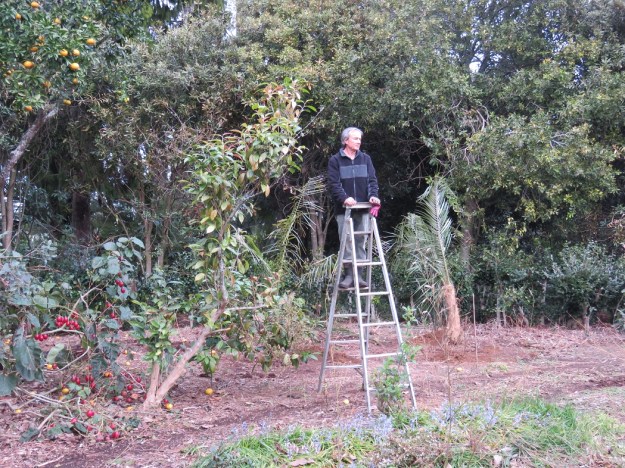
It is a flat area. Mark had to get up the ladder to get a view
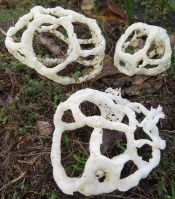
Basket fungi
We refer to it as ‘the caterpillar garden’ but we really need to come up with a better name. It is the caterpillar garden because of an episode of BBC Gardeners’ World we watched several years ago. English designer, Tom Stuart-Smith, went into Carol Klein’s garden and clipped her buxus hedge into his trademark, undulating, wavy caterpillar style. That was the starting point for Mark’s vision for this particular area – a central backbone in clipped, undulating caterpillar-style but planted in a small leafed Camellia microphylla rather than utility buxus. He laid it out in pentagon shapes and I wondered about calling it ‘the pentagon garden’ but I would need to wait for a new president of America to go with anything that carried such strong, albeit irrelevant, connotations. Now Mark is wondering about ‘the basket garden’ on account of the basket fungus that guided his layout but that is a bit obscure.
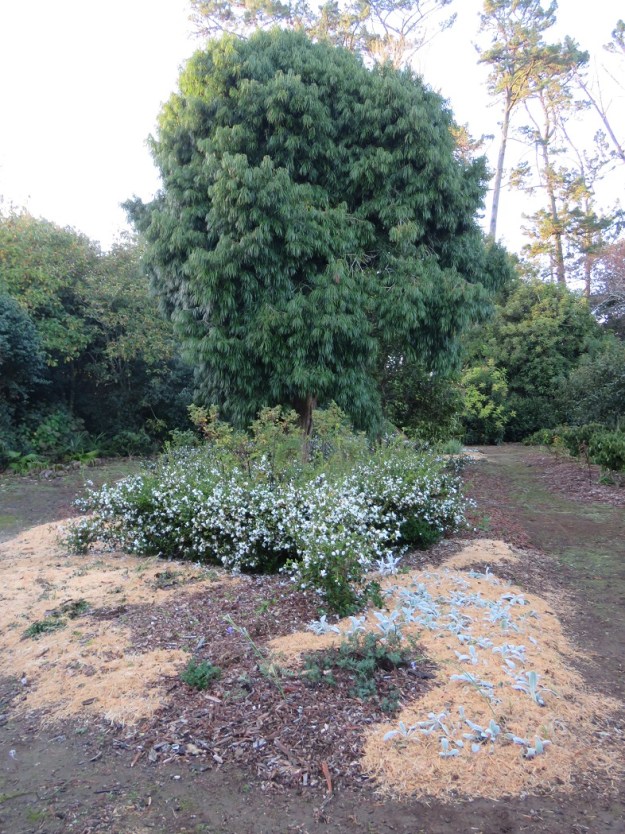
May 2018, a few months after planting. The Podocarpus henkelii in the centre is such a handsome tree that we are keeping it and working around it. The little white flowers are Camellia microphylla in bloom in early autumn.
We both laughed when a Facebook page of Broughton Grange’s parterres came through on Facebook this week. Lo, there was Tom Stuart Smith’s undulating caterpillar hedging, filled with a tapestry of plants. Same, same but different. I think his shapes are hexagons, not pentagons and he has closed each shape rather than opening bays to the side paths as we have. He has gone for a different colour palette too – bright reds and yellows rather than our softer hues of blues, whites and lilac. And he has put the taller plants in a separate border to the side of the parterre rather than having them rising out of the central enclosures as we have. But we feel we are in excellent company with our caterpillar garden. We were a bit surprised that a small snippet of inspiration could see us end up at a similar destination several years later.

Very late spring 2018 – white iberis and Brodiaea ‘Queen Fabiola’ with the blue perennial forget-me-not (Myosotis) in the background
I wondered about appending a plant list to this post at the end, just in case any reader wanted to see what we have used but these things are never that simple. Even mass planting for impact and restricting the selection for each separate enclosure to between one and three different plants, I have kept adding to the plant palette to try and extend the seasonal interest and a quick count came to about fifty different plants so far. So I won’t be listing them. I can tell you that it gets us through three seasons with different plants being a focus but it is never going to be a great mid-winter garden. I would also comment that we could not afford to garden on this scale if we relied on buying the plant material. It takes many (many, indeed) plants to fill such an area of around 200 square metres. We have drawn on plants we already had in the garden, plants we have been given and trialled in Mark’s vegetable and meadow areas and plants we have raised. In fact, while it has taken plenty of time and effort and a lot of thought, the dollar expenditure currently sits at zero. We are quite happy to pay for special plants or ones we need to get us started, but this is not a garden for special plants. We are after mass effects and colour blocks.
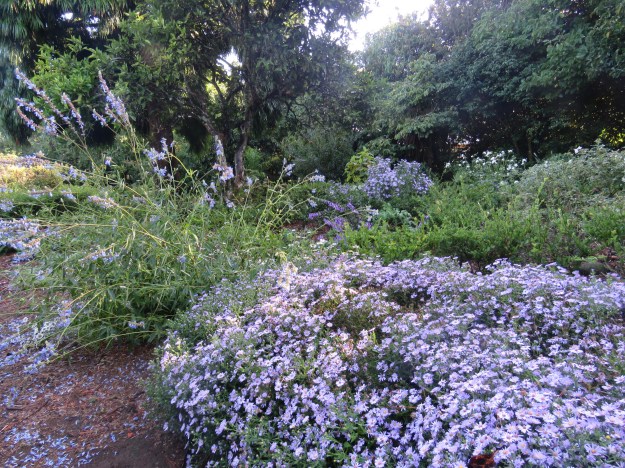
The Salvia uliginosa is too floppy to be in an outside bed
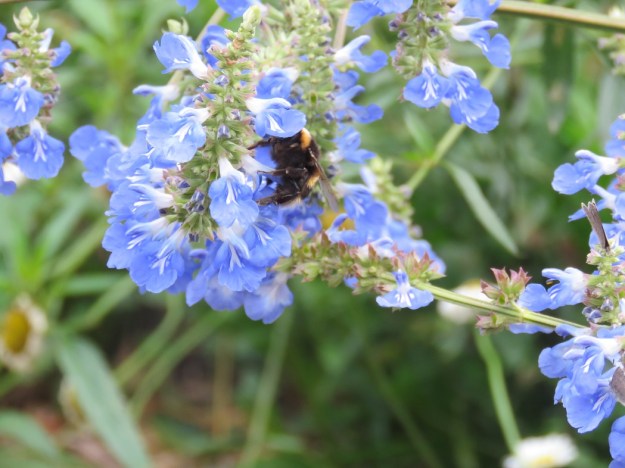
This is now a garden filled with life, particularly butterflies and bees
This has been its second summer. It was patchy last year with big gaps. Some of the plants are smaller growing and more compact so take longer to spread and cover the area. This summer, I have felt it is coming together as we hoped. I have just completed the first – and most major – reworking that is often necessary when the reality doesn’t match the vision. The pink shades had to go. Too pink and detracting from the spectrum of blues and whites. Salvia uliginosa is too tall where I had it and needs to be moved – but placed with care because it does have dangerous, invasive instincts. I am quite happy doing the fine tuning. For me, it is worth the effort.
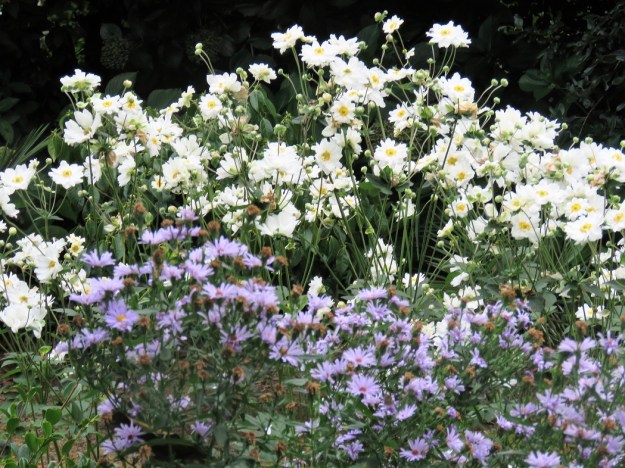
I love the white Japanese anemones and blue asters currently in bloom
I have high hopes for next year when I think it will all come together as we envisage it. And we may have the paths laid and quite possibly some garden edging to emphasise the curves. I was going to avoid edgings if I could but I think this is a case for gently rusting Corten steel edging defining the lines and keeping the mulch from the paths. Not tanalised timber ply, not in our garden.
It feels as though this garden has taken longer to get to fruition, but what is a few short years in the greater scheme of things?
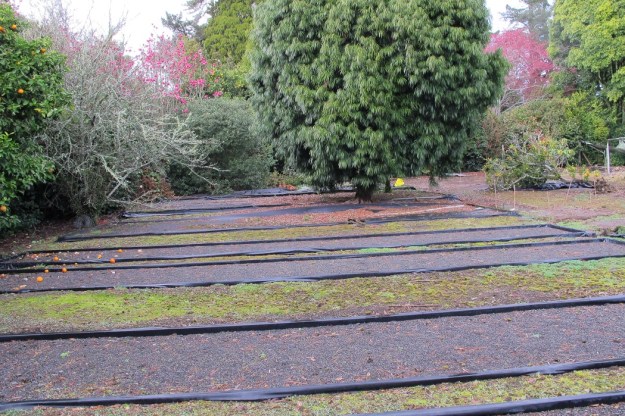
This was back in 2012 when we emptied out the capillary beds (which had been built around the Podocarpus henkelii 20 years earlier).

In 2014, we cleared and re-contoured the area. Same tree in the centre. Spike, the dog at the front is still with us but distinctly elderly and very deaf these days,

And this week. Filling in colour blocks with plants.
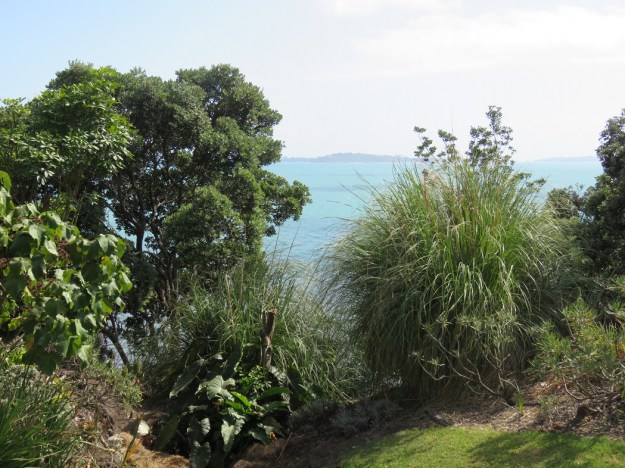 We visited a Mellons Bay garden which had a location and view to die for. It is still very much in development and the owners are making the most of creating a garden space that maximises its remarkable location. It was there that I encountered a grass I had not seen before.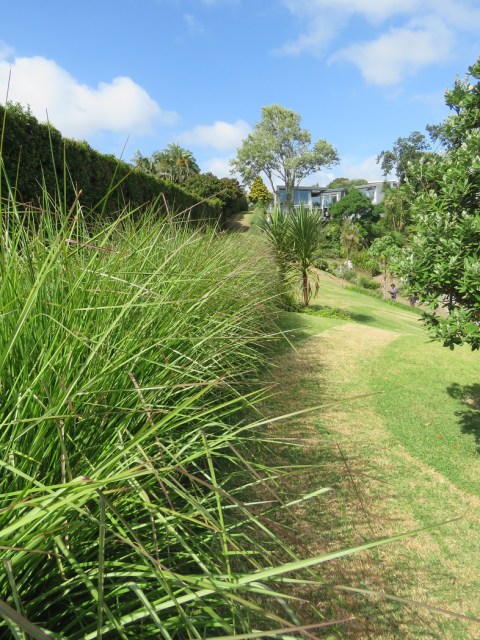
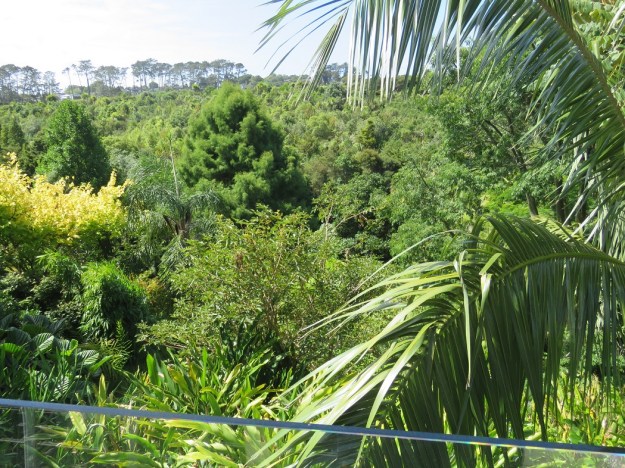
 Added to that, the row of houses have maximised what was once more or less wasteland that runs along the base of the properties. You wouldn’t want to go swimming or paddling in this water (I am guessing most of it is stormwater, supplemented by springs), but it is a delightful, sheltered common space at the end of the gardens.
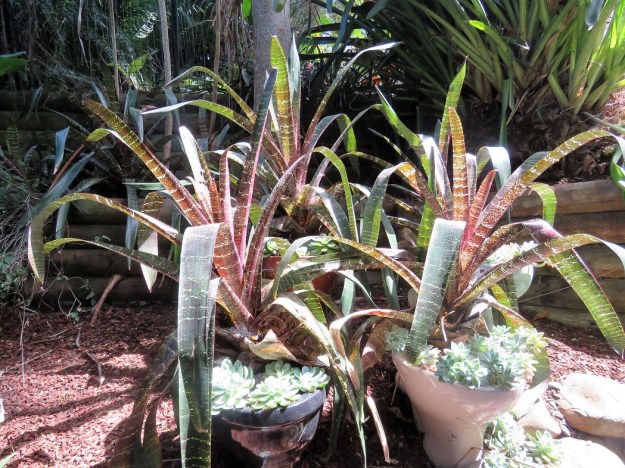 The light was too bright and the shadows too deep to do justice to this cluster of bromeliads but I particularly noted it because it was a counterpoint to the vibrant and bright use of bromeliads mentioned in the first post of these two. This was restrained and understated but maybe more charming for that.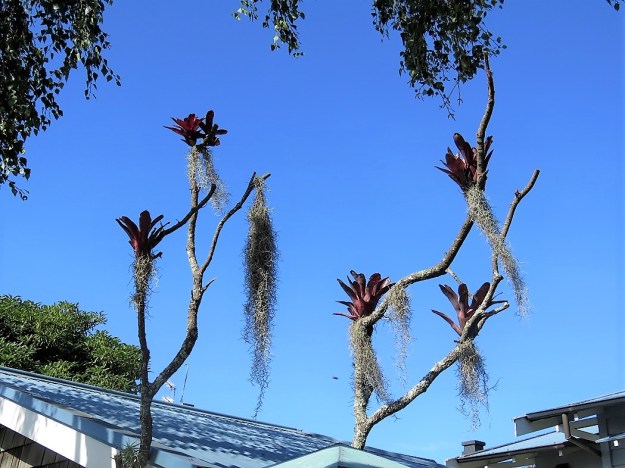
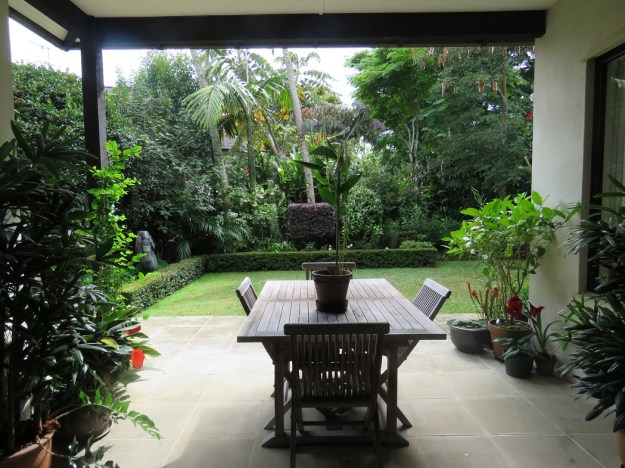
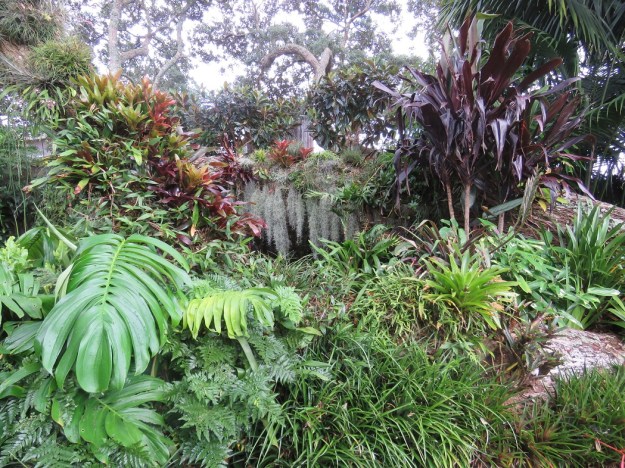
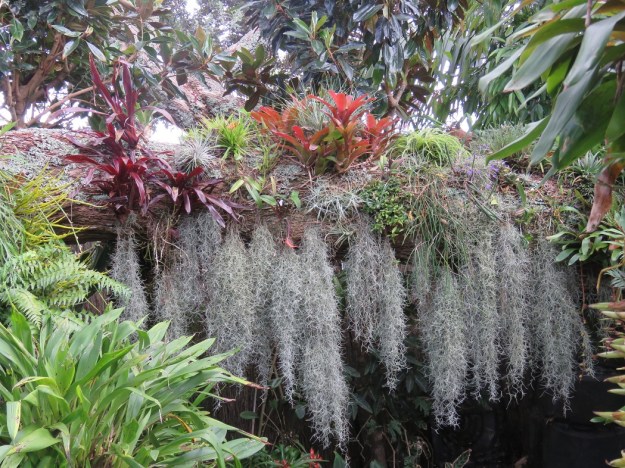 Despite its small size, good architectural design has given it total privacy and a good garden design has given it a sense of containment without being cramped. The level of refinement and detail is exquisite. The foliage is layer upon layer of detail without looking cluttered and the level of plant interest is extremely high. Wherever I looked, there was more fine detail to be uncovered with just the right amount of exotica. It takes a skilled eye and sure hand to be able to achieve that level of detail without it looking confused.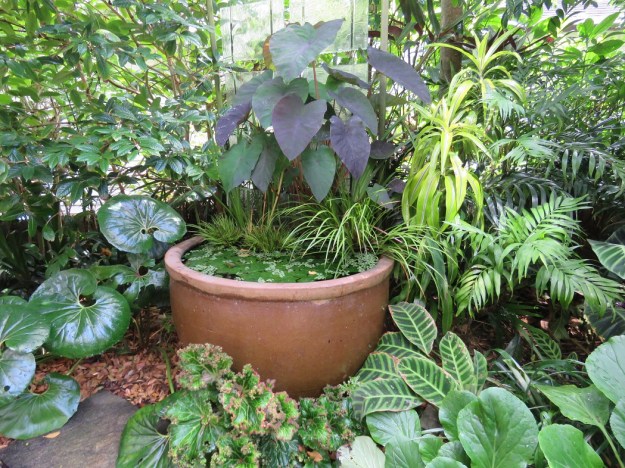
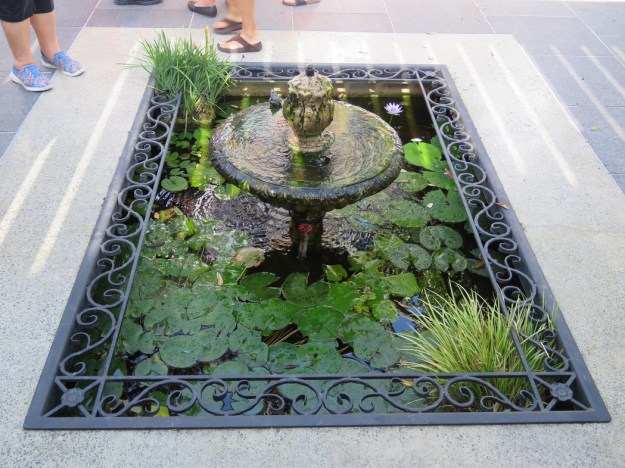 I will just offer you edited highlights, starting with this tiny garden (well, tiny by my standards) where the backyard pool was both pretty and thoughtfully constructed. In a very tight space where the water feature is within the outdoor entertaining area, safety is an issue and that outer decorative grill should give warning to most guests who may take a backward step without looking.
 I am always interested to see where the work and service areas are contained in small gardens. One of the aspects of growing many plants in containers that is rarely shown on TV is that a work area for repotting is needed. I nodded approvingly at this one – attractive but functional and pleasant to use.
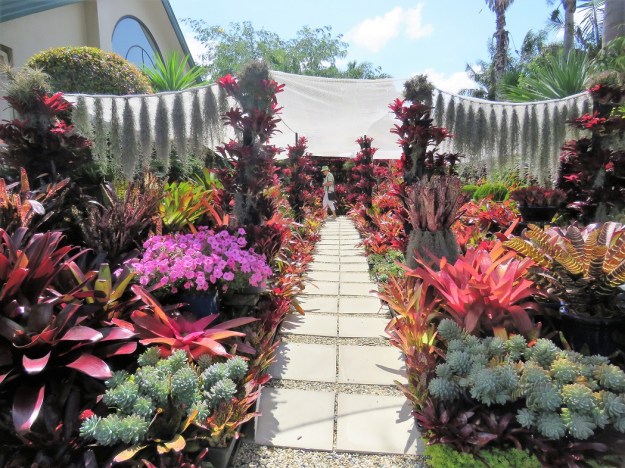 I failed entirely to find the work area for this garden although I think I read on their information sheet that it is screened from view out the back somewhere. I wish I had spotted it because I would have liked to have seen what the scale and set-up was. The very bright light conditions and crowds of people mitigated against getting photos that do justice to this garden which is a pity because it was a truly remarkable example of a garden of obsession. Whether I like it or not (and it was not my style at all) is gloriously irrelevant. I was in awe at the scale and the attention to detail. It was absolutely immaculate down to every last plant – the vast majority of which are in pots. Anything that looks a little marked or ‘off’ is clearly whipped out the back and replaced with a healthy substitute. It is all hand-watered, by owners who understand the differing water needs of each and every plant. It is also vibrantly colourful.
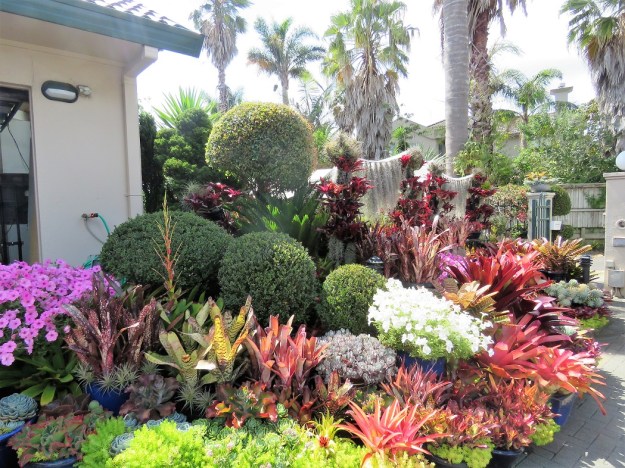 It would not be out of place in the book ‘

 A cautionary tale this weekend: last week my foot encountered a stick. The skin abrasion was so minor that I didn’t worry about it, though when it started to show signs of infection rather than recovery three days later, I reached for antiseptic salves and bandaids. Two days on from there, when my whole foot was swelling rapidly, I took advice and headed in for urgent after-hours care at the hospital. Yup, cellulitis – the bacterial infection was spreading rapidly into the surrounding soft tissue and skin.










 Tikorangi The Jury Garden