
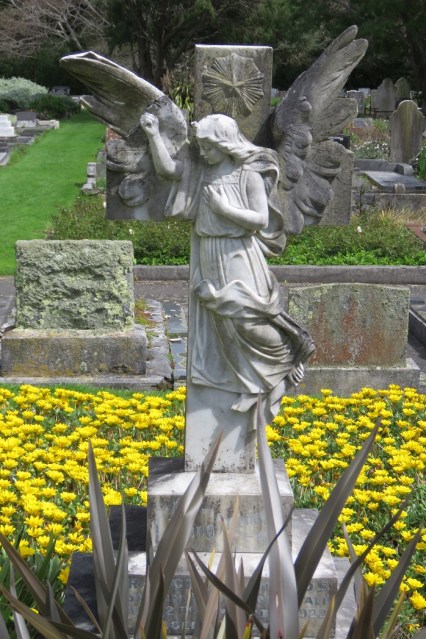
I do not make a practice of visiting graveyards and I have never been to New Plymouth’s cemetery before, despite living in the district for over 35 years. But a friend was insistent that I should go and look at the older sections. At this time in spring, it was simply charming. In my very limited experience, graveyards tend to be either of two types – very austere and plain, managed by tight local body regulation with the weedsprayer and lawn mower to hand. Or left to their own devices so that, over time, they progress from neglect with weeds and rank grass to that sense of nature reclaiming aged graves.
 Somebody, or probably several living bodies, must have lavished a lot of love and care on this section of the graveyard over many years. It was so well done and individualised that it did not have the look of institutional management. Nor indeed of relying on family or descendant management of individual graves – though there were some examples of these.
 It was the wide range of plants used, the attention to detail and the many delightful little pictures that were created as a result, the careful colour toning in some areas and the soft-edged maintenance that made me think it was not chance that created these scenes. Many are created as individual small gardens for a specific grave. I could not help but notice that the space of an individual grave back when the 1800s turned into the 1900s was considerably larger than a modern grave; family plots were larger again.
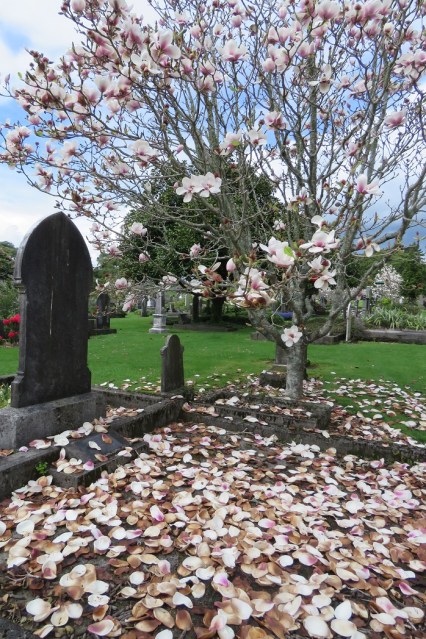
Mark tells me there are some Jurys buried in the graveyard (well, he mentioned his Uncle Les, the camellia breeder, but Jurys are so numerous that I am sure there must be many more). Having seen mature specimens of Jury magnolias felled to make way for the new road bridge at the entry to the cemetery area, it was a surprise to see more recent plantings of Felix’s magnolias scattered through the cemetery – several specimens each of Apollo, Milky Way, Athene and Iolanthe. As he looked at my photos, Mark commented that he felt the Jurys had a fair representation there.
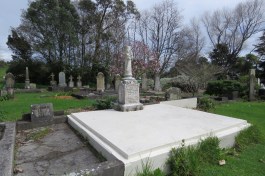
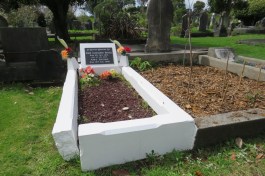
There are small businesses working in the area of grave restoration. I know this because I have been contacted by one who had looked at the Jury family graves in our little, local Tikorangi cemetery. I ascertained that their services were limited to cleaning the headstones and decided that if it really worried us, I could pop along myself with a scrubbing brush and some water with bleach and detergent. In the end, it comes down to personal choice how one wishes the graves of one’s ancestors to look to the public eye, but there is a certain jarring element to the restoration of some graves in the gentle environment of the old cemetery.
 For spring scenes, the cemetery was unsurpassed. I must go again in summer and see if the secret hands have wrought similar magic into the next season.
 If you are on Facebook, I have posted an album of additional photos to our garden page. I took so many and that medium is better for multiple photos.
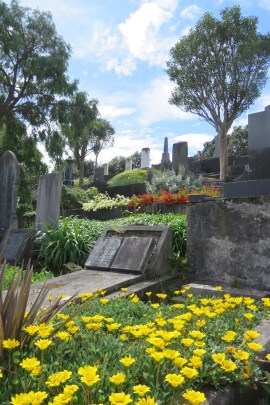
Looking left, the hanging gardens of New Plymouth
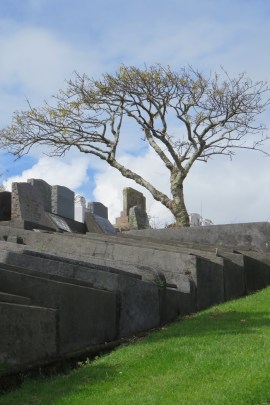
Interesting austerity to the right, under the sparse umbrella of a kowhai tree
 A sign of an interesting book is when you find yourself keeping it to hand so that you can refer to it in numerous conversations. Not a showy book, in this case. There is a not a photograph in sight and the production values are what might be called utility, so it fails to fit the traditional definition of a coffee table book. Perhaps the descriptor of ‘aircraft reading’, or even ‘loo reading’ captures the format – short pieces between about 700 and 1200 words long which can be read in a few minutes. But for the last few weeks it has been sitting close to hand as we discuss many of the points made in its text.
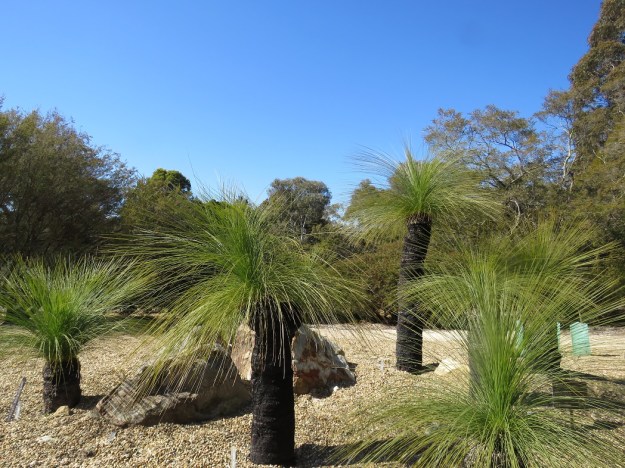
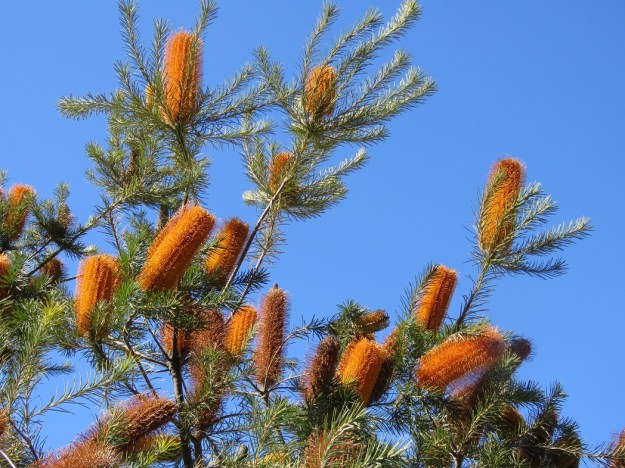
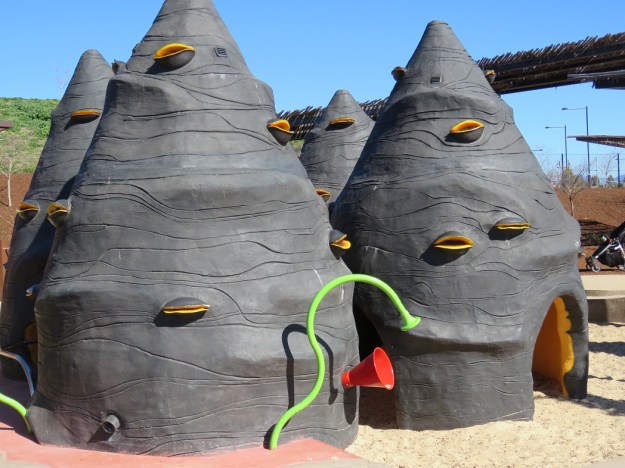
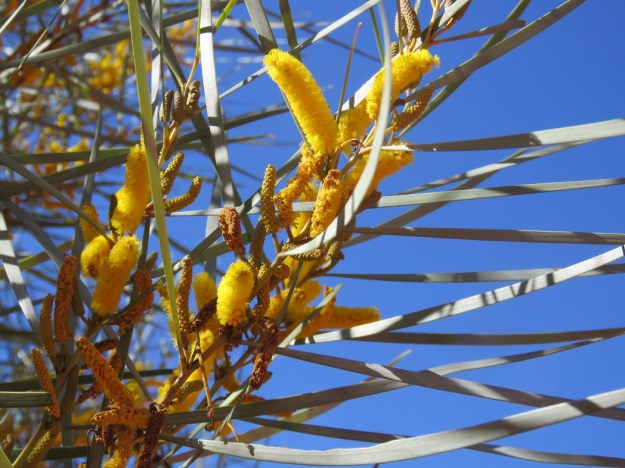
 It was a second visit to the National Arboretum in Canberra that had me thinking along these lines. This enormous project, encompassing 250 hectares, is a response to the devastating bush fires of 2003 which burned out the area. It is a grand vision, still in its infancy, that will create a legacy for generations to come.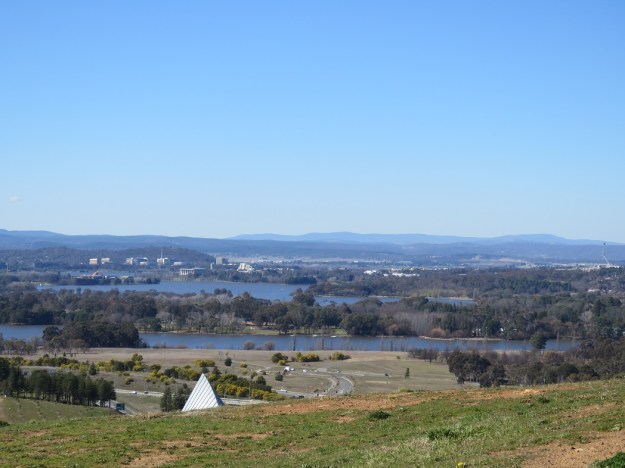


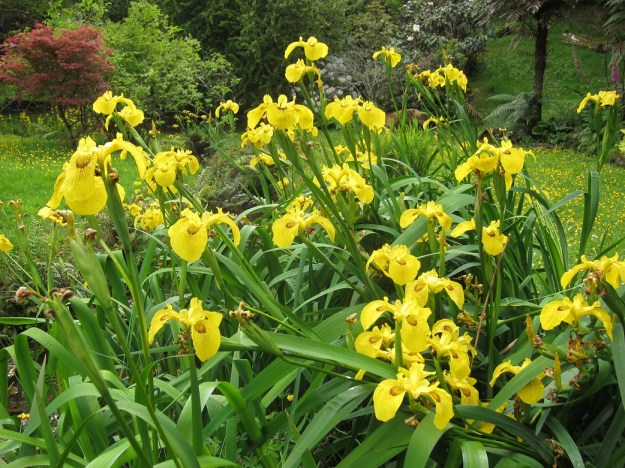


 We are enjoying the water meadow effect we are achieving in that area of the garden.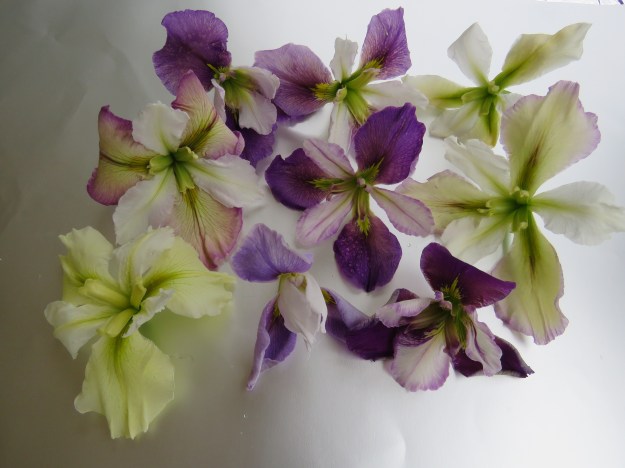
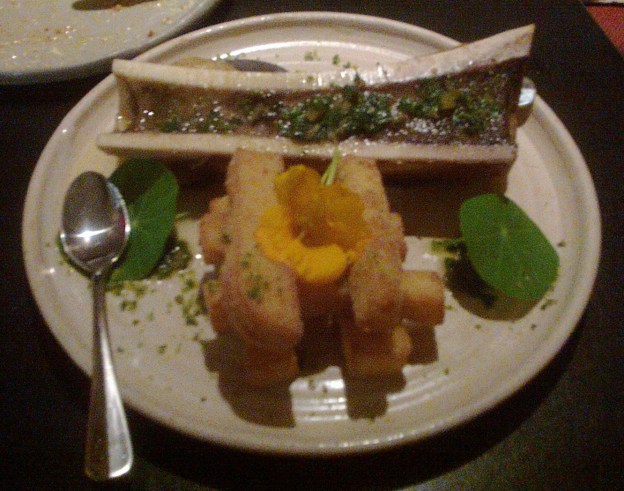 Their menu describes the dish as “Brussel sprouts** with almond tarator and zhoug”. I had to google both tarator (usually a yoghurt, cucumber and walnut based sauce) and zhoug (hot green spice paste of Yemeni origin). From memory the sprouts were not boiled or even steamed. They may have been lightly roasted.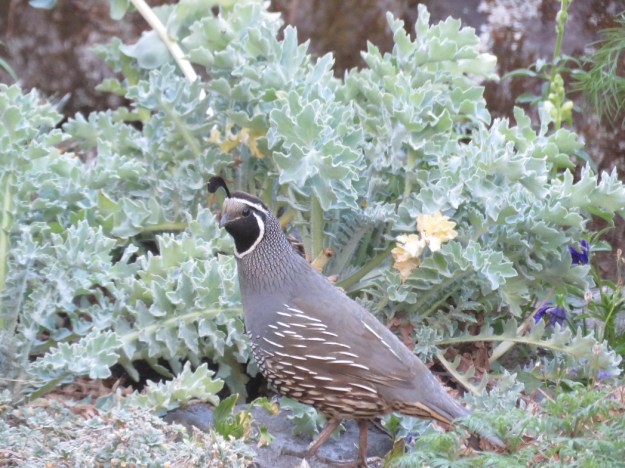
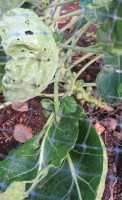 Alas, my plans to attempt some re-creation of this taste treat at home this season have been thwarted by our resident Californian quail. We are very fond of these charming birds which are slowly increasing in number but have no intention of consuming either the birds themselves or their lovely speckled eggs. When you have watched Mama and Papa Quail herding their young, which resemble fluffy little bumblebees, around the garden, the thought of putting them on the dinner plate is unimaginable. But it was a close-run thing when a mob of them found a way into the protective cloche Mark has placed over this season’s crop of Brussels sprouts. The crop was decimated and the few we have salvaged are poor, shredded examples of this vegetable.
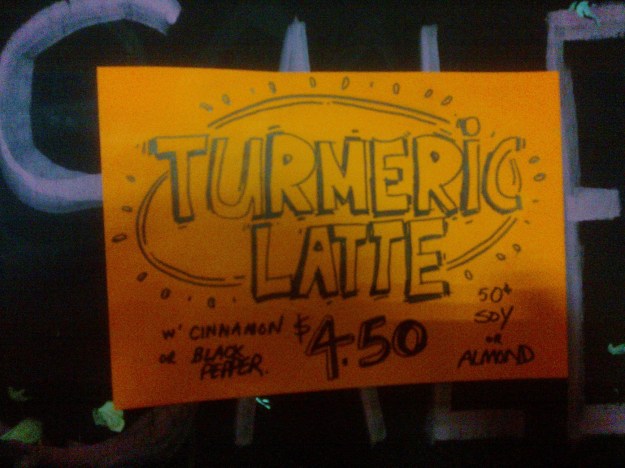 I give you the ultimate example of Bondi hipsterdom in Sydney.
 And the somewhat quaint example of hipsterdom in Canberra. No, I do not think pulling out the stained, blue woolly hat that my late mother in law used to adorn her teapot will achieve the desired level of hipsterdom when I lack the gluten-free friands as accompaniments.
 Tikorangi The Jury Garden