

I haven’t posted about the petrochemical development all around us for some time. It is not that it has gone away. No sirree, not at all. It became a situation where I had to change my personal coping strategies. Being asked to contribute a piece of writing for the ‘Frack Off’ exhibition that opened yesterday was a poignant experience, focusing my thoughts on what has happened in the area I call home and the extent of the personal impact. Which is why I titled this piece:
It’s very personal
I live in a place more beautiful than I ever dreamed possible. It is also a place that is now in the evacuation zones for two separate well sites and not so far from another dozen sites on this side of the river. Fracking and petrochemical development is very personal for me. I live with it day and night. Every day and every night.
From 2012 to 2014, I worked with others campaigning for better management of rampant petrochemical development, fighting to save what remains of pre-industrial Tikorangi, the area where I live. It nearly broke me.
My adult daughter sent me an iPod so I could listen to music and shut out the environmental noise when outdoors, as I am most days. How ironic that one of my favourite tracks was the original version of ‘Ring of Fire’ at a time when we often had only one quadrant of the night sky that was not lit up by gas flares.
Oddly, it was a single word – solastalgia* – that enabled me to refocus my life and to learn how to live with the changes beyond our garden boundary. Naming a condition is a remarkably powerful tool and the discovery of solastalgia made me realise I was not over-reacting or going mad. I was in grief, desolated even.
I circled the wagons and looked inwards. Moving is not an option for us. The family roots go very deep here, back to 1870. Quite simply, this is our place to stand.
Petrochem is a sunset industry exploiting a finite resource. I hope I live long enough to see the day the companies exit Tikorangi. But if I am not alive, others will be resident in this place where I currently live. They will see the return of dark nights, unlit by the burning of gas flares and high intensity site lighting. They will listen to the return of silence – the absence of huge volumes of heavy transport, generators priming up to frack, the underlying roar of the gas flare, the sound of a drilling rig, the frequent helicopters and all the clamour that accompanies the fossil fuel industry.
Beyond the boundaries of our property, Tikorangi has changed forever, despite our efforts from 2012. The raising and strengthening of the roads for heavy transport has removed any vestige of usable road verge. The many installations above ground may be removed – the well sites and the pumping stations with their hostile security fencing, maybe even the high-tension pylons and lines. But the network of pipelines below ground, crisscrossing almost every local road and at times running the length of the road beneath the seal, will presumably remain.
None of us can know the long term impact of frequent fracking and deep well reinjection. Will the contaminants find their way closer to the surface? We have to hope that the companies and regulators are correct when they claim it is safe but this is recent technology and the bottom line is that nobody knows.
In many ways my world has grown smaller. I used to look beyond those circled wagons to the wider community. I learned that in order to survive, I had to narrow my focus. At least this little area where I stand, ringed by trees, can endure.
Solastalgia “It is the ‘lived experience’ of negative environmental change. It is the homesickness you have when you are still at home. It is that feeling you have when your sense of place is under attack.” (Glenn Albrecht, philosopher).
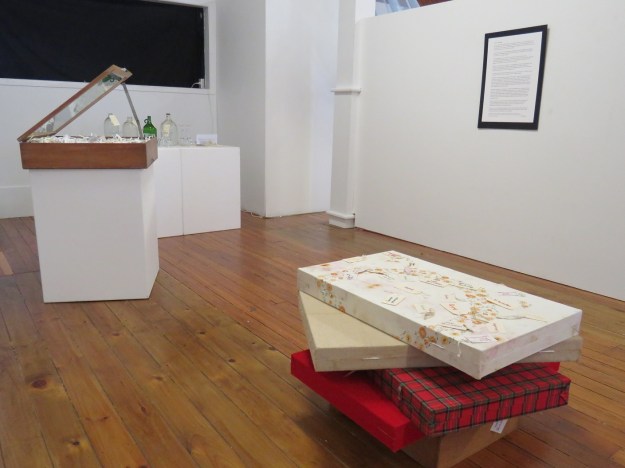
Our Tikorangi corner of the exhibition
I feel honoured to have been invited to contribute to this exhibition – awed even, to be in the company of such New Zealand literary luminaries as Elizabeth Smither and David Hill, let alone the visual artists. But our Tikorangi corner was haunting for me, for we are on the front line.
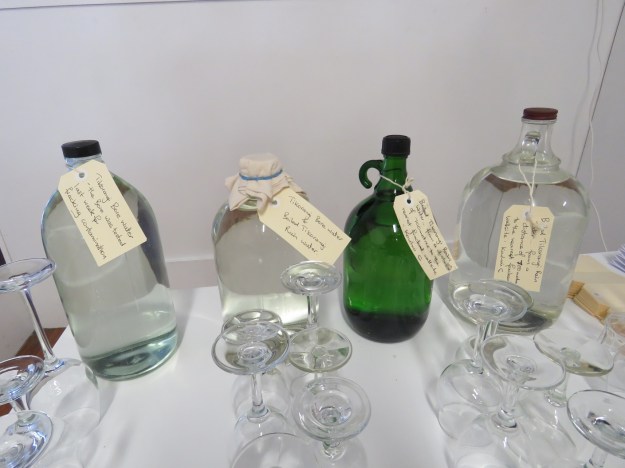
What can I say? That is our tap water to the left.
Fiona Clark is both a good friend and a neighbour. She is best known for her photography and has an exhibition opening later in April with American artist, Martha Rosler, at Raven Row in London. For ‘Frack Off’ she chose to go with an installation rather then photography and video.
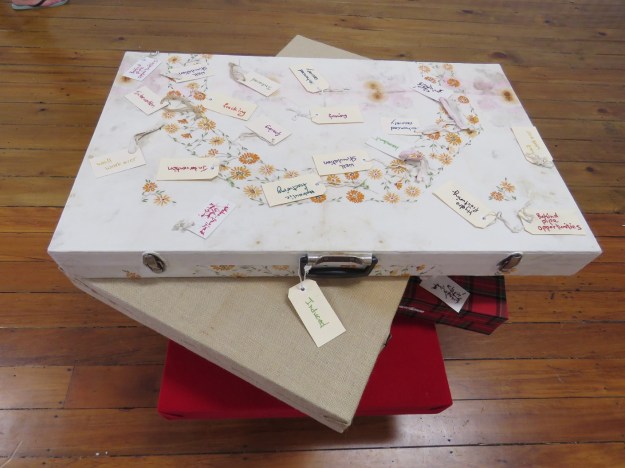
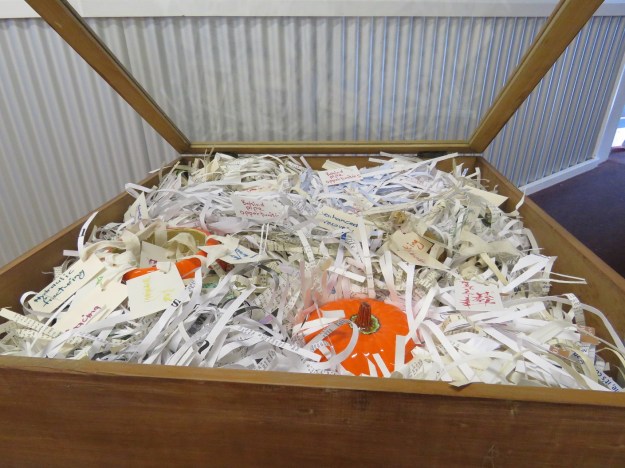
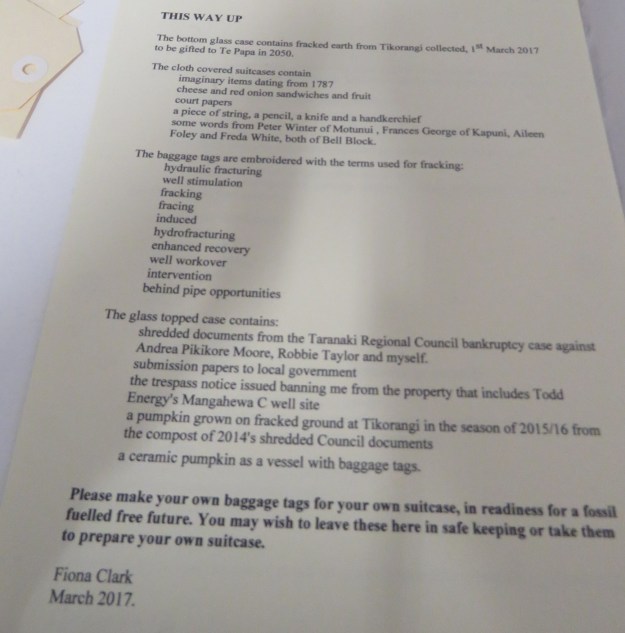
I add Fiona’s words, for those who wish to understand the significance of her display cases.

Oh the irony, the irony, to walk out of the Frack Off exhibition and there, all along the main street of New Plymouth are flags and banners welcoming the upcoming petroleum conference. 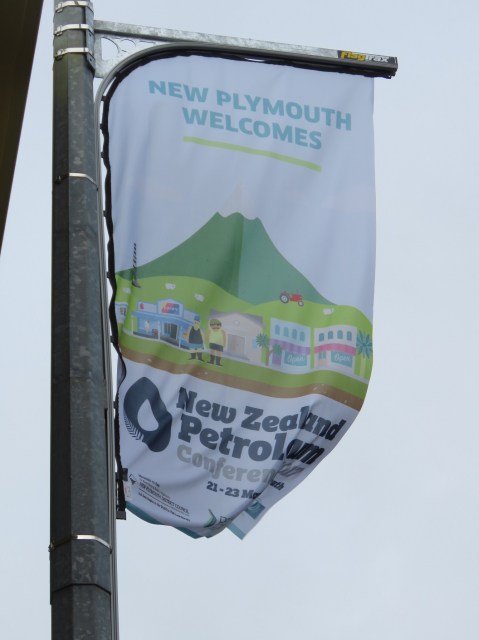
Not MY New Plymouth. That is all I can say.
‘Frack Off’ has been curated by Graham Kirk whose own work is the Muppet poster. The exhibition is open until March 26 at the J D Reid Gallery at 33a Devon Street West which is down the bottom of the dip where the Huatoki Stream is piped beneath the the city, near the intersection with Brougham Street.
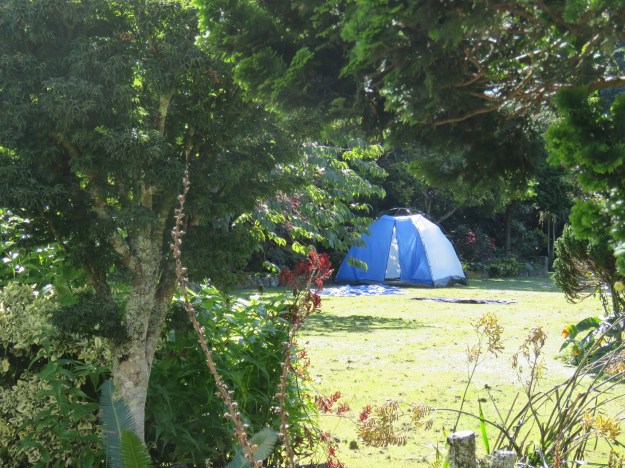 It was one of those moments of parental delight to put up the little tent on the lawn recently. I needed to check that it was still complete. Our boy was due back in the country and he needed a tent for a music festival in Auckland last weekend, before he and his partner were to travel southwards home. It was exciting enough to be seeing them after a two-and-a-half-year break while they have been living in Amsterdam but that little tent brought back so many memories.
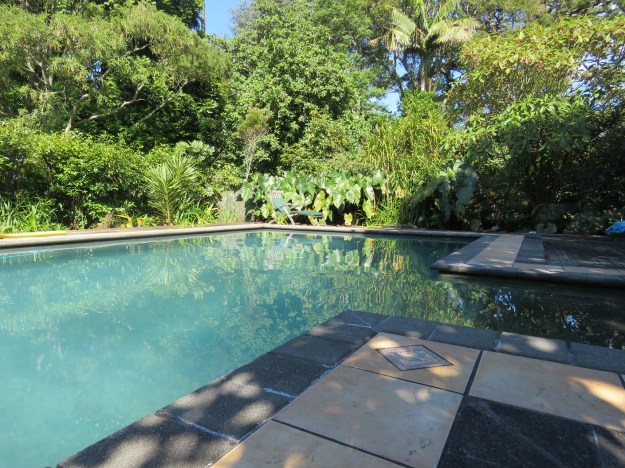 On the bright side, given that Theo and his partner departed from a Northern European winter under two weeks ago, our miserable summer perked up no end for them this week. They have spent much time in the pool and even I took my first swim of the summer on February 20 (we usually start swimming in December). Summer may be very late this year and will be extremely short as a result. The entire garlic crop succumbed to rust and the rock melon and water melon crops have failed to mature in the cooler, wet weather. But a week of warm, sunny, swimming weather gives a lift to the spirits.
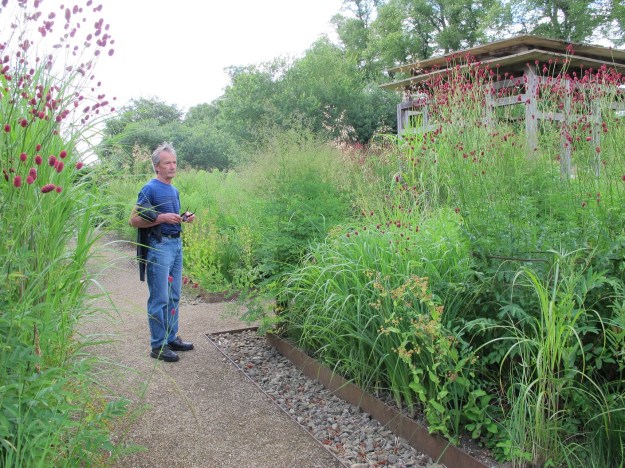
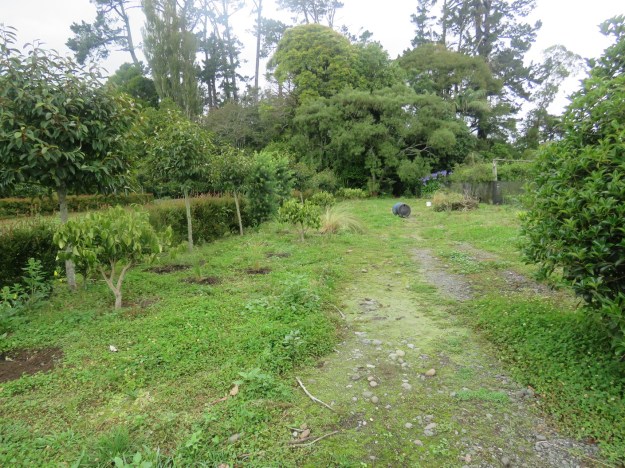


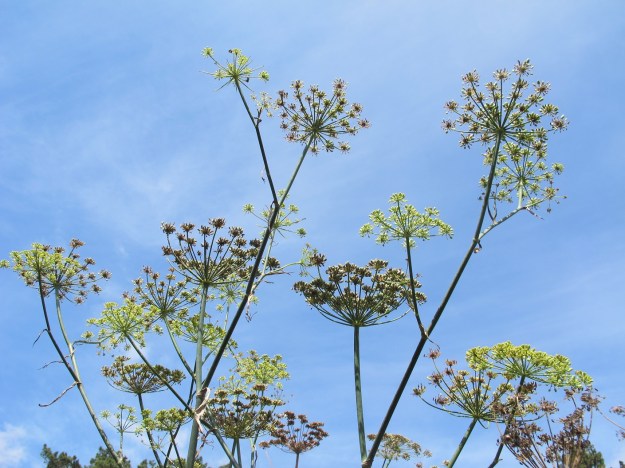
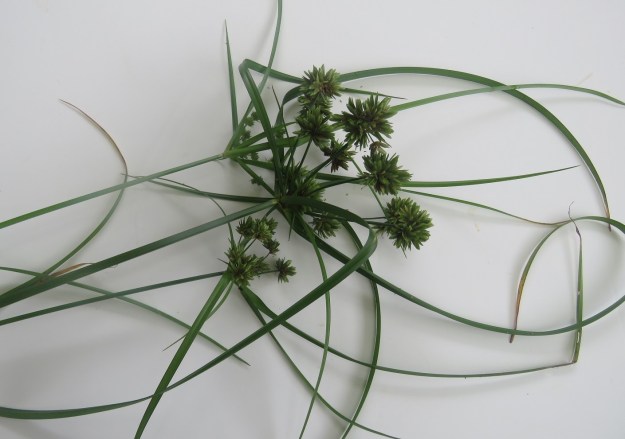
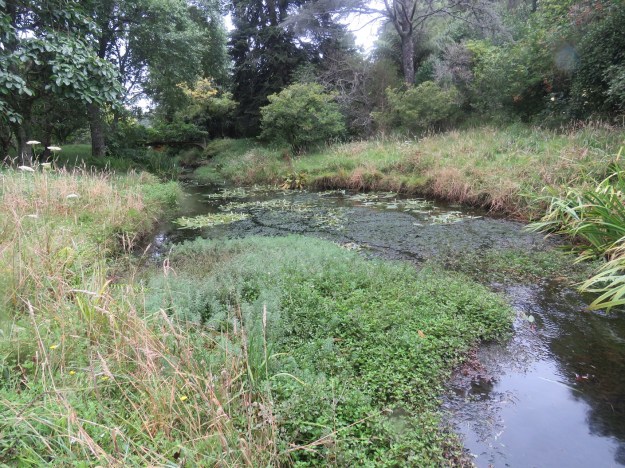
 I have been weeding the stream. Yes, hand weeding the stream. I see it is
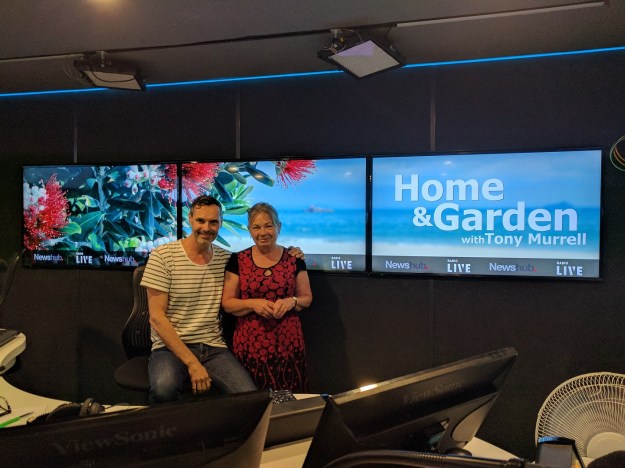 A quick trip to Auckland at the weekend saw me rushing hither and yon but also enabled a face to face conversation with Tony Murrell in the studio at Radio Live. Usually we do these by phone. It is at the unseemly hour of 6.30am each Sunday morning so I had to rise even earlier to get to the studio. These conversations are remarkably complex for the early hour but both Tony and I are enjoying them enormously. Last Sunday it was partly about taking inspiration from other people’s gardens and not falling into the trap of thinking that recreating these ideas at home means using their blueprint, often from another climate, another country and another time. The link is
 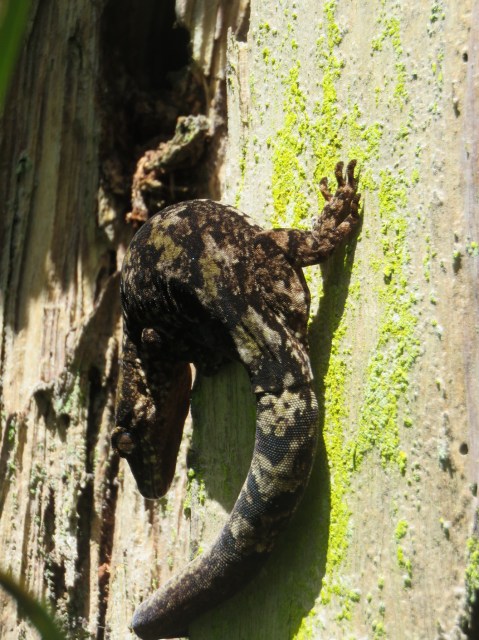 We did not see
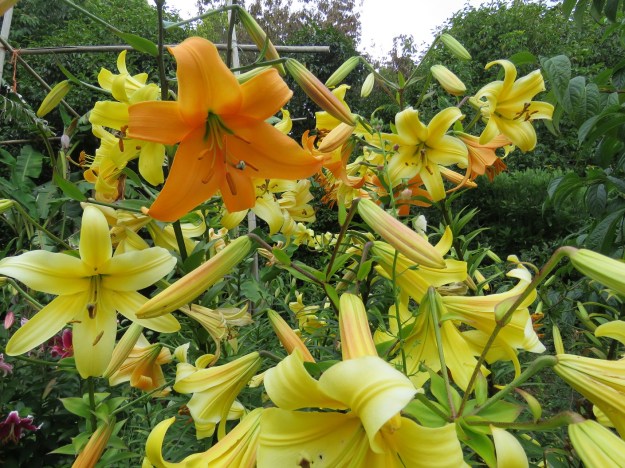
  The UK gardening tour I mentioned last week has done been and gorn. It rained, steadily, when they arrived which was disappointing but we moved them all indoors for tea and cakes and the rain stopped a few minutes into the walk around the garden. While hosting these tours takes a bit of work and a surprisingly large amount of mental energy, the visitors often repay the efforts in more than money. Being able to share the garden with appreciative visitors who have a fairly high degree of knowledge themselves – albeit with an entirely different range of plants – is what it is all about really. We don’t garden on this scale just for ourselves and it can be extremely affirming to share it with a group like this one. I have to report that the lilies in the garden did not flower as hoped but we have enough lilies planted “out the back” as we say for me to pick an impressive display for vases indoors and they did not go unnoticed.
 Also putting on the very best display we have ever seen here is
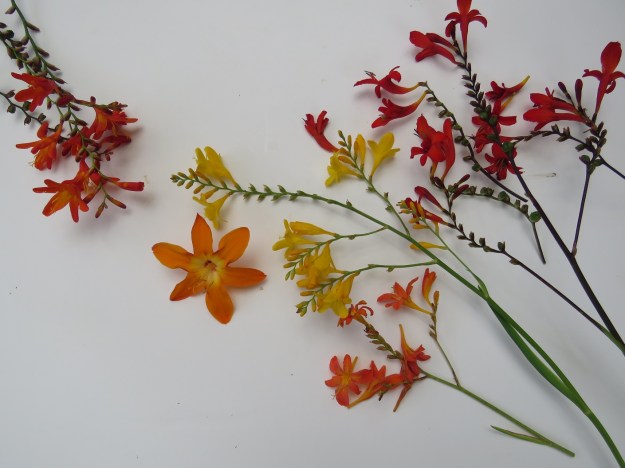
 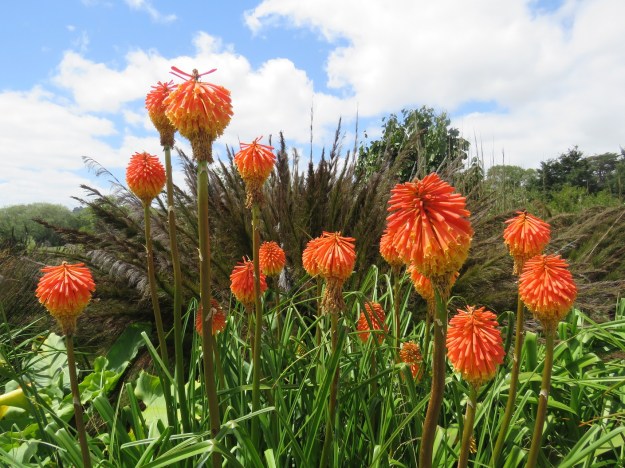 Finally, a few snapshots of summer flowers I liked this weekend. I called in to Joy Plants to check out their perennials and the kniphofia in the gardens were looking marvellous.


