
Here we are, 23 days off the shortest day of the year and in the late autumn phase. The daytime temperature has dropped to the mid teens celsius and we even had a light frost this week. But we are lucky here that our light levels during the day don’t drop much. It just gets dark earlier.
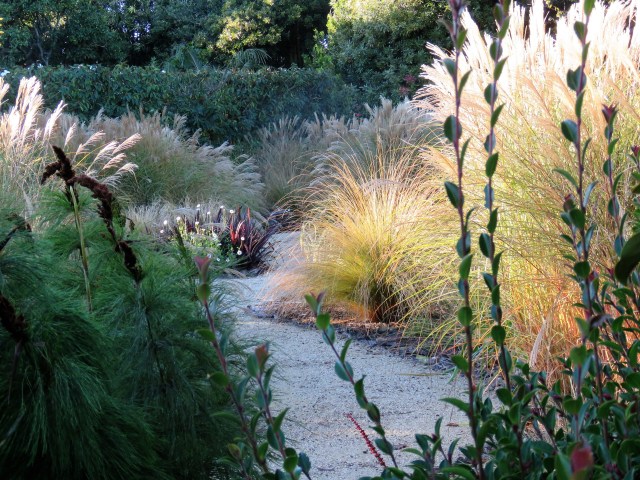
We never get that grey, leaden look of spent perennials and patches of dark green that characterise many gardens in colder climates, let alone the blanket of white snow many northern countries experience. But neither are we tropical. I have busted out my thermals already. In self-defence, we do not retire indoors as the temperature drops and we are out and about in the garden in all but the worst weather.

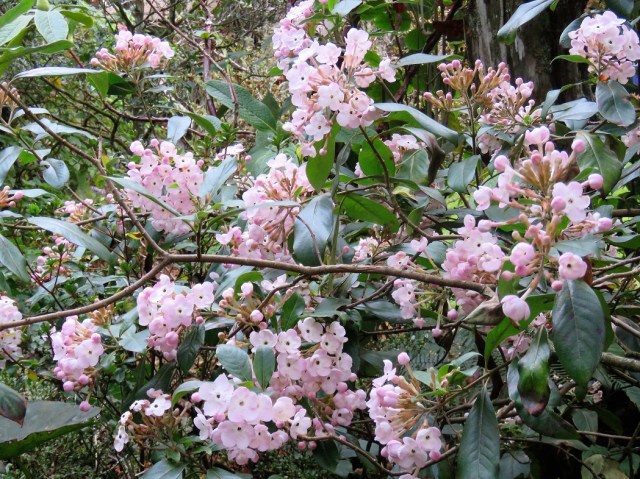
The luculias are in flower. Rangy and frost tender these plants may be, the scent is divine and the flower heads are large and attractive balls of colour well into winter. My favourite is the almond pink of ‘Fragrant Cloud’. Unfortunately, they don’t hold well when picked but we keep our house at a warm temperature in winter that is not conducive to any garden flowers holding well indoors.
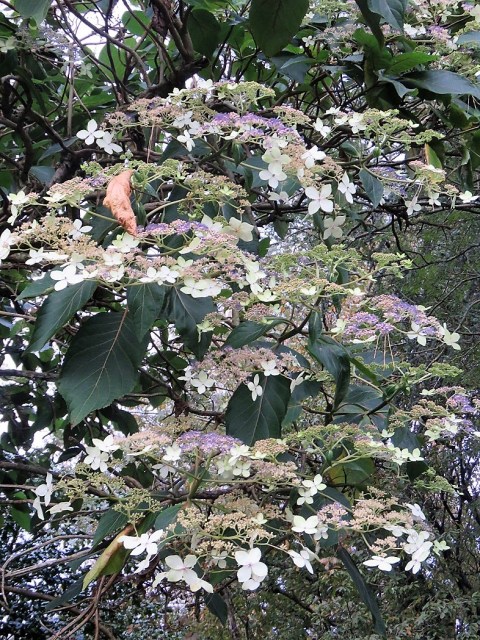
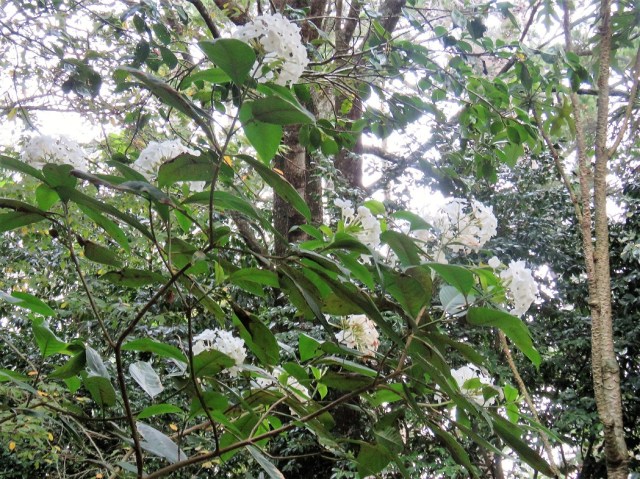
Also rangy and frost tender, the enormous, evergreen tree hydrangea is in full bloom. Walking past it on sunny days, the hum of honey bees is not quite deafening but certainly on track in that direction. As the plant is about 5 metres tall and currently sporting so many blooms on the sunny side that the foliage is barely visible, it can accommodate a whole lot of honey bees at a time when other food sources are less abundant. Last I heard, this unusual Chinese hydrangea is thought to be a member of the aspera group.
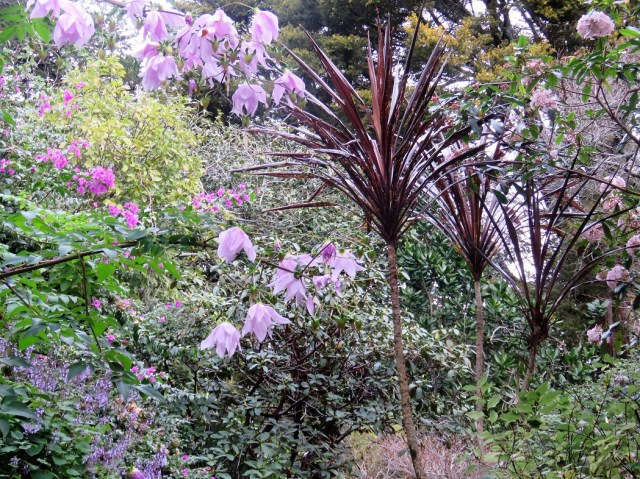
Nearby, still in the woodland area we call the Avenue Garden, I like this seasonal composition with the red form of Cordyline australis x banksii, the hanging chalices of the tree dahlia D. imperialis (another rangy, frost tender plant), the cerise of the enormous bougainvillea, blue flowered plectranthus and Luculia ‘Fragrant Cloud’ on the right.
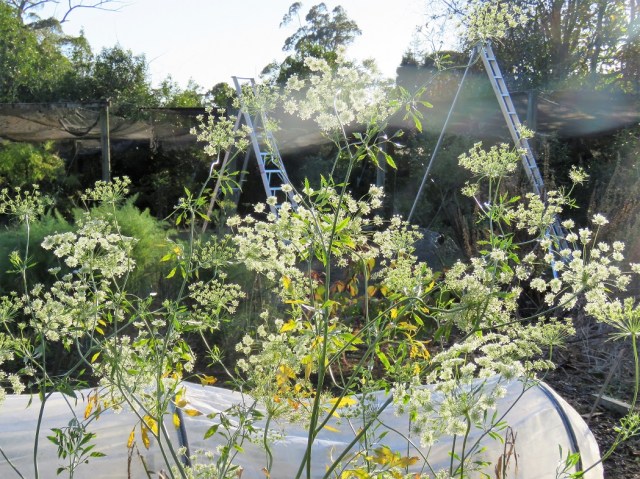
Out in the rather wilder margins of Mark’s vegetable garden (which we never open to public view because while he is a productive gardener, he is also very messy in this area), the Ammi majus flowers on. I liked the mix of wildflower, the cloche and the communion of our two new ladders which Lloyd was using in tandem at the time.
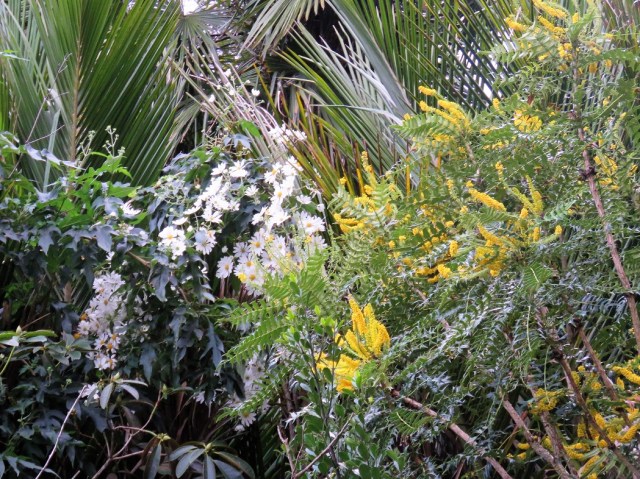
In still wilder margins, this scene was the coming together of a United Nations of self-seeded plants – the nikau palms from NZ, Montanoa bipinnatifida otherwise known as the Mexican tree daisy,and the yellow mahonia which may or may not be Mahonia japonica from Japan.

Back in the more cultivated areas of the garden, many vireya rhododendrons are blooming. These are the subtropical rhododendrons – so frost tender and generally pretty sensitive – and tend not to be longlived. Their flowering is triggered by day length, not temperature, so they bloom intermittently but autumn and spring are the main seasons. We have some dead specimens we are removing now and Mark is doing a cuttings round to propagate an ongoing supply. But this specimen, this one is defying that tendency to whiff off and die. It is the very plant that Felix collected from the highlands of New Guinea in 1957 and the start of his breeding programme – R. macgregoriae.

Autumn is sasanqua camellia season, now my favourite group of camellias. For years the NZ sasanqua market was completely dominated by consumer demand for white sasanquas – it may still be the case but I am out of touch with commercial production these days. We have plenty of different white sasanqua varieties in the garden but they do not spark joy for me in the way the coloured options do. This one is pretty ‘Elfin Rose’, seen here with the last nerines of the season, N. bowdenii at its feet.
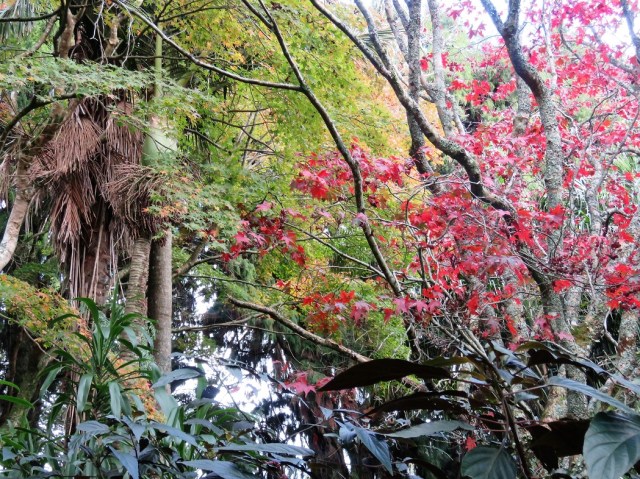
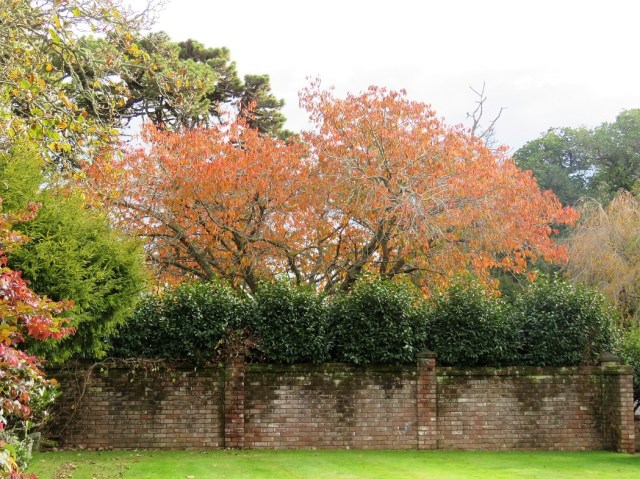
It is not just flowers giving colour. While autumn colour is patchy and extended over a long period of time because we move so gradually from late summer to autumn to winter, the maples and some of the prunus give a pretty display.
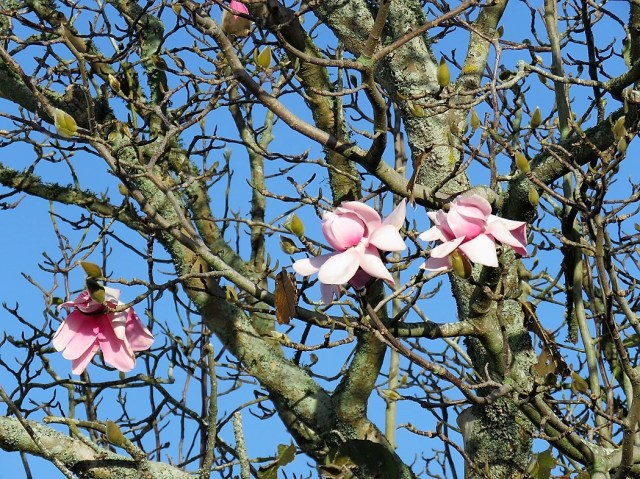
Finally, in a sign of how our seasons lack the sharp demarcations of colder climates, the first magnolias are already opening. I follow a Facebook page for magnolia enthusiasts that is heavily dominated by mad keen magnoliaphiles from northern Europe. They are still posting photos of late season blooms opening on their spring magnolias. Meanwhile, as far away as we can get across the world, the Magnolia campbellii in the Anglican churchyard of my local town of Waitara is already open with a score or more blooms.

Here, we are looking at the first flowers open already on ‘Fairy Magnolia White’, the first of the michelias of the new season to bloom. As we are in the last gasps of autumn, these early magnolias are a reminder that spring is not far away.
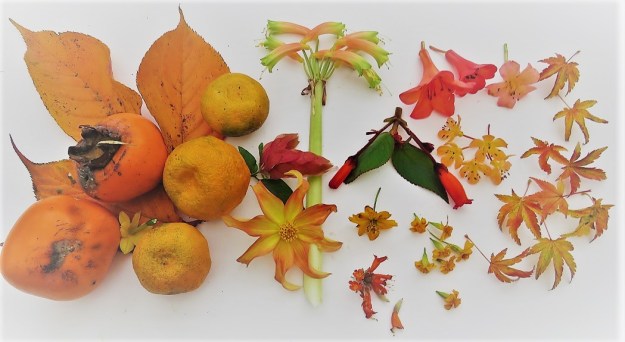
 But as late autumn draws in, the orange outside is very cheering. On Monday, I thought I must get out and photograph the dwarf Japanese maple that turns its raiment from modest green to blazing orange as winter approaches.
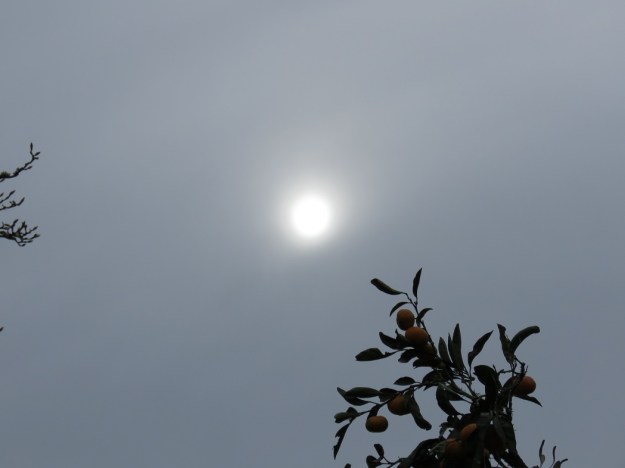 The day was grey with the sun attempting to break through, a light so unusual here that I also photographed it. I have only been to the UK once in December and I remember a similar light on the day we visited the Russell Page garden at Leeds Castle. The difference is that here, the sun did indeed come out and shine brightly – if intermittently – as the day progressed while my UK family said that was as good as it got there, closing in on the shortest day.
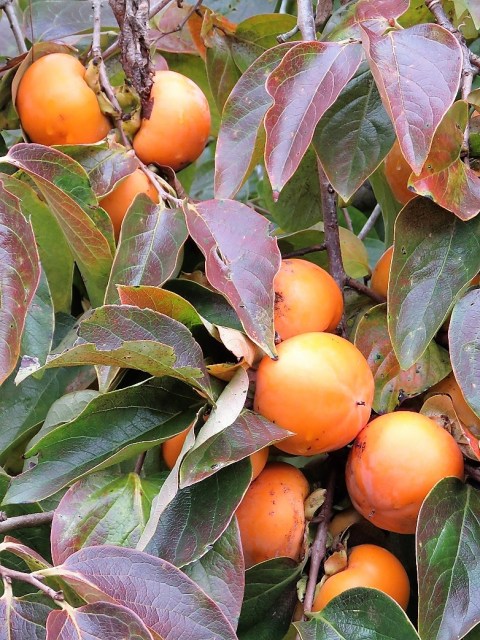
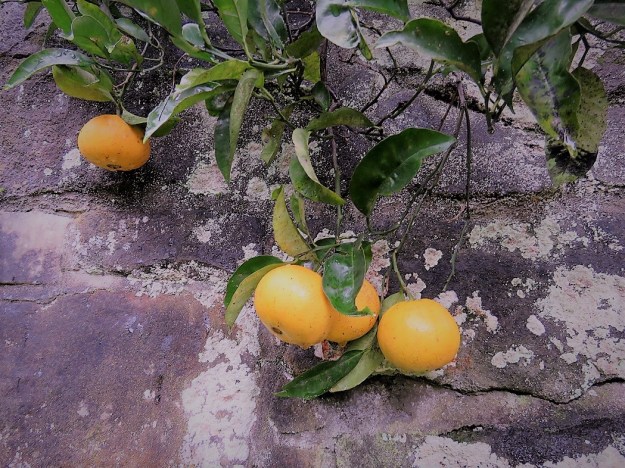 I became entirely focused on orange. Mind you, it is hard to ignore it as the citrus trees flaunt their wares. We are blessed to have a climate where we can grow citrus and also to have inherited a garden where the trees have large been included in the wider garden, rather than confined to an orchard situation. Citrus are both decorative and functional. I once wrote a fairly lengthy piece on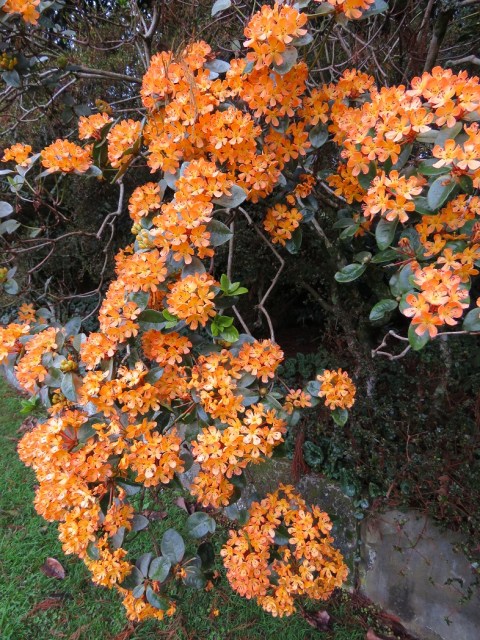
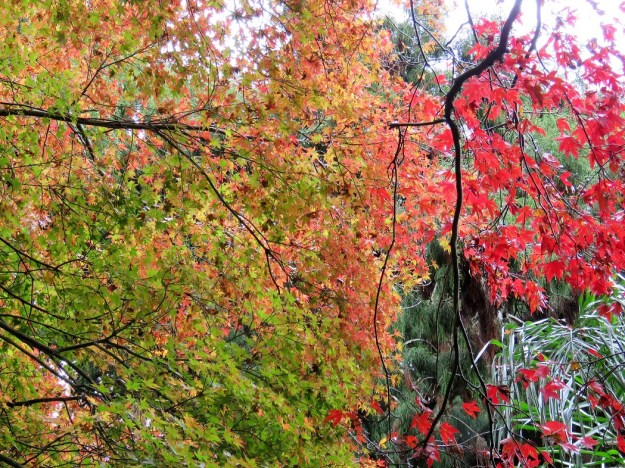

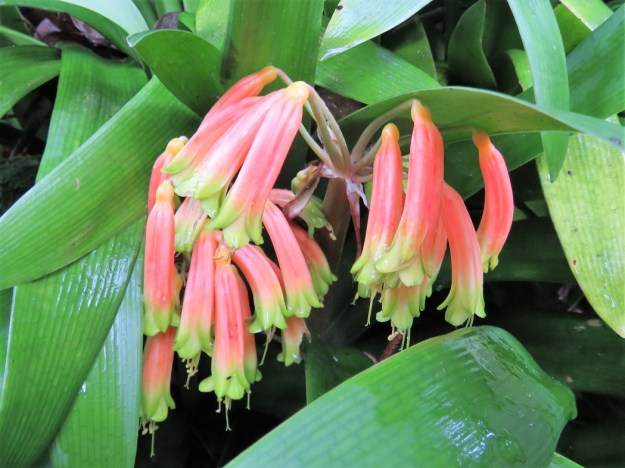


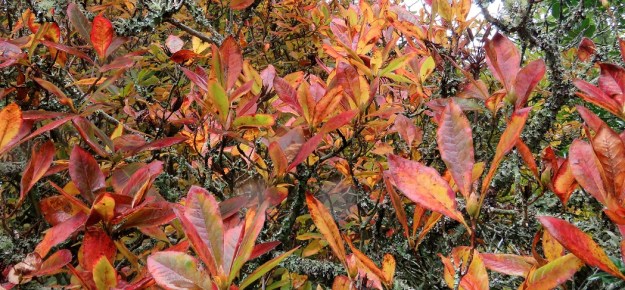 I do not know whether it was the rainy Saturday that made me pensive or whether it was my somewhat melancholy state of mind. Either way, I took a damp walk around the area we call the park. While the autumn colours seem quite striking this year and relatively early considering we have only had two cold days so far, I am not sure that damp autumn days are uplifting to my soul.
 But I have been pondering the differences between those of us who see gardening as a process and those who see it as a product. I am happier in the company of the former – those who enjoy the act of gardening and see it as a journey where there may be a destination in mind but experience says that such a goal will be but transient and fleeting and not an end point at all. For a garden can never be static and frozen in time so will never be finished or full. I suspect these are the characteristics of a gardener.
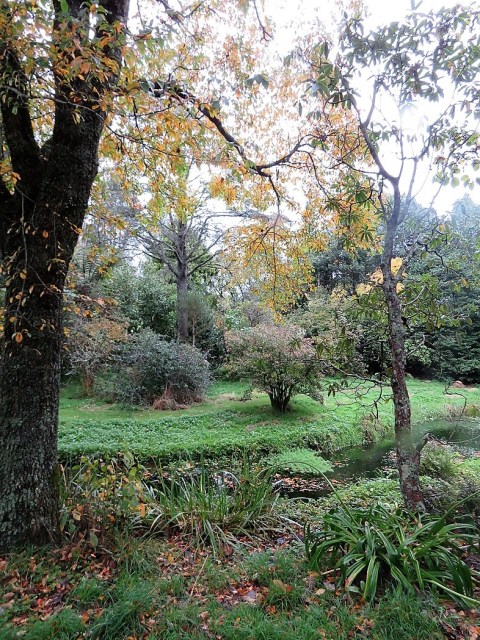 There are many who see a garden as a product – a particular destination or point of achievement in a creation that can then be frozen in time. This, I think, is probably a viewpoint of a garden owner who is not a gardener by nature. I felt a passing pang of sympathy for landscape designers. I would guess the majority of their paying clients fall into this category. Some may come to understand the whims of nature but many more make a rod for their backs, requiring that a garden be preserved in pristine condition at a certain point of its development.
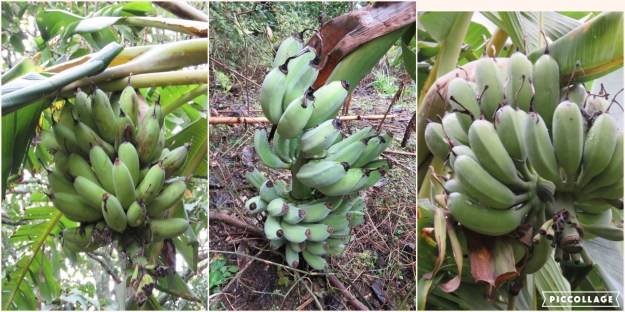 But Sunday dawned fine and dry which meant my usual cheerful disposition was restored. We cannot complain about an autumn which delivers us a daytime temperature of 24 degrees Celsius and night time temperature still well into double figures. Behold Mark’s pride and joy – his luverly bunches o’ bananas. Several lovely bunches. We are super marginal when it comes to growing bananas for tropical we are not. These are the only plants we cover for winter – festooned in protective shade cloth suspended on a giant bamboo frame.


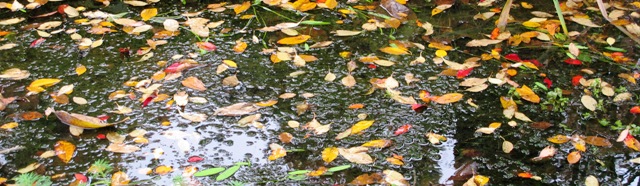 Autumn colour occurs when deciduous trees shut down the chlorophyll which is what makes most leaves green. It is chlorophyll which enables the plant to combine sunshine, water and carbon dioxide, making the simple sugars that sustain the plant (a process called photosynthesis). Once the green colouring disappears from the leaves, the other colours already in the leaf become obvious.
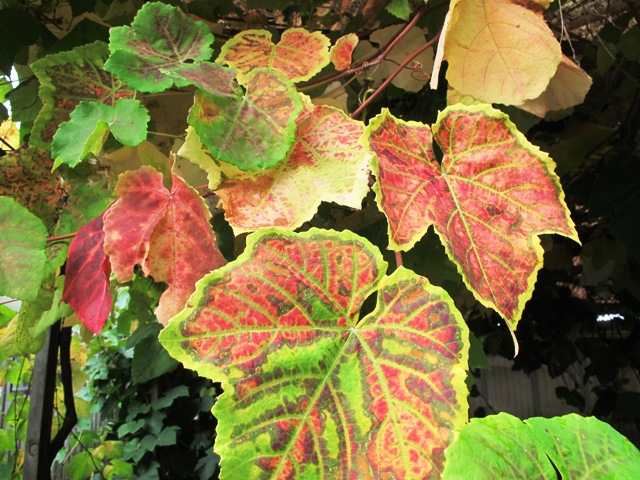 You can see in this grape leaf that the chlorophyll is still alive in parts, particularly the veins but other colours dominate in the body of the leaf. Not all grapes colour the same way. Our Albany Surprise grape becomes brilliant yellow, making it appear as if the sun is shining, even on a grey day.
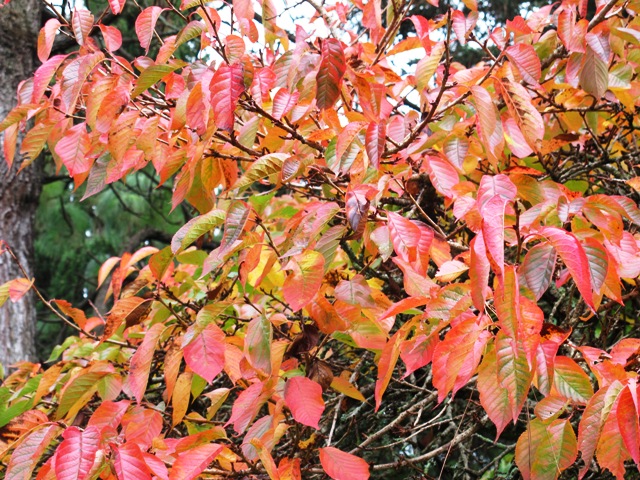 Some of our flowering cherries (prunus) turn yellow but this one is notable for its red colouring, caused apparently by anthocyanins which are what give the red and purple tones. Bright light in autumn helps the anthocyanins and bright sunlight is one thing we do well in most of this country.
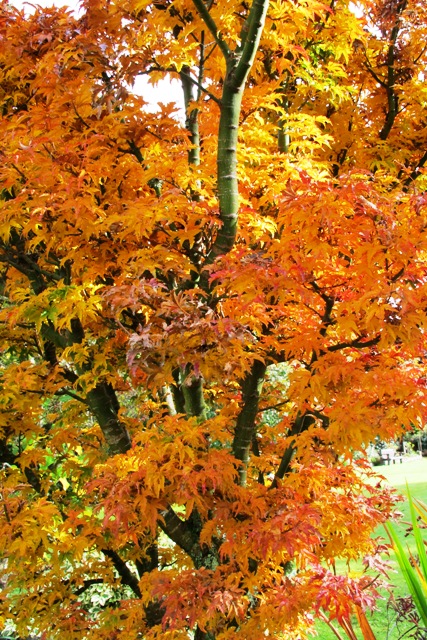 Maples, particularly the Japanese varieties, are one of the most reliable plants for autumn colour and the brilliant hues occur even in milder areas where some other plants will just skip the colouring step and turn brown. What is more, there are many petite maples (often sold as patio varieties) which will fit in even the smallest garden.
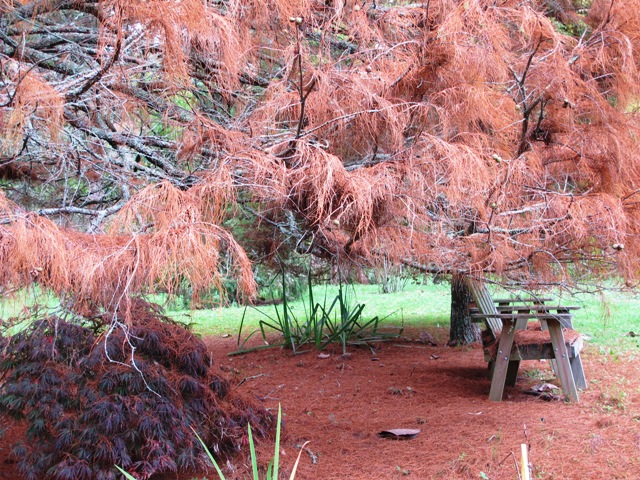 We find the deciduous conifers colour well for us. This is a taxodium but the metasequoia and glyptostrobus are also good. However these are large trees, unsuitable for small urban sections. There are many smaller growing options like the koelreuteria or parrotia.
 Just to prove it is not only the woody trees and shrubs that can flaunt their autumn raiment, Soloman Seal (Polygonatum multiflorum) grows from rhizomes below ground. A common enough plant which fills a role in semi shade conditions, it can startle with its golden foliage as it prepares to hibernate for winter.
 Many folk never consider that evergreen plants also drop leaves (do they think that foliage is permanently attached for the life of the plant?). All evergreens drop a full set of foliage every year. It is just that they don’t drop them all at once. However some plants, like this Fairy Magnolia Blush, have a tendency for some leaves to colour and then drop in autumn. It is not a bad sign, it is just part of the plant’s cycle.
 Tikorangi The Jury Garden