Tag Archives: autumn planting

‘Autumn is icumen in’

It is not ‘sumer’ that is icumen in here, but very much autumn that has announced its arrival.

It seems a lifetime since I studied English literature at university. I guess it is almost a lifetime ago and I have long since lost my ability to read texts such as Chaucer’s tales and ‘Sir Gawain and the Green Knight’ in their original Middle English. But how have I reached this age without ever knowing about the farting billy goat in ‘Sumer is icumen in’? (see below) I only found it this morning when I looked up the lyrics. It is perhaps a sign of times that were more bawdy than vulgar.

‘Icumen in’ does not translate to ‘is coming in’. It means it is here and nothing makes that seem more real than the end of daylight saving. I used to find the onset of autumn somewhat depressing, describing myself as a summer bunny. But now that I garden, it heralds the start of a new season with all the freshness of new season flowers.
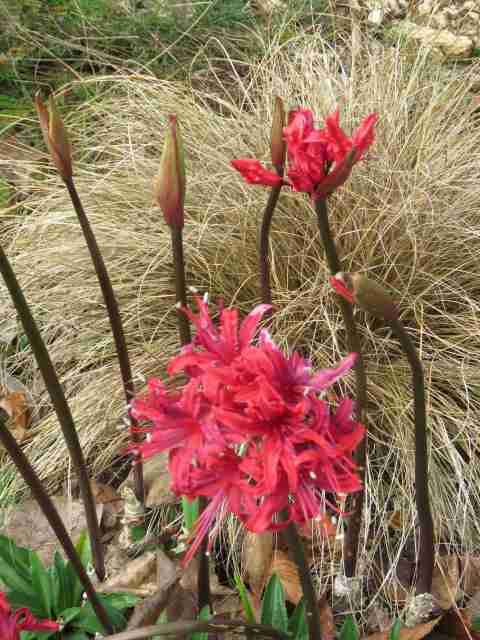
Nerine sarniensis season! This is one of Mark’s hybrids – the long stems mean it would probably be better grown as a cut flower than a garden plant. The weight of the head can drag the stems down but we don’t do cut flowers so we just persevere with it in the garden.

In our climate, it also heralds the time when we can get back to planting, digging and dividing and renovating parts of the garden that are crying out for more drastic action. We still have up to two months of the growing season left here; the ground doesn’t get cold enough to stop plant growth until June. Indeed, for those people who live in areas with hotter, dry summers, autumn planting is often a much better option than spring planting because the plants can settle in and get their roots out before the stress of summer conditions sets in. Spring planting is the better option for those who live with harsher climates where the ground can freeze or is waterlogged and very cold in winter but most of our country can happily plant away in autumn,  safe in the knowledge that that the plants will over-winter and leap into new growth in springtime.
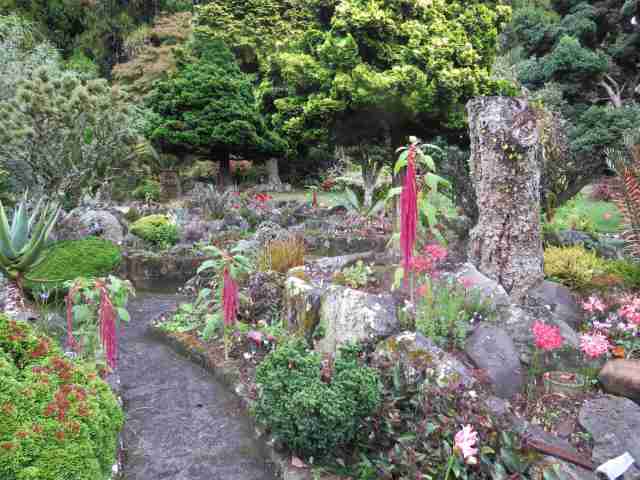
Autumn is the second season for the rockery. While there is always something of interest flowering 52 weeks of the year, autumn and early spring are when it bursts with colour and variety. Nerines feature large, particularly the sarniensis hybrids.
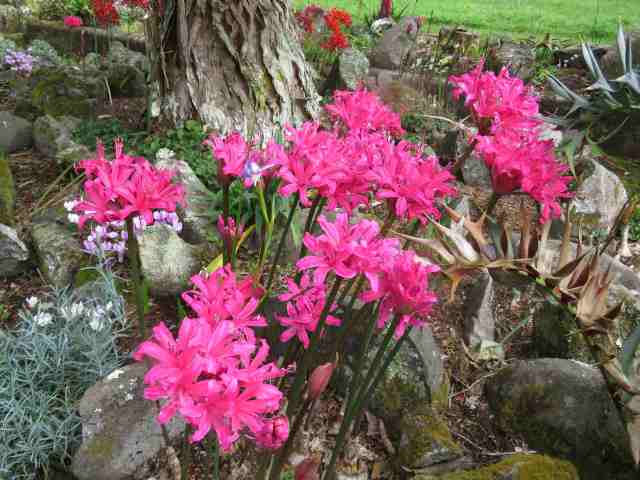
Most of our nerines are hybrids from both Felix and Mark’s efforts. We once named and sold a few but nowadays they mostly just exist in our garden. Every year, my camera fails to capture the truly startling shade of highlighter pink in this clump.
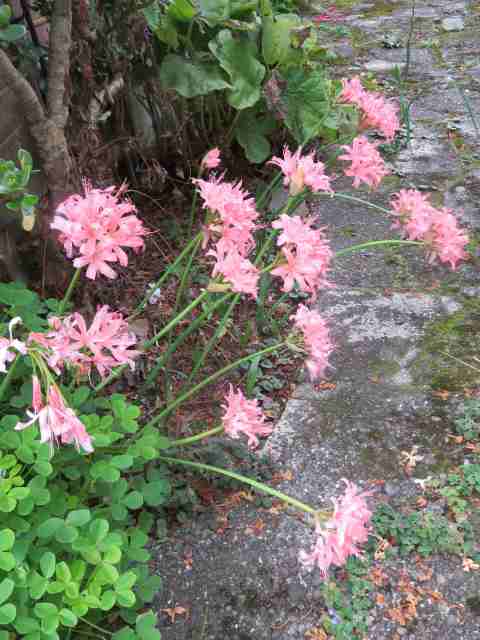
Felix started with a few named ones from Exbury. This is ‘Inchmery Elizabeth’ and has proven to be such a pretty and reliable performer down the decades.
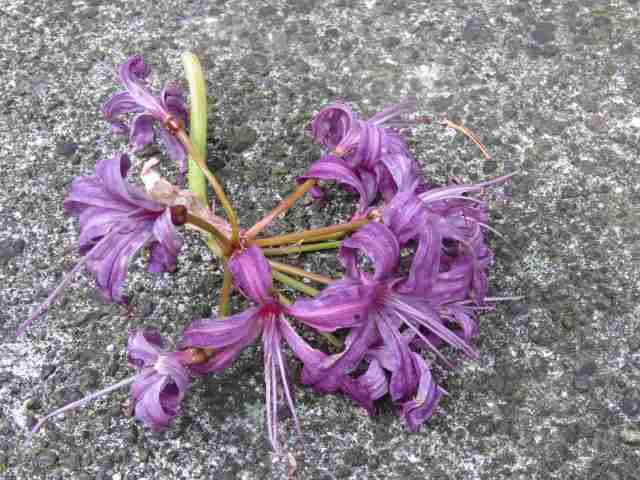
I found this one snapped off, which may have been due to slug chomping on the stem or it may have been Ralph the dog who is no respecter of gardens but ploughs in when pursuing a fly, bee or wasp. What I think is interesting is the shade of purple it is fading to; presumably there are enough blue genes in there to indicate it is only a matter of time and determination by somebody to get to true purple and blue hybrids in the future.
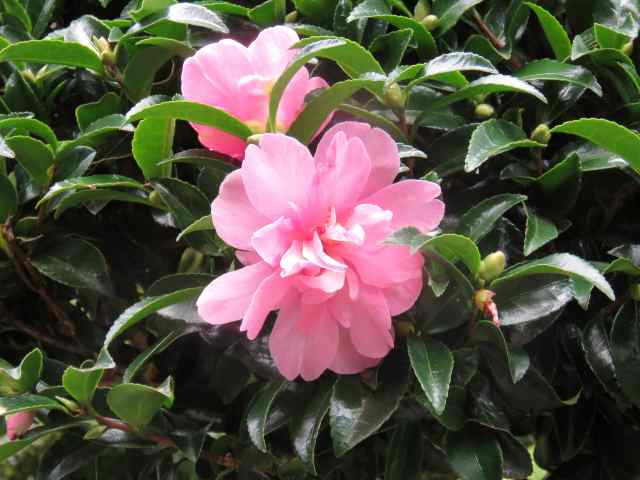
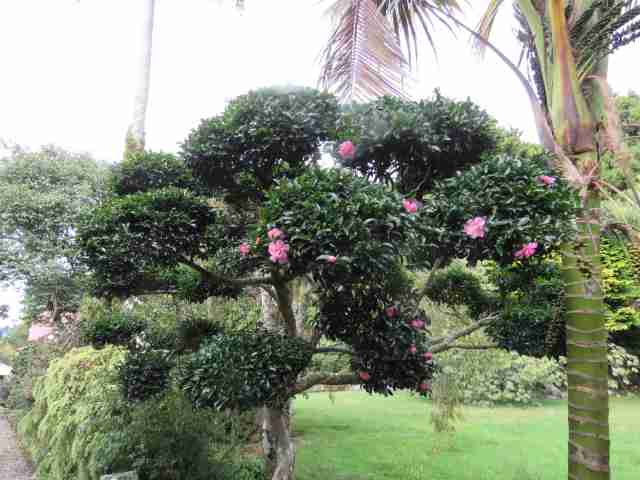
Camellia sasanqua ‘Elfin Rose’

Autumn is sasanqua camellia season. This is sweet little ‘Elfin Rose’, which we cloud prune. Sasanquas don’t have to be white, as per the long-running fashion in this country.
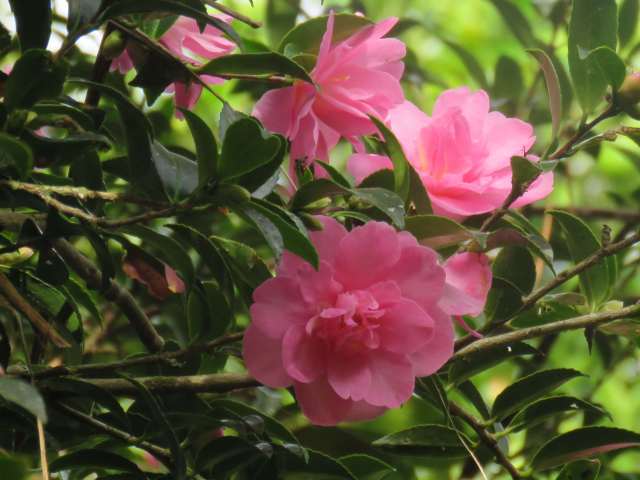
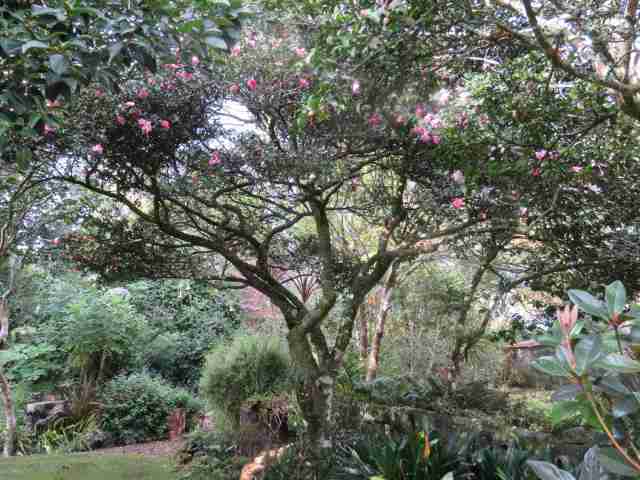
Camellia sasanqua ‘Sparkling Burgundy’

The flower on ‘Sparkling Burgundy’ is not so very different to ‘Elfin Rose’ but the habit of growth is. This plant is decades old, maybe 50 years or so. We lifted it and thinned the canopy to turn it into a graceful, open small tree rather than a bushy shrub.
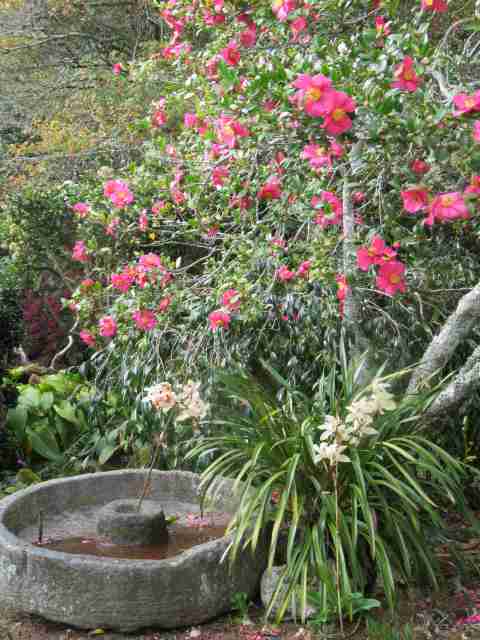
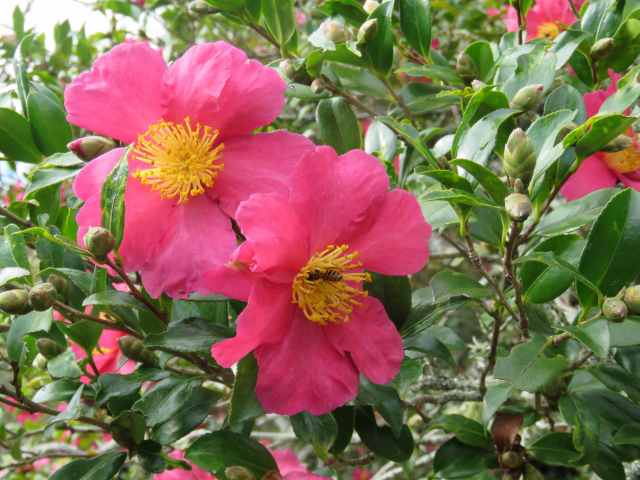
Camellia sasanqua ‘Crimson King’

Sasanqua camellias have softer flower forms and laxer growth than the more common japonica and hybrid camellias that flower in winter and spring but they don’t get petal camellia and we have grown to appreciate their relaxed informality of flower form. Alas that is a wasp feeding on the flower above but they are equally a source of food for the more desirable bees. Exposed stamens and pollen are the key to feeding bees.

The lyrics to ‘Summer is icumen in’, courtesy of Wikipedia. Composed, it seems, to be sung as a round. Spot the farting billy goat (and the politer alternative).

Middle English
Sumer is icumen in
Lhude sing cuccu
Groweþ sed
and bloweþ med
and springþ þe wde nu
Sing cuccu

Awe bleteþ after lomb
lhouþ after calue cu
Bulluc sterteþ
bucke uerteþ
murie sing cuccu

Cuccu cuccu
Wel singes þu cuccu
ne swik þu nauer nu

Sing cuccu nu • Sing cuccu.
Sing cuccu • Sing cuccu nu
Modern English
Summer[a] has arrived,
Loudly sing, cuckoo!
The seed is growing
And the meadow is blooming,
And the wood is coming into leaf now,
Sing, cuckoo!

The ewe is bleating after her lamb,
The cow is lowing after her calf;
The bullock is prancing,
The billy-goat farting, [or “The stag cavorting”]
Sing merrily, cuckoo!

Cuckoo, cuckoo,
You sing well, cuckoo,
Never stop now.

Sing, cuckoo, now; sing, cuckoo;
Sing, cuckoo; sing, cuckoo, now!
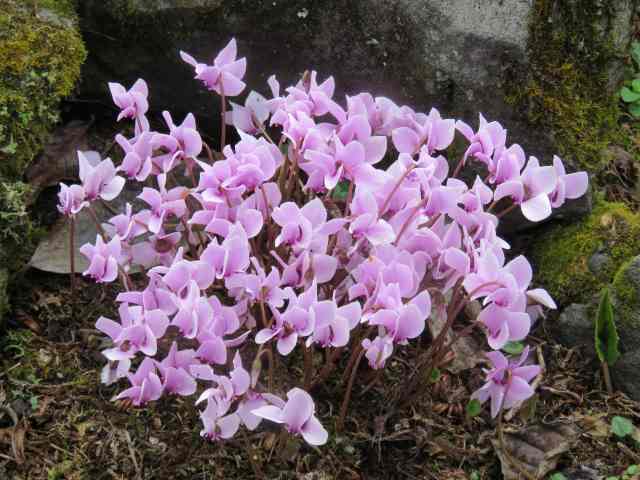
What is there not to love about Cyclamen hederafolium. First the pretty, dainty blooms and then the lovely marbled foliage to carry through winter.
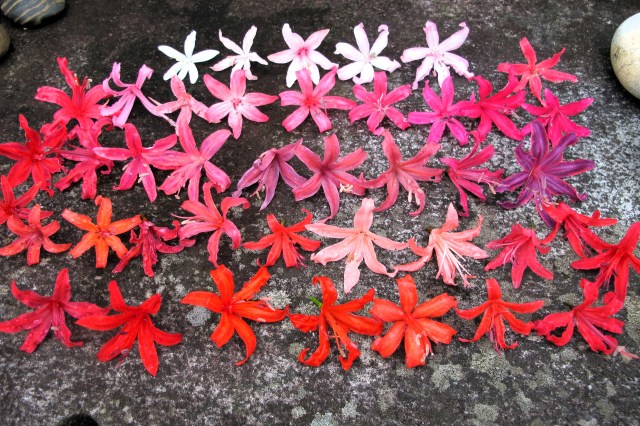
A flower lay I prepared earlier, showing the various hues of nerines in the rockery at the time

Garden Lore

“Our trees rise in cones, globes and pyramids. We see the marks of scissors upon every plant and bush….I would rather look upon a tree in all its luxuriancy and diffusion of boughs and branches, then when it is thus cut and trimmed into a mathematical figure; and cannot but fancy that an orchard in flower looks infinitely more delightful, than all the little labyrinths of the most finished parterre.”

Joseph Addison (1672 – 1719)

058Autumn planting

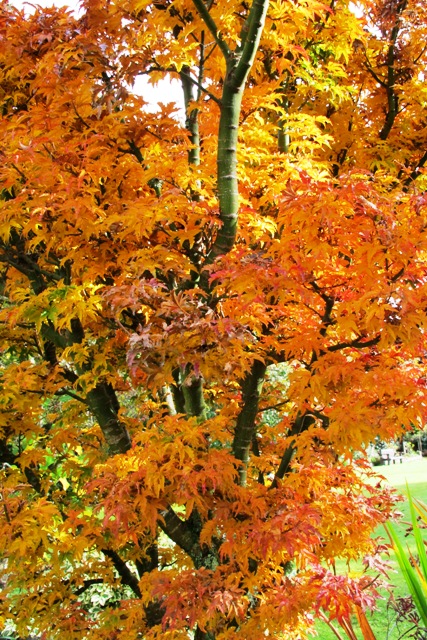
Autumn is about more than colouring foliage. Despite an indifferent summer, we are gently morphing into autumn. When the autumn rains arrive – which they will and probably sooner rather than later – it is a signal that optimal planting time is here, particularly for woody trees and shrubs which includes hedges. Planting in autumn gives time for root systems to start developing before growth slows down or stops in winter, positioning the plants to take full advantage of spring growth. It means most plants will be well established before the potential stress of drought next summer. The more traditional spring planting dates back to the days when garden centres did not get delivery of new season stock until late winter. Nowadays, most nursery stock is container grown and available all year round but old gardening habits die hard. The more drought-prone you are, the more important it is that you plant before winter, not after it.

While you are waiting for the autumn rains, you can be planting out winter vegetables. The reference to “winter veg” does not mean you plant them in winter. They need to be planted in autumn because they make most of their growth before winter and can then be held in the ground through the lower temperatures to be harvested fresh as required. White butterflies are still very active, so if you are planting winter brassicas (and that includes rocket and many of the Chinese greens as well as the usual cabbage, cauli and broc), you may need to erect some sort of cover to stop them becoming caterpillar fodder in the early stages.

First published in the Waikato Times and reprinted here with their permission.

Garden lore

“My garden, that skirted the avenue of the Manse, was of precisely the right extent. An hour or two of morning labour was all that it required. But I used to visit and revisit it a dozen times a day, and stand in deep contemplation over my vegetable progeny with a love that nobody could share or conceive of, who had never taken part in the process of creation.”

Nathaniel Hawthorne, Mosses from an Old Manse (1846).

002 - CopyAutumn planting

Autumn is the best planting time. That is not garden industry hype to encourage sales. It is simple fact, though often ignored by gardeners who only get inspired in spring and therefore drive peak sales at that time of the year. When you autumn-plant trees and shrubs, which includes all hedges, roses and fruit trees, they have time to establish their root systems during late autumn and winter before all their energy goes in to spring growth and flowering. This makes them much better placed to withstand the stress of subsequent summer heat and possible drought.

We are still very dry for this time of the year but there is much less evaporation happening as temperatures have cooled. Make sure you soak the root balls of the plants thoroughly before planting. This is best done by plunging the entire plant, pot or bag and all, into a bucket or tub of water and leave it there until the bubbles stop rising. This can take at least 20 minutes. If your soils are still bone dry, place the plant in the hole and then fill it up with water before you back fill the soil. With the light rains we are getting, this is probably enough to keep the plant moist without additional watering, until wetter times return.

First published in the Waikato Times and reprinted here with their permission.

In the Garden this week: March 18, 2011

Freezing surplus tomatoes

Freezing surplus tomatoes

• Now that the heat of summer has passed and we are getting into autumn, you can be thinking about planting woody trees and shrubs. Novice gardeners get inspired in spring but more experienced gardeners know that mid autumn is an optimum planting time. It gives plants a chance to get their roots established before the spring flush and the threat of a dry summer. Hedges, specimen trees, avenues and orchards – start frequenting your favourite garden centres to see what they have available. There is no rush. You are better to plant when we have had a few days of good rain and there is a six to eight week spell of good autumn planting weather.

• Garden centres are advertising spring bulbs. Remember when planting bulbs that most do not need super rich soils. Good drainage is the critical aspect so they don’t rot out when dormant. Light, friable soils are more hospitable than great clods of dirt but lay off the fertilisers. Digging in some leaf mulch or a little compost is all that most bulbs require. In the wild, many bulbs have evolved to survive in quite difficult conditions and mollycoddling can result in too much leafy growth to the detriment of flowers.

• You can do autumn cuttings of plants like fuchsias, pelargoniums, vireya rhododendrons and perennials which don’t clump so need to be increased by cuttings – dianthus (pinks), oenothera (evening primrose), erysimum (wallflowers) and the like. These types of plants root easily and don’t generally need rooting hormone. Use firm wood from this season’s growth and reduce the leaves by about half to stop the cutting drying out too quickly.

• You have pretty much missed the boat now on sowing root crops for winter because they need a longer growing season. If you have space, you could try carrots but they will only make baby grade. However, you are fine to continue planting brassicas, Florence fennel (finocchio), peas, winter spinach, winter lettuce and quick maturing Asian greens.

• If you have an abundance of tomatoes, we have found the easiest way yet to prepare them for freezing. Wash them, cut out any damaged bits and the central stem area. Pile them into big roasting dishes and bake in the oven until cooked. Cool. Drain off the clear liquid (tasty as juice or frozen for soups). Pull off the skins which are now very loose. Freeze in small containers. They become concentrated and ideal for using later in the year.

• As long as you can get a hosepipe within reach, it should safe to sow new lawns after the next good rain.

Tikorangi notes: April 9, 2010


LATEST POSTS
1) April 9, 2010 Our chaenomeles never get bletted – Abbie’s column.
2) April 9, 2010 Autumn is the best planting time here for the ornamental garden – garden tasks this week.
3) April 7, 2010 Summer has hardly waved goodbye but it must be autumn – the early camellias are in flower. Camellia brevistyla.

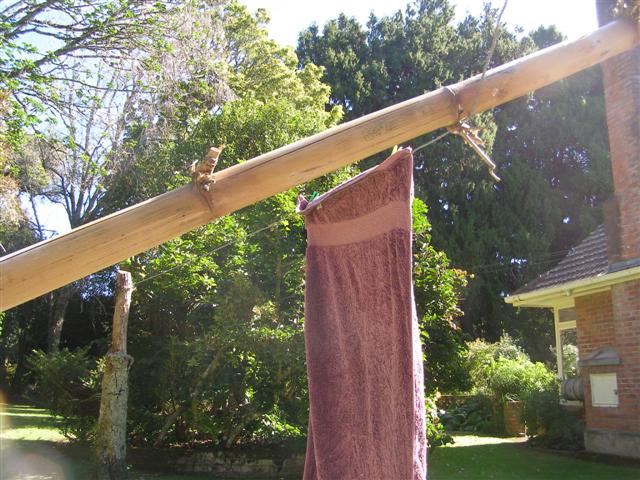
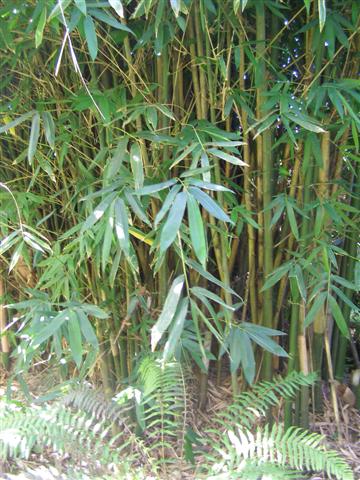
You wouldn’t credit how pleased I am with my new clothesline prop. While 95% of this country favours the rotary clothesline (originally styled the Hill’s Hoist, I am told), I quite like the nostalgia of the one wire strung between a dead tree trunk and another that looks as if it may be on the way out. This wire has served the house inhabitants well for 60 years and who am I to change traditions? The bamboo prop, however, requires replacement every five years or so. Fortunately we have a stand of this giant clumping variety on a small island in our park. Mark says he thinks this particular bamboo is one of the dendrocalamus family. There has been some resistance here to the suggestion that we could follow Asian traditions and build our own bamboo scaffolding when the upper story of the house next requires painting. The do-it-yourself ethos does not extend quite that far.