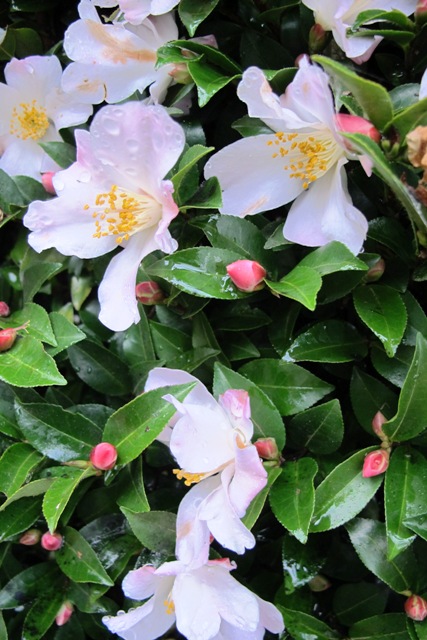
Tag Archives: camellia petal blight

STILL pruning…

It is an experience shared by most gardeners. I will just get this (smallish) job done and then go on to something else. And that smallish job expands from a few hours to days or even weeks. So it is with trimming camellias, about which I wrote last week. I am still doing it.
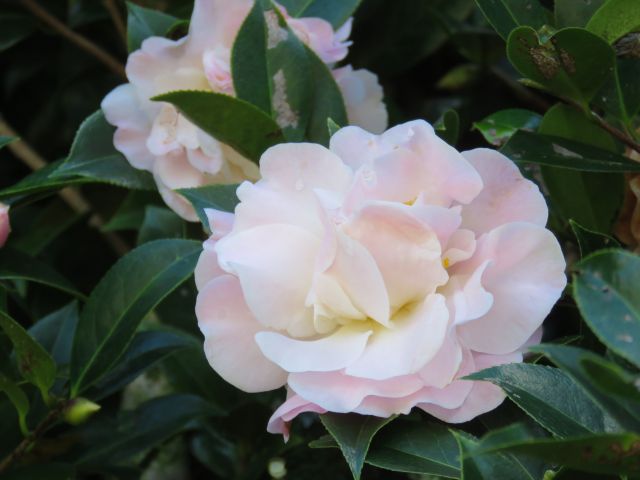
A rare sight these days – good flowers on Jury’s Pearl.

We don’t trim a lot of camellias, I thought to myself. And then I added them up. Excluding the camellia hedges – and there is a fair distance of those – I reached about 40 that get individual attention every year. That is not a lot compared to the number of camellias we have which must be several hundred, but it is still quite time consuming. Some we trim to be feature plants; some we trim to freeze them in size.

A relatively dry winter has meant we have had a better show this year. It doesn’t resemble the mass displays we used to get before the devastation wrought by camellia petal blight but there have been some pretty blooms. Most of our larger flowered camellias are retained as shelter, screening, wind breaks or their attractive form, certainly not for floral display because that is but a memory and the larger flowered types get hammered by petal blight. It means more work to ensure that in key spots in the garden, we have to make that attractive green form visually effective in order to justify keeping them. We have a strong preference for the small flowered varieties which do still put on a good show. And autumn flowering sasanquas, of course but they are long finished.
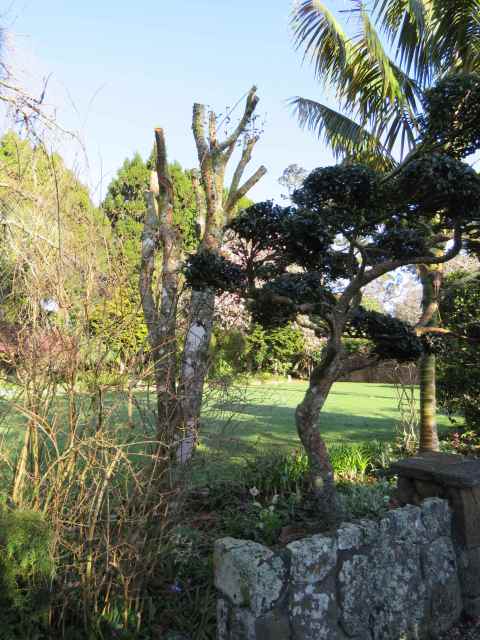
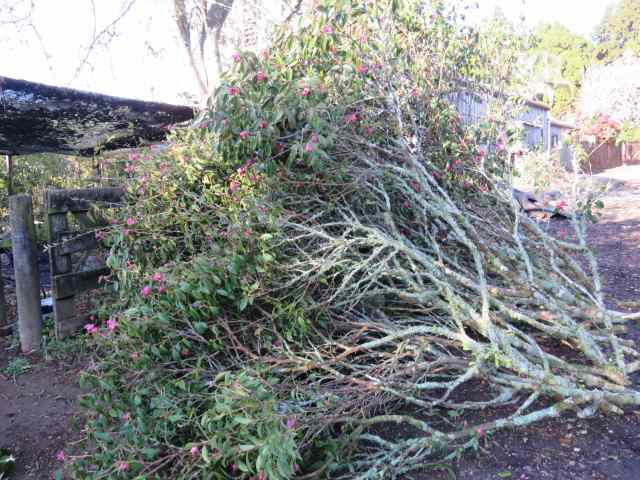
Fairy Wand has been reduced to a skeleton and we may drop it lower yet. We try and keep a good framework when we are cutting camellias very hard, not cutting off at ground level.
That is A LOT of Fairy Wand piled up to be mulched

Camellia ‘Fairy Wand’ started life as a miniature back in the days when miniature only applied to the flower size and not, as most people assumed, growth habit. Bred by Os Blumhardt in Whangarei, Mark planted it, ‘Gay Baby’ and ‘Tiny Star’, also from the same breeder, beside our driveway. After about 40 years, they were all about six metres tall and in a decidedly leggy state, with wayward branches being cut off to keep the driveway clear. We stagger our extreme pruning here. ‘Tiny Star’ was cut back two years and is now a bushy little column shape about two metres tall. This week was ‘Fairy Wand’s’ turn for drastic treatment. ‘Gay Baby’ will be done at some stage in the next two years, when ‘Fairy Wand’ has rejuvenated. We don’t want a row of three massacred plants. It took Zach all of an hour to cut back the Fairy and about the same length of time for Lloyd to mulch it up for wood chip.
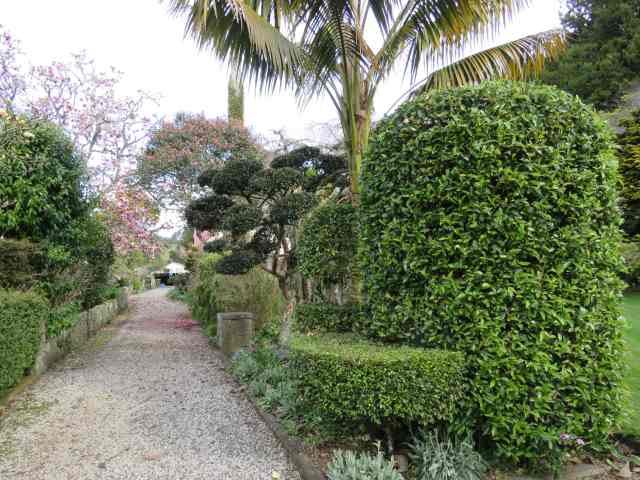
Taking Fairy Wand down behind gives this tableau of clipped camellias a whole lot more impact, especially the cloud-pruned sasanqua Elfin Rose. We are now thinking of dropping Fairy Wand behind even lower so it stays below the cloud pruning.

As an aside, it is possible to rejuvenate most michelias in the same manner. You do need to start with plants that are growing strongly because if they aren’t, the shock may kill them but we have, upon occasion, cut michelias as ruthlessly to promote bushy fresh growth.
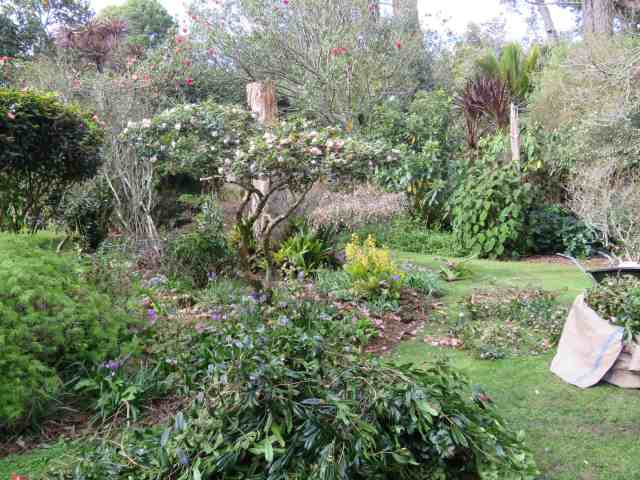
Itty Bit in the centre after being reduced in size by about 40%

While Zach may only have taken an hour on ‘Fairy Wand’, I have spent many hours on others and that is because we want the form and shape on a healthy plant. I probably removed about 40% of ‘Itty Bit’ to reach this stage.
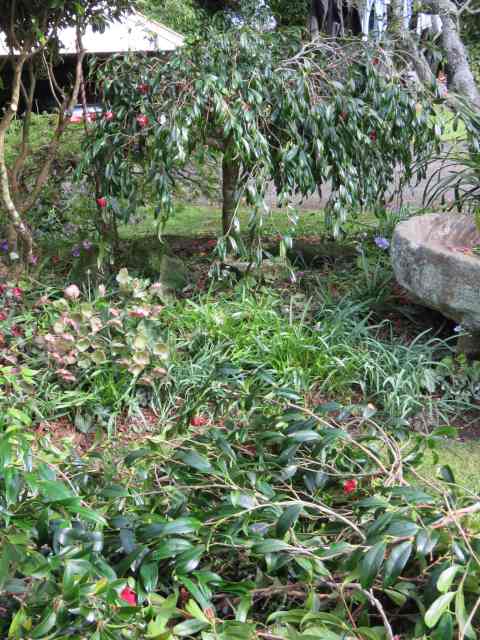
Camellia Hakuhan-kujaku – a shadow of its former self

It took me ages to get ‘Hakuhan-kujaku’, the peacock camellia, to this state. I took out at least 60% of it and it looks a whole lot better for the time spent. Shapely, not hacked or massacred.
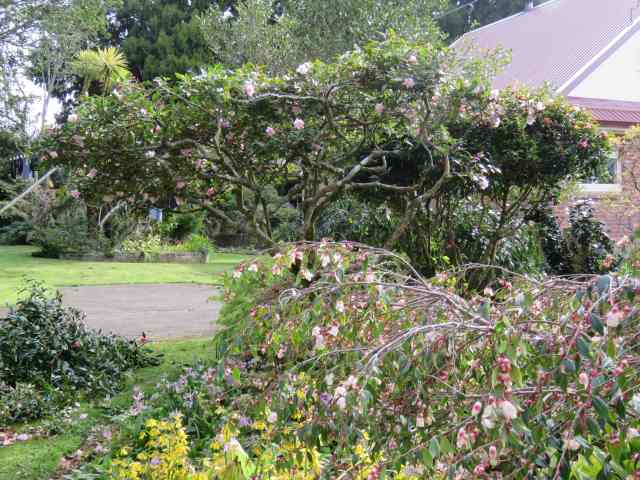
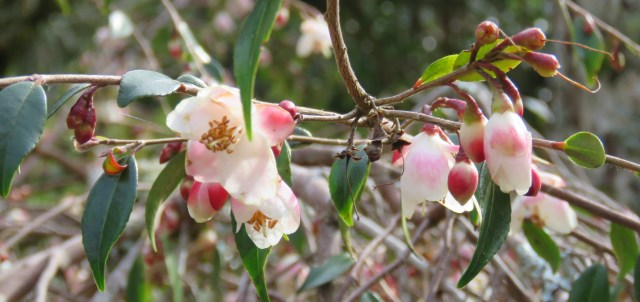
Camellia minutiflora front right, Itty Bit behind

Little C. minutiflora is one of my absolute favourites, though hard to get photographs that do it justice so you will just have to take my word that it is a little charmer. It is a more recent planting so I probably only took 25% off it. At least it will only be a tidy-up trim for the next few years until there is so much congested growth and crossed branches that it is time to spend hours laboriously picking over every branch again.

My secateurs and pruning saw are my best friends at the moment. If you are wondering where to start on this type of pruning, I start by looking at the plant from every angle. Because we are trying to keep the plants from getting tall and leggy, I first take out growths on top that are going straight up instead of bushing out sideways. Then I work around the perimeter, reducing the spread, always trimming growth flush to the branch or trunk. Then I get into the middle and take out crossing branches. Finally, I get underneath and trim from below, making sure there is cover across the top while taking out surplus growths and branches below. I spend a lot of time looking and tracing where main branches go. This is why it takes time.
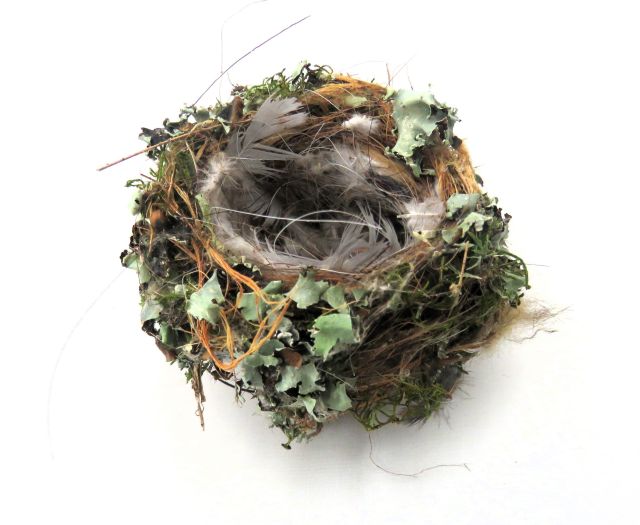
Look! Just look at this exquisite little chaffinch nest lined in soft feathers. Must the chaffinches start all over again because we humans destroyed their nest? Disclaimer – this one was blown down in a storm.

At this time of the year, I remember the warning from friend and colleague, Glyn Church. Pruning needs to be finished very soon on taller trees and shrubs. The birds are nest building and will be laying eggs. Unless you are okay with destroying days of hard work by individual birds and killing off their young, time is of the essence.
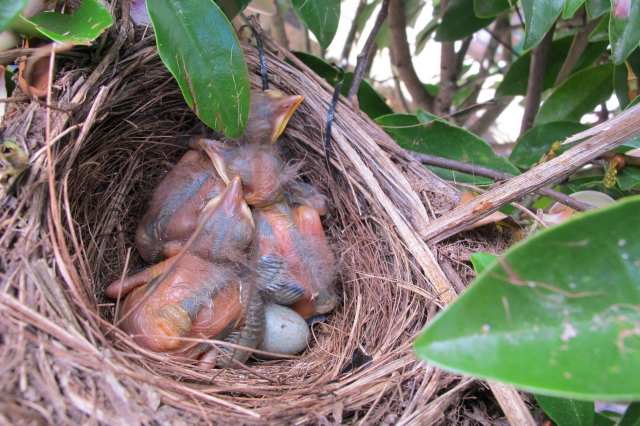
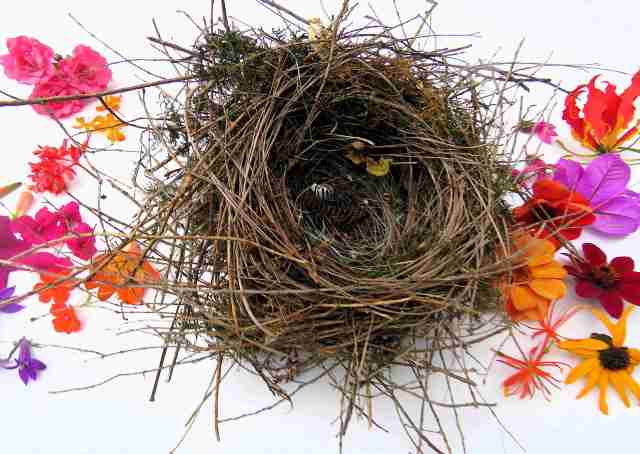
They are just common, pesky blackbirds but it still does not feel right to kill them for human convenience or by human carelessness.
A tui nest.

Sad thoughts on camellias

We used to take perfection in camellia blooms for granted

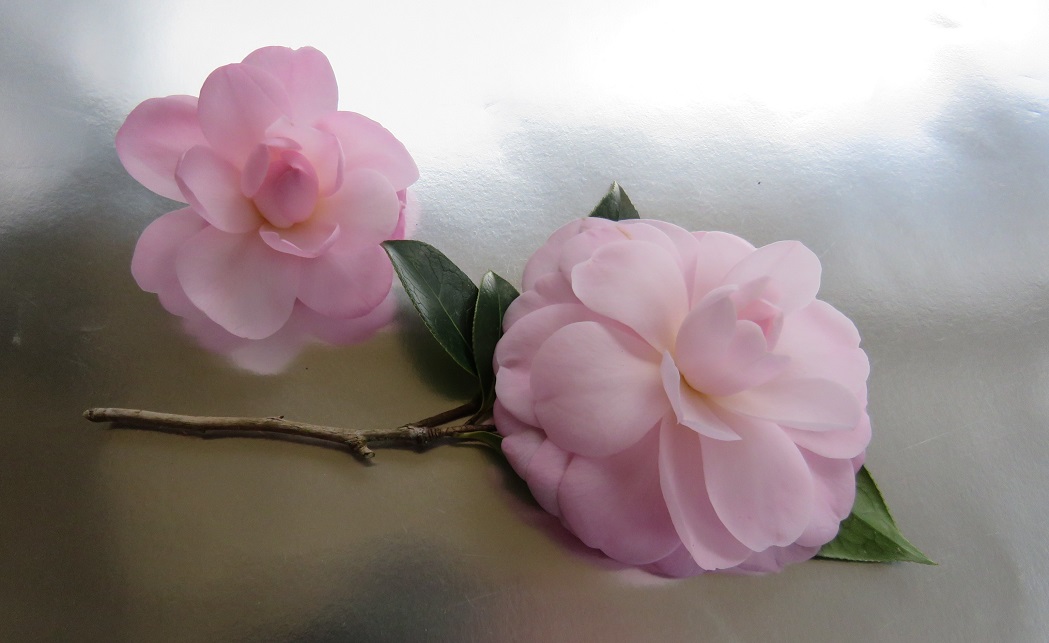
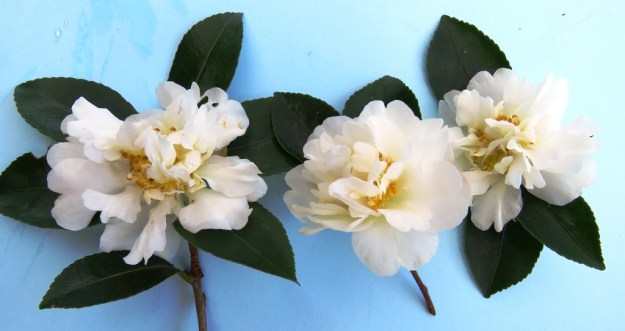
Why did this camellia make me so sad that I picked it to photograph it? It is just a pretty, formal japonica-type that is an unnamed seedling, known here as ‘Mimosa’s sister’ because it is of the same breeding that produced the beautiful pink formal that Felix Jury liked so much he named it for his wife, Mimosa Jury. The answer is because it is a rare sight, now – a perfect, undamaged bloom.

When we set up the nursery in the early 1980s, rhododendrons and camellias were our main lines. The former have fallen from favour these days, the latter have been decimated by camellia petal blight. Mark’s dad, Felix, loved the formal flower shape so much that most he named were of this form – ‘Waterlily’, ‘Dreamboat’, ‘Softly’, ‘Julie Felix’ and ‘Mimosa Jury’. The first two are international classics now and ‘Mimosa Jury’ deserves to be there, too.

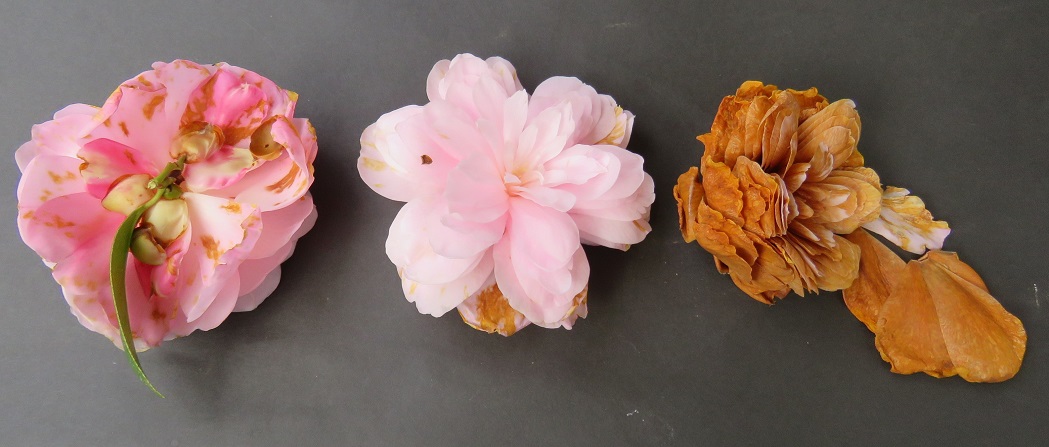
These days, this is a more common sight – blooms showing various stages of unsightly damage

We still have many camellias in our garden, both of Jury breeding and named cultivars from around the world. Right now should be peak display for the japonicas, hybrids and reticulatas but camellia petal blight has dealt a death blow to that. It is maybe two decades since we have had a good early spring display and we will never see it again from that grouping of mass bloomers. It really is a bit sad to lose a major family of flowers. We keep the plants we want for shelter, overhead cover and as background filler plants but now without the pleasure of a clean floral display.

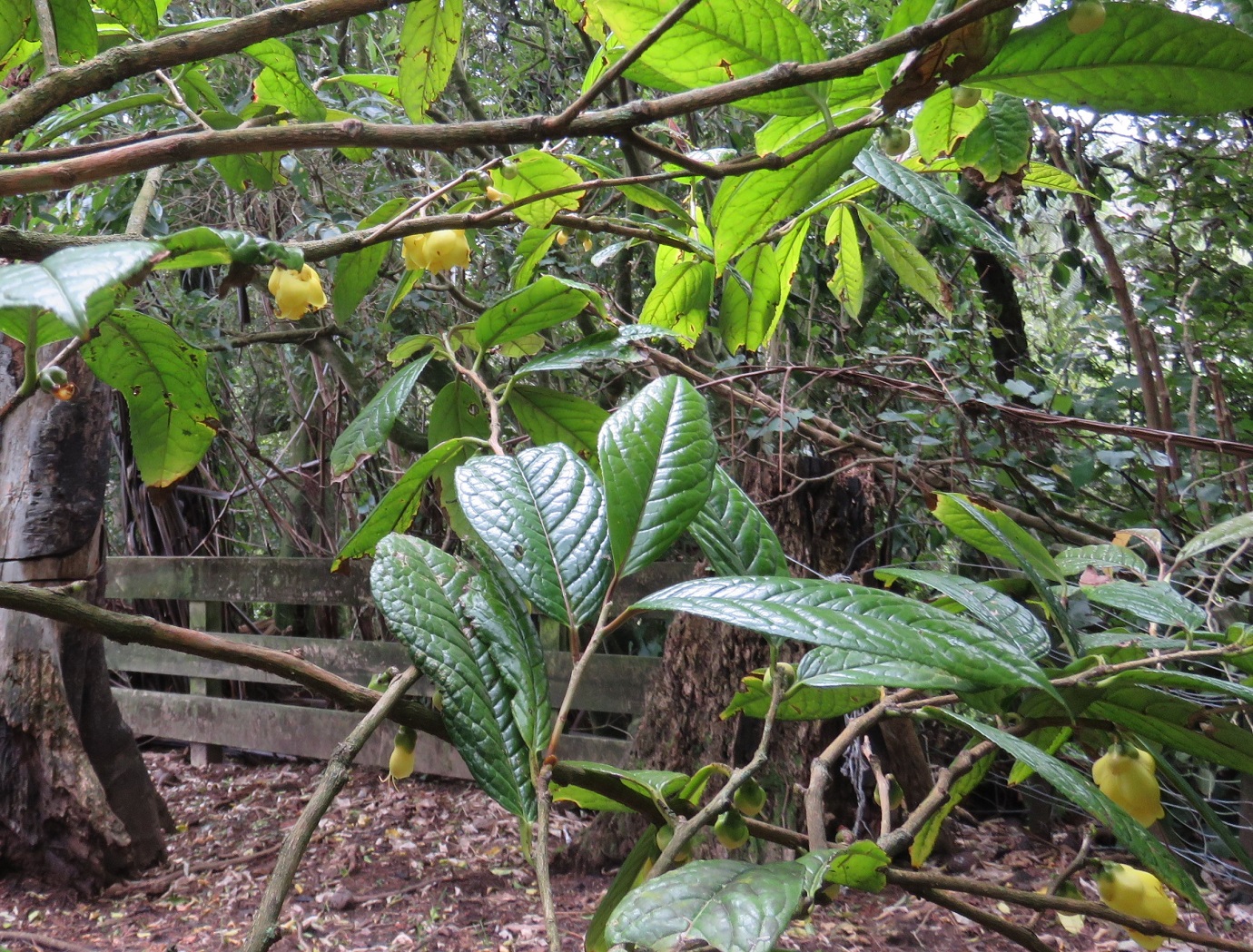
Sadly, even the interesting tropical yellow species like Camellia nitidissima suffer from petal blight in our conditions 

More of botanical interest than rewarding garden plant – Camellia nitidissima again

Camellia petal blight is a problem throughout much of the world. Australia hasn’t got it and long may their border control keep it out. As I commented after attending the International Camellia Congress in China,  it is not as devastating in other areas as ours. It is nowhere near as bad in dry climates. But here, with our generally mild climate, high rainfall and high humidity all year round, it is as bad as it can be. I doubt that we will plant another japonica or reticulata in our gardening lifetime. Were we still selling plants, we would have contracted our range to sasanquas, the garden-worthy species and some of the tiny flowered cultivars that don’t show a problem with petal blight because each individual flower only lasts a few days.

There is work going on to try and breed for blight-resistant choices but they are limited to tiny flowered cultivars as far as I have seen. I do not think we will ever see the japonicas and reticulatas free of blight. The progress on trying to find a treatment for petal blight is painfully slow and if it comes about, it may be suitable for treating individual specimen plants but not for the mass plantings that New Zealand went for in the past.

At the time it was discovered, it was only in four places in Wellington and could have been eradicated but it wasn’t seen a priority, either high or low. So it spread – everywhere. The theory back then was that it may have come in on a corsage being worn by an airline passenger from the west coast of USA where it was already well established. From such minor events can a major change be brought about.

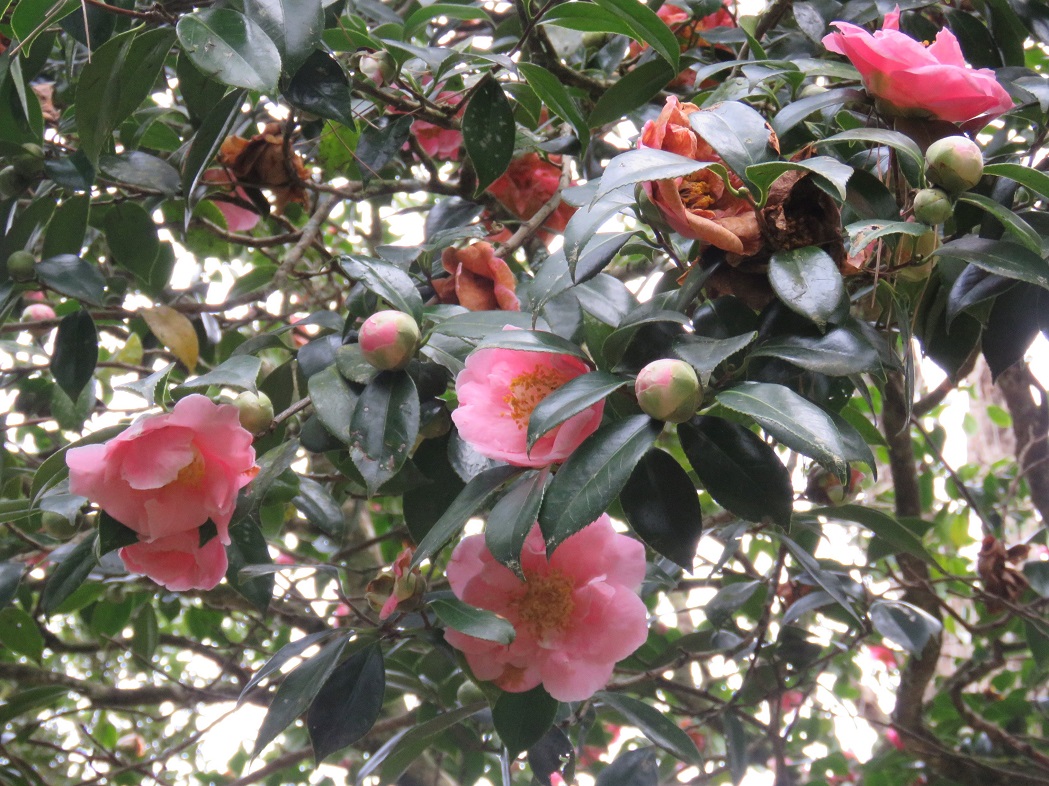
Most of our camellias look more like this now – hanging on to blighted blooms

I just feel a bit sad that I won’t see the mass display of beautiful blooms that we took for granted for so long. If you live in a drier climate, they are probably still a viable option. Look around and see if the garden plants in your area are putting on a clean display and dropping their spent blooms (blighted blooms usually stay hanging on the bush). If, like here, there are no mass displays of blooms any longer, I would be looking at planting other options than the larger flowered camellia types. When you come from the camellia family of Jury, that is bleak advice.

Ever the Pollyanna, I should finish on a positive note. Fortunately there are plenty of other beautiful flowering plants we can choose from for this time of year. Look at the range of colours Mark is getting to in his breeding work on garden-friendly michelia shrubs. Most of these are also blessed with good fragrance which is not common in camellias.

Camellia stars

China (4)

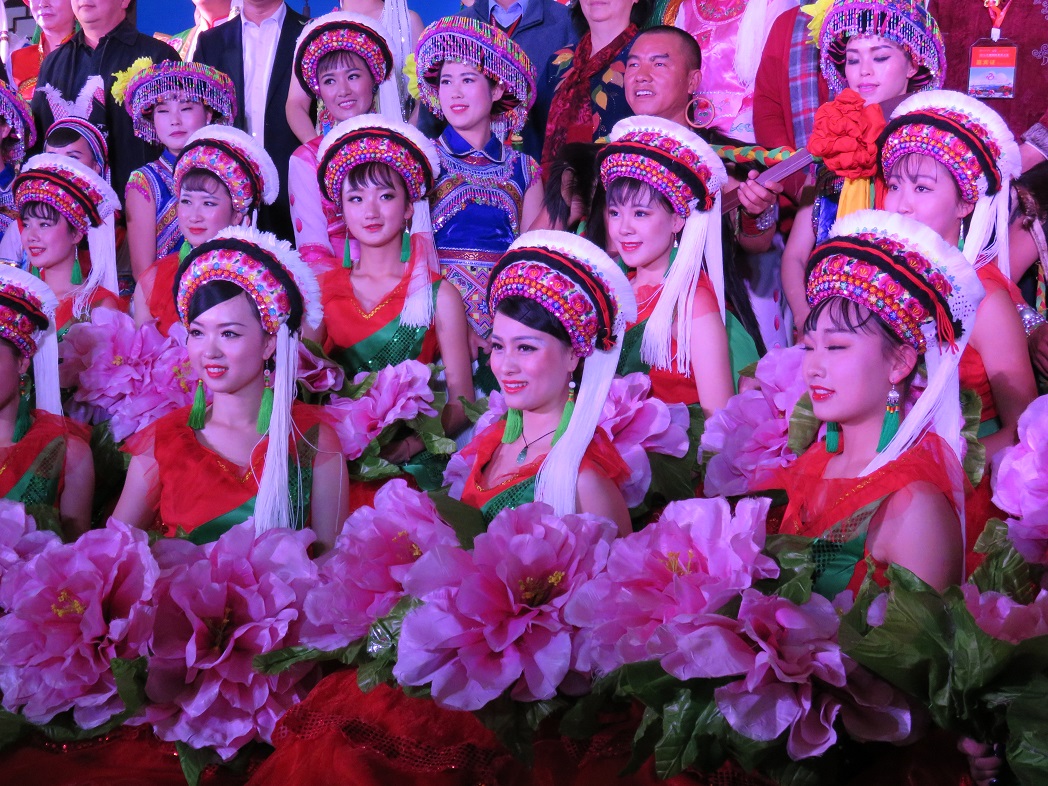
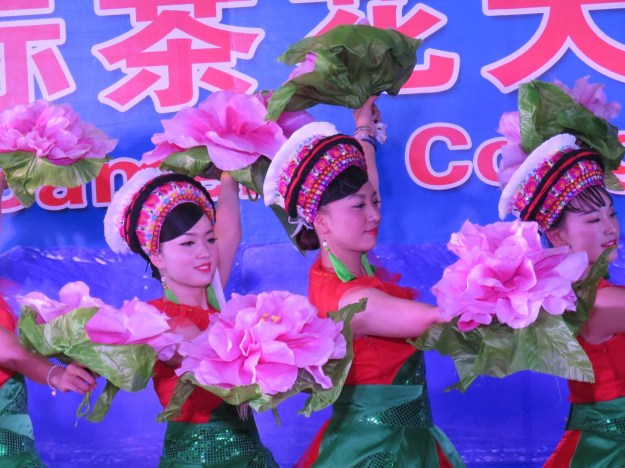
Camellia heartland in Dali with cultural performances. The dancing girls are holding oversized camellias


It is looking as if this is to be the year of the camellia for us. We went to China in February, to join the International Camellia Society’s biennial congress and it has been non-stop camellias since.

Camellia High Fragrance  (photo by Tony Barnes)

Camellia High Fragrance (photo by Tony Barnes)

While the congress in Dali was wall to wall reticulatas (more on these in my August NZ Gardener column), one New Zealand cultivar has made inroads to the heady world of Chinese camellias where they otherwise show complete loyalty to their own. The late Jim Findlay from Whangarei spent many years working on scented camellias and it would not be exaggerating to say that his ‘High Fragrance’ is a sensation in China – regarded with reverence, even. It is a shame Jim is not still around to enjoy the accolades and honour from the home of camellias.

Dali prides itself on being camellia heartland.  Even aside from the colourful displays and ceremonies associated with hosting what was seen as a highly prestigious congress, it was clear that the camellia is a cultural icon unmatched by anything I can think of in New Zealand, except perhaps rugby. It was celebrated in song, dance, art, branding, decoration and, above all else, in plants by the thousand, nay, tens of thousands, grown in containers and displayed everywhere.

Pink form of C. sinensis

Pink form of C. sinensis

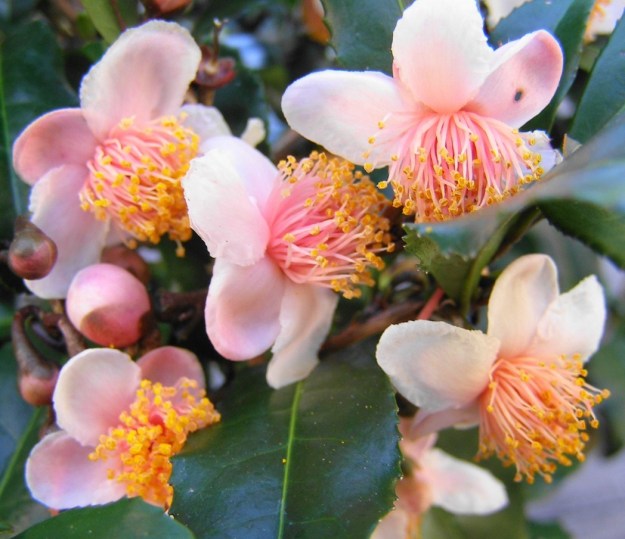
Travelling across hemispheres, we arrived home in early March to find our earliest camellias already in bloom. C. sinensis is the proper tea camellia and one form we have has the daintiest and earliest little pink blooms. It is, of course, primarily grown for its young foliage which we sometimes harvest for the freshest green tea experience possible. Lightly crushing the leaves and leaving them to ferment overnight in a warm place gives a stronger flavour, reminiscent even of our favoured Earl Grey. Inspired by our Chinese experience, I am determined to be more organised and consistent in harvesting the foliage in spring this year though we are not going to reach self sufficiency.

Camellia brevistyla

Camellia brevistyla

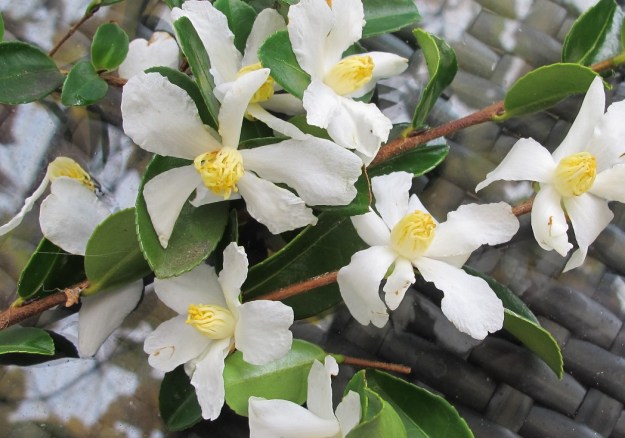
The other very early bloomer for us is Camellia brevistyla, with its dainty white flowers. It is a bit ephemeral with its flowering season (the extremely similar C. microphylla lasts longer) but its small leafed, compact form lends it to clipping so we are happy to let it keep its little space in the garden.
sasanqua camellias (2)

Sasanqua camellias in autumn

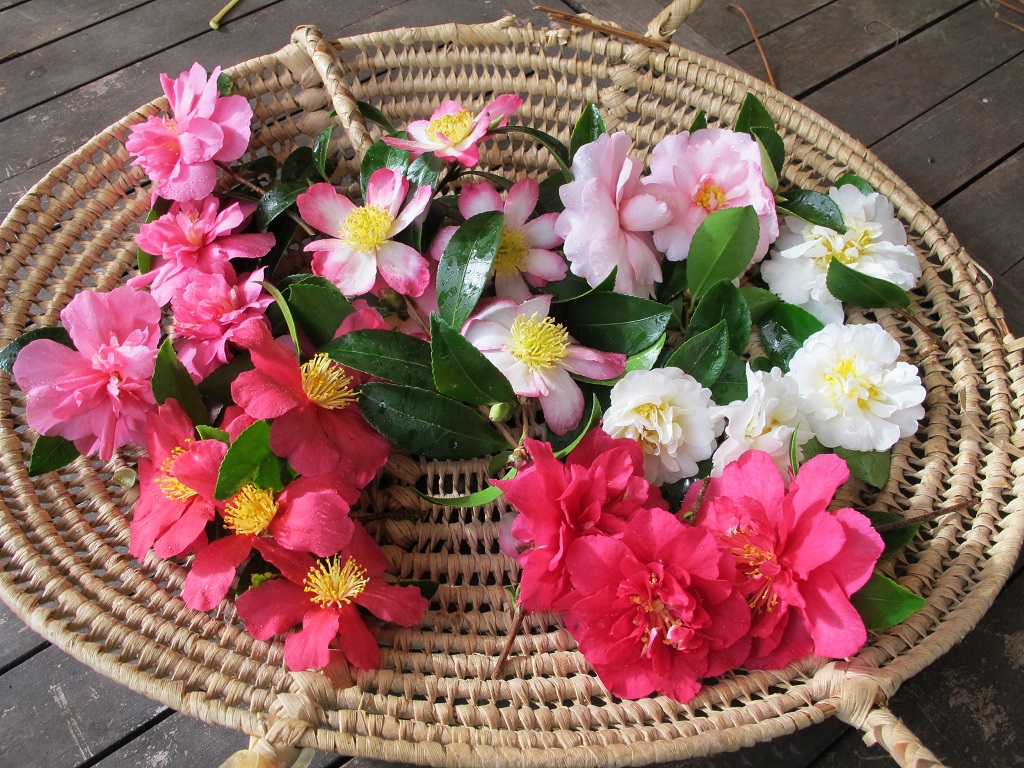
By mid May and into June, it is the sasanqua camellias that take centre stage as the dominant flowering shrubs in the garden. Most of the sasanqua species originated in Japan and in the camellia heydays through to the early 1990s, they were often seen as the utility relative – good for hedging and sun tolerant but lacking the substance and flower form that were prized in the japonicas and hybrids. Fashions change with time and these days I really like the softer flower form and the smaller foliage which is usually a good dark green colour and ideal for clipping and shaping. Also, the early bloomers of the season lift the spirits on grey days of late autumn going into winter.

Camellia petal blight

Camellia petal blight

The other huge bonus of the sasanquas  is that they do not get petal blight which has cut the display of later flowering types. The ravages of petal blight (technically Ciborinia camelliae) have been a huge disappointment to us and pretty much stopped the inter-generational Jury camellia breeding programme in mid stride. It was particularly interesting in China to see blight and discuss it with professionals from other countries. Australia is still free from it (a good argument for tight border control), but Asia, Europe and the USA are all afflicted.

I spoke to an Italian researcher who gave hope. They have found a biological cure (another fungus, in fact) which is working well in laboratory conditions but not yet in the field (or garden). Maybe over time, there is light at the end of the blighted tunnel. In the meantime, what struck us was that while we saw it through the areas of China we visited and discussed it with Europeans, it was nowhere near as bad as we get here at home. Mark ruefully commented that maybe we have the worst blight in the world. While our coastal Taranaki winters are mild and we get bright sun, we also get a lot of rain and high humidity – optimum conditions for anything fungal, really. China was dry. Maybe gardeners in dry parts of New Zealand like Hawkes Bay and Central Otago are correspondingly less affected?

Camellias continue to play a valued role in our garden but the nature of that role has changed in response to  wretched blight.

IMG_2845First published in the June issue of NZ Gardener and reprinted here with their permission. 
China (3)

Garden lore: July 20, 2015 Petal blight, white camellia hedges and winter pruning

“One has a lot, an endless lot, to learn when one sets out to be a gardener.”

Vita Sackville-West, A Joy of Gardening (1958)

078

Petal blight

Petal blight

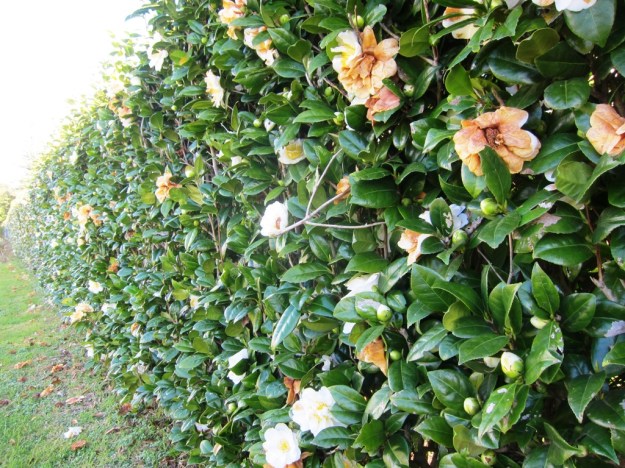
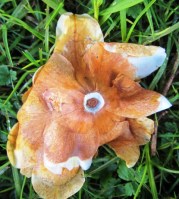
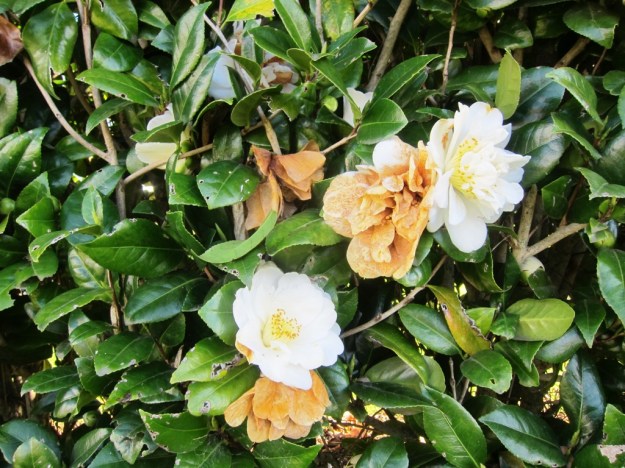
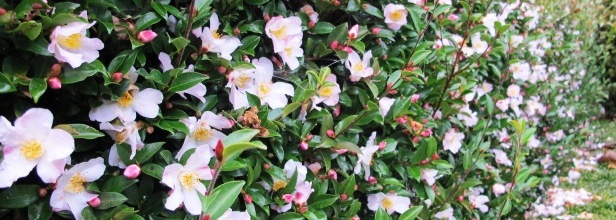
After writing about Winter Whites last week, referencing the ubiquitous white camellia hedges, of course I noticed this hedge on my way to town. My eye was drawn to the composition of brown and white flowers. It is a japonica camellia, though which one I am not sure. Closer examination revealed a bad case of petal blight, even this early in the season. There are two main giveaway signs. The first is the brown flowers hanging on to the bush. Most modern camellias are what is called self-grooming. They are bred to drop their spent blooms but those affected by petal blight hang on. The blighters. The second sign is shown by turning over a brown bloom and removing the calyx that holds the petals together. There is the tell-tale white ring of death – fungal spores. There is no remedy. You either live with it or you remove the plants.
076

I have never been a fan of japonica camellias for hedging. The foliage can go a bit yellow in full sun and both leaves and blooms are too big. Smaller leafed camellias, seen in the sasanquas, some of the species and the hybrids look much better. Miniature single flowers usually fall cleanly and disintegrate quickly, avoiding the sludgy brown effect below.

Camellia transnokoensis

Camellia transnokoensis

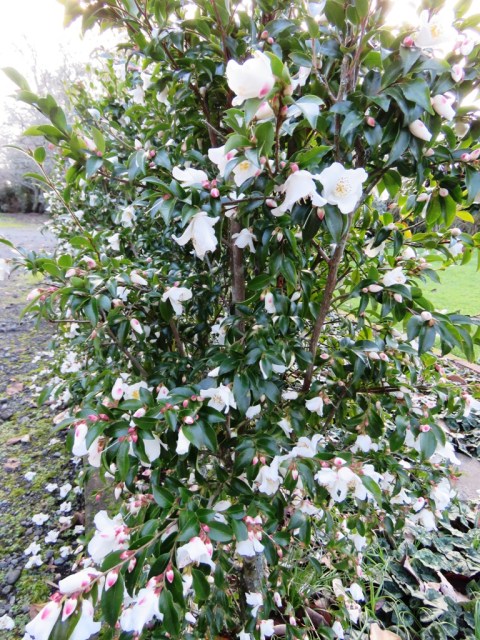
While our C. transnokoensis hedge needs to thicken up yet, we are charmed by its floral display. The sasanqua ‘Silver Dollar’ is also an excellent hedging choice. While the small flowers are nothing special viewed close-up, it is one of the first sasanquas to bloom for us and one of the last so it has exceptionally long season allied to compact growth and small leaves which are a good, dark green.

Camellia sasanqua Silver Dollar - an excellent hedging option

Camellia sasanqua Silver Dollar – an excellent hedging option 

While some claim that sasanquas can get petal blight, we haven’t seen it on our plants. And although the single flowered species and hybrids are not necessarily resistant, most set large numbers of flowers but each bloom only lasts a few days so they fall before blight takes hold.

On another topic, winter is pruning time. I did the wisterias on Friday. This is one plant family I recommend removing totally if you are not willing to prune them. They have dangerous proclivities. Most of the roses are done and I have started on the hydrangeas. Those in colder climates may be better to wait another month before tackling the last two because pruning encourages new growth which is vulnerable to frosts. The pruning guides I did several years ago as part of my Outdoor Classroom series give step by step instructions if you are not sure where to start – wisteria, hydrangeas, roses.

A blight upon your camellias

I married in to a camellia family. Long before the Jury name ever became associated with magnolias, it was known both in New Zealand and overseas for camellias. That is because there were two brothers working independently on camellias in the previous generation.

Les Jury (known here as Uncle Les, for obvious reasons) was the better known and some of his cultivars are classics in the camellia world – Anticipation, Debbie and Jury’s Yellow to name just three. Not far behind was Felix Jury who created Water Lily, Dream Boat, Rose Bouquet and many others.

Encouraged by his father and his uncle, my Mark was following suit. They were heady days and camellias ranked second only to roses in volume of plant sales in New Zealand. Both Mark and I remember the Day of Doom. Mark received an unannounced visit from senior members of the local Camellia Society bringing him the bad news that camellia petal blight had been found in Wellington. It took quite a while for the implications to sink in for me but Mark knew instantly what it meant and that was the day he stopped camellia breeding. Only now, more than twenty years down the track, is he starting to return to it as the picture has become clearer.

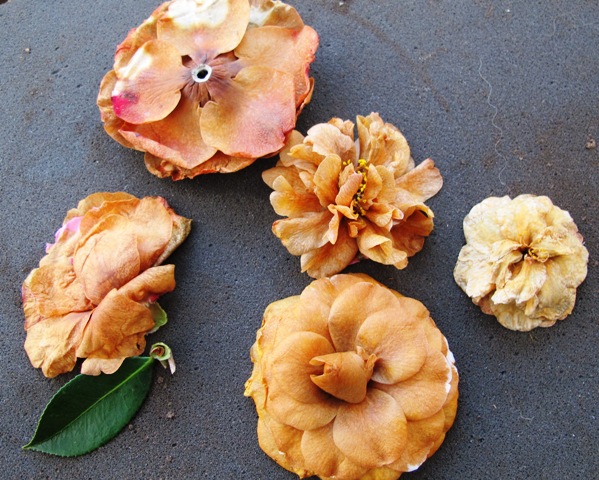
From these slightly blemished blooms...

From these slightly blemished blooms…

Camellia petal blight is endemic to China and Japan and has long been a problem on the west coast of the USA. More recently, it has struck the UK and Europe though apparently Australia is still free from it. A plant can’t carry it. It is transmitted on the flower or in the soil. Even back when it was first found in this country, standard practice was to ensure that all plants being shipped in or out of New Zealand were stripped of all flower buds and had their roots washed clean. It is quite possible that it entered this country inadvertently in a corsage somebody failed to discard safely or some similar incident. The discovery of infected blooms in Wellington Botanic Gardens and in two locations in the Hutt (if my memory serves me right) was hardly painted apple moth or Queensland fruit fly territory but its impact has certainly been very disappointing.

... to this in two short days

… to this in two short days

It is a fungus – Ciborinia camelliae, to be precise and the spore are dispersed through the air. The problem in this country is that the camellia is so ubiquitous and the distances from host plant to next potential host so short that the disease spread rapidly. For the same reason, you can’t eradicate it because you will just get reinfected. So we have learned to live with it.

We have always had botrytis which turns blooms dark brown but petal blight is much more rampant. What may be light brown speck on a bloom one day can show as riddled as the pox the following day and pale mush the day after. And it usually hangs on the plant, which is the worst aspect of all because blighted blooms look awful. A lot of modern breeding has been to get camellias that are self grooming – in other words they fall when finished. But not the blighted blooms.

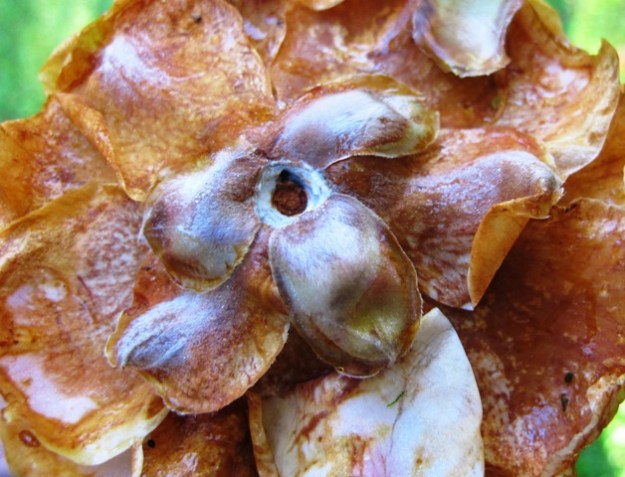
If you want to check that you have it, flip a bloom over and peel off the calyx which holds the petals together in the centre. If it has a telltale white powdery ring inside the calyx, that is petal blight. If it is greyish black, it is botrytis.

The white ring of death - camellia petal blight

The white ring of death – camellia petal blight

Petal blight does not weaken the plant. It merely cuts the floral display. You won’t get as many blooms, though given camellias’ propensity for massive bud set, they will still out flower most other shrubs. You will probably have to do more of a clean up, maybe shake the bush as you pass and rake up the debris to keep them looking attractive. It is still a lot less than many other plants require.

Reticulata camellias (the ones with the huge blooms the size of lunch plates) tend to drop their blighted blooms because they are so heavy. And many are red which doesn’t show the brown blemishes as badly. But reticulatas are very hard to find for sale these days. Despite what some information on the internet says, we have never found petal blight on our sasanqua camelliaseither, and that is not for want of looking. As far as we are concerned they are clean.

The smaller flowered camellias with masses of shortlived blooms in succession are just as good as ever. We had a rush of blood to the head when Mark thought last week that petal blight was entirely absent from his Camellia Fairy Blush (the first camellia he ever named – a C. lutchuensis hybrid, not a sasanqua). He examined many spent blooms and finally found one with the telltale white ring. So not blight free, but unaffected in its display.

It is the bigger flowered, paler varieties that look the worst along with the ones bred for show blooms – fewer flowers but with perfect form. It has pretty well wrecked the traditions of camellia shows. Whether time and renewed efforts by plant breeders can replace these types with blight resistant options is still unknown.

Camellia Fairy Blush - not immune but the display is unaffected

Camellia Fairy Blush – not immune but the display is unaffected

First published in the Waikato Times and reprinted here with their permission.