
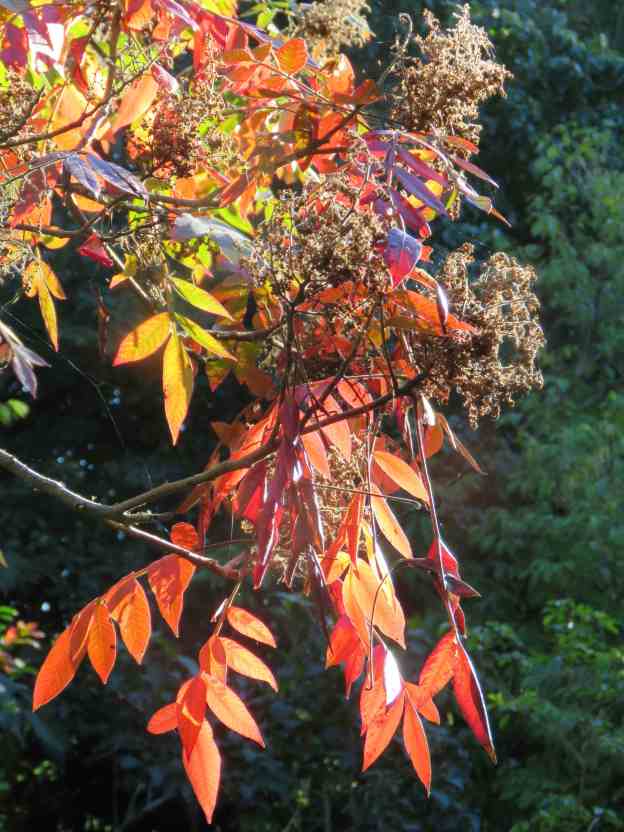
It is not ‘sumer’ that is icumen in here, but very much autumn that has announced its arrival.
It seems a lifetime since I studied English literature at university. I guess it is almost a lifetime ago and I have long since lost my ability to read texts such as Chaucer’s tales and ‘Sir Gawain and the Green Knight’ in their original Middle English. But how have I reached this age without ever knowing about the farting billy goat in ‘Sumer is icumen in’? (see below) I only found it this morning when I looked up the lyrics. It is perhaps a sign of times that were more bawdy than vulgar.
‘Icumen in’ does not translate to ‘is coming in’. It means it is here and nothing makes that seem more real than the end of daylight saving. I used to find the onset of autumn somewhat depressing, describing myself as a summer bunny. But now that I garden, it heralds the start of a new season with all the freshness of new season flowers.
In our climate, it also heralds the time when we can get back to planting, digging and dividing and renovating parts of the garden that are crying out for more drastic action. We still have up to two months of the growing season left here; the ground doesn’t get cold enough to stop plant growth until June. Indeed, for those people who live in areas with hotter, dry summers, autumn planting is often a much better option than spring planting because the plants can settle in and get their roots out before the stress of summer conditions sets in. Spring planting is the better option for those who live with harsher climates where the ground can freeze or is waterlogged and very cold in winter but most of our country can happily plant away in autumn, safe in the knowledge that that the plants will over-winter and leap into new growth in springtime.
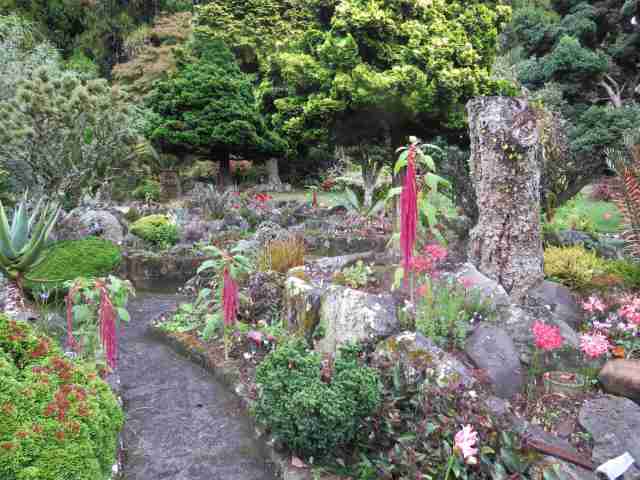
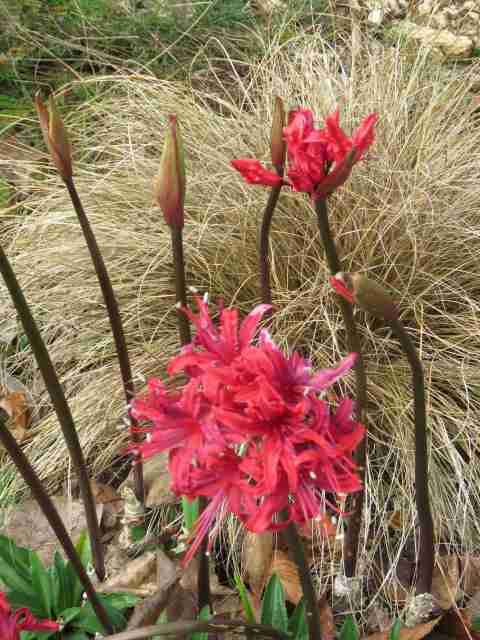
Autumn is the second season for the rockery. While there is always something of interest flowering 52 weeks of the year, autumn and early spring are when it bursts with colour and variety. Nerines feature large, particularly the sarniensis hybrids.
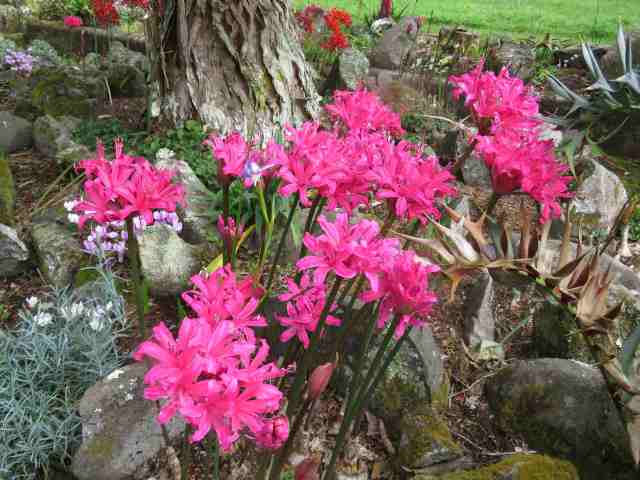
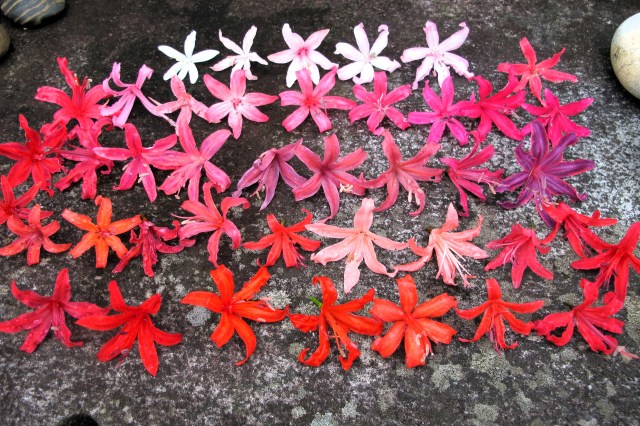
Most of our nerines are hybrids from both Felix and Mark’s efforts. We once named and sold a few but nowadays they mostly just exist in our garden. Every year, my camera fails to capture the truly startling shade of highlighter pink in this clump.
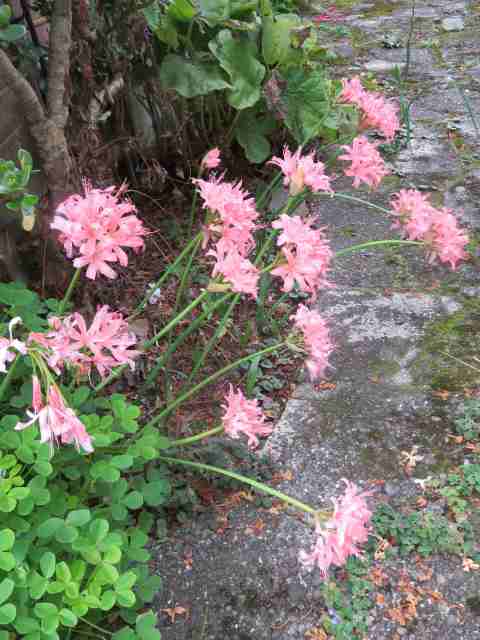
Felix started with a few named ones from Exbury. This is ‘Inchmery Elizabeth’ and has proven to be such a pretty and reliable performer down the decades.
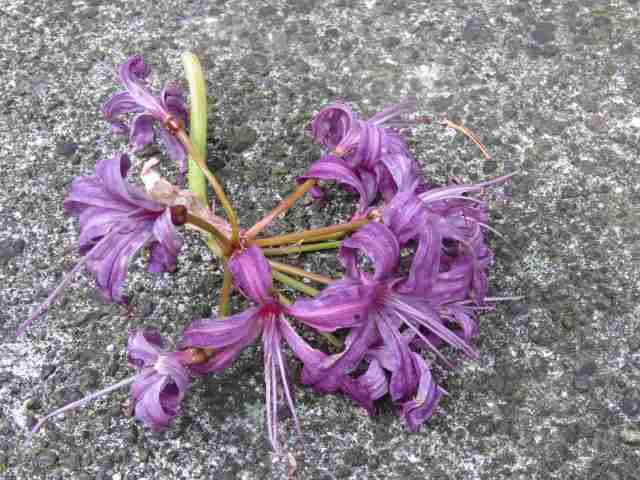
I found this one snapped off, which may have been due to slug chomping on the stem or it may have been Ralph the dog who is no respecter of gardens but ploughs in when pursuing a fly, bee or wasp. What I think is interesting is the shade of purple it is fading to; presumably there are enough blue genes in there to indicate it is only a matter of time and determination by somebody to get to true purple and blue hybrids in the future.
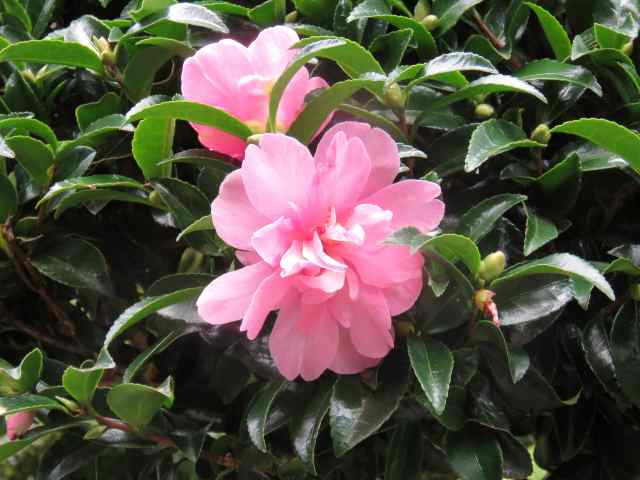
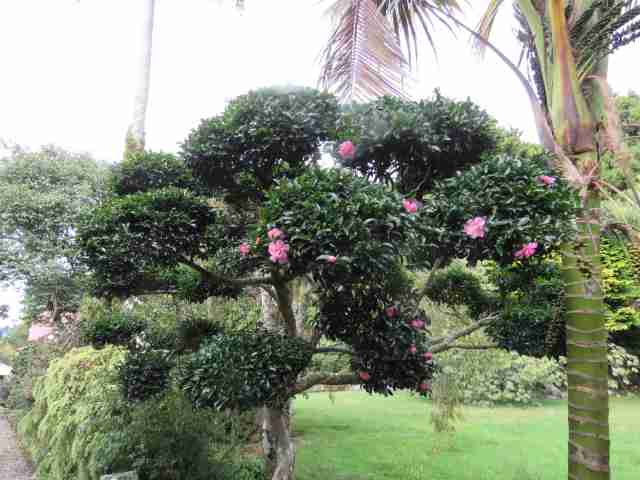
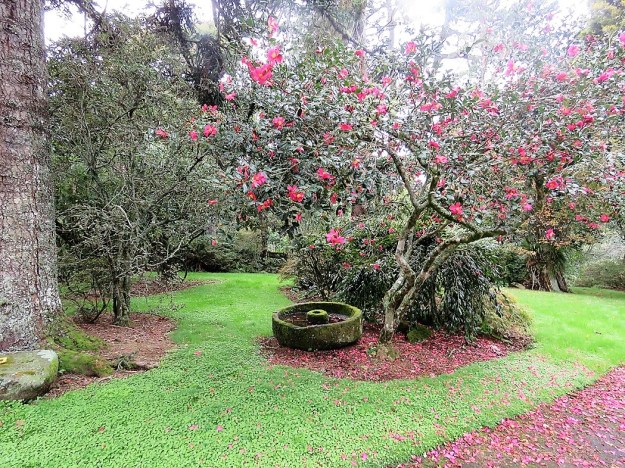
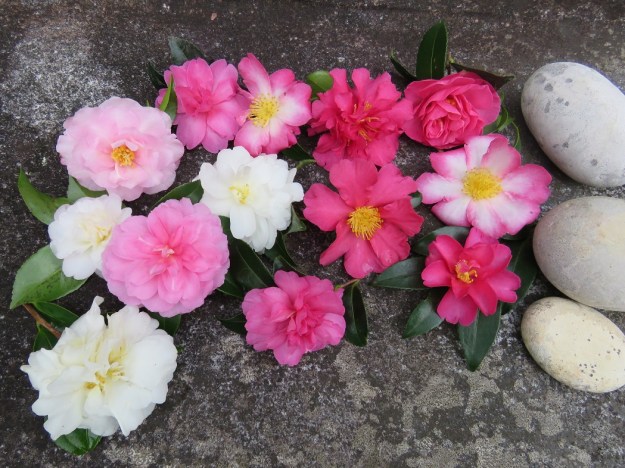
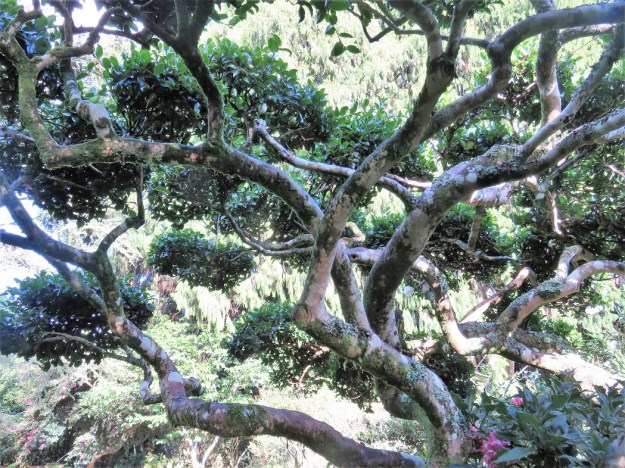
Autumn is sasanqua camellia season. This is sweet little ‘Elfin Rose’, which we cloud prune. Sasanquas don’t have to be white, as per the long-running fashion in this country.
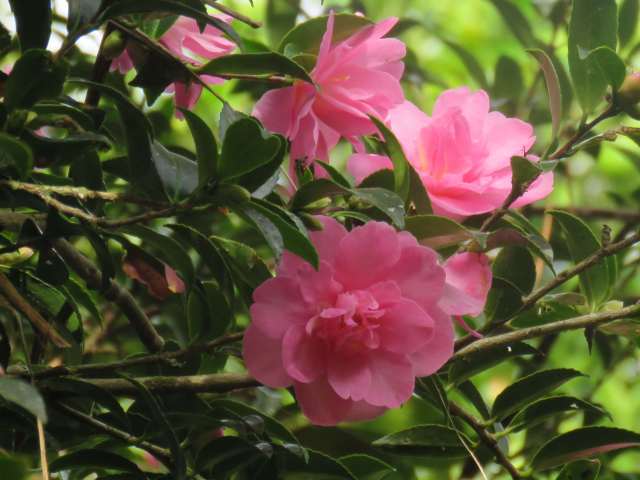
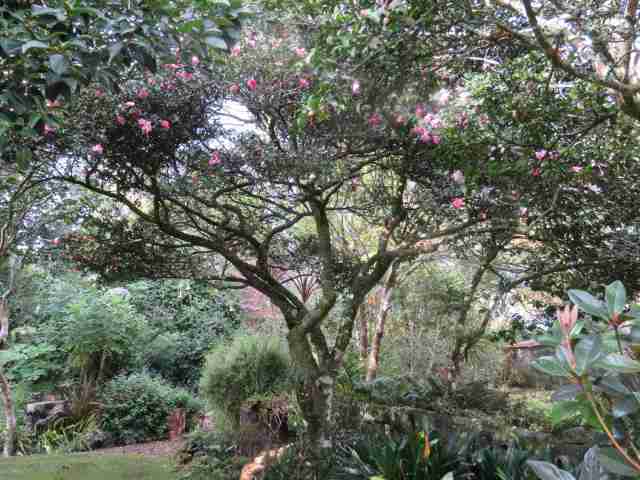
The flower on ‘Sparkling Burgundy’ is not so very different to ‘Elfin Rose’ but the habit of growth is. This plant is decades old, maybe 50 years or so. We lifted it and thinned the canopy to turn it into a graceful, open small tree rather than a bushy shrub.
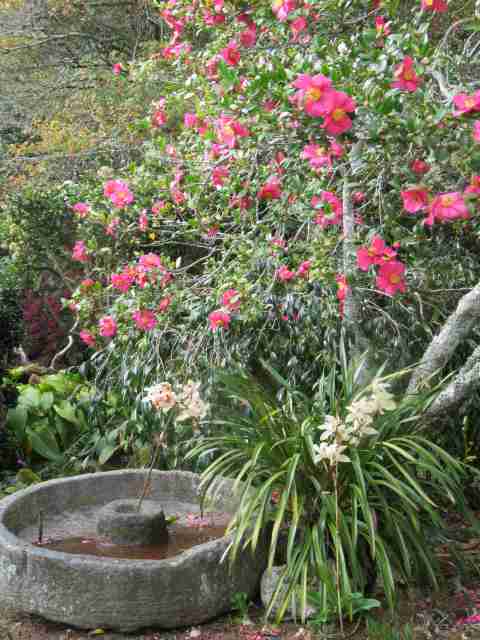
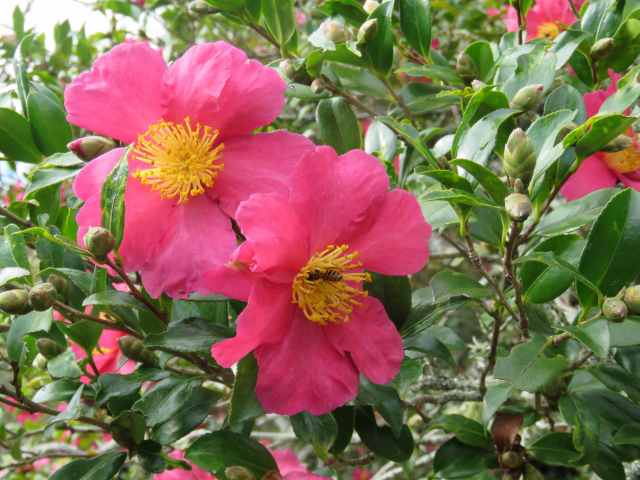
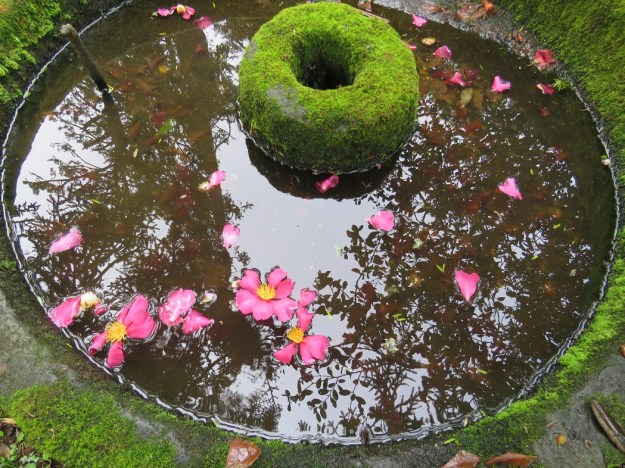
Sasanqua camellias have softer flower forms and laxer growth than the more common japonica and hybrid camellias that flower in winter and spring but they don’t get petal camellia and we have grown to appreciate their relaxed informality of flower form. Alas that is a wasp feeding on the flower above but they are equally a source of food for the more desirable bees. Exposed stamens and pollen are the key to feeding bees.
The lyrics to ‘Summer is icumen in’, courtesy of Wikipedia. Composed, it seems, to be sung as a round. Spot the farting billy goat (and the politer alternative).
| Middle English Sumer is icumen in Lhude sing cuccu Groweþ sed and bloweþ med and springþ þe wde nu Sing cuccu Awe bleteþ after lomb lhouþ after calue cu Bulluc sterteþ bucke uerteþ murie sing cuccu Cuccu cuccu Wel singes þu cuccu ne swik þu nauer nu Sing cuccu nu • Sing cuccu. Sing cuccu • Sing cuccu nu | Modern English Summer[a] has arrived, Loudly sing, cuckoo! The seed is growing And the meadow is blooming, And the wood is coming into leaf now, Sing, cuckoo! The ewe is bleating after her lamb, The cow is lowing after her calf; The bullock is prancing, The billy-goat farting, [or “The stag cavorting”] Sing merrily, cuckoo! Cuckoo, cuckoo, You sing well, cuckoo, Never stop now. Sing, cuckoo, now; sing, cuckoo; Sing, cuckoo; sing, cuckoo, now! |
 But every autumn, as the sasanquas come into flower we both derive huge delight, particularly from the
 Tikorangi The Jury Garden