Tag Archives: crocosmia

Bold Bulbs of January

While I think of early spring and autumn as Peak Bulb Blooming Time here, January must take the crown of Big Show-off Bulb Time. With big bulbs as well as a big display, notably the lilies and scadoxus.
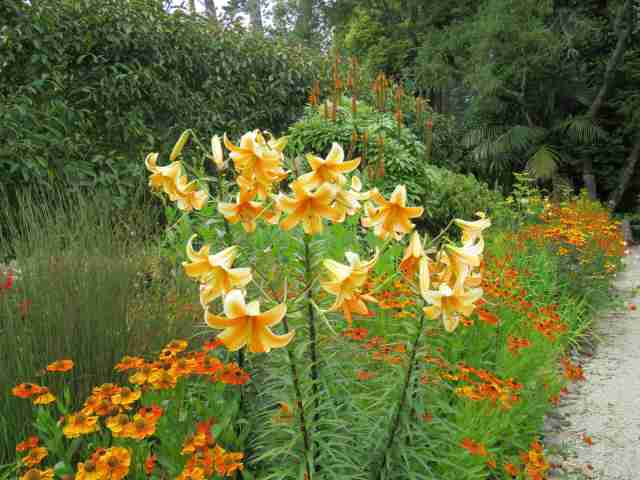
Mark’s Aurelian hybrids in yellow and apricot orange.

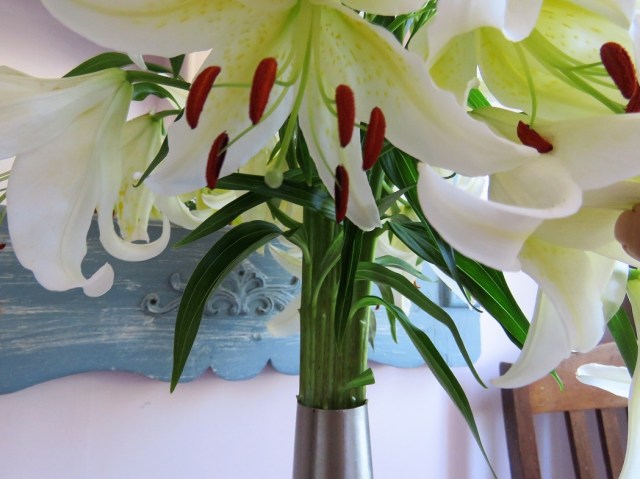
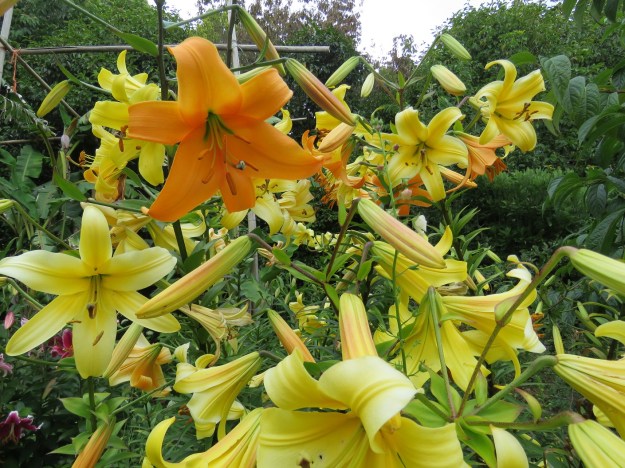
Beat the drum to announce lily time. The month starts with the yellow and apricot-orange Aurelians, for which I give full credit to Mark. We have never made them available on the market so any Aurelians you buy won’t look quite look ours and probably will have fewer flowers to the stem. They are truly lovely in their 2 to 3 week season. Nicely scented too.
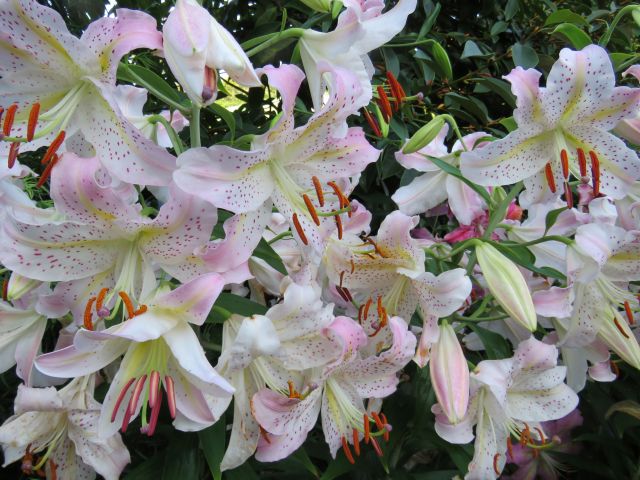
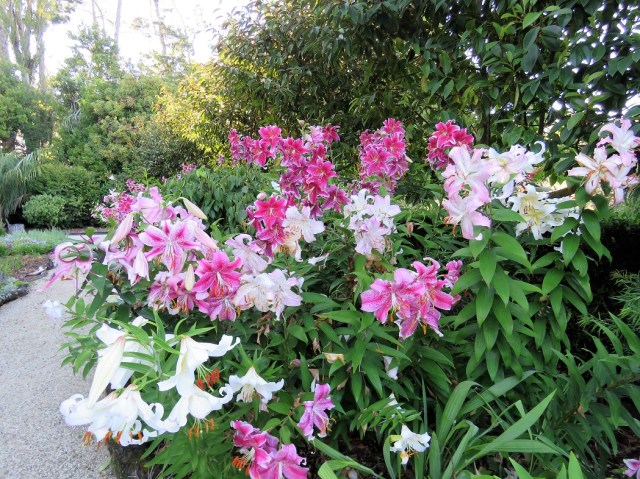
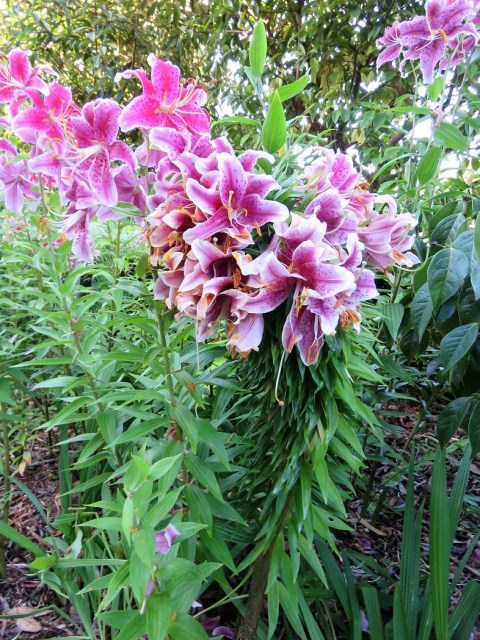
Auratum hybrids – all outward facing

As the Aurelians pass their peak, the auratums hit their stride and they are an astounding sight in full sun and in the open woodland areas of the Avenue Gardens. We have a few, as I say in a major understatement. Some date back to Felix who dabbled with lilies in the 1960s and 70s, and even further to Les Jury (his older brother) selecting for deep red shades amongst others, but particularly for outward-facing flowers. Upward-facing lilies are probably better for florists but they also gather dust and leaves and suffer more from pollen staining so they are not as good as garden plants. We select for plants that perform as garden plants.
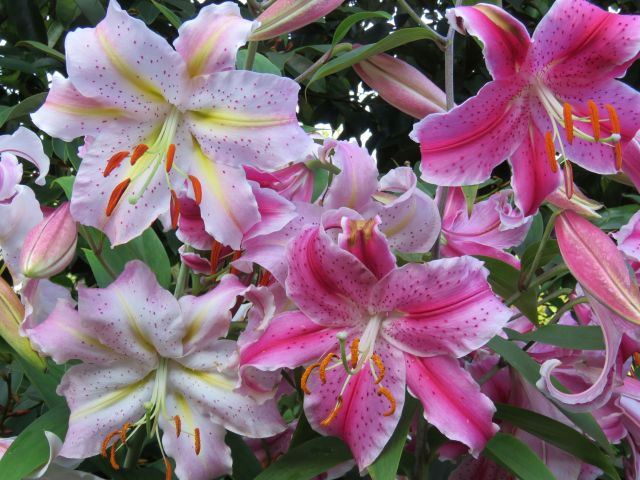
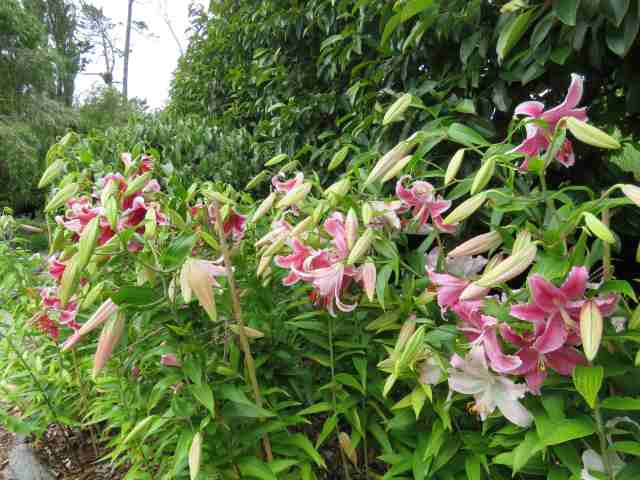
A 30 metre border of auratum lilies plus a whole lot more in other areas. Did I mention we have a few?

Back in our mailorder days, we named and sold a few of Felix’s selections but the more recent hybrids from Mark have never been put into commercial production. Pure and simple, he raised many plant from controlled crosses for our garden (by which is meant he chose the parents and manually pollinated rather than harvesting wild pollinated seed). He was after outward-facing blooms, big flowers, strong stems and a range of colours from white through pinks to what passes for red in the auratum family. He succeeded in this endeavour and every year, the auratums are a sensory joy with both looks and heady fragrance.
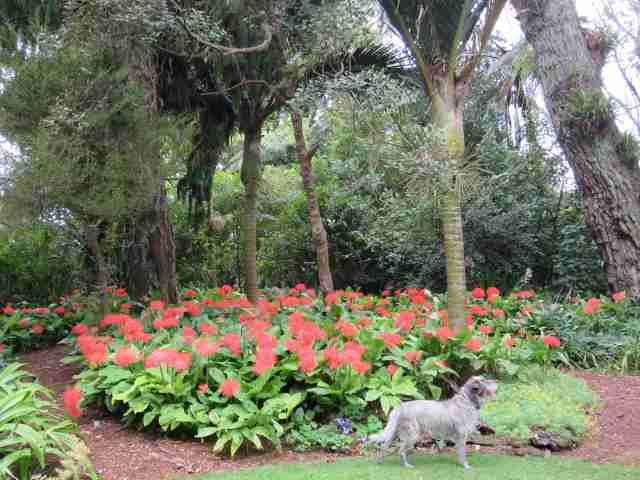
We have a few Scadoxus multiflorus ssp katharinae too.

The Scadoxus multiflorus ssp katharinae continue to thrill and delight us with their sheer scale here. I am not sure I have much else to say that I have not said before. This particular patch is one of our unique features. It is more usual for these bulbs to be nurtured as single specimens in a pot. While they have naturalised here, their spread is not on such a scale as to be described ‘invasive’; they are easy to control but we are fine with them gently popping up in nearby areas. As a general rule, we favour complex scenes of mixed plants rather than mass plantings, so much the better if they are choice plants finding their own happy place.
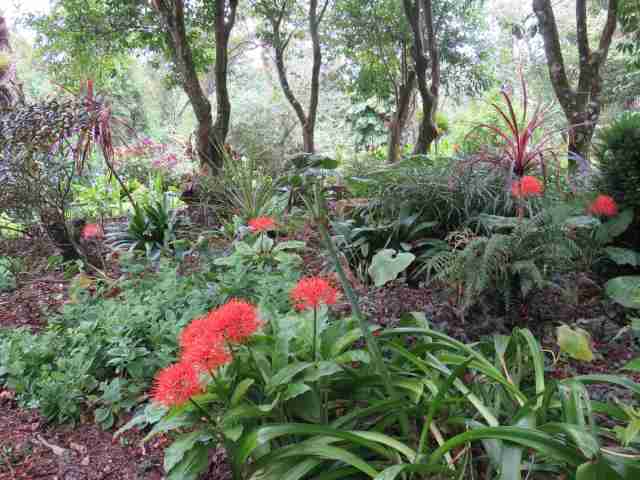
Gently spreading in the woodland
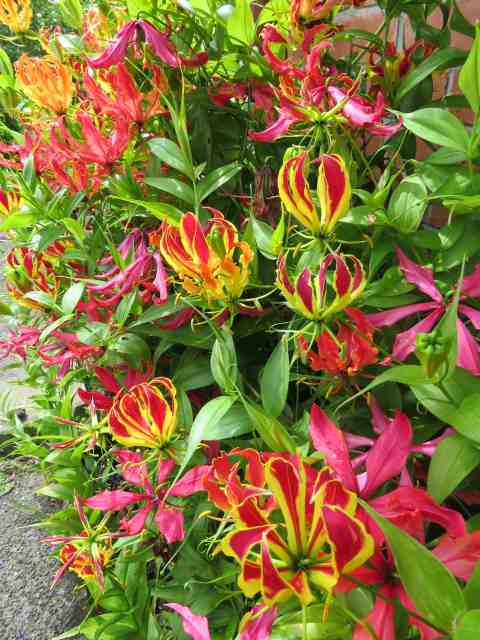
Gloriosa superba in a dry border that never gets watered and the only moisture is runoff from the concrete beside

It is also gloriosa time. While they are commonly referred to as climbing lilies, the lily connection is but distant and the colchicums are much closer relatives. Gloriosas are highly prized by many until they multiply to the point where they become a bit of a weed. We are at that point. They are a handy plant to have in super dry conditions like the narrow, hot, dry border at the front of our house where little else thrives. I am not convinced about them in other areas and am trying to restrict their spread. Also, I feel they ramble as much as climb. I wouldn’t mind if they would climb neighbours to hold themselves up but they are more inclined to sprawl and need staked areas to keep them more upright.
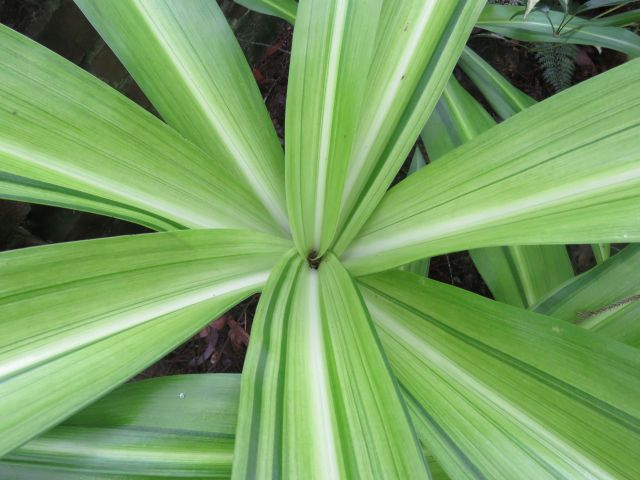
Crinum moorei var rates as a choice bulb for its foliage alone, even before the white flowers appear
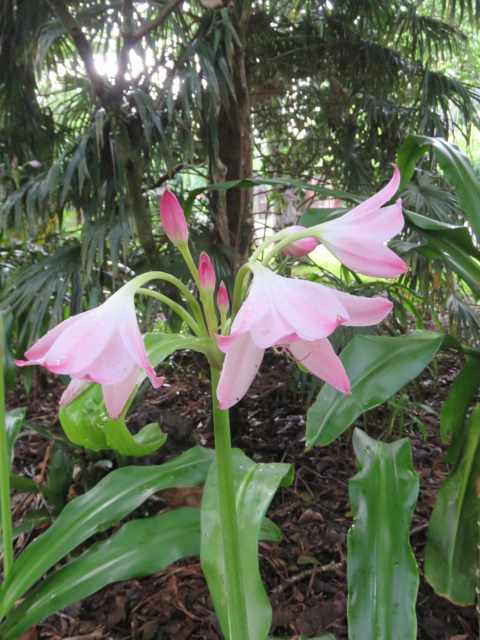
It may be C. moorei (non variegated) or it may be one of the other species. Nowhere near as choice but pretty enough in casual woodland

The stars of our crinums are the many bulbs we have of Crinum moorei variegated but they are only just starting to put up their pure white flower spikes this week so they can wait til February’s instalment. We have other crinums flowering soft pink. I have never unravelled the different species; Mark tells me we have two different species, one of which is the common form of moorei (non-variegated) and one of which is a different species that he has forgotten the name of and I never knew so its identity may remain forever a mystery. These all-green foliaged plants are rangy in foliage, utilitarian but useful bulbs for shady areas and pretty in bloom.
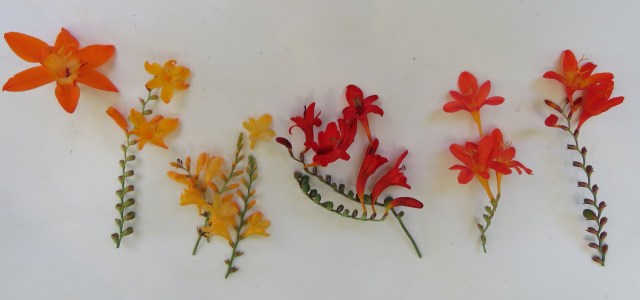
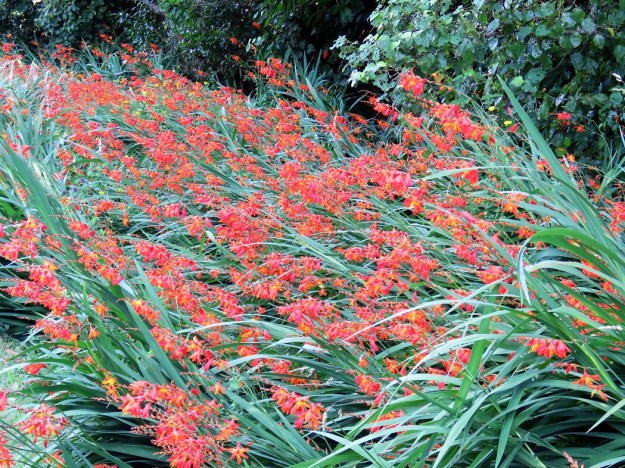
Crocosmias – pretty but most are on the rampant side
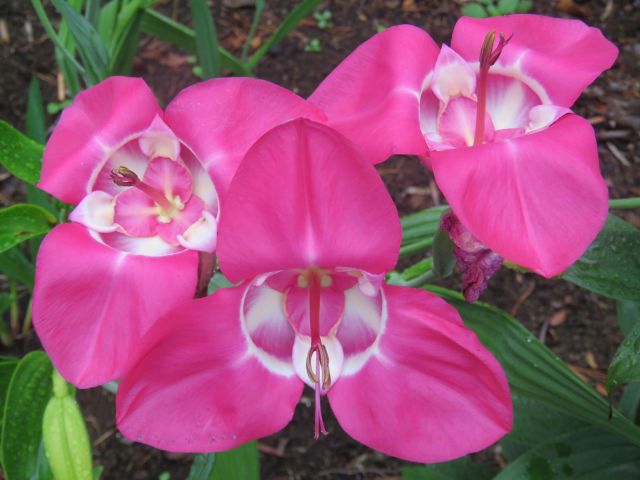
Tigridias – we have them with and without spots in white, red, yellow and a variety of pink hues

In the showy/utilitarian/potentially weedy category, we are flowering tigridias (jockey caps), crocosmia and zephyranthes. Tigridias hail from central America, Tigridia pavonia which is the common garden species  is from that area around Mexico and Columbia. Crocosmia are a grasslands bulb from southern Africa.
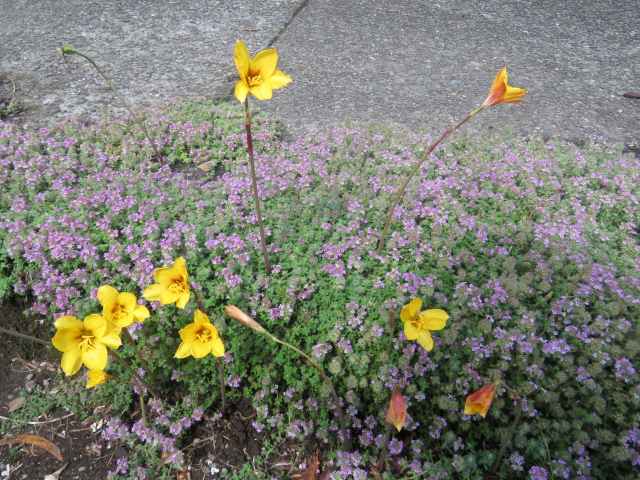
Zephyranthes or habranthus? I was going to say at least we can call them rain lilies but they are not even lilies because they belong to the amaryllis family instead.

The zephyranthes are from the Americas, oft referred to as ‘rain lilies’ because flowering is triggered by rain. Zephyranthes or habranthus, you may ask. As I did. I have no idea now. We have always called them zephyranthes but ten years ago when I wrote this piece they appear to have been reclassified as habranthus. Now, a decade on, it appears that habranthus have been swept up – along with sprekelias – and moved back to zephyranthes.  This is all based on botanical analysis and DNA and who am I to challenge that? I can continue with zephyranthes which is easier for this old brain to remember because we used to have a family dog named Zephyr. These are plants for the casual, sunny areas of the garden – more wildflower than tidy bedding plant.
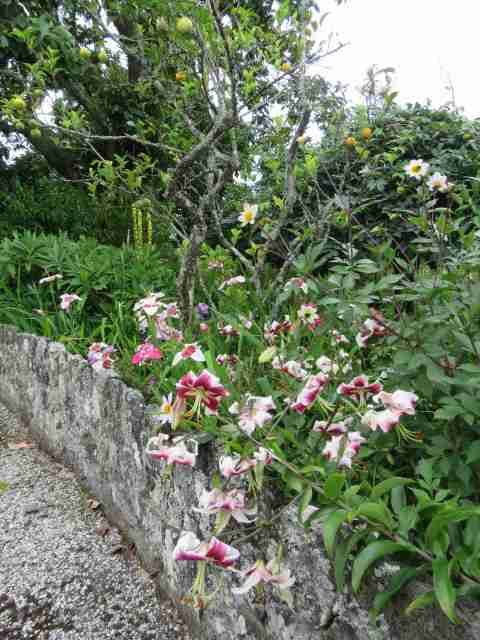
A casual planting of a smaller flowered auratum and tigridias beside the drive in the Iolanthe Garden

As if the disappointing summer is not bad enough, I see we already have the first flowers opening on Cyclamen hederafolium and even the autumn snowdrop. Sigh.

Special thoughts to those in the north and on the east coast who have been hit hard by extreme weather in the past week. We see you, we hear you, we feel for you even as we know that is about as useful as Trump’s ‘thoughts and prayers’ or, in the rural vernacular, as useful as tits on a bull. May the weather settle soon that you can start the process of recovery.
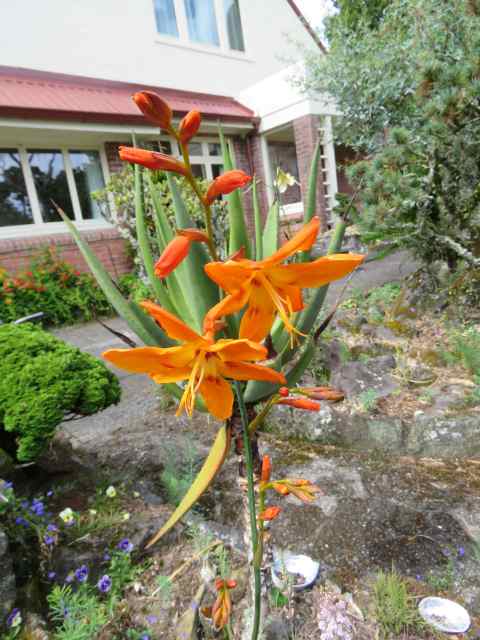
Crocosmia – possible ‘Star of the East’. Unlike the others we grow, this has exceptionally large flowers, is VERY slow to increase and never in any danger of becoming a weed or wildflower. This is why it is allowed in the rockery.

A week of paper wasps, fasciated lilies and crocosmia

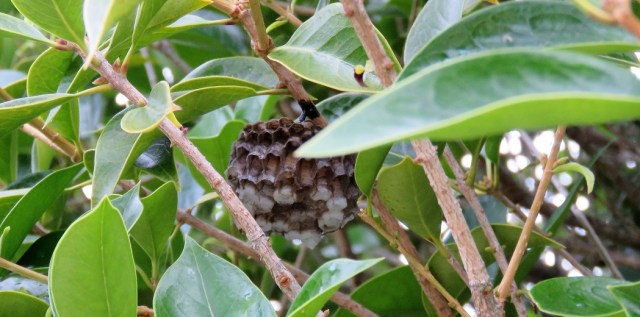
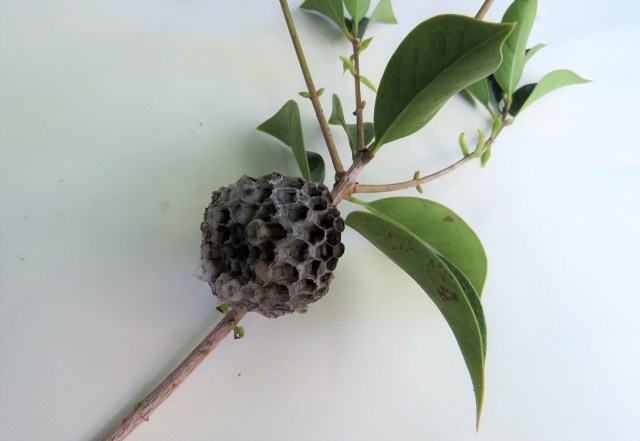
A paper wasp nest

Look at this cute honeycomb nest. A small wonder of nature but not a welcome one. It is the nest of a paper wasp. I have lived my life blissfully unconcerned about these creatures. We have both the Australian and the Asian paper wasp in New Zealand, along with the more aggressive German and common wasp. Mark wages war every summer on the nests of the latter two.

The nest is fairly hard to spot in the foliage

Alas, a wasp from this nest that I hadn’t even noticed took exception to me cutting out some of the leafy tips of an over-large osmanthus. It stung me twice just below the eye and then buzzed me aggressively as I exited hastily. I didn’t even see it. I was more worried about getting to a mirror to work out whether it was a bee (in which case I would have needed to get the sting out) or a wasp. Mark went straight out and spotted the nest at eye level – he is observant, that man. They are quite hard to spot because there is not the busy coming and going that defines a common wasp nest. We looked on line and came to the conclusion that what he saw crawling over the nest was more likely an Australian than Asian paper wasp. Whichever, they are dead wasps now.

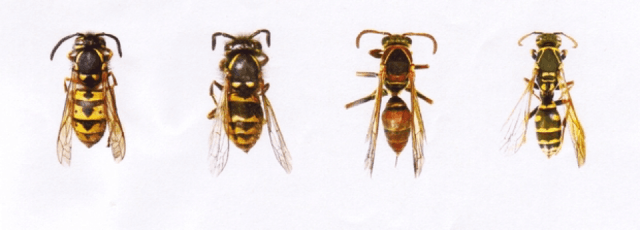
Left to right: German wasp, common wasp, Australian paper wasp, Asian paper wasp. Photo credit: unknown. All these wasps are unwelcome intruders to this country.

While unpleasant, two paper wasp stings do not appear to be as bad those from the larger common or German wasp. I kept ice cubes wrapped in cloth on them for an hour or more as required on the first day. The puffy swelling remained for another three days and the site remained tender to touch but not exactly painful, so it could have been much worse. At least I know what to look out for now.

We are past peak auratum lily season although there are still plenty in bloom as we enter late summer.

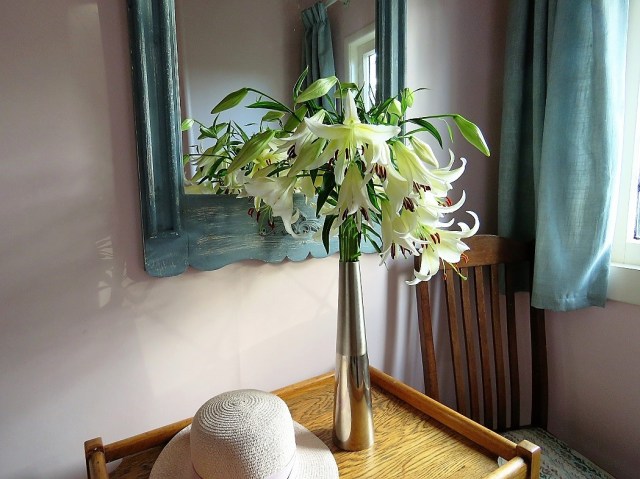
A mass of blooms on a single stem – a sign of fasciation

Here we have the curiosity of a fasciated lily, not to be confused with a fascinating lily unless you like freaks and novelties. It is an aberration in a plant, usually a seasonal deformity but not a lasting condition and it causes a flattening of the stem (basically it is two dimensional and ribbed) and a huge increase in the number of flowers but they are correspondingly smaller. The cause is unknown and it may stem from any number of things (including hormone spray damage but not in this situation) but presumably environmental because it does not appear to be a genetic issue in the plant. It is not likely to occur again in the same plant next year.

You can see the stem is very broad and ribbed. What you can’t see is that it is also almost flat.

I picked the white stem because the weight of the flowers was too heavy for the stem to hold it up but we have another example in the lily border which stands very sturdily, showing off its freakish growth. The local paper used to publish stories every year with some breathlessly excited gardener showing off their ‘special’ plant with its unusual head of flowers and flat stem but it is not rare and fasciation occurs across a wide range of plants. It is not generally stable or lasting but broccoli, apparently, is a freak fasciation that was stabilised. Google it, if you want to know more.

You can see a much fuller head of blooms and dense foliage on the fasciated lily in the centre

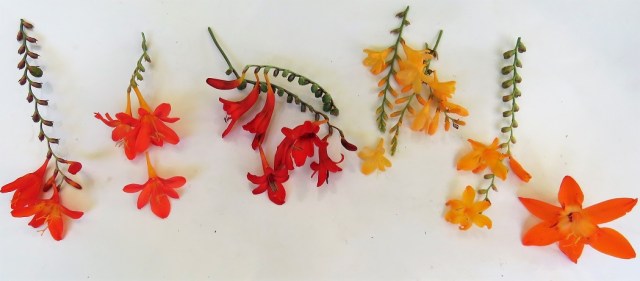
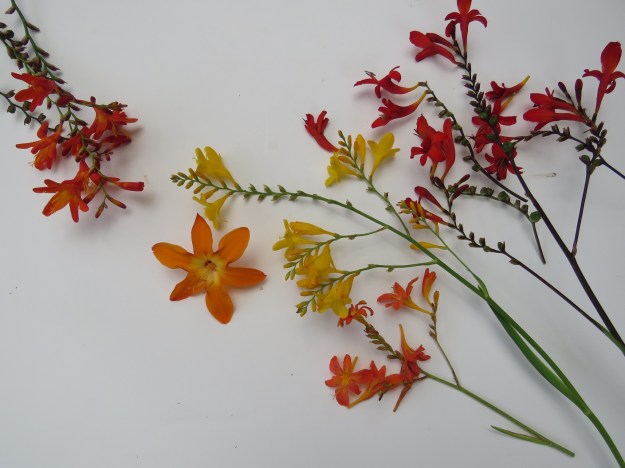
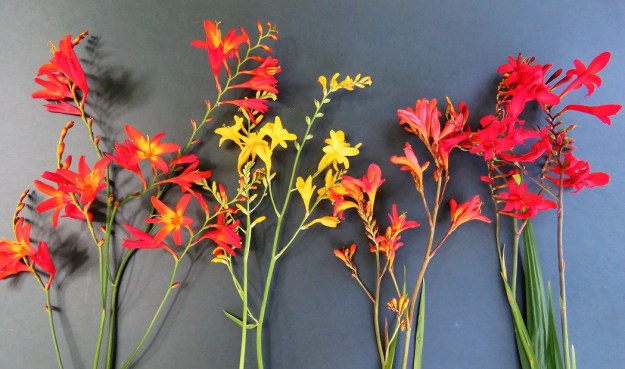
The crocosmias are starting to pass over but I like to line them up and compare them. Going left to right, we start with the common roadside weed. It is usually called montbretia in this country and while pretty, it is a seriously invasive weed. It washes down our stream in every flood and it is all down our roadsides but we certainly never introduced it ourselves. It multiplies readily both from the bulbs and by seed. Botanically, it is C. crocosmia x C. crocosmiiflora.

Second from the left is ‘Severn Sunrise’ and I am working to eradicate it from the garden. It appears to be just as invasive the common one and not much different in flower, habit or growth. I wonder if it is just a selection of the same cross. It may be more highly valued in countries where it is not such an invasive weed.

Third is red ‘Lucifer’ which is now listed as Crocosmia x curtonus (I see I previously found it as C. masoniorum × C. paniculata) so it has different parentage to the orange, weedy ones. It is by far the strongest growing one we have and certainly showy but also vigorous (read: the bulbs increase very rapidly) and it sets so much seed that I try and deadhead it to control it. I also need to thin out the bulbs which are getting a bit too determined to colonise and dominate the areas where they live.

Fourth along is one of my current favourite and the purest yellow with dainty blooms. It is just a chance seedling Mark picked up from the roadside so it will be the same cross as common montbretia (C. crocosmia x C. crocosmiiflora) but we have not had an issue with it seeding down. The bulbs increase readily but without free seeding, it is not a problem to keep it restrained and it seems to have a longer flowering season.

Second from the right is my newest addition – larger flowered and a pretty yellow but richer in colour so more apricot than pure yellow without quite getting to orange. I swapped some of our yellow one with Cemetery Sue at the graveyard to get this one and it is likely to be a named form but neither of us know the name. She has not had an issue with it seeding around so I am hopeful for its future in our garden.

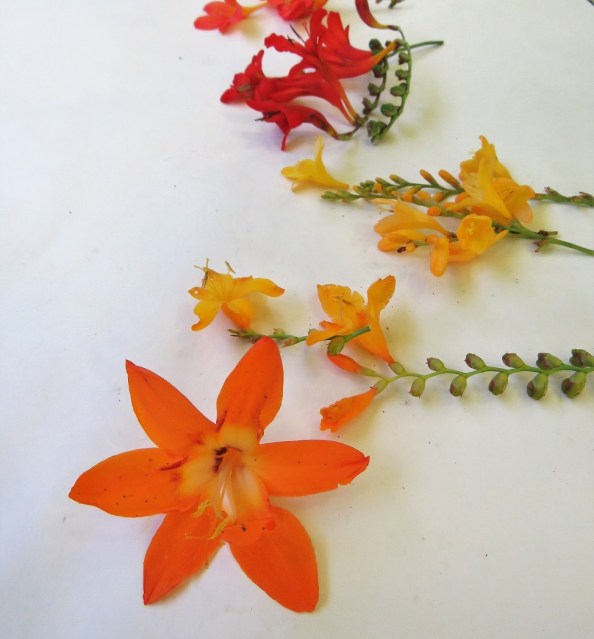
The large bloom may or may not be ‘Star of the East’. It is certainly dramatically larger than all the others.

The last one is by far the showiest and I think it is probably ‘Star of the East’, judging from photographs. Although it may not be, because ‘Star of the East’ is just a selection from the same cross that gives us weedy montbretia and this bears no resemblance to that cross.  It is genuinely spectacular but certainly not vigorous. We have had it in the rockery for several years where it limps on without increasing as I would like it to and it seems to be sterile. Conditions are hard in the rockery and I think I need to lift it and move it to a more hospitable location with richer soil. I say this every year but this season, I swear I will do it. It is worth the effort.

Crocosmia are wildflowers of the grasslands in southern and eastern Africa. There are currently nine different species and they should not all be judged by their wayward, roadside weed family member. They are also not as invasive in less benign climates than ours.

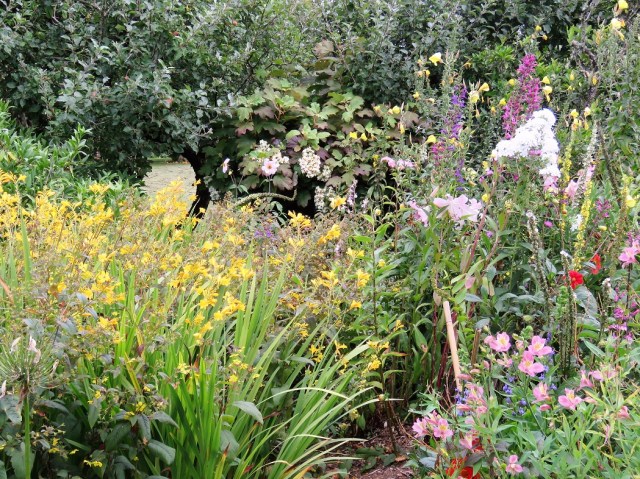
Our yellow crocosmia in the Iolanthe meadow garden

Summer flowers – tigridias and crocosmias

I started by thinking I would do a comparison of tigridias. And then crocosmias. It was too hot to be out in the garden and I couldn’t go down to the shaded areas of the stream in the park to clear weeds on the banks and free up the water from some of the choking weeds on account of having stuffed my dodgy wrist doing this heavy work the day before.
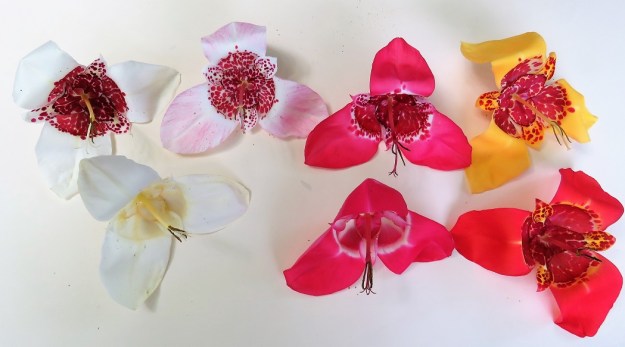
But really, it is that I like making flower boards. If I had my life again, maybe I would consider textile design as a career. I could do lovely floral confections, taking inspiration from flowers from my garden.

I have spent some time separating the tigridias by colour into separate blocks in two different garden borders. There are many more colours out there but I am not so keen as to want to collect them all. A fair number of them seem to be leaning towards brown hues. This is probably what happens when the pinks cross with the yellows. I am okay with white, all the hues of palest pink through to deepest pink, pure red and bright yellow.
What I would like is forms of the yellow and the red without spots – or freckles as they are often called. It appears that the dominant freckled forms can throw the occasional seedling that lacks them entirely. I have separated off the pure white and mid to dark pinks that hatched sans freckles and last year I found a single bulb with palest pink, freckle-free status. It hasn’t yet flowered this year so I couldn’t include it and, to be honest, it is a bit insipid. But it adds a link to the chain. Over time, I would prefer to mass the freckle-free ones and just add some spotties for variation. I do not know why we have never had a red or a yellow without the spots, but I will continue to watch.

Commonly referred to as montbretia, the weedy crocosmia growing wild all round North Taranaki roadsides

And crocosmias. They turned out to be more interesting than I thought, though we only have four different ones. Crocosmia are better known as montbretia when they are a roadside weed. Or maybe now a wildflower rather than a weed. A weed suggests they can be eliminated but this east African corm has made itself so much at home now that we literally have carpets of them on the road verges around here. We try and keep it out of our park but every time we get heavy rains that cause flooding, more wash down from upstream. They are at least pretty in flower.

Left to right: the roadside weed, a selected yellow form of same, ‘Severn Sunrise’ and ‘Lucifer’

There are about nine species of crocosmia in the wild. The common roadside one is C. crocosmia x C. crocosmiiflora and it increases both from the bulb and from seed. The most common garden form is the larger-flowered, red ‘Lucifer’  which, it turns out, is a different line altogether, being  C. masoniorum × C. paniculata. I deadhead it because it sets prodigious amounts of seed and there is a limit to how many I want in the garden.

The pretty yellow form is simply a variation on the wild roadside one that Mark dug up and moved into the garden because it caught his eye. It has stayed true and also has the advantage of being either sterile or not setting much seed at all. I must take closer note this year, now that I have it well established in the new borders, and see if it is truly sterile. It is a worthwhile addition if it is.

Mark actually bought Crocosmia ‘Severn Sunrise’ from a well-known perennial nursery. All we can say is that it is either not true to the original or it performs much better in the UK, where it has been given an Award of Garden Merit from the RHS. It is so disappointing here that I plan to dig it up and dump it (but not on the roadside). Its foliage is not a good colour, the flowers are small and not displayed well AND it sets seed. I could make better selections from the wild ones along our frontage. I failed to find the species description for ‘Severn Sunrise’ but I wasn’t that interested, to be honest. Some plants just don’t justify their place even if they come with impeccable pedigrees.

The transient pleasure of a colour toned flower board to finish


A garden of grasses. Mostly.

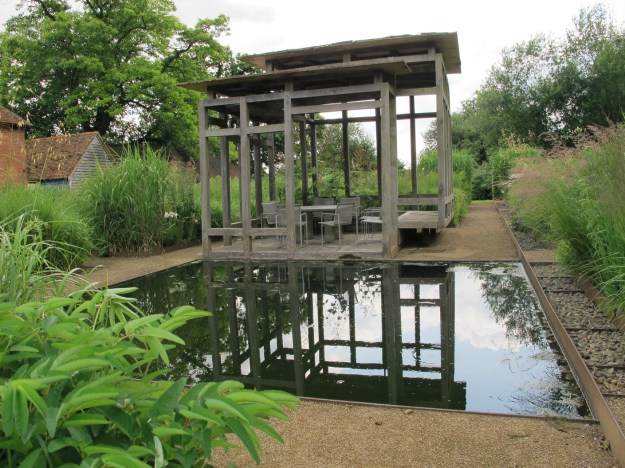
The grass garden at Bury Court

The grass garden at Bury Court

It is interesting to reflect on gardens over time. Sometimes a garden that makes you go ‘wow’ on the day is not the one that endures in the memory. In fact, not wanting to be too dismissive, but it is a rare garden that stays in the memory for long after a single visit.

That is Mark, not the owner, at Bury Court

That is Mark, not the owner, at Bury Court

The grass garden at Bury Court has endured for me. So much so, in fact, that it has inspired me to start a grass garden here.  Bury Court’s grass garden was by leading UK designer, Christopher Bradley-Hole but credit must also go to the garden owner, John Coke, whom we didn’t meet but had certainly stamped his mark on the other areas of the garden which were early Piet Oudolf. It is not that I want to recreate that grass garden which was full of soft, waving, tall grasses in informal plantings but contained within a sharp-edged, rectilinear design with a charming Japanese-influenced summer house at its centre. I am just using it as inspiration.

Anybody who has looked at gardens in the UK and Northern Europe over the past decade or maybe nearing two, will have seen the extensive use of grasses in perennial plantings. It is variously described as ‘prairie planting’, ‘New Perennials’, ‘naturalistic gardening’, ‘Sheffield School style’, ‘Oudolf- inspired’ and, no doubt, other terms as well. The bottom line is that it is the integration of grasses with flowering perennials in various styles and combinations and it has yet to catch on in New Zealand. Towards the end of our last trip in 2014, we started counting the ratios and it was common to see 3:1 – three flowering perennials to one grass. The Bury Court grass garden was 1:8 – that is one flowering perennial to eight grasses. The effect was very different and the movement of the tall grasses a delight.

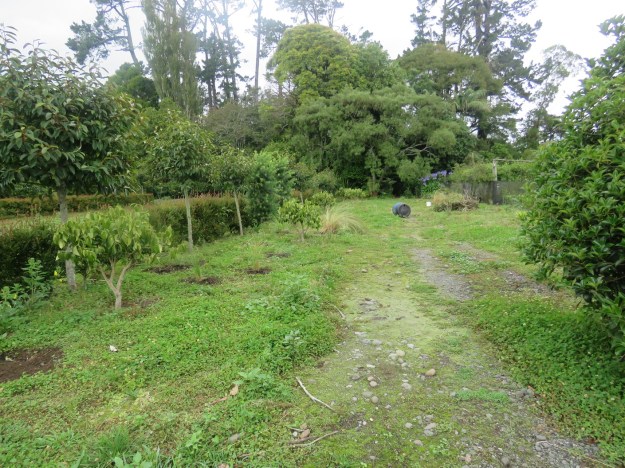
A blank canvas of about 250 square metres (I paced it out)

A blank canvas of about 250 square metres (I paced it out)

I have been incubating ideas for the past three years. In an old garden, it is rare for us to be in a position to start a new area from scratch but that opportunity has arisen. Somewhere over 250 square metres of empty space in full sun with good drainage, in fact, that I can get down on for my grass garden. But we need that amount of space for we envisage B I G grasses waving in the breeze and when each plant will take up probably a square metre, that chews up the space. We have enough highly detailed garden here already, so we are looking at bigger canvas garden pictures with lower maintenance. That is the plan, anyway.

Stipa gigantea, with phlomis, at Wisley. Lovely ethereal seed heads but unproven in our conditions

Stipa gigantea, with phlomis, at Wisley. Lovely ethereal seed heads but unproven in our conditions

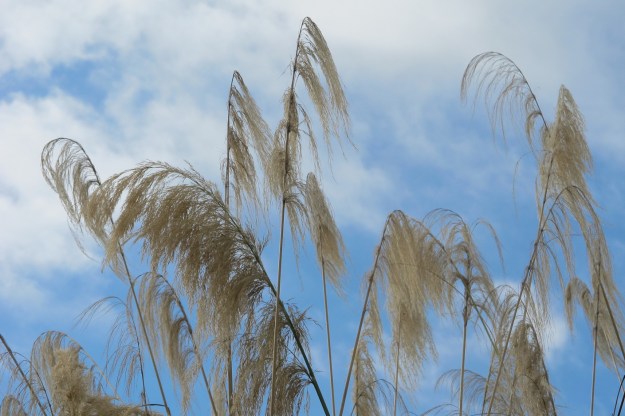
Our native toetoe, or cortaderia

Our native toetoe, or cortaderia

We have been given some plants of Stipa gigantea, beloved by UK gardeners. It remains to be seen if it will perform in our conditions, but I have put the first nine plants out. Also our native toetoe (which used to be a cortaderia but has now been reclassified as an austroderia) which will grow here and is our native version of the pampas grass often used overseas. Pampas (Cortaderia selloana) is on the totally banned list where we live, be it pink or creamy pampas. I have a very large miscanthus that I will relocate and divide in winter and a few other different grasses we have gathered up over the years but never found a suitable spot for. In using some of our native grasses and the Australian lomandra, there is an immediate difference to what we have looked at overseas. For our grasses are evergreen and theirs are generally deciduous. That is a big difference. Deciduous grasses give a fresh new look every spring whereas evergreen grasses hold their dead leaves so they don’t look as pristine but they are present all year round.

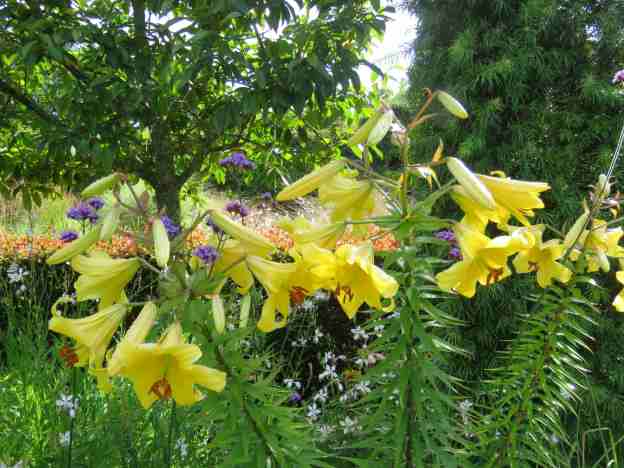
Aurelian lilies in abundance here

Aurelian lilies in abundance here

In terms of flowers, it will be a restrained palette. Mark has raised a lot of Aurelian lilies (clear, bright yellows and few in orange) that flower in early January and are desperate for a forever home in the garden. They will be number one, planted in groups of five. I have no idea how many there are out in his vegetable garden waiting to be lifted – maybe 80 flowering sized bulbs or so?

Crocosmia - from left: the roadside weed known as montbretia which is way to invasive to introduce to the garden, a spectacular large orange form that unfortunately does not increase quickly at all, yellow and orange forms and red 'Lucifer' for the new garden

Crocosmia – from left: the roadside weed known as montbretia which is way too invasive to introduce to the garden, a spectacular large orange form that unfortunately does not increase quickly at all, yellow and orange forms and red ‘Lucifer’ for the new garden

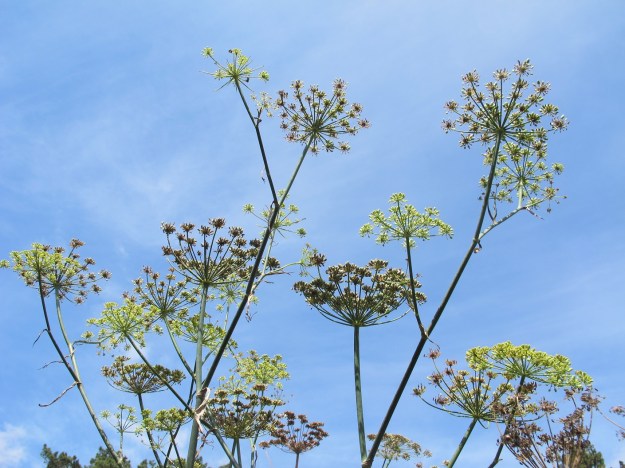
For mid summer, the crocosmias can add spots of colour and I may use the pure red and pure yellow tigridias too. We have a giant, autumn flowering yellow salvia that towers over 2 metres high so needs big space. I think that will fit in. Self-seeding, towering fennel (I like fennel flower and seed heads), a tall, creamy yellow alstromeria and that might be it for the initial plantings. The grasses are to be the prime focus in this new area.

Fennel, seen as a roadside weed here but I think it will fit well in the grass garden

Fennel, seen as a roadside weed here but I think it will fit well in the grass garden

Being gardeners, not designers, we are working from gut instinct and experience, not a formal plan. We are debating about whether to turn it into a gravel garden by using fine gravel as both mulch and path surface but that is a bit further down the track. We happen to have a small mountain, almost a mountain range, even, of fine gravel that would be suitable if we decide that is a good idea.

It is not instant gardening. Because it is dependent on plants, not hard landscape features, it will take time to fill in and mature. But that is in the nature of long term gardening – gradual evolution rather than instant gratification.

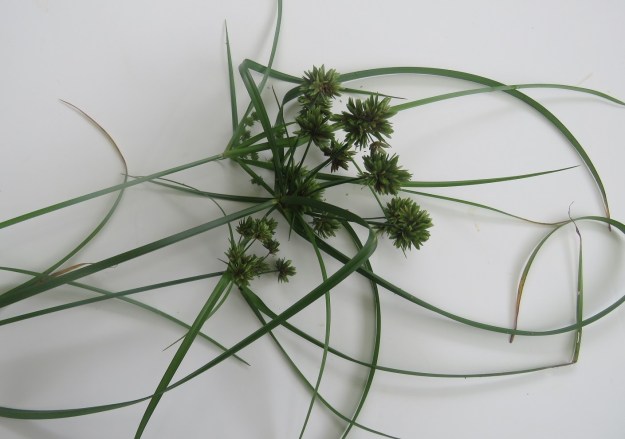
And a weedy carex - at least we think it is a carex, that we are hand digging to remove from both the new garden and the park. Decorative seed heads but way too badly behaved and invasive

And a weedy carex – at least we think it is a carex, that we are hand digging to remove from both the new garden and the park. Decorative seed heads but way too badly behaved and invasive

Postscript: A Facebook follower says of that weedy carex above: “Eek, that weed is a Cyperus eragrostis ( I think) type of sedge.” We are in complete agreement that it is a menace.

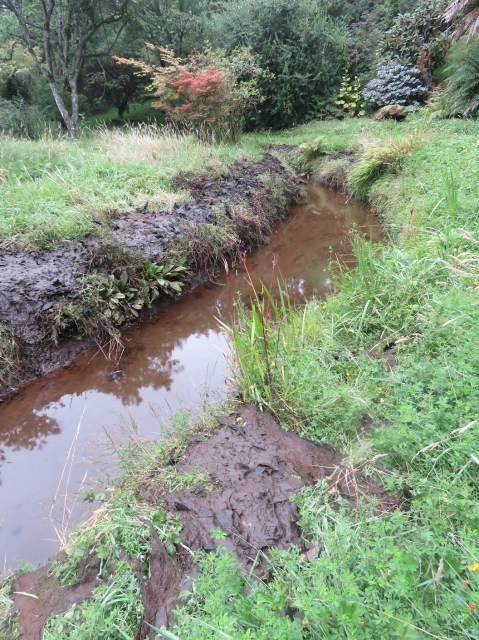
Weeding the stream. Again. An ongoing task.

“Believe me, my young friend, there is nothing – absolutely nothing – half so much worth doing as simply messing about in boats.”

Kenneth Grahame, The Wind in the Willows

I misremembered. I felt sure there was a Wind in the Willows quote about messing about in the muddy waters of a stream but I was wrong. Of course they were messing about in a boat, not mud. When I went searching, there were many other charming quotes from the same book which are gently affirming in a world seemingly gone mad, but I found another escape this week.
img_3982I have been weeding the stream. Yes, hand weeding the stream. I see it is five years since I last got down and dirty in the water, although Mark and Lloyd do a certain amount of ongoing maintenance with the long handled rake. I find it easier to climb right in and scoop by hand or sometimes with a rake. It is very muddy and Mark laughs when I stagger back up from the park but I am way too vain (or self conscious, maybe) to immortalise this by taking a selfie of Muddy Me.
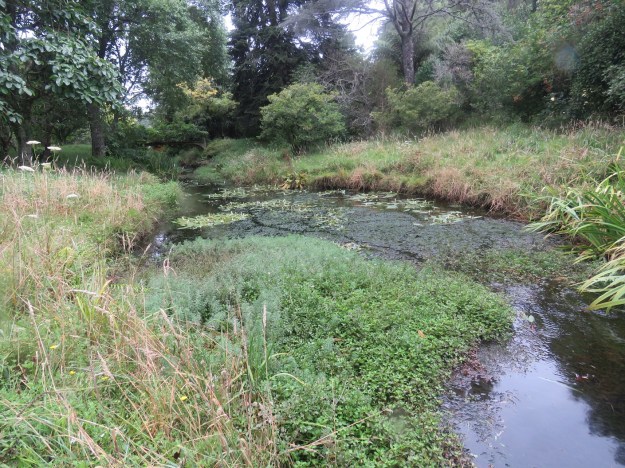
There are both eels and fish in the stream – small fish, mostly mud fish – and I find it deeply unnerving when something smooth and slippery brushes past my bare legs. I wouldn’t be quite so anxious were it not for Mark’s recent encounter with an eel. He was reaching into the water to pull out some blockage when an eel mistook his hand for something else and latched on. There was blood, quite a lot of blood and all of it was Mark’s. Eels are renowned for their backward facing teeth so it is not easy to dislodge them, though I think both the eel and Mark got such a fright that everything went flying. I console myself with the thought that eels are not known for aggressive attacks and it would be bad luck for one to follow up with me so soon after. Just in case, I wear both shoes and gloves as a precaution. I am hoping one will not attack my knees, calves or thighs.  Still, as I reviewed one cleaned area of the stream a few hours later, I was disquieted to see an eel gently swimming along the somewhat bare expanse. But it was a small one and I will not be intimidated.

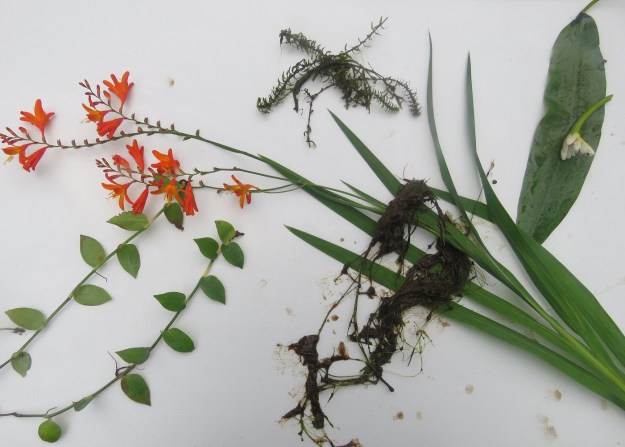
Clockwise from top left: crocosmia, oxygen weed, wretched Cape Pond Weed, blanket weed and tradescantia

Clockwise from top left: crocosmia, oxygen weed, wretched Cape Pond Weed, blanket weed and tradescantia

But the weeds! We get up close and personal with the weeds that are carried down to us from properties further upstream but the major flood in 2015 has caused us a few more problems than before. Crocosmia, often referred to as montbretia but technically crocosmia x crocosmiiflora, have pretty summer flowers but the huge flood carried the corms far and wide and we are now working on restricting its spread. There is simply too much of it for us to be able to eradicate it and we would get reinfested during the next flood event.

Eradication, however, is the aim with the dreaded Wandering Jew (Tradescantia fluminensis). Mark has spent two decades battling this on our properties but still we get new outbreaks washed down to us. The problem is that every piece that is broken off is capable of growing and it is truly rampant once established. Both the tradescantia and the crocosmia grow alongside the water, rather than in it.

The goal is also to eradicate the oxygen weed and the Cape Pond Weed (Aponogetum distachyum). Mark has succeeded once in eradicating oxygen weed so he was most disappointed when he saw a larger form of it getting established on our place. His theory is that it comes from people emptying their little aquariums into fresh water ways, presumably because they do not wish to euthanise their goldfish and can’t find anyone to give them too. Don’t. Please don’t ever do this. Not only do we not need or want free range goldfish in our waterways, the oxygen weed becomes a choking blanket in slow moving fresh water. We have spent countless hours pulling it out but unless we get every bit, it will grow again. Ditto the Cape Pond Weed, about which I have written several times in the past.

What I call the blanket weed – a mass of very fine filaments – is here to stay but we try to keep it from getting too solid and impeding the flow of water. It is at least easy to rake out. Besides, the aquatic life needs some cover.

We are not perfect. Although we try and dead head our waterside irises and primulas, some of those may have washed downstream. I did at least go to a lot of effort to get rid of the noxious flag iris beside and in the water when we realised what an environmental hazard it is in this country.

In the meantime, there are worse ways to spend a pleasant, mild day than poddling about in the water. Our adult son is returning home from overseas next week and plans to stay for a few weeks. He spent many childhood hours playing with his mates in the ponds and the stream  – boogie boarding up and down and playing bike jumping games into the water. I am wondering at what stage I might suggest to him that it would be a huge help to his Aged Parents if he could turn his attention to scooping or raking the weeds from the deepest sections of the ponds which are beyond my reach. We shall see.

We have lowered the water level to enable major weed removal over the next week or two

We have lowered the water level to enable major weed removal over the next week or two