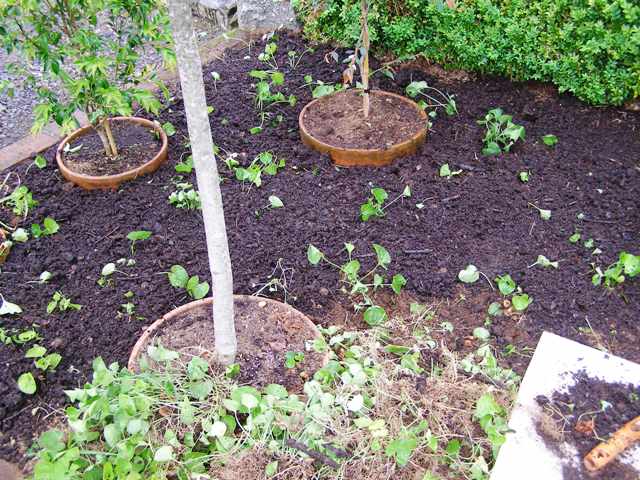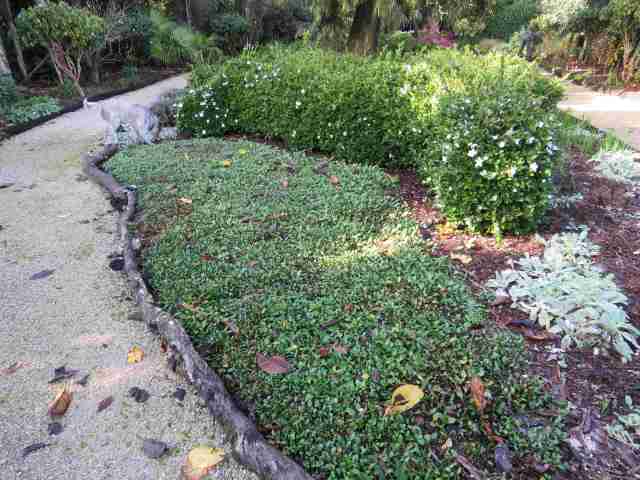
Tag Archives: digging and dividing

A postscript – or maybe an update –  to my last two posts on digging ‘n dividing and bluebells.

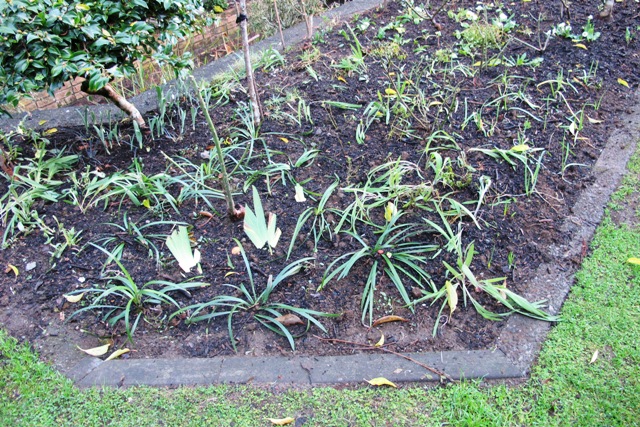
I photographed this patch of asters trimmed to the ground because I thought it was a good example of when not to let sleeping asters lie. Digital photography is very handy for dating things and I see it is only three years since these were last dug and divided. It had become a seamless carpet of aster in the time since. Both Zach and I noted that it did not look as good as it should have last summer. They weren’t helped by getting hit by mildew which has not happened before, but there was no mass flowering.
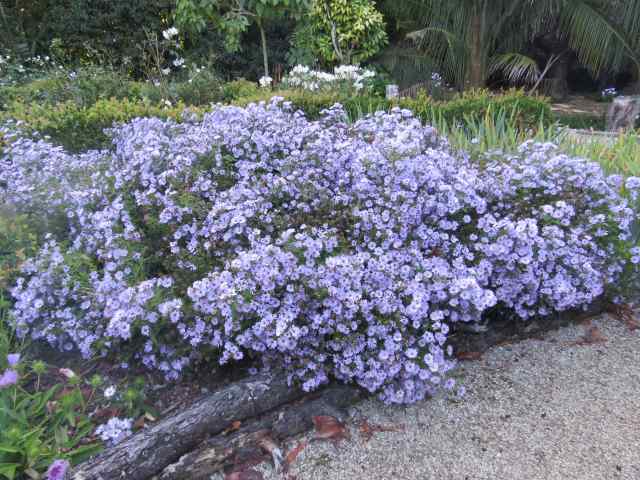
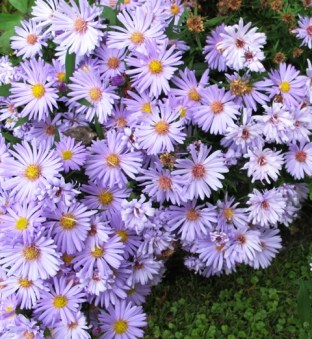
It should have looked like this last summer, but it didn’t. This is from summer 2024.

Time for a dig and divide, which Zach did this week. A perennial that has to be lifted and split every two to three years is on the high maintenance side and we don’t have many in that category. My friend, Sue, who leads the team of volunteers at the pretty Te Henui cemetery, told me she is culling plants that are too high in maintenance for their labour resources and this aster might fit that category. I must ask her for her latest list of culls. Fortunately I have Zach to carry out such tasks or I might be casting around for a less demanding plant option.
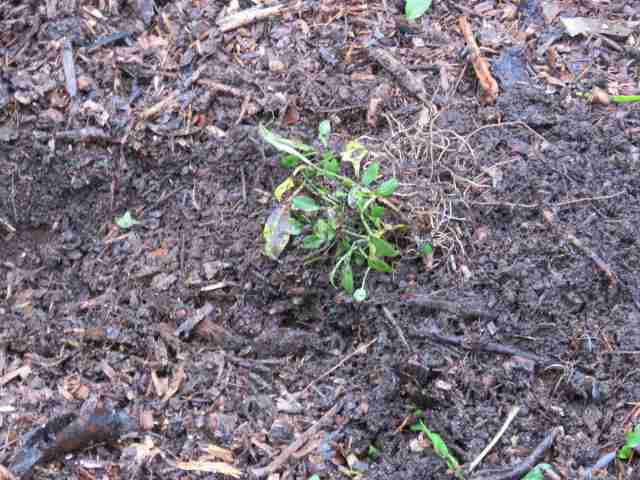
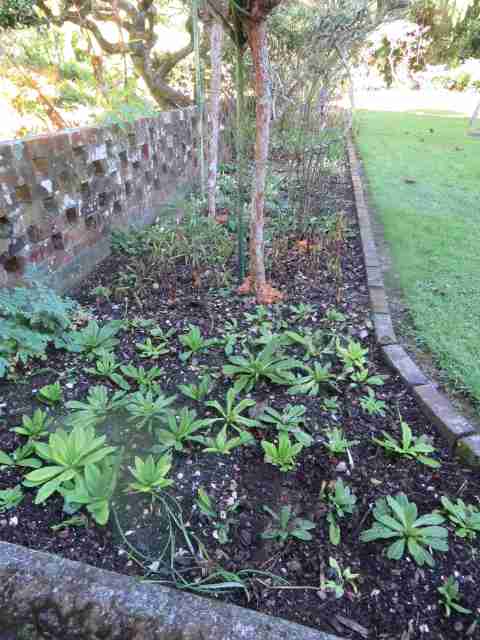
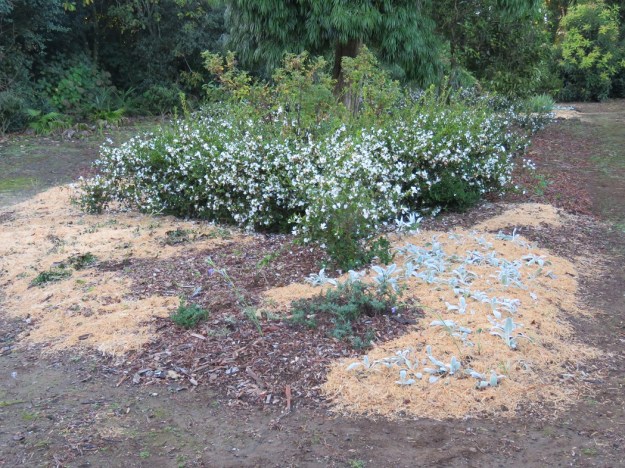
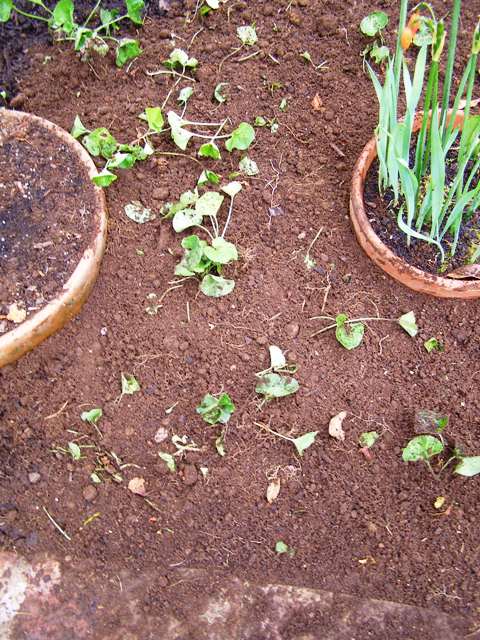
Enter the rabbits. After a quiet few months on the rabbit front, they are back and there is nothing they like more than an area of soft, freshly dug garden and mulch to dig. I sent Zach a text yesterday telling him that the rabbits were undoing his work. He was equally unimpressed but at least the photo shows you the size of division he split off from the previous carpet to replant.

I have just replanted the casualties, filled in the holes and spread blood and bone. The rabbits don’t like blood and bone and will stay away from that area but it does need to be replenished after rain and we have had plenty of that this week.
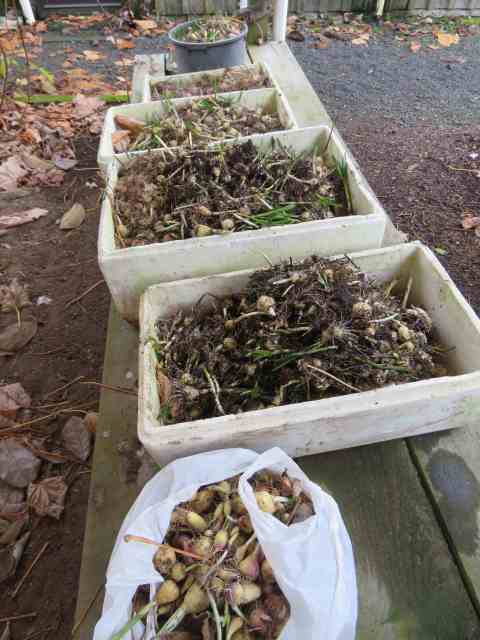
A whole lot of bluebell bulbs, just from the Iolanthe garden. There were more. I have already disposed of some.

The war on bluebells continues and I am at an advanced stage of boredom. I took this photograph as proof that I am not exaggerating. This is by no means all of the bulbs I have dug out of just the Iolanthe garden. Most were never planted there but I will have spread a few when I planted that area in 2019. Some have already been disposed of and still there are more to be dug.
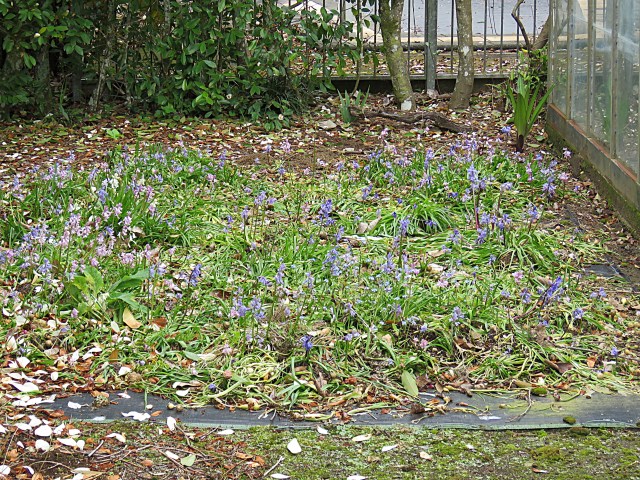
They did not dehydrate in the summer sun. They grew instead.

Bluebells have no place in the cultivated garden. I found a couple of photos from last year, recording our attempts to deal with some culled from the Avenue Gardens. I worried about how many we were dumping on our wild margins and they don’t rot down in the compost. I had the idea that if we spread them thinly on weedmat, they would dehydrate and die in the summer sun. They didn’t. They kept growing. I then thought they might compost in plastic bags in the sun, as wandering tradescantia does. Some did over the summer months but others in those bags were still firm and viable. Responsible disposal is quite a big problem.
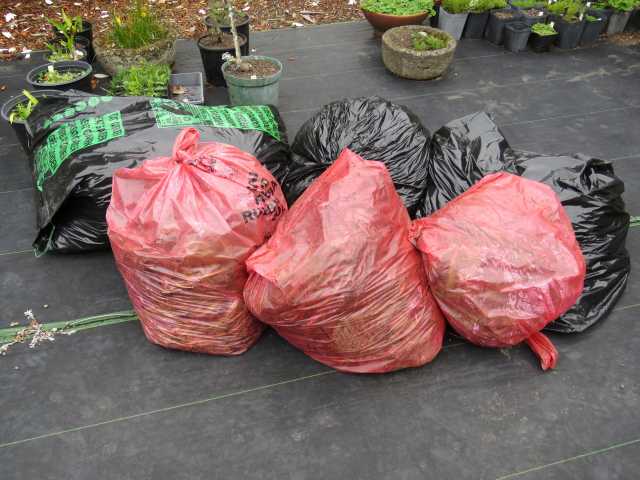
Nor did they rot down in the plastic bags, as I hoped.

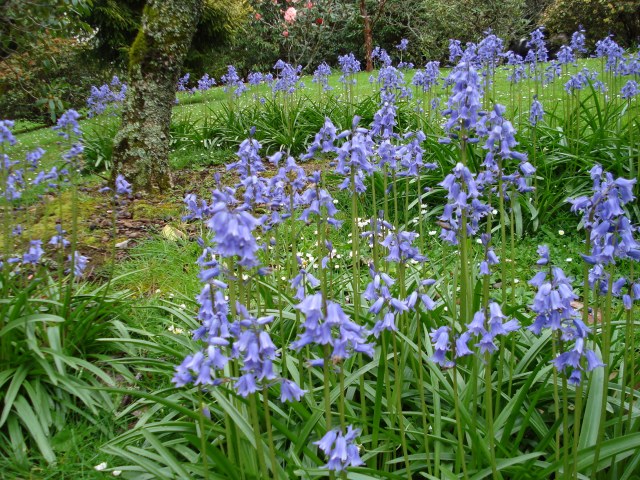
We have a lot of bluebells in the park and the Wild North Garden and they can stay there. To get rid of them, we would have to go for repeated use of some heavy-duty sprays and we try and avoid that. Besides, they are very pretty in spring. Ours are all Spanish bluebells or hybrids; the more desirable English bluebells are extremely scarce in this country. I don’t think I have ever seen them.
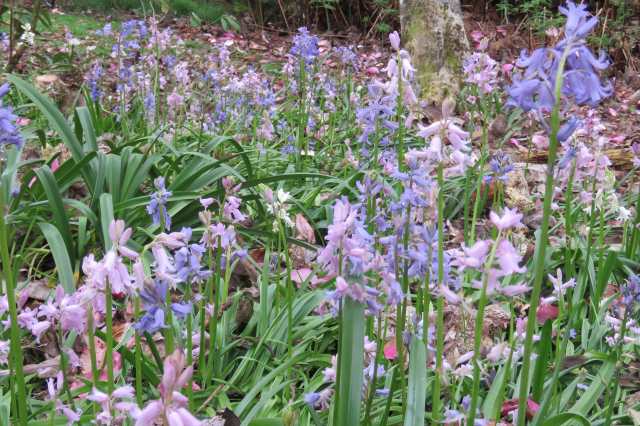
“If they stank like onion weed, they would be seen as a weed,” said Mark. “They are a weed,” I replied.

If we had our time over again, we would think twice about introducing them to our property. Mark put a bit of work into building up numbers in the first place. A decade or so on, I am putting a great deal more work into digging them out from some areas, all but sifting the soil to get the baby bulbs. You have been warned.
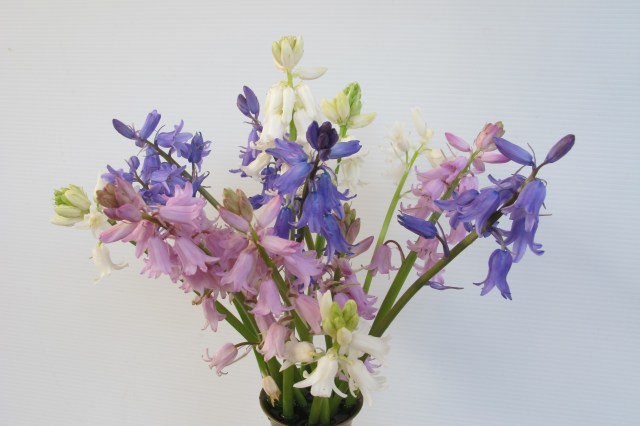
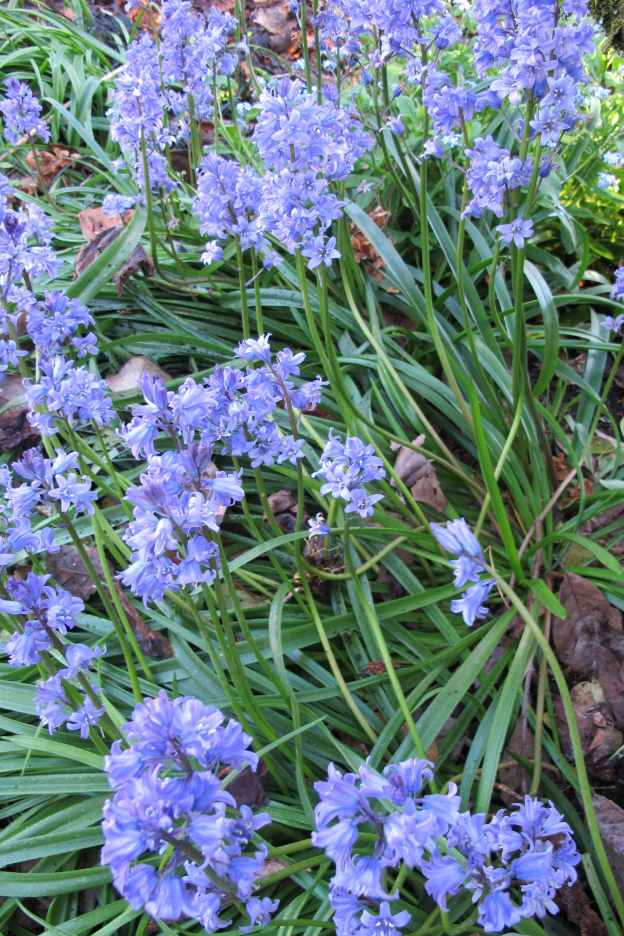
From happier bluebell days

More lessons learned. Plants to avoid

I am busy a-diggin’ and a-dividin’ perennials. While autumn is indubitably here, the soils are still warm and there should be several more weeks for the fresh divisions to settle in and start to establish before the winter chill of late June and early July. In colder climates this is more commonly recommended as a spring activity but with our distinctly wet spring season and late onset of winter, we prefer to do it in autumn.

I did not realise how much digging and dividing would be needed when we embarked on some large areas of perennials in open, sunny conditions. We have always had plenty growing in shady conditions but they are pretty self-maintaining and undemanding. Give them sun and it is a different story. Sun, mild winters, friable, volcanic soils and regular rainfall – in optimum conditions they R O M P away with gusto.

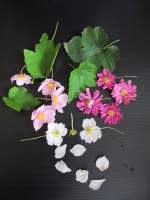
Much and all as I love Japanese anemones, they are not a good option for perennial beds because of their invasive ways

If I had my time again, there are perennials I would not unleash to start with. Some I have written about before but off the top of my head, I can not recommend planting the following:

Saponaria. Photo credit: Rosser 1954 Wiki Commons
  • Saponaria (soapworts). Pretty they may be in flower but those underground runners run both deep and far. Dangerously invasive. They are not generous enough on the flowering stakes, to justify their existence. And in the absence of a soap shortage, I do not feel the need to keep them to use the foliage as a soap substitute.
  • Jerusalem artichokes – foliage to flower ratio is way too high and they are altogether too enthusiastic at producing tubers.
  • Bluebells in cultivated garden situations. I am digging out every one I come across, knowing there will be plenty I miss but still they are being measured by the bucket-load. They are difficult to dispose of, too. They grow rather than rotting down so I am having to send them to landfill.
Japanese anemones. The pretty flowers belie what is happening below the surface.
  • Japanese anemones. I love the flowers in early autumn but these are another invasive plant genus that either needs to be confined tightly in a garden situation or avoided from the start. Because they put out very long runners, they are difficult to get out when they creep – or sprint, actually – amongst other plants.
  • Mondo grass. Mondo grass. Mondo grass. Too much mondo grass here, there and almost everywhere. I am carefully picking out their seeds as I go, too.
  • Forget-me-nots, be they annuals or perennials. I love their sea of blue, coming in just after the bluebells and they are easy enough to pull out but I am pretty sure every single seed grows. And they are incompatible with Ralph the dog who is no great respecter of gardens and can spend months coming indoors with multitudes of sticky little forget-me-not seeds all through his fur.
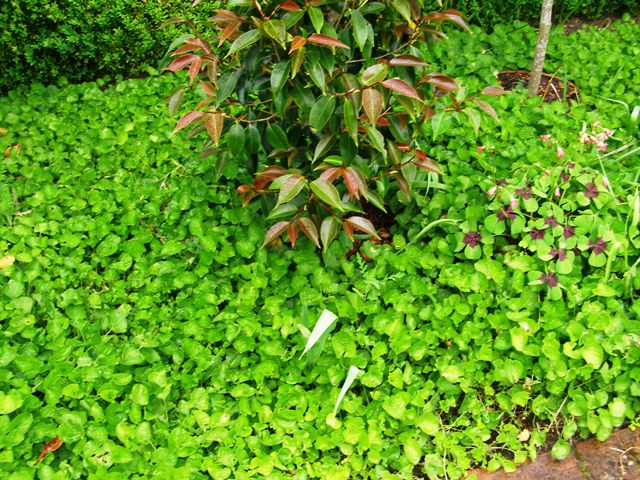
  • I have now added violets to the banned list too, after spending yesterday digging out plants I am sure snuck in and weren’t planted. They may have a sentimental attachment, being Mark’s great grandmother’s violets but it doesn’t stop them being invasive. They are another plant that will entwine themselves amongst the roots of neighbouring plants so I have had to dig those out too, to extract the interloper.

There are other plants that need caution and constant management. Crocosmias and ixias are in that group. I removed yellow crocosmia bulbs by the bucket load in late summer but I am aiming for containment on those because I like them in bloom, just not everywhere.

The Iolanthe garden on January 2, 2021
Where have all the flowers gone? The same block on December 30, four years later. Time for some attention.

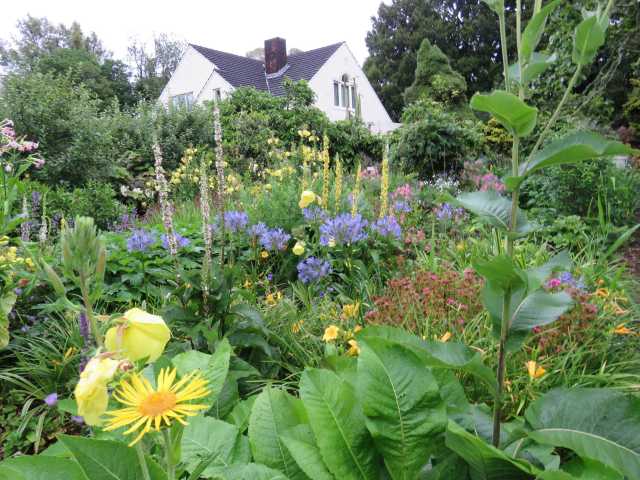
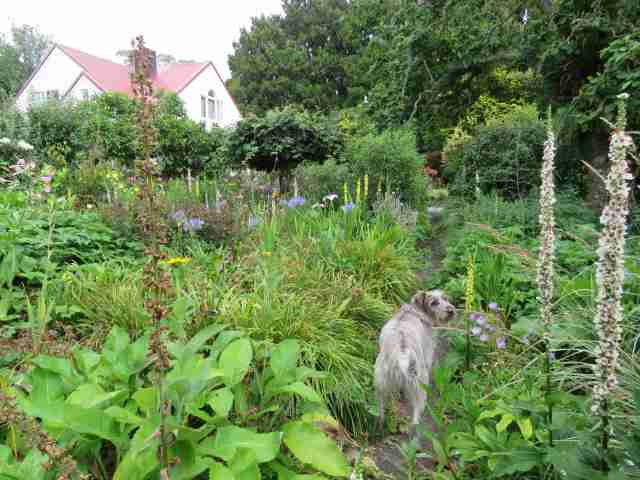
Zach and I have been working our way through the Iolanthe garden, our bee and butterfly garden which is a cross between a perennial meadow and a cottage garden. I planted the whole area up back in 2019. During summer just passed, I thought it wasn’t looking as pretty and flowery as it had been and too many of the perennials were looking scruffy and somewhat rank. I have high hopes for next spring and summer; it had better be good because a lot of work and time have gone into it so far.

The underplanting on this mixed border has never been exciting but it had crossed to line to neglected
Primula denticulata – somewhere I have better photos of it en masse but goodness knows what I filed them under.

I was distracted from the Iolanthe garden for a couple of weeks onto the border at the back of the sunken garden area. We were in danger of losing the pretty Primula denticulata. At the end of a dry late summer, they were fast dwindling away to nothing.  I realise that to keep them going, I probably need to dig, divide and feed with compost every two years. There aren’t a lot of plants I am willing to give that amount of attention but they are one. Some perennials just quietly waste away if left to their own devices. Stokesias and echinaceas also fall into this category. Having started on that border, I had to keep going because the whole border, I realised, had passed over from being relatively anonymous to so unloved that I was avoiding even looking at it as I walked around. I dug the lot and did a full reorganisaton and cull before replanting. That was when I found how dangerously invasive the saponaria is. Those underground runners were up to a metre long, sending up shoots all the way along.

Freshly dug, divided, carefully considered and replanted all the way along. Now it is waiting for spring.

It was interesting, to me at least, moving between the two areas. The border in the sunken garden is planted in defined blocks whereas the Iolanthe garden is much more casual, naturalistic mix and match. Different styles for different areas but no matter what style we choose, we prefer complex plantings involving many different plant varieties to utilitarian mass planting of a single variety. It is  more complicated to manage but also a great deal more interesting.

It never fails to surprise me, when I lift an entire area, just how many plants it takes to fill the area back up again with fresh divisions. We want it to look well-furnished by spring and summer so I am planting fairly close together. You would not want to be buying the plants unless you have very deep pockets but the advantage of perennials is that most divide easily. I haven’t had a lot of surplus plants to compost – some sedums, campanula and stokesia but that is about it.

I am not big on anthropomorphism but I like to think of the fresh divisions heaving a sigh of appreciation as they settle back into fluffed up, friable soils still warm from the summer but now moist from the autumn rains. Hopefully, these areas will perform for another five years or so with just spot interventions before the next round of lifting and dividing is needed. This is not a low maintenance style of gardening but neither do we want that.

Bluebells – best kept to loose meadow or park situations. Never again will I unleash them in a cultivated garden.

What a difference a year makes

Off topic but a pretty flower to lead – Nerine bowdenii coming into bloom. The last of the season to flower and the easiest of the nerines we grow

Remember those TV programmes from ten or even twenty years ago that were all about instant makeovers? You too could have your messy back yard transformed into beautiful, landscaped space within a day. Fortunately, we seem to have moved on from the techniques that had to be used to make a photograph-ready scene immediately. Nowadays, it is more common for programmes to include a more modest, practical make-over section where the presenter talks the viewer through the process and explains how the plants will grow to fill the space, rather than trying to create the illusion of instant show garden.

The techniques of creating a show garden – reaching their zenith at Chelsea Flower Show – are very different. Those are a combination of ideas and illusion, designed for a temporary installation and they don’t have a whole lot to do with actual gardening. For starters, the plants are generally kept in their pots and packed in really tightly before being covered with a carpet of mulch to hide the evidence. But those earlier makeover TV garden shows seemed to imply that it was possible to create an instant, fully furnished garden. It isn’t. Gardening takes time.

We are blessed by a benign gardening climate where we live. Most of New Zealand has extraordinarily fast growth rates compared to other parts of the world and you can accelerate the growth rates even more if you are willing to apply large amounts of fertiliser often. We don’t do that, preferring to rely instead on home-made compost, gardening in line with our ethics. For how we can we complain about modern farming practices and the deterioration of fresh water in this country if we are doing the same thing on a smaller scale in our own gardens?

April 21, 2017

It was interesting this week to chart the growth we have achieved through photographs of the new gardens we are working on. This photograph was taken just over 12 months ago – late April. The area was a blank slate and had been nursery so laid in weed mat for three decades. This had compacted the soil badly and after planting the first few plants, I decided it was all too hard to dig and I would take up Mark’s offer to rotary hoe it.

December 2, 2017

Come December, it was pretty much planted out. I, personally, have planted every single perennial in there and added no fertiliser except some compost at the time of planting. Nothing has been watered. We garden without irrigation here. Mark often describes our place as ‘a poor man’s garden’ (excuse the gendered language – I have yet to come up with a pithy, gender-neutral term which would be more accurate). If we had to go out and buy the plants, we could never afford to garden on the scale we do. I think I bought maybe 10 new grasses to go in this garden. Everything else has been relocated from elsewhere here.

May 7, 2018


Now, in autumn, the whole area looks remarkably well furnished and under 13 months have passed. All that is needed is some tweaking. I want more blues in summer. Fortunately, Mark has a row of very good blue agastache in his vegetable garden (for the butterflies and bees, you understand) that I can raid. I am a bit worried about the phlomis which look overly enthusiastic out in the sun. They are far more restrained in their habits growing in the woodland gardens where we have them established. The Calamagrostris x acutiflora ‘Karl Foerster’ (feather reed grass) may prove to be too vigorous in our conditions. But that whole process of editing and tweaking and modifying as I learn is what gardening is all about.

The caterpillar garden this week

The grass garden took priority. Over on the other side of this new area, I have nearly finished planting out the caterpillar garden. It is a very different style of planting, far lower and more restrained although the area involved is similar – about 30 metres long and up to 8 metres wide. It is also under siege from the local rabbit population. I find the rabbits generally leave the plants alone if they are surrounded by wood shavings. We have tried various strategies to deal to the rabbits but have grown desperate enough to think we may have to resort to poison. For us that is really desperate. We prefer to keep to trapping or shooting vermin rather than poisoning. It will be interesting to see how quickly this area fills out. The planting has again been carried out using relocated material – from the former rose garden that I have been stripping out. No plants have been purchased. But even I am amazed at how many plants it takes to fill in a blank space – hundreds and hundreds of divisions, maybe thousands. Mind you, I am planting closely. That is how I will get a carpet covering within the year.

Gardening is not an instant activity. But a year to go from blank slate to looking well-furnished and established seems the next closest thing to instant results for us.

Modern perennial plantings – more in the style of Braque than Mondrian

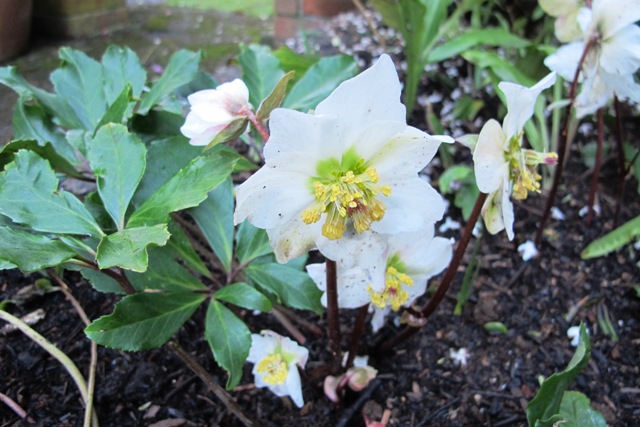
A simple but very pleasing combination of Helleborus niger for winter flowers, Calanthe arisarnensis for  spring, some random dwarf narcissi - and interesting foliage all summer

A simple but very pleasing combination of Helleborus niger for winter flowers, Calanthe arisarnensis for spring, some random dwarf narcissi – and interesting foliage all summer

Last week, I wrote about the major makeover in the rose garden and mentioned the fun I was having with the perennials. While the rains have interrupted progress (it is difficult to dig and divide in waterlogged conditions), we have spent a great deal of time discussing perennials and their use here. Indeed, we even dedicated a gardening trip to the UK to look at techniques.

Traditionally, English perennial gardening has been dominated by the herbaceous border organised on what I had been calling the mix and match approach but which I have just seen described as tapestry gardening. And that seems appropriate – it is like building up an entire picture but from a multitude of different plants instead of coloured threads. At its best, it is magnificent but it is also very labour intensive and takes a lot of skill to put together well. Too often both the ongoing labour and the skill levels are lacking and it just looks a mess.

In the nineties when we saw the gardening scene hijacked by the landscape fraternity in this country, that sort of detailed gardening was thrown out. “The Look” became the dominant feature. Gone was tapestry gardening and any value placed on plantsmanship or plant detail. Now perennial gardening became “underplanting” and just as patterned carpets have been shunned in favour of the same plain carpet throughout the entire house, so too was underplanting to be a utility carpet, usually comprising only one plant variety. So rose gardens were carpeted with nepeta (catmint), or maybe stachys (lamb’s ear). Liriope was fine as long as it was en masse, or any other utility perennial that could form a reliable carpet. It is an approach to gardening that we have shunned as deathly dull.

Piet Oudolf’s rivers of perennials at Wisley were a revelation to us. Here was a contemporary take on perennial planting on a large scale. Each river or stripe is composed of three or four different plants, often repeated in other combinations elsewhere in the border. Tom Stuart-Smith’s plantings in the same RHS garden were a reinterpretation of the type of block planting first espoused by Gertrude Jekyll, especially with her later work when her eyesight was failing and she needed more defined form. When I use the word “blocky”, we are talking more freeform shapes than geometric, more Braque than Mondrian.

The upshot of this thinking was that when Neil Ross suggested I look to reorganising the perennial plantings in our rose garden to more contemporary blocky plantings with simple combinations, I had a mental framework to fit it into. While the area is hard landscaped into a formal design, I didn’t want formal geometric plantings. We strive for a spring and summer froth of pretties – roses and perennials – with touches of plant interest to extend the seasons into autumn and winter. So my blocks are random but nothing less than a square metre and nothing more than three square metres. And each block has three, sometimes four different plants in it. The fun has been in deciding the combinations block by block. It is a bit like creating a multitude of mini gardens and linking them together.

I have bought no new plants. All I have done is to lift, divide and recompose what I had in the garden. So they are just arranged differently. In each block, I have tried to combine plants which I think will be compatible in close company with each other – in other words nothing that is going to overwhelm its companions above ground by smothering them or underground by over-competing. I have considered the time of the season that each plant peaks to try and cover a good span of the year and also to get interesting combinations of foliage and flowers within each block.

A carpet of blue asters in late summer and autumn

A carpet of blue asters in late summer and autumn

Nothing is more boring than endless plant lists so I will just give a couple of examples. One block is the common liriope (grassy foliage and blue flowers in summer) with a taller, pure white Siberian iris (for spring flowers) and one of the strong growing, mat-forming Kippenberg asters with lovely blue daisy flowers in autumn. Elsewhere, I have another block which repeats the white iris but this time combining it with a compact bright blue campanula and a little pure white scuttelaria which flowers most of the time.

If one block doesn’t work, then it will be easy to address the problems in that section. Some will need lifting and dividing more often than others. The whole area has been dug over thoroughly so the plants are in friable and fluffy soil which most perennials appreciate and I have laid a mulch of compost on top. These are optimal conditions and, while the area is very new right now, I have planted divisions and plants close together so I expect rapid results as soil temperatures rise in spring. If it doesn’t close up and fill the beds with a riotous froth in time for our peak garden visitor season, I may have to be in there with emergency plugging of gaps but I hope that is not going to be required. I am also expecting that the self seeded annuals will also come away quickly and fill gaps. The pretty nigella (love in a mist), linaria pink and lilac, blue poelmonium (Jacob’s Ladder) and common old blue pansies are all welcome to stage a return wherever they wish, to soften the divisions between the blocks.

Now it is just a question of waiting to see the results.

First published in the Waikato Times and reprinted here with their permission.

Planted - patience is now required as I wait for soil temperatures to rise

Planted – patience is now required as I wait for soil temperatures to rise

On the case with Grandma’s violets (subtitled: it is hard to find the perfect groundcover).


I see it was only a little over two years ago that I gave the death sentence to Rubus pentalobus (commonly called the orangeberry plant because few of us can recall its proper name) and chose Grandma’s violets as a ground cover instead. In fact they are more likely to Mark’s great grandma’s violets because they date back to the 1880s house site and have gently survived paddock conditions there ever since. Once divided and planted into the garden, they have taken off with alarming vigour. Sweetly scented and charming though they are in flower, they were starting to overwhelm everything in their path.

Last year we tried thinning the patch and it was a surprisingly difficult task because the violets had formed an impenetrable mat. I figured this year it would be easier to dig the entire patch and replant small divisions. Digging is only difficult when the ground is heavily compacted or with a blunt spade. Using a sharp spade, I cut the violets into squares as one does with turf. Each square was easy enough to lift.

I raked over the bare soil to level it. Some of the clumps I had dug fell apart quite readily, giving me small divisions to replant immediately. Others, I pulled apart as required, spacing at around 15cm intervals.

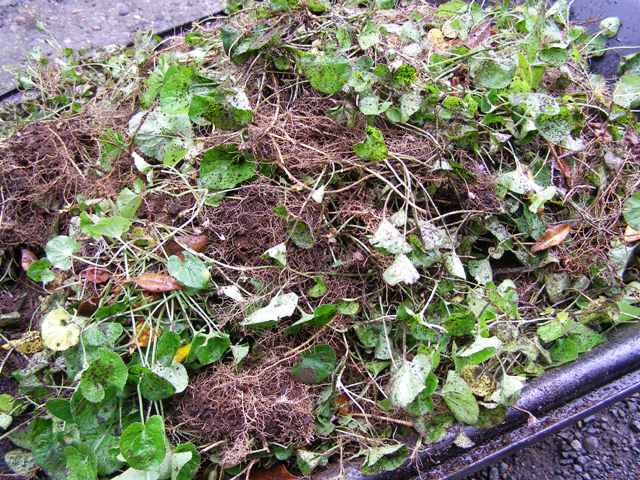
There was a large surplus of violets. Not every plant is precious. This barrowload (one of several) is destined for the compost heap.

A final topdressing of compost feeds the soil, reduces water loss from the poor stressed plants and makes the whole area look more attractive. There is an open verdict here as to whether I want to persist with a groundcover that looks as if it will need drastic digging and dividing every year. I will make the call next spring.