Tag Archives: early spring bulbs

Is it spring yet?

The early magnolias and bulbs are telling us that winter is waning and spring is starting. I noted last month that May and June were quiet months for bulbs. July is not, but it is mostly the daintier bulbs that are opening.

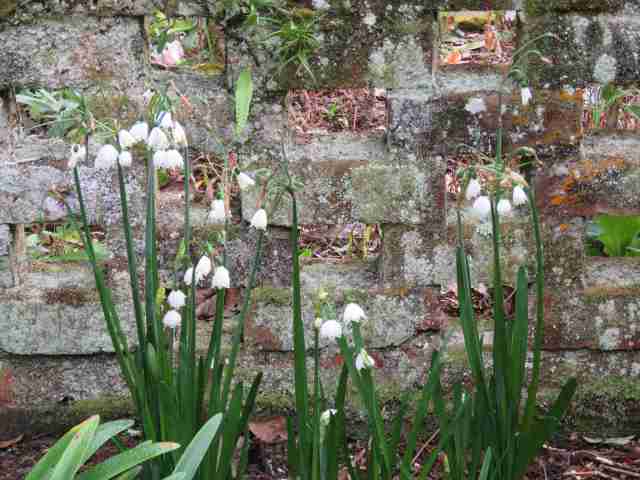
Leucojum vernum ‘Gravetye Giant’ has a very long season in bloom but is more useful than choice

Is this particularly early? Some of us ask that question; others boldly declare, based on ‘vibes’, that this is very early.  I thought it was early but it really isn’t. I have checked photo dates from my files and the snowdrops and narcissi are right on cue, as are Magnolias campbellii and ‘Vulcan’.

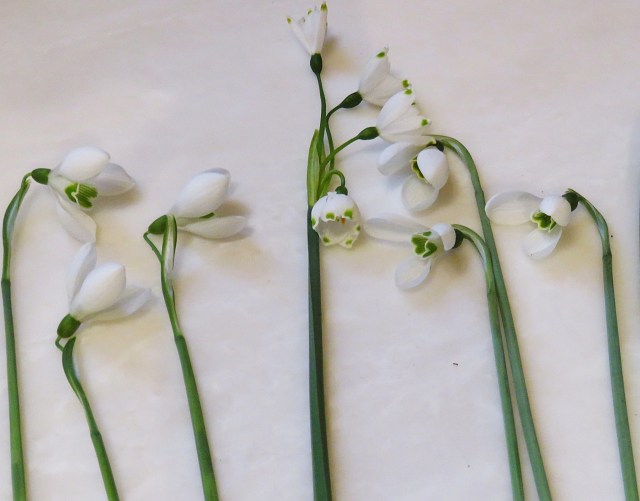
left to right: Galanthus nivalis ‘S Arnott’, Lecojum vernum (snowflake) and Galanthus elwesii

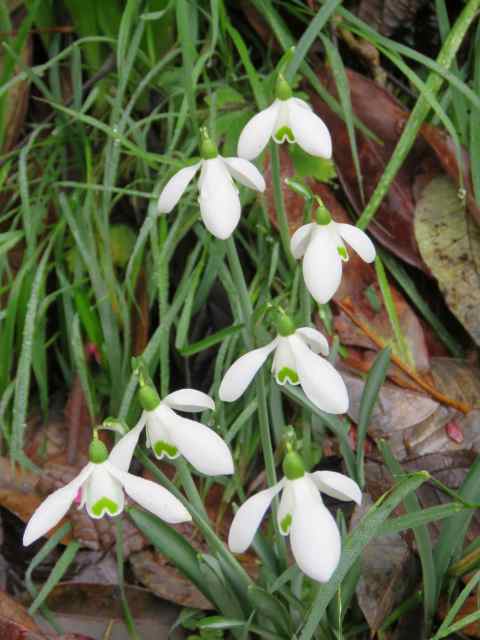
It is indeed peak snowdrop time which is but brief in our area which has only once ever had snow that we know of. I can tell you very specifically that it was on August 15, 2011, quite possibly between the hours of 6.00am and 7.00am. Out of all the snowdrops – and there are many, many different ones – we have ended up relying on just two different ones that perform well and actually increase in our warm temperate conditions. People in colder climates will have a much larger range that they can grow and they will have a longer season. We are confined to Galanthus nivalus ‘S. Arnott’ and Galantus elwesii and we really only get a couple of weeks out of them. The snowflake or Leucojum vernum ‘Gravetye Giant’ flowers over a couple of months.

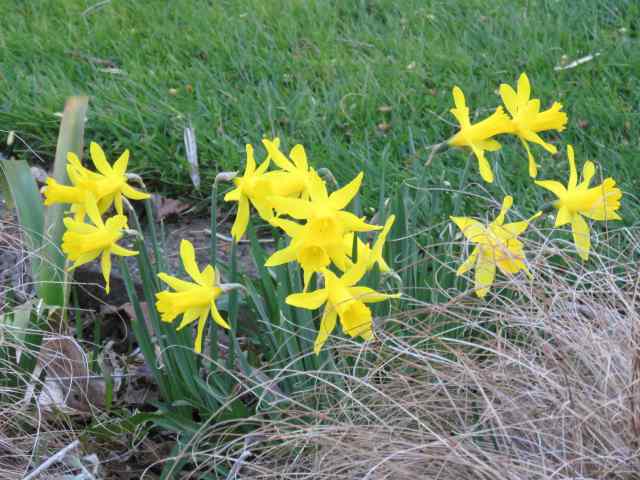
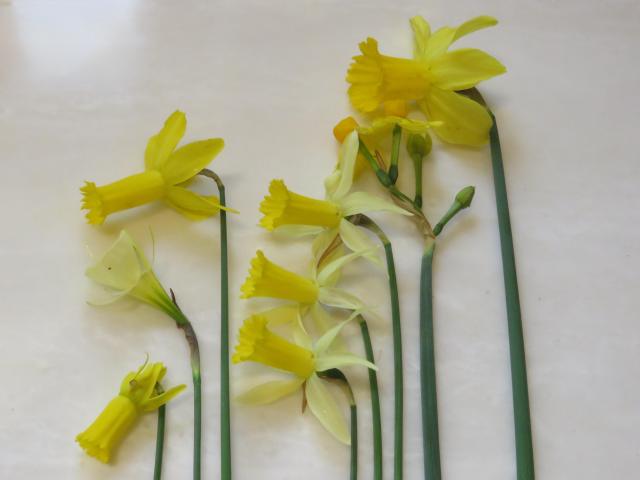
‘Twilight’ as a set of 3 in the centre, ‘Peeping Tom’ on the right

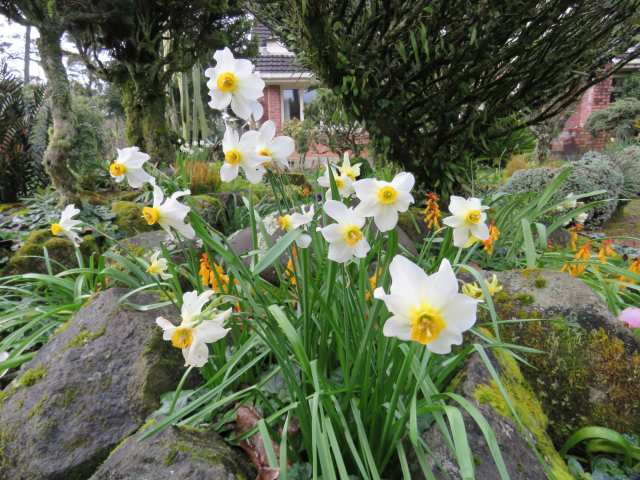
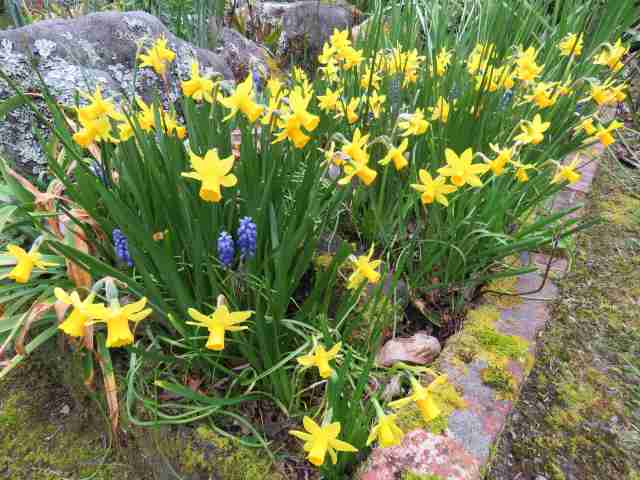
What we lack in range on the snowdrops, we make up for with the daffies. We grow a wide range of dwarf narcissi, both named varieties and cyclamineus seedlings,  and the season is just starting. ‘Peeping Tom’ is in full swing. It has an interesting name – maybe it was peeping out as snow melted? Or maybe somebody felt obliged to name it Tom but didn’t wish to? No matter, it is a bold and reliable performer and it certainly doesn’t skulk around quietly. So too is Felix Jury’s ‘Twilight’ a mainstay performer for us. It is sterile so it puts its energies into flowering for a long time and increasing its bulbs rather than setting seed. Next month will see an explosion in the narcissus varieties in bloom and ‘Twilight’ will continue to bloom alongside them.

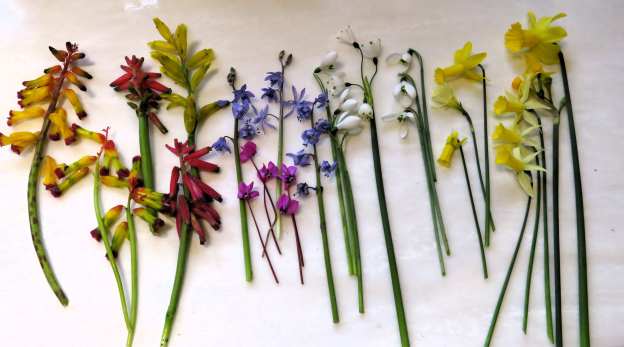
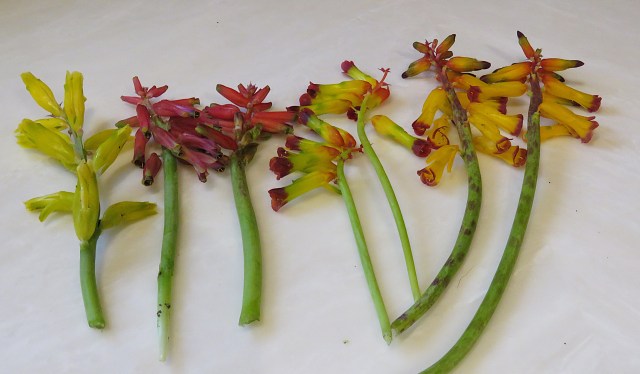
L to r: Mark’s reflexa hybrid, red L. bulbifera, L aloides quadricolor and the common old L. aloides var aloides.
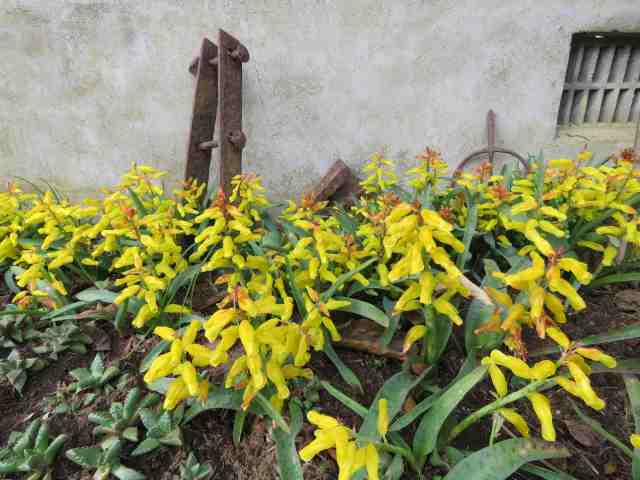
Mark’s Lachenalia reflexa hybrid which has proven to be a good early performer

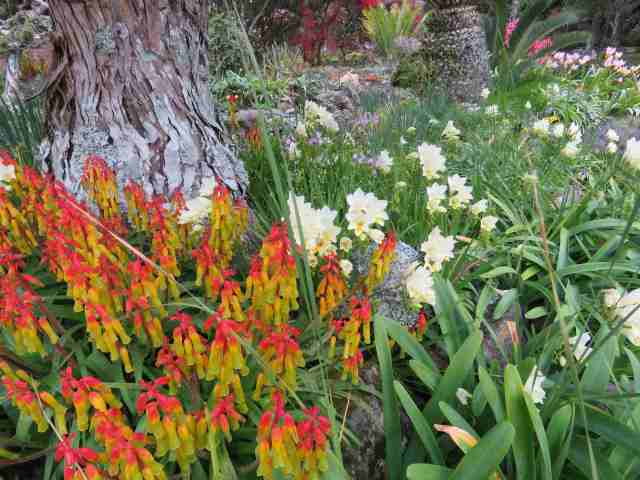
The other group starting its season is the lachenalias. The more desirable pink, blue and lilac ones will come later but these early ones are very cheerful and some have a long season in flower.

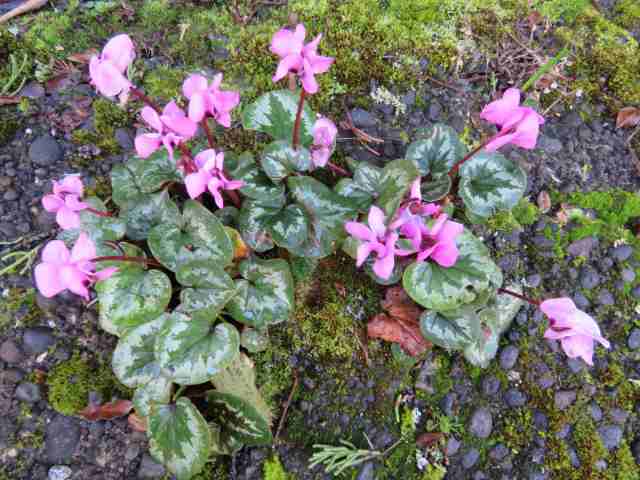
Cyclamen coum
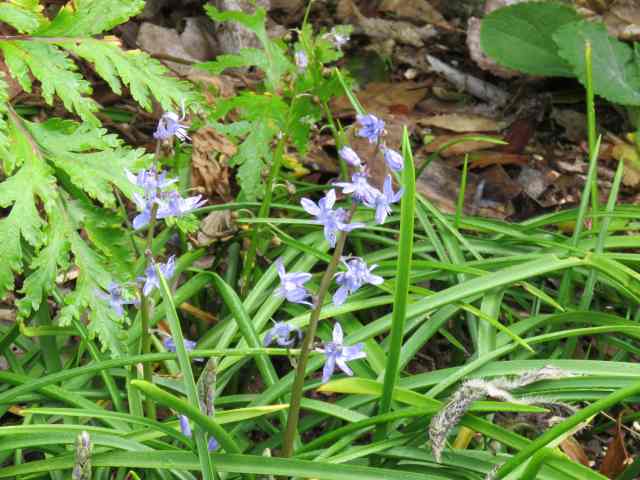
A winter flowering scilla. It will have a species name but I don’t know what it is and, to be honest, don’t care enough to go searching through back catalogues of ours and online.
Cyclamen coum and scilla

Cyclamen coum flies the flag for this plant family all winter and we have enough to set seed freely. It is smaller growing than the earlier C. hederifolium, and the dominant form we have is more cerise pink. The blue is an early season scilla, charmingly referred to as meadow squill, but I have no idea which one. We will have had a species name on it at some point. I wouldn’t get too excited about it. It is a pretty blue but has too high a foliage to flower ratio and is more suited to meadow planting than rockery. Not choice.

Overall, there is nothing much out of the ordinary but for mid-winter, the earliest bulbs are a very cheerful sight. July is the early harbinger of the peak bulb season of spring. I should give an honourable mention to Oxalis purpurea alba (still!), Oxalis versicolor and the simple blue anemone seedlings that have gently seeded down as survivors from a packet of De Caen mix I planted maybe 25 years ago.

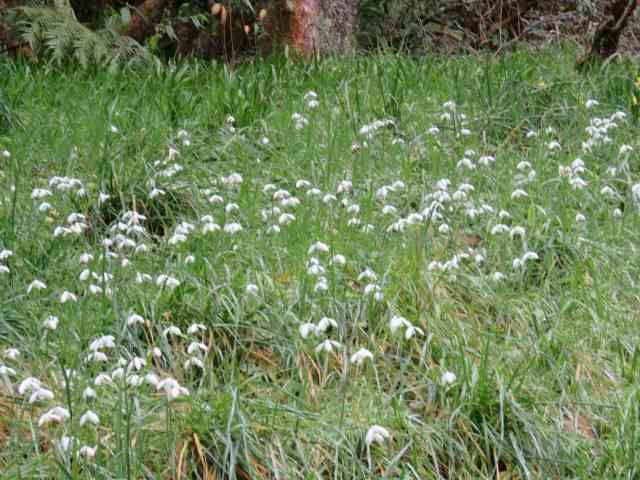
The gentle charm of snowdrops in a meadow situation

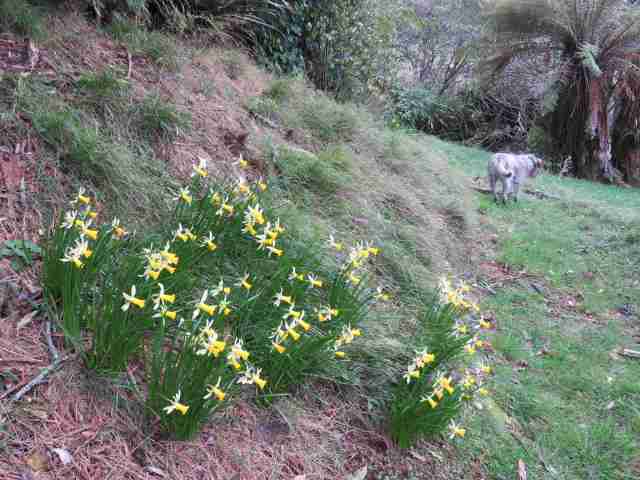
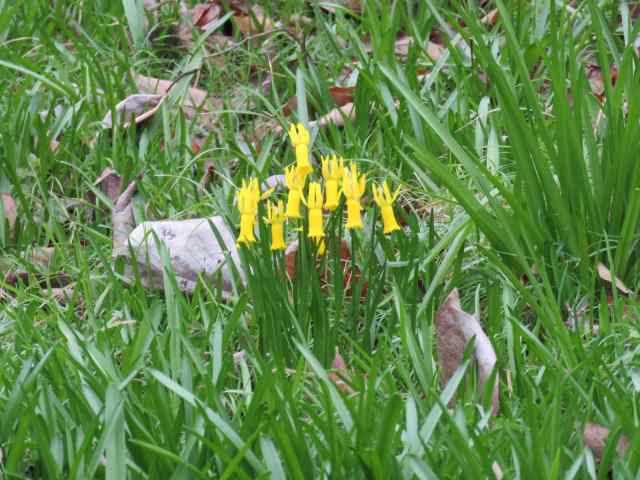
In the ‘you need to be here to really appreciate it’ category, July opens up our season of bulb hillsides down in the park. We don’t have actual acres of snowdrops yet but we do have extensive plantings and they are in flower now. The meadow narcissi are also opening their flowers. We rely on the stronger dwarf forms – particularly Narcissus ‘Twilight’ and cyclamineus seedlings which Mark raised to get high enough numbers to have an impact. Meadow bulbs bring charm through being an unexpected surprise and that is a little visual treat in early spring each year.

Dainty Narcissus cyclamineus competing well with bluebells and grass in the park
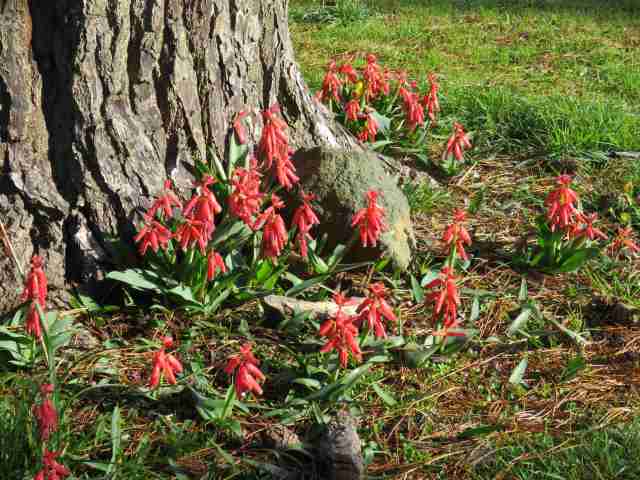
Lachenalia bulbifera at the base of an old tree amidst a grassy area that gets mown. Around bare tree trunks is often a good place to start planting bulbs for a meadow of sorts.

The delight is in the detail

We like a detailed garden, we do. It is not just the big views that catch our eye. Often it is the little delights – tiny, even – that focus our eyes on the close-up. It is possible to have a highly detailed garden without it descending into fussy clutter.

Here we are in midwinter and the small bulbs are bursting into flower. No, this is not early; nor is it a sign of climate change. It is on cue for an area where our winters tend to be mild and lacking in extremes. Goodness knows, we complain as much as anybody about cold weather, dreary days, rain and wind but the plants tell us that it is not as bad as we think.

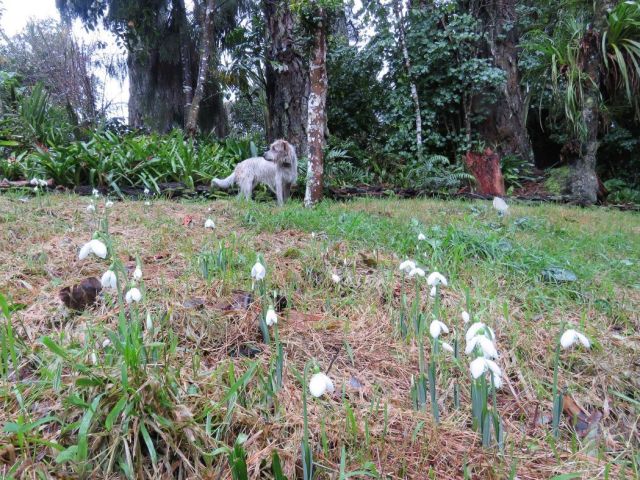
In the days when I used to write for the Waikato Times, we had a sheltie dog who quietly photo-bombed many a picture. Now we have Ralph channelling the spirit of the late Zephyr, except he is a boisterous photo bomber.

The swathes of snowdrops and dwarf narcissi that we have in areas of the park are only just showing first colour because it is colder on the south facing slopes but there are plenty out in the cultivated areas of garden that are noticeably warmer.

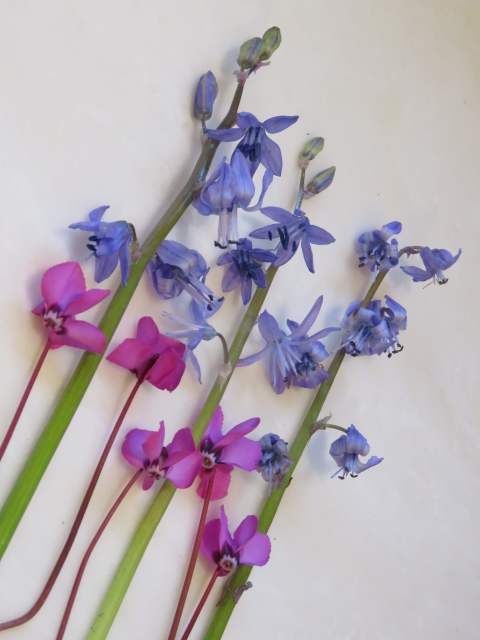
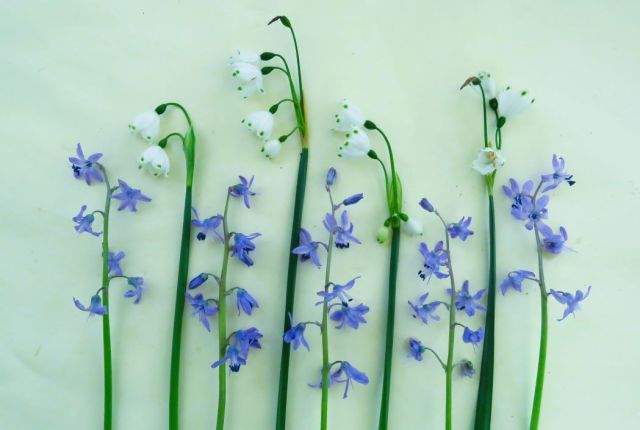
I started with the snowflakes and an obscure scilla that flowers earlier than the more common bluebells. The snowflakes – leucojums – are often taken for granted as robust survivors that are inferior to the more desirable snowdrops (galanthus). This is unfair to them because they are very different as a garden plant and under-rated, especially when we consider their extended flowering season.

I am fine with under-rating this particular scilla. Its only redeeming graces are that it is pretty to pick and it is the very first to flower. It isn’t worth garden space – far too much foliage for the number of flowers – so it has been banished to the wilder margins. We used to have a collection of species scillas – there are a lot of different species – with names like greilhuberi, hohenackeri and litardierei but I think they came to us under incorrect names even before we lost the names. I have no idea which one this is.

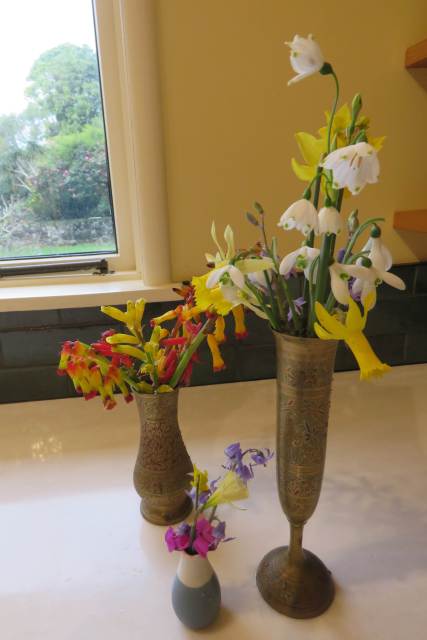
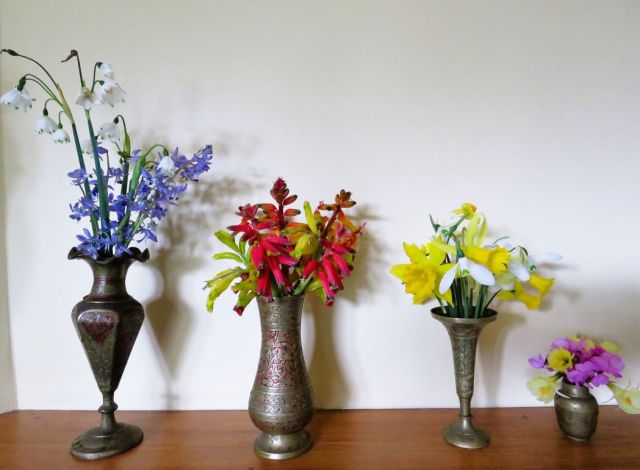
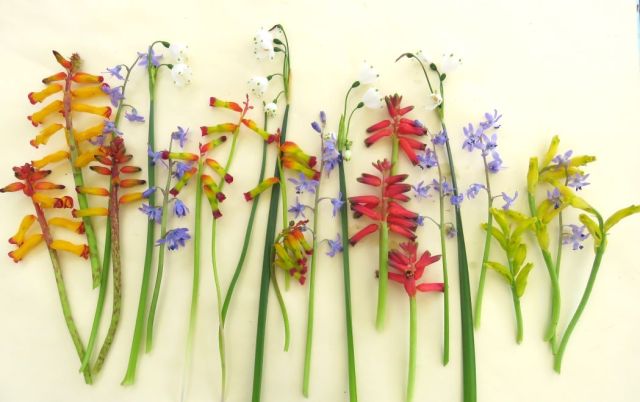
I added in the early flowering lachenalias to the flower lay. We still have an extensive lachenalia collection which flowers for us from now through to early November. Some are much easier to keep going in the garden than others but these early ones are toughies which will withstand competition and meadow conditions. The more collectable blue and lilac forms flower later. From left to right we have the most common, robust, cheerful but vulgar Lachenalia aloides (still sometimes to be found mislabelled as Lachenalia pearsonii),  the somewhat more refined Lachenalia aloides quadricolour (quad = four colours, in this case orange, yellow, green and burgundy), the red Lachenalia bulbifera and finally the yellow of Mark’s L.reflexa hybrid.

Sometimes I think I would have enjoyed being an illustrator or a graphic designer specialising in pretty florals but nothing can compare with the ephemeral charm of living flowers.

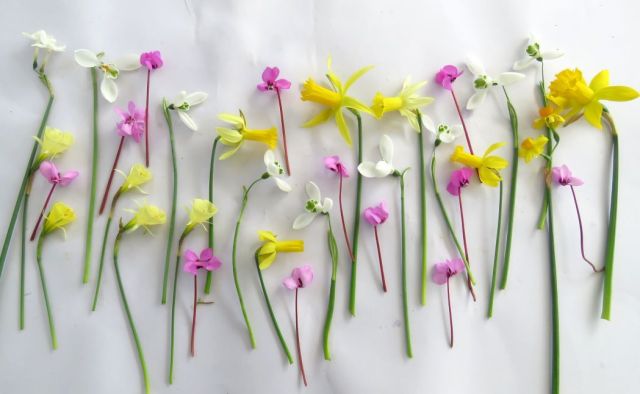
In a world where the news just seems to get more complicated and worse by the day, where things feel as though are spinning out of control, I find dainty flowers can be a welcome diversion. They don’t come any prettier than snowdrops, cyclamen and little narcissi. The snowdrops are a mix of Galanthus ‘S Arnott’ and G. nivalus which are our two mainstay varieties that perform in our area where we don’t get much winter chill, let alone snow. The cyclamen is C. coum which, according to Wikipedia, has the common name of ‘eastern sowbread’. I am not even going to ask who calls it that and why. While they might have wild sows in its native habitat around the Black Sea, the corms are so small and its rate of increase slow so it is unlikely that would ever make much of a food staple for browsing animals.

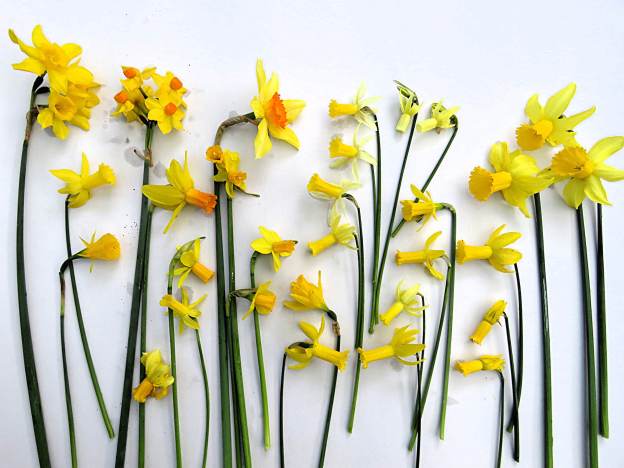
The narcissi are a mix of species and hybrids. My preference is for the cyclamineus types with their swept-back, reflex petals but the earliest jonquils in both yellow and white are deliciously fragrant and the bulbocodiums or hooped petticoats are also very charming.

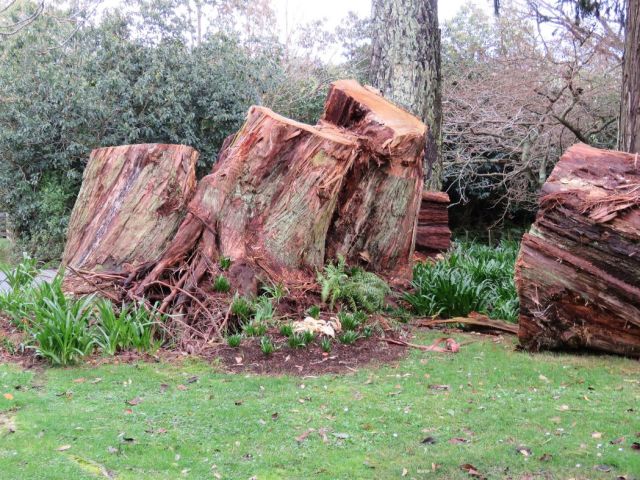
Zach has been lifting surplus bluebells to make way for more desirable snowdrops and baby daffs in the area we refer to as the hellebore border. I suggested he could rehome some of the bluebells – thugs that they are – into the area by our gate where the giant eucalypt came down in February’s Cyclone Dovi. Over the years, I had planted a fair swag of surplus bulbs around the base of the old gum.

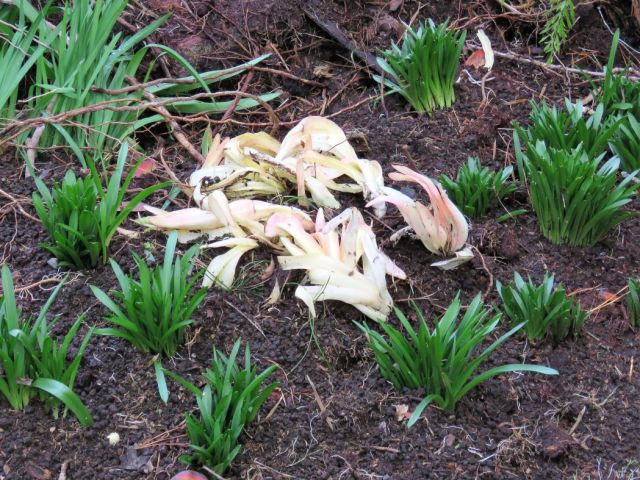
When he had finished, I couldn’t work out what the white patch was until I got up close. Buried bluebells, obviously from an earlier planting. Deep beneath the soil that had become displaced by the falling tree, some had leaves 30cm long and still not breaking the ground into the light.  I knew they were tough but that shows a high level of survival skills.

I have spent some time in the past working out the differences between the highly desirable, scented English bluebell and the dominant Spanish species and came to the conclusion that what we have are predominantly Spanish (Hyacinthoides hispanica), maybe with some Spanglish hybrids. They will not flower until mid spring.

We still have the worst of winter to get through but the earliest spring bulbs are a daily reminder that we are on the right side of the solstice already.

Finally, welcome to new subscribers who came this week after reading this recommendation from Julia Atkinson-Dunne. May you enjoy what you read and see.