
While the rhodohypoxis and Sinningia (syn Gesneria) cardinalis flower on in abundance, it is time to turn to the bulbs that have made their annual appearance in this month of December.
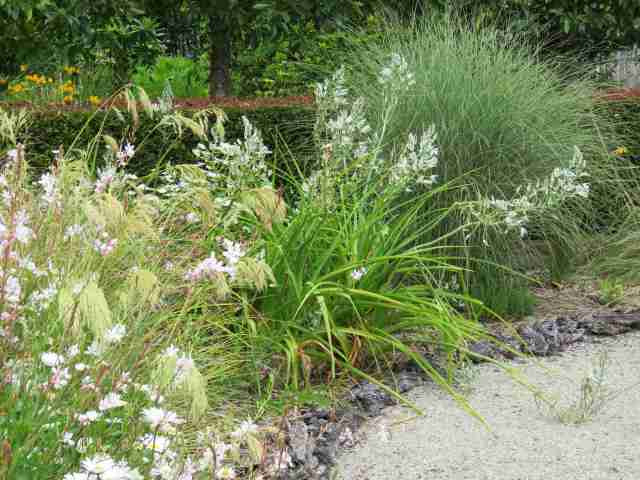
We have always grown the large Albuca nelsonii and its green and white bells have often featured in any Christmas floral staging I do because it cuts well. I included it when I planted the Court Garden and I worried about its somewhat unwieldy habits. Staking those tall, curvy flower spikes was… challenging, shall I say? All that changed when I looked up the albucas in an attempt to get a species name on its half-sized cousin with very similar flowers. I found a reliable site that described the characteristic of the plant that the flower spikes naturally become pendulous to prostrate. Why fight nature? I now allow them do as they wish.

Randomly, I also found the information that an “infusion made from Albuca nelsonii bulbs and tubers of Kniphofia species, known as icacane, is taken as an emetic as protection against sorcery.” Just in case you need that handy hint.
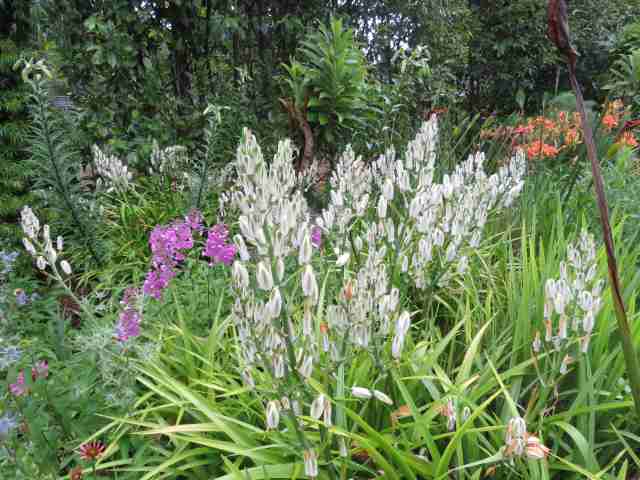
Often mistaken for A. nelsonii is its half-sized cousin. As far as I can make out, this is Albuca batteniana. The little orange tuft – actually the calyx that holds the petals – that appears at the top of the flower spike when it first starts opening is a distinctive characteristic. The flowers, bulbs and foliage are very similar to A. nelsonii and it is a better-behaved garden specimen in that somewhat suburban, tidy manner. Its flower spikes do not lie down on the job; they stay obediently erect. It is a good garden plant which I have used in the twin borders but it doesn’t make me smile as the more exbuberant and wayward big A. nelsonii does.

These days, the abundant blue mist that shrouds the rockery is not the bothersome geissorhiza, about which I have written often. It has taken years for me to encourage the dainty Cyanella capensis with its tiny blue flowers across a long blooming season. Only now am I thinking I may be getting too much of it. At least its bulbs are large and easy to remove. I just have to be a bit more vigilant on deadheading it because it is spreading by seed, not bulb.
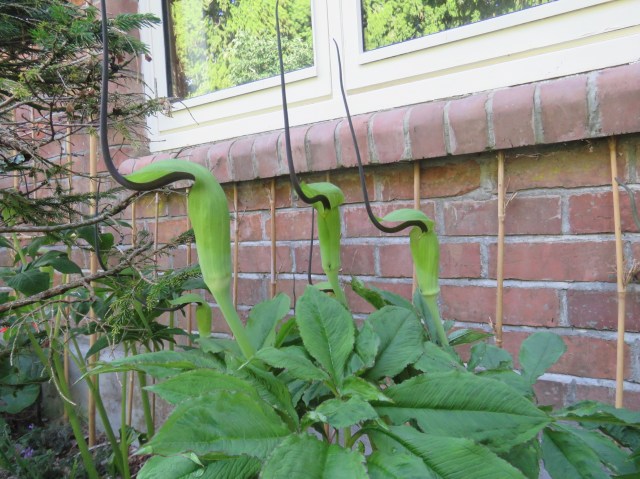
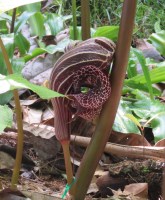
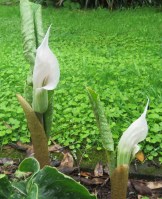
I have missed the arisaemas in previous months’ bulb articles. We have a reasonable range of arisaemas, some of which are much more choice than others. But it is really only the easy and common A. tortuosum that makes me think of them as the meerkats of the plant world. I deadhead them thoroughly and weed out strays because I do not want the alert meerkats of plant world all over the place but in their allotted space, they are an annual delight. And quite bizarre.
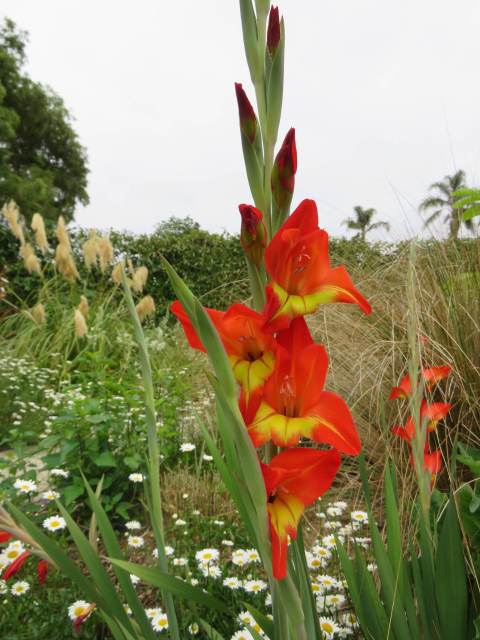
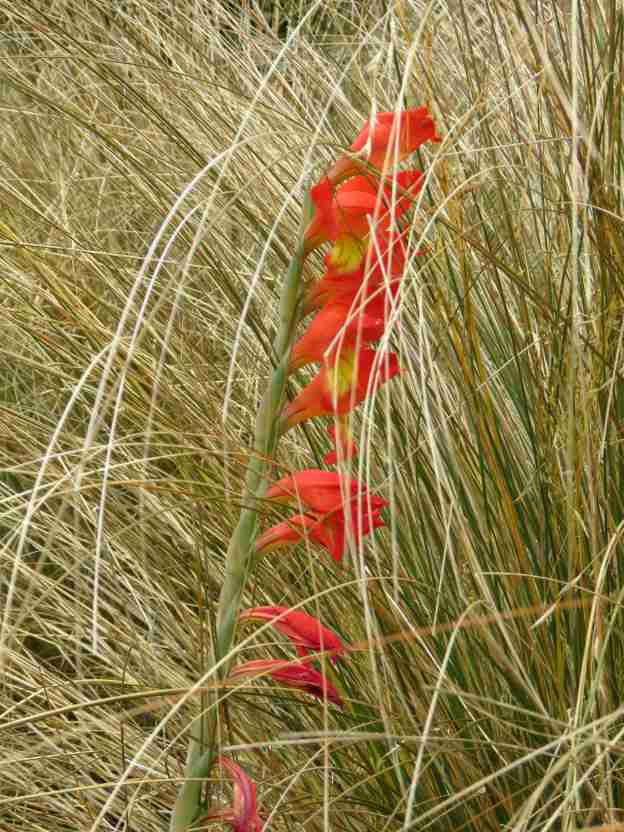
Gladiolus – there are a few that I appreciate, mostly species. And a few that I tolerate. The overbred, overblown hybrids of Dame Edna fame have never appealed but I accommodate the ones that date back to Mark’s mum. As she died back in 1986, I feel a begrudging respect for those that have survived down the years and they seem to fit in okay to the exuberant and largely uncurated floral abundance of the Iolanthe garden. Gladiolus daleni has been in flower for a few weeks now but the star this week is the gorgeous red Gladiolus papilio X ‘Ruby’. One of the problems with gladiolus, though, is that they open their flowers in succession so no matter how attractive the freshly unfurled buds are, they share their stem with ones that have withered, browned and died. It seems a design flaw to me.


The topic of gladiolus reminds me of this passage I wrote in a book review some years ago. I am still quite proud of it.
By the way, Penguin (Publishers) , it is time you dispensed with the auto spellchecker. The author of this book winning prizes for exhibiting her Gladys rivals a previous author counselling readers to throw out their Algarve. The author may have been using the colloquial term of gladdies, but even that is inappropriate for the text on page 164 and 165 where poor Gladys has her name taken in vain repeatedly. Gladiolus stands for one, gladioli for more than one. Gladdie is the vernacular, not the common name. Gladys is somebody’s grandmother.
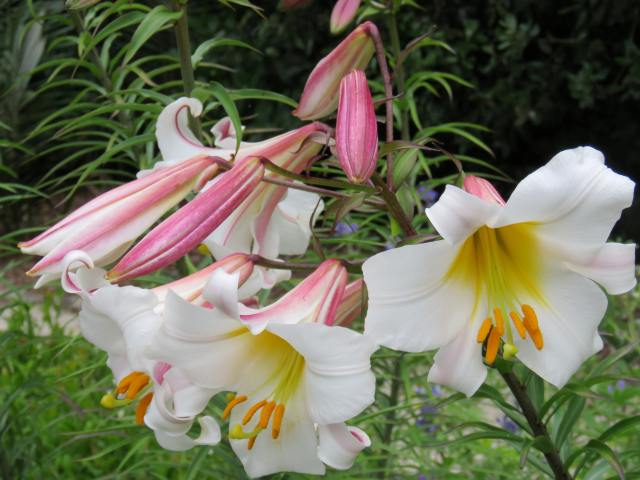
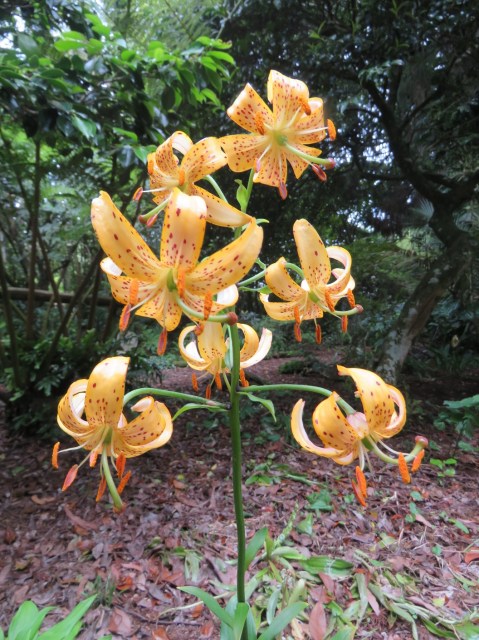
The first of the Christmas lilies is in bloom and the buds are fattening on the golden Aurelian lilies. But I think we will leave the lilies for January when the auratums star.
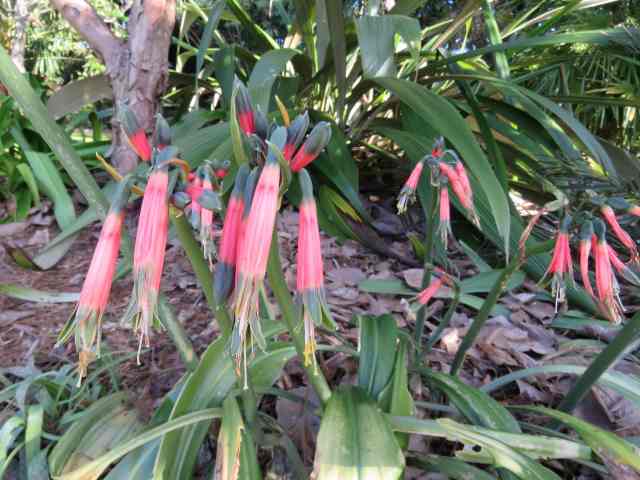
There are of course, other December bulbs in flower. That is a Phaedranassa cinerea above (great name!). From Ecuador, no less. I can’t think we grow many plants from Ecuador. And what we still call Urecolina peruviana (from Peru, presumably) but may be more accurately called Stenomesson miniatum blooms on. One day I might sort out which bulbs we have are South American as opposed to the majority that are from South Africa.
Stay safe and our thoughts go to Australians in this week. Mass shootings are so rare in this part of the world that it shakes our nations to the core when they happen.
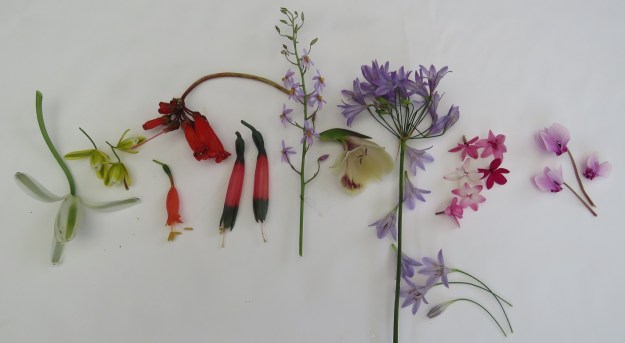 “Good thing we are not drying out too much,” Mark observed wryly as we faced another day of rain. This is a variant on his usual “Good news! The drought has broken”. While technically summer, our very wet spring continues. I entertained myself by doing a bit of a stocktake of bulbs in flower in mid-December and assembling one of my flower boards.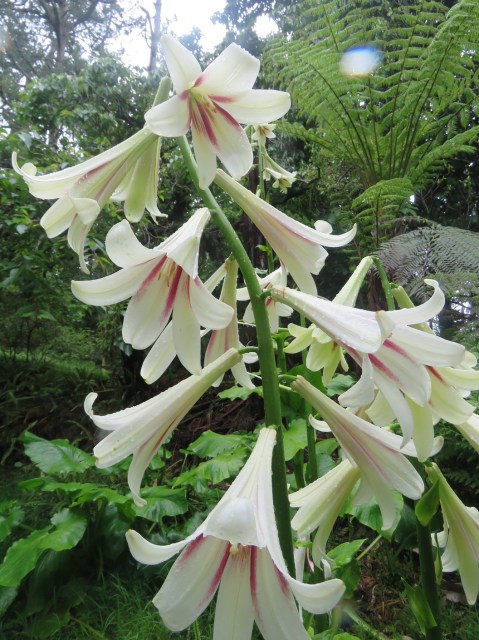
 From left to right, we have two albucas (more shortly),
 Tikorangi The Jury Garden