Tag Archives: Felix Jury

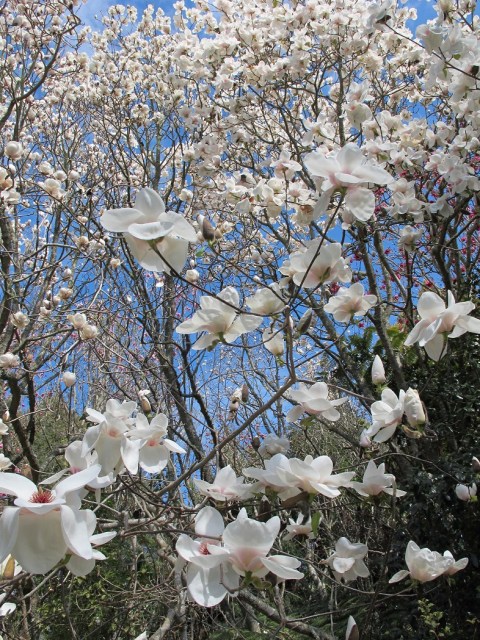
The Jury Magnolias. A retrospective view.

Written for and first published in the International Magnolia Society journal. In the time since writing the text and publication, we are now able to release details of the three new deciduous magnolia hybrids being released internationally.

The Jury magnolia reputation rests on just twelve deciduous magnolias so far. Soon there will be fifteen and it may end up at seventeen in total. Despite originating on a farm in far-flung New Zealand, some of those plants have had a significant impact in the international magnolia world. 
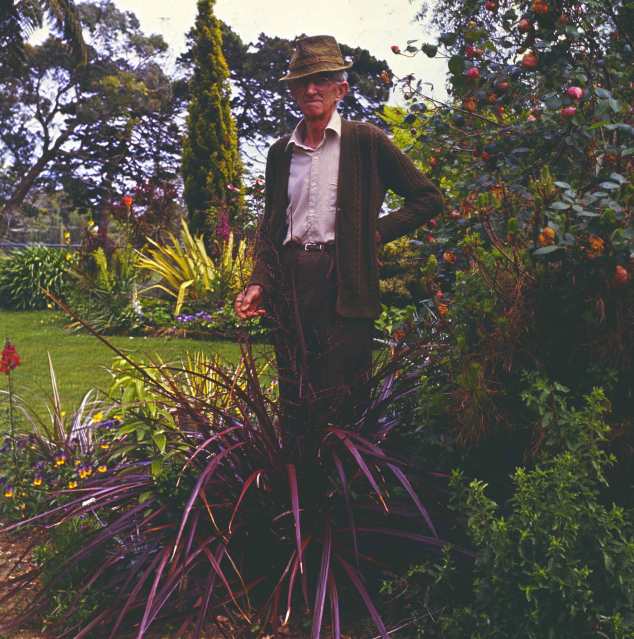
Felix in his garden, 1985. Photo credit: Fiona Clark

Felix Jury was a farmer who decided he would rather garden. He handed over the family farm to his second son as soon as he could and devoted his time and energy to building a large garden. He started by buying plants, importing new material from around the world. It was the failure of many of these to thrive in our warm temperate conditions that started him on the hybridising path. He was a self-taught amateur; like many of his contemporaries of the day, he became proficient at raising seed, striking cuttings, budding and grafting across a wide range of genus but it was always on a small scale, hobby basis. For an amateur, some of his plants have stood the test of time across the world. Phormium ‘Yellow Wave’ is still being produced internationally in surprisingly large numbers and Camellias ‘Dreamboat’ and ‘Waterlily’ have remained household names in the camellia world. He never received a cent in payment for any of these plants. Over time, it is his magnolias that have firmly cemented his name in international gardening.

Mark Jury was Felix’s youngest son. By the time Mark and I returned to the family property in 1980 with Mark planning to set up a plant nursery, his father had scaled down his adventures with plants and quietly retired to the garden. It was a privilege for both father and son to have seventeen years working closely together in remarkable harmony. Felix was able to transfer all his knowledge and experience to Mark who was keen to continue the garden development and to take the plant breeding to the next level. Unlike his father, Mark needed to generate an income. Also self-taught, Mark started the nursery, literally building up from one wheelbarrow to a successful boutique business doing mail-order, wholesale and on-site retail.

Felix didn’t raise large numbers of magnolias from his controlled crosses. They would probably number no more than fifty and over a few years only in the 1960s. Of these, eight ended up being named and released commercially. Technically, there were nine but we will return to the irritating matter of the ninth later.  He would have named more but Mark vetoed that. From an early stage, Mark took the view that fewer and more stringent selections were better than more when it comes to a genus with the potential to be long-term trees in the landscape.
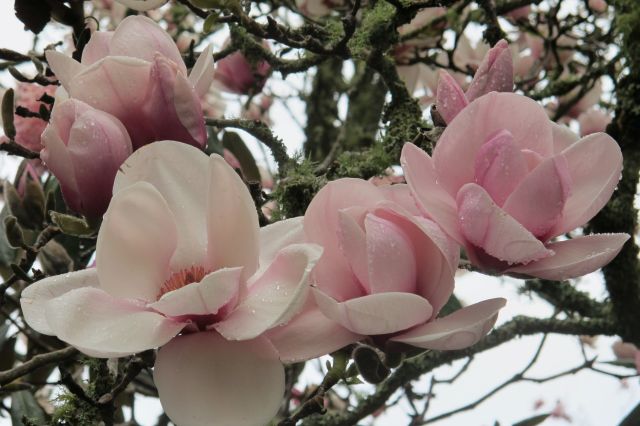
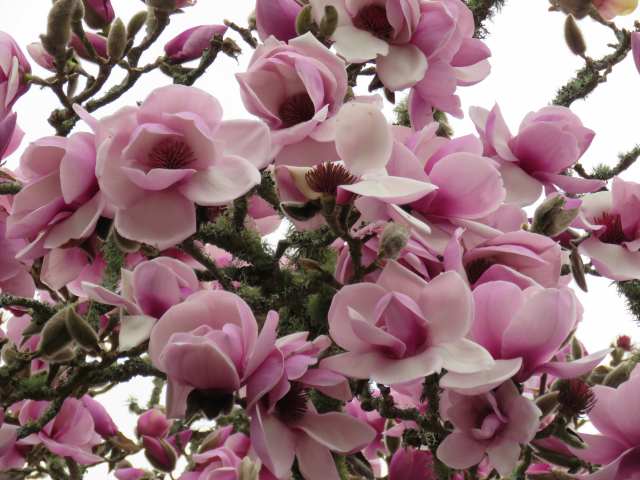
Magnolia ‘Atlas’
Magnolia ‘Iolanthe’

Of those eight, Mark has felt that probably only six should have been named. He singles out sister seedlings ‘Milky Way’ and ‘Athene’ as two that could have been narrowed down to one. For a long time, he said the same thing of ‘Iolanthe’ and ‘Atlas’ but has had to change his tune. While we regard ‘Iolanthe’ as a flagship magnolia, arguably one of the best two Felix bred in New Zealand conditions, it has never performed as well overseas and is certainly not rated as highly elsewhere. ‘Atlas’ has a larger bloom and is a prettier pink but its flowering season is short – by our standards – and we don’t often see it in its full glory because the petals are too soft and get badly weather-marked. But ‘Atlas’ appears to be hardier in overseas climates and a better performer elsewhere than it is here.
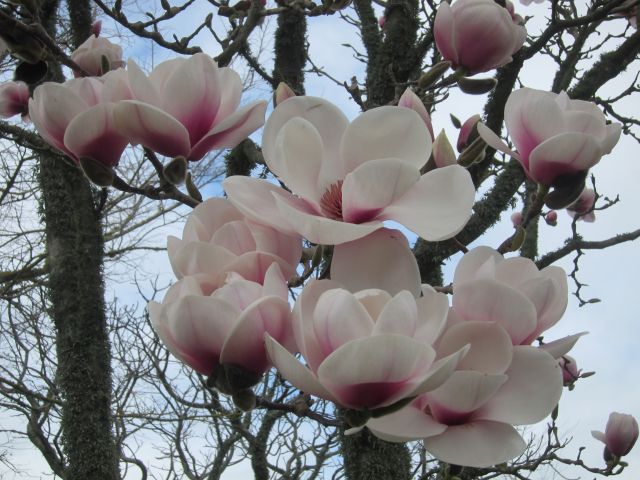
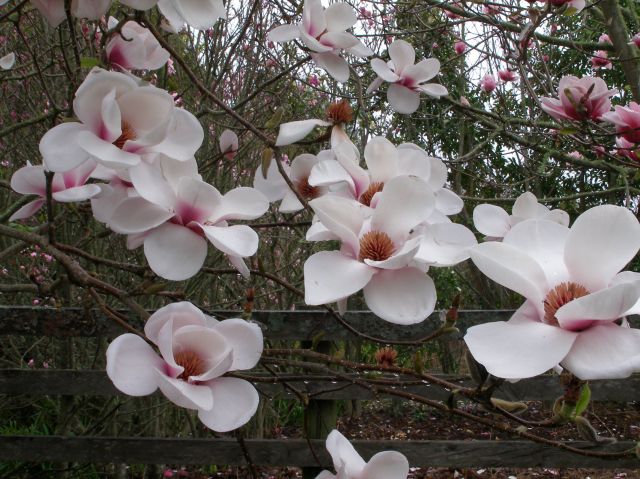
Magnolia ‘Milky Way’
and ‘Athene’. Even we have trouble telling them apart at times, particularly in photo close-ups. We can usually tell by looking at the tree and time of flowering or side by side comparisons, but we have to think about it every time.

In those days, the range of magnolias available commercially was small. Felix’s initial goal was to see if he could create hybrids that would flower on young plants and stay a garden-friendly size. It was generally accepted that when a magnolia was planted, it was realistic to expect a delay of between about seven and fifteen years to get the first blooms. He also liked the cup and saucer flower form and he wanted more colour. Of his named hybrids, six of the eight had a chance hybrid in their parentage. It was the cross he received from Hillier’s Nursery as a seedling of M. campbellii var mollicomata ‘Lanarth’. Mark has always referred to it as his father’s secret weapon. When it flowered, it was clear it was not ‘Lanarth’ but a hybrid, presumed to be with M. sargentiana robusta. He duly named it for his favourite son so it is known as Magnolia ‘Mark Jury’.
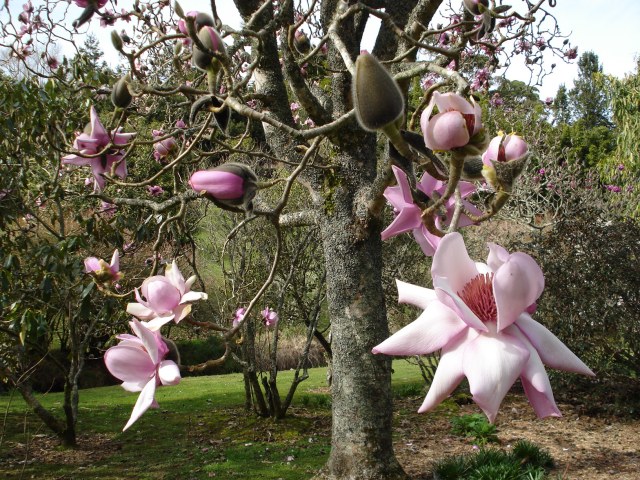
Felix’s breeder parent – M. ‘Mark Jury’ – is always distinctive with its very large blooms and pronounced recurved petals

Felix’s two greatest achievements were in creating large-flowered hybrids that bloomed on young plants and in introducing the breakthrough to red shades with his cultivar ‘Vulcan’.

Possibly under-appreciated are the additional factors of heavy textured petals, solid flower form and the setting of flower buds down the stems so blooms open in sequence, rather than just tip buds that all open at once for a mass display that may only last a fortnight. Our springtime is characterised by unsettled weather; Mark refers to the magnolia storms. One overnight storm can destroy the display of softer booms like M. sprengeri var. ‘Diva’ or wipe out the tip bud display of ‘Sweetheart’ (a ‘Caerhays Belle’ seedling).
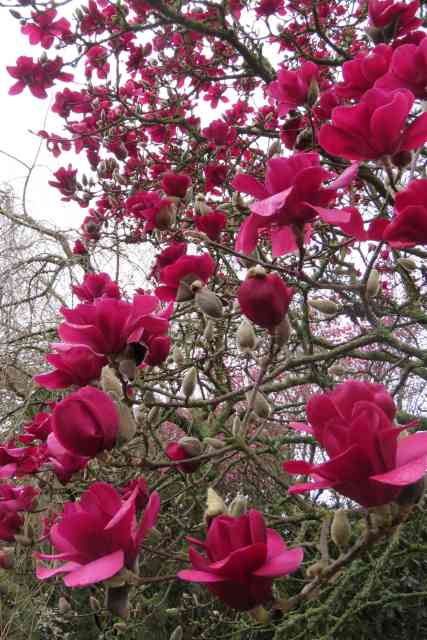
Magnolia ‘Vulcan’ at its early season best

The performance of ‘Vulcan’ around the world has been well documented and ranges from brilliant to undeniably disappointing.

I will say that ‘Vulcan’ was the only plant we have ever put on the market which we could track its flowering by the phone calls we received year on year. Being a long, thin country in the southern latitudes, magnolias open first in the warmer north and then in sequence heading down the country. The phone would start ringing in early June from the north and continue through August from more southern areas. That is a stand-out plant.

Whatever its flaws, ‘Vulcan’ opened the door to the plethora of red hybrids now available internationally and it remains a key foundation plant in the development of new hybrids.
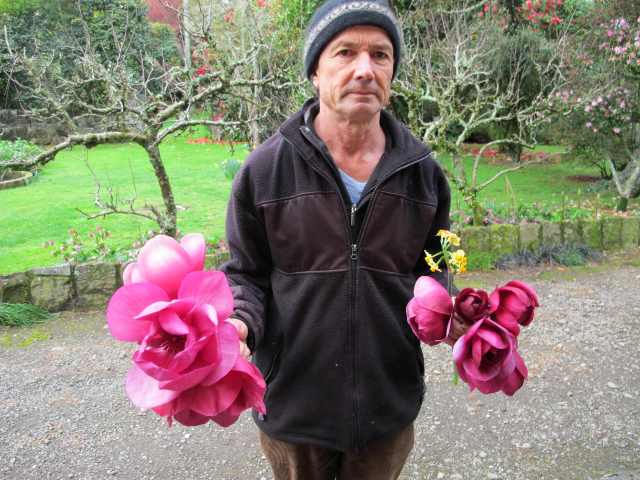

Mark, picking seedling blooms to compare back in 2013
Like father, like daughter. I recently found this photo of our second child holding her father’s blooms from twenty years earlier – likely the first blooms from some of Mark’s earliest crosses

Mark started hybridising magnolias in the 1980s, picking up where his father had left off and using the same genetic base. He has raised many more controlled crosses than his father ever did. We have never counted how many but it will be well into the thousands. Of those, only four have been named and released and there is another tranche of three which are being built up for release internationally. That makes seven Mark Jury magnolias and all are distinctly different.

Ill health has cut short Mark’s breeding programme and we are now assessing the final batches of his breeding efforts. He has already decided that he has done as much as he can with the reds so he has ruled out the next generations of those and we are now looking at his yellows. We are hopeful that we will get maybe two final selections so he may end up with nine named magnolias in total.
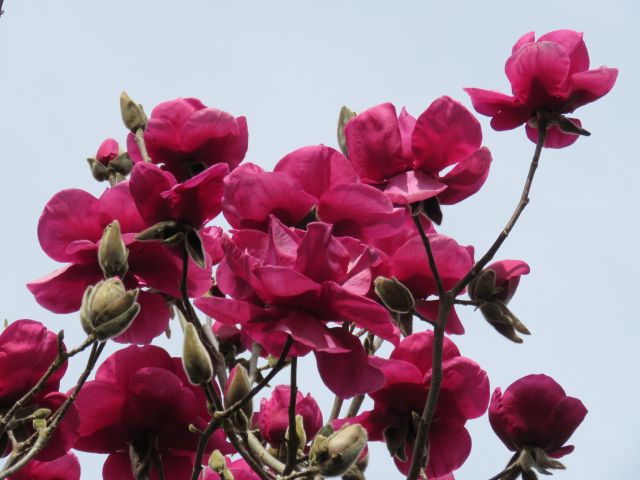
Magnolia ‘Felix Jury

He has always been particularly proud of the cultivar he named for his father, Magnolia ‘Felix Jury’. He reached the goal Felix had set – a tree that will not get excessively large but with very large, colourful blooms from an early age. It has always delighted us that Felix was still alive to see it bloom. In our climate, the colour can vary from rich pink through to deep red, at its best. Over the years, we have learned that the colour in magnolias can bleach out, particularly in colder climates, and we get exceptionally rich colour in New Zealand. Presumably this is related to the very clear light that we have, along with the soils and mild climate (never very hot and never particularly cold). ‘Felix Jury’ keeps its size and form in different climates and even when the colour is lighter in shade, it is an acceptable pink, albeit not the stronger shades we see here.
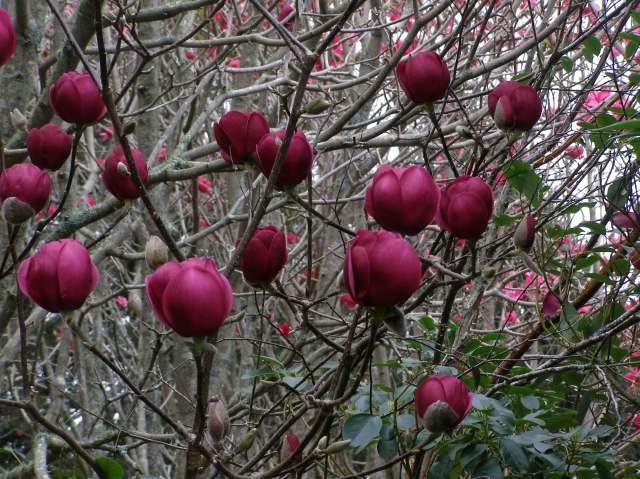
Magnolia ‘Black Tulip’

Both Mark’s ‘Black Tulip’ and ‘Felix Jury’ are showing up in the breeding of countless cultivars across the magnolia world and are clearly having long-term influence. ‘Black Tulip’ sets seed readily and it seems every man, woman and their dog have raised seedlings, judging by the photos we have seen.  None appear to be an improvement on the parent to our eyes and not many have taken it in a different direction. But its impact on the development of new hybrids is clear to see. Mark has raised hundreds of his own ‘Black Tulip’ hybrids so we see many, many lookalikes but few stand-outs.
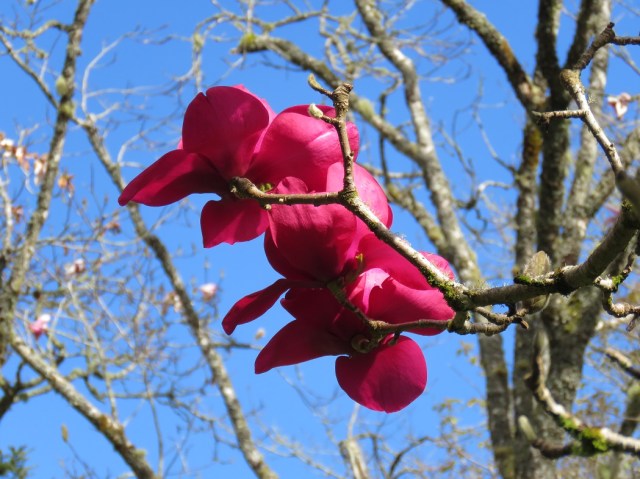
Mark’s best red, ‘Ruby Tuesday’

We have high hopes of the last red he has selected which is one of the three new ones to be released. He bypassed ‘Black Tulip’ and went back to his father’s ‘Vulcan’ as one of the parents. We don’t rush selections based on flower alone; this one goes back 20 years but its shade of red stood out from the start and the original plant has never had an off-season. It has lost the muddy purple undertones of ‘Vulcan’ and keeps its rich shade of red right through the exceptionally long flowering season. It starts a little later than ‘Vulcan’ so is less vulnerable to late frosts and the late season blooms are as good as the first ones. We describe it as a ‘Vulcan’ upgrade. It has kept the best features but eliminated the undesirable characteristics. Only time will tell if this is true in other climates but keep an eye out for this ruby red selection in the coming years.

Mark turned his attention to the yellows. The magnolia world is awash with yellow hybrids, so many that it is hard to pick out the ones that are superior. Mark’s dream was of a big, pure yellow flower in the cup and saucer form of M.campbellii but on a tree that opens its flowers before its foliage appears, and in a garden-friendly size. A yellow ‘Iolanthe’ or ‘Felix Jury’, so to speak.
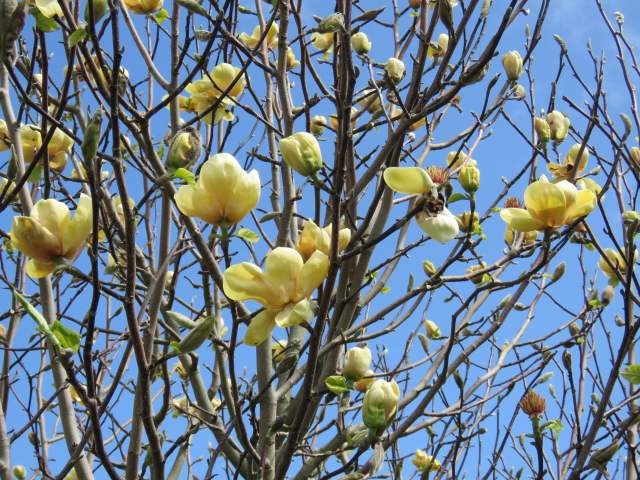
Magnolia ‘Honey Tulip’ – the only yellow Mark has named so far

His ‘Honey Tulip’ was a step on the way. It was a break away from the pointed buds, narrow petals and small flowers that come from the dominant M.acuminata parentage. It isn’t the butter yellow he wanted but it met the brief of solid flower structure and thick texture, flowered before leaf-break and stayed small enough for most gardens. Importantly, the colour does not fade out as the season progresses.

The next generations have taken it further. He has the strong, clear yellow he wanted, the large flower size, the flower form, the slightly earlier blooming season to beat leaf-break and the garden friendly habit of growth. He just doesn’t have them all on the same plant.
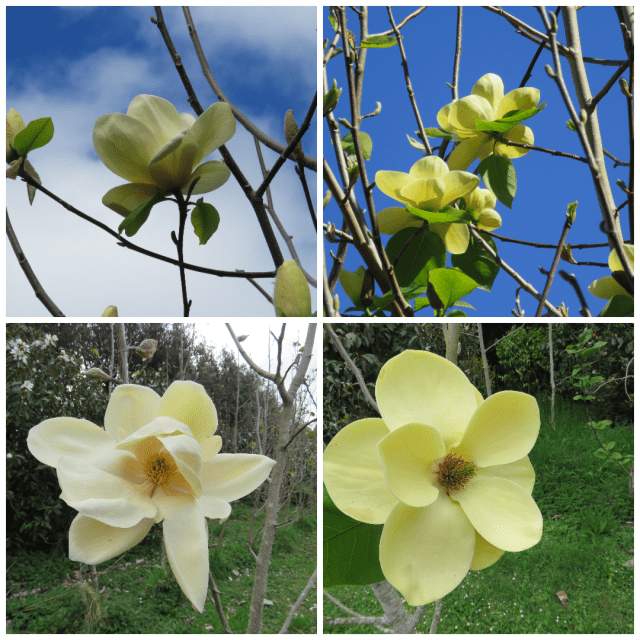
If we could just take the best aspect of each of the seedlings and get them all onto one plant, that would be good.

The goal of a big, pure yellow, cup and saucer magnolia is achievable but Mark has run out of time and energy. It will take another generation of plant breeder to reach it. That said, there are probably a couple of good yellows that are significant steps along the way that we should get out of the last batch of seedlings. One, in particular, is a very pretty lemon-yellow (so not the strong colour he wanted but still yellow) with the desired flower size and form and it is blooming from an early age although the flowers coincide with leaf-break. It is hard to reach perfection.
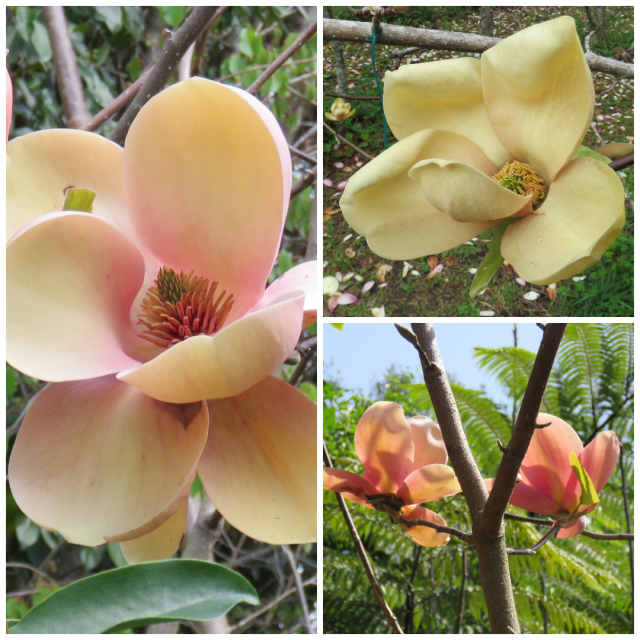
Sunset shades and caramel shades but none good enough to select yet

There are a few striking sunset mixes of strong colour on goblet shaped blooms but none of them look good enough to select. Plant selection is always made on a variety of criteria but Mark’s personal preference for solid colour is strong. Every magnolia he has named is one colour inside and out because that is what he likes. I had to twist his arm to even look at the sunset mixes; he does not think pink and yellow is a pleasing combination. He is also dismissive of what he calls ‘novelty blooms’. I marked one seedling that had distinctive, caramel-coloured blooms. Viewed close-up, they are interesting but I had to concede he was right. On the tree, they will just look like they have been hit by frost.

Always, we are selecting for plants that will look good over time in the landscape. Looking interesting as a cut flower in a vase is not enough, given the magnolia is a landscape tree with long term potential.

I mentioned the irritating ninth Felix Jury hybrid at the start. It is Magnolia ‘Eleanor May’ and I wouldn’t even reference it except I saw a photo lauding its merits in the UK this year. I don’t have a photo of it in my files which indicates the low esteem we hold it in. While it is a seedling from Felix’s breeding programme, we don’t claim it as a Jury hybrid. It is a full sister to ‘Iolanthe’ and a rejected seedling. Felix provided material of it to the nursery Duncan and Davies to use as a good root stock. From there, the nursery sent out a few failed grafts of ‘Iolanthe’ to garden centres by mistake. One plant was purchased by a customer who was observant enough to pick the difference when it flowered. He then took it upon himself to name it for his wife which may have been legal but was certainly lacking in courtesy. As far as we are concerned, it is inferior to ‘Iolanthe’, had already been rejected in selection and was an escapee by mistake. Besides, when we question releasing two of the same cross – ‘Iolanthe’ and ‘Atlas’ – why would we want to claim a third of the same cross? We have a property filled with sister seedlings which we would hate to see unleashed onto an over-crowded magnolia market.
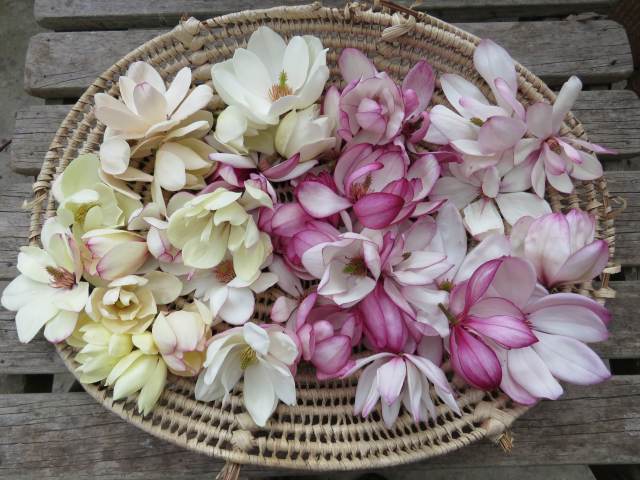
Starting with predominantly white genus, Mark has reached into the pinks, purples, peach tones and lemon as well as bicolours.

Mark’s more recent work with hardier members of the michelia group is another story. The first three selections are on the international market under the Fairy Magnolia® branding. They are in white, cream and soft pink and the next two on the way are in shades of peach and blackberry ripple. We are now onto the final round of selections which are into the bicolours and purple.
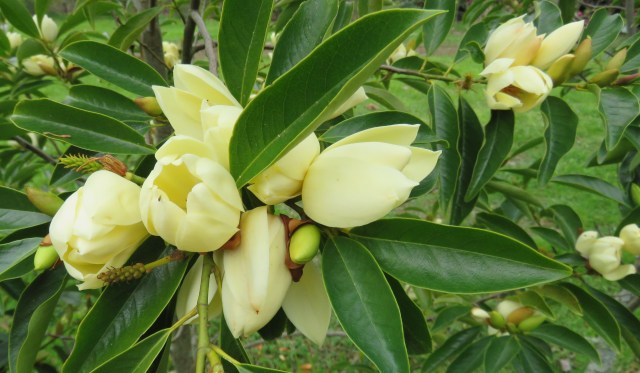
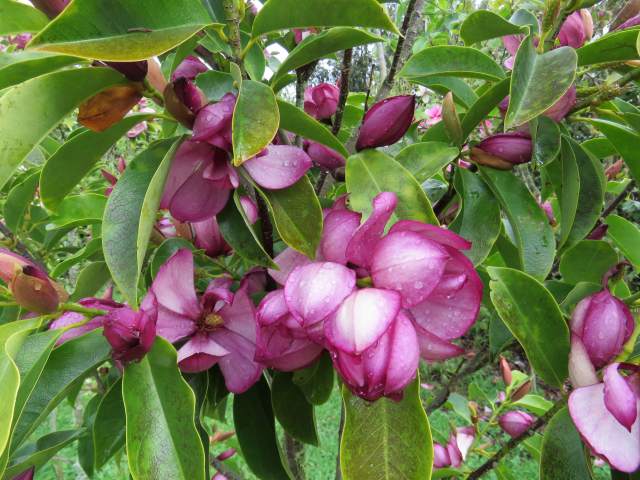
Getting there – definitely lemon but not yellow enough
The dark pinks and purples have been more rewarding than the yellows

Again, he has come up short on a strong yellow that is good enough to select and, regretfully, the really pretty apricot ones have not made the grade. But we know that those colours are within reach without sacrificing hardiness. Mark wryly describes his work on michelias as ‘RFI’. That is Room for Improvement. It will take another breeder to get there but there is plenty of promise and scope to take them further.
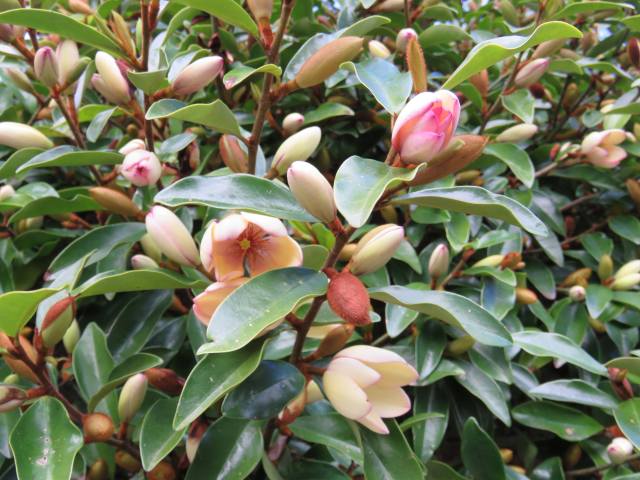
Labelled ‘FM Baby’ in my files, this new selection is being released as Fairy Magnolia® ‘Petite Peach’

Felix Jury magnolias

Apollo (probably liliiflora nigra hybrid x campbellii var mollicomata ‘Lanarth’)

Athene (‘Lennei Alba’ x ‘Mark Jury’) 

Atlas (‘Lennei’ x ‘Mark Jury’)

Iolanthe (‘Lennei’ x ‘Mark Jury’)

Lotus (‘Lennei Alba’ x ‘Mark Jury’) 

Milky Way (‘Lennei Alba’ x ‘Mark Jury’) 

Serene (liliflora x ‘Mark Jury’)

Vulcan (liliiflora hybrid x ‘Lanarth’)

Mark Jury magnolias

Black Tulip (‘Vulcan’ x)

Burgundy Star™ (liliiflora nigra x ‘Vulcan’)

Felix Jury (‘Atlas’ x ‘Vulcan’)

Honey Tulip (‘Yellow Bird’ x ‘Iolanthe’)

 Plus Ruby Tuesday, Dawn Light and Ab Fab
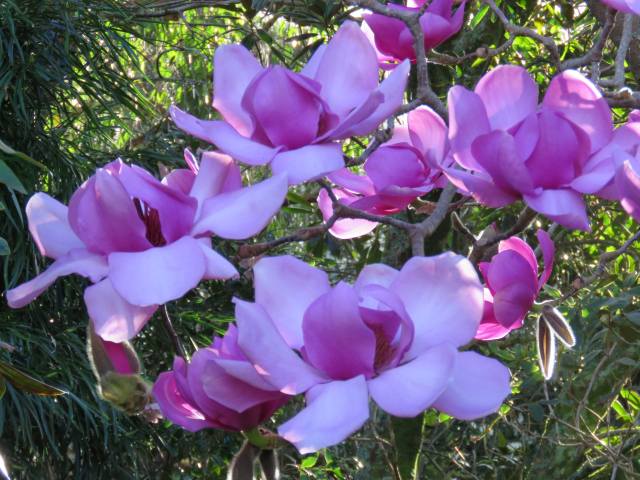
Magnolia ‘Dawn Light’
Magnolia ‘Ab Fab’

Fairy Magnolia® Blush (M. laevifolia x foggii hybrid)

Fairy Magnolia® Cream (M. laevifolia x foggii hybrid)

Fairy Magnolia® White (M. laevifolia x doltsopa)

Fairy Magnolia® Lime (on very limited release in Europe only)

Plus Fairy Magnolia® Petite Peach
Preserving a period of time

Can a garden ever be frozen in time?

This train of thought came back to mind as I was sorting through the old slides of our garden dating back in its early days. We first came across the concept of freezing a garden in time when we encountered the Florence Charter being quoted twenty years ago, in the context of what are now referred to as the regional gardens here, particularly Tupare and Hollards.

I see the Florence Charter of 1981 built upon the earlier Venice Charter of 1964 and I can’t quite get my head past the glorious locations of these think-tank conferences on preserving historic monuments. Still, I doubt that the wise heads behind these charters were thinking about preserving gardens from the 1940s and 1950s. Only in colonial New Zealand do we think of 70 to 80 years warranting the descriptor of *historic*.

But how realistic is it to freeze a garden in time? For starters, it is probably limited to bulbs, herbaceous perennials or roses. Trees and shrubs grow. They can’t be lifted, divided, thinned, pruned and replanted in their original configuration. That rules out 99% of all gardens in this country; I cannot recall seeing any gardens here with no trees or shrubs in them.

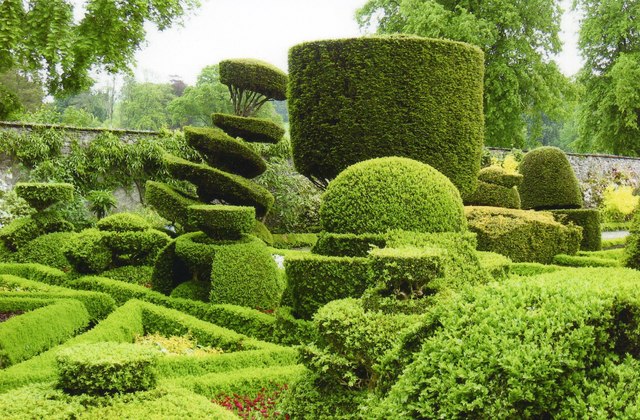
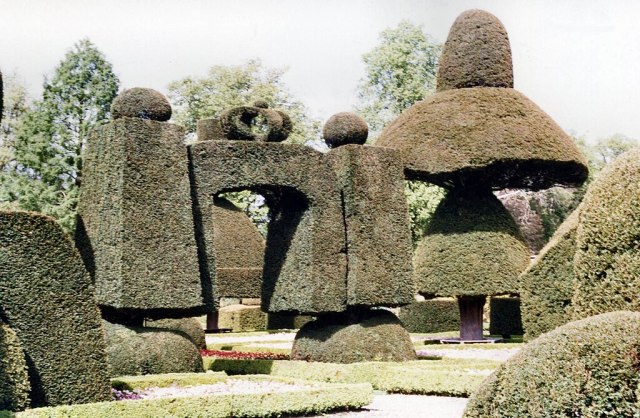
Topiary at Levens Hall by Peter Jeffery (via Wiki Commons)

What about topiary, I hear somebody ask. Even they evolve over time. Covid robbed us of the opportunity to visit Levens Hall in the Lakes District of the UK. That garden dates back to 1690 and is claimed to be the oldest known topiary garden. Some of the yew topiaries could well be original but I doubt they look the same now as they did in 1700. Even topiary and bonsai grow, mature and evolve over time.

Topiary in the garden at Levens by Simon Palmer (via Wiki Commons). That unbalanced, leaning, cake-plate topiary is an example of serendipity over time, adding quirkiness that would not have been there at the start.

Roses and maybe some other small deciduous shrubs can be kept to the required size and shape. Besides, you could grow on replacement plants out the back somewhere and bring them in as instant substitution when needed.

Herbaceous perennials and bulbs can certainly be lifted, thinned and replanted in exactly the same configuration, although why you would want to do so eludes me.

But, and it is a big but, you can have a perennial, bulb or rose bed and dedicate your gardening life to keeping it static in display but make sure it is in the middle of open space which will stay open. As soon as a bed or border is encircled in hedging, other gardens, trees, orchard or anything else, the time-clock of change starts ticking. The micro-climate you started with will change over time as other plants grow and may no longer be hospitable at all to the initial plant selections.

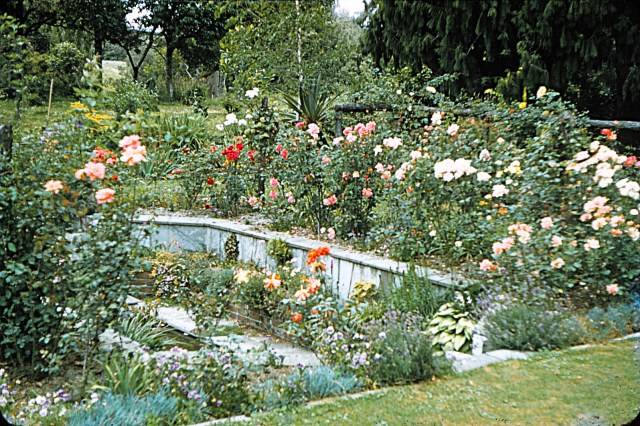
Mark’s mother’s rose garden in its heyday
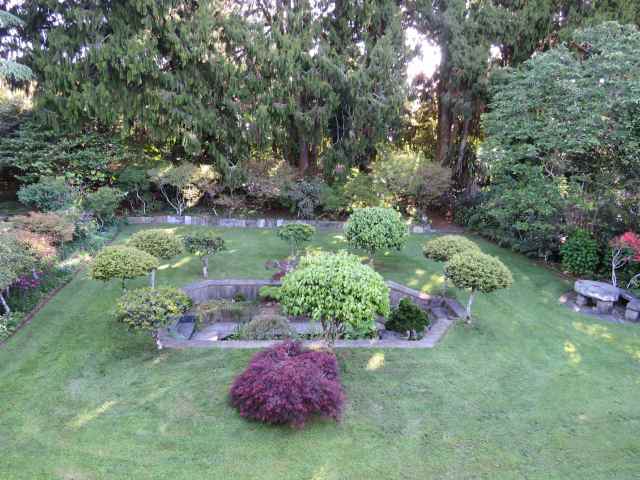
And how the area looks today. The line of rimu trees behind were planted in the 1870s and continue to grow with root systems spreading extensively.

We worked this out when our best efforts failed entirely to restore the sunken garden to the glory days when Mimosa had it looking lush, abundant and flowery. In the decades since it was first planted, the rimu trees that bound it on one side have pretty much doubled in size and their fibrous root systems have spread throughout much of the area. The trees and shrubs Felix and Mimosa planted on two other sides have grown like Topsy and the garden in the middle has long since stopped being sunny and open; the area once suitable for roses is now semi-shaded, very sheltered and filled with roots from surrounding trees sucking up all the moisture and fertility. We changed tack entirely.

Freshly planted azaleas on the sunken garden side of the rimu trees, probably in the early to mid 1960s
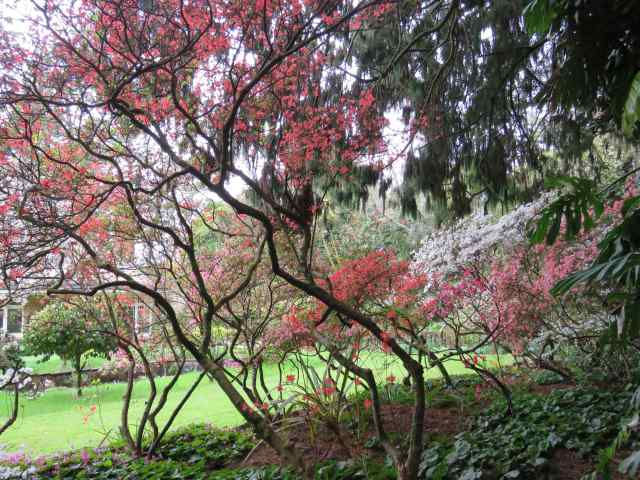
Looking back towards the sunken garden, these are the surviving azaleas from that original planting today. Now underplanted with Cyclamen coum and hederafolium as it is too shaded for the original narcissi.

All of this begs the question of why anyone would want to freeze a garden in time. Times change and with that, expectations and gardening values change. I was going to add in changing fashions, but long term gardens are about more than fickle fashion. The mark of good gardening, in my book, is the ability to adapt an existing garden, keeping it appropriate, relevant and in tune with current values while accommodating issues of changing microclimates and external conditions. Personally, I don’t see the value of trying to freeze even historic gardens to a particular point in their development.

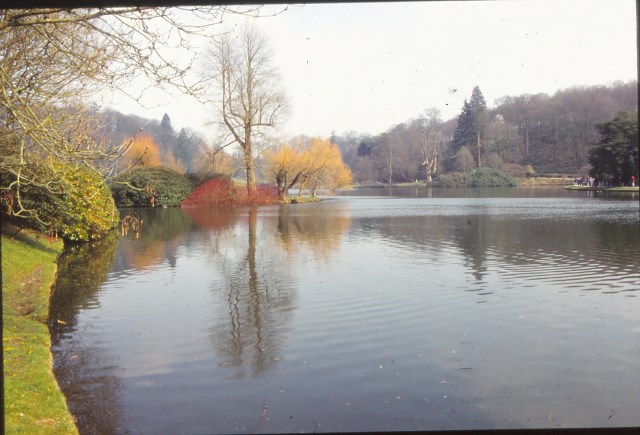
Stourhead, we think. Our memories are a little hazy now, given we visited in 1996.

Never have Mark and I forgotten our early visit to Stourhead in Wiltshire. The garden at Stourhead was created in the style of Capability Brown – sweeping landscapes and dearie me, is that a village located just where we want to put the lake? Move the peasants out now. So, a statement of wealth, power and privilege. Visiting in spring, the magnificent display of rhododendrons and azaleas delighted the modern hoi polloi amongst the vistas and the garden follies of past grandeur.

But there was a problem. Historically, the garden at Stourhead pre-dated the introduction of rhododendrons to the UK. The original lakeside plantings were, apparently, laurel and mass-planted laurel is never going to delight anybody, really. There was a purist, historical lobby group who wanted to pull out all the glorious rhododendrons and replant with laurels, in the interests of historical accuracy, you understand.

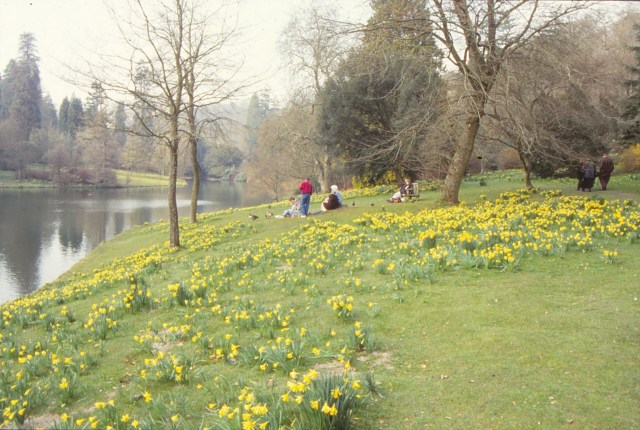
I admit we didn’t think to look closely enough back in 1994 to determine whether this host of golden daffodils were native narcissi species and not more recent hybrids.

I am assuming the historical purists did not win but we haven’t been back to see. It does illustrate the downside of picking an arbitrary time frame to freeze for the long term. You can do it with buildings and monuments but gardens? Gardens, by their very essence, change over time and we gardeners need to adapt to and enhance that change, not constantly try to wind the clock back.

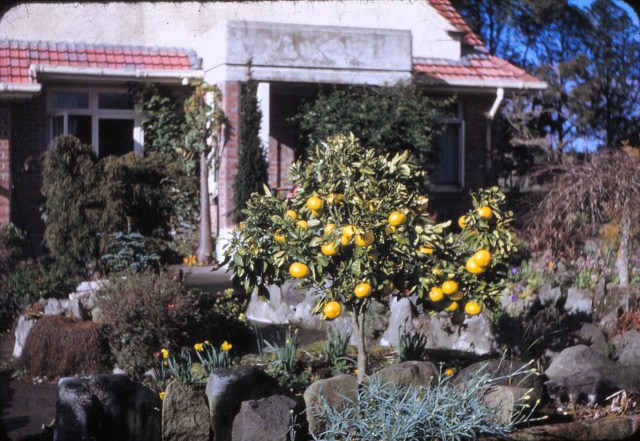
Postscript: Theoretically, a rockery largely given over to bulbs and small perennials could be maintained as a static feature. It is clear that from the very start, Mark’s parents set out to plant in a mixed style.

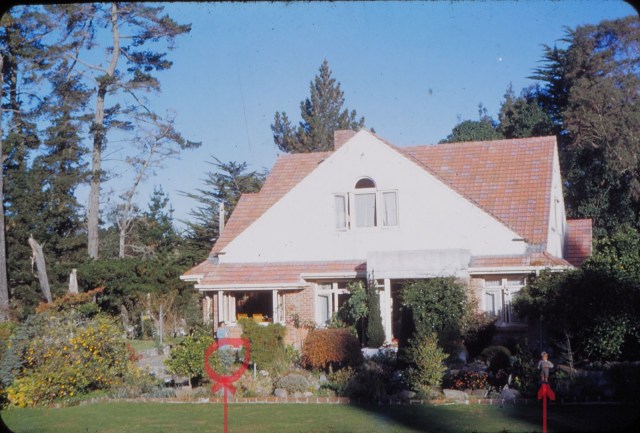
The house was built around 1949 and 1950 and the rockery must have been the first area of the garden to be created and then planted because this is as early as 1954 and many trees and shrubs are looking remarkably well established. That is a Wheeney Grapefruit which was moved out soon after.

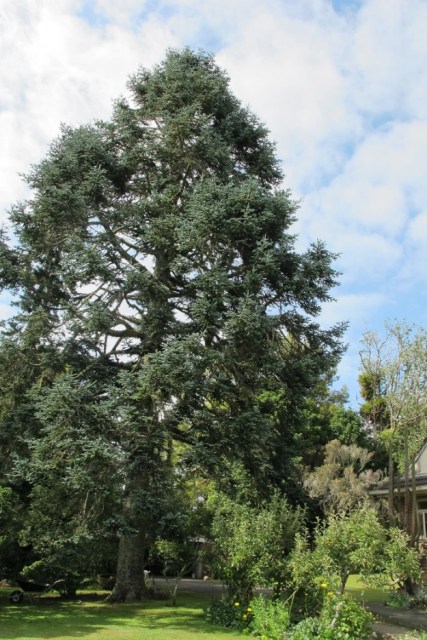
We can date this to 1954 accurately because that is wee Marky at the red arrow on the right. Mark’s mum is above the red arrow on the left but the circle is what I wanted to highlight. You won’t be able to see much on a small screen but the circle is around a very small blue conifer. It was Abies procera glauca and you can read it’s story here.

We felled it in 2019. It had been moved out of the rockery at some point in the later 1960s and by the time we dropped it for safety reasons, it looked like this.

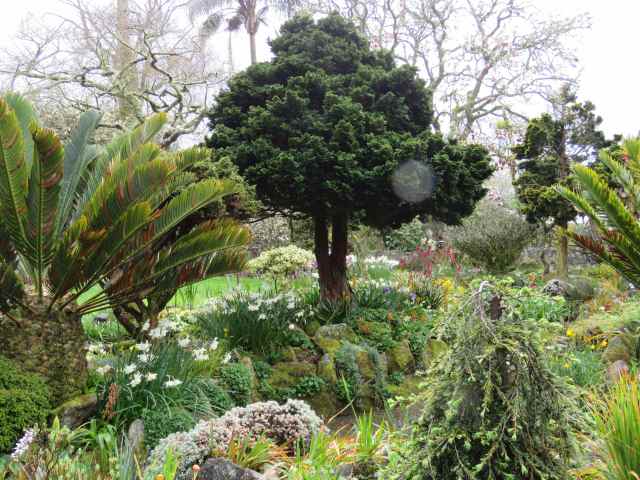
The rockery is the the area where there has been the least change in structure and design. We have carried out a few running repairs but otherwise it is pretty much as constructed by Felix around 1951. The plant material, however, is something else. The turnover of plant material won’t be quite 100% but there is very, very little left that is original.

Freezing a garden in time seems a fruitless folly, really.

The rockery today

The evolution of a garden

One of the privileges of taking over a family garden is being able to trace it down the decades and watching how the garden grows and changes over time. In sorting out Mark’s parents’ slide images, I found snapshots in time that I had not seen before.

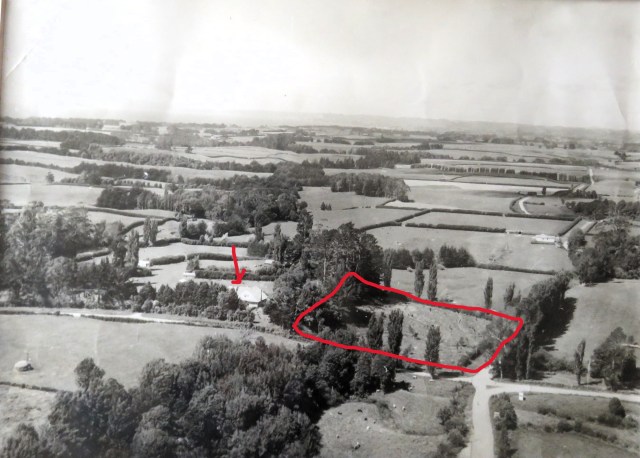
We can date this aerial black and white photo of the property to the early to mid 1950s. The house (marked with the red arrow) was built around 1950 to 1951 and key areas of the garden had yet to be laid out. The red rectangle is the area we refer to as ‘the park’ – then a sheep paddock of about 4 acres or 1.6 hectares on a south facing slope. Here, in the antipodes, south facing means it is on the cold side. Mark once studied the original, large format photo with a magnifying glass and declared that he could spot patches where his father had sprayed out the grass in preparation for planting.

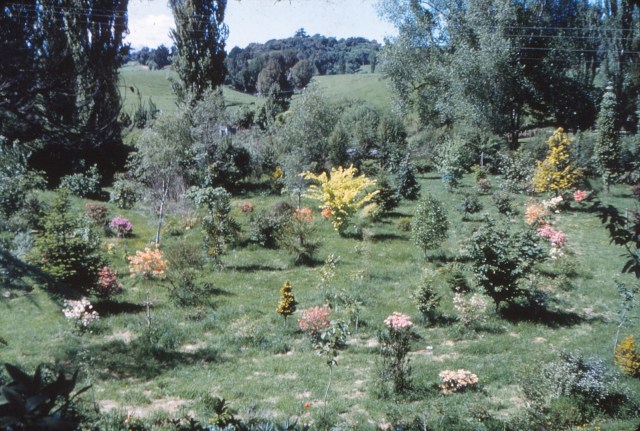
This image is undated but is one of the earliest we have after planting started. That is a lot of top quality trees and shrubs going in. I can’t remember who told me that the planting was guided by the principles of the Rhododendron Association at the time; it may even have been Felix. The plants were not grouped but individually placed so that each one could be viewed in solitary splendour from any angle. Plants grow quickly in our mild, warm temperate climate with volcanic soils, regular rainfall and high sunshine hours.
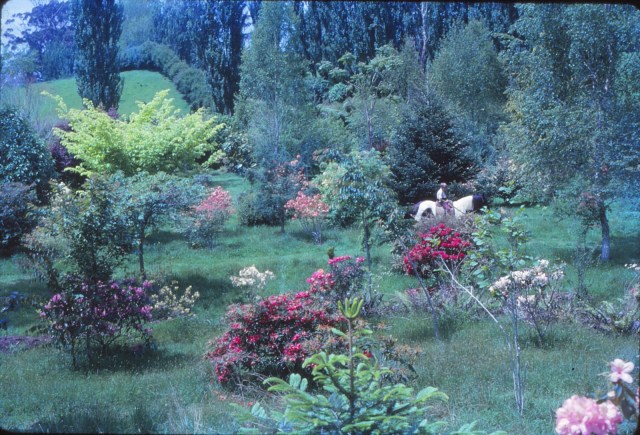
This slide was dated 1962. That is Mark’s older brother on the horse but he was only riding through. Rhododendrons in particular are toxic to stock and so are other ornamental trees like yews. Felix maintained the area by grazing a very small group of sheep in amongst the trees and shrubs. He kept to the same sheep because they learned quickly which plants made them ill and they avoided them from then on.

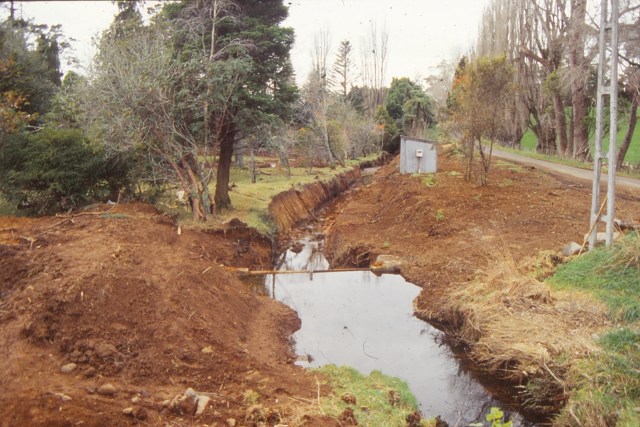
The park really didn’t change a great deal over the next 30 years, until a somewhat younger Mark unleashed himself in 1995. There was always a problem with flooding in the low-lying areas and rhododendrons hate having wet feet. The evergreen azaleas are more tolerant but it was an ongoing issue. Mark’s tidy grandfather, Felix’s father, Bertrum Jury had straightened the stream to run at right angles on the property to maximise grazing areas. That was around 1900. Every time it rained heavily, the park flooded and there were no natural drainage channels left.

Mark’s efforts were major. That is our bottom road boundary. Grandfather Bertrum’s stream channel was deepened and turned into a flood channel controlled by a simple weir. Before anybody asks, yes he was Bertrum Jury, not Bertram or Bertrand. Flexible spelling is not recent.

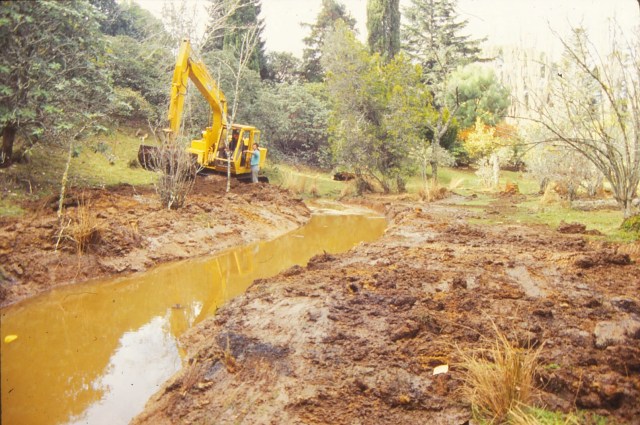
The largest flow of water was directed back through the park, opening up the original stream bed. Mark had calculated its likely route and felt vindicated when the digger excavated tree trunks and debris that had been used to fill the old stream bed when it had been closed off.

The resulting clean-up was huge. The amount of silt and clay stacked up by the channel needed to be moved because it would set like concrete and smother the roots of trees that were already deemed precious. It was winter, probably before the days of bob-cat machines and all that gluggy mess had to removed by hand because it was too wet and the spaces too tight to get machinery in. I remember Mark coming in for months on end – dog-tired and covered in mud. He hauled barrow loads to upper slopes to build tracks – one person pushing the barrow and another on a rope pulling because they were too heavy for one person. It was a pretty grim winter activity and only dogged determination got Mark through. To this day, he swears it stuffed his back.

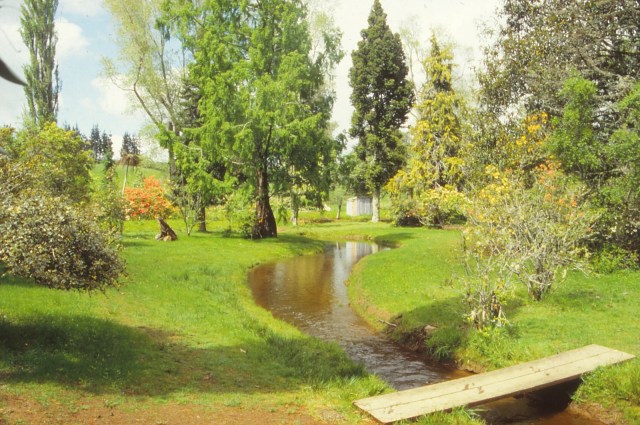
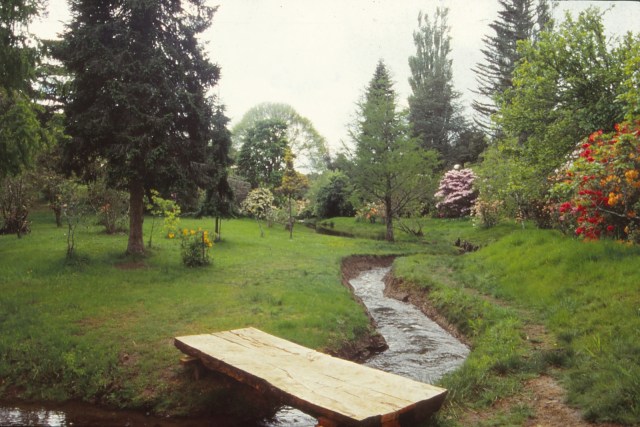
But look! Within just one season, by late spring the scars of the earthworks were already healing and we had flowing water where before there was soggy bog. These are still 1995.

Around this time, we bought our first fancy-pants lawnmower that cost more than our car did but was capable of mowing the varied terrain in the park and maintaining stability while manoeuvring around innumerable plants. Between that and the new weedeater or strimmer, we entered the era when we maintained the area to a standard that would have satisfied even public parks and gardens. Very, very tidy, we were, with neatly mown grass.

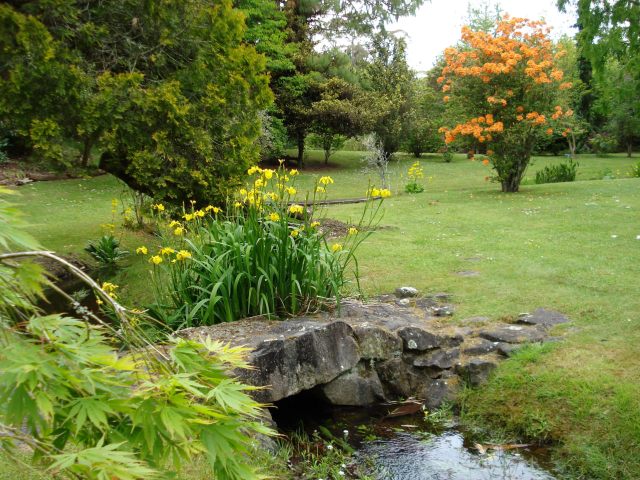
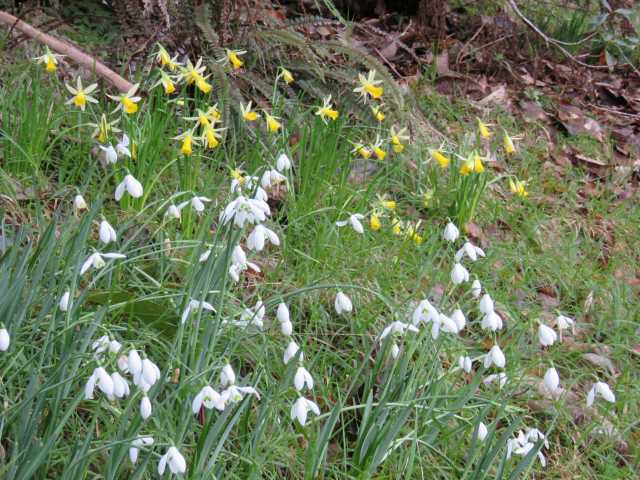
Mark then set about turning what had been plants standing in solitary splendour in a glorified paddock into more of a cohesive garden. He also started planting – bulbs and even perennial beds on a shady slope. The bulbs have worked well, especially the narcissi and galanthus. Mark went to some trouble to establish our native microlaena grass in some areas, as a replacement for paddock grass. Its finer foliage and gentler growth is much more compatible with dainty bulbs. 25 years on, we now have swathes of spring bulbs, rather than a few patches.

Around 2010, we started thinking there had to be a better way of managing the park. Keeping it mown and neat was not only labour intensive but we were increasingly concerned by our heavy dependence on petrol-powered motors. Enter the meadow era. We looked closely at meadows, particularly in the UK, and worked out that our situation was very different and we would have to manage it in different ways. Quite a lot of thought and discussion took place before we took the plunge.

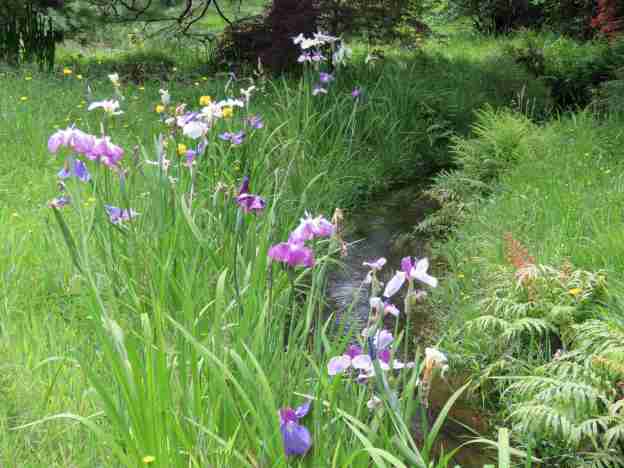
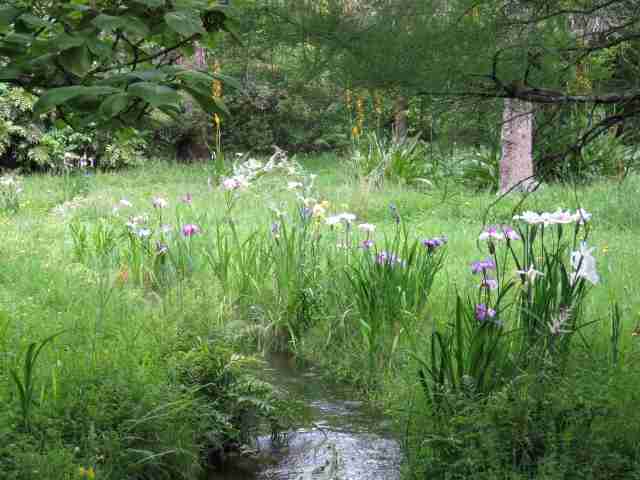
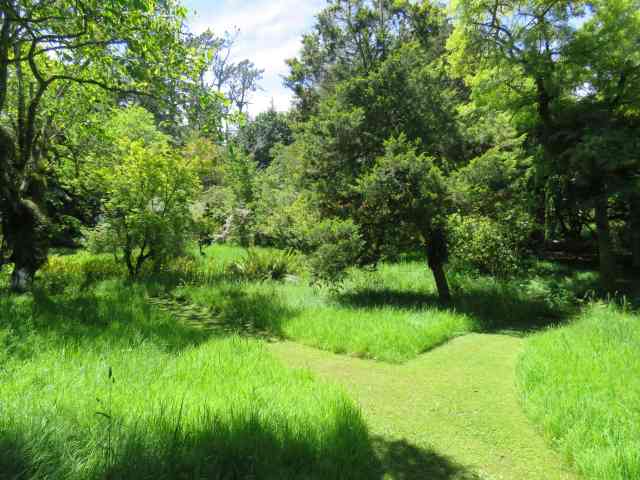
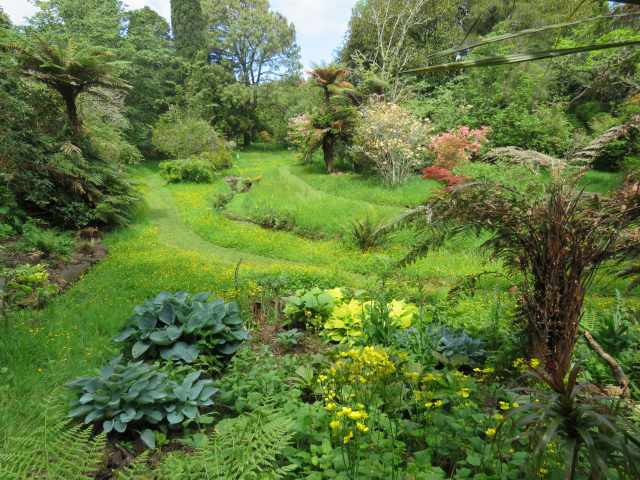
We have not regretted it. The mown park may have looked impressive but the meadow is full of soft-edged charm that delights us all the time. I have written before about how we manage it. We mow walking paths through and twice a year we cut the entire area of grass to the ground – in mid summer and again in mid winter. We don’t remove the grass because that would be too big a job. Nor do we have yellow rattle in this country to weaken the growth. We have grass growth all year round; it is why this is good dairy farming country. We had to adjust to a meadow with rampant grass growth. We work to keep out noxious weeds like thistles, tradescantia that washes down the stream from above and onion weed but we have learned to tolerate our buttercups and even the docks. They are part of what makes a meadow in our conditions.

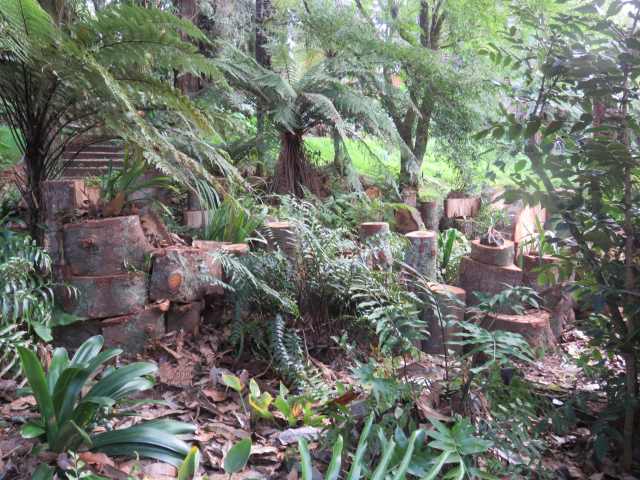
The park continues to develop. The latest two areas are our gardener Zach’s efforts. The upper photo – an area we refer to as The Barricades – was a creative means to deal with waste wood after Cyclone Dovi. Rather than burning it on site, it has been carefully arranged by Zach to create an environment for more planting – mostly orchids and ferns. It will gently moulder away and return to the earth, as indeed we hope to ourselves.
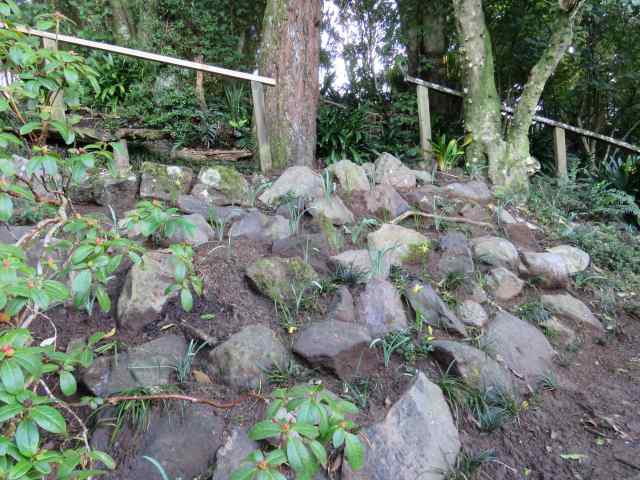
The Accidental Rockery, as Zach calls it, was his solution to retaining a bank that needed some attention by one of the paths down the hill. It wasn’t planned as a new planting area but that was a bonus to moving in rocks to retain the soil. It has filled out a lot since I took this photo soon after it emerged from his efforts.

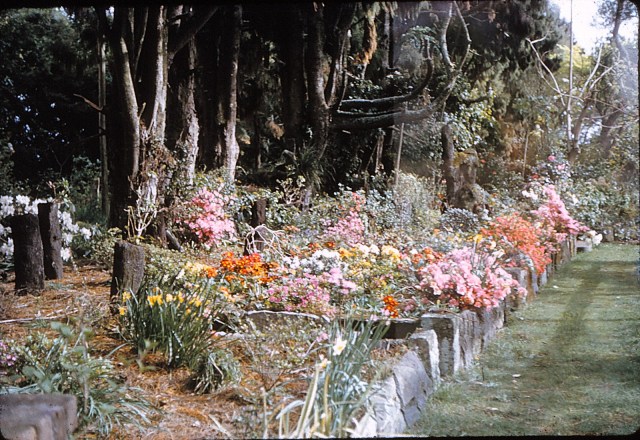
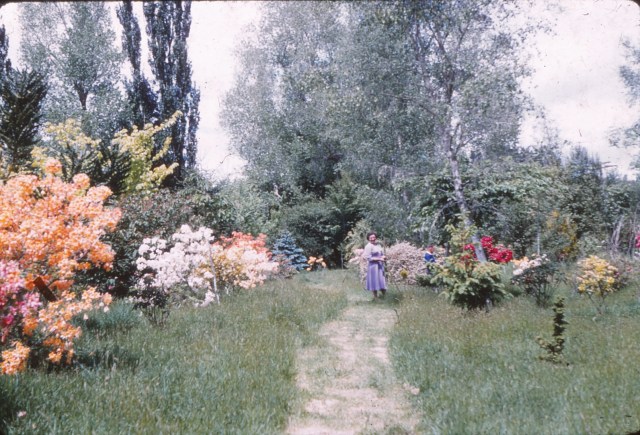
Back to earlier days, I think this image is mid 1960s and that is Mark’s mother, Mimosa, standing by the azaleas. I looked at this photo and thought, maybe we have just gone full cycle. Is that soft-edged scene with a mown path so very different to where we have ended up now, 65 years on?

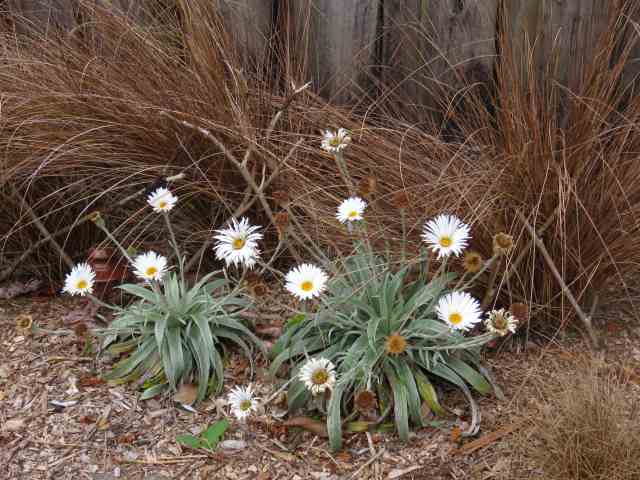
Our very own mountain daisy, the celmisia

The three species crosses resulted in broader leaves and silver colour all year round

Celmisias are our very own mountain daisies. They have never been a common garden plant because they aren’t easy in nursery production and rarely thrive in the average home garden. It is likely that their greatest fans are trampers and botanists but that should not blind us to their charm. Many people just don’t know of them. And I suppose, when you think about it, quite a lot of our native plants have white daisy flowers.

I was surprised when I looked them up and found a far greater number of species than I ever knew existed. Some dedicated botanists have clearly spent a lot of time unravelling this genus.

When Mark’s father, Felix, was still alive, he became very interested in seeing whether he could hybridise different species to get plants that would thrive in our lowland, humid conditions. Most celmisias are subalpine to alpine plants. I remember Felix and Mark heading up our maunga, Mount Taranaki, in search of the form which grows there naturally – Celmisia major var. brevis – and being thrilled to find some flower variations into pink. This was about 40 years ago, you understand, when people didn’t feel so bad about collecting plant material in a national park. They collected some plants, including a few of the pinks which they only saw growing in one area.

The first season after their relocation. I have moved them again because the grasses were overhanging them and these plants do not appreciate having to compete for space and light.

Felix set about crossing three species – C. coriacea which comes from Fiordland, C. hookeri  from the Otago area and the aforementioned C. major, in various combinations. Forty years on, we still have some of those hybrids growing and flowering in the garden here. It is the three way cross which gave us the broader leaves in distinctive silver all year round. Over the decades, we lost many of them, including all the pink ones, and have, at times, run close to losing the lot but for a bit of quick intervention. They have never seeded down for us; we have to increase them by division. They do set seed which we could gather and sow in seed trays but, in a busy gardening life, we don’t seem to get around to it. These are plants that need to be lifted and divided every few years or they rot out and fade away so we can never claim that they have naturalised here.

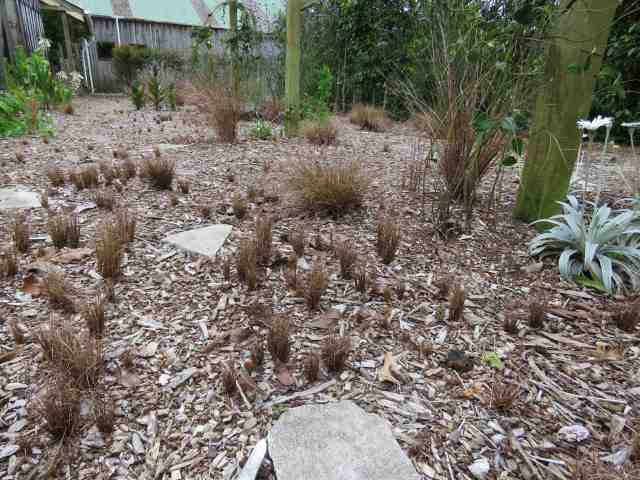
The area we refer to as ‘the grasslands’ when I first planted it in 2022 – one of the few celmisias to the right

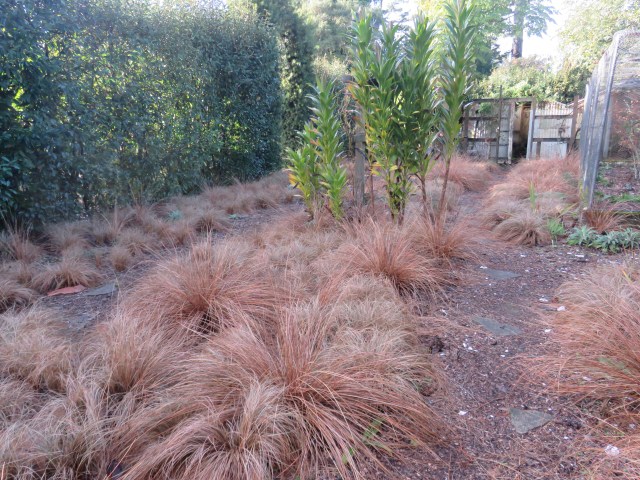
When I planted my tawny brown area of two native carex grasses, C buchananii which is specific to our maunga and C. comans, I envisioned a simple breathing area of just those two plants. Mark looked at it and wanted more detail and colour. He suggested moving some of the celmisias which we were in danger of losing, into the newly cultivated area. So I did. There weren’t many left to play with. In the first year, I probably only had half a dozen divisions.  That was in 2022. It was like they breathed a sigh of relief and set about growing with renewed vigour. Last year I divided a few clumps that were large. This year, I divided most of them and I lost count around 58 or 60 plants. Some are small but they are surviving and I have done my best to give them optimal growing conditions. It was enormously satisfying. There aren’t many perennials I am willing to lavish such frequent and individualised care upon but the rewards feel worth it with the celmisias.

The same area in 2025 but now with the addition of 58, or it may be 60, celmisia plants

It is mighty hard to be original in a garden. Pretty much everything has been done before, some time, some place. I always scoff silently to myself when I hear the occasional gardener declare that somebody ‘stole their ideas’ or copied them. “But who influenced you in the first place?” I want to ask (but never do). However, I doubt that the celmisia and carex combination will be replicated soon, at least not locally. It is a successful subalpine planting in coastal, subtropical conditions and I am moderately chuffed by its unexpected nature in that context.

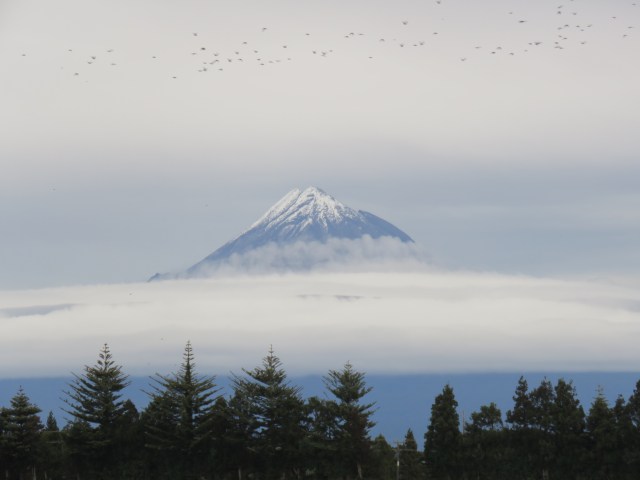
Te maunga, our mountain, Mount Taranaki, as I drove to town on Wednesday. The snow cover is abnormally light for mid-winter. There may be no more skiing days this season.

An FCC, no less.

It is not every day that we hear the news that a Jury plant has been awarded an FCC – First Class Certificate – from the prestigious Royal Horticultural Society in the UK. In fact, it has never happened before. I remember, back in the days of writing plant descriptions for our catalogue, coming across the occasional FCC and being aware that it was prestigious but I had to seek clarification on the difference between an FCC and AGM (an award of garden merit, not to be confused with an annual general meeting). We have few Jury plants with AGMs, but not many.

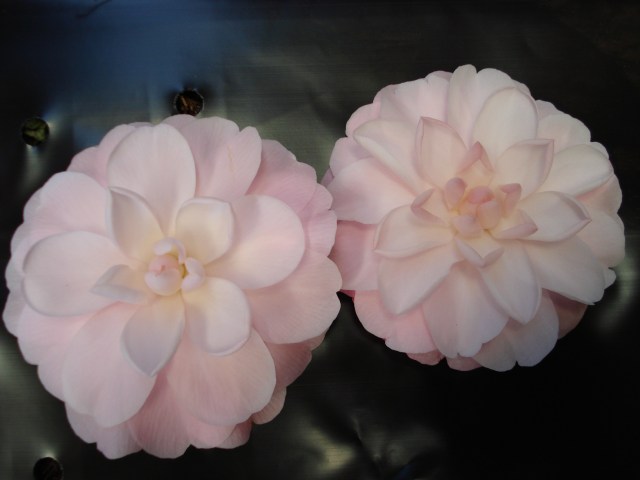
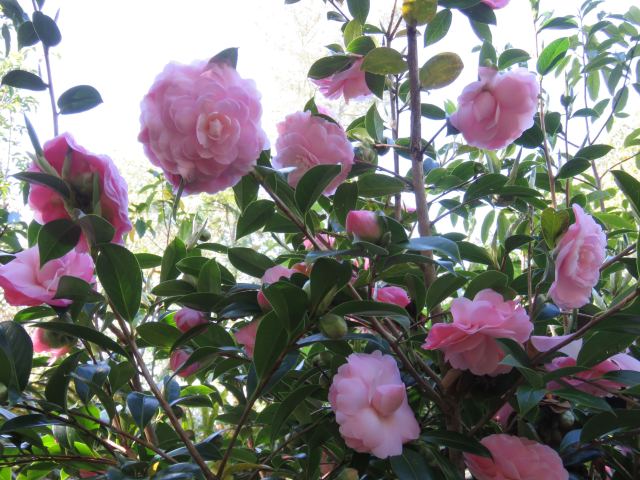
Camellia ‘Mimosa Jury’

First class certificates are like the pinnacle of quality assessment – an award that is attached to that plant forever. Awards of garden merit can be bestowed and then, on occasion, taken away, being a recommendation by the RHS of top quality cultivars that perform well as garden plants in most situations. FCCs are quite a step above that.

It is Felix’s plant, not Mark’s, that has been honoured. Camellia ‘Mimosa Jury’ was named for his wife so we know both Felix and Mimosa rated it very highly. I see we first released it in 1989, some four years after Mimosa died. From our modest little nursery (very modest back then), it was distributed by others throughout the camellia world.

It is an exceptionally beautiful flower in the form that Felix particularly liked – described as ‘formal’ in form – in the prettiest shade of pink. It is not a big bloom like the highly rated ‘Desire’ or even ‘Queen Diana’ back in the day, but that makes it a better garden plant. And the FCC award recognises the merit of the overall plant, not a single show bloom.

Camellia ‘Mimosa Jury’, now recognised as one of the best but, sadly, no longer in our conditions

Sadly, camellia petal blight has robbed us of the once beautiful display in our conditions. None of the japonica, reticulata or hybrid camellias have escaped the scourge of petal blight which is particularly bad in our mild, humid climate. We haven’t planted a new camellia from those vulnerable groups in many years. Camellia petal blight has spread throughout the world; I am told it has now arrived in Australia which had managed to stay free from it for a long time. But it is not as devastating in other places, especially those with colder winters, lower rainfall and less humidity. Camellias in other places still perform and mass bloom in the manner we have not seen here for decades now.

It seems Camellia ‘Mimosa Jury’ is performing so well in the UK that it stands head and shoulders above most other camellias. Felix died 28 years ago but we will bask in the reflected glory on his behalf.

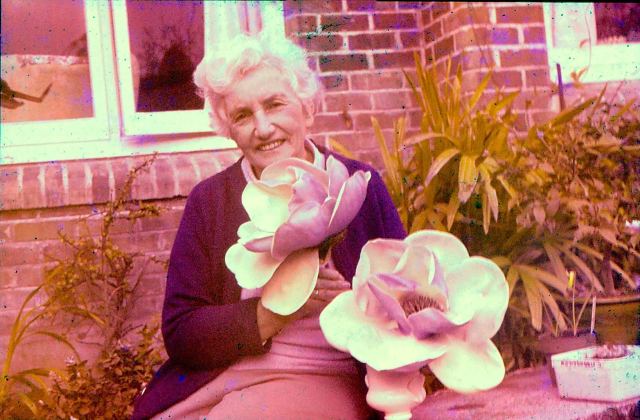
I don’t have many photos of Mark’s mother, Mimosa, from later in life. She died before the advent of digital cameras and existing photos are mostly studio shots from her younger days. Here she is, sitting in front of the house with early blooms of Magnolia ‘Atlas’, in the early 1980s.