Tag Archives: Garden

Let there be flowers and the gentle change of seasons

In a world that seems to be growing more chaotic, unstable, downright dangerous and even vicious by the day, let there be flowers.

I know I am not alone in limiting my time following the news and on social media. Never in my life did I think I would be taking life guidance from RuPaul but his advice to ‘look at the darkness but don’t stare’ are words that I repeat to myself every day. It is one thing to be aware of what is happening but it can be overwhelming if I spend too much time following it closely.
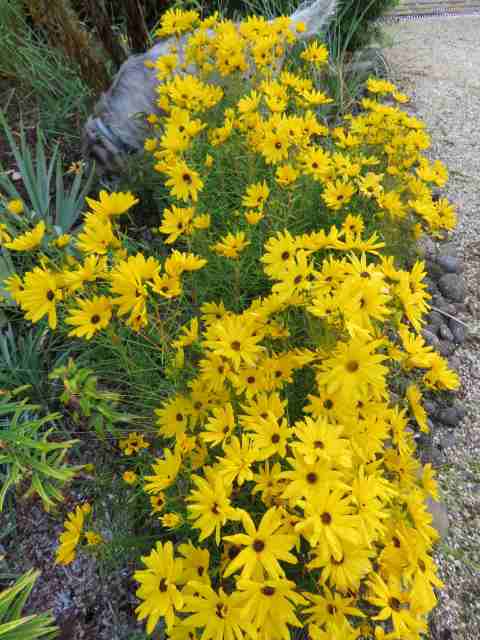
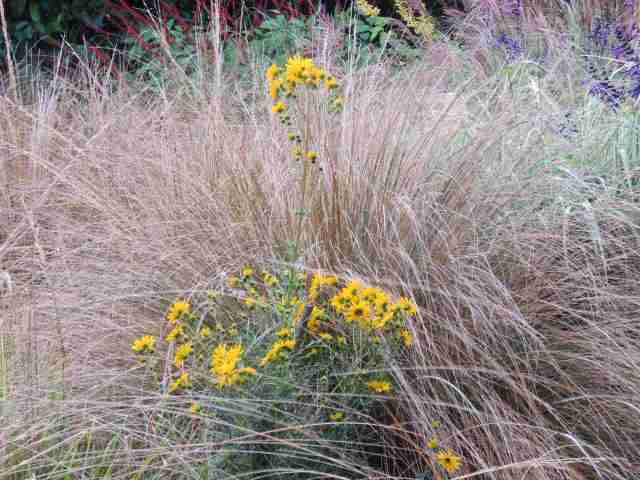
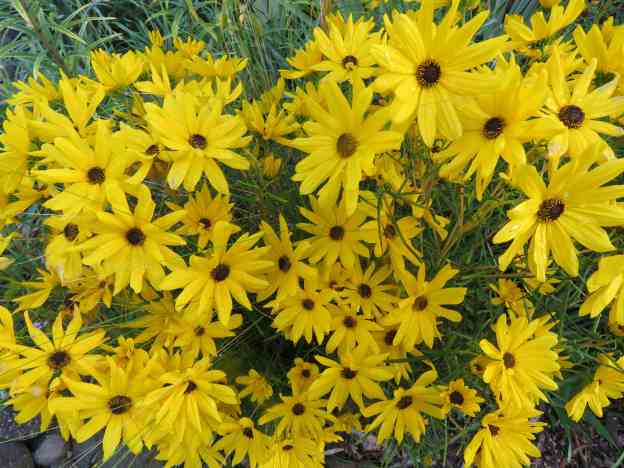
The bright cheer of the dwarf helianthus makes me smile. This is a named cultivar but I have forgotten where I recorded the name.

Instead, I give you the gentle predictability of the change of season from summer to autumn here with photos from yesterday. I have used the shorter version of the helianthus in the borders but the tall leggy form – likely closer to the species or as it is found in the wild – seemed to fit better in the controlled abandon of the Court Garden. No more. We are in danger of losing it because it is not as capable of coping with competition as I thought. As soon as this remaining clump has finished flowering, I will relocate it to the more cultivated environment of the borders where it will be given its own space to thrive.
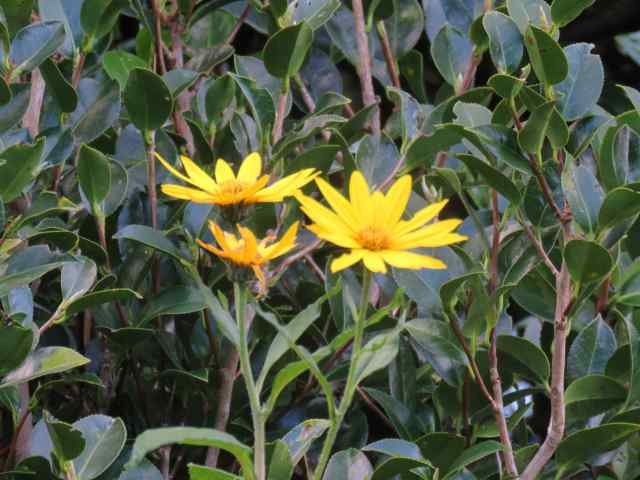
The Jerusalem artichoke is also a member of the helianthus family but it does not justify its place as an ornamental plant. Not enough flowers, I am afraid, but an abundance of tubers which I dare not eat. While tasty, no matter how hard I try, I can not find ways to prepare it that improve its digestibility without the unfortunate side effects. Its name as fartichoke is fully justified.
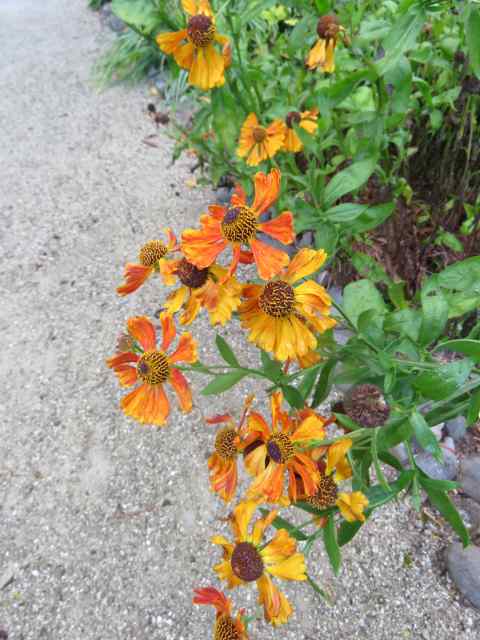
The heleniums are in the twilight of their season but remain eyecatching. These have one of the longer flowering seasons of the summer perennials and fully justify their prime position in the borders.
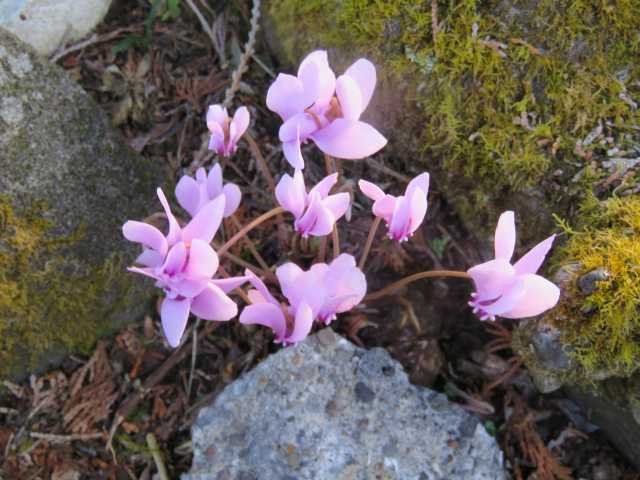
Cyclamen hederafolium are coming into their autumn peak and what a delight they are. We have many of them, many many in fact because we encourage them to seed down in their pretty pink and white charm. I am not a fan of the bigger cyclamen hybrids but the species are a source of great delight throughout the garden.
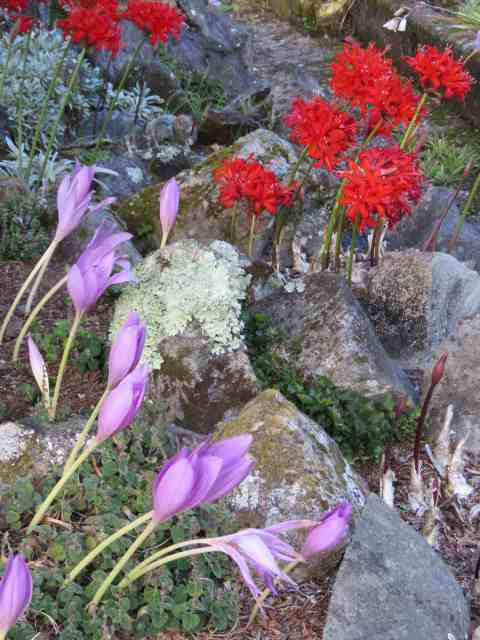
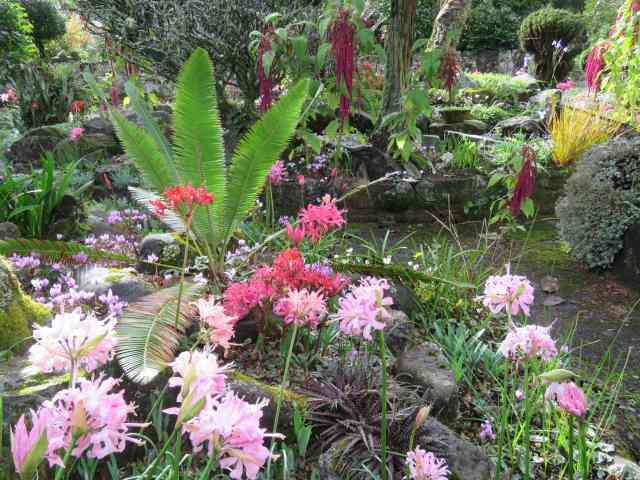
The rockery is hitting its stride with its autumn display. The colchicums are a fleeting delight but one we would not be without. The nerines are just starting, mostly red so far but plenty about to open in other colours. I live in hope that the Lycoris aurea will stage a reappearance. I planted a pot of flowering bulbs out in the rockery years ago but I can’t remember where and it has never flowered since. It may have gently withered away to nothing or it may still be masquerading as a random clump of nerines which I just haven’t noticed aren’t flowering. Perhaps our hot, dry summer will have triggered it to flower. Or maybe not.
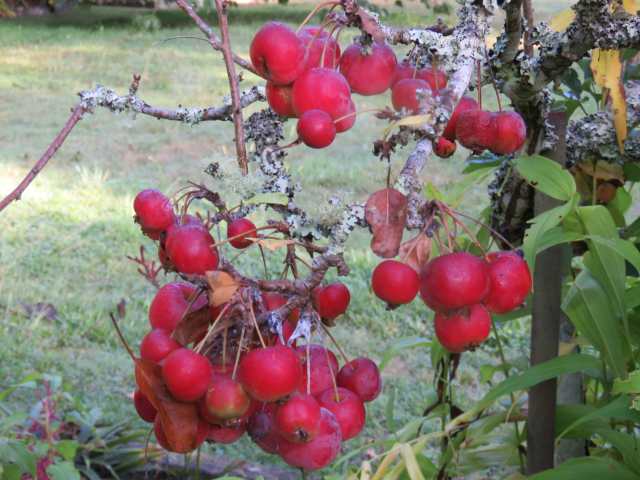
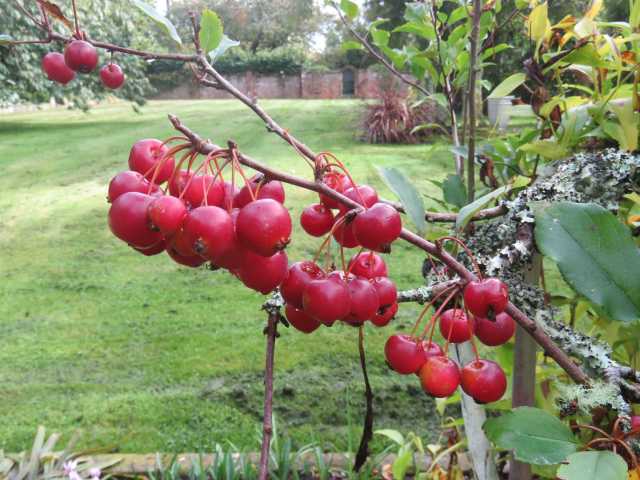
We have two dwarf crabapples in the rockery, standing little more than 1.2metres high after about 50 years. Their flowering is insignificant and their form and foliage unremarkable but they justify their place with their ornamental fruit in autumn.
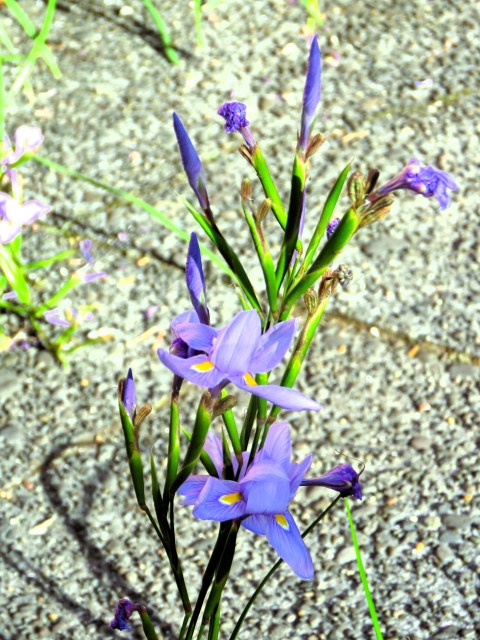
Moraea polystachya, an autumn form of the peacock iris, seeds around enthusiastically but harmlessly and rewards us by popping up randomly – on the edge of the drive in this photo – and having one of the longest seasons in flower of any of the autumn bulbs because it keeps opening a generous succession of buds.
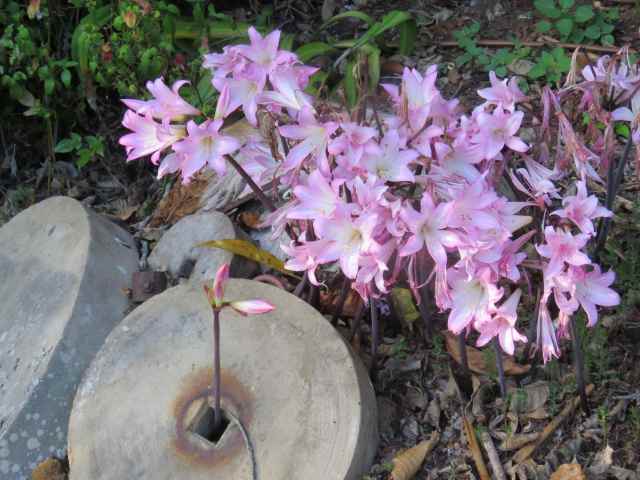
The belladonnas are bold, a bit scruffy and have bulbs and foliage that are too large to make them obliging garden plants. But they are a welcome addition in wilder areas, in this case on the site of the old woodshed we removed this summer before it fell over of its own own accord. We don’t know anything about the grinding wheels except that Felix must have gathered them up fifty years ago and there are three in graduated sizes.
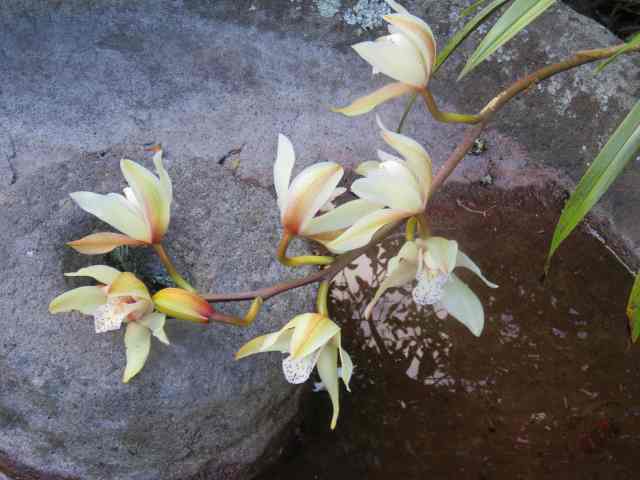
The first cymdidium orchid is opening. This somewhat understated one is always the first of the season and is a top performer in its spot, arching over the old stone millwheel which has been repurposed a bird bath.
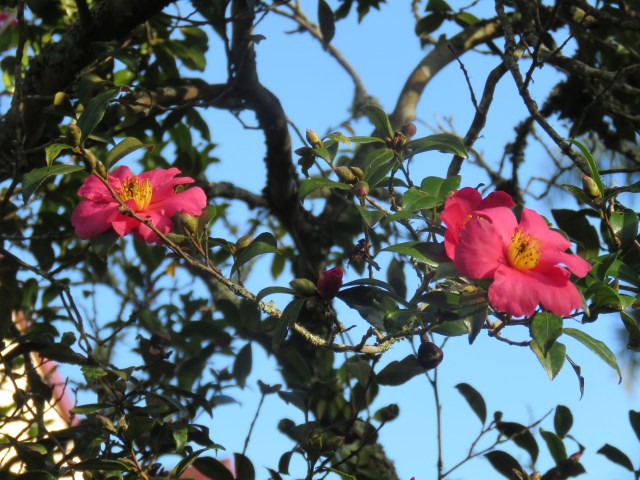
Finally, camellia season has started. Camellia sasanqua ‘Crimson King’ is always one of the first to open. Even with climate change, there is a reassuring predictability in the cyclic nature of the seasons.

May there always be flowers. I can stare at them as long as I like without fear of being overwhelmed by a sense of despair, anxiety and helplessness. In the flowers and the seasons lie promise and joy and we need a whole lot more of that at this time.
Reflections and plans (with unrelated photos)

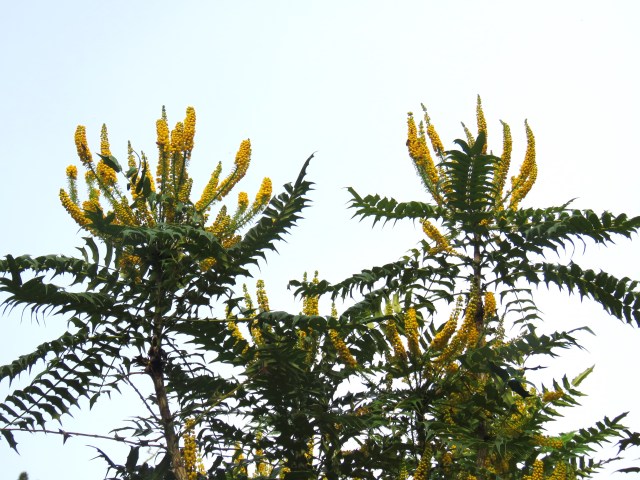
Mahonia. Which one we don’t know. Neither of us has ever been interested enough to look into the different mahonias but this one does put on a good display in autumn and is alive with the hum of bees.

I had cause recently to look up how many years I spent writing weekly for newspapers. EIGHTEEN YEARS, first for Taranaki Daily News, then adding the Wanganui Chronicle and finally the Waikato Times.  You could knock me down with a feather. It is so long ago that I started by faxing my articles to the paper. There are children alive now who don’t even know what a fax machine was and how magical it was for its brief office reign. No wonder I have such a big back catalogue of writings because on top of the newspaper contracts, there were shorter stints with magazines.

More of the mahonia

The high point was probably when a survey conducted by one of the newspapers had readership of the garden pages (where I was the main contributor) ranking higher than the sports pages. You would never guess that by the current invisibility of gardening in the media and the amount of space and time still given to sports coverage. But times change.

There are times, I admit, when I feel I have nothing left to say that I have not written before and I wonder what I can photograph that I have not shown before. Quite a large part of that is the result of our personal world becoming so much smaller. I have always relied on seeing gardens that are new to us, new landscapes, talking to more people for the stimulation of new perspectives. The last time we did a major trip overseas – I don’t count Australia as overseas – was 2017. Covid saw us cancel our 2020 plans.

Self-sown Moraea polystachya just out from the back door. it is probably the longest flowering of any of the autumn bulbs and belongs in the iris family

I am flying off to the south of France in ten days time, via Barcelona as the closest airport to where our second daughter, her partner and their beautiful baby live across the border. I think it may be my last long-haul trip in the face of an uncertain future with climate change and geopolitical upheaval. I haven’t been to that northern corner of Spain or any of the south of France so I expect to be invigorated with new sights and experiences. We have scheduled Gaudi’s Park Güell for the day after I arrive.

The rockery is bursting with colour as it hits its autumn peak.

In the middle of my trip, I am heading east, to what used to be known as the French Riviera. There I am joining a six day tour of the gardens in the area around Nice, starting with Lawrence Johnson’s indulgence called Serre de la Madone. Johnson is most famous for creating the garden at Hidcote Manor, which which just blew our minds when we first saw it, back in 2009 I think. At the time it was, quite simply, everything we aspired to with our own garden. In the years since, our directions have changed and I doubt that we would respond so intensely now but I have always wanted to see his French garden which is, I believe, very different to his English one.

I expect to return stimulated and inspired from seeing these largely classical French gardens with forays to Monte Carlo and across the border to Italy. Crossing borders in Europe never fails to delight me, as a New Zealander whose nearest neighbour is a minimum 3 hour flight away. I am anxiously watching the situation in the Middle East and the flooding in Dubai because I am flying that way. For overseas readers, to get to Europe or the UK from here involves two long-haul legs. We can do it via USA or Asia with with two flights of 12 hours each, give or take. Or we fly via Dubai or Doha and that starts with a non-stop 17 hour flight from Auckland, followed by a shorter second leg. That 17 hour flight is quite a lot … a lot of something, probably endurance.

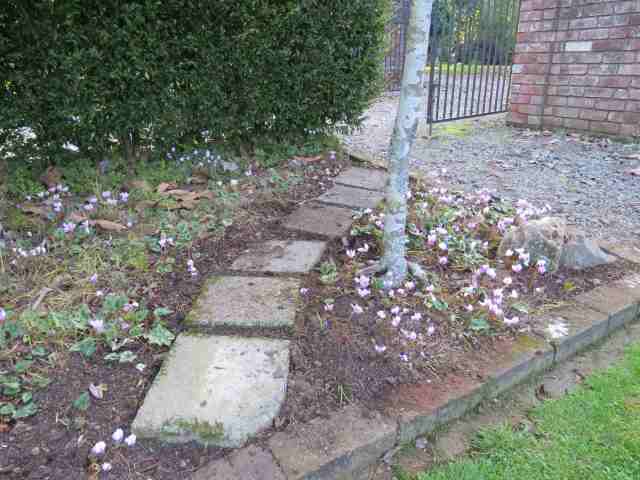
Back to more local concerns: this path of pavers marks a degree of resignation to the inevitable. Ralph had established a speed track across the bed – the shortest distance out to the carpark. After all, he needs to respond quickly to any vehicle or strange voices because, you understand, he is never sure whether it is a maniacal axe-wielding man intent on doing harm or the lovely electricity meter reader who feeds him dog biscuits. Speed is of the essence.

I debated about trying to block him off but he would jump any barrier up to a metre high and the potential for injuring himself on bamboo stakes is pretty high. I think we can conclude Ralph won that round.

A dwarf crabapple in the rockery . Its name is lost in the mists of time but in all the decades it has been there, it is still only a metre and a half in height.

Originality – a rare quality

It is Sunday morning which means my thoughts have been focussed on the morning garden discussion with Tony Murrell on Radio Live Home and Garden Show. It is a little easier to be focussed at 7.45am than it used to be at our earlier time slot of 6.30am, even though we have less time now.  This morning the topic was originality in gardens. Is it over-hyped and how many truly original gardens have you seen?

I have seen a fair number of gardens now and met many gardeners who regard their own patch as showing great originality. While some show genuine creativity, that is different to originality. I only came up with four gardens that I have personally visited that I would describe as originals.

For most of us – and I include Mark and I in this – our gardens are a grab-bag of ideas from all over the place and from throughout history. The skills lie in how we reinterpret those ideas and make them our own. Some people don’t do even that. They just grab the ideas they have seen somewhere or read about and try and reproduce that at home. There is not much creativity in that.

Even Sissinghurst, that famous garden that has arguably had a greater influence on New Zealand domestic gardening than any other, is not an original. Hidcote was started 20 or 30 years before Sissinghurst and shows a similar approach to garden rooms in the Arts and Crafts genre. And if you go and look at the Moorish gardens of Andalusian Spain (the Alhambra is the most famous), you can see intimate garden rooms from a much earlier era.

One photo can not do justice to a large, complex garden

So which four gardens did I come up with that have struck me as genuinely original without clear influences from identifiable places or earlier times? Two are in New Zealand. Paloma, near Wanganui, is the creation of Clive and Nicki Higgie and it is remarkable. Unique, even, and I do not hand out that accolade lightly. Not only is there exceptional plantsmanship looking well into the future, and a very personal creativity bordering at times on the quirky, it is what I would call an original vision. I can not think of any other garden that is like Paloma.

The same goes for Grahame Dawson’s industrial chic garden on a small urban section in Mount Eden, Auckland. I have never seen anything like it, before or since. It is what I would call an original created with great flair and panache.

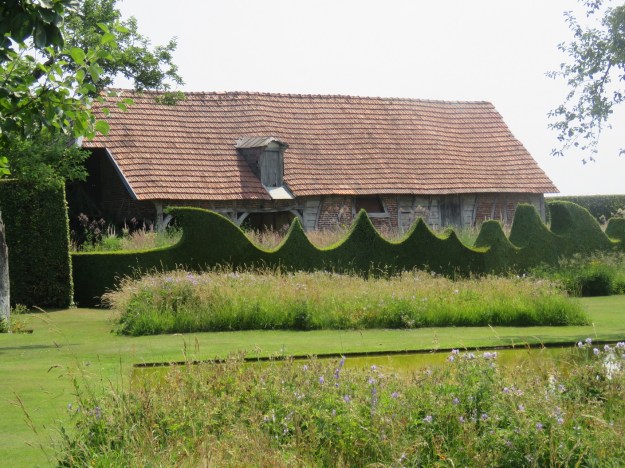
Overseas, Le Jardin Plume in Normandy (near, or near-ish, to Rouen) has stuck in my memory with great clarity. Other people have wave hedges but they tend to be of the undulating hummock style whereas Plume has these sharp-edged waves evocative of the sea breaking on the shoreline. The contrast with the loose plantings of tall, perennials is stark and effective. So too are their parterres of meadow an entirely new take on old forms. It is an innovative garden with some ideas that were completely fresh to us. Though, in the interests of accuracy, there were also areas which were not as unique.

It may come as no surprise to regular readers that I also chose Wildside as one of the few totally original gardens we have seen. Keith Wiley has entirely resculptured his landscape on a surprising scale to accommodate his plants by creating different microclimates and habitats. He would be one of the most exceptional plantsmen we have ever met but also with a passion for colour, texture and putting the plants together to create vibrant pictures. We have not seen another garden like it.
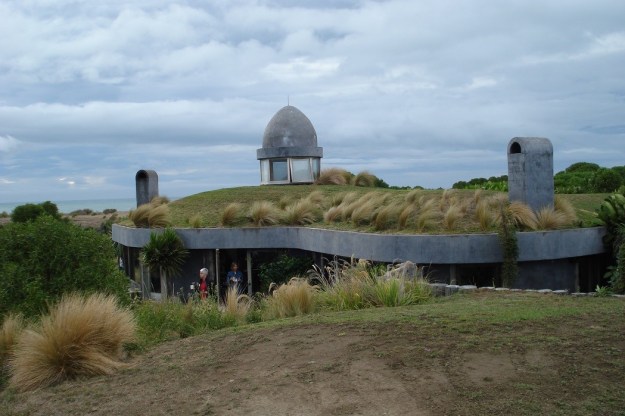
What all these four gardens have in common is that they are private owned and gardened with great passion, joy and commitment by their owners. They don’t have sole claim to those attributes but it is also allied to personal visions that are as close to individual and unique as I have seen. Many of us are craftspeople in our garden, at times with considerable skill, flair and the ability to put our own stamp of creativity on the ideas and visions we have in our heads and hearts as well as to push boundaries. But to a rare few is given the ability to come up with something entirely fresh and new. Maybe they are the ground-breaking artists? In their own quiet way, in the quiet space of their own garden at least. And that element of originality is not always comfortable for garden visitors.

Postscript thoughts:

I have not included sculpture gardens because in most cases, the garden is the venue for the dominant art, not a situation where the garden can stand on its own as showing original vision.

Nor have we visited the Garden of Cosmic Speculation or any of the Wirtz gardens. Landform as sculpture is a different aspect altogether and I haven’t seen enough to comment. I have seen one garden that took this approach in a naturalistic style and I have never forgotten it (years ago – read the fifth para down for a description). We usually seek out gardens that combine design with plantsmanship and working with nature to achieve beauty whereas it seems that landform gardens use the materials of nature to create sculptural form, often with minimal plant interest. When time is short, one has to set priorities in garden visiting.

Paloma is open by appointment and their website gives contact details. Grahame Dawson opens occasionally for the Heroic Festival in late summer but is not generally open. Le Jardin Plume and Wildside both have websites that detail their open days.