Tag Archives: garden tasks

Plant Collector: Vireya Rhododendron Rio Rita

Large, luscious and fragrant - vireya Rio Rita

Large, luscious and fragrant - vireya Rio Rita

Rio Rita was bred by the late Os Blumhardt, one of this country’s foremost plantsmen and plant breeders in his time. It was named for the irrepressible Rita Watson and it always makes us smile because the flower is so well suited to the bold personality and immaculate grooming of the namesake. Rita was very keen on vireya rhododendrons and her North Shore garden boasted some of the best grown plants we have ever seen in a garden situation though we were told she subsequently gave up growing vireyas and took up line dancing instead. Rio Rita is a leucogigas hybrid (crossed with Dr Sleumer) and the flowers are voluptuous and fragrant. There are five flowers to a truss and this photograph is of two trusses side by side, which is why it looks quite so full. Each flower is about 10 cm across, which is large.

Most vireyas don’t have a set flowering season because they come from the equatorial areas where day and night length is pretty much the same all year. This means you can have some in flower all the time if you have sufficient plants and different varieties. However, they won’t tolerate more than a degree or two of frost and wet feet will kill them very quickly. As a guide, the bigger and more lusciously fragrant the flowers are and the larger the leaves, the more susceptible they will be to cold temperatures and less than ideal conditions. This means that Rio Rita is by no means the easiest vireya to grow well, let alone keep alive at all, but if you have the right conditions, it certainly puts on a show.

In the garden this week: Friday April 29, 2011

Prunus serrula would have been better kept to a single leader when it was a young plant

Prunus serrula would have been better kept to a single leader when it was a young plant

• Get any spring bulbs planted without delay. They need to be growing now to give you the anticipated display later.

• Rhubarb is a clumping perennial and benefits from being lifted and divided. It is a gross feeder and likes really well cultivated soil. So double dig the area (dig, then dig again) and add plenty of compost before replanting big divisions.

• Broad beans can be planted now for harvest in spring. Picked when young and tender, they are truly tasty. If they get away on you and go old and tough, dry them. They are also known as fava beans and are delicious when soaked, skinned and used in bean dishes or added to falafel.

• A reminder to get your strawberry runners planted without delay so they can get established and build enough strength to start cropping on cue in spring.

• It is only tradition that says garlic should be planted on the shortest day of the year. We have had good success planting considerably earlier, in May. The plants are stronger and better able to withstand the very wet early spring weather we can get here when temperatures are still cold. If you are going to plant your garlic early (and long keeping brown onions can be done at the same time), prepare the ground now. Dig it over well, adding plenty of compost and maybe some animal manure. Then leave it to sit for a few weeks before planting. These crops need excellent drainage, but they do better when the soil has settled a little rather than being freshly fluffed up.

• It is good pruning and shaping time on woody trees and shrubs (though best done when the overhead branches are not showering you in water). A good pruning job is when it is not clear by looking at the plant where you have been, despite the mountain of branches on the path beside you. Rather than hacking the entire bush, being selective about which branches you remove or shorten and cutting flush to the main stems makes a big difference. However, there are times when drastic action is required – such as the shabby camellia in Outdoor Classroom this week.

• Most trees are best kept to a single leader – one trunk. Where a trunk is forked near the base, it is a structural weakness in the tree which can lead to it eventually splitting apart. The earlier this is done to a tree, the easier it is to train what remains to a good shape.

In the Garden this week: Saturday 23 April, 2011

• I was wrong. The first wintery blast did not wait for Easter but arrived last Monday morning. Fortunately we should not stay cold for a while yet, but it was a good reminder to make the most of remaining mild autumn weather in the garden. Nothing saps gardening motivation faster than cold, wet conditions.

• Easter should signal the time to be out doing the autumn clean up. Tell yourself that you are working off the extra calories consumed by most of us at this time. Remove spent crops in the vegetable garden and do a weeding round. If you don’t need to use all the area for winter and spring crops, either sow down bare areas in a green crop or at least mulch it to keep the invading weeds at bay.

• Silver beet is a rewarding vegetable to grow for those who are willing to eat it (and apparently some people like it) because you can continue harvesting repeatedly from the same plants. It is also hardy so makes a good winter stand-by. It is best to put in small plants this late in the season. There is not a lot of growing time left before winter.

• In the ornamental garden, the time for autumn feeding is over in colder, inland areas and fast running out in milder parts. The idea of feeding now is to allow the plant to take up the goodness before growth slows down or stops during winter. There is no point in feeding dormant plants.

• Last gasp, too, for perennial cuttings this season. After this, perennials need to be increased by division, not cuttings.

• Slugs and snails are undeterred by the cold. Watch for signs of them around emerging spring bulbs and set up bait stations if need be. We often use a low-sided plastic bottle top such as those from milk containers with a paua shell covering it to stop the bait from dissolving.

• Wrench plants which you intend to move to another site. Wrenching involves making straight cuts down two sides of the plant’s roots now, following up with cutting the other sides in two or three weeks’ time. This reduces the stress on the plant but is only necessary for well established plants which have been in the ground for some time (as in more than a year or two). Plan to take as large a mass of roots as you can physically manage.

• If you have not yet given hedges a tidy up trim, don’t delay on it. Trimming forces a new flush of growth and you don’t want it so fresh and tender that the first hint of frost will burn it off.

In the garden this week: Friday 15 April, 2011

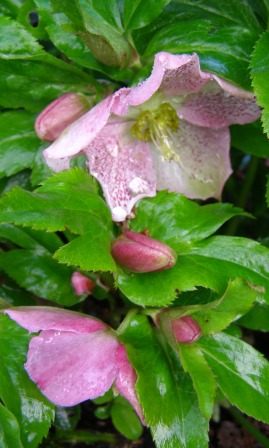
A little attention now will ensure a better winter display from hellebores

A little attention now will ensure a better winter display from hellebores

* It is time to give hellebores (winter roses) a little attention. We go through at this time and cut all the old leaves off, removing them to the compost heap. This gets rid of any aphid infestations, allows the flowers which will start emerging in a few weeks to be visible and the fresh foliage is much more attractive than tired old leaves. You can go through with a slasher if you wish. A weedeater is faster but tends to leave chewed looking stems. Feed and mulch the crowns.

* Most hellebores, particularly the common H.orientalis, are not the most amenable plants to divide. They take several years to build up to a good size so if you plan to divide a clump, make them large divisions. We prefer to go through and remove all the seedlings to prevent too much competition, leaving the large plants alone.

* Autumn is a good time for pruning and shaping most woody trees and shrubs.

* Sow lawns without delay while the weather is still mild. If you don’t do it straight away, you will have to wait until spring because grass seed won’t grow in winter.

* In response to phone calls, the pumpkin crop we grew for hull-less pumpkin seed was called Austrian Oil Seed and we bought it from Kings Seeds. Only the seeds are edible although the pumpkin may be suitable for stock food.

* In the curious world of vegetables, Sydney daughter reports that amongst the various bok choy/ pak choi variants at the market, she found a different veg called kang kong which she thought looked like a weed so she bought some to try. She says it was “quite nice”. Upon looking it up, she worked out why it looked like a weed. It is a convolvulus. I have yet to see kang kong offered here. Most Asian green leafy vegetables are quick maturing so ideal for a short term crop.

* While on the topic of seeds, the new autumn catalogue from Franchi Seeds is available on line at http://www.italianseedspronto.co.nz. These are predominantly summer crops but you may like to browse the traditional tastes of Italy in anticipation of sowing seed later in the year. Mark is planning to try some of the tomato crops and I am encouraging him in this because the most delicious tomatoes I have ever eaten were in the south of Italy. By no means are all tomatoes equal in the flavour stakes. Make the most of the pleasant autumnal weather which is brilliant for gardening. We frequently get the first wintery blast over Easter. No matter when Easter falls, the weather gods spy the event, not the date.

In the garden this week: April 8, 2011

Time to gather swan plant seed

Time to gather swan plant seed

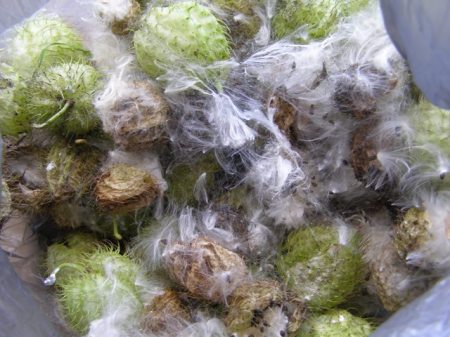
• If you had swan plants which were large enough to set seed, gather the seed and hold it over for planting in early spring. A row of plants in the vegetable garden is a satisfying summer entertainment.

• The walnuts are starting to fall. If you have trees, you need to gather the nuts frequently or you will find the wildlife beats you there at night – particularly rats. Nuts need to be dried before they can be eaten and stored. We spread them in a single layer on trays for a couple of weeks and try and fight off the vermin which will conduct raiding parties until we can get them stored away. Mark sometimes resorts to putting the dried nuts in tightly tied onion bags hanging from the shed roof.

• Pumpkins store better if they are dried out first. Eat any thin skinned varieties of pumpkin first (the green buttercup type along with squash) and keep the tough iron grey ones for last. However, if you plan on storing pumpkins, make sure that their outer casing is undamaged or they will just rot.

• Onions also store better if they are first dried in warm, light conditions.

• You are running out of time for planting vegetables to harvest during winter. Soon it will be time to plant for spring. Get in peas, brassicas and winter leafy greens (silver beet, spinach and winter lettuce) without delay.

• Sow down bare areas of the vegetable patch with green crops such as oats, lupin, vetch, phaecelia, mustard or rye grass. They will germinate and grow, reduce weed infestations and when you dig them into the ground in early spring, they will add goodness and structure to the soil. Leguminous green crops like lupin and vetch also fix nitrogen in the soil.

• You are not likely to ripen tomatoes on old vines now. Gather any perfect fruit, green or not, because they can be ripened off the vine and are less likely rot.

• If you have areas in the ornamental garden which are looking scruffy, past it and generally unappealing, lifting perennials and dividing them can make a big difference. These plants appreciate frequent handling and will respond with renewed vigour, especially if you dig over the area before replanting, water them back in and add a scattering of fertiliser. Perennial plants include all the clumping types of plants, as well as flaxes and grasses.