Tag Archives: garden visiting

English gardens in Provence

The two gardens I enjoyed the most on my recent jaunt around gardens in the French Riviera were the private ones where we were welcomed by the owners. I can relate to the scale, the personal vision and the detail that comes in good private gardens.
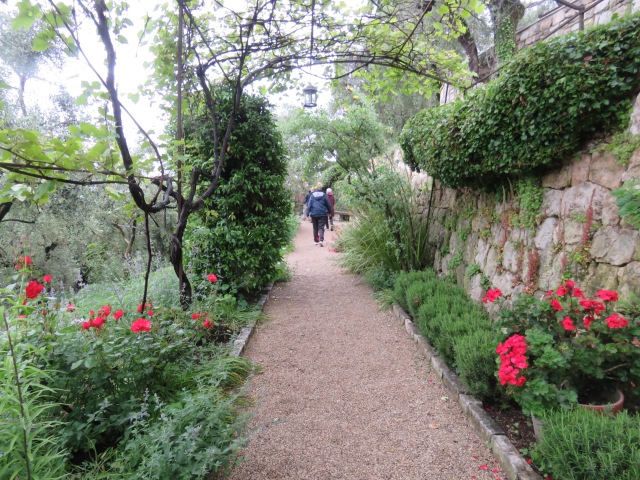
When gardening is on terraces, as most of these gardens I visited were, long walkways are a common design feature. La Mouissone

La Mouissone, near Grasse, may have a French name but the owner and hands-on gardener, Lady Lockett, is as English as they come, even though she has lived there for many years – presumably since they purchased the property in 1998. A down to earth (how appropriate), characterful and energetic woman, it was a delight to be taken around by her.
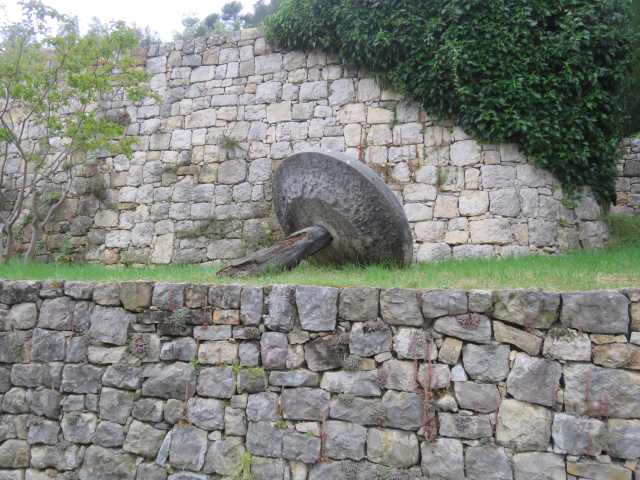
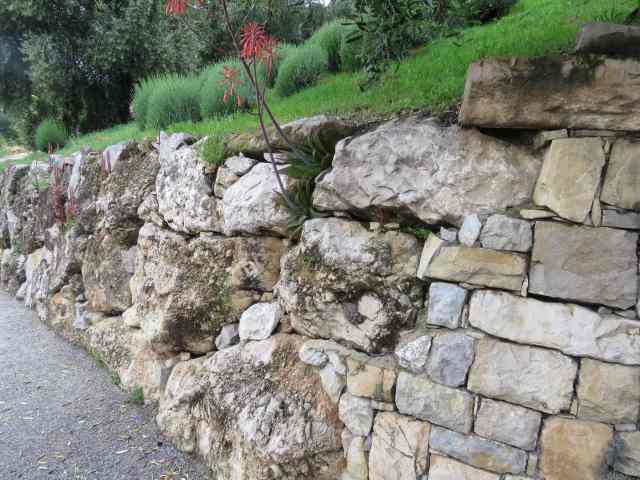
There is a whole lot more than stonework to La Mouissone but there is also a whole lot of stonework. The stone masons were mostly Moroccan. I asked, having admired splendid Italian stonework in the past.
I liked that the stonework was not all the same. It is interesting to look at different styles and techniques.

Our tour leader told us in advance that it had taken 15 stonemasons 10 years to build the walls, or was it 10 stonemasons for 15 years? And Lady Lockett cheerfully told us the stonework cost a million euros. Gulp. As a result, I expected a garden which was all about stonework but au contraire. The stone walls and terraces were all about turning a steep, old olive grove into a series of terraces that could be gardened and lived in. The owner then set about planting to soften the stone and to feature the plants. She gardens in that soft-edged, romantic way that is so very English in style.

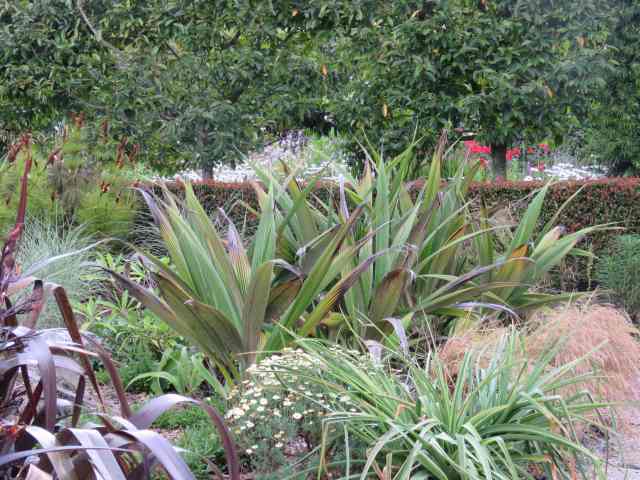
I mostly took this photo because look! A New Zealand flax plant – phormium. I had seen plenty of Australian plants in these dry French gardens but very few from Aotearoa

The garden covers 3 hectares and is built around 250 aged olive trees which are still in full production. It is still a comparatively new garden with an owner-gardener who is happy to experiment and change aspects as it matures.

Okay, so this view is is mostly olives and erigeron daisies (which are banned from sale and generally frowned upon in this country) but there is a seductive simplicity to this lush view .

In mid May, it was unusually lush and green because of the recent rains. Apparently, it is usually dry at that time of the year and I imagine it is now, with the heat wave hitting southern Europe. My daughter, who is living on the other side of the south of France (on the Spanish border, not the Italian border that meets the Riviera) tells me that the winds have blown up from the Sahara and everything around her is covered in a fine layer of Saharan sand. La Mouissone may look different this month – a reversion to the norm of dry grass in golden hues offset by the grey-green foliage of the olives.

The swimming pool was particularly attractive, situated close to the home and with expansive views across the French countryside and beyond.

I appreciated Lady Lockett’s attention to plants and her interest in expanding the plant collection as she finds other options to grow in the poor soils and hard climatic conditions. I also liked that it is clearly a family garden – a playhouse for the grandchildren, a family swimming pool, outside seating areas placed where it is likely they would be used, extensive vegetable gardens. It makes it a very personal garden.
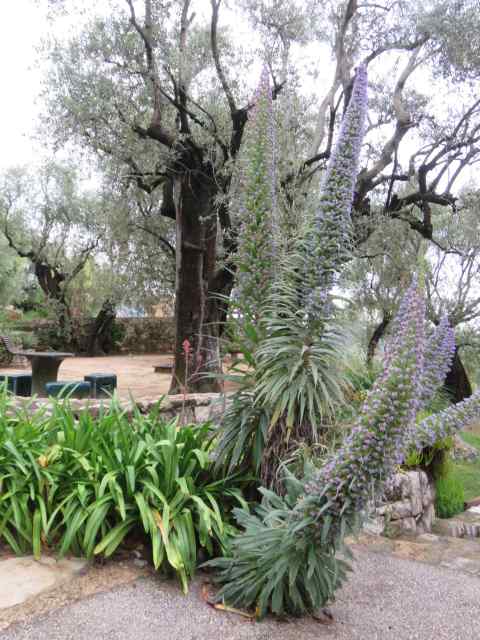
Echiums thrive in this climate and that looks like agapanthus to the left – another plant derided in NZ but much valued elsewhere

The biggest disadvantage of being on a tour is that one must move at the pace of the tour. This is a garden I would have enjoyed spending more time in, taking time to sit and look, exploring further and then going back around in the opposite direction to experience it in reverse. It is a garden I would go back to except I am unlikely to return to this part of France. I see it is open to visits by appointment; their website is www.lamouissone.com
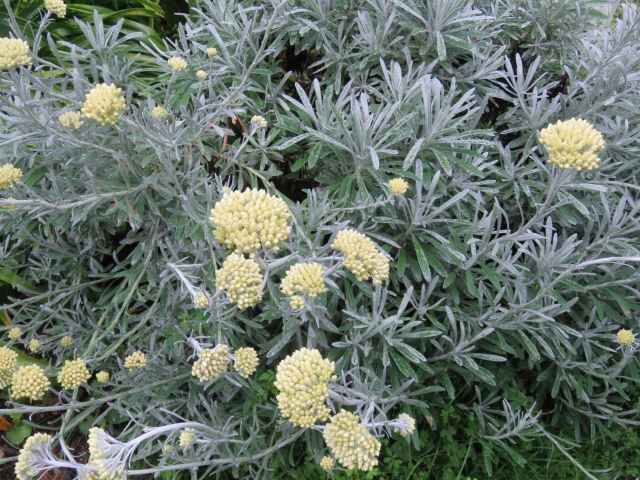
I coveted this artemisia, even though our climate is very different to the greys and yellows of the Mediterranean
The dog is a resident, the people from Northern Ireland and Tasmania. The bamboo is grown for both practical use and aesthetics at La Mouissone.
Le Clos du Peyronnet was very different but still distinctively English in style

While La Mouissone is firmly anchored in the modern style – call it the new naturalism, New Perennials or what you wish, Clos du Peyronnet harks back to an earlier generation, is well established in the Arts and Crafts style. The Waterfield family bought the land in Menton, close to Lawrence Johnston’s Serre de la Madone, and built the villa as a winter retreat at the end of the nineteenth century. The garden in its current form is 1950’s vintage. Humphrey Waterfield is credited with the initial design and plantings while William Waterfield, who took over in 1976, added the many layers of different plant material – including the extensive bulb collection – and extended the garden features, building upon his uncle’s earlier work.

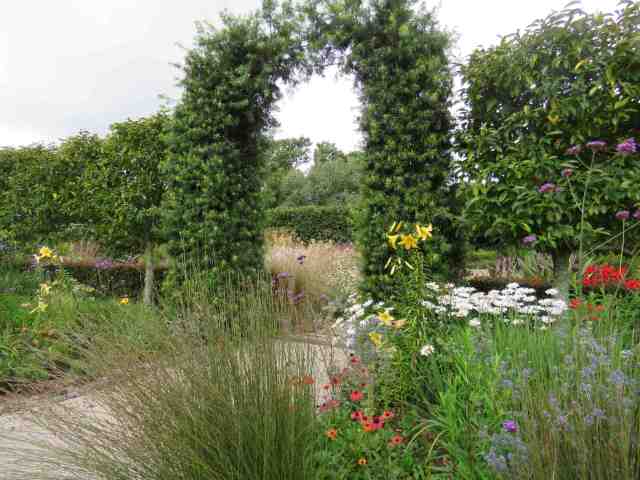
More long terraces, carved from the hillside – a defining feature of so many of these gardens. The cypress arches are effective, even though they are crying out for some work on the dead patches

I think the reason I liked Clos du Peyronnet so much is perhaps that it was close to what I hoped Serre de la Madone would be – and indeed may have been in its day. Sadly, William Waterfield died in 2021 with no heirs. The garden now is managed by his wife, American Judith Pillsbury. She is no garden novice, having a garden at her Paris apartment that has been written up over the years and as a previous owner of La Louvre in Provence – a garden I recognised as soon as I googled it, from seeing on TV (maybe Monty Don on French gardens?). It was Judith Pillsbury who welcomed us and took us around the garden but the mid to long term future is in doubt.
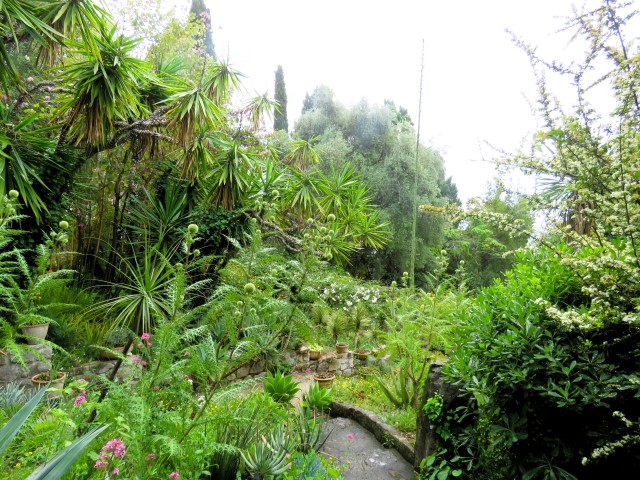
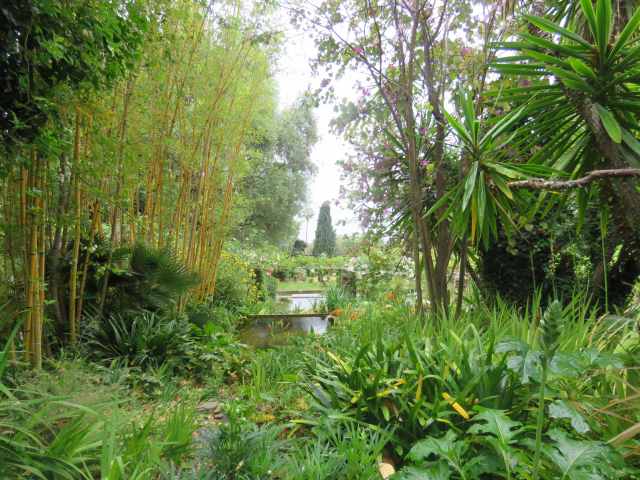
This is a fair representation of the garden and some of us with established gardens with larger trees will relate to the situation where plants grow out at an angle to reach the light.
Water is an important garden feature in a climate renowned for its hot summers.
I looked at this photo and asked myself how I could have failed to check those steps. Do they indicate this pond was originally established as a swimming pool back in the days before chlorine and pool fllters?

What did I enjoy about it? Good design, interesting plantings, quality hard landscaping that has aged well down the years, character, discreet but attentive maintenance, brilliant location and views. What is not to like? It is English-style gardening in France, spanning seven decades.

That is a splendid specimen of loquat with large fruit

Peyronnet has a collection of fruits that are rare in that area of olive trees and citrus. Amongst them was a loquat – Eriobotrya deflexa – with the biggest fruit I have seen. And I spotted a feijoa tree,  Acca sellowiana. I subsequently read an article on line that referenced the feijoa – “the unrelated pineapple guava Acca sellowiana (‘tastes like sweet Harpic,’ he confides).” The he in this quote refers to William Waterfield and all I can say is that several million New Zealanders would like to disagree with his Harpic assessment.

The view from Clos du Peyronnet is remarkable
Looking across to Menton, the some time home of our own Katherine Mansfield

The feeling of privilege that comes with getting to see private gardens was reassuring to me to experience from the other side. These days, we only open our garden to a few special interest tours or individuals who manage to convince me they will be interesting people to meet. I had wondered if I was being a bit precious in creating such barriers to prospective visitors. No. It is a privilege to gain access to private gardens and to spend time with the owners. It makes it a special and memorable experience. 

This little dining terrace at Peyronnet was very charming even as I derived some amusement at the global nature of those outdoor chairs which we also have at our place. Indonesian and Malaysian hard wood, I think, and probably the cause of many orphaned orangutans.
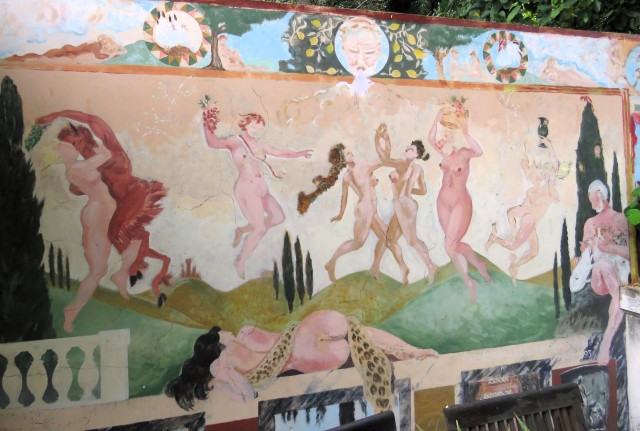
To one side of that dining terrace is this fresco that I photographed before I found this comment on line: “He commissioned a local artist to paint a fresco on the wall of a small, enclosed garden that looks out across Menton’s west bay and depicts William as a bon vivant in all its senses.” Umm, is that William to the right? Or is there another fresco somewhere that I missed?

Changing plans

It has been a somewhat difficult start to a new year here, both at a personal level and in the wider context of global events. This is why I have been silent since Christmas but, with an unprecedented upsurge in subscribers (waving hello to new subscribers), I felt I needed to break the silence.

Solace in the garden

When I find myself in times of trouble, it is not Mother Mary who comes to me as she apparently inspired John Lennon and Paul McCartney. Rather, it is the garden that wraps around my day. Always, as I reach the reflective time at the end of the day, when Mark’s and my ritual is to sit together and have a drink (sometimes alcoholic and sometimes just homeopathic gins – lime and soda in a glass with just the memory of actual gin), I think how lucky I am in life to have washed up living in such a special environment. 

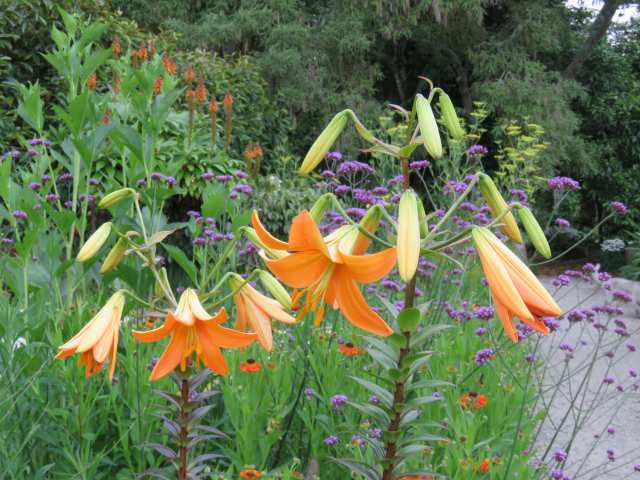
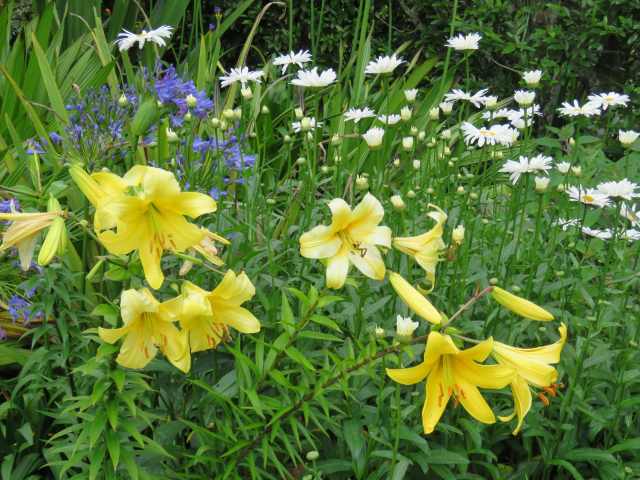
We don’t often open the garden these days but I had booked two summer tours from overseas. One cancelled a couple of months ago (presumably advance sales were too slow) so that left one for this weekend. It has dominated my days since just before Christmas. Everything I did in the garden was driven by the deadline of having the place spruce and ready for this weekend. I will delay cutting those back until after, I would think, rather than making a gap. The Aurelian lilies will be at their peak, I thought while I hoped some of the auratums would also be open. When Lloyd and Zach returned to work last Monday after the Christmas break, it was action stations. The pressure was on.  We are an experienced and well-oiled machine on this but it is quite a lot of extra work and a different focus to our usual days.

Morning tea was required and I arranged extra help from a friend and planned to spend Friday baking. If you have ever been here to one of these situations you will recognise my menu because I keep to the tried and true – Annabel’s (Langbein) Orange Lightning Cake, Lemon Yoghurt Cake and Edmond’s hokey pokey biscuits with added oats or walnuts. My fail-safe recipes.

Not having heard from the NZ company that was managing logistics for the tour since early December, I started asking on Monday for final numbers and arrival and departure times. And on Tuesday. On Wednesday, I phoned them and they said they would get back to me. A few hours later, they did get back by email – to cancel. Apparently, they can no longer fit us in to their itinerary.

It was discombobulating. Zach felt the same as priorities suddenly changed and the pressure was removed. At first I was angry at the unacceptably short notice and cavalier attitude. Now I am resigned to the fact that it is just ignorance. It is a company that doesn’t know us and has no idea what our set-up is here where we only open on request for specialist tours. They probably thought it was the same as cancelling a café lunch or a visit to a public garden.

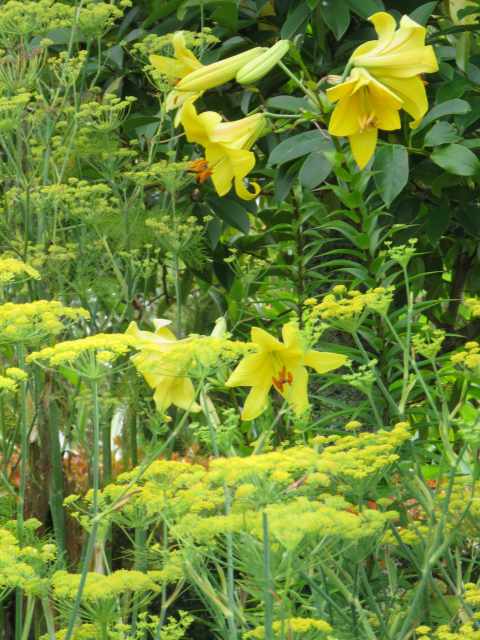
Mark’s Aurelian lily hybrids come in two colours – soft orange and clear yellow.

I am also relieved. I hadn’t been enjoying the lead-up and feeling the pressure to showcase our garden at its best and I had been thinking that I may decline all future bookings for summer tours. That decided it; I WILL be declining all summer tours in the future. We are not that desperate. We only accept these tour bookings because we think they might have some interesting people on them and the actual visit is enjoyable as we take them around the garden and then host them over morning or afternoon tea. Despite the pressures of preparation, the visits are leisured, pleasant and affirming for us – a good experience for all parties.

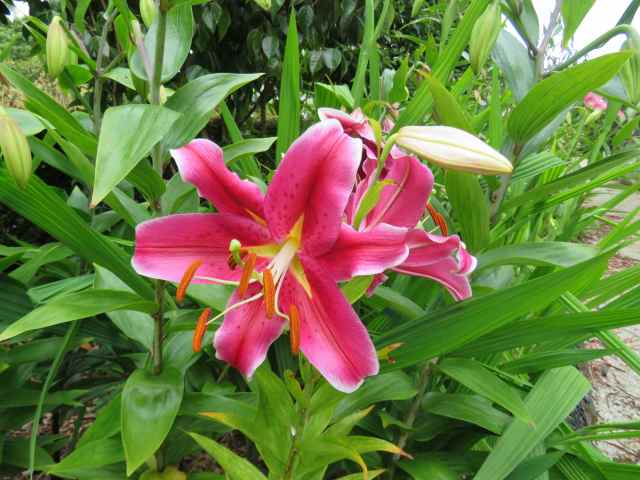
So here we are. The pressure is off. The sun is shining. The pool is warming up nicely and I can spend time floating on my lilo and dipping in the water. The Aurelian lilies are indeed at their peak and the first auratum lilies are opening. The garden is looking lovely as we head into peak summer. And I am now doing the garden tasks that I want, rather than those I felt I had to.

The first of the auratum lilies are opening. We do an impressive display of auratums here.

It may be that the tour company, who shall remain unnamed, will learn in time that the holy grail of garden tours is personalised experiences and getting into gardens that are not normally open to casual garden visitors. Australian designer, writer and tour leader, Michael McCoy knows this. “This morning we’re heading to Dan Pearson’s own garden Hillside for a wander with Dan himself, who will talk us through how his own garden fuels and inspires his design work. What a treat!”

UK-based garden tour specialists, Brightwater Holidays, know this. “After breakfast today we visit the private garden of Clos du Peyronnet, Our access to this private garden is a Brightwater exclusive, and a real highlight of our tour.” This is from their tour of gardens of the French Riviera that we were hoping to join in May before circumstances conspired against that plan.

The magnificent terrace at Mount St John In Yorkshire created by leading designer, Tom Stuart-Smith

Some of our own special memories are of gardens we gained access to that do not open to the public – a private commission of Dan Pearson’s in the Cotswolds , Mount St John in Yorkshire (owned by a grocery magnate, I believe) where leading designer Tom Stuart-Smith has created a sublime terrace with a borrowed vista into seeming eternity, being hosted to morning coffee by the owner of Bury Court near Farnham when the gate was very firmly closed to general garden visitors, being accorded the privilege of wandering alone at our own, slow pace through Ninfa in Italy, a champagne and canape reception for our group only, hosted by the Principe and Principessa Borromeo on Isola Bella – these experiences are on a different level to following the tried and true garden destinations that anybody and everybody can get into.

Personally hosted over coffee by John Coke at Bury Court, a memorable and privileged experience

While twenty-five Canadians have missed their only chance of ever getting to see our garden, I feel I have taken it back. You will find me out digging mondo grass. I am thinking my way into an article on ‘when good plants go feral’.

Abbie

Saving my best for last – Auckland Heroic gardens part 2.

We visited a Mellons Bay garden which had a location and view to die for. It is still very much in development and the owners are making the most of creating a garden space that maximises its remarkable location. It was there that I encountered a grass I had not seen before.
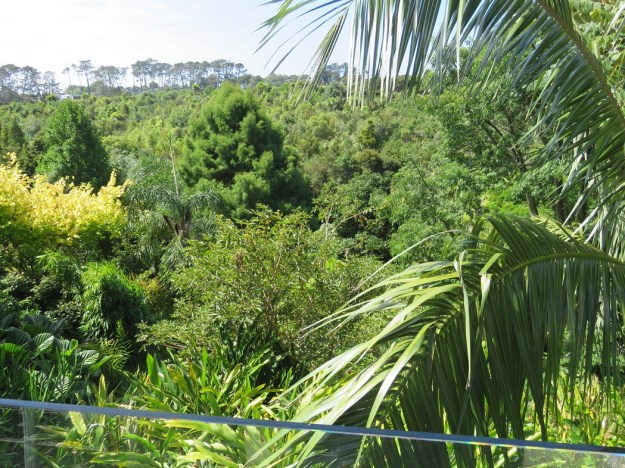
Vetiver grass, not miscanthus

At first I thought it must be a mass planting of miscanthus but no, it is vetiver grass from India, botanically Chrysopogon zizanioides. I learned this from my friend and tour host for the day, the effervescent garden designer, Tony Murrell. Vetiver is apparently being widely promoted in Auckland for its erosion control capability. I looked it up. It puts its roots down four metres in the first year alone and is hardy to drought, prolonged flooding, fire, some frost and grazing. The roots can go down as far as six metres. By this stage, my eyebrows were pretty much reaching my hairline but it is apparently sterile and non-invasive so it doesn’t spread. And if you change your mind about it, you can use herbicides on it, though I can’t imagine digging it out without heavy machinery.

Personally, I wouldn’t be rushing to plant something that grows quite so strongly but we don’t suffer from erosion or land that slips so we don’t need something quite as drastic. If you prefer to use native plants, there are many references on-line that will give various options, such as here.

The view from the deck in city suburbia

From there, it was to see four smaller, city gardens. I had seen all of them before but not for several years. When you live in a densely populated city, sometimes with long thin sections that are not a great deal wider than your house, this sort of vista is pretty amazing. It is in Glendowie and the owners of the two open gardens had the wisdom to buy properties that looked outwards to reserve so there is a seamless visual flow. Added to that, the row of houses have maximised what was once more or less wasteland that runs along the base of the properties. You wouldn’t want to go swimming or paddling in this water (I am guessing most of it is stormwater, supplemented by springs), but it is a delightful, sheltered common space at the end of the gardens.
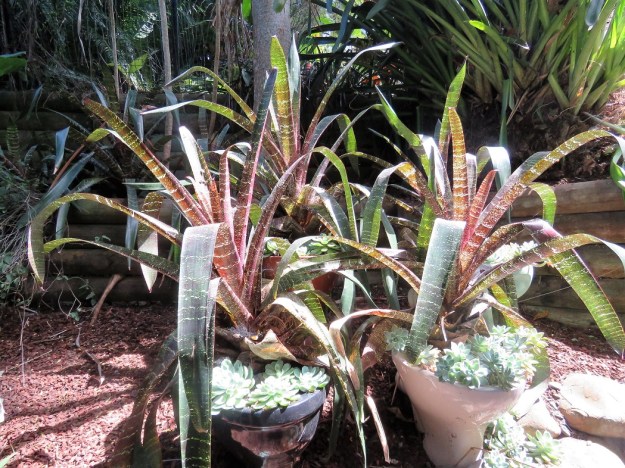
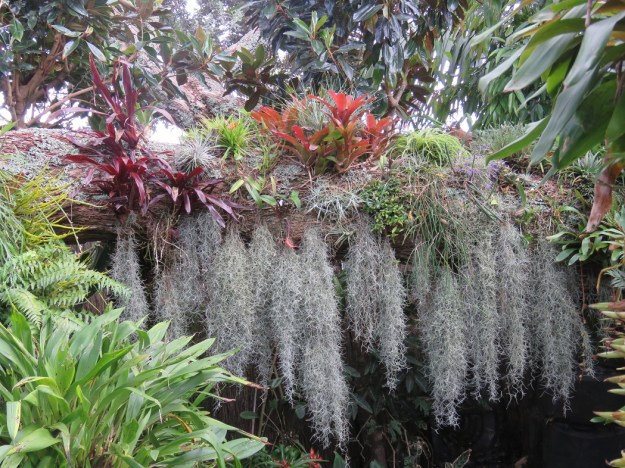
The light was too bright and the shadows too deep to do justice to this cluster of bromeliads but I particularly noted it because it was a counterpoint to the vibrant and bright use of bromeliads mentioned in the first post of these two. This was restrained and understated but maybe more charming for that.
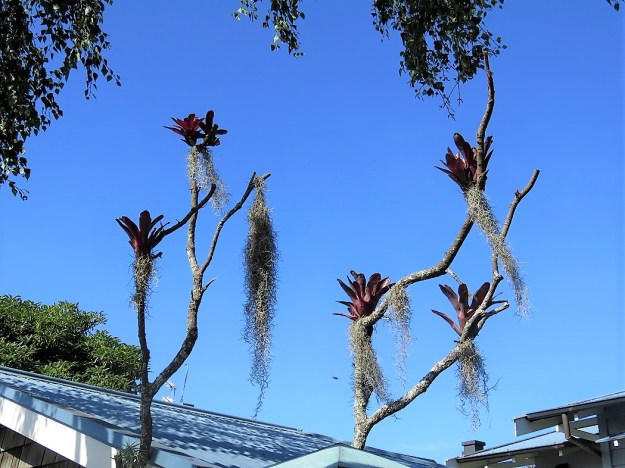
From there it was to a garden I have written about before – industrial chic I called it then and I did not change my mind on a second visit. Quirky, detailed and full of energy. I don’t want to own it but it makes me laugh. It is also on the market, should you feel such admiration that you want to own it. Although it is such a personal creation that the future owners may feel imposter’s syndrome until they make it their own. I would have taken more photos, but there wasn’t much room to move with so many people and rather a lot of accoutrements.

The box-shaped plant in the centre of the photo is the purple loropetalum.

Finally a gem of a garden, to which I returned as a private visitor the next day so I could have a closer look with the owners, Geoffrey Marshall and John Hayward (who also happen to be the Heroic Festival organisers). They are friends who will read this, so I don’t want to seem as if I am fawning, but if my lot in life was to be a tiny town section, this would be my personal choice. Despite its small size, good architectural design has given it total privacy and a good garden design has given it a sense of containment without being cramped. The level of refinement and detail is exquisite. The foliage is layer upon layer of detail without looking cluttered and the level of plant interest is extremely high. Wherever I looked, there was more fine detail to be uncovered with just the right amount of exotica. It takes a skilled eye and sure hand to be able to achieve that level of detail without it looking confused.
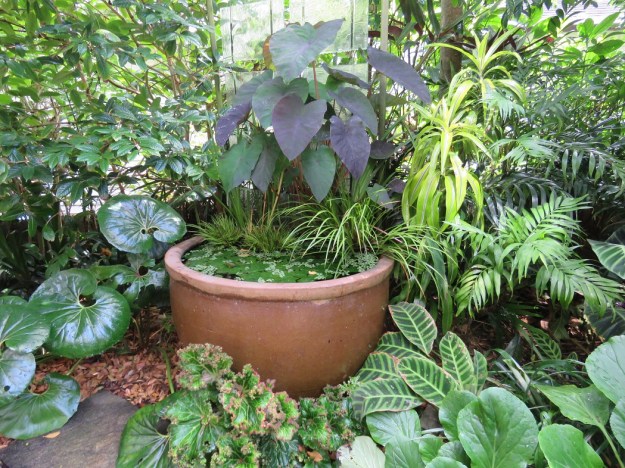
It seems a good place to finish my weekend of looking at the gardens of Auckland.


Auckland Heroic gardens. Part one (of two)

My impetus for heading to Auckland last week was to enjoy the final Heroic Garden Festival. After 23 years, this was to be the end of this successful fundraiser, in its current form at least. It is always interesting to look at other people’s gardens, even if they garden in a totally different environment and style. These were predominantly small urban gardens in a densely populated city, which usually means very close neighbours.

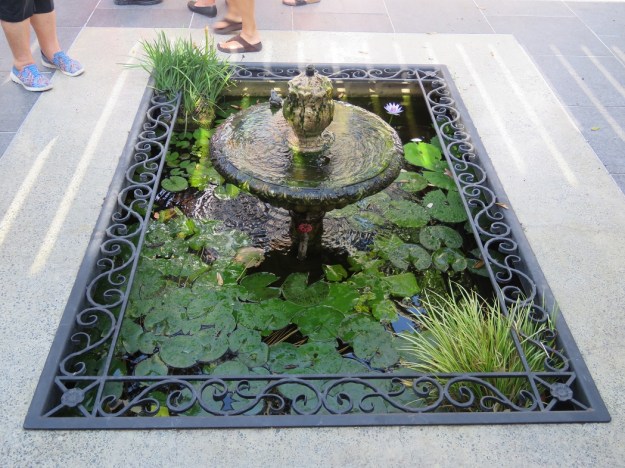
I will just offer you edited highlights, starting with this tiny garden (well, tiny by my standards) where the backyard pool was both pretty and thoughtfully constructed. In a very tight space where the water feature is within the outdoor entertaining area, safety is an issue and that outer decorative grill should give warning to most guests who may take a backward step without looking.

I am always interested to see where the work and service areas are contained in small gardens. One of the aspects of growing many plants in containers that is rarely shown on TV is that a work area for repotting is needed. I nodded approvingly at this one – attractive but functional and pleasant to use.
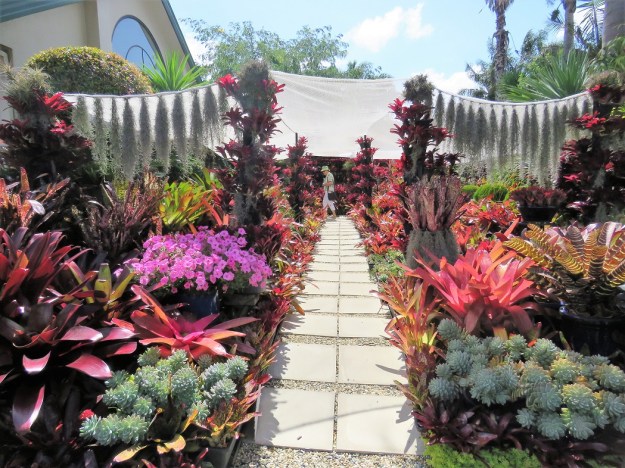
I failed entirely to find the work area for this garden although I think I read on their information sheet that it is screened from view out the back somewhere. I wish I had spotted it because I would have liked to have seen what the scale and set-up was. The very bright light conditions and crowds of people mitigated against getting photos that do justice to this garden which is a pity because it was a truly remarkable example of a garden of obsession. Whether I like it or not (and it was not my style at all) is gloriously irrelevant. I was in awe at the scale and the attention to detail. It was absolutely immaculate down to every last plant – the vast majority of which are in pots. Anything that looks a little marked or ‘off’ is clearly whipped out the back and replaced with a healthy substitute. It is all hand-watered, by owners who understand the differing water needs of each and every plant. It is also vibrantly colourful.
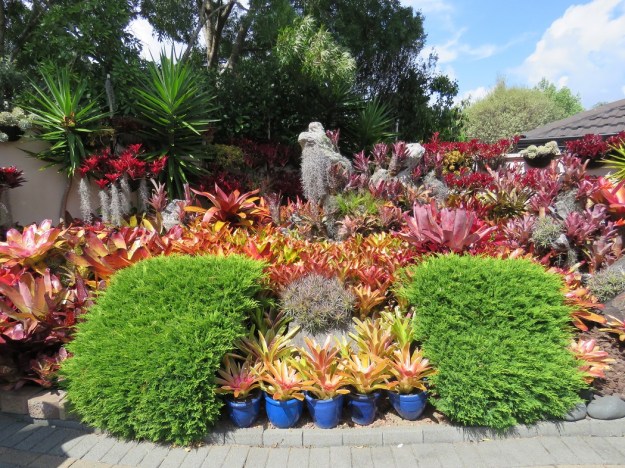
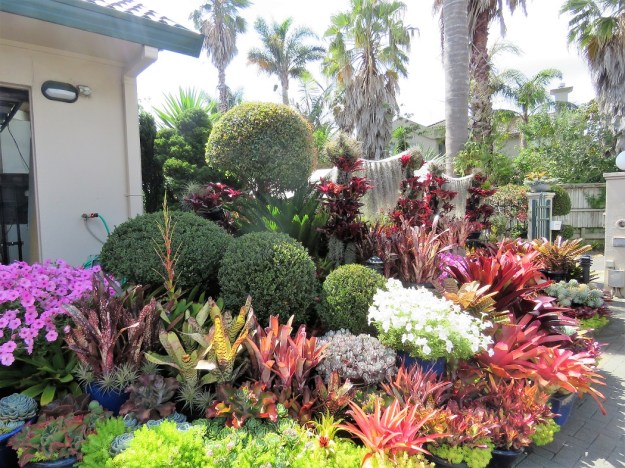
It would not be out of place in the book ‘Gardens of Obsession’ , which reminds me that I must find our copy and have another look at it.  There was a single-minded focus and clarity of vision in painting with bromeliads that made this garden quite remarkable in its own way, along with a cultural heritage that reflects our growing connection with Asia as much as Auckland. I was unconvinced by the description of it in the programme as being ‘low maintenance’ and ‘family-friendly’. Yes, it is a private, family garden, a suburban section in Pakuranga, and has a pool out the back but I do not think anyone can attain this level of attention to detail and painting with plants without considerable effort and skill. It is open by appointment if you want to be amazed.  Just suspend all preconceptions and personal preferences as you enter.
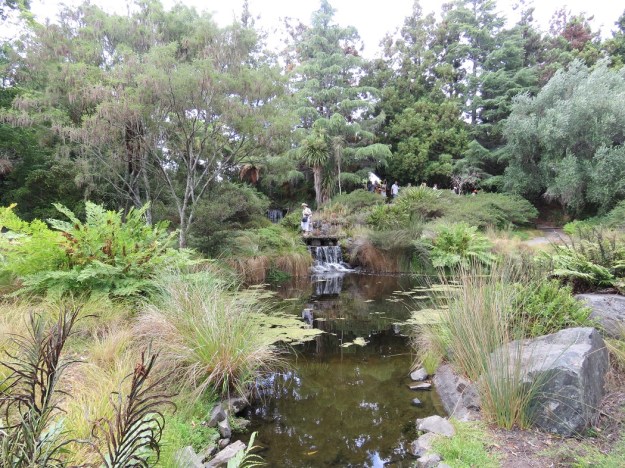
The waterfall is now the main visitor entrance and has nestled into its setting as the trees have grown

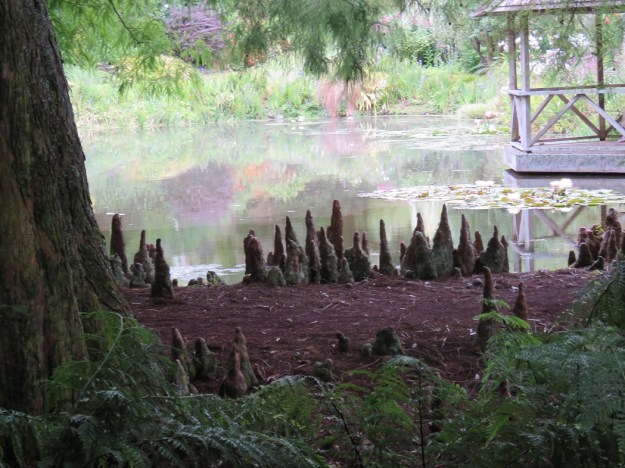
From there, we headed out to ‘Ayrlies’, Bev McConnell’s renowned garden, which could not be more different. I have been there several times before but not for quite a while. For us, it is an interesting comparator, being of a similar size and scale to how we garden but created and maintained with a larger budget and more gardening staff. The highlight of this garden for me, personally, remains the taxodiums by the bottom pond with their wonderful nubbly protrusions referred to as knees.

The nubbly growths in the centre of the photograph are usually referred to as knees

We have extensive experience in opening our own garden in the past (over 20 years of it, in fact) and I have amassed a fair amount of experience in garden visiting over the years – more than Mark who is happy to stay at home and look at my photos on my return. We used to get driven nuts at garden-opener meetings when owners of small, city gardens would declare: “People like to see small gardens that they can relate to.” I can still hear the inimitable Biddy Barrett retorting, “That is what people say to you in your garden. Nobody has ever said that to me in our garden,” because Biddy and Russ had a very large garden.

Whimsy at Ayrlies and given the context and the event, I feel personal opinion is irrelevant. They will make some people smile while others may raise their eyebrows.

If you only ever go to see gardens that relate to your own garden at home in size and scale, if you only see garden visiting as an exercise in purloining other people’s ideas to apply to your own patch, then you miss out on so much. I would have missed out on the immaculate exuberance of the Pakuranga bromeliad garden. Many of you would miss out on the varied experiences of Ayrlies.

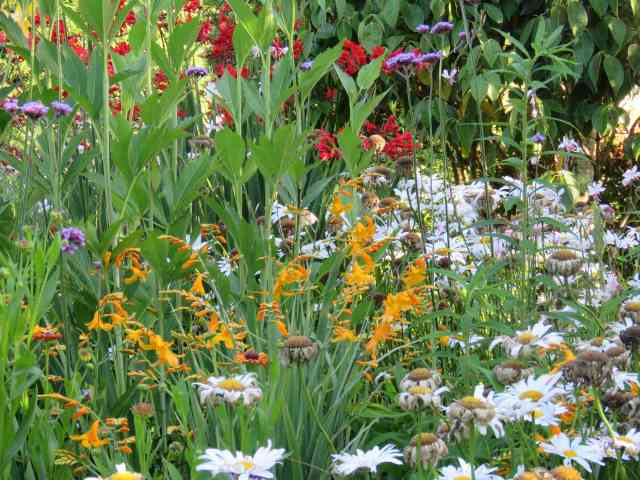
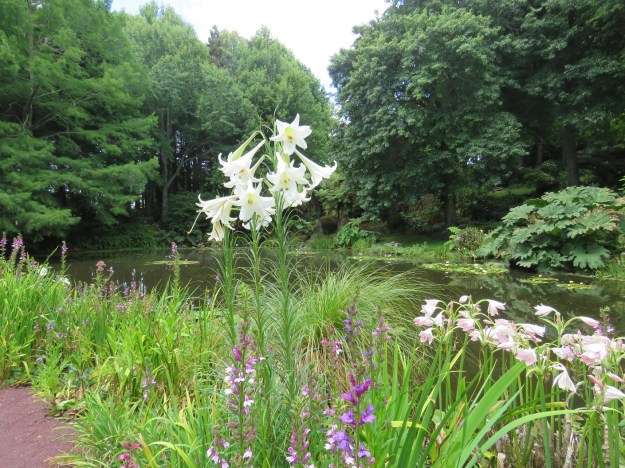
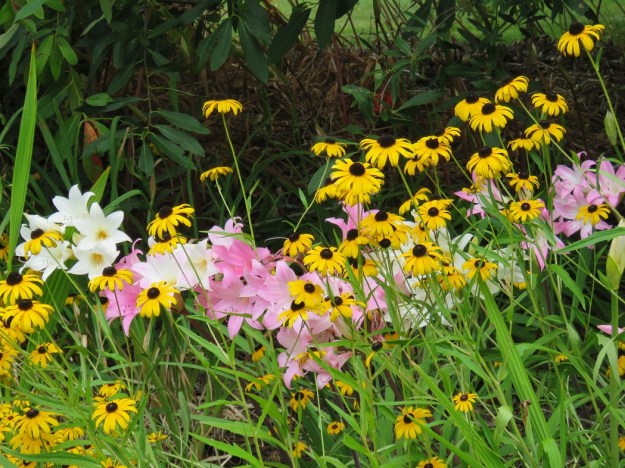
I include the pink and yellow specifically for loyal reader Marge M H, she who likes the colour combination whereas, were it my garden, I would be removing either the rudbeckia or the pink belladonnas from this scene