
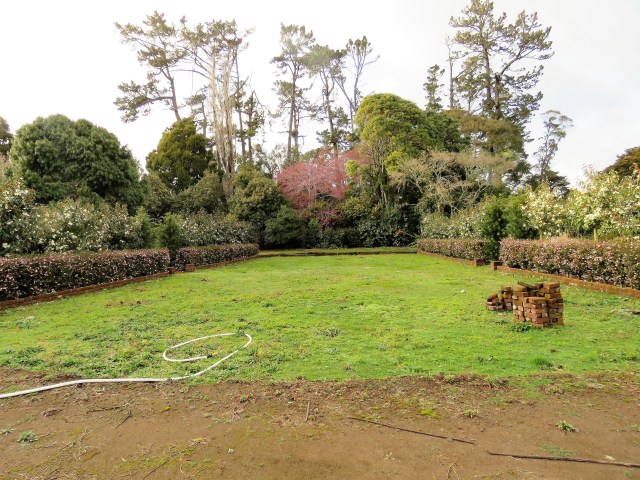
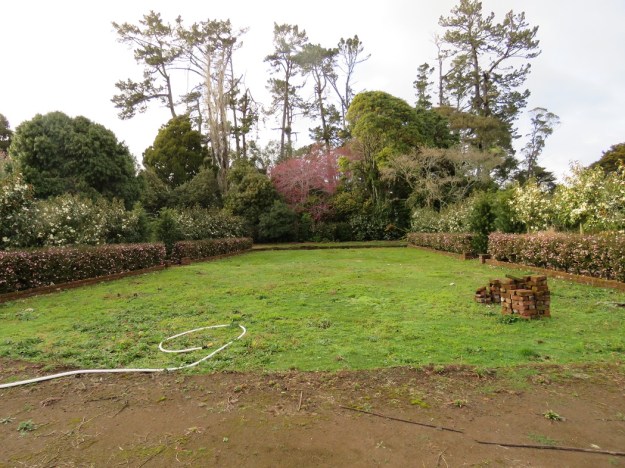
I am turning my attention back to refining the new Court Garden. How did we manage before digital cameras? They make it so easy to track change. This was where we started with a blank canvas.
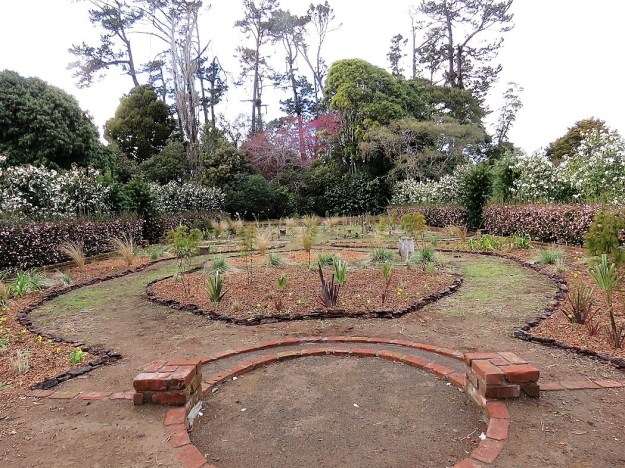
A year later and I had done most of the planting and the steps were in place. If you look carefully, you may see some little spots of yellow. I drifted many dwarf narcissi through to add early spring interest. This winter will be my last chance to locate them and remove them before they are forever swamped in the grasslands.
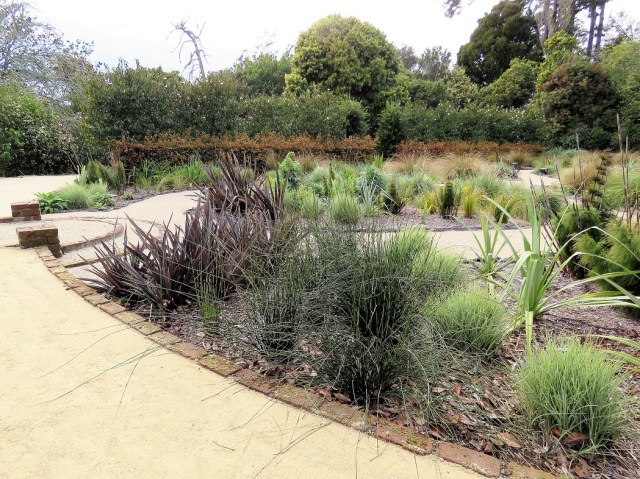
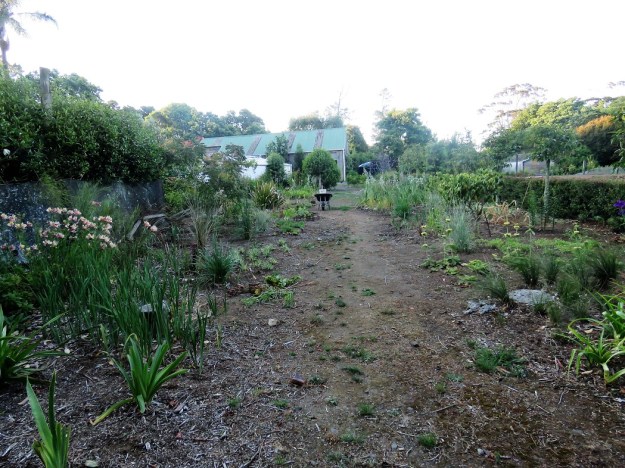
This is how it looked when we opened for the garden festival last spring, when we had completed the paths. It was the first viewing by members of the public and most visitors loved it.
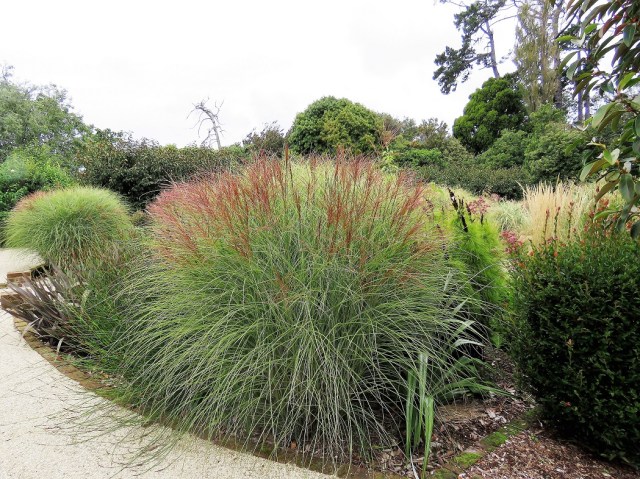
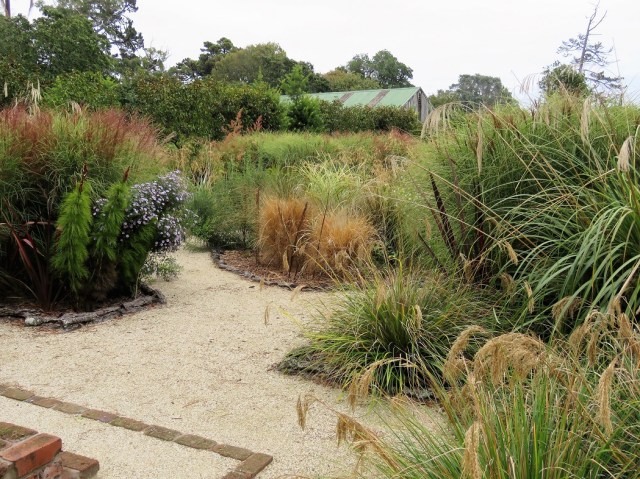
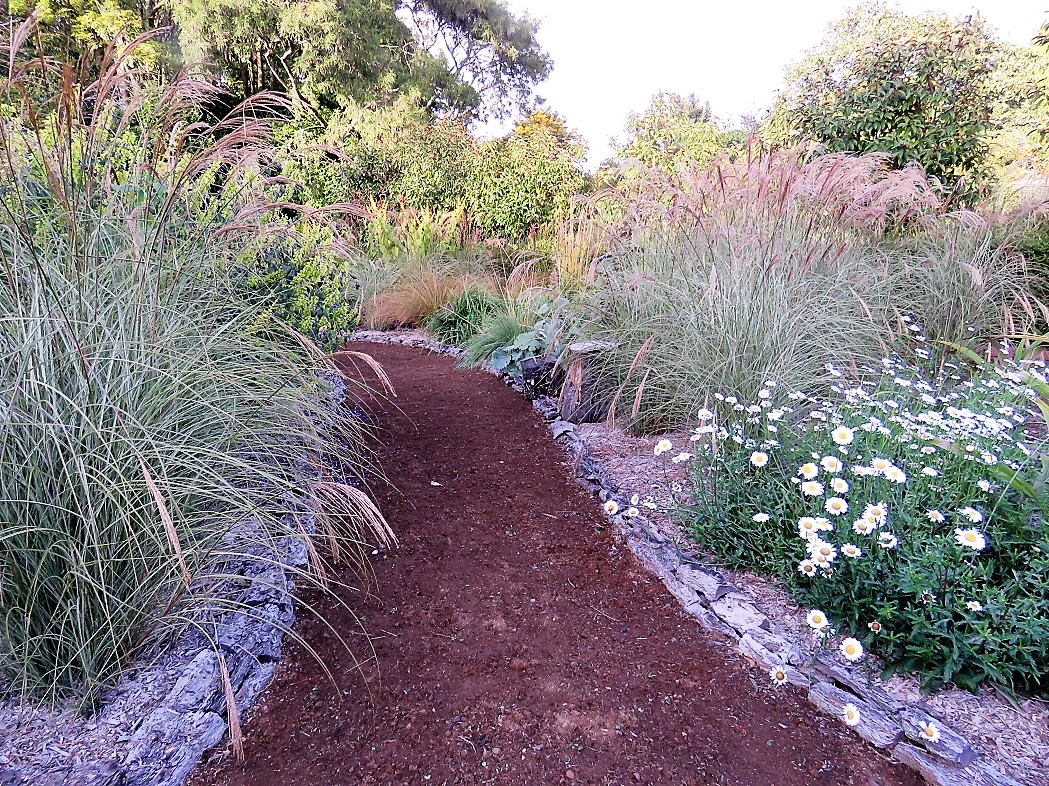
This is the same view, four months later. The growth has been well in excess of what we expected. This is the result of planting into fresh ground although the soils would not have been particularly fertile after being under nursery weedmat for three decades. We have not fertilised anything. Nor did I use compost to enrich the soil. We did, however, cultivate the ground before planting and mulch afterwards. While planting, I squished a gazillion grass grubs that I unearthed as I went.
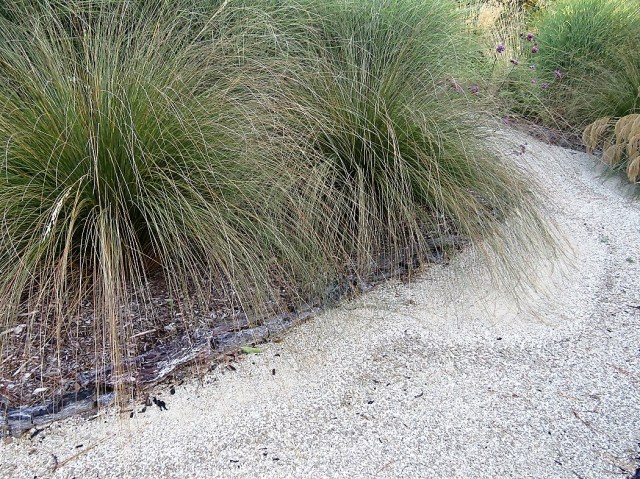
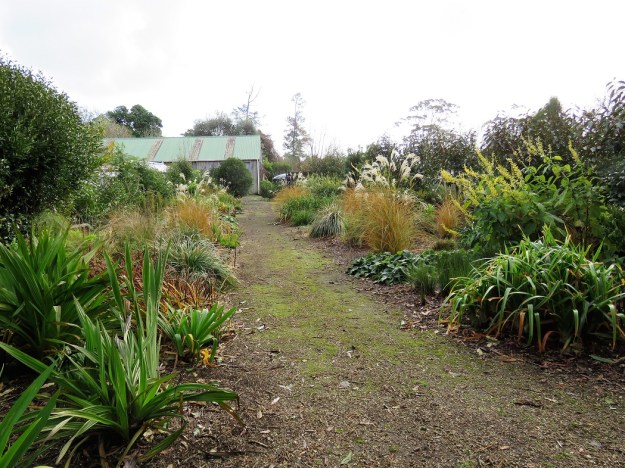
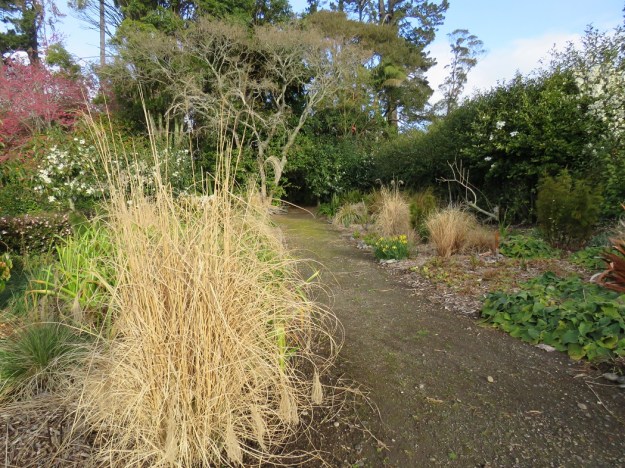
Despite my best effort to get the spacings right as I planted. the mistakes are now clear, mostly because I underestimated how large the plants would get. You can see from the markings on the path, how far out the grass stems are sweeping. I am fine with a bit of softening overhang but I also want to be able to walk through without getting wet legs. I need to move the right hand chionochloa back half a metre. Fine tuning, I call it.
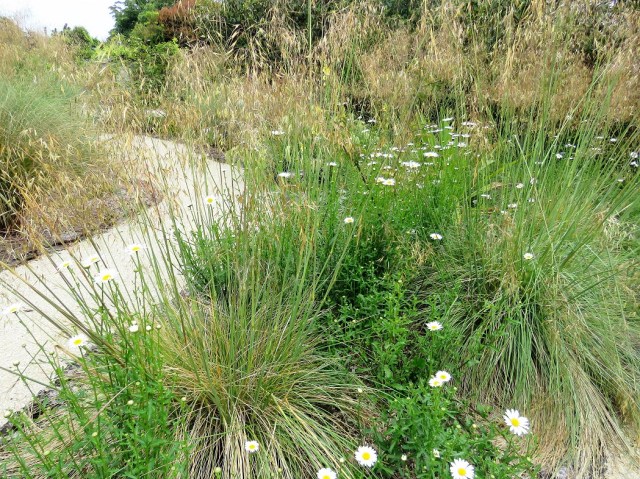
Again, thanks to digital photography, it is easy to track plant combinations through the seasons. I have been surprised that some have held for a good four months. This is just a simple combination of Stipa gigantea (golden oat grass) and ox-eye daisies as it looked when we opened the garden at the beginning of November.
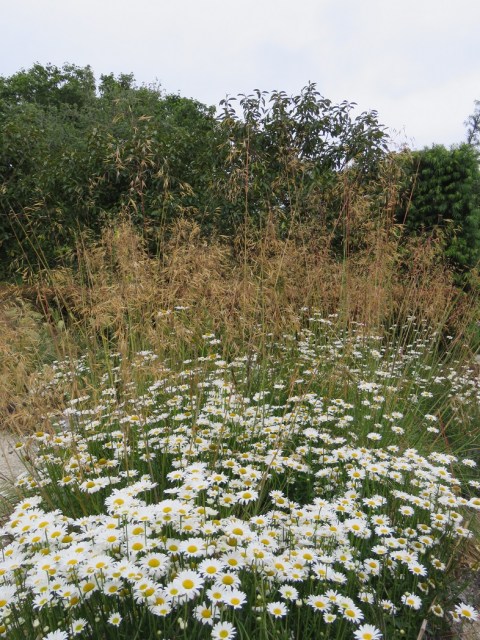
The same view in December. Aren’t those simple daisies simply glorious? As this mass display passed over, I cut them back to the rosettes at ground level.
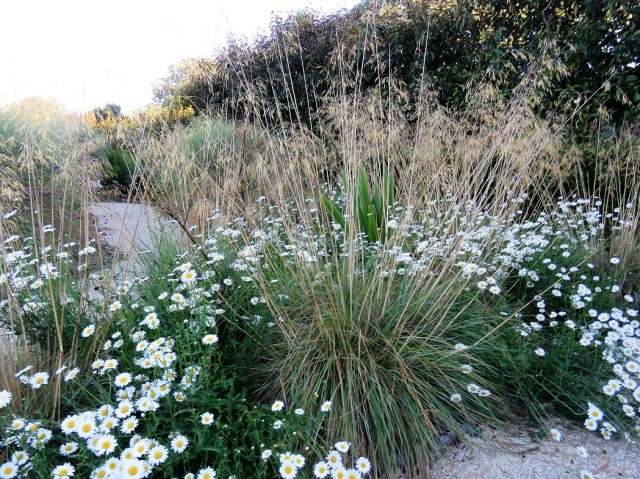
This is the same spot in February. The daisies are having a second flush and i think if I get my timings right, it may be possible to get a third flush each year. The stipa has also held onto its sterile flowers and I did not expect these to hold for over four months.
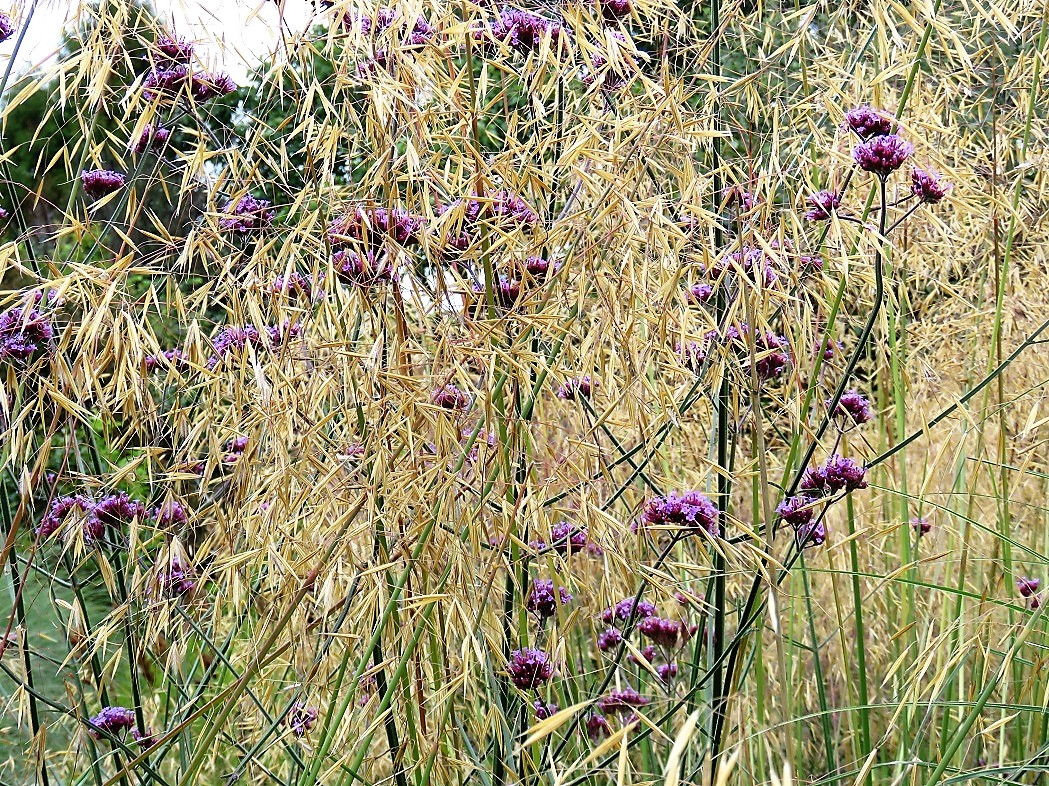
Back in mid December, I was delighted by the chance combination of a Verbena bonariensis that chose to seed in this spot by Stipa gigantea. I even took a short video of the gentle movement which was everything I aimed for in this garden but my tech skills let me down sometimes and I can’t work out how to upload it to this platform.
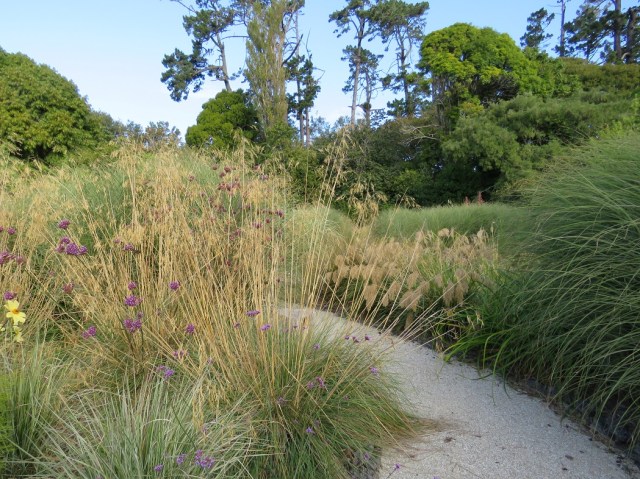
This is the same scene, two and a half months later. Still pretty, albeit past its fresh flush.
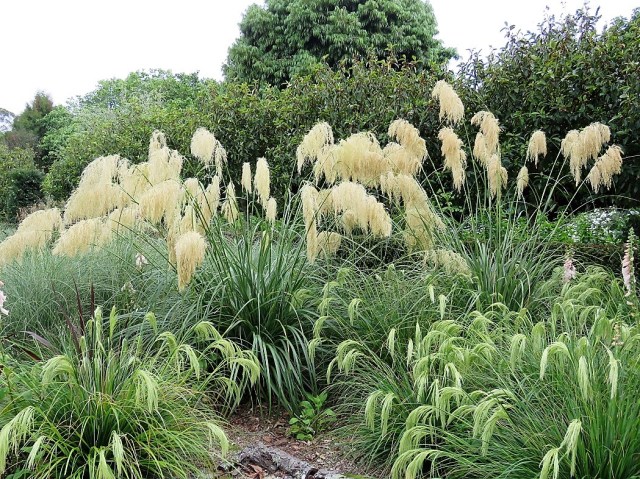
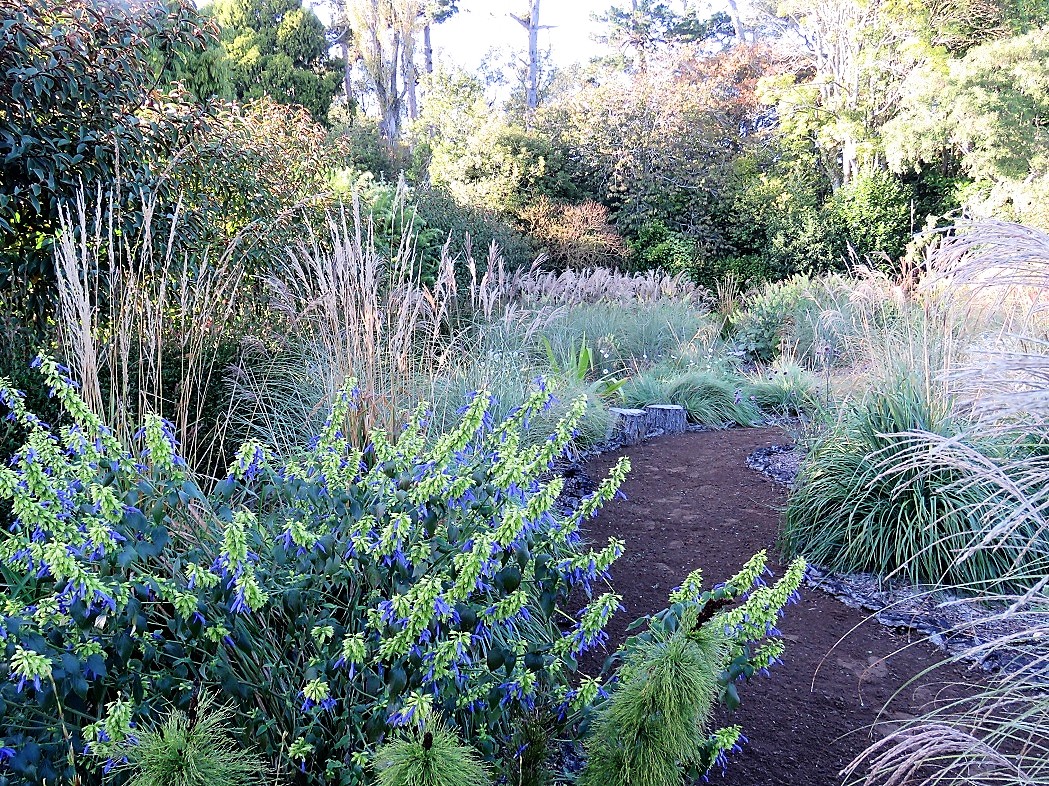
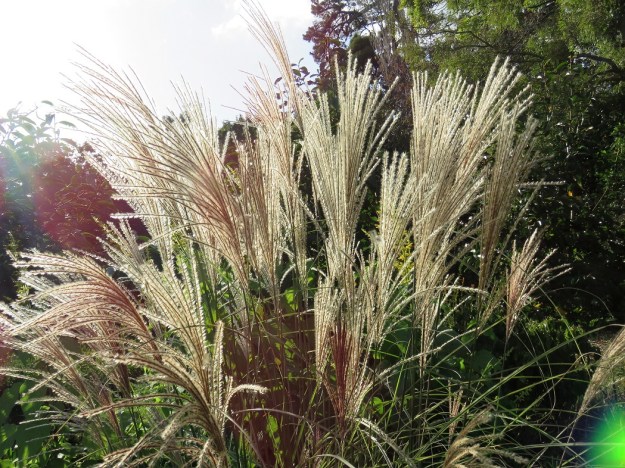
Who still declares that our native plants are boring? Mark said we must have our native toetoe in what is essentially a grass garden. I bought three plants on TradeMe (our equivalent of Ebay) and from memory, I think they are Austroderia fulvida. We have five species native to this country. The smaller plants are Chionochloa flavida, often sold as ‘dwarf toetoe’ although they are a different plant family.
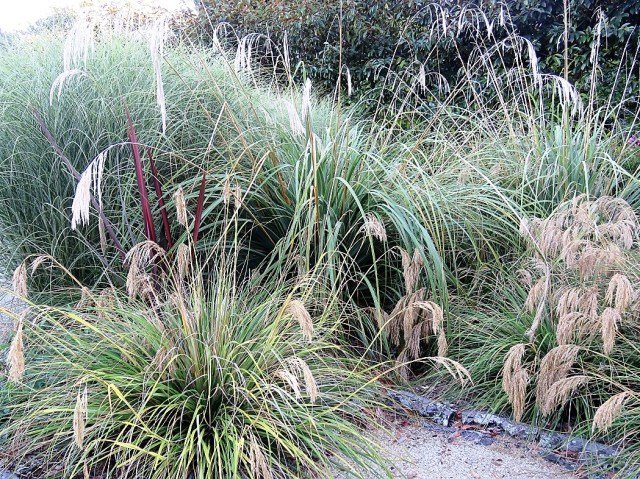
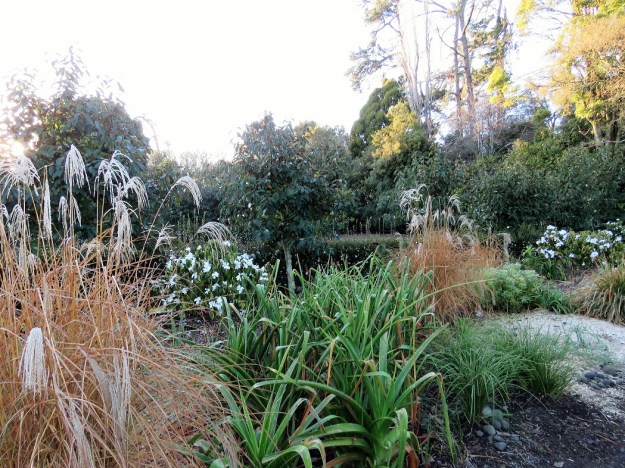
Four months later, the flower plumes are still holding, albeit a little tired as we go into autumn. This is not unreasonable on their part.
I think I am ready to give an interim report card on the key plants used in this garden but that will have to wait for another post. It will take another few years before I feel confident to recommend based on longer term performance but some trends are already clear. Pretty much all the plants used are readily available in this country.


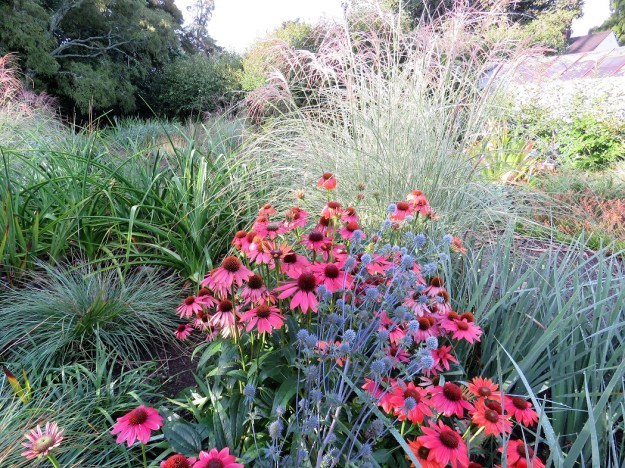
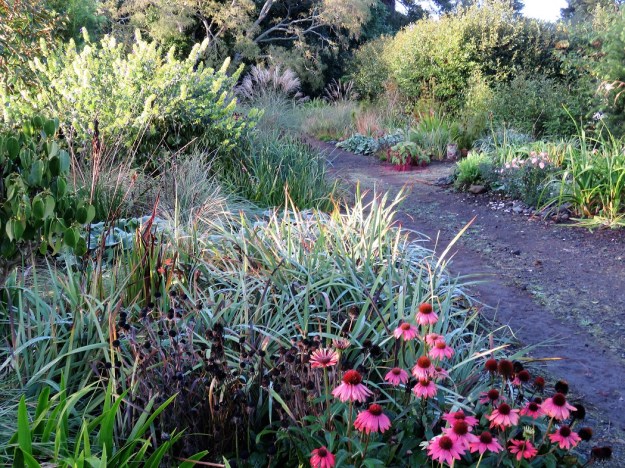
 I planted at what I intended to be final spacings and there is only one section that I have put in too closely and will need to reconsider. The rest, I think, will be fine for some time. Mark would like more flowers so I am working in a bit more colour as I find plants that I think will be able to compete. The giant Joe Pye Weed (Eutrochium purpureum) which the bees and monarch butterflies love is the next to move in.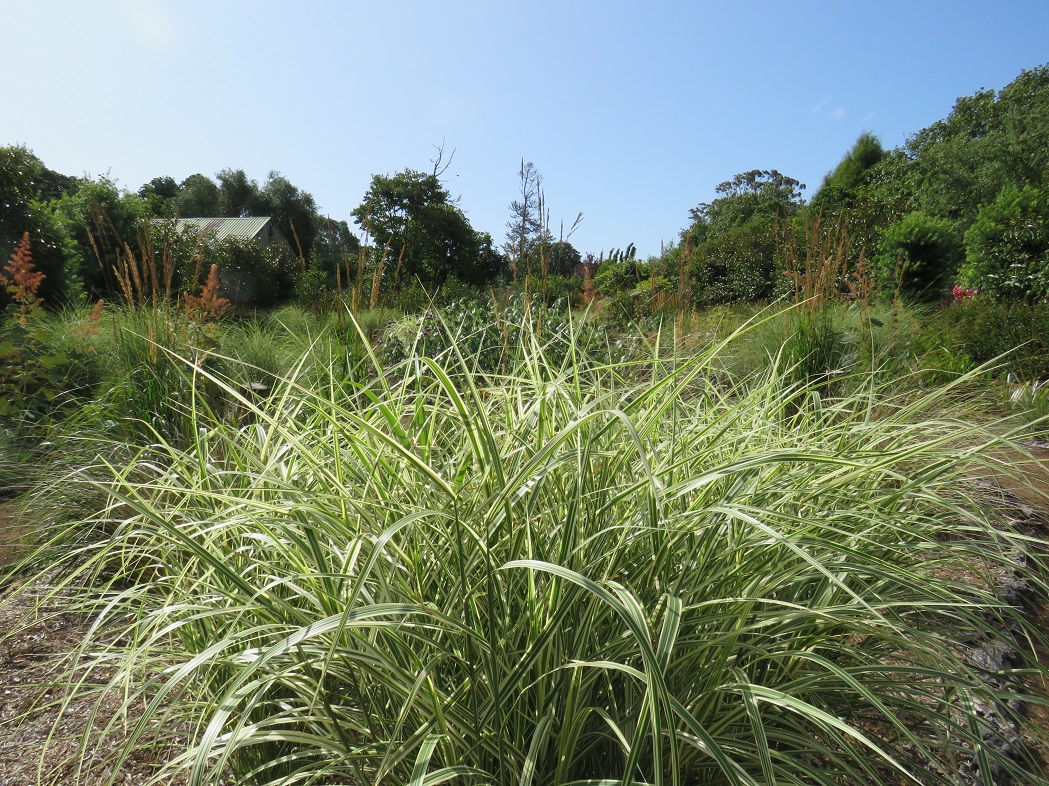
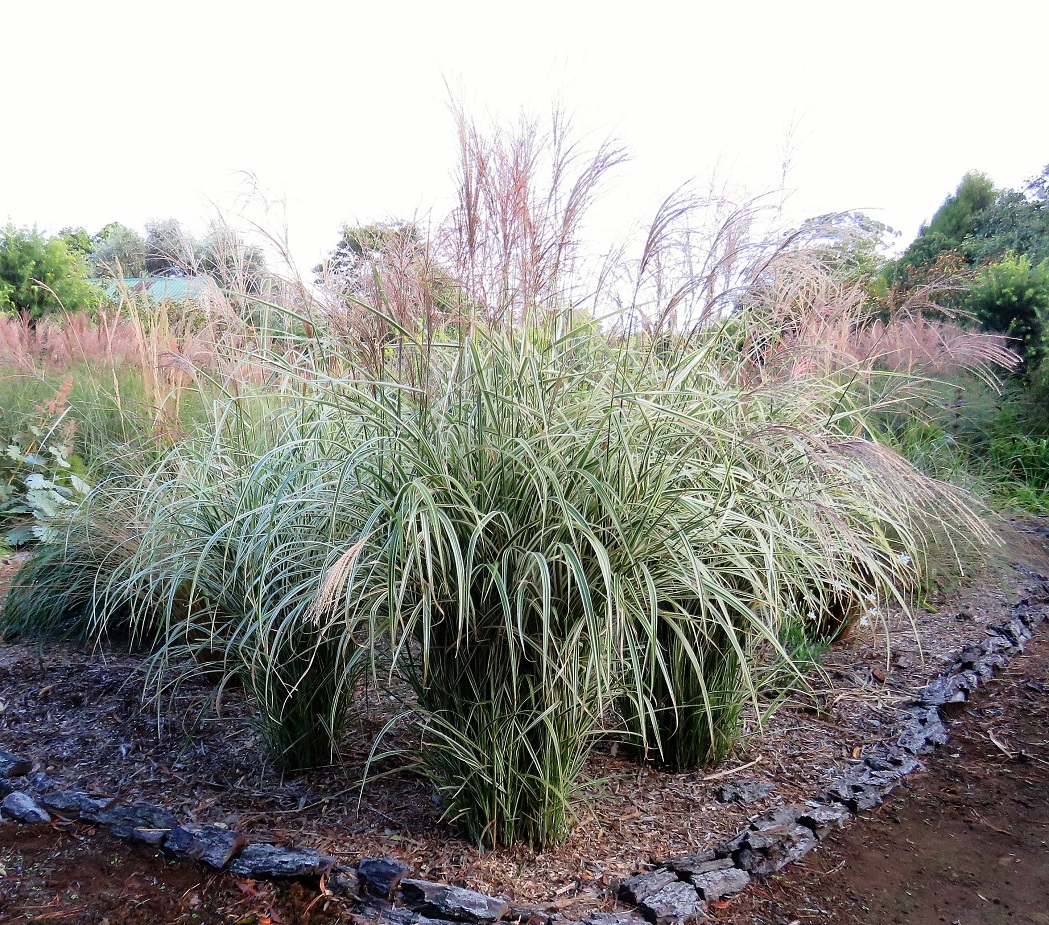


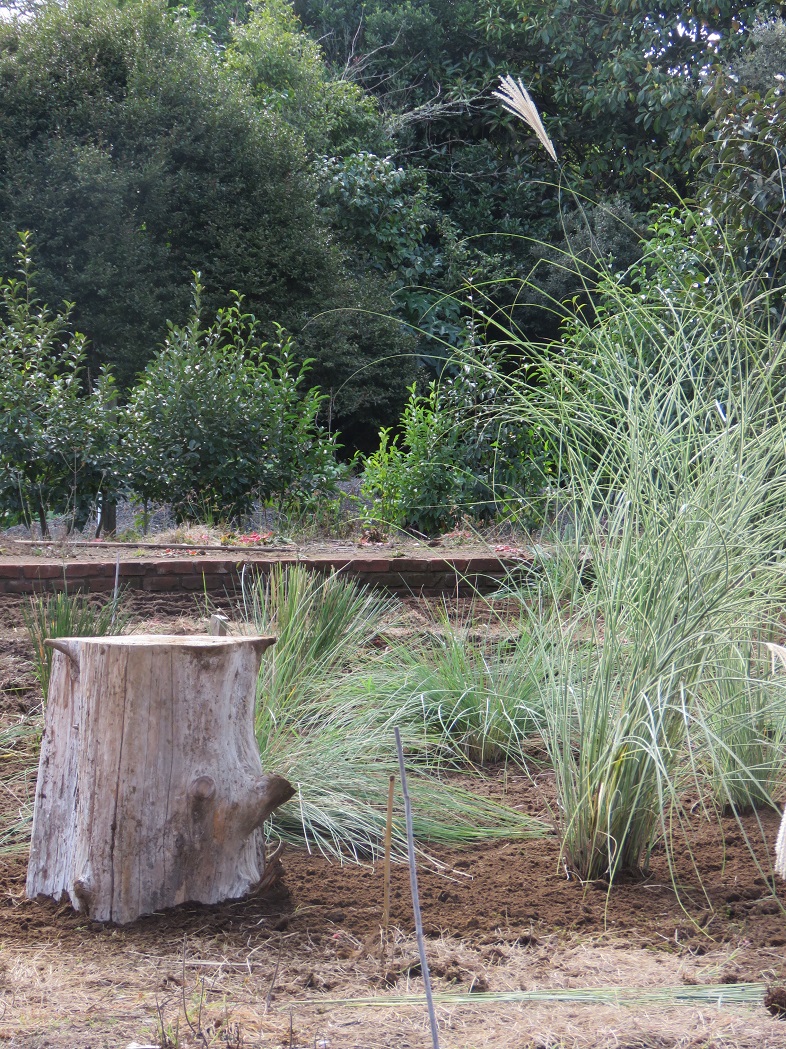 It is a blank canvas, what we refer to as the court garden, on account of it looking like a tennis court when it was just an open space. We have talked about it a lot, stood and looked at the space and mentally envisaged the possibilities – which were pretty much endless – for this open, sunny area. Having narrowed down the plan, I set about refining the plant palette and building up the material to go in. As Mark has observed in the past, ours started as a poor man’s garden. His father could not afford to buy in all the material to plant up the large garden across several acres so applied himself to raising a lot of it. These days, rather than a poor man’s garden, it is an economical couple’s garden. It would cost a lot to buy in all the plants needed to fill over 450 square metres and they would arrive as small specimens. I have been gently building up plants for a few years now so what are going in are reasonable large divisions. Instant effect, Mark calls it.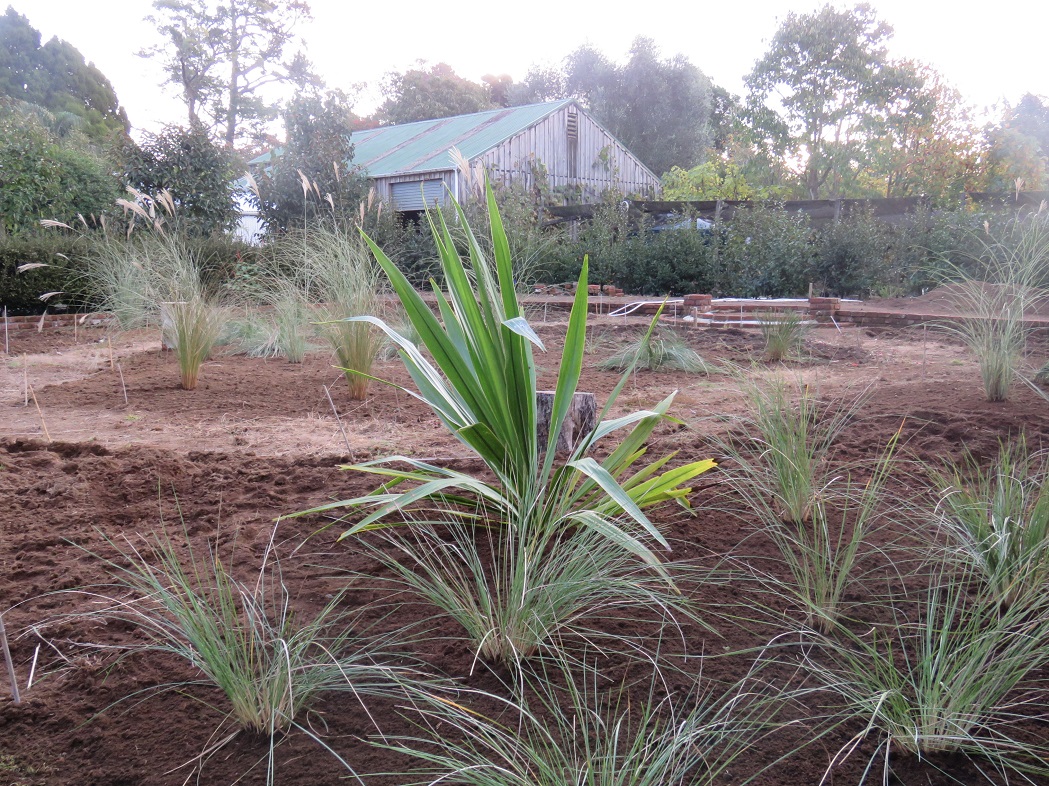

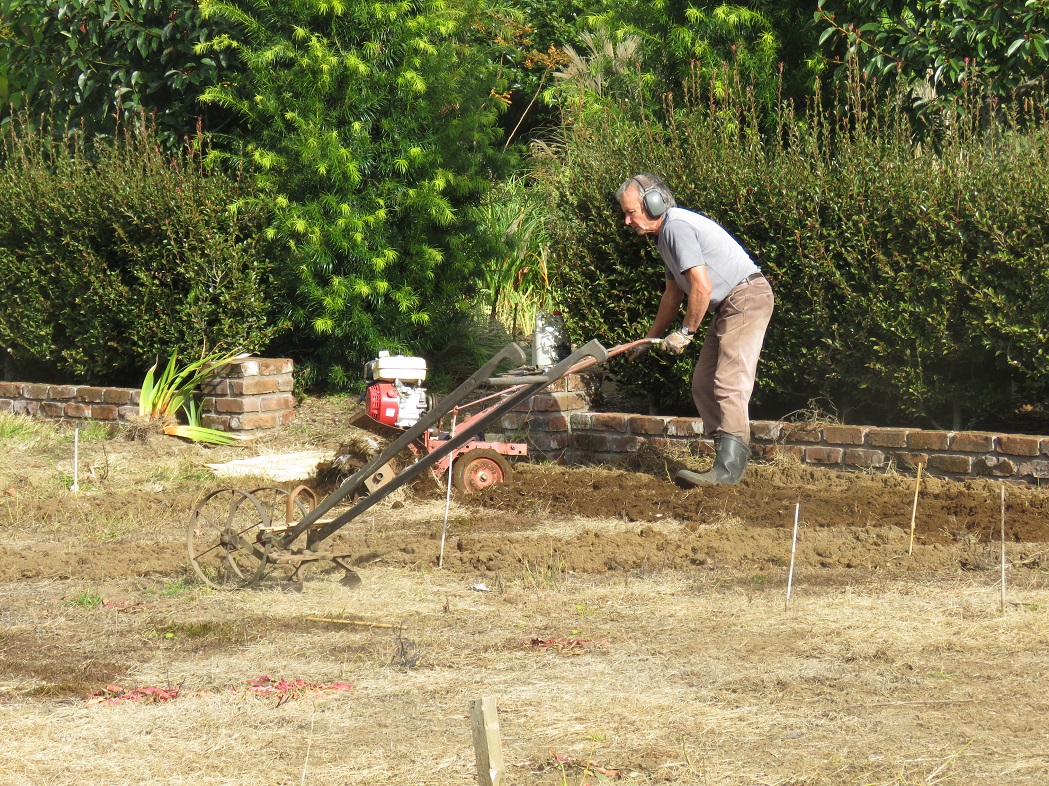
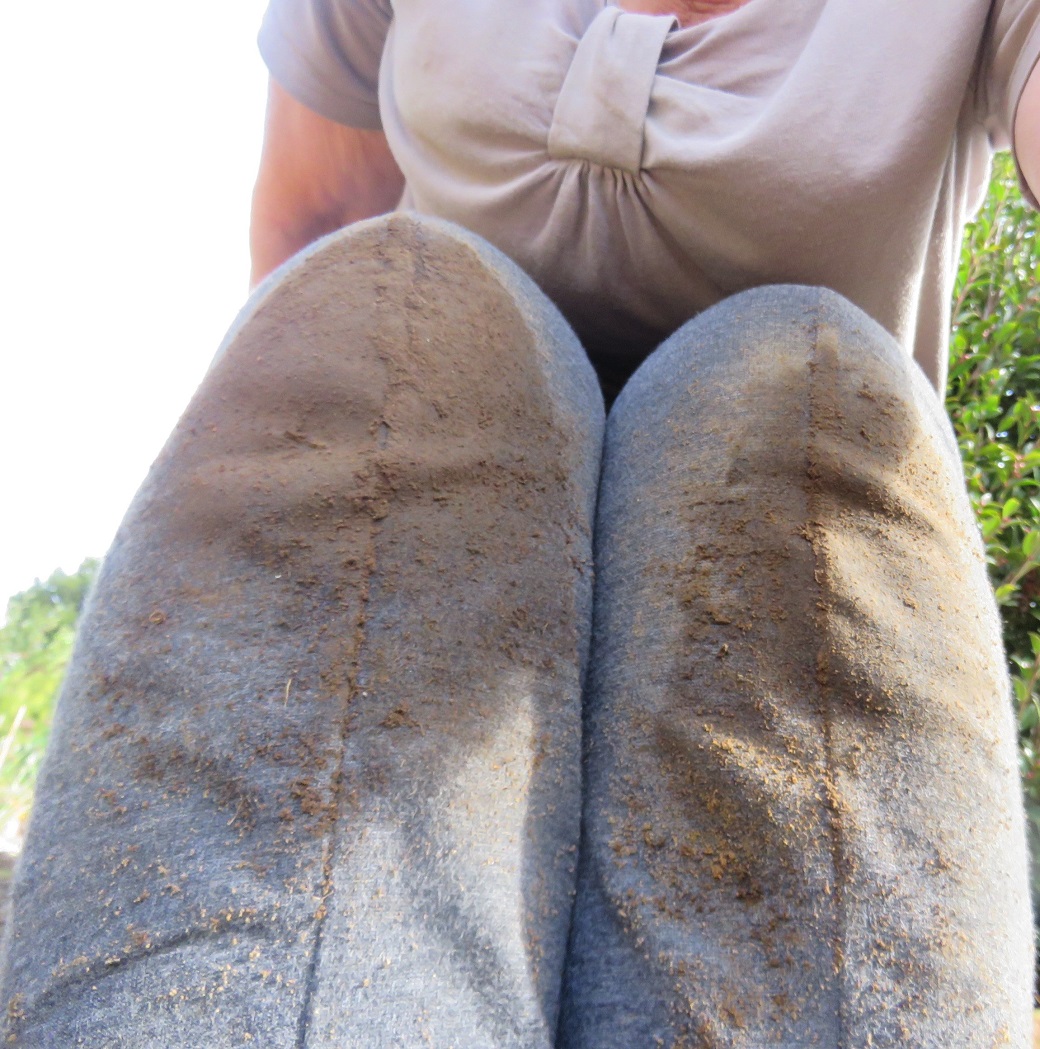 Postscript: I am a dirty-kneed gardener. Mark laughs at me and regularly tells me I should not be allowed indoors. Indeed, I often shed my trousers in the laundry before I enter the house. Don’t tell me about knee pads. I have tried them and they don’t suit me. I have an abundance of kneeling pads but unless it is wet, muddy and cold, I find it easier to wash my clothes than constantly re-position the kneeling pads.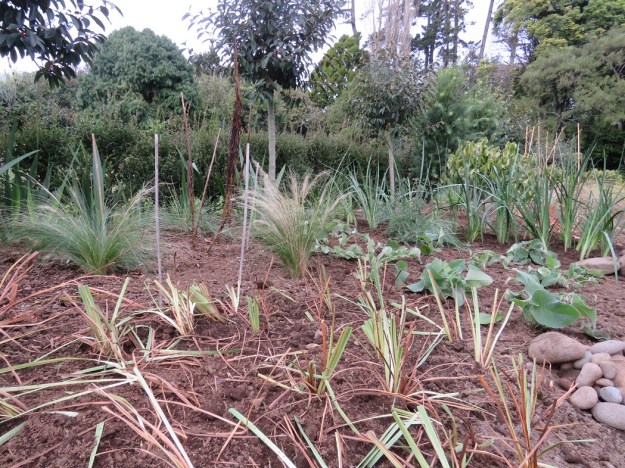






 Tikorangi The Jury Garden