Tag Archives: gardening

Pruning and shaping

Ulmus Jacqueline Hillier after pruning. For the avoidance of confusion, this plant is only 3m by 3m, not a forest giant.

Ulmus Jacqueline Hillier after pruning. For the avoidance of confusion, this plant is only 3m by 3m, not a forest giant.

I am married to a master pruner. I recognise his skills are hugely greater than mine. This was reinforced when he pruned the Ulmus Jacqueline Hillier at the weekend. This plant is meant to be a dwarf but it is looking less and less dwarf-like in our rockery and needs attention most years to keep it to a suitable size for that location.

At the end of the better part of half a day, he asked me how I thought it looked. In fact it looked very similar to how it had looked when he started. It is a plant with a lovely characterful shape and fan like sprays which hold the tiny leaves. There was close to as much lying cut off on the lawn as there was left on the shrub but you would not pick that. It had been reduced considerably in size and scale but had lost none of its form or shape. That is good pruning, dear Readers, as opposed to the butchery carried out by lesser mortals.

There was almost as much on the ground as left on the plant but you could not tell that by looking.

There was almost as much on the ground as left on the plant but you could not tell that by looking.

Such dedicated and meticulous pruning takes time, skill and sharp hand tools.

We joined a garden tour in the north of Italy some years ago and anyone who has visited those grand Italian gardens will know that most are clipped and shaped to within an inch of their lives. In fact they are so heavily clipped and groomed that plant health is often not that great. It is all about form and shape and very labour intensive.

Similarly, we have looked at the meticulous bonsai specimens in the Chinese gardens in Singapore. These are tended constantly by people with nail scissors, I kid you not. It may not be nail scissors exactly, but they were definitely nipping and snipping with scissors of some description. Surgical precision and detail. Again, labour intensive.

We lack the personpower here to carry out that sort of heavy clipping and shaping. Oh, to have a small army of serfs that we could upskill and then reward with a hovel in which to live and the occasional sack of spuds. But even then, we would not want a heavily contrived and clipped garden, preferring instead to go with some degree of natural harmony. It is all about degrees, however. Gardening involves a whole lot of management and manipulation to get desired effects.

Once the initial shaping and training is done, it does not take huge skill to maintain it. These are just camellias used as shapes in the garden.

Once the initial shaping and training is done, it does not take huge skill to maintain it. These are just camellias used as shapes in the garden.

Getting the initial shaping on plants is the skill, or bringing an over-sized specimen back to a more manageable size and shape. Once it is done, it only takes a moderate level of skill and care to maintain it.

I have watched Mark bring a wayward plant into line and that is why I am happy to concede his skills are so much greater than mine. He takes his time and he concentrates. He is up and down the ladder repeatedly (despite this playing havoc with a dodgy knee joint), viewing the plant from all angles at all stages. Major cuts are very carefully considered because you can’t glue a branch back on if you make a mistake. It is all about finding the natural shapes within the plant and highlighting those.

Frankly, it would often be faster to cut a plant out, even if it then involves major work removing stumps and roots. But if one forever removes plants when they get some size and maturity, then there is never a chance for them to develop character and the garden will remain perpetually juvenile.

All this comes back to the fact that we use plants as features and focal points in our garden, not ornaments. We prefer to clip a strategic plant here and there than to paint the outdoor furniture a different colour or place an urn.

First published in the Waikato Times and reprinted here with their permission.

Garden lore

“When Lord Teviot had despatched his letters, he found her in her garden,,, [it was] a first-rate gardener’s garden, every plant forming part of a group, and not to be picked or touched on any account; all of them forced into bloom at the wrong time of the year; and each bearing a name that it was difficult to pronounce, and impossible to remember.”

Emily Eden The Semi-Attached Couple (1830)

Dealing to wandering jew

Of all the pesky, invasive and difficult weeds to eradicate, wandering jew – also known as wandering willie or tradescantia – is right up there with the worst. It is usually impossible to eliminate in one hit and every single bit you miss or drop will grow again. Turn your back, and you will have a carpet of smothering foliage returning. It takes great persistence – either the removal of every single piece for alternative destruction or repeated chemical nuking.

Whether you are spraying or hand pulling, rake the top layers off first and remove. I hesitate to say send to landfill because I do not think that is what landfill is for. Piling it into black rubbish sacks, sealing them and then laying them on concrete under hot sun will kill it. Then you can compost the remains. If you are confident that you make a hot compost, you can put it straight into the heap but a cold compost mix won’t kill it. If you are not going to spray, then you just have to keep repeating this process.

If you are willing to spray, the bad news is that glyphosate is largely ineffective. You need a spray with the active ingredients of either triclopyr or amitrol. Grazon is probably the best known triclopyr brand but your garden centre will have other commercial sprays with these active ingredients. It will take at least two or three applications over several months to get rid of the regrowth.

Apparently this weed can cause terrible skin irritation to dogs and cats which is another good reason for eradicating it. Just don’t ever do it by chucking the bits over the fence. They will grow and return to your place to reinvade as well.

First published in the Waikato Times and reprinted here with their permission.
Plant Collector: Daphne genkwa

Daphne genkwa - as lovely as a flowering shrub can be

Daphne genkwa – as lovely as a flowering shrub can be

We only grow a few types of daphne in gardens although there are many more known species. Most are grown for their fragrance, rather than any spectacular display. D. genkwa is different. Once established, it is as spectacular as any flowering shrub in the garden and in a most unusual hue of lilac blue. Because it is deciduous, all you see in late winter or early spring are arching branches smothered in the prettiest of displays. The individual flowers don’t even look like the usual daphnes, being larger, more delicate and of different form with a long corolla or tube.

What it lacks is a strong scent. In fact I didn’t realise it had any scent at all until I put my nose right amongst the flowers. This one is grown for its looks. Genkwa is renowned for being difficult to propagate so is not widely available. It is generally done from root cuttings. If you can find one, plant it somewhere with plenty of space to grow – maybe two metres all round to accommodate its arching growth. I killed an established specimen by trimming it after flowering one year so the replacement plants, bought at some expense, will be left entirely to their own destiny. It has fine, light foliage so when not in flower, is just an anonymous border shrub.

First published in the Waikato Times and reprinted here with their permission.

Garden lore

I never had any other desire so strong, and so like to covetousness, as that one which I have had always, that I might be master at last of a small house and a large Garden.

Abraham Cowley The Garden (1666)

“There is a psychological distinction between cutting back and pruning. Pruning is supposed to be for the welfare of the tree or shrub; cutting back is for the satisfaction of the cutter.”
Christopher Lloyd The Well-Tempered Garden (1973)
018 (3) Garden lore – spring pruning

With spring now officially here – unofficially it arrived some weeks ago for many of us – it is the last call for hard pruning and clipping. The birds will be starting to nest and if you leave it any later, you will be carrying out the ornithological equivalent of mass infanticide. In addition to that, the sap will be starting to rise and it is generally better to prune when the plant is in a dormant or near dormant state. Grapevines in particular must be pruned right now. They weep for ages after pruning if you do it too late.

My definition of pruning and shaping is anything that requires a saw (be it a hand saw or chainsaw), loppers and secateurs. Hedge clippers, line trimmers and snips see you in the territory of clipping and shaping. If you are using a line trimmer on hedges or bushes in spring, do a check for nests first. Those mechanised tools are unforgiving and indiscriminate once they are going.

Raspberries and apples should also be pruned without delay.

First published in the Waikato Times and reprinted here with their permission.

The tyranny of monocultural gardening

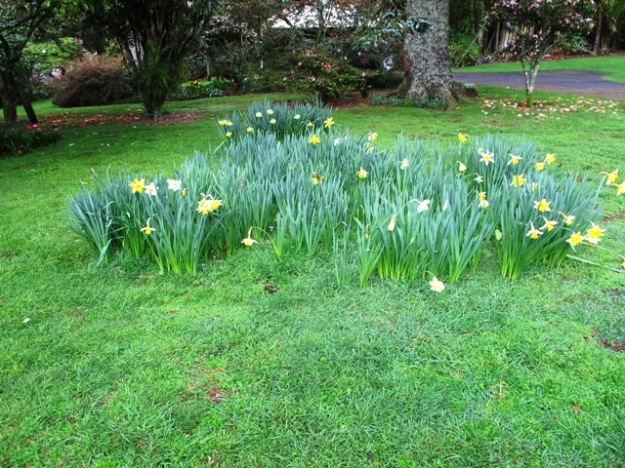
We have abandoned the tyranny of the perfect lawn

We have abandoned the tyranny of the perfect lawn

Monocultures. We have been talking about horticultural monocultures – the cultivation of a single crop on a large scale.

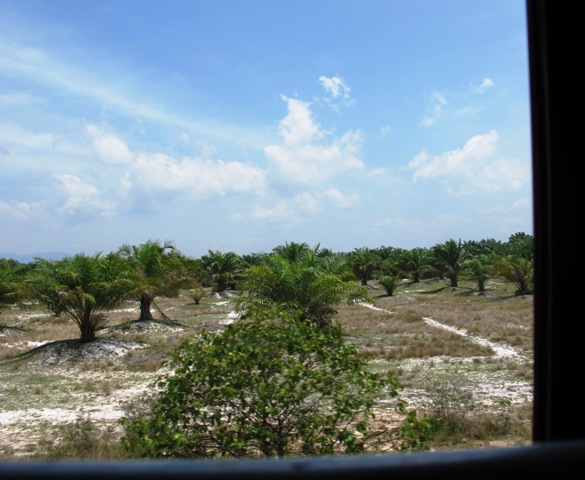
I saw a monoculture in Malaysia – palm oil. The accompanying photograph was taken from a moving bus and shows a relatively recent planting. As palm oil plantations go, it is not one where native forest has been cleared for commercial purposes and no orang-utans were endangered for this one – that is happening in Indonesia more than Malaysia. But palm oil is an extensive monoculture.

Palm oil - the increasingly common monoculture of some Asian countries

Palm oil – the increasingly common monoculture of some Asian countries

In this country, we have a localised but more extreme example of the risks of monoculture in our golden kiwifruit. As I understand it, that was not only one crop – it was one clone. That means that pretty much all the golden kiwifruit plants descended from the same original specimen. So when that plant selection succumbed to the dreaded Psa bacterial disease, it affected all plants equally and threatened the very existence of the crop. The race is on now to find clones which are resistant to Psa.

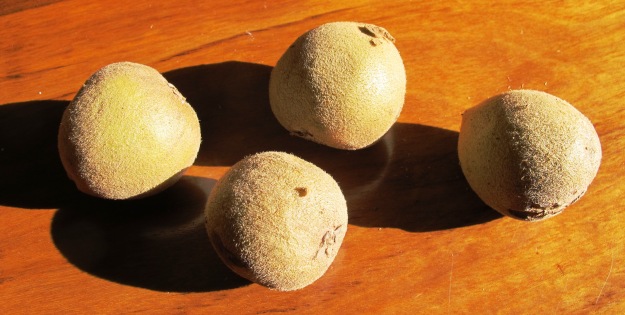
You can’t buy plants of golden kiwifruit in this country because that one clone that was used and the replacement clone are restricted to licensed commercial growers only. In recent years, Mark has been raising seedlings from fruit we have bought and this year we had minor harvests. Because this fruit does not grow true from seed (it needs to be vegetatively propagated), our seedlings will be genetic variations. The fruit so far is not of the same size and consistency of the commercial selection and the taste varies between plants but it looks as if we may have some viable options amongst the crop to keep ourselves supplied.

Raising our own selections of golden kiwifruit gives genetic diversity

Raising our own selections of golden kiwifruit gives genetic diversity

But where do monocultures fit in when it comes to a gardening context? Matched avenues of the same tree. Massed plantings of a single selection in the modern landscape style. Lawns. Of those, lawns are probably the only monoculture in a technical sense, but they are a major issue.

Matched avenues can look fantastic when they are at their best. They give a beguiling formality and structure to a garden or landscape. When they are at their best. The problem is that plants are living things and don’t always oblige by growing uniformly. I am sure some readers will be nodding in wry agreement. Then there is the problem if a plant dies. Matched avenues with gaps are nowhere near as pleasing. And you are faced with a conundrum. Do you leave the gap? Or replace it with the same plant selection which will almost certainly be a different size and stick out like a sore thumb for years to come? And how do you know that the affliction that killed the missing plant isn’t in the soil and therefore likely to attack the replacement plant as well? Replace the dirt as well, maybe? It is often difficult when things go wrong.

Many modern landscapers favour massed plantings of a single plant variety. It is a broad brush technique which can be visually effective, if you like that look. But if you have a problem, you end up with the acne look which is not so nice at all. A few dead lavenders amidst your simulated fields of Provence, massed rust-spotted renga renga lilies which look as if they have chicken pox – this can easily be your lot if you favour the monocultural approach. Or indeed, you may lose the whole patch at once which can be expensive when it comes to a quick-fix replacement.

Nature of course does not generally grow as a single species. In the wild there is often a dominant species but around that, there will be a host of other plants in a natural mixed colony. That is what makes it nature.

Nowhere do we fight nature more than in the highly valued lawn. There, it is often decreed, the only plants to be accepted are the selected grass species – often rye and fescue. Anything else is an interloper to be weeded or poisoned out. That is a never-ending battle yet we persist in demanding the perfection of the monoculture of lawn grass. Lordy lou but I was reading about an obsessive English gardener this week who is so proud of his lawn that he tends it constantly and mows it with pride six times a week! I looked at the photo – a bowling green style with five brown patches where he had clearly sprayed out weeds.

We have made the conscious decision to abandon this futile quest for lawn perfection. As long as it is green, fine-leafed and able to be mown, it can stay. Perhaps more controversially, Mark tells me that he has decided the flowering clover and self-heal can stay. He likes the patches of colour and the fact that these flowering lawn plants feed the bees and butterflies. We are headed down the mown green meadow path rather than the garden lawn. No monocultures here. The more experience we get in gardening, the more we favour a natural style which works with, rather than against, nature.

First published in the Waikato Times and reprinted here with their permission.