Tag Archives: gardening

Outdoor Classroom – pruning roses

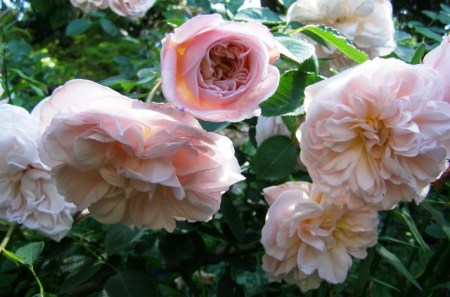
Cymbeline

Cymbeline

One size does not fit all with roses but there are some rules that apply to most rose types. Pruning stimulates growth so in colder areas, it is best left until later in August to avoid new growth getting frosted. In warmer areas, timing does not matter – from now on is fine.


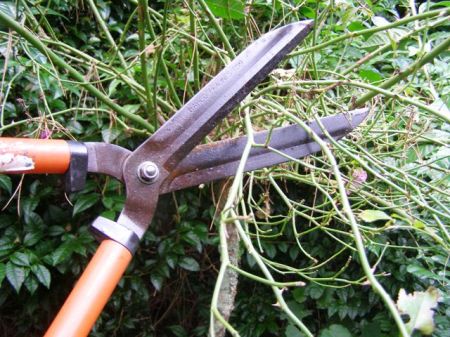
1) Bushy roses with lots of fine, twiggy growth (some standard roses are of this type also) can be given the once over shear with hedge clippers. It doesn’t look the tidiest when the cut ends then die back to the nearest leaf bud, but once they come into leaf there is little visible difference and it is much faster.


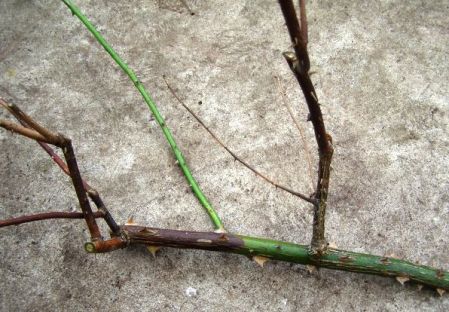
2) For more careful pruning, cut out stems with dieback, seen here in the dark brown stems.


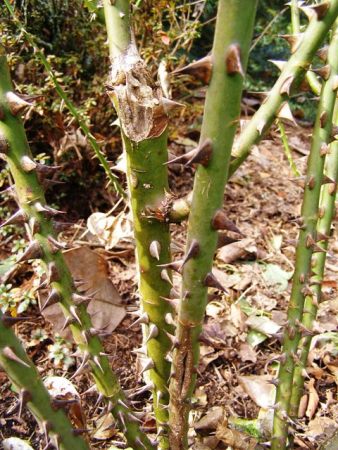
3) Cut out stems which show damage or cross and rub against each other, shown here in the two centre stems. The rubbing damages the bark and makes the plant more vulnerable to diseases getting in. Because roses do best with light and air movement, it is usually advisable to keep the middle of the plant open. Remove any spindly, weak stems.


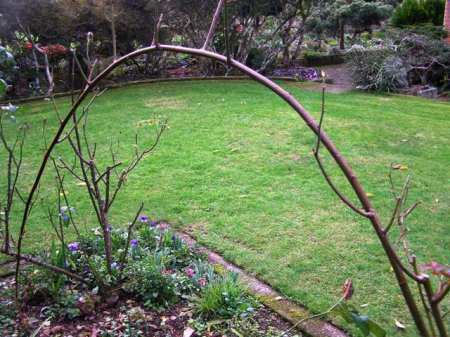
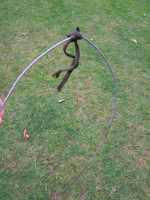
4) Some roses put on very long, whippy growths. Where space allows, arching these growths over and tying them down (I use hoops of wire and a soft tie) forces all the buds along the stem into growth and greatly increases the floral display. Similarly, tying a climbing rose to a horizontal line, encourages that stem to flower all the way along rather than just on top.


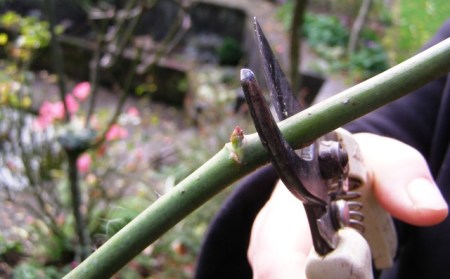
5) Shorten the remaining stems back to a leaf bud (if you leave too much past the bud, it will die back to that level anyway) and pick a leaf bud on the outside of the stem. This is because the new shoots will follow that direction and you want them growing away from the plant and not crisscrossing the middle. Angling the cut away from the bud encourages the water to run off. Make sure your secateurs are sharp and cut cleanly, not crushing the stem.


6) All advice is to use a copper spray after pruning to help fight fungal diseases. We have yet to do this (we don’t spray our roses at all) but the advice comes consistently from those who know more about roses. It will also help reduce the build-up of lichens and mosses on the stems and the base. Copper hydroxide is different to copper oxychloride so follow the application rates on the packet and do it at winter strength.

The Bad Tempered Gardener from the Welsh borderlands

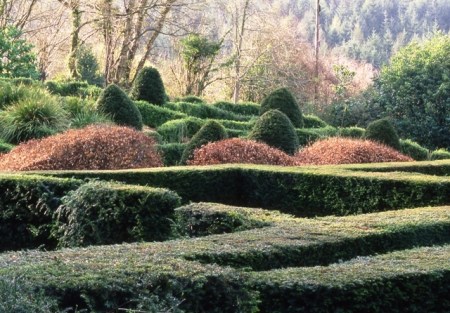
Veddw, the garden of Anne Wareham and Charles Hawes (photo copyright Charles Hawes)

Veddw, the garden of Anne Wareham and Charles Hawes (photo copyright Charles Hawes)

Anne Wareham (photo credit Charles Hawes)

Anne Wareham (photo credit Charles Hawes)

Anne Wareham had my attention from the first page of her book, bravely titled “The Bad Tempered Gardener”. Her second sentence opens:

I have to make my way in a world which is totally alien to me. A world where people are inevitably passionate, always ‘green’ and always terribly concerned about the little furry things….

She continues:

I began to get tired of hearing every garden described as ‘lovely’. I visited many of them and often found them to be banal and uninspired. I began to wish for writers who would tell the truth about the gardens and gardening and found only ‘garden stories’ and discussions of gardening techniques…. The problem is the fond idea that gardening is inevitably nice but dull…. ”

What is interesting about Anne Wareham’s work is that this is contemporary thinking about gardening from a hands-on perspective. I have also been reading Vita Sackville West’s collated newspaper columns from the early 1950s. She is renowned for creating the garden at Sissinghurst. There has been a proud tradition of garden writing by gardeners – Russell Page, Beth Chatto, Penelope Hobhouse and other great names, particularly in the world of English gardening. Not to put too fine a point on it, they are all either elderly or dead. Where is the current thinking?

Garden writing at this time seems to fall into three categories. There are academic treatises out of institutions where gardening has been hijacked by higher status landscape design. Then there are all the novice wannabe books which are of no interest at all to the serious gardener. All that breathless naivety and ingenuous enthusiasm wears very thin if you are not in the target demographic. The rest tends to be either prosaic description or praise in purple prose. There is no attempt at critique and very little in the way of ideas.

Apparently it is the same in the UK though I did think that the writer of the BBC Gardening Blog was guilty of gross hyperbole when he or she babbled of this book that: “Everyone, but everyone has been talking about possibly the most controversial book ever written about gardening.” It is not that radical and actually slots quite nicely into the tradition of garden writing. It is thought provoking and a breath of fresh air.

That said, it is not highly polished and the forty five chapters stand independently, almost as if they are a collation of pieces published previously, though there is no reference to this being the case. So there is not a cohesive argument but more a case of recurring themes. What I can tell about this book is that there is a great deal of thinking time that has gone into formulating the ideas and opinions. The author has two acres of intensive garden which she started from scratch and two acres of woodland which she maintains with her husband. Much of gardening is repetitive and takes little concentration so there is a lot of solitary thinking time. It takes one to know one. It is how I operate so I recognise it in someone else. And I have never before read a book where I have so often felt as if I was in conversation with the author. I kept wanting to say: “Exactly. I wrote about this very thing here.” Whether it is water maintenance, show gardens, rose gardens, scented plants, the impact of devaluing the garden visit experience by bringing it under the amateur and charitable banner, the hyperbole of garden descriptions – this is all familiar territory.
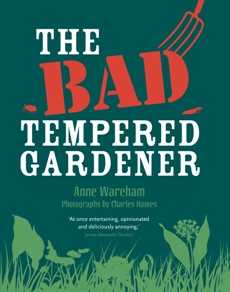
The Bad Tempered Gardener by Anne Wareham

The Bad Tempered Gardener by Anne Wareham

Thought provoking chapters are interspersed with short pieces on plants. These have little relevance in New Zealand. Erigeron is that highly invasive daisy that is actually on the banned list here. Tulip mania has never struck this country in the European manner (to buy fresh bulbs every season seems profligate). Alchemilla mollis is not the easy, frothy plant here that it is in the UK. These are just little interludes, breathing spaces, between the more opinionated pieces. Of interest are the chapters on the creation of her own garden, Veddw, on the Welsh border and the principles which drove her in design and plant selection. We are not in agreement on plants, but that is fine. To disagree with a well thought out and strongly held position challenges one’s own thinking.

Best guess is that the author has cultivated a certain prickly persona. I doubt very much that she is inherently any more bad tempered than the rest of us. The title of her book is probably as much a nod to the late Christoper Lloyd (he of Great Dixter fame) with his book titled “The Well-Tempered Garden” and maybe to Germaine Greer. Readers here may not be aware of the latter’s enthusiasm for gardening. She wrote a newspaper column under the pseudonym of Rose Blight and a collation of these were released in book form under the title of “The Revolting Gardener”.
Indeed, I am wondering about extending the theme with my own book – “The Opinionated Gardener”. Don’t hold your breath, however. I am unlikely to find a publisher any time soon.

I sourced my copy through Amazon though Touchwood Books or good bookshops will be able to order it in. As far as I know it is not on the shelves in this country.

The Bad Tempered Gardener by Anne Wareham. Photographs by Charles Hawes. (Frances Lincoln Ltd; ISBN: 978 0 7112 3150 4).

The reflecting pool at Veddw (instructions are in the book). Photo credit: copyright Charles Hawes

The reflecting pool at Veddw (instructions are in the book). Photo credit: copyright Charles Hawes

First published in the Waikato Times and reproduced here with their permission.

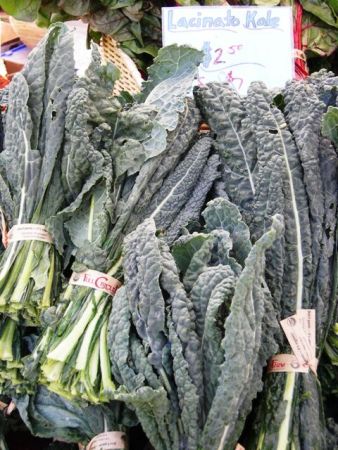
Grow it Yourself: Cavolo nero (Tuscan black kale)

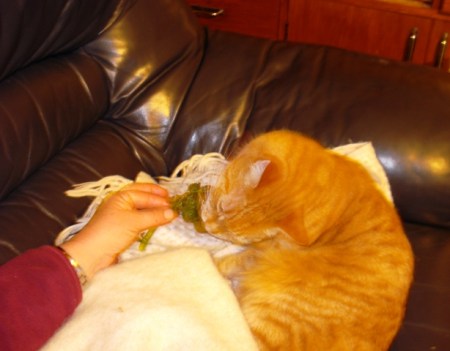
Buffy, the contrary cat, tries to convince us that kale is delicious

Buffy, the contrary cat, tries to convince us that kale is delicious

Cavolo nero - photo Joe Mabel

Cavolo nero – photo Joe Mabel

In the odd world of fashionable vegetables, Cavolo nero ranks high enough to be showing in trendy recipes, putting it above even options like cardoon and burdock. It is a kale, a member of the brassica family, but coming from Italy and being of an interesting appearance, it is seen as a sophisticated option. It does not form a heart but instead has very long leaves in a palm-like formation, heavily crinkled or puckered (like a Savoy cabbage) and blackish green in colour. We tried growing kale one season but found it tough and unappealing. Mark commented that there may be reasons why our forbears preferred other brassicas to kale. Our cat at the time, the contrary Miss Buffy, confounded us by eating the cooked kale we rejected, but that should not be taken as an affirmation of taste and texture. Kale is very hardy and reliable in conditions where even other brassicas struggle.

Despite its unusual appearance and trendy reputation, Cavolo nero is a typical brassica – cold hardy, will hold in the winter garden but best avoided for mid summer growth because it is just as vulnerable as others in the family to white butterfly and aphids. You are unlikely to find plants for sale so will almost certainly have to start with seed. You can source seed from Italian Seeds Pronto or Kings Seeds. If you are really keen, you could try an early spring sowing for harvest two months later though it is more commonly sown in late summer to grow through autumn and to hold in the garden for winter harvest. Frosts are reputed to intensify and sweeten the flavour, somewhat akin to swedes, but some of us think this may have more to do with wishful thinking.

First published in the Waikato Times and reproduced here with their permission.

Plant Collector: Picea albertiana 'Conica'

Picea albertiana 'Conica' after a mere 20 years

Picea albertiana ‘Conica’ after a mere 20 years

“So how old is the small Picea albertiana ‘Conica’?” I asked. “Not very old,” he replied. Then we worked out that this little specimen, under 2 metres high, is in fact over 20 years, whereas the big one (a scaled up version about 4 metres high) is 60 years old. Time can fly in the garden.

When conifers fell from grace after their heyday in the 70s, we threw some babies out with the bathwater. P. albertiana ‘Conica’ is a dwarf sport from the timber tree, Picea glauca. Glauca just means blue, and the fine foliage of the dwarf form retains a blue-grey hue. P. glauca is commonly known as the white spruce growing naturally right across from east to west of the northern states of USA, Canada and even Alaska. It is a valuable timber tree. You would be waiting a long time to get any timber out of P. albertiana ‘Conica’. In fact it is such a slow grower that it is a favourite candidate for bonsai. Our two specimens are in our rockery and the perfect icecream cone shape that gives them a wonderful silhouette. The leaves are fine, short needles, densely packed. I always want to put stars on top of them at Christmas.

That said, they may be on borrowed time. Coming from a very cold climate, they survive here because Mark is willing to treat them each year for red spider. These are two of the only plants in the garden he still sprays. If we get much more purist in our quest to garden without chemical sprays and fertiliser and shun treating even these, they are likely to kark it over time. We know this because the one in our park that he didn’t get around to spraying died. I would miss their tight cones.

Organic Gardening Bible by Bob Flowerdew

If the rather grandiose title makes you raise your eyebrows, the subtitle is more modest: “Successful growing the natural way”. Bob Flowerdew has been gardening organically for 30 years and is a well known radio contributor (BBC Radio4 Gardeners’ Question Time), author and sometime television presenter.

Pare down organic gardening and take it away from the faith based aspects (lunar planting, biodynamics, reverence for heirloom varieties, romantic interpretations of times past, even interlocking with astrology and homeopathy) and what you end up with is the unvarnished reality. Quite simply, to be an effective organic gardener, you have to be a good gardener following sound environmental practices because when things go wrong, you don’t have the option of falling back on chemical intervention. If you get it wrong, you won’t get a harvest.

Bob Flowerdew takes organic gardening back to the basic principles of sustainable gardening with a common sense approach. He does not try and pretend it is all wonderfully easy and anybody can do it at the drop of a hat. Modern aberrations like tomato grow bags and raised bed potagers do not make an appearance. It takes time and practice to learn how to be a good gardener though good advice can help short circuit some of the common mistakes. There is information about which plants fix minerals in the soils, on the pros and cons of various companion planting options, green crops and which ones are recommended in various situations and at different times of the year. This is the first time we have seen mention of the effect green crops can have on crop rotation. For example, mustard is a brassica and that has to be factored in to planning. The author’s preferred fallback option is miner’s lettuce (Claytonia perfoliata). The focus is on creating healthy and rich micro environments within your garden. There is a wealth of information contained in the 270 pages (and large format at that), with a comprehensive index at the back. However, we were surprised at the absence of information about the importance of carbon in maintaining soil health. Not even traditional charcoal got a look in.

That aside, if you want good, sound information on organic gardening methods without the smoke and mirrors that too often accompany such books, this is a good place to start. It is just a shame it is English and geared to a colder climate. That is its major drawback for New Zealand gardeners in warmer conditions.

Organic Gardening Bible by Bob Flowerdew (Kyle Books; ISBN: 978 0 85783 035 7) reviewed by Abbie Jury.

First published by Waikato Times and reprinted here with their permission.