Tag Archives: gardening

Plant Collector: Cyclamen purpurascens

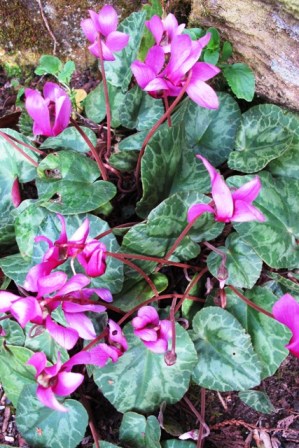
Cyclamen purpurascens seems to be in flower pretty well all year

Cyclamen purpurascens seems to be in flower pretty well all year

We are big fans of the species cyclamen and C. purpurascens is starring as a garden plant. Astoundingly, this patch in the rockery flowers almost twelve months of the year and doesn’t go dormant. Most of the species cyclamen are from Southern Europe through to North Africa and are therefore used to distinct wet and dry seasons and often poor, stony conditions. C. purpurascens has a far wider distribution into Northern Europe where it is more of a woodland plant, often found growing naturally in beach forests.

It appears that we are quite lucky that our form of this cyclamen is good, clean cerise colour as it is sometimes found more in muddy pink shades but like most species, the colour can vary across the spectrum of pinks and very occasionally turning up in white.

C. purpurascens has typical heart shaped leaves, dark green mottled with silvery white markings. It grows from a round, flat tuber as do other cyclamen. Given its wonderful performance as a garden plant over several years here, the only downside is that it sets very little seed. This will be why you don’t see it around much. The common C. hederafolium sets seed freely and naturalises readily if given the chance whereas we have to be vigilant to spot the occasional seed on C. purpurascens. If you can find it, give the tuber cool, moist growing conditions which are rich in humus. Moist does not mean permanently wet – which may rot out the tuber. We have it growing on the shady side of the rockery.

First published in the Waikato Times and reprinted here with their permission.

Grow it yourself: aubergines

GIY – aubergines

Goodness knows why these are described as eggplants – some varieties are egg shaped? The texture can be a little like an over-boiled egg in its shell? Aubergine is a much more attractive name for what is widely seen as a sophisticated vegetable, showing up ever more frequently in modern NZ recipes. The problem with aubergines is getting your timing right because they need maximum heat all summer long. Essentially you need three to four months of warm weather to get a worthwhile harvest and, being a plant from warm climates, it will succumb as soon as temperatures drop in autumn. For most of us, this means starting the plants in pots under cover so they have some size before planting them out when soil temperatures rise in November. You can either buy a few plants from the garden centre or start from seed. If you choose the latter, you may do better if you go for quicker maturing varieties with smaller fruit.

Aubergines are solanums along with potatoes, capsicums and tomatoes but they are not as easy to grow. They like humus rich, friable soils in full sun. Once you have planted them out, treat them like a capsicum or even a tomato. They may need staking if they start to fall over. They will benefit from early pinching out of new shoots to encourage them to be bushy. They will need watering in dry summer times. But the bottom line is that you don’t have established plants in the ground by the beginning of December, you have missed the boat.

First published in the Waikato Times and reprinted here with their permission.

In the Garden – May 10, 2012

A fortnightly series first published in the Weekend Gardener and reproduced here with their permission.

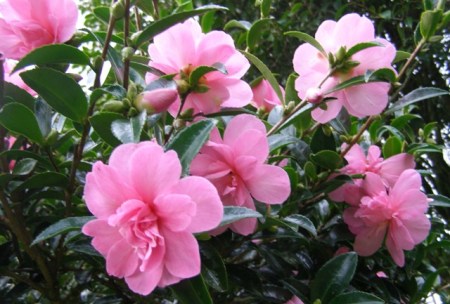
Sasanqua camellias do not have to be white - pink Elfin Rose

Sasanqua camellias do not have to be white – pink Elfin Rose

We are grateful that we live in such a mild climate where we don’t have to put our garden to bed for winter. Instead we can have plants flowering all year round and continue active gardening, even in the coldest months. At this time, the autumn flowering sasanqua camellias are in full flight. One of my particular favourites is pretty “Elfin Rose”. Too often, people get hooked on white sasanquas but strawberry pink is very cheering on a grey day. “Elfin Rose” also has a long flowering season and wonderful forest green, fine foliage. By contrast, our “Mine No Yuki” looks magnificent for a week, or until we get some heavy rain which turns the pristine white blooms to a disappointing brown mush.

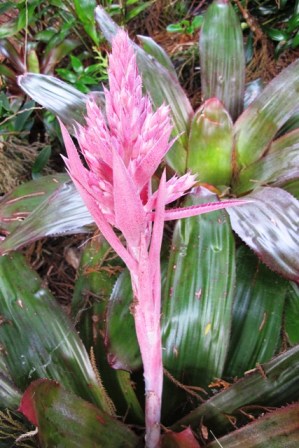
We have vireyas in flower all the time. If you have plenty, there are always some blooming because these rhododendrons don’t have a set flowering season. However, they don’t tolerate more than a degree or two of frost, so you need protected sites. We also have bromeliads in bloom looking wonderfully exotic while the late autumn bulbs continue to delight. Somewhat to our surprise, the first snowdrops appeared in mid April. Maybe our disappointing summer means winter will bypass us this year? The impatiens, which are fully perennial in our woodland area, will continue in flower until the worst of the winter chill cuts them back. While we wouldn’t mind being a degree or two warmer overall, it seems churlish to complain about the colder seasons here.

Bromeliad in flower now

Bromeliad in flower now

Top tasks:
1) The winter and spring bulbs are well on the move and many are through the ground. We need to ensure that they don’t get completely smothered by a build up of autumn leaves and to keep an eye out for marauding slugs and snails.
2) Sadly, it is time to put the outdoor furniture away for the season. It lasts a lot longer if we don’t leave out to the elements when we are not using it.
3) Continue the autumn clean up round on scruffy perennials. We make hot compost so we can put seeding plants through the compost heap but it is not to be recommended if your compost never gets hot enough to kill the seeds and any mildew or blight.

Passing the sniff measurement test – fragrance in the garden

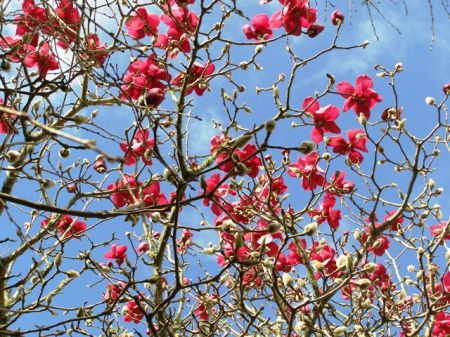
Magnolia Vulcan - spectacular and magnificent in flower but too far up to ever smell

Magnolia Vulcan – spectacular and magnificent in flower but too far up to ever smell

When I entered my teens, my mother gave me a book on charm. I can only recall two pieces of advice from it, though I read it time and again. One was to err on the side of restraint – that one white accessory with a little black dress may be stunning but three or four are bitsy (think Audrey Hepburn-esque style). The second was not to apply perfume before 10am. Until mid morning, the subtle scent from one’s morning bath should carry one through and to add perfume on top is heavy handed and inappropriate. Understatement was an integral part of charm in the sixties.

It was the perfume rule that had me thinking (though the merit of subtlety in accessorizing is a handy rule of thumb and not just for clothing). In years of plant retailing, I met a scary number of people – always women – who would only buy a plant if it was fragrant.

As a defining attribute, I think fragrance is over-rated and doesn’t stand up to logical scrutiny. It is different in cut flowers. The wafting fragrance from a vase of flowers indoors is a delight but even then you need quite a large amount of very fragrant flowers to scent an entire room.

Seriously, apply the sniff test in the garden if you are obsessed with growing scented plants. There are not that many plants that will pass the metre sniff test – that is, able to perfume the air a metre beyond the plant and that usually requires a warm, calm day. Some daphnes will do it, as will the rare Michelia alba and proper orange blossom.
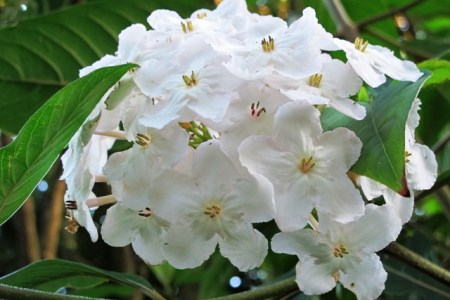
Luculia Fragrant Pearl - passing the 50cm sniff test

Luculia Fragrant Pearl – passing the 50cm sniff test

Come in a little closer and there are a range of plants which will tease you with a hint of fragrance as you pass by – philadelphus or mock orange blossom, luculia, auratum lilies, the stronger scented jonquils. But if you stop and immerse your olfactory organ (that is your nose) in the reproductive organs of the plant (that is the flower), there is a very strong perfume.

Therein lies the problem. Generally you have to stop and sniff a flower to get a true sense of its scent, or, in many cases, any scent at all. And nobody goes around their garden sniffing each and every flower every time. So the presence of perfume is often irrelevant in practice.
Some flowers are so subtly scented that you need the right conditions to get any fragrance at all. Scented camellias are of this ilk, but the public romanticism is such that merely advertising this attribute will help sales. I know.

Then there are plants where scent is related to time of day. How many people have bought the common port wine magnolia (Michelia figo) because of the promise of heady scent, only to be disappointed? The flowers are small and insignificant, the scent comes in late afternoon to night so you won’t get a whiff of anything at other times, and then the actual aroma is closer to the old Juicy Fruit chewing gum than anything else.

The bottom line is that plants have not evolved with scent to please humans. So there is no guarantee that the biggest, showiest and brightest blooms will also have the best fragrance. More often, the scent is there to attract pollinators so it is frequently linked to rather small, insignificant blooms which might otherwise pass unnoticed. There are a whole lot of scented rhododendrons and, almost without exception, they are white or pastel coloured. Bright flowers don’t need scent to attract their pollinator when they do it by colour. Night scented plants are generally pollinated by night flying insects so they don’t need to be fragrant during the day and they don’t need size and colour.

Floral scent is delightful and much appreciated. No synthetic scent can match the best natural fragrances. But those natural scents are by their very essence ephemeral. To extend their life, you have to capture the scent in oils, perfumes, pot pourri and the like. To make it mandatory that a plant be scented before you will buy it, is to elevate one characteristic beyond its merit. I regard scent as a bonus but first and foremost, a flowering plant must be interesting, attractive and appropriate to the position.

And when the next person asks me whether such and such a magnolia is scented, I may weep. We grow many magnolias here and revere them above other flowering trees. Many of ours are large now, and I can safely state that I have never stood beneath a large magnolia in flower and been amazed at the heady fragrance. Stick your nose in the flower and some are pleasantly scented, but that is pretty hard to do when the flower is five metres up the tree. Who cares when the floral display so astounding? Must the lily be gilded further with compulsory scent?

Plant Collector: Metasequoia glyptostroboides

Metasequoia, commonly known as the dawn redwood

Metasequoia, commonly known as the dawn redwood

Most people know this by its common name, the Dawn Redwood, though this can cause a little confusion if you mentally associate the massive redwoods with North America. Those are the sequoia and sequoiadendron whereas the metasequoia is a Chinese plant (though botanically related). It wasn’t even identified and recorded until the 1940s, which is very late in the piece for botanical discoveries, certainly of something that large. For it is a very large tree – this specimen must be nigh on 30 metres now. We understand this specimen was planted in the mid 1950s here. Seed was sent from China to the Arnold Arboretum in the USA in 1948, just before China closed its borders for decades, and the arboretum then dispersed it around the world to ensure the survival of the species. So our tree must be one of the older ones in cultivation outside its native habitat, though is a mere baby for what is a very long-lived tree.

The other aspects that make this tree really interesting are that it is a conifer (bears cones) but it is deciduous. There are very few deciduous conifers. The leaves are turning colour now and will fall soon. In spring, the fine, feathery foliage (described as pinnate) emerges in bright green and garden visitors invariably ask us to identify the tree. It also has magnificent shaggy brown bark which is wonderfully tactile. It is just not a tree for suburban back yards but where space allows, it is a most handsome landscape specimen. It likes adequate moisture and we have it growing by a stream, but it is not as tolerant of wet roots as the other deciduous conifers, the taxodiums and glyptostrobus.

First published in the Waikato Times and reprinted here with their permission.