Tag Archives: gardening

Tikorangi Notes: Friday October 14, 2011

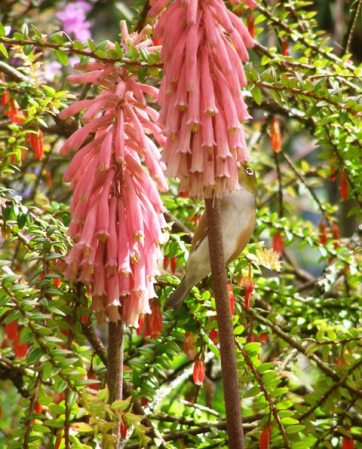
Feeding from both the veltheimia and the agapetes

Feeding from both the veltheimia and the agapetes

Latest Posts:

1) ‘Tis spring – must be rhododendron time. R. johnstoneanum “Ken Burns” in Plant Collector this week.
2) A call for more rigour and less fervour in Abbie’s column this week – what used to be called The Good Life (courtesy of Felicity Kendall and whover Briars – was it Richard?) but is now styled Green Urban Living.
3) Grow it Yourself – beetroot this week.
4) Tikorangi Diary and notes about half price clearance special on most magnolias.

Tikorangi Notes:
I was delighted by the sight of the little waxeye gathering nectar from the veltheimia flowers outside my office window. We often see them working the Agapetes serpens (which I describe as the waxeye bush, for its ability to feed the birds) but this is the first time I have seen one feeding on the veltheimia which looks better suited to humming birds because of its very long, tubular flowers. We do not have humming birds in this country which has always seemed a bit of a pity to me. We would gladly trade blackbirds and sparrows for humming birds.

Rain has not helped the garden preparation this week – our annual festival (now styled the Powerco Taranaki Garden Spectacular) starts in a fortnight so the pressure is on. I did feel sorry for the tour group here on Wednesday when it was hosing down but at least it wasn’t windy or cold! The magnolia season is drawing to a close with only Serene looking picture perfect now. But the michelias (now also reclassified as magnolias) have a longer season. The first of Mark’s new series, Fairy Magnolia Blush, is looking particularly pink this year. Indubitably pink which, in the world of white michelias, is pretty remarkable. More rhododendrons open every day though the maddenii and nuttallii types are generally later flowering and won’t be doing much for another fortnight. The garden is open every day now and we are generally around for plant sales – sound the car horn if we do not appear because we will be in the garden.

Indubitably very pink this season - Fairy Magnolia Blush
Indubitably very pink this season - Fairy Magnolia Blush

Grow it Yourself – beetroot

Beetroot is enjoying something of a renaissance these days. It has gone beyond the large tinned slices which made sandwiches and hamburgers soggy, as it has progressed past being grated and set in vinegar flavoured jelly. These days you are more likely to find baby beet, golf ball sized, served with fresh curd cheese and toasted fresh walnuts in upmarket lunch dishes or flavoured with balsamic vinegar and roasted. The good news is that it is a root crop which is dead easy to grow at home and fresh young beet will always taste sweeter and more delicious than woody old things you may have tried in the past.

Being a root crop, it likes well drained, friable soils which are not too rich in nitrogen. Usual practice is to sow it in a spot where you previously grew a green, leafy crop. The seed is usually sown directly into the ground. Cover them with about 2cm of soil. As they germinates, go through and thin the crop – these thinnings are delicious and often found in salad mixes. Essentially you want to reduce the crop to allow about 10cm spacings between each plant to give them room to develop the tubers. Do not expect good crops if you miss the thinning process. They take about two to three months to mature. This is not a time specific crop. You can sow any time between early spring to mid autumn (about September to April), though you may find the summer crops bolt to seed too readily, especially if the soils are dry. Chief Veg Grower here advises that he prefers to keep to spring and autumn sowing because there are plenty of other more time sensitive crops to fill the garden in summer. Root crops appreciate plenty of moisture to develop juicy roots. Left too long in the ground, they will become large, old and woody. It is better to harvest them, remove the leaves and store in cool conditions – this will probably have to be the fridge in summer. With the rise in popularity, there is now a whole range of different varieties available with variation in both shape and colour, even a cerise and white candy ringed version.

Tikorangi Diary Thursday 13 October, 2011

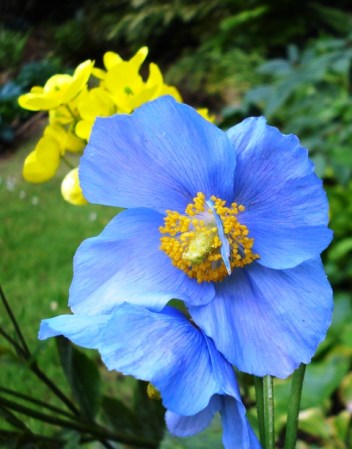
Mark's meconopsis available again

Mark's meconopsis available again

As we hurtle into spring, the pressure is on to get the garden all groomed up and ready for our annual garden festival at the end of the month. This means we are around most of the time so plant sales are not restricted to just Fridays and Saturdays. If you come in and can’t find anyone, please sound your car horn. We have Eftpos available (but not credit cards).

Half price on most magnolias (while stocks last). This includes Vulcan, Burgundy Star and Black Tulip but not Felix Jury (which is in short supply). It is nearing the end of the season – the plants would be happier in your garden than in our nursery. There are about a dozen Magnolia grandiflora “Little Gem” left at the bargain basement price of $12 (but the Camellia Jury’s Yellow have gone). Magnolias are listed under Plant Sales on our website but not with sale prices – halve them. This offer includes good plants of Fairy Magnolia Blush – if you have been planning a hedge of them, now is your chance to do it at a very reasonable price.

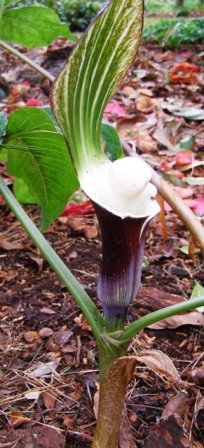
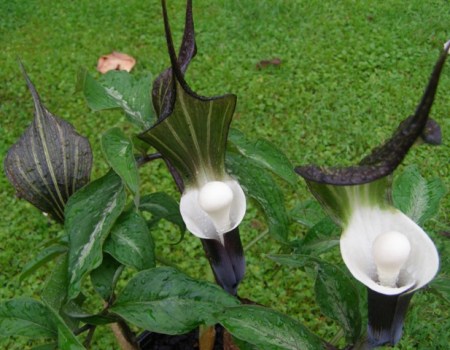
The very curious Arisaema sikkokianum

The very curious Arisaema sikkokianum

In the treasures line, we have some of Mark’s meconopis for sale – blue Himalayan poppies. These plants are already in their second year and show more perennial tendencies than usual in our climate (though not guaranteed perennial – it would pay to gather the seed this year as well). And we have good plants of Arisaema speciosum (great for woodland carpets) and the curious, showy but more difficult Arisaema sikkokianum.

No mail order, sorry. Personal customers only.

Tikorangi Notes: Tuesday 11 October, 2011

Notable, perhaps, for a total absence of any PC thinking here!

Notable, perhaps, for a total absence of any PC thinking here!

Tikorangi Notes: Tuesday 11 October, 2011

I am a little late with the links to latest posts this week. They were available on Friday as usual but I was in Hamilton speaking at the Waikato Home and Garden Show – where I found a wonderful example of absolute lack of any hint of political correctness. Golliwog scarecrows – gollycrows, perhaps. I am guessing that the creator had simply no concept whatever of the debate two decades ago about Little Black Sambo, the Black and White Minstrels and golliwogs which forever labelled these as monuments to racial stereotyping.

Latest posts:

1) Cyrtanthus falcatus – a first flowering for us of this interesting large bulb and member of the amaryllis family. We must have waited well over a decade for this event.
2) Kicking off the debate here on the difference between maintenance and sustainability in the garden – Abbie’s column.
3) Grow it Yourself looks at potatoes this week.

Rhododenrons Floral Sun and Rubicon

Rhododenrons Floral Sun and Rubicon

Tikorangi Notes: Tuesday 11 October, 2011

Arisaema sikkokianum

Arisaema sikkokianum

As the magnolias pass over, it is the time for rhododendrons and the mid season bulbs to come into their own. While the soft golden tones of Rhododendron Floral Sun and the pure red of Rubicon side by side may lack subtlety, they present an eye catching combination in our carpark. Rhododendrons often have a relatively short time in full bloom but the anticipation of fat buds showing colour and starting to open extends the flowering season substantially. It is also arisaema time for us. A. sikkokianum is not the easiest variety to keep going as a garden subject and it needs to be increased by seed as a rule, but it is one of showiest species in flower with its pure white spadix and its bloom held above the foliage. A. speciosum is not as showy but is trouble-free to grow and settles in most comfortably for the long haul. It has very curious burgundy snake’s head flowers held just below the tall, open foliage.

With our annual garden festival now just two and a half weeks away, the pressure is on the groom the garden to pristine standard for the 10 days which is our peak time for garden visitors. Formerly referred to Rhodo Festival, this year its full name is the Powerco Taranaki Garden Spectacular (!). More details at www. gardenfestnz.co.nz.

Grow It Yourself: Potatoes

The history of the potato is a remarkable one and surely warrants further exploration at a later date. But is it worth growing at home? If one potato is much the same as the next to you, then probably not, because they are so cheap to buy. But if you love your taties and can tell the difference between varieties, then of course you will be growing them. And the message from the Head Vegetable Grower here is that if you want new potatoes for Christmas dinner, you will have to get them in this very weekend because most early varieties take from 75 to 90 days to mature, though Swift and Rocket can do it in 60 days. Potatoes are vulnerable to disease so it pays to start with fresh certified seed potato from garden centres each year rather than using your own old potatoes which are shooting.

Potatoes are heavy on space. Because this is not a problem for us, we do them in rows digging narrow trenches about 20m deep and wide (full sun, well cultivated friable soil, fresh ground if possible), piling the soil to the side of the trench. The potatoes are then laid on the bottom of the trench and covered with 10cm of compost. As the shoots reach about 20cm, more soil is layered on top – a process called mounding. The potatoes form on the stems so you need to encourage stem growth and keep a thick enough layer of dirt to keep the potatoes well covered and stop them going green. The mounding process continues until the plants have flowered and it may be necessary to water in dry spells because the mounds lose moisture.

In smaller spaces, the stack of tyres is a popular technique, though hardly aesthetic. Potatoes need good drainage so it is better to build your stack on dirt rather than concrete. Start with one tyre and fill with good soil or compost, making sure you fill the rims as well. Plant about three potatoes and, as mounding is needed, add another tyre and fill with soil. You will probably end up with a stack of 3 or 4. If you plan to use potting mix instead of soil, they will become expensive potatoes.

One of the reasons for getting potatoes in now is to try and get crops through before the dreaded blights hit. In our experience, if you are not willing to spray your potatoes regularly with copper (about every fortnight), unless you know what you are doing, get your crop in early and manage them very well, you will get disease. Don’t use nitrogen based fertilisers as they are a root crop. Favourite early varieties here are Liseta and Jersey Benne, for main crop Red Rascal and Agria.