Tag Archives: gardening

Grow it yourself: Bok Choy or Pak Choi

Mark, the vegetable-growing husband here, comments that we have been a bit slow to wise up to the fact that the Chinese know a great deal about food production and we should have been looking to their crops a long time ago. Bok Choy, also known as Pak Choi, is a case in point. In the world of leafy greens, it is a great deal faster and easier to grow than the likes of spinach. It can also be grown throughout most of the year and deserves to be a staple crop, though you are best to avoid sowing in mid summer when it is more likely to get stressed and bolt to seed rather than to leaf. It is so easy to grow from seed that there is not a lot of point in buying baby plants.

Sow into the usual vegetable garden conditions – full sun and well cultivated soil with plenty of compost or humus added. Water if it gets too dry. Within a few weeks, the seeds will have germinated and you can start thinning the row and eating those baby thinnings as micro greens, raw in salads or lightly cooked in stirfries. Bok choy only takes about six weeks to reach maturity so you can be harvesting for as much as four weeks of that time, at various stages of growth. As with many crops, sowing a few seed every three weeks ensures a steady supply but it really comes into its own as a winter green when the more common crops basically stop growing and fresh veg are expensive to buy. There is a lot to be said for a quick maturing green vegetable which grows all year round and is not silver beet.

First published in the Waikato Times and reproduced here with their permission.

Tikorangi Diary: Thursday 16 September 2011

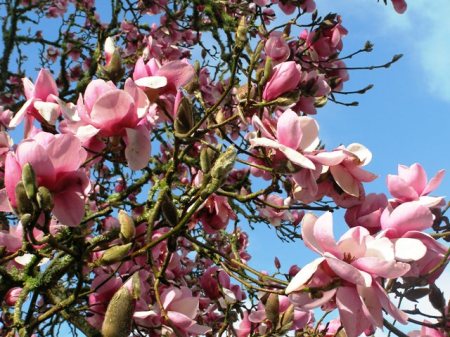
The original Iolanthe is a wondrous sight this week

The original Iolanthe is a wondrous sight this week


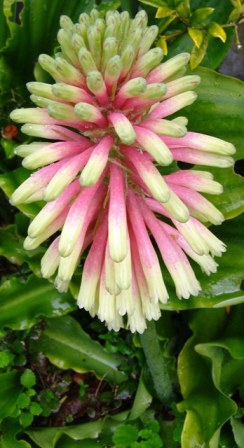
Veltheimia bracteata "Rosalba"

Veltheimia bracteata "Rosalba"

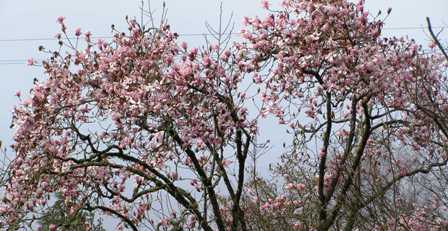
It is not easy to convey the full impact of the original Magnolia Iolanthe in flower. It is a wondrous event. Mind you, at about 50 years old, the canopy does measure around 10 metres across so there is rather a lot of Iolanthe to be wondrous. As somebody commented to us, what will Felix Jury be like in full flower when it achieves the same age and similar stature? Possibly even more astounding. We never tire of magnolia time here.

We advertise that we are open for plant sales on Fridays and Saturdays which means that we will definitely be here in attendance. In fact we are here most of the time and the garden is open every day (there is an honesty box if we are not around) but we just don’t guarantee our availability on other days. You can ring first to check if you want to come on other days. Details on what we have available are listed in Plant Sales. I have to comment though that despite every page on Plant Sales explaining that we do not courier or mail order plants, (sales are to personal customers only), every single day brings enquiries from people who have either failed to read that header comment or who hope that we will make an exception for them. If it was easy to pack and courier plants, we would still be doing it but it isn’t, so we don’t. End of story, I am afraid. We will however hold plants out the back while you arrange for somebody else to pick them up for you or until you can get here.

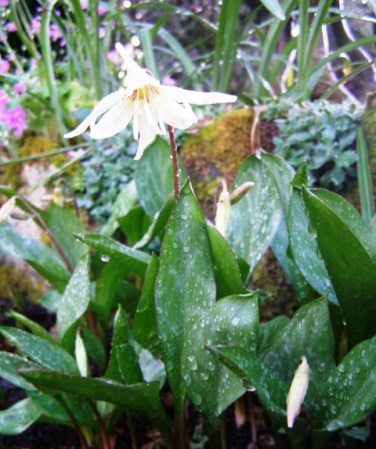
The dainty delight of the erythronium

The dainty delight of the erythronium

The highly sought after lemon and pink variant of veltheimia (bracteata Rosalba) is just coming into flower but we only have a few plants left so be in quickly if you want it. We have plenty of the more common pink (bracteata). And just as a complete contrast to the opulent magnolias, we have plants of one of the daintiest and most ephemeral seasonal delights – dogs tooth violets or erythroniums. Spring here is all about the big pictures and the tiny treasures. Why would anybody want an evergreen garden which looks the same all year round?

Grow it Yourself – Florence fennel or finocchio

In this country we have been a bit slow to catch on to the European favourite of finocchio or Florence fennel and it is only very recently that it has sometimes become available at the fruit and veg counter. But we rate it very highly as a crop to grow at home and regard it somewhat like celery to eat (which is not at all easy to grow well). It can be finely sliced or grated and eaten raw in salads, it is delicious roasted whole like a parsnip or used in stirfries. It is genuinely versatile and has a good crisp texture raw or lightly cooked without the strong aniseed aroma of the seeding fennel (which is foeniculum vulgare). Florence fennel is foeniculum vulgare azoricum and it produces a fleshy, bulbous base to the stems. This is the section that is eaten.

It is not difficult to grow and it holds well in the garden. As with most vegetables, it needs to be sown into well cultivated soil in full sun. As it germinates, thin out the baby plants to about 20cm spacings. The thinnings can be eaten as fresh greens. Seed sown now will be ready to harvest in summer. We usually sow again between the end of January to early March for winter harvest. It is pretty forgiving as a crop so timing is not critical but seeds sown from late October onwards will tend to bolt too quickly in summer, before they have formed the edible bulb. However, if those plants are cut back and left, they will come again and be edible the following winter. The fluffy green tops look similar to ordinary fennel but lack its flavour so are really only good for a garnish. If you can’t find seed at your garden centre, try Kings Seeds or Italian Seeds Pronto who both have websites for on line ordering.

(first published in the Waikato Times and reproduced here with their permission)

The constructions at Paloma

First printed in the Weekend Gardener issue 322 and reproduced here with their permission.

Clive Higgie and his slightly surprising small companion, the irrepressible Pablo.

Clive Higgie and his slightly surprising small companion, the irrepressible Pablo.

Over the years, Clive and Nicki Higgie have amassed one of this country’s foremost collections of plants and turned them into a remarkable garden at Fordell, near Wanganui. With his farming background, Clive is both practical and innovative and enjoys turning his hand to both construction and sculptural installations for the garden. He is not afraid to mix and match different styles and the results can be both surprising and original.

Some of Clive’s work is edgy, even flamboyant, and pushes boundaries in unexpected ways. A plain board fence at the entrance has been transformed into a statement by using witty wall writing – it is rather too whimsical and well executed to be described as graffiti.
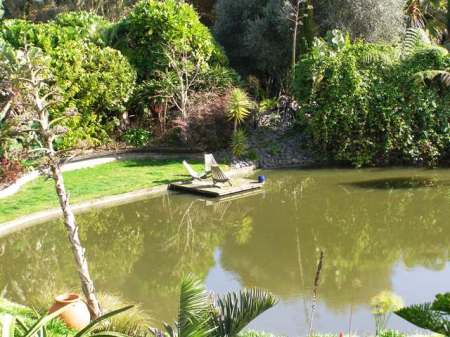
The seating deck built out over the large pond area is also a little edgy. There is something a little insecure about sitting in such an exposed position even if the water is shallow. Clive says he made a few design mistakes on this small platform, particularly making it so low that leaves accumulate below the deck. Clive also constructs the seats. He calls them his Barebum Chairs, which I originally misread as Ba-ree/-bum.
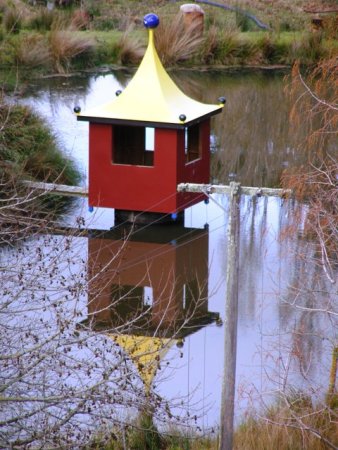
The boathouse is a work in progress. Showing typical ingenuity, Clive has used a concrete water tank as foundations for the structure. The roof is made from fibreglass matting coated with acrylic while the balls are ceramic.


The Iona Cross is distinctly monumental construction made by Clive, standing nearly two and a half metres tall. It is concrete and was poured flat before being moved to its location. By contrast, the Polynesian influenced vertical panel was boxed up and poured in its final location. These are just two of a series of installations surrounding his earth labyrinth which reference the ancestry of Clive and Nicki’s first grandchild.
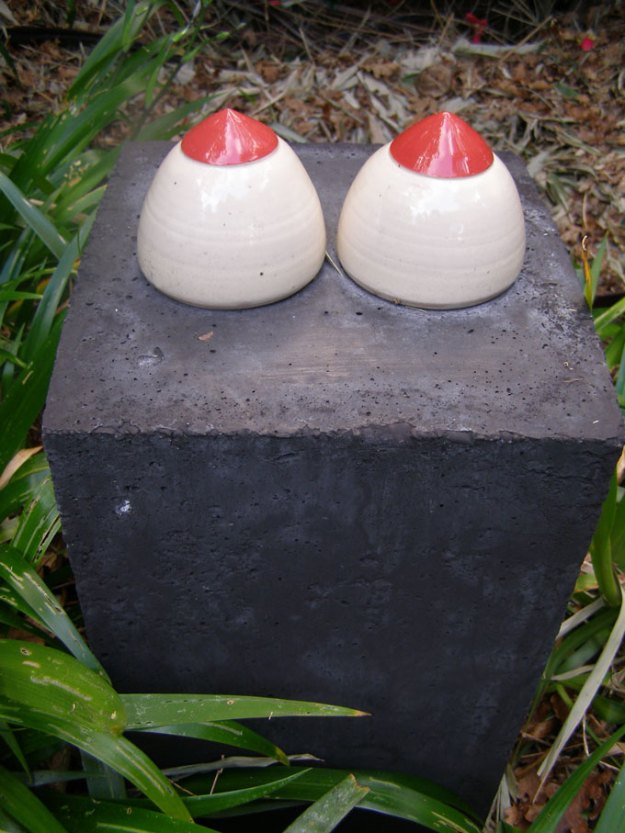
Paloma Six

Clive is pleased with his recent constructions of simple concrete plinths. “I add a bit of oxide to colour the concrete and to stop it being that glaring white of fresh concrete. I really like the plinths. Sometimes a small vase or sculpture can get lost in a garden setting but the plinths make them stand out.”

The ribbed pillars have a clear debt to ancient times but have been created using labour saving modern techniques. The mould was simply a product called baby iron (small profile corrugated iron) bent in a circle and filled with concrete. These have reinforcing rods down the centre and are boxed up and poured in their final location.

Paloma orange

Elsewhere in the garden, Clive has made extensive use of pillars constructed from terracotta field tiles. He first saw the technique used at Tupare in New Plymouth. He explains: “The pipes are irregular so I mortared them together before filling them with concrete. The mortar joins give structural strength. They didn’t do that at Tupare and many of their pipes had cracked and split.”
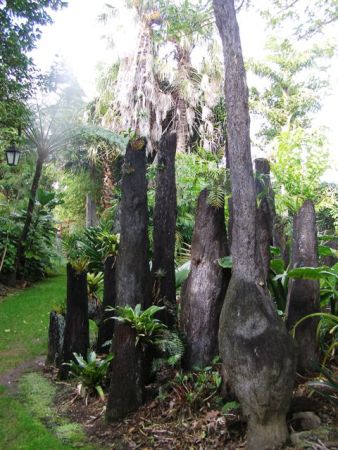
Not all construction is in concrete. Clive used ponga longs of irregular shapes and sizes to build a simple stumpery installation. The pongas vary from waist height to around 3 metres.
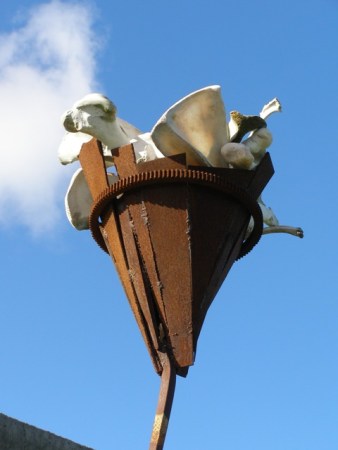
In his new Garden of Death, his friend, sculptor Steuart Welch, made the hanging crucibles which he calls Dracula pots. Clive has filled them with bleached animal skulls to complement the theme of the garden which is based around the social history of poisonous plants.
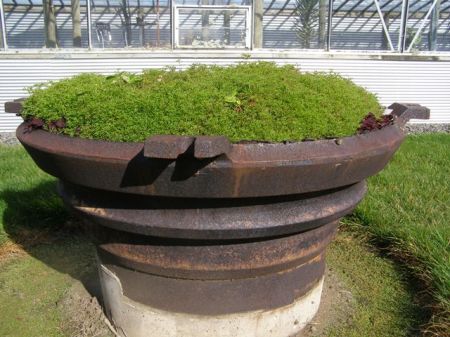
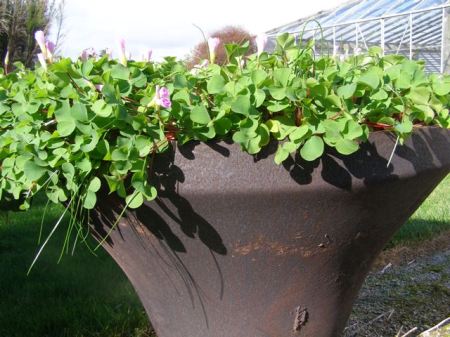
The attractive large planters came from a quarry stone crusher and, originally, the smooth sided bowl fitted inside the ribbed one, breaking large stones down to form road gravel. Being magnesium steel, they were of no scrap value but now contain large plantings of ornamental oxalis.
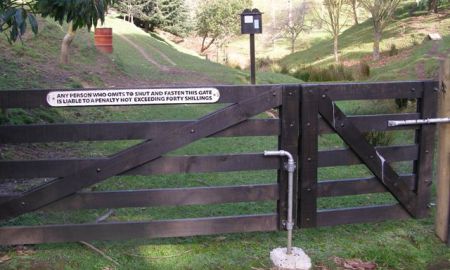
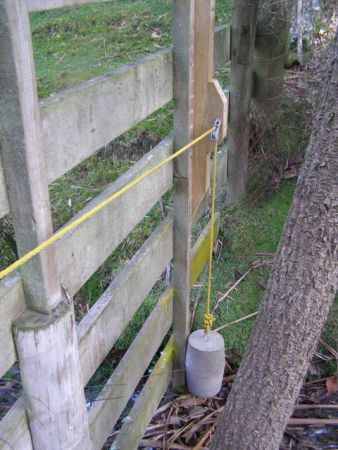
Clive is pleased with his simple solution for the side gate leading from the lower garden to the Matchless Arboretum. Because sheep graze beneath the trees, it is important that the gate be kept closed. A simple system of a counterweight pulls it shut behind visitors.

Paloma Gardens are open to the public all year round. For further information, check out their website: http://www.paloma.co.nz, email clive.nicki@paloma.co.nz or phone 06 342 7857 For my earlier story on Paloma, check Breaking the Mould of the Modern New Zealand Garden – the Dreams at Paloma.

Tikorangi Notes: August 27, 2011

Magnolia sargentiana robusta came through last week's winter unscathed

Magnolia sargentiana robusta came through last week's winter unscathed

The reticulata camellias are in full bloom

The reticulata camellias are in full bloom


R. protistum var. giganteum "Pukeiti" - with the frosted version just visible behind

R. protistum var. giganteum "Pukeiti" - with the frosted version just visible behind

Tikorangi notes: August 27, 2011
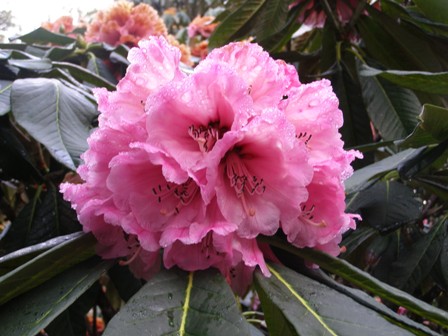
Last week it snowed, followed by a frost in the coldest few days we can ever remember. This week it is indubitably spring. Certainly there is damage in the garden – many of the early magnolias and michelias did not appreciate it at all, though M. sargentiana robusta appears to have come through unscathed. The same cannot be said of the big-leafed rhododendrons. I was searching to find an undamaged bloom and Mark felt that one of my shots of an R. grande hybrid showed we could rename it as Hokey Pokey (a reference to a favourite NZ icecream which has streaks of butterscotch coloured candy throughout). The big leafs have gone the same way as Magnolia Lanarth – 2011 may be the least memorable flowering ever. The campanulata cherries are alive with native tui, the reticulata camellias are in peak flower, the lovely daffodils continue to flower in succession and, just to prove that even in frost and snow, our climate can’t be all that bad, a vireya rhododendron, R. konori, is flowering beautifully and completely untouched in the rose garden area.
The beautiful, fragrant and touchy vireya R. konori flowers on regardless

The beautiful, fragrant and touchy vireya R. konori flowers on regardless


Mark has been poddling about with his calanthe orchids while I am grooming the rockery. Winter pruning is complete (fruit trees, hydrangeas, roses, wisterias and the like). Now we are laying mulch on many of the garden beds – we favour our home made compost for this.
Our first garden visitors for the season have started arriving but if you want to see the magnolias at their peak this year, hold off for another week or two to allow more to come out. That said, Magnolias Felix Jury and Black Tulip are recovering well from the earlier ravages by the weather and there are some lovely flowers showing now.
Magnolia Black Tulip - for those who prefer a more understated size of flower

Magnolia Black Tulip - for those who prefer a more understated size of flower