Tag Archives: gardening

Plant Collector – Camellia sinensis

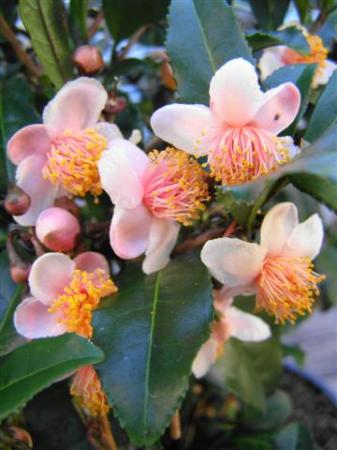
Grown to harvest for tea, rather than its floral display - Camellia sinensis

Grown to harvest for tea, rather than its floral display - Camellia sinensis

Despite being one of the first camellias of the season to flower, Camellia sinensis is not grown for its floral display but as a crop. It is the tea camellia. All tea comes from the same plant. Whether it is green tea, oolong tea or black tea depends not on the plant variety but on how it is dried, fermented and roasted. The preparation of quality teas takes a skill level on a par with roasting coffee or making wine. You can, however, harvest easily for home consumption, unlike wine and coffee. Green tea is unfermented and the leaves can be used fresh or dried. Oolong tea is lightly fermented (or sweated) and very lightly roasted. Further along the line is the fully fermented and roasted black tea. For the very best quality, you only pick the three leaves of fresh growth. By picking, you encourage the plant to continue pushing out fresh growth.

Camellias, as we all know, grow extremely well in New Zealand. The first attempts to grow sinensis commercially failed because of the site – cold inland valleys of Nelson. The frosts burned the desirable new growths. There is now a Taiwanese plantation near Hamilton which specialises in high quality oolong tea for the Chinese market. Most C. sinensis flower white. This form has flowers in dusky pink, but still tiny. The leaves are not like a common shiny japonica, being longer, crinkly and softer. We grow it in the vegetable garden and keep it to about 1.5m high x 1.2 m wide. Should Armageddon strike, we will have to drop coffee off the menu but we can still drink tea. I will just have to find out which bergamot is added in order to replicate our favourite Earl Grey tea.
Tikorangi Notes: Friday, April 1, 2011

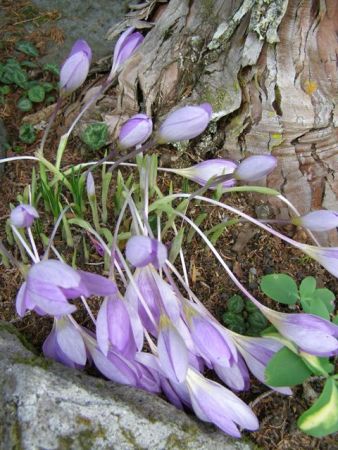
The blue autumn crocus - a fleeting seasonal delight

The blue autumn crocus - a fleeting seasonal delight

Nerines flowering in the rockery

Nerines flowering in the rockery

Latest posts:
1) Camellia sinensis is grown for harvesting, not for its floral display though its little pink flowers are charming if you look closely. The tea camellia in Plant Collector this week.

2) Garden tasks this week as we enter the second month of autumn.

3) Fifty Plants that Changed the Course of History – book review.

4) Outdoor Classroom this week looks at options for garden mulches in the first of a two part series. I was a little surprised to find that the dreaded scoria is still available.

Latest posts: While early spring is widely seen as the prime season for bulbs, autumn can be pretty rewarding too. The nerines are currently at their peak, the Moraea polystachya, zephyranthes and Spiloxene alba have particularly long flowering seasons, the Cyclamen hederafolium create carpets of pink and white, while the autumn crocus, colchicums and sternbergia are more fleeting delights. April heralds the start of our off season when we say the garden is closed, except by appointment. Mark stood in the rockery today, wondering why we advertise such an early closing date when there is still so much colour and interest.

In the Garden: Friday 1 April, 2011

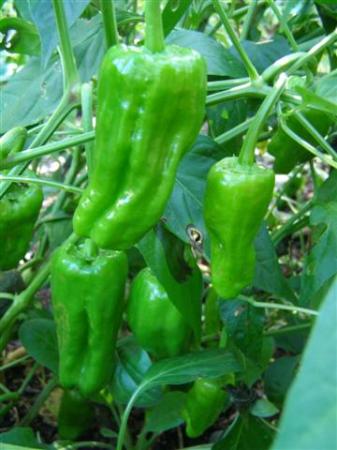
A game of chance with the pepper crop this year

A game of chance with the pepper crop this year

• The capsicum crop this year has been causing me problems. Peperone Padron is apparently a Spanish heirloom variety, renowned for the fact that it bears both mild and hot peppers but you can not tell the difference until you eat them. The seed packet proudly proclaims that eating a portion is popularly linked to Russian roulette. I prefer a little more predictability in the harvest so we may be more conservative with next year’s varieties.

• The spring bulbs are bolting into growth so if you have patches you have been meaning to dig and divide, do them this weekend and handle them gently. You have longer if you are buying dry bulbs which are still available at all garden outlets.

• We should still have at least five weeks of very mild weather, albeit with cooler nights, before the threat of frosts in inland areas and the first blasts of winter chill. So it is perfect planting time for trees and shrubs.

• The mild conditions are also the reason why right now is a good time to do an autumn fertilising round. The plants have time to benefit from the feed before they either go dormant or slow dramatically in growth over winter.

• Sow new lawns and over sow bare patches now. The grass has time to germinate and get some roots out before winter.

• Don’t walk away from the vegetable garden after you harvest the autumn crops, even if you are not intending to replant until springtime. It is time to do a big tidy and clean up. Remove blighted and mildewed plants entirely from the site to try and break the cycle. You don’t want the fungi and diseases wintering over in your patch. If you are going to dispose of them by burying them, don’t do it in your vegetable garden and only compost them if you make a hot mix. It is also good practice to rake up the leaves from fruit trees as they fall. You can help break the cycle of pests and diseases by good hygiene.

• With cooler nights, mice will be moving indoors. If you are storing seed, move the packets to rodent proof containers.

Plant Collector – brugmansia

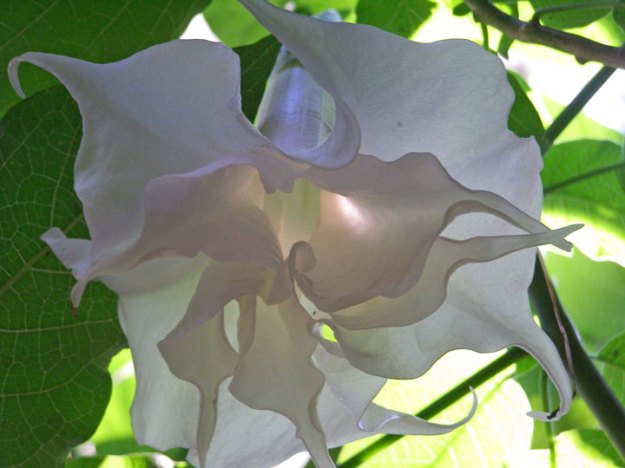
Double white brugmansia - huge, frilled white trumpets

Double white brugmansia - huge, frilled white trumpets

If you are into frills and furbelows, it is hard to go past the charm of this double flowered, pure white brugmansia. It is a member of the solanum family – as are tomatoes, capsicums, aubergines and, indeed, the dreaded woolly nightshade. None are as ornamental. The fragrant brugmansias hail from South America, mostly around Ecuador and the Andes, and are somewhat frost tender so presumably it is low altitude Andes. They are woody shrubs, around 3 metres high. This one is likely to be Brugmansia x candida (or aurea x versicolour), sometimes referred to as B. “Knightii”. We have it growing in open woodland conditions but it is also quite happy in full sun.

The differentiation between brugmansia and datura seems to be on a sliding scale. Brugmansias all used to be classified as datura. Now there is a school of thought that all datura are in fact brugmansia. What is usually referred to as a brugmansia has hanging (pendulous) flowers and woody stems whereas what are commonly called datura have horizontal or upward facing flowers and herbaceous growth. In days gone by, suicidal youths would regularly kill themselves trying for hallucinogenic experiences (now probably replaced by synthetic drugs which, while not safe, are not usually fatal). The problem is that while there are hallucinogenic properties, all parts of this plant are highly poisonous. A psychedelic trip can be a one-off experience with a high price to pay.

In the garden this week: March 25, 2011

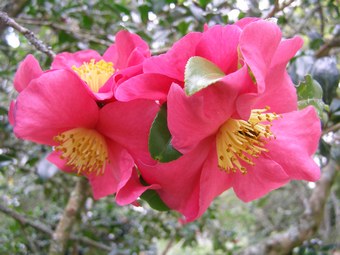
The first of the autumn camellias - sasanqua Crimson King

The first of the autumn camellias - sasanqua Crimson King

* Autumn is here. The first of the sasanqua camellias and the early flowering species have opened blooms. These early flowering camellias escape the ravages of camellia petal blight which will strike in June.

* You can sow annuals now to get good displays in early spring. Cineraria, snapdragons, pansies, poppies along with many other options are all much cheaper if you just buy a packet of seed and take the trouble to raise your own. It is best to sow into seed trays to get them started rather than the lazy option of broadcasting seed on the garden. With most of these, if you take the trouble to get them started once and then let them seed down, they will keep returning in future seasons as long as you are not too ruthless with the weed spray or push hoe.

* Most main crop potatoes are ready to be dug now. Get on to it straight away if your plants are looking blighted – the blight travels down the stem into the tubers and you can easily lose some of your crop. We hose our potatoes clean, sort out any damaged ones to eat first, dry them off and pack in opaque sacks for longer term storage in a dark and dry area.

* If you are planting leafy greens (and with the current price of lettuces at the supermarket, you should be), remember that plants with lots of top leafy growth are the hungriest feeders so benefit from added fertiliser, compost or rotted animal manures.

* With cooler weather, you can be dividing clumping perennials. Astelias, flaxes and grasses are better with autumn divisions because they can re-establish themselves before the chill of winter stops growth. You need to chop back the foliage by half to two thirds to reduce stress on the freshly divided pieces. A level cut with a sharp spade is the most usual approach or you can carefully cut out at least every second leaf at the base if you don’t want the shorn, Mohican look all winter. Clivias are tough, resilient plants which can be divided pretty well any time but now is good.