Tag Archives: gardening

In the Garden: March 4, 2011

• It is now officially autumn, a much more favourable season for keen gardeners but it does bring a slight sense of melancholy to many. This is exacerbated by the national sense of shock at the Christchurch earthquake. Friends who are currently refugees from that fair city tell me that they knew that there was up and down movement as well as the more common sideways vibration because any plants in their garden which were not very well established with big root systems were thrust upwards, right out of the ground, like corks bursting out from a bottle of bubbly. Their former garden is littered with plants pushed up, tossed sideways and now lying some distance away. Sadly, that is the least of their problems but they found it an interesting phenomenon.

Cover grape vines urgently

Cover grape vines urgently

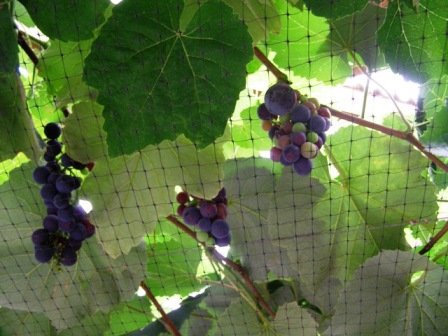
• If you have yet to cover your grapevines with bird netting, get onto it. Today. Otherwise you will have no crop because the birds will get there first. Even netted in, wily blackbirds will find the smallest opening but it does slow down the onslaught.

• With autumn rains threatening, harvest onions and pumpkins. It does not do them any good to be left out in the weather. Your garlic should have been gathered already.

• Most of the garden centres have their autumn bulbs in stock and the earlier you buy them, the better condition they will be in. If you are not ready to plant them, store them in the fridge but in paper bags, not plastic, so they can still breathe. Many bulbs appreciate that chill before being planted and it is recommended for anemones and ranunculus. Remember to plant anemones with the pointy side down and ranunculus with the claws down.

• Tulips are not easy to keep in our climate which is why mass displays of them are not common. Freshly purchased bulbs should give a wonderful display this spring but future seasons will be all downhill unless you live halfway up the mountain or in cold inland areas. They need winter chill to keep performing well. Even so, many of the spectacular displays in Europe depend on replanting every year and discarding the bulbs that have already flowered.

• Hyacinths are even worse in our climate which is a shame for such lovely flowers. Really, you have to see them as an annual here.

• Take out spent canes on raspberries. Next season’s crop comes on the new canes.

Tikorangi Notes: Friday 25 February, 2011

LATEST POSTS: Friday 25 February, 2011

1) The romance of the summer meadow garden and why, alas, they do not work in our climate.

2) Haemanthus coccineus in flower this week – a plant better known, perhaps, for its foliage than its paintbrush flowers.

3) Garden tasks for the last official week of summer and praise for the Japanese Black Trifele tomato.

TIKORANGI NOTES: Friday 25 February, 2011
No Tikorangi Notes today. This remains a country in shock with the Christchurch earthquake. No matter that it is quite some distance from us (different island, opposite coast and different faultlines). When the main issues remain the search for buried survivors, finding the missing (dead or alive) and, for the survivors in our second largest city, access to that most basic necessity of water, writing about our garden seems completely irrelevant.

Summer meadow gardens (and why they don't work here)

Enchanted by the native orchids growing wild at The Garden House in Devon

Enchanted by the native orchids growing wild at The Garden House in Devon

Surely the two most romantic sounding gardening styles are meadow gardens and woodland gardening. Woodlands will have to wait because summer is for meadow gardens, though not without difficulty in our climate.

Meadow gardens are based on the attempt to re-create and manage the wildflower meadows and we don’t have these in abundance in this country. Generally, one seems to go to Western Australia to catch the blooming of the wildflowers and that, I am told, can be a hit and miss affair. Timing is critical and some seasons are much better than others. In New Zealand we have natural alpine meadows (the Mount Cook lily, gentians and the like) but in such difficult, inaccessible and vulnerable environments that they do not lend themselves to garden tourism. Countries with naturally occurring wildflower meadows share several things in common – a much harsher, drier climate, and a lack of intensive, pastoral farming. Intensive dairying and wildflower meadows are an oxymoron. And most such areas will have an abundance of annual native flowers which leap into growth en masse, usually triggered by seasonal rains. Our native flora is unique and fascinating but not rich in pretty flowers of the field. So, by definition, wildflowers in this country tend to be invasive weeds. The lupins of Central Otago and the perennial sweet peas of Marlborough are a case in point. As indeed are gorse, broom, Kelly thistles and ragwort, all of which can have a blooming season which is showy. Not for us, thank you, and more than one New Zealander has been shocked to see gorse used as a garden plant in the UK.
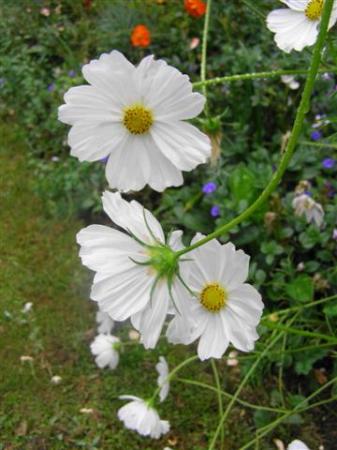
Simple flowers like this white cosmos look best in meadow-style gardening

Simple flowers like this white cosmos look best in meadow-style gardening

All our garden plants, of course, originated somewhere so plants such as the species cyclamen, the deciduous ground orchids like dactylorhiza and anacamptis, even the Black-eyed Susans, echinacea and cosmos are native wildflowers somewhere. Just not here. I have never seen the North American prairie gardens, nor the wildflowers of South Africa but it was exciting (believe it or not) to see the ground orchids that we treasure as choice garden plants growing wild in England and in Italy.

Having decided that naturalised wildflowers in this country are more often noxious weeds, how about the controlled alternative of the managed meadow garden? Bad news. All the characteristics which make Taranaki prime dairy country mitigate against meadow gardens. Our grasses grow too well, our soils are too fertile, on top of that we fertilise too heavily, our rains come too readily all year round and our temperatures are too even. The grasses will swamp out all but the most aggressive of the wildflowers. Gardeners right on the coast in the north and in the drier south in the Hawera to Waverley stretch may have more success because their conditions are a little harsher. But it is not just conditions that one needs to get right. Meadow gardens require a bit of an attitude shift, we now realise, and it is a theme that we keep returning to in discussions here. Weeds. Meadow gardens require a high tolerance level for weeds and that is a problem for most New Zealanders. We have an ingrained antipathy to them. The worst crime an open garden can commit is to have weeds. Whether this is a reflection of our farming background, of the DOC position (our weeds are all introduced plants) backed up by our local councils, our high tolerance level for the use of chemicals in gardening and agriculture (and indeed in conservation), or an innate value placed on tidy suburbia, we do not like weeds. Because meadow gardens rely on letting plants grow naturally, you can’t control weeds. Once you start intensive control and management, your meadow garden becomes a cottage garden, and that is a different kettle of fish altogether.

We may need to reconsider our antipathy to weeds. Mark recalls the late Peter Winter, one of our leading environmentalists locally, commenting that the riparian plantings being fostered so actively by our regional council and indeed by Fonterra, are a positive move but that we will have to accept that a certain amount of weed growth is inevitable. The riparian plantings are the ribbons of mixed plants being established along all waterways, fenced off from stock. Done properly, they will filter run-off from farm land and reduce the amount of nutrient being washed into waterways. But they are not going to be a healthy environment if farmers expect to keep them weed free which, for the vast majority, will mean the repeated use of chemical weed killers.

A field of flowers in its first season

A field of flowers in its first season

But back to meadow gardens. It is the very simplicity of the meadow garden that lends it so much charm but it takes a little more skill than just standing and broadcasting a meadow mix of seeds in early spring. Amongst other things, the birds will pick off a fair portion of the seed and the germinating plants unless you take precautions. Then there are strategies for managing a succession of flowers through the seasons from spring to autumn and to ensuring that the garden lasts for more than one year. If you are willing to kill out all the grasses and competing plants before you sow a very generous amount of seed, you can manage a field of flowers in the first year. By the second year, the grasses will have crept back and the weeds will also be germinating and seeding. Weaker performers in the mix will have been beaten out by the competition. It will be more akin to the wildflower environment and it will have rank and unkempt times of the year.

If you want to try a meadow, pick an area which is in full sun and with poor soil. Don’t feed it at all. You want the plants to flower and seed, not to make a lot of leafy growth so they need to be on the stressed side. At the end of the season, you mow the meadow (one man went to mow, went to mow the meadow…) and leave it all lying on the ground for two weeks to allow the seed to fall out. Then you rake it all up because you don’t want to fertilise the ground by letting the clippings rot down. And you live with the weeds which will also be colonizing the area. The meadow should come back into growth when triggered by seasonal change. That is the theory of it, more or less.

We would love to grow a meadow garden but each time we look at it again, we figure the climate and conditions which make it possible for us to grow lush and verdant gardens mitigate against the meadow concept. It is why we continue to work on naturalising selected plants in designated areas instead. It is not at all the same thing, but it is what we can manage here.

In the Garden: February 25, 2011

Impressed by the Japanese Black Trifele tomatoes

Impressed by the Japanese Black Trifele tomatoes

• There is not a whole lot you can be doing in the ornamental garden at this time of the year but history tells us that we will start cooling off within the next fortnight so enjoy the respite. Try at least to stop summer weeds from seeding to reduce next year’s crop. Snip the seed heads straight into a bucket and dispose of in the rubbish or burn them if you are in an area that allows fires.


• It is pretty much the last call for summer pruning of cherry trees. While you are about it, you may want to tidy up plums and peaches as they finish cropping.

• Mark has tried a relatively large assortment of tomato varieties this year but top of the popularity poll is Japanese Black Trifele. It is a curious dark tomato, more deep green and black than red so traditionalists may find it slightly disturbing but it more than makes up for that with good flavour, fleshy texture (rather than too juicy) and good production.

• You can save seed from most vegetables (we will be saving the tomato seed), confident that future crops will come true but with two provisos. Save the seed from the best specimen in the harvest, not some poor little weakling. The quality of future crops depends on the quality of the parent plant. And F1 hybrids will give very patchy results and don’t generally come true to the parent. F1 hybrid seed is the result of controlled pollination between two selected parents and was the origin of the super sweet corn we now take for granted and of some of the modern tomato cultivars. The only way of telling if you have F1 hybrids growing is from the original seed packet.

• Keep up the deadheading on summer flowering plants like dahlias and cosmos to extend the blooming season.

• Deadhead agapanthus by waterways and near native bush areas.

• Get the winter veg into the ground but plant brassicas in small numbers successively every month to avoid the common problem of a huge surplus of cabbages and cauliflowers all coming ready at the same time.

Making cold compost step by step (part 3 of 3)

Part one – low tech, low input means of dealing with green waste.
Part two – making a hot compost mix.

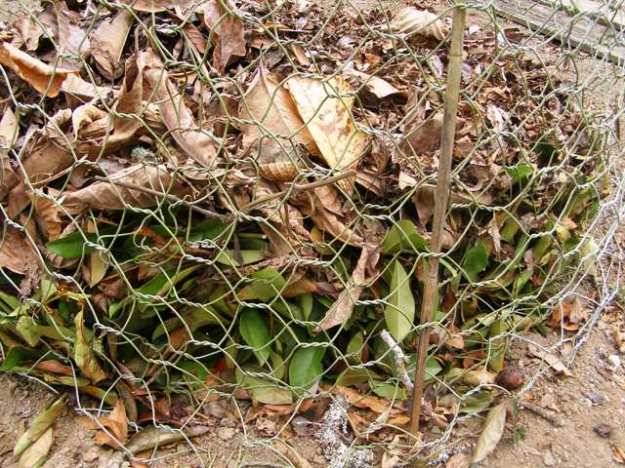
1) In an earlier Classroom, we looked at making hot compost where heat helps the breakdown. Cold compost, where the work is done by worms, is by far the most common form of home compost. You don’t need special facilities – a pile on the ground, compost bins or a netting ring are all fine. It needs to sit on dirt so the worms can move in. You are aiming to build up about a cubic metre of composting material at a time.

2) The ingredients and ratios are the same as for hot compost but because cold compost is not usually turned, it is better to build it in layers. Nitrogen comes from green waste (fresh leaves, vegetable scraps, lawn clippings etc) and this can be up to 60% of your mix. Carbon comes from dried leaves and stalky vegetation along with all the twiggy bits and this should comprise 40 to 50% of the mix. The carbon also traps air in the mixture and stops it turning to a sludgy mess.

3) Do not put in seed heads or diseased foliage or plants. Without heat, the seeds and diseases will survive and when you spread your compost, you will be spreading them throughout the garden.

4) The usual advice is that citrus peel and egg shells should not be added but we ignore that because we have large quantities of citrus peel to dispose of. The worms ignore it and it rots down of its own accord. However it pays not to add meat which will attract dogs, cats and rats. If you are adding newspaper, scrunch it up first or it comes out at the end of the process pretty much as it went in. Newspaper counts as carbon content.

5) The compost worms will arrive of their own accord. Striped tiger worms are the most common. If you are worried, you can buy them or transfer them from a worm farm but it is not necessary. If your compost pile gets sludgy and smelly, you do not have enough carbon content and it may have insufficient air (oxygen).

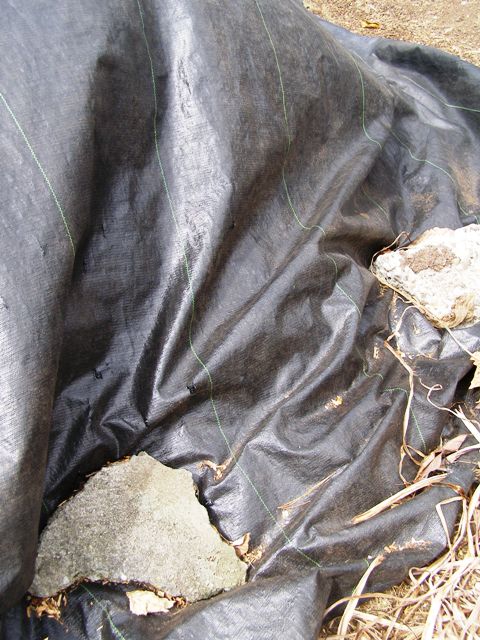
6) When you have about a cubic metre of layered mix, cover the heap or bin. Some people use old woollen carpet. Other options are heavy duty plastic, boards or corrugated iron. We use old weedmat weighed down so it does not blow off. With cold compost, it will take at least six months before it is ready to use and it may take longer over the colder months of the year. But at the end of that, you should have a clean mix which is easy to handle and nutritious in the garden. It is usually best to work with a row of compost heaps, or at least three – one you are building, one that is maturing and one that is being used.