Tag Archives: gloriosa superba

Bold Bulbs of January

While I think of early spring and autumn as Peak Bulb Blooming Time here, January must take the crown of Big Show-off Bulb Time. With big bulbs as well as a big display, notably the lilies and scadoxus.
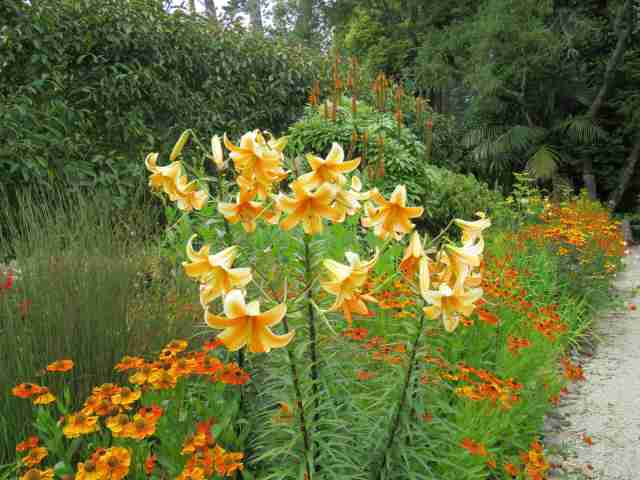
Mark’s Aurelian hybrids in yellow and apricot orange.

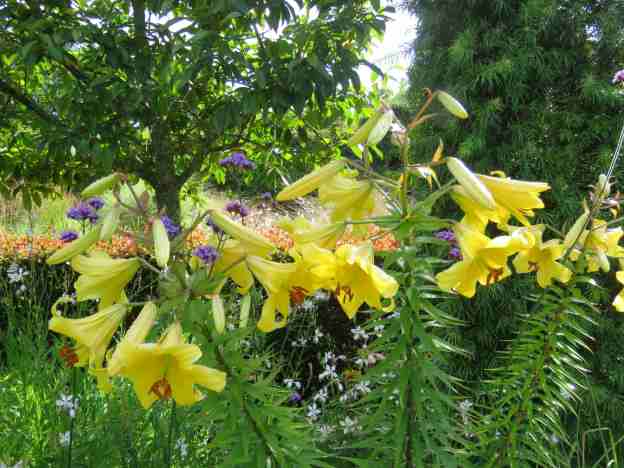
Beat the drum to announce lily time. The month starts with the yellow and apricot-orange Aurelians, for which I give full credit to Mark. We have never made them available on the market so any Aurelians you buy won’t look quite look ours and probably will have fewer flowers to the stem. They are truly lovely in their 2 to 3 week season. Nicely scented too.
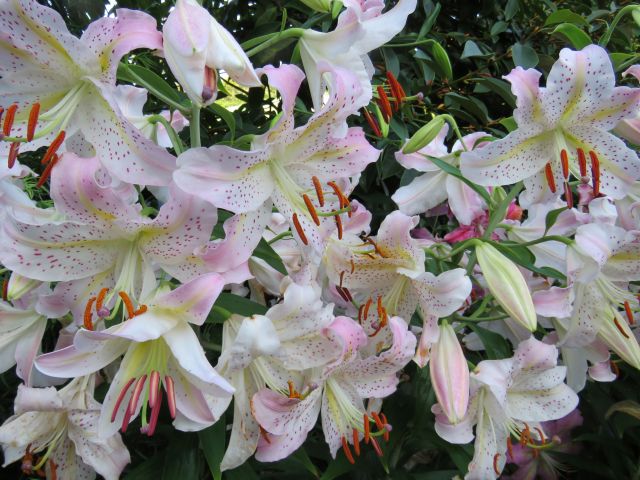
Auratum hybrids – all outward facing

As the Aurelians pass their peak, the auratums hit their stride and they are an astounding sight in full sun and in the open woodland areas of the Avenue Gardens. We have a few, as I say in a major understatement. Some date back to Felix who dabbled with lilies in the 1960s and 70s, and even further to Les Jury (his older brother) selecting for deep red shades amongst others, but particularly for outward-facing flowers. Upward-facing lilies are probably better for florists but they also gather dust and leaves and suffer more from pollen staining so they are not as good as garden plants. We select for plants that perform as garden plants.
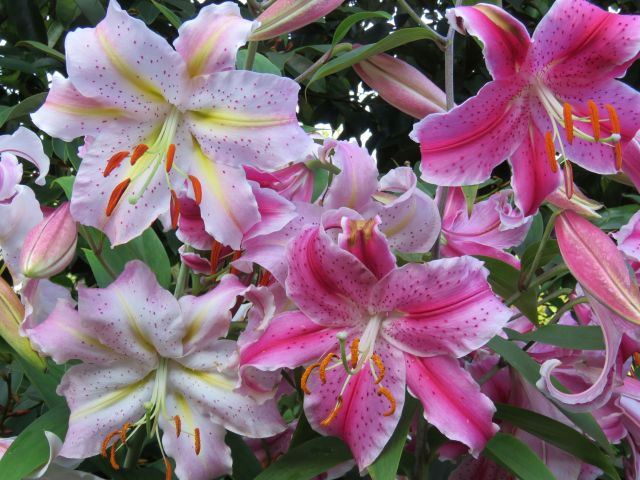
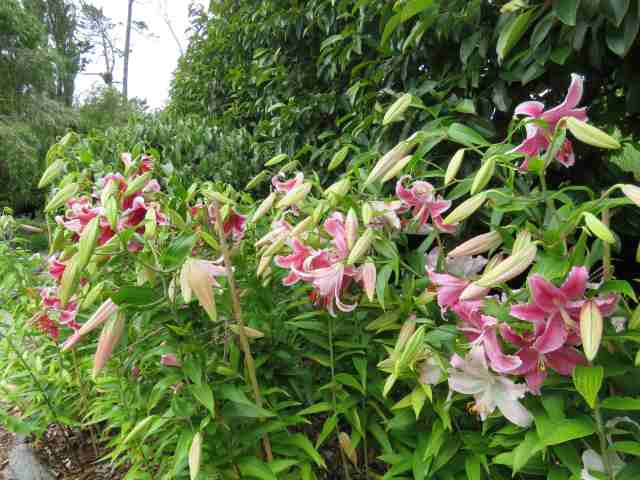
A 30 metre border of auratum lilies plus a whole lot more in other areas. Did I mention we have a few?

Back in our mailorder days, we named and sold a few of Felix’s selections but the more recent hybrids from Mark have never been put into commercial production. Pure and simple, he raised many plant from controlled crosses for our garden (by which is meant he chose the parents and manually pollinated rather than harvesting wild pollinated seed). He was after outward-facing blooms, big flowers, strong stems and a range of colours from white through pinks to what passes for red in the auratum family. He succeeded in this endeavour and every year, the auratums are a sensory joy with both looks and heady fragrance.
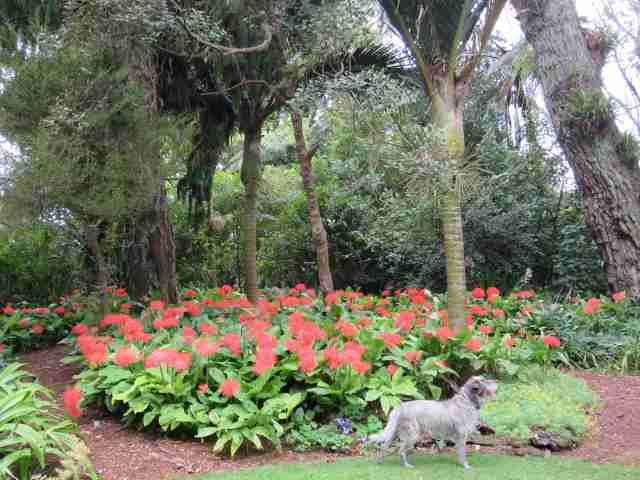
We have a few Scadoxus multiflorus ssp katharinae too.

The Scadoxus multiflorus ssp katharinae continue to thrill and delight us with their sheer scale here. I am not sure I have much else to say that I have not said before. This particular patch is one of our unique features. It is more usual for these bulbs to be nurtured as single specimens in a pot. While they have naturalised here, their spread is not on such a scale as to be described ‘invasive’; they are easy to control but we are fine with them gently popping up in nearby areas. As a general rule, we favour complex scenes of mixed plants rather than mass plantings, so much the better if they are choice plants finding their own happy place.
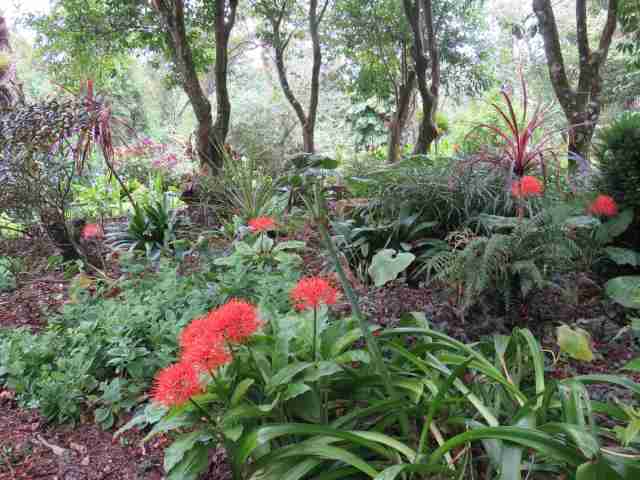
Gently spreading in the woodland
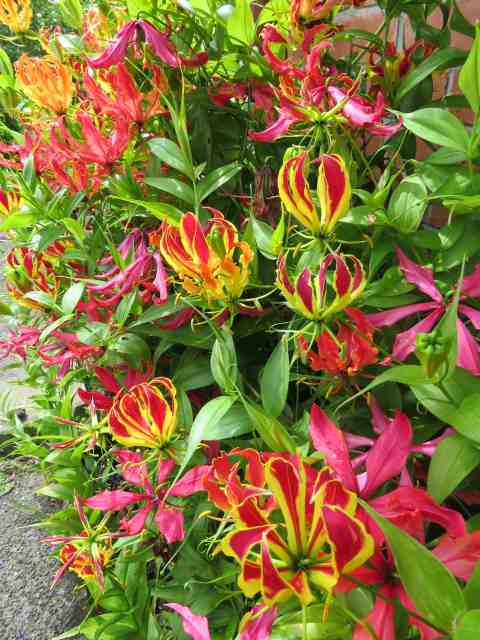
Gloriosa superba in a dry border that never gets watered and the only moisture is runoff from the concrete beside

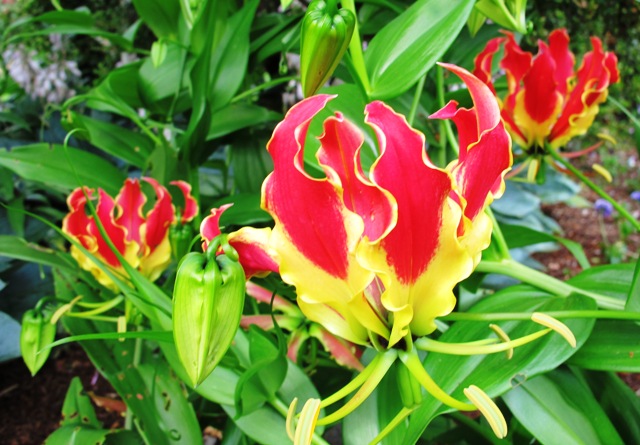
It is also gloriosa time. While they are commonly referred to as climbing lilies, the lily connection is but distant and the colchicums are much closer relatives. Gloriosas are highly prized by many until they multiply to the point where they become a bit of a weed. We are at that point. They are a handy plant to have in super dry conditions like the narrow, hot, dry border at the front of our house where little else thrives. I am not convinced about them in other areas and am trying to restrict their spread. Also, I feel they ramble as much as climb. I wouldn’t mind if they would climb neighbours to hold themselves up but they are more inclined to sprawl and need staked areas to keep them more upright.
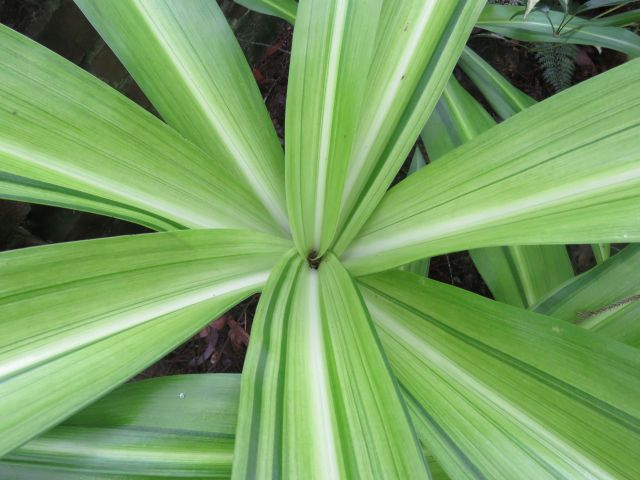
Crinum moorei var rates as a choice bulb for its foliage alone, even before the white flowers appear
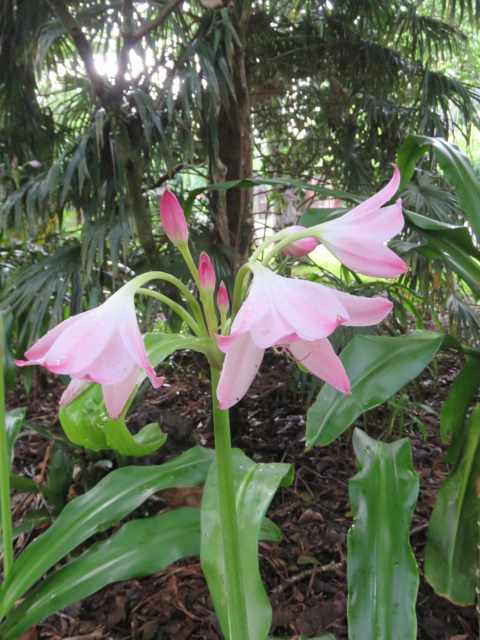
It may be C. moorei (non variegated) or it may be one of the other species. Nowhere near as choice but pretty enough in casual woodland

The stars of our crinums are the many bulbs we have of Crinum moorei variegated but they are only just starting to put up their pure white flower spikes this week so they can wait til February’s instalment. We have other crinums flowering soft pink. I have never unravelled the different species; Mark tells me we have two different species, one of which is the common form of moorei (non-variegated) and one of which is a different species that he has forgotten the name of and I never knew so its identity may remain forever a mystery. These all-green foliaged plants are rangy in foliage, utilitarian but useful bulbs for shady areas and pretty in bloom.
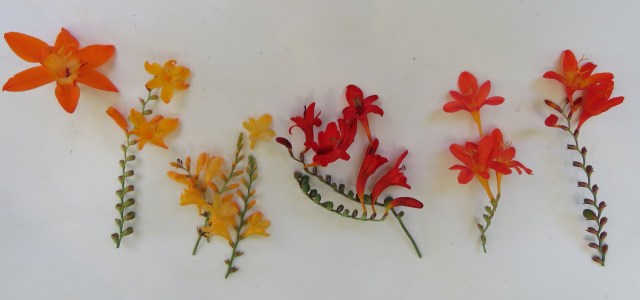
Crocosmias – pretty but most are on the rampant side
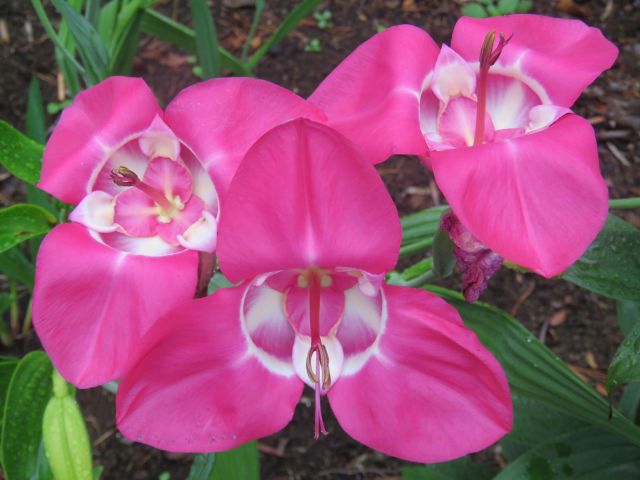
Tigridias – we have them with and without spots in white, red, yellow and a variety of pink hues

In the showy/utilitarian/potentially weedy category, we are flowering tigridias (jockey caps), crocosmia and zephyranthes. Tigridias hail from central America, Tigridia pavonia which is the common garden species  is from that area around Mexico and Columbia. Crocosmia are a grasslands bulb from southern Africa.
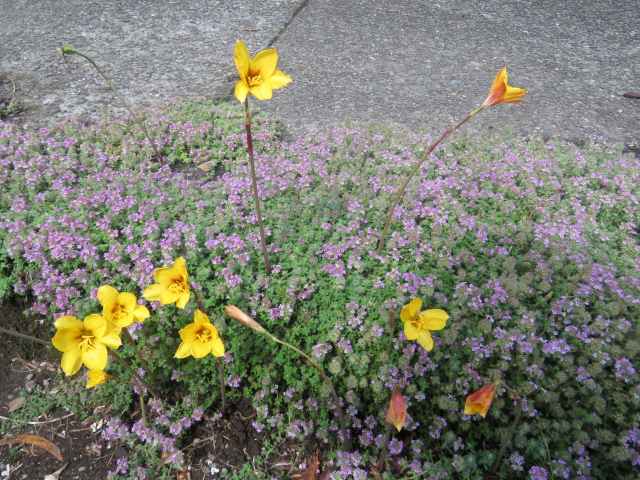
Zephyranthes or habranthus? I was going to say at least we can call them rain lilies but they are not even lilies because they belong to the amaryllis family instead.

The zephyranthes are from the Americas, oft referred to as ‘rain lilies’ because flowering is triggered by rain. Zephyranthes or habranthus, you may ask. As I did. I have no idea now. We have always called them zephyranthes but ten years ago when I wrote this piece they appear to have been reclassified as habranthus. Now, a decade on, it appears that habranthus have been swept up – along with sprekelias – and moved back to zephyranthes.  This is all based on botanical analysis and DNA and who am I to challenge that? I can continue with zephyranthes which is easier for this old brain to remember because we used to have a family dog named Zephyr. These are plants for the casual, sunny areas of the garden – more wildflower than tidy bedding plant.
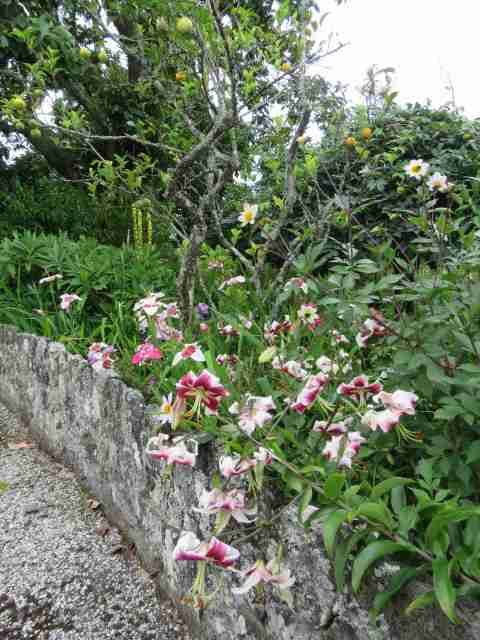
A casual planting of a smaller flowered auratum and tigridias beside the drive in the Iolanthe Garden

As if the disappointing summer is not bad enough, I see we already have the first flowers opening on Cyclamen hederafolium and even the autumn snowdrop. Sigh.

Special thoughts to those in the north and on the east coast who have been hit hard by extreme weather in the past week. We see you, we hear you, we feel for you even as we know that is about as useful as Trump’s ‘thoughts and prayers’ or, in the rural vernacular, as useful as tits on a bull. May the weather settle soon that you can start the process of recovery.
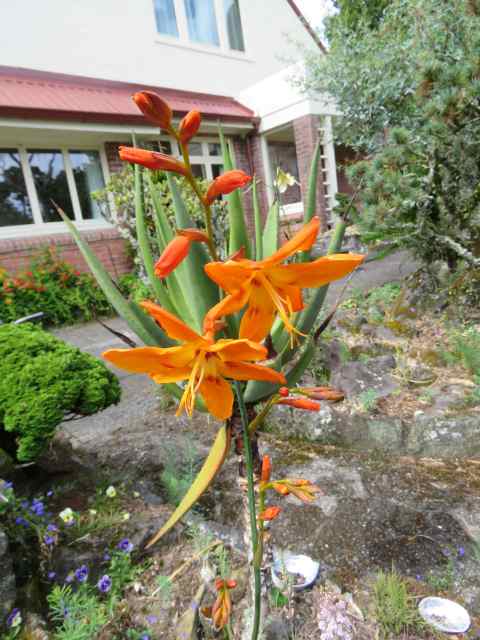
Crocosmia – possible ‘Star of the East’. Unlike the others we grow, this has exceptionally large flowers, is VERY slow to increase and never in any danger of becoming a weed or wildflower. This is why it is allowed in the rockery.

Win some, lose some

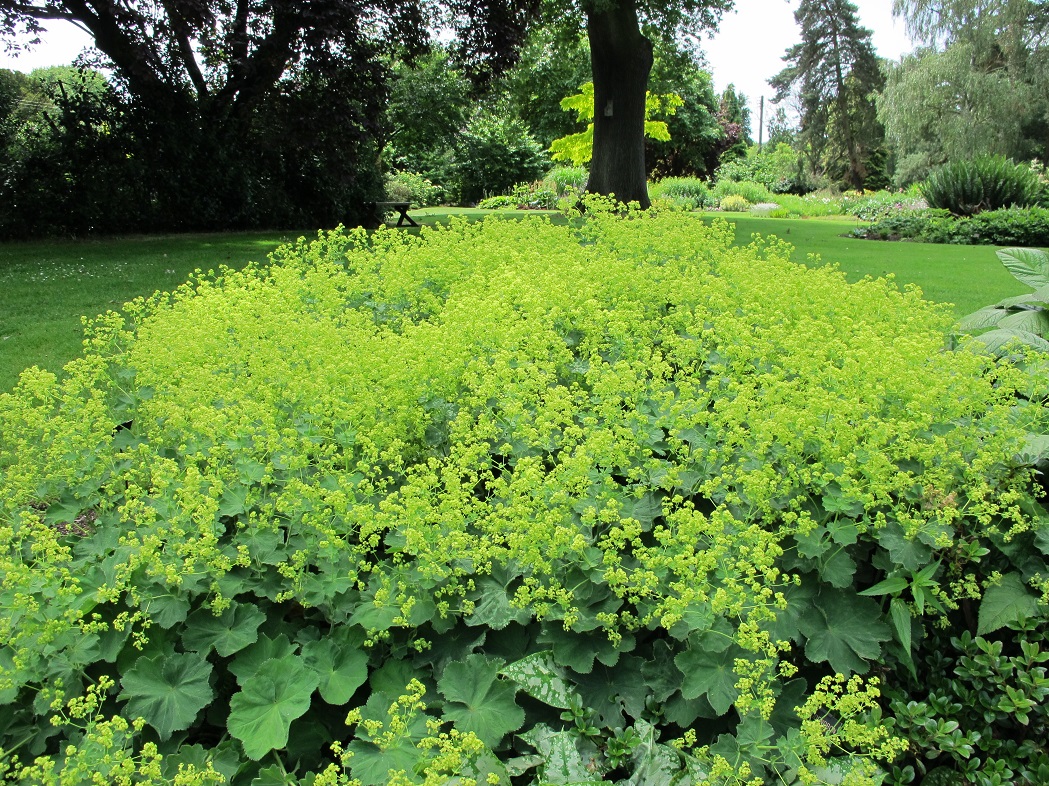
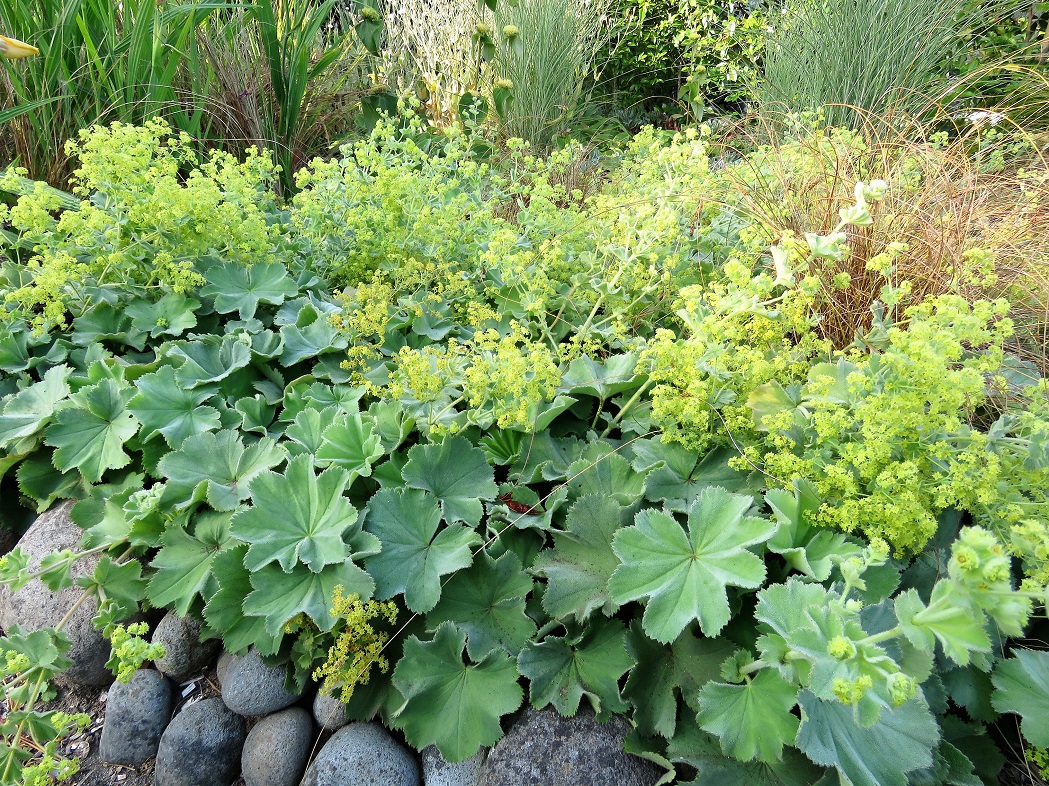
Alchemilla mollis in my garden

I photographed my patch of Alchemilla mollis for my friend, Chris. He, too, had admired the acid yellow froth in English gardens and wanted the same effect in his own home garden but found his efforts were not rewarded. This is as good as I can get it here.

Alchemilla mollis at Blooms of Bressingham in the UK

I do not understand why it never seems as lush. It originates from southern Europe so is presumably not dependent on winter chill. though maybe there are chillier areas in southern Europe because it certainly seems to perform better in cooler places with lower light levels. I even wondered briefly if what we grow in New Zealand as A. mollis is in fact its smaller cousin, Alchemilla erythropoda. But apparently the latter is much, much smaller so I guess not. It is A.mollis, but not as northern gardeners grow it.

Do not laugh at this poor little specimen of a veronicastrum. A lot of effort has gone in to getting it to this stage. The bamboo stakes were part of rabbit protection when it was even smaller.

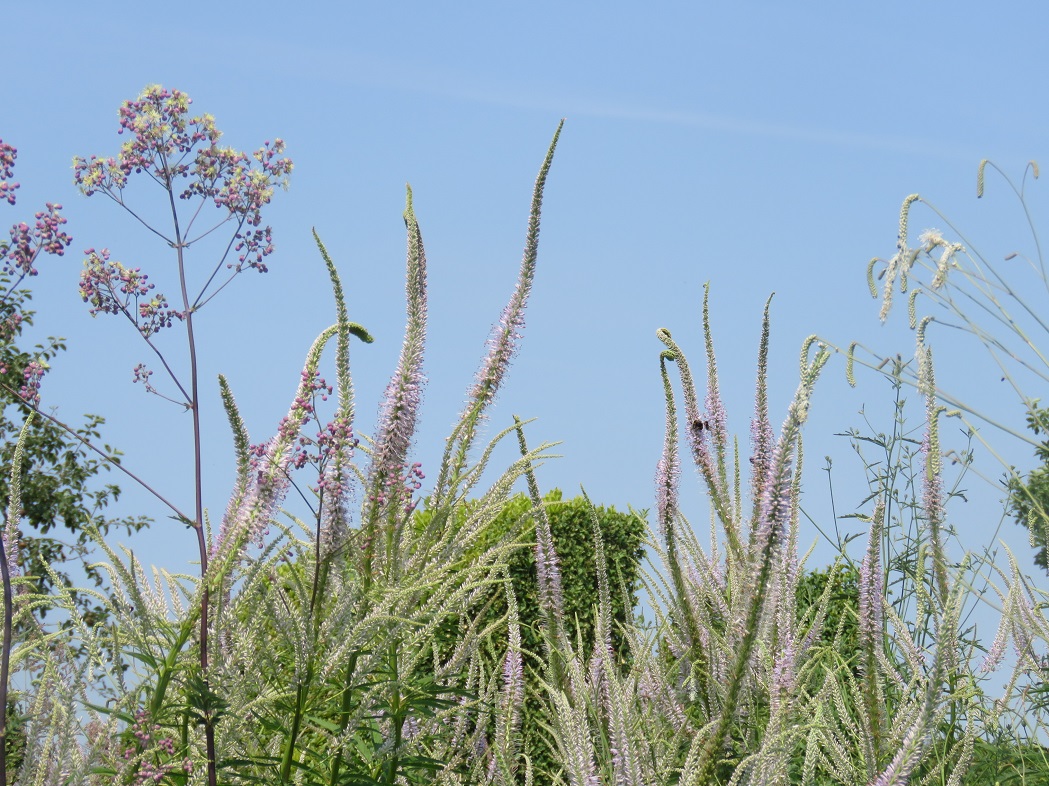
I have written before about our single, solitary specimen of the blue veronicastrum, V. virginicum, which we have nursed through from seed to its second summer. It is even setting flower buds. It is just that the plant is only 20cm tall when it should be hitting two metres in bloom. It is clearly not a rapid grower and I wonder if northern gardeners buy established plants to start with. It is a common, hardy, American plant and nowhere in the international literature do I see mention of it being difficult to establish.

This was more the effect I was hoping for – at Le Jardin Plume in Normandy

This stronger blue veronicastrum, which will be a named form, was used by Piet Oudolf in Trentham Gardens near Stoke-on-Trent in the UK

We sourced two different packets of seed which disconcerted Mark when he came to sow them because they were so fine he got out his magnifying glass to check that he wasn’t just sowing dust. Despite being a professional at dealing with seed and going to the trouble of stratifying them in the fridge, he only ended up with this one, solitary plant. Time will tell whether it gets more strength and grows large enough for us to divide it. In the meantime, Mark is trying it from cutting as well. It is a plant we would like to use in our summer gardens but I would have expected it to be a little more enthusiastic in its second summer. In fact, I thought it would be a lot more robust and vigorous.

Astrantias are another mainstay of English summer gardens that we have tried and failed with. They flower and then just fade away. Heucheras are another plant that we have given up on. Once planted out in the garden, the lush nursery specimens just quietly sat and languished, failing to thrive. There is no substitute for trialling plants before investing too much money, time and energy on using them on a larger scale.

Scadoxus multiflorus ssp katherinae naturalising in our woodland

But I mustn’t moan. We do have our successes. I am pretty sure some successful growers of the aforementioned perennials would look with awe and envy at our summer display of Scadoxus  katherinae. We will have only started with a few bulbs, possibly just the one at the very beginning, and we certainly didn’t plant this large swathe in the woodland. They have just gently seeded down and spread a little more year by year without ever causing a problem. They have very large bulbs (of a similar size to a belladonna) which sit close to the surface and stay evergreen with that large, lush foliage for much of the year.

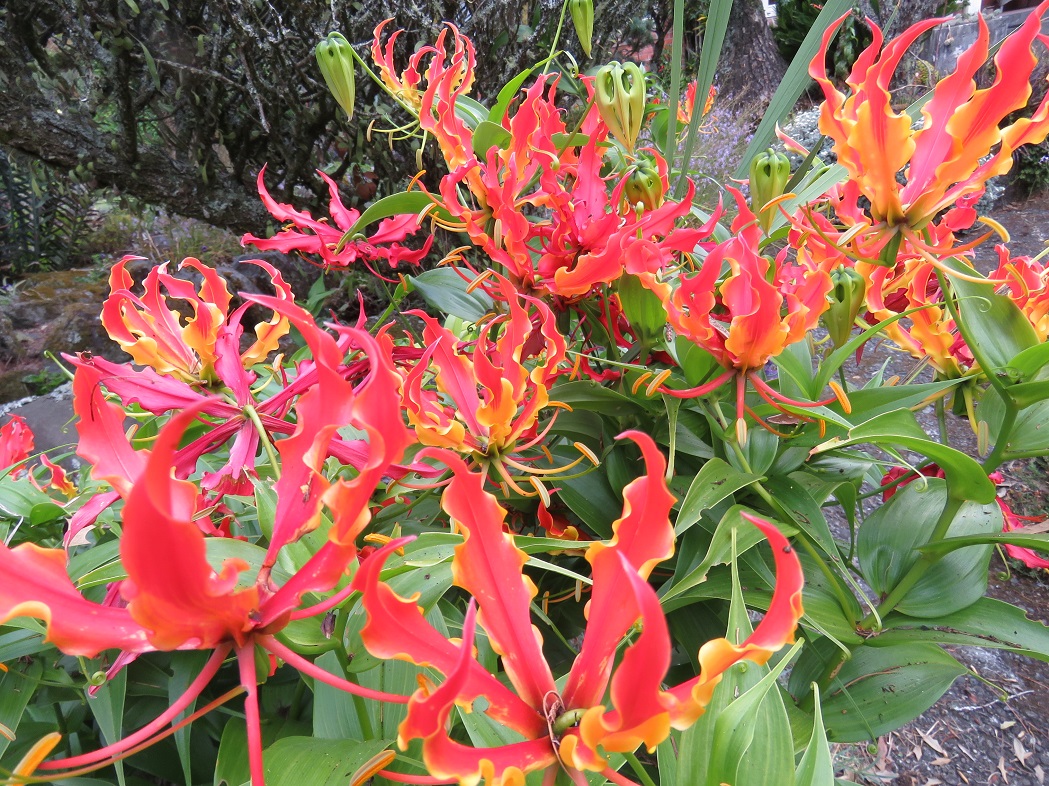
Gloriosa superba prefers full sun and has also gently spread itself around

Ditto the Gloriosa superba, at times a little more problematic with their natural seeding. They are one of the types of tuber that finds their own depth in the soil and they bury themselves really deeply. This can make them difficult to get out if they are in the wrong place. But when they bloom with that lovely reflexed shape, it is like having fiery coronets in the garden.

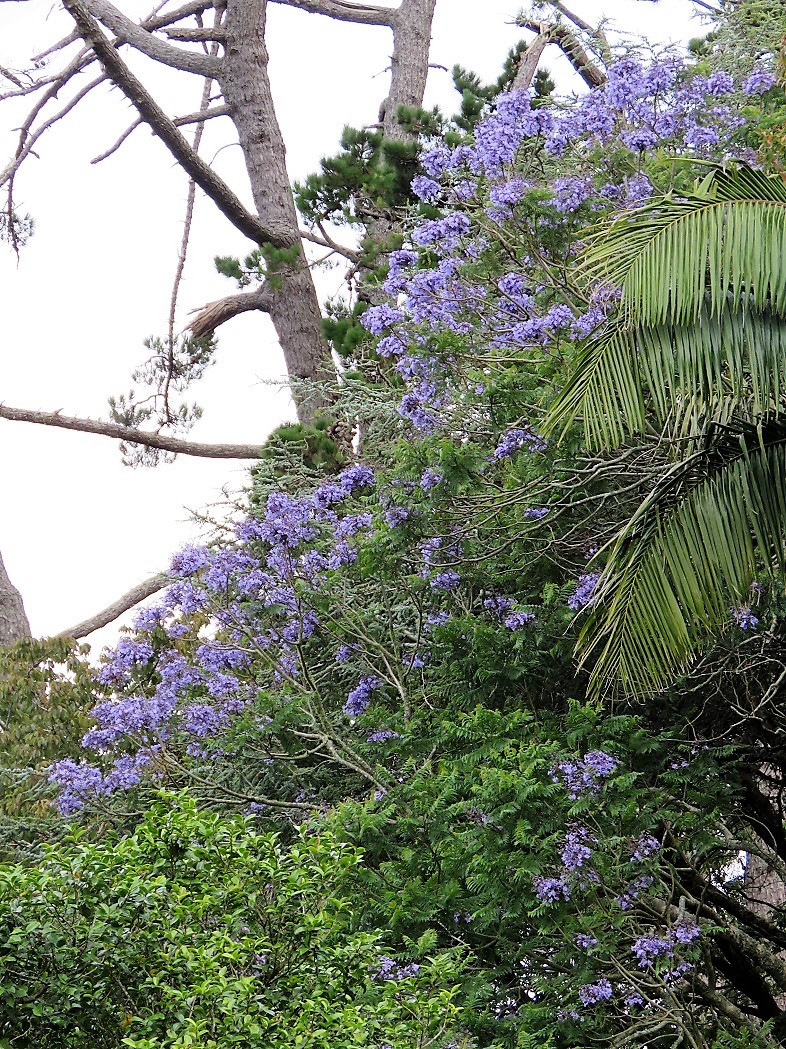
Jacaranda! In Tikorangi! We are not exactly within its normal climatic range of conditions

The jacaranda tree is having a good flowering this year, albeit not as spectacular as in drier, hotter climates. I love jacarandas so to have one that blooms in our conditions is a great pleasure. Blue flowered trees are not common when you think about it and the carpet of fallen blooms beneath is also a delight.

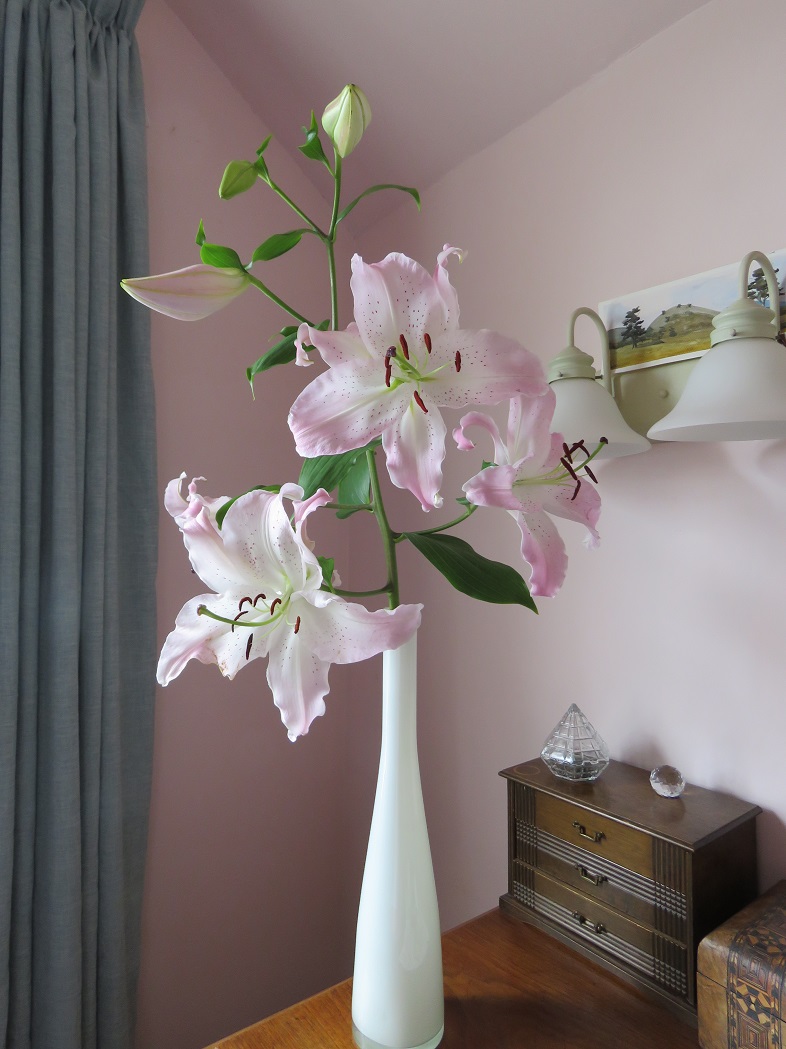
Pretty much the only flower I cut to bring indoors and one stem fills a vase and scents a room. We have hundreds in the garden.

And we are into the season of the auratum lilies. I pick some to bring indoors to scent the house and truly, they are gorgeous. We have hundreds of these in the garden AND NO LILY BEETLE IN NZ! For this we are truly grateful and thank our tough border control. Their peak blooming over the next weeks will more than compensate for the absent astrantias, hopeless heuchera, anticlimactic alchemilla and the very disappointing veronicastrum.

January bulbs for mid summer

Regular readers will know that we are very keen on bulbs here. As I surveyed the January ones, I figured that most bulbs are stars on their day. I guess because they are both seasonal and transient, they have to wow in their short time in the spotlight. A bulb in bloom can make you look in admiration, despite even the most unattractive location. We would not be without them.

The prized worsleya

The prized worsleya

Indubitably, the star this week is the unusual Empress of Brazil (Worsleya procera syn. rayneri) which does indeed hail from Brazil. It is an exotic showstopper. But the reason it is hardly ever seen is because it is rare in cultivation and requires a patient gardener. This particular specimen took 13 years from planting to bloom. There aren’t many gardeners willing to wait over a decade for a flower.

Scadoxus multiflorus ssp katherinae

Scadoxus multiflorus ssp katherinae

The Scadoxus multiflorus ssp katherinae are also big and showy but much easier to source, being very popular with Auckland landscapers. We have reached the point where they seed down and are naturalising themselves beneath trees where they have become a real feature in the summer shade garden. Some of those blooms are getting close to the size of human heads. We have South Africa and Zimbabwe to thank for these beauties.

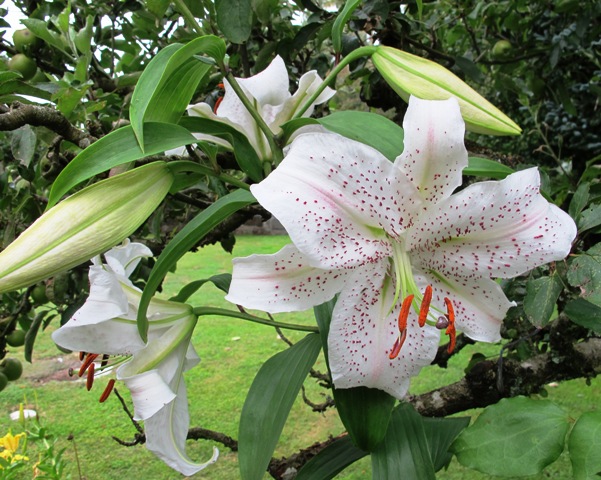
Auratum lilies

Auratum lilies

In sunnier spots and on the margins, it is the lilies that astound. I wrote about the aurelians two weeks ago but it is now the time for the auratums (sometimes known as the golden-rayed lily of Japan). These can be sourced from garden centres in winter. Just make sure you never let the bulbs dry out, even when they appear dormant. If you give them lots of TLC for the first few years, you can increase numbers from the small offshoots as well as raising seed.

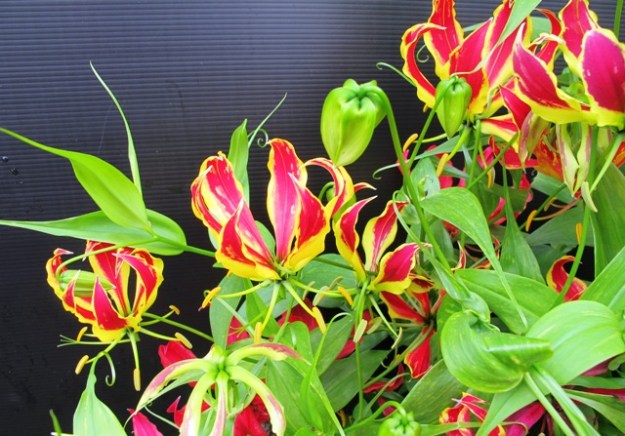
Gloriosa superba

Gloriosa superba

Gloriosa superba are often called climbing lilies, though they are only distant relatives at best. These are great plants for hot, dry conditions – the sort of spot many of us have under house eaves facing north. They flower for a long time in high summer and require absolutely no care at all beyond giving them something to cling to so they can climb rather than tumble.

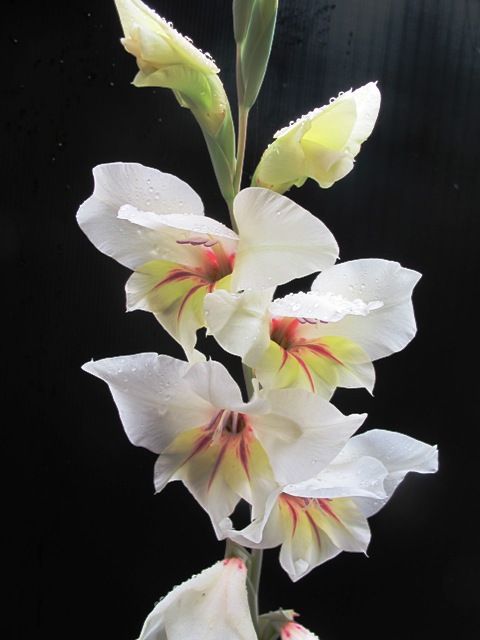
Gladiolus

Gladiolus

Gladioli! Dahlias! We often take both families for granted but summer gardens would be poorer for their absence. We don’t have many of the Dame Edna hybrid gladdies. While there is a certain charm in their exuberant vulgarity, we are less enamoured of the rust that afflicts the foliage, making them unattractive plants. This white gladiolus is not a species, as far as we know, but it is somewhat further back up the breeding chain from the modern hybrids. Dahlias I tend to lump in with perennials though technically they are tubers, so within the bulb group.

Crinum moorei

Crinum moorei

The crinums are coming into flower and C. moorei is another shade garden option though it needs to be in a position where its rather large foliage can be ignored during the times when it is scruffy. These plants stand chest height, the fragrant flowers close to nose level so there is nothing small and dainty about them.

Add in the crocosmia featured last week, the tigridias in Plant Collector today, summer flowering ornithogalum, the yellow zephyranthes (‘rain lilies’), even the early Cyclamen hederafolium coming into flower. While January is not in any way peak bulb season, those in bloom add a great deal to the summer garden.

First published in the Waikato Times and reprinted here with their permission.

THE FINAL In the garden this fortnight: Thursday 5 July, 2012

A fortnightly series first published in the Weekend Gardener and reproduced here with their permission. However, as I have now parted company from that publication, this will be the final in this particular series.

Gloriosa superba in summer

Gloriosa superba in summer

The comments about lilies in issue 339 reminded me that I needed to thin our Gloriosa superba. While these are often referred to as climbing lilies, they aren’t a lily at all, being an entirely different family. But they are a wonderful summer flower and very obliging at growing in parched, dry conditions in the front, sunny border under the eaves of the house. There are not a lot of plants that like those conditions. The tubers are very curious. As they get bigger, they grow into large V shapes and they find their own depth in the soil – sometimes very deep down. I do not understand how they do it. It is hard not to envisage them wriggling down. If they are happy, they can multiply a bit too readily and seed down as well. I dug out a bucket of spares from a short border. They are difficult to dig out without breaking them and if you lose both tips, they are no longer any good and will just rot.

Gloriosa superba tubers

Gloriosa superba tubers

These tubers come into growth in late spring. The stems need some support because they get about a metre long before they put up a succession of odd reflexed flowers in orange-red and yellow tones which look for all the world like a coronet. They lack any fragrance but they are an excellent cut flower and the season lasts months through summer. Curiously, they are the national flower of both Zimbabwe and Sri Lanka.

Top Tasks

1) Rose pruning. We like our roses to flush early here so that they are in full flower for our annual garden festival at the end of October. Being country residents, we are still allowed an incinerator and I pile up the prunings beside it so they can dry and then be burned.

2) I prefer to keep most of our roses in one area of the garden rather than spread throughout. After pruning, I rake out fallen leaves around the plants because these can harbour disease and then follow up with a mulch of fresh compost.

3) Carry my wire brush with me in my gardening basket. While the lichen growth we get here is apparently a sign of very clean air, we can end up with too much moss and lichen in our humid climate. I find it much easier to do a little often, rather than trying to clean entire areas at once. I have stonework, concrete, brickwork and plant trunks in my sights.

Flowering this week: Gloriosa superba

Summer glory in Gloriosa superba

Commonly called the glory lily, flame lily or climbing lily, this plant should be recognised by all ex-pat Zimbabweans and some Indians. Oddly enough, it originates in both areas and is the national flower of Zimbabwe and also accorded special status in the state of Tamil Nadu in India. It is only a very distant relative of the lily, being a member of the colchicum family and because it is full of the chemical colchicine, all parts of the plant are poisonous. Colchicine is used to double the chromosomes in plant cells and is highly toxic in concentrated form. Not that I have ever seen anybody want to eat gloriosas.

The plants grow from V shaped tubers which will survive in very dry, sandy conditions so we use them in the narrow dry house border facing north where very little else but succulents will grow. They are winter dormant and never get watered, even in summer. The tubers find their own required depths and can end up quite some distance below ground.

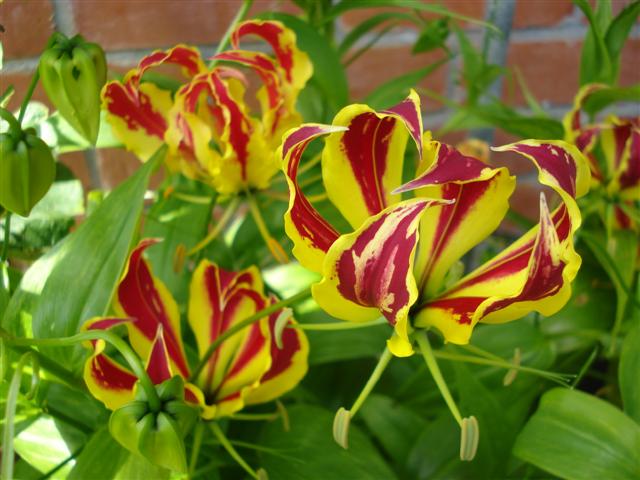
Gloriosa is a good cut flower, lasting well in a vase though the pollen can stain. But look at the flower shape. It opens conventionally enough but then the petals reflex entirely (in other words they all bend backwards) leaving the anthers and stamens completely exposed. Sometimes the petals can be so recurved that it looks like a full crown with fringe. The colours are always in the yellow/orange/red spectrum and the most desirable forms tend to be those with the sharpest yellow and dark red contrast. It is not particularly rare in this country, so you should be able to find gloriosas if you want them and they are an ideal plant for sandy, coastal gardens.