

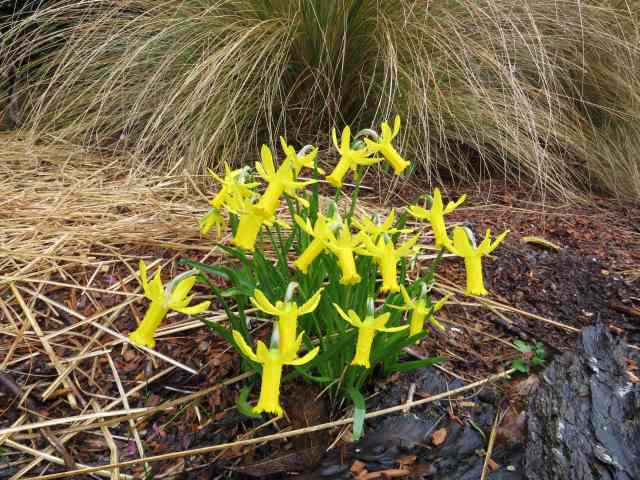
What a delight are the dainty narcissi. I see I started photographing them in in mid July so we have had a month of pleasure so far and plenty more to come. When it comes to magnolia flowers, we lean to the bigger is better way of thinking but the narcissi are different. Small and dainty, thank you.
The big daffodils flower later and we don’t have many of those. In fact, we have none of the large-bloomed, modern hybrids which are what dominate the commercial bulb catalogues. They just don’t fit our garden style. Also, because they are later flowering, they get hammered by the narcissi fly and with their long stems and heavy heads, they flop over as garden plants in heavy spring rains.
We once went to the National Daffodil Show when, for some unknown reason, it was staged in the War Memorial Hall of our nearest small town. It was amazing but the only dwarf varieties on show took up about one square metre while the rest of the hall was packed with impressive displays of show blooms and there was a clear preference for what we sniffily refer to as ‘novelties’ but devotees would describe as ‘breeding breakthroughs’. Those split coronas (the trumpet part in the middle) that look squashed don’t do anything for me and I am unconvinced by the colour break to pastel, salmon pink. But that is a matter of personal taste and life would be dull if we all liked the same thing.
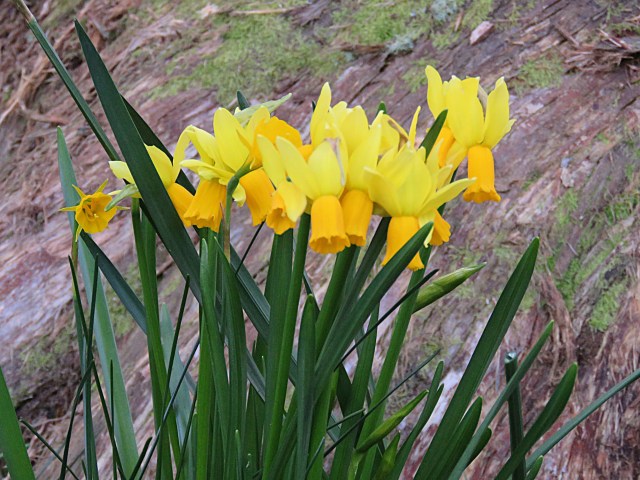
Mark and his father before him gathered up all the dwarf varieties they could find at a time when there were more available than seem to be around these days. So we have a reasonable representation of named varieties like ‘Tête-à-tête’ (more commonly written as Tete a Tete, without the French accents these days), ‘Beryl’, ‘Jetfire’, bulbocodiums (hooped petticoats) in both bright yellow and lemon (Bulbocodium citrinus), ‘Thalia’ and others. But we wanted more and we wanted them sooner than we could get by lifting and dividing existing clumps, which is why both Felix and Mark started raising seed.
It is the back story of our garden, really. We could not afford to garden on the scale we do if we had to buy in all the plants. A lot of what we have across most of the genus we grow are unnamed seedlings that have been raised on site. In most cases, those seedlings are the result of controlled crosses rather than random, self-sown seedlings. A controlled cross is selecting two good parents and taking the pollen from one to fertilise the other, marking the flower stem and watching until the seed is ripe enough to gather. It is quite a bit more faffing around than just collecting random seed that has set but it ensures a higher percentage of good progeny.

If you want to start in a smaller way, you can just gather seed but, with narcissi, you need to sow it in a seed tray, look after it and pot on the seedlings when they are large enough, growing them on – usually in small pots – until they are large enough to plant out. From seed to flowering size takes about three years which may seem a long time to some who are used to more instant results but we are patient gardeners here.
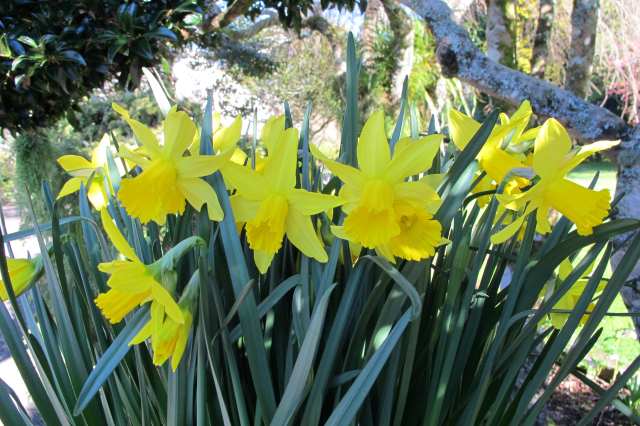
The classification of narcissi is a complicated business and there are many different species and groups. In our climate, we have most success with the cyclamineus types, often characterised by swept back petals. The other advantage of keeping to dwarfer varieties is that their foliage is smaller and finer so they die off more gracefully, rather than the spent foliage flopping down and smothering everything around them.

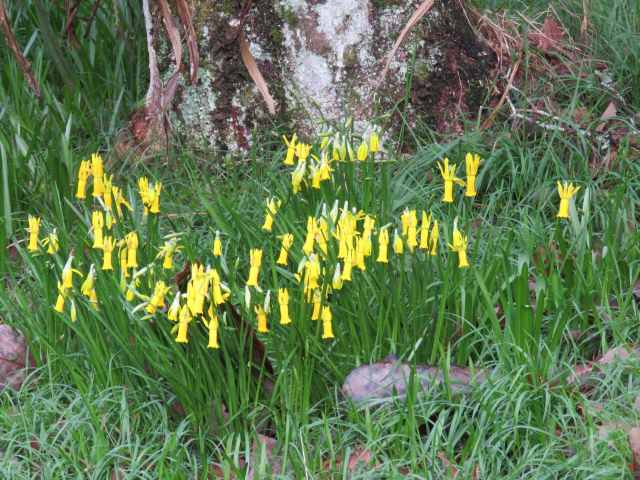
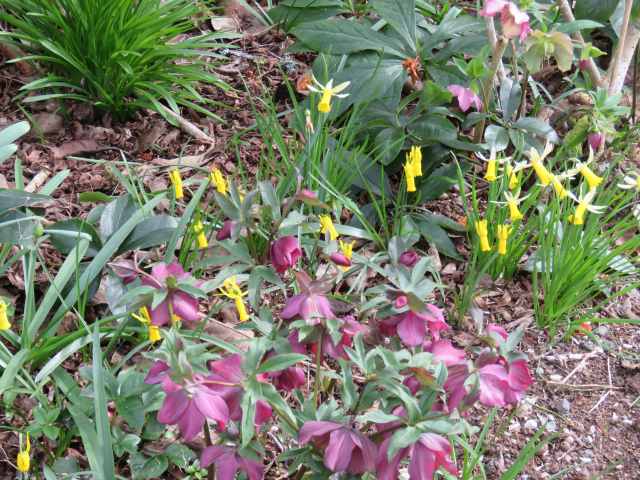
Mid August is a very pretty time for us. The early magnolias are magnificent and the dainty narcissi scattered all around the place are such a good contrast in scale, colour and detail. We have figured we can never have too many little narcissi and are continuing to spread them further afield from cultivated areas, to extending the bulb meadows and tucked in wherever we think they can grow undisturbed that they may emerge and delight during their weeks to shine their golden light in early spring.

 Tikorangi The Jury Garden